

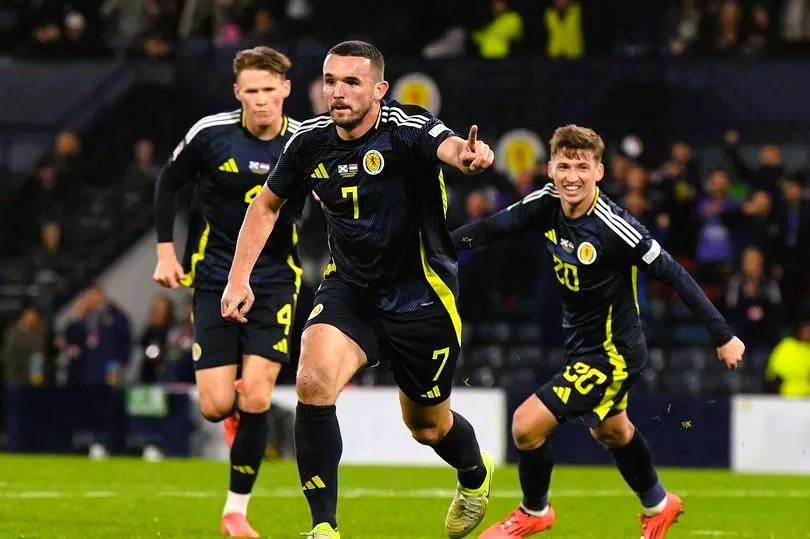
Will Scotland, drawn into a formidable Group C alongside five-time champions Brazil, resilient Morocco, and newcomers Haiti, finally break their long-standing group-stage curse in North America after a 28-year absence from the global stage?
Co-hosted by Canada, Mexico, and the United States, the expanded 48-team tournament will conclude with the final on Sunday, July 19, 2026, at MetLife Stadium in New York/New Jersey.
Below, we take a closer look at Scotland at the 2026 FIFA World Cup, including the squad, key players, head coach, tournament history, and a complete preview of their ambitions and expectations.
Scotland’s Road to the 2026 World Cup
Scotland have returned to the footballing stage after ending a 28-year drought. Under manager Steve Clarke, the Tartan Army secured their place in November 2025 by finishing top of UEFA qualifying Group C.
This historic achievement will be Scotland’s first World Cup appearance of the 21st century and ninth overall. The “Road to 2026” was a dramatic campaign that saw Scotland battle through a four-team group alongside Denmark, Greece and Belarus.
On November 18, 2025, Scotland secured a thrilling 4-2 victory over Denmark, with Scott McTominay’s early overhead kick and decisive late goals sending the nation into celebration.

Scotland at the FIFA World Cup
World Cup Titles and Best Performances
Scotland have never won a FIFA World Cup and have consistently been eliminated from the group stage in their previous eight appearances without getting past the first round, often in heartbreaking fashion.
Despite this, Scotland have produced legendary moments on the world stage, including being the only undefeated team at the 1974 World Cup and defeating the heavily favored Netherlands in 1978.
Their best historical performance has been marked by a “near miss” where they were eliminated on goal difference in three consecutive tournaments: 1974, 1978, and 1982.
World Cup Performance by Year:
1954 (Group stage), 1958 (Group stage), 1974 (Group stage), 1978 (Group stage), 1982 (Group stage), 1986 (Group stage), 1990 (Group stage), 1998 (Group stage).
Scotland Coach and Key Players
Head Coach Profile
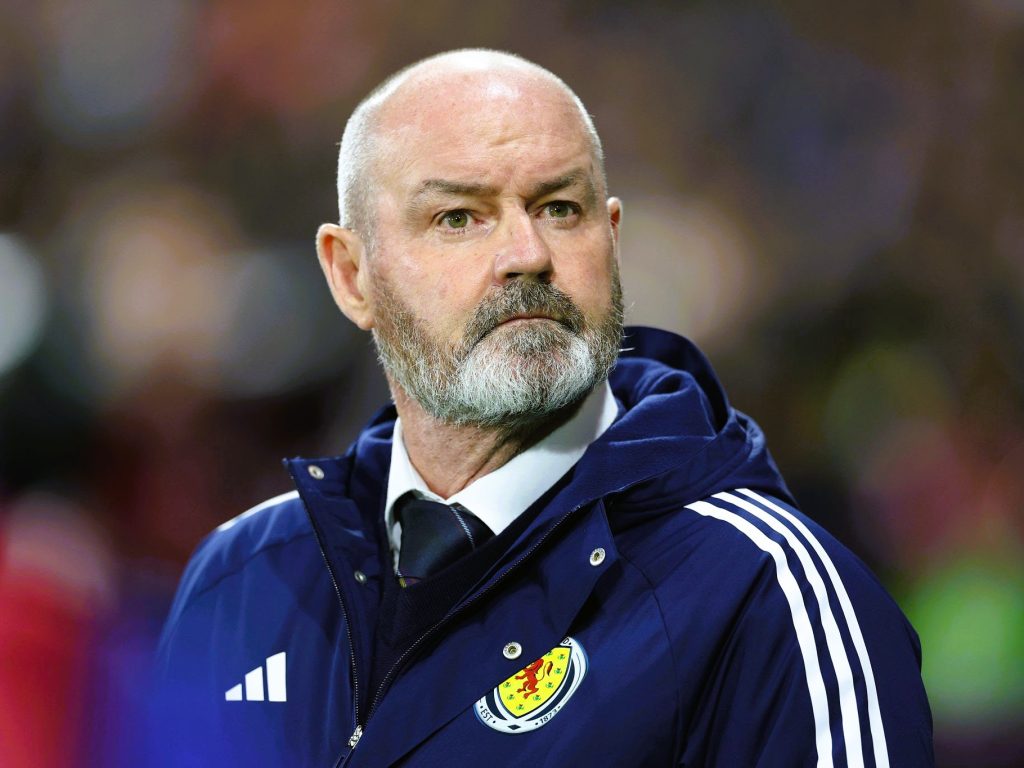
The Scotland national team is led by Steve Clarke, the strategic architect behind the country’s modern football renaissance.
Since his appointment in May 2019, Clarke has broken decades of “glorious failure”, becoming the first manager to guide Scotland to three major tournaments – Euro 2020, Euro 2024, and the upcoming North American Championship.
Clarke typically uses a 3-5-2 or 4-3-3 formation, focusing on compact defence, quick counterattacks, and set-piece exploitation.
Key Players to Watch
Scott McTominay (Midfielder/Forward, SSC Napoli)
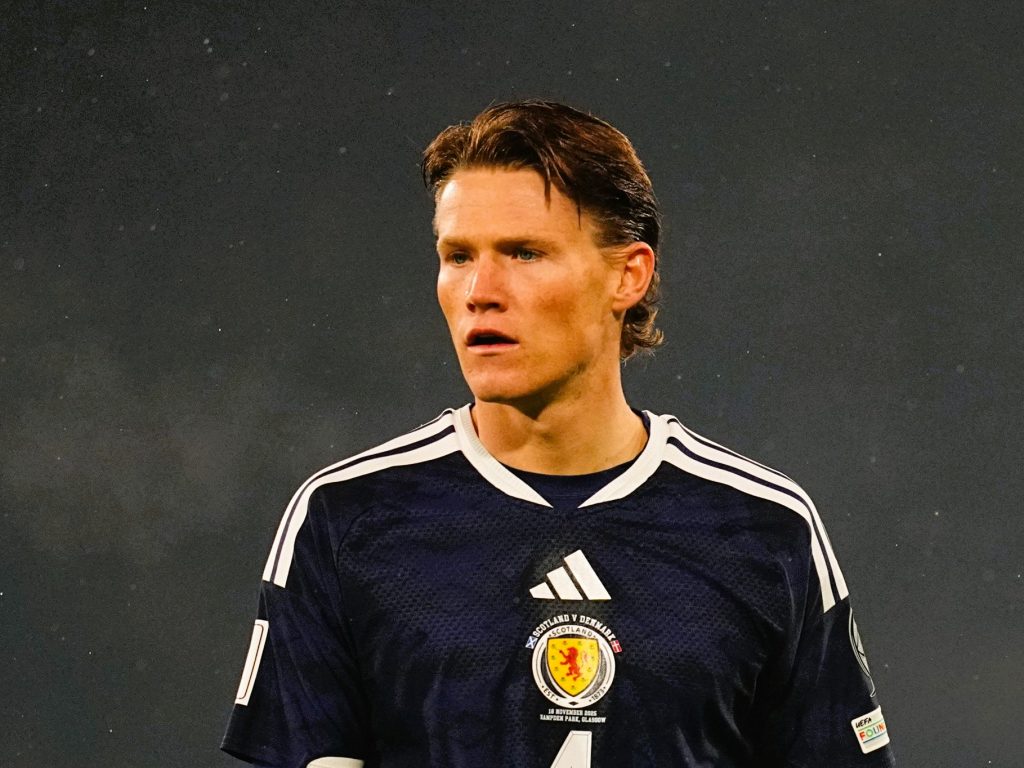
There is no better example of Scotland’s attacking midfielder than Scott McTominay. In Steve Clarke’s 4-1-4-1, he is an attacking midfielder who will have almost complete license to abandon defensive duties and enter the penalty area as a second striker.
His late arrivals are Scotland’s most reliable source of goals; defenders who switch off for even a second will find the Napoli midfielder rising above them or finishing off loose balls.
McTominay is Scotland’s primary weapon, and he enters every game looking for the moment when the opposition forgets he is there.
Andrew Robertson (Defender, Liverpool)

Andy Robertson’s role for Scotland is simultaneously simple and impossibly demanding: to attack relentlessly, defend flawlessly, and never let the weight of history break his composure.
As a left-back, he is Scotland’s only truly world-class outlet in transition. His overlapping runs deeply challenge right-wingers; his crossing accuracy turns routine possession into a real threat.
This is almost certainly his last World Cup, and he intends to spend every minute of the run.
John McGinn (Midfielder, Aston Villa)
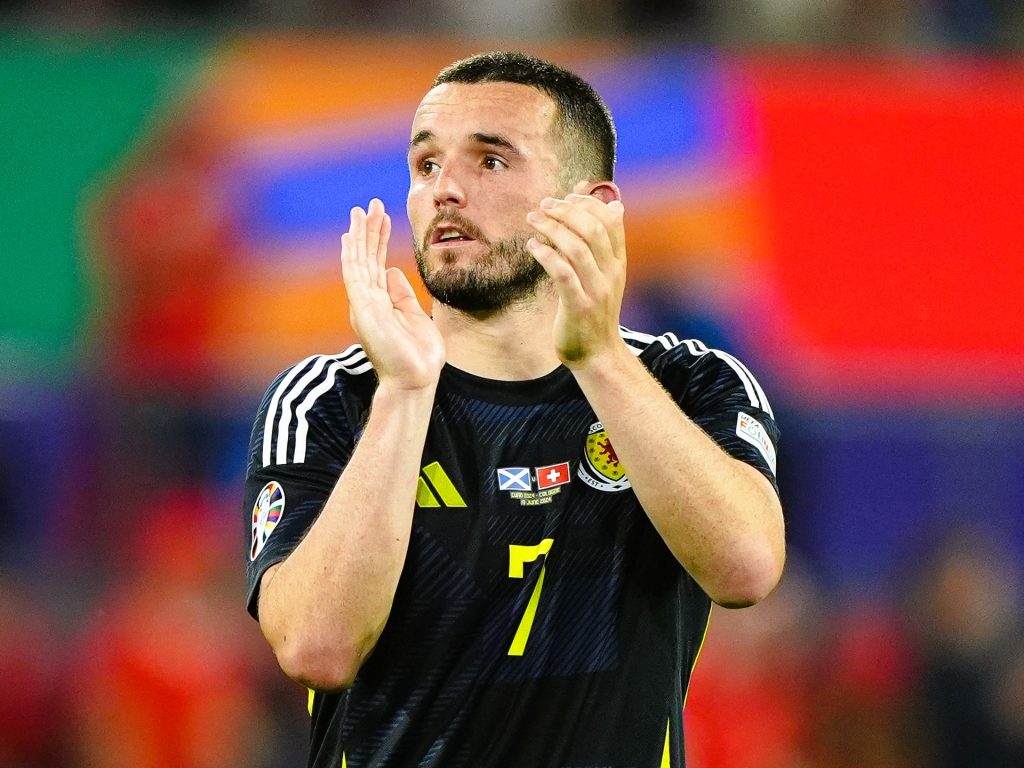
John McGinn is Scotland’s emotional and tactical anchor. Deployed as a central midfielder with a license to carry the ball and attack the left half-space, he draws fouls with an almost comical efficiency—18 in six qualifying matches, the most in the team.
When Scotland are under pressure, the instruction is simple: give it to McGinn, and he will win a free kick. Timed to meet Andy Robertson’s crosses, his slow runs to the back post leave opposition full-backs responsible for two incoming midfielders instead of one.
Scotland Schedule – 2026 FIFA World Cup
Group Stage Fixtures
June 13, 2026: Haiti vs. Scotland
June 19, 2026: Scotland vs. Morocco
June 24, 2026: Scotland vs. Brazil
Scotland Squad – 2026 FIFA World Cup
This is a projected squad based on recent selections and form; final roster to be confirmed closer to the tournament.
Goalkeepers
- Craig Gordon (Hearts)
- Liam Kelly (Rangers)
- Scott Bain (Falkirk)
Defenders
- Andy Robertson (Liverpool)
- Aaron Hickey (Brentford)
- Kieran Tierney (Celtic)
- Jack Hendry (Al-Ettifaq)
- Grant Hanley (Hibernian)
- Scott McKenna (Las Palmas)
- John Souttar (Rangers)
- Anthony Ralston (Celtic)
Midfielders
- Scott McTominay (Napoli)
- John McGinn (Aston Villa)
- Billy Gilmour (Napoli)
- Kenny McLean (Norwich City)
- Ryan Christie (Bournemouth)
- Lewis Ferguson (Bologna)
- Callum McGregor (Celtic)
Forwards
- Lawrence Shankland (Hearts)
- Che Adams (Torino)
- Lyndon Dykes (Birmingham City)
- Kevin Nisbet (Aberdeen)
- Ben Doak (Liverpool)
Scotland World Cup 2026 Preview
Team Strengths and Weaknesses
Scotland will not only be a resilient, tactically disciplined team at the 2026 FIFA World Cup, but also one of the most productive goal-scoring midfields in Europe, particularly around Scott McTominay (SSC Napoli).
Captains Andy Robertson (Liverpool) and John McGinn (Aston Villa) provide world-class leadership and a “club-like” atmosphere. Their “left-sided overload” will be the hallmark of Clarke’s 3-4-2-1 system, which proved capable of crushing top-tier opponents such as Spain and Denmark during qualifying.
The team has demonstrated a “never-say-die” attitude, for example, scoring two stoppage-time goals to secure an automatic passage to the finals. The current Scotland squad is renowned for not collapsing or panicking under pressure.
Scotland face a race against time for many starters. John McGinn is currently sidelined after knee surgery, and Billy Gilmour (SSC Napoli) is recovering from groin surgery. The loss of these “engine room” players could seriously affect their tactical fluidity.
Scotland hold the record for the most World Cup appearances (8) without reaching the knockout stages. This historic weight, coupled with their failure to win a game in the last two European Championships, has become a psychological barrier.
While experience is a strength, reliance on older players, such as veteran goalkeeper Craig Gordon, could raise concerns about physical fitness in a high-intensity, month-long competition in the North American summer.
Expectations and Tournament Outlook
Scotland will be in North America with a load of history and renewed ambition. After a 28-year absence, the primary expectation for the Tartan Army will be to finally break their “group stage curse” – their record for most World Cup appearances (8) without reaching the knockout stages.
With the competition expanding to 48 teams, including a new round of 32, there is a strong belief that this “golden generation” can finally make history.
Manager Steve Clarke and the Scottish FA have identified reaching the round of 32 as the minimum objective. With eight of the twelve best third-placed teams now progressing, a single win in the group stage could be enough to see Scotland advance to the knockout stages for the first time.
Following disappointing winless exits at Euro 2020 and Euro 2024, it will be up to manager Steve Clarke to see if Scotland can put in a strong performance in North America.
Scotland face a challenging but insurmountable road ahead in Group C. Against Haiti (June 14), no team should be underestimated, but a win here is essential for Scotland’s qualification hopes.
Against Morocco (June 20) will be a tactical battle for manager Steve Clarke. The 2022 semi-finalists and 2024 AFCON champions provide a tough physical test. A draw here would be a huge success.
Underdog Test Scotland have never beaten Brazil in 10 attempts. A draw against Brazil (June 25) would be a great achievement.
If Scotland defy the odds and progress from Group C, their next opponents will depend on their final standings.
If Scotland progress from Group C as winners, they will face the Group F runners-up and if they progress as runners-up, they will face the Group F winners (likely the Netherlands or Japan).
If Scotland advances with a best-of-three finish, they will face the winners from several groups (A, B, D, E, G, I, K, or L).