



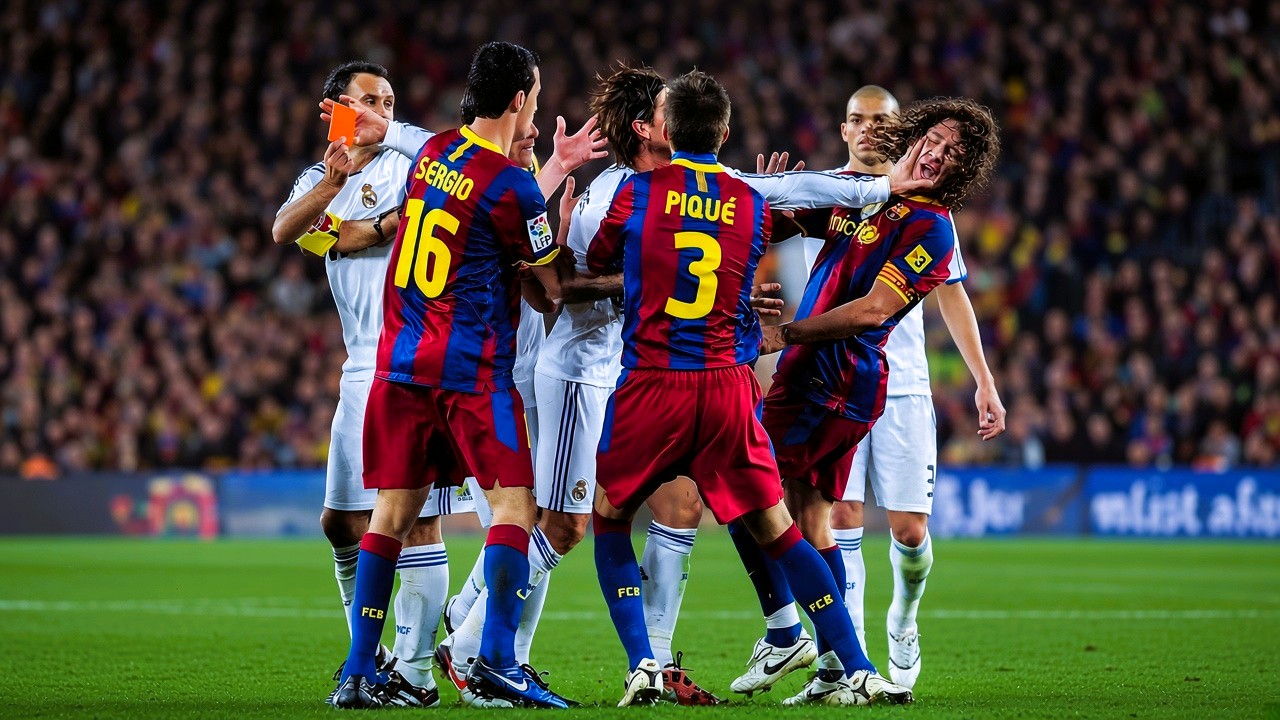

El Clásico is the meeting between FC Barcelona and Real Madrid, two of the most successful clubs in Spanish football.
Their rivalry stretches back to 1902 and has been shaped by domestic title races, European competition, legendary players and a complex cultural history.
The fixture has produced defining moments across generations, from Alfredo Di Stéfano’s era at Real Madrid to the Lionel Messi–Cristiano Ronaldo rivalry and Barcelona’s 6–2 victory at the Santiago Bernabéu in 2009.
But El Clásico is more than a collection of famous scorelines. Its significance comes from the clubs’ long competition for trophies, their distinct identities and the players who have repeatedly turned their meetings into major football occasions.
This guide explores El Clásico’s history, head-to-head record, biggest victories, leading goalscorers and most memorable matches. Statistics are updated through 10 May 2026 unless otherwise stated.
What Is El Clásico?
El Clásico, or El Clàssic in Catalan, simply means “the classic.” It refers to any match between Barcelona and Real Madrid.
The term originally applied mainly to league games but now covers every competitive meeting, including LaLiga, the Copa del Rey, the Supercopa de España and the UEFA Champions League. Each of these meetings counts as El Clásico.
The fixture sits at the centre of Spanish football. Both clubs rank among the most successful and valuable in the world. Their meetings regularly decide domestic titles and have produced some of the highest-profile European ties.
When Was the First El Clásico Played?
The clubs first met on 13 May 1902. The match was played in the Copa de la Coronación, an unofficial tournament held to celebrate the coronation of King Alfonso XIII. The match was played at the Hipódromo in Madrid.
Barcelona won 3-1. Joan Gamper, the club’s Swiss-born founder, was among the scorers. Madrid’s goal came from Arthur Johnson.
The club known as Madrid FC did not become Real Madrid until 1920. So the 1902 meeting took place before the name that most fans use today existed.
The 1902 match is generally recognized as the first meeting between the clubs. It was not a league game. It came almost three decades before the first LaLiga meeting.
The two clubs first met in LaLiga on 17 February 1929. LaLiga itself was founded that year, so the 1929 match is the first in the competition that now defines Spanish league football.
Early meetings were not treated as a grand rivalry at the time. Contemporary coverage focused on the tournaments and the teams’ local standing. The fixture’s stature grew over decades rather than appearing in 1902.
How the Barcelona-Real Madrid Rivalry Developed
The rivalry grew alongside Spanish league football. LaLiga’s creation in 1929 gave the clubs a regular stage to meet each season.
Both clubs competed for domestic titles and, later, for European trophies. That competition created a steady supply of high-stakes matches.
The 1950s brought one of the fixture’s most debated episodes. Alfredo Di Stéfano, the Argentine forward, was the subject of a transfer dispute between Barcelona, Real Madrid and other clubs.
The affair was resolved in Real Madrid’s favour, and Di Stéfano went on to become one of the club’s greatest players.
The Franco era added a political dimension. Catalonia’s identity and its language were restricted during Franco’s regime.
Barcelona came to symbolize Catalan identity for many supporters. Real Madrid was associated with the Spanish state by many observers.
That context is real, but it should not be overstated. Supporters of both clubs have held a wide range of political views. Many fans see the match first as a football contest.
Star players, managers and controversial matches have also shaped the rivalry. Television broadcasting then carried the fixture to a global audience, which increased its profile further.
Barcelona vs Real Madrid Head-to-Head Record
Head-to-head totals vary according to which matches a source includes. The figures below follow a competitive-match tally covering LaLiga, the Copa del Rey, the Spanish Super Cup, the Copa de la Liga, the UEFA Champions League and the 1902 Copa de la Coronación.
Because the 1902 tournament was unofficial, this methodology should not be confused with a record limited strictly to officially sanctioned competitions.
| Statistic | Barcelona | Real Madrid |
|---|---|---|
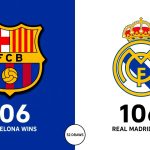
| Wins in all official competitive meetings | 106 | 106 |
| Draws in all official competitive meetings | 52 | |
| LaLiga wins | 77 | 80 |
| LaLiga draws | 35 | |
| Goals in all official competitive meetings | 441 | 444 |
| LaLiga goals | 312 | 309 |
These figures are updated through 10 May 2026, when Barcelona defeated Real Madrid 2–0. Other statistical sources may report different totals because their historical counting methods differ.
Who Has Won More El Clásico Matches?
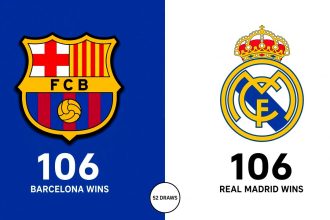
In official competitive matches the clubs are level on 106 wins each, with 52 draws. Real Madrid hold a narrow advantage in LaLiga (80 wins to 77). Barcelona have the edge in the Copa del Rey.
Counting method changes the answer. Some tallies have shown Barcelona ahead at different points in the rivalry’s history. The lead has moved back and forth over many decades.
A narrow lead in meetings does not settle which club has been more successful. Trophy counts, European titles and league titles tell a different part of the story.
The Biggest El Clásico Wins
Real Madrid recorded the biggest victory in El Clásico’s competitive history when they defeated Barcelona 11–1 on 13 June 1943 in the second leg of a Copa del Generalísimo semi-final, the competition now known as the Copa del Rey. Barcelona had won the first leg 3–0, but Real Madrid advanced 11–4 on aggregate.
| Date | Home team | Score | Competition | Context |
|---|---|---|---|---|
| 13 June 1943 | Real Madrid | 11–1 | Copa del Rey | Largest margin of victory |
| 3 February 1935 | Real Madrid | 8–2 | LaLiga | Four goals from Fernando Sañudo |
| 24 September 1950 | Barcelona | 7–2 | LaLiga | Barcelona’s biggest league win |
| 19 May 1957 | Barcelona | 6–1 | Copa del Rey | Second-leg victory |
| 18 September 1949 | Real Madrid | 6–1 | LaLiga | Home thrashing |
| 29 November 2010 | Barcelona | 5–0 | LaLiga | Guardiola’s side at peak form |
| 7 January 1995 | Real Madrid | 5–0 | LaLiga | Zamorano hat-trick |
| 8 January 1994 | Barcelona | 5–0 | LaLiga | Romário hat-trick under Cruyff |
Barcelona’s 5–0 victory over Real Madrid on 29 November 2010 was one of Pep Guardiola’s defining wins as manager. Xavi, Pedro, David Villa (twice) and Jeffren scored as Barcelona dominated a match that became a landmark of Guardiola’s era.
Real Madrid’s 5–0 win in January 1995 and Barcelona’s 5–0 victory in November 2010 are two of the rivalry’s best-known league results. Both produced the same scoreline, but they came in different eras and under very different teams and managers.
A list of the biggest wins can change with the rules. Friendlies, historical unofficial competitions and cup matches each produce different answers.
The Highest-Scoring El Clásico Matches
High-scoring matches have become part of the fixture’s reputation. They are often remembered as much for their attacking quality as for their results.
| Score | Date | Competition | Note |
|---|---|---|---|
| 6–6 | 13 April 1916 | Copa del Rey | 6–6 after extra time in a Copa del Rey semi-final replay. |
| 11–1 | 19 June 1943 | Copa del Rey | Largest winning margin |
| 8–2 | 3 February 1935 | LaLiga | Ten goals in a league match |
| 5–5 | 10 January 1943 | LaLiga | High-scoring league draw |
| 7–2 | 24 September 1950 | LaLiga | Nine goals |
| 2–6 | 2 May 2009 | LaLiga | Modern classic at the Bernabéu |
Barcelona’s 6–2 victory at the Santiago Bernabéu on 2 May 2009 remains one of the defining matches of the modern rivalry. The result strengthened Barcelona’s position in the LaLiga title race and demonstrated the attacking quality of Pep Guardiola’s side.
These matches show how dramatically the rivalry has swung between close contests and extraordinary scorelines. For a complete ranking, the competition and match type must be defined consistently.
El Clásico All-Time Top Scorers
Lionel Messi is the fixture’s all-time leading scorer. Figures from beIN Sports list him with 26 goals in all competitive meetings.
Cristiano Ronaldo and Alfredo Di Stéfano are next, with 18 goals each in the same tally. Messi’s total is eight goals ahead of that pair.
| Rank | Player | Club(s) | Goals |
|---|---|---|---|
| 1 | Lionel Messi | Barcelona | 26 |
| 2 | Alfredo Di Stéfano | Real Madrid | 18 |
| 2 | Cristiano Ronaldo | Real Madrid | 18 |
| 4 | Karim Benzema | Real Madrid | 16 |
| 5 | Raúl | Real Madrid | 15 |
| 6 | César Rodríguez | Barcelona | 14 |
| 6 | Paco Gento | Real Madrid | 14 |
| 6 | Ferenc Puskás | Real Madrid | 14 |
Messi’s total includes 18 LaLiga goals, six in the Supercopa and two in the Champions League. These figures exclude friendlies and are current as of May 2026.
These totals cover all competitive meetings. LaLiga-only totals differ and must not be mixed with them. Those figures should be verified against LaLiga’s official statistics before publication.
Lionel Messi vs Cristiano Ronaldo in El Clásico
From 2009 to 2018 the personal duel between Messi and Ronaldo became a central storyline. Their careers overlapped at both clubs’ peaks.
Messi was a playmaker and goalscorer who often drifted inside from the right. Ronaldo was a direct attacker who relied on pace and power in front of goal.
The pressure surrounding their meetings was intense. Each match carried the weight of the league title race, cup competitions or European progress.
Ronaldo left Real Madrid in 2018. The rivalry changed after that, though El Clásico remained one of the most closely followed fixtures.
Their rivalry drew global attention, but it was not the only reason. Team strength, trophies and the clubs’ histories also played a major part.
Barcelona vs Real Madrid Beyond El Clásico
The clubs compete for more than the head-to-head record. Their trophy cabinets, European success and youth systems all feed the rivalry.
Both clubs have attracted elite managers and players. Transfer battles have often been as heated as the matches on the pitch.
Real Madrid leads the historical record in European Cup and UEFA Champions League titles, while Barcelona has also enjoyed major success in domestic competitions.
Comparing overall trophy totals requires a consistent definition of which competitions count. A separate Barcelona vs Real Madrid trophies guide can examine those differences in detail.
Frequently Asked Questions About El Clásico
What does El Clásico mean?
El Clásico means “the classic” in Spanish. It is the name for matches between Barcelona and Real Madrid.
When was the first El Clásico played?
The first meeting was on 13 May 1902, in the Copa de la Coronación.
Which team won the first El Clásico?
Barcelona won that first match 3-1.
When was the first Barcelona vs Real Madrid match in LaLiga?
The first LaLiga meeting was on 17 February 1929. It was not the first meeting between the clubs.
Which club has won more El Clásico matches?
In official competitive matches the clubs are tied on 106 wins each (as of 10 May 2026).
Who has scored the most goals in El Clásico?
Lionel Messi with 26 goals in official competitive matches.
What was the biggest El Clásico win?
Real Madrid 11-1 Barcelona on 19 June 1943 in the Copa del Rey.
How many times do Barcelona and Real Madrid play each season?
They meet twice in LaLiga. Additional matches occur if they are drawn together in the Copa del Rey, Supercopa or European competition.
Is El Clásico played only in LaLiga?
No. The term covers all competitive meetings between the clubs.
Why are Barcelona and Real Madrid rivals?
They are the two most successful clubs in Spain. They have competed for titles for more than a century, and political and regional identities have added to the rivalry.
Conclusion
From the first meeting in 1902 to the modern contest between two global football powers, El Clásico has evolved through changing generations of players, managers and teams.
Its history includes extraordinary scorelines, major title battles and a rivalry shaped by both football and cultural identity. The head-to-head record captures part of that story, but the significance of El Clásico extends far beyond the numbers.
