

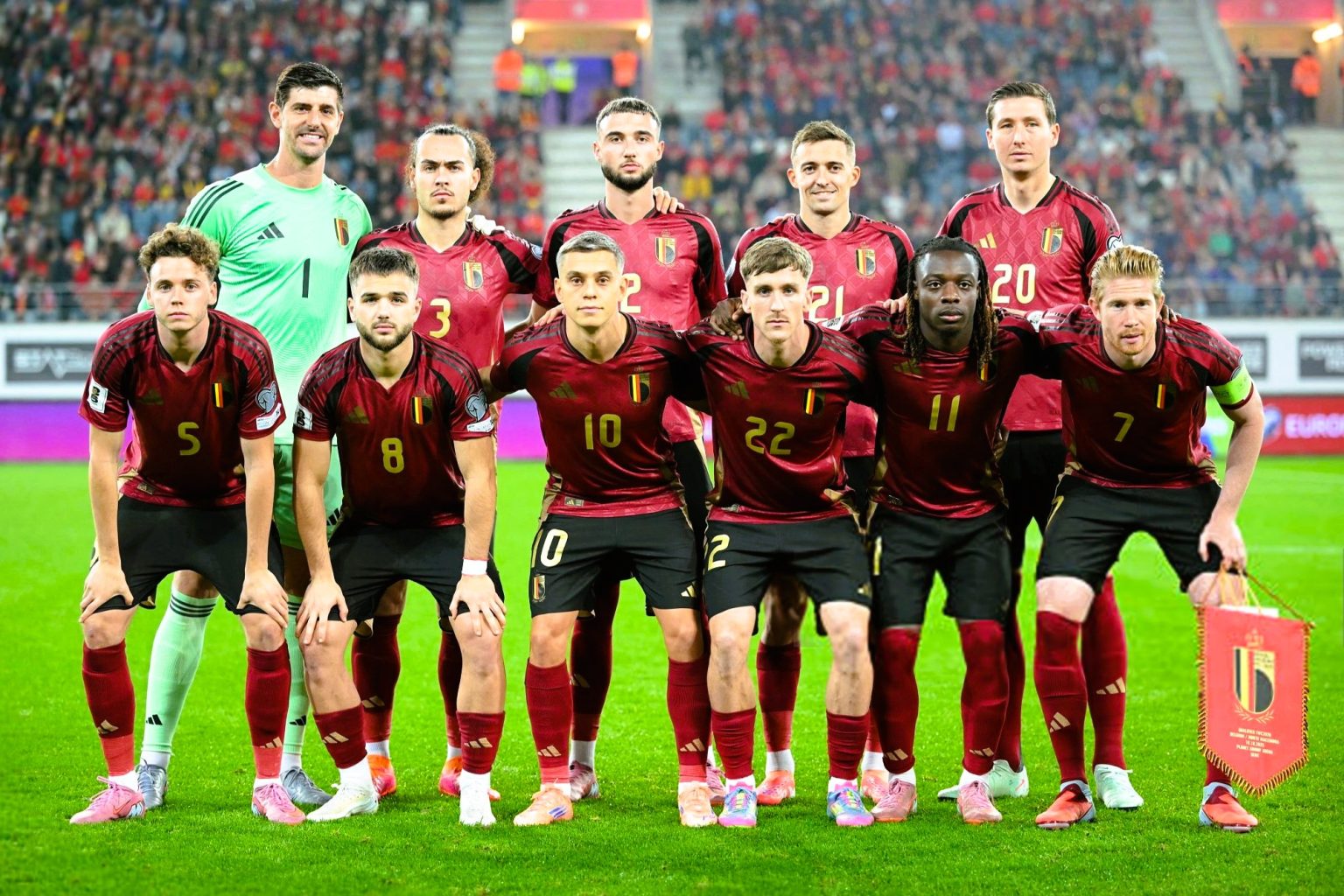
Belgium, drawn in Group G alongside Egypt, Iran, and New Zealand for the upcoming tournament in North America, arrive with a familiar question hanging over them: are they still the golden generation — or have they already become something else entirely?
For the better part of a decade, Belgium entered every major tournament carrying the weight of the world’s No. 1 ranking, a constellation of Premier League superstars, and the quiet, gnawing belief that this time — surely this time — they would finally deliver.
As Belgium prepare for the 2026 FIFA World Cup, co-hosted by Canada, Mexico, and the United States, the narrative has shifted. The expanded 48-team tournament will conclude on July 19, 2026, at MetLife Stadium in New York/New Jersey, but for Belgium, the bigger question remains whether this squad can redefine its legacy on football’s biggest stage.
Below, we take a closer look at Belgium at the 2026 FIFA World Cup, including the squad, key players, head coach, tournament history, and a complete preview of their ambitions and expectations.
Road to the 2026 World Cup
Belgium officially qualified for the 2026 FIFA World Cup by going undefeated in UEFA qualifying Group J. They secured automatic qualification by beating Liechtenstein 7–0 on the final matchday, finishing in first place ahead of Wales.
This qualification will be Belgium’s fourth consecutive World Cup appearance and their 15th overall. After a series of coaching changes and a disappointing Euro 2024 campaign, Belgium have found stability under Garcia, winning five of their eight qualifying matches and drawing three.
They held off a strong challenge from Wales, notably to claim the group’s sole automatic qualification slot, with 18 points and a goal difference of +22.
World Cup Titles and Best Performances
Belgium has never won a FIFA World Cup title, with their best-ever performance being a third-place finish at the 2018 World Cup in Russia. During that historic campaign, the “Golden Generation” defeated England 2–0 in the third-place play-off to secure the nation’s first-ever podium finish. This surpassed their previous record of fourth place achieved at the 1986 World Cup in Mexico, where they were famously eliminated in the semi-finals by a Diego Maradona-led Argentina.
World Cup Performance by Year:
1930 (Group Stage),1934 (Round of 16), 1938 (Round of 16), 1954 (Group Stage), 1970 (Group Stage), 1982 (Second Group Stage), 1986 (Fourth Place), 1990 (Round of 16), 1994 (Round of 16), 1998 (Group Stage), 2002 (Round of 16), 2014 (Quarter-finals), 2018 (Third Place), 2022 (Group Stage)
Belgium Coach and Key Players
Head Coach Profile
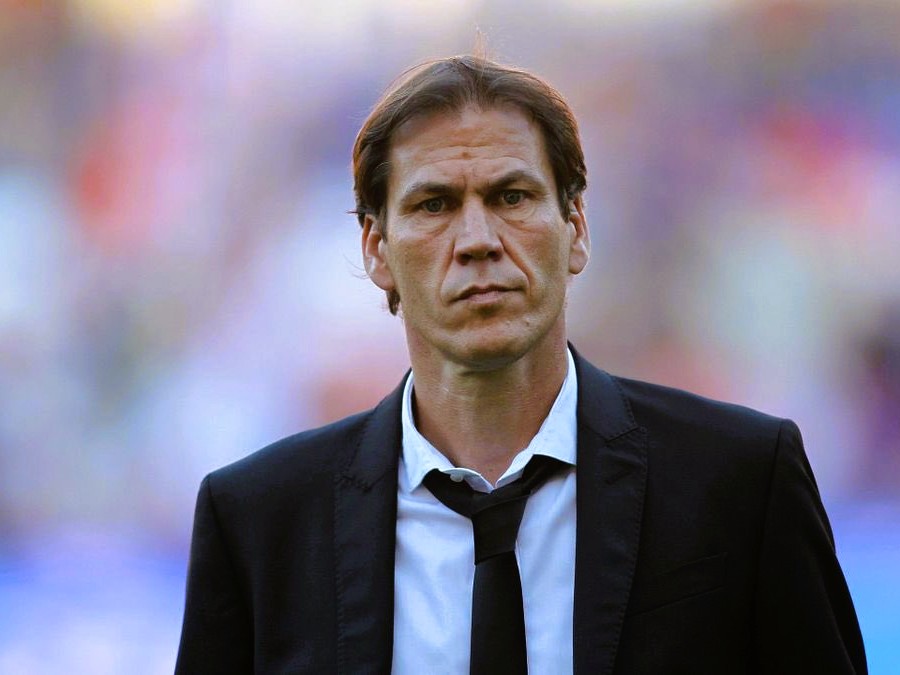
The Belgian national team is led by veteran French tactician Rudi Garcia. Appointed in January 2025 to stabilise the Red Devils following the departure of Domenico Tedesco, Garcia has successfully weathered a period of great pressure to secure Belgium’s place at the 2026 FIFA World Cup.
Garcia arrives with a distinguished pedigree in European club football, most notably leading Lille OSC to a historic Ligue 1 title in 2011.
His experience managing high-profile dressing rooms at clubs such as AS Roma, Olympique Lyonnais and Napoli has proven invaluable in managing the transition of Belgium’s “Golden Generation”.
The Belgians, who have been making the transition from veterans to youth, are known for their possession play and counter-attacking. For starters, Garcia often uses a flexible 3-4-2-1 or 4-2-3-1, emphasizing high pressing, midfield dominance, and the exploitation of wide areas with dynamic wingers.
Key Players to Watch
Kevin De Bruyne (Midfielder, Napoli )
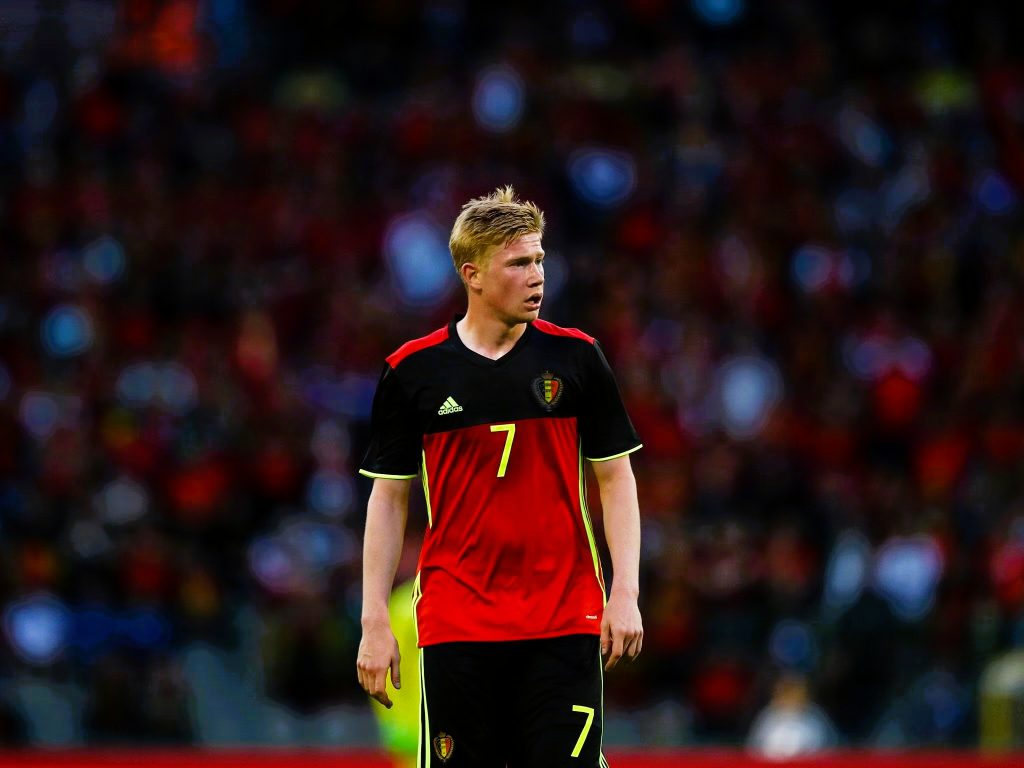
Even at 34, De Bruyne is the undisputed brain of the Belgian team. His 115 caps span three World Cups and countless continental campaigns.
The national captain has transformed his game into a more controlling role under Rudi Garcia, acting as the team’s tactical “quarterback.”
His passing range – that impossibly weighted delivery that seems to lean into the right stride of a runner – is unmatched in this team.
Jérémy Doku (Winger, Manchester City)
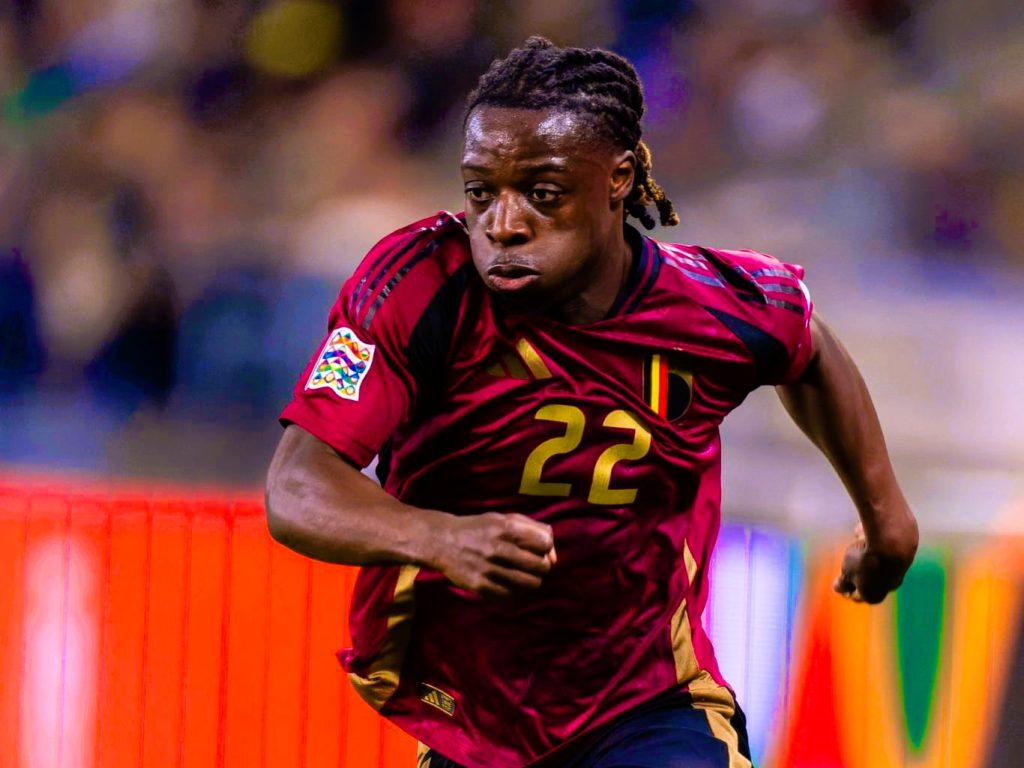
Watch Jérémy Doku for five minutes, and you’ll understand why Belgium still believes. The Manchester City winger has developed into one of the most feared 1v1 specialists in world football.
The Manchester City winger isn’t just fast; he’s also unstoppable, a player whose low centre of gravity and explosive acceleration force defenders to make decisions they know are wrong the moment they make them.
In Garcia’s system, Doku is the primary outlet for quick transitions, tasked with isolating the full-backs and creating goal-scoring opportunities for the central forwards.
If Belgium surpasses expectations in North America, it will almost certainly be because Jeremy Doku has made elite defenders look ordinary.
Thibaut Courtois (Goalkeeper, Real Madrid)
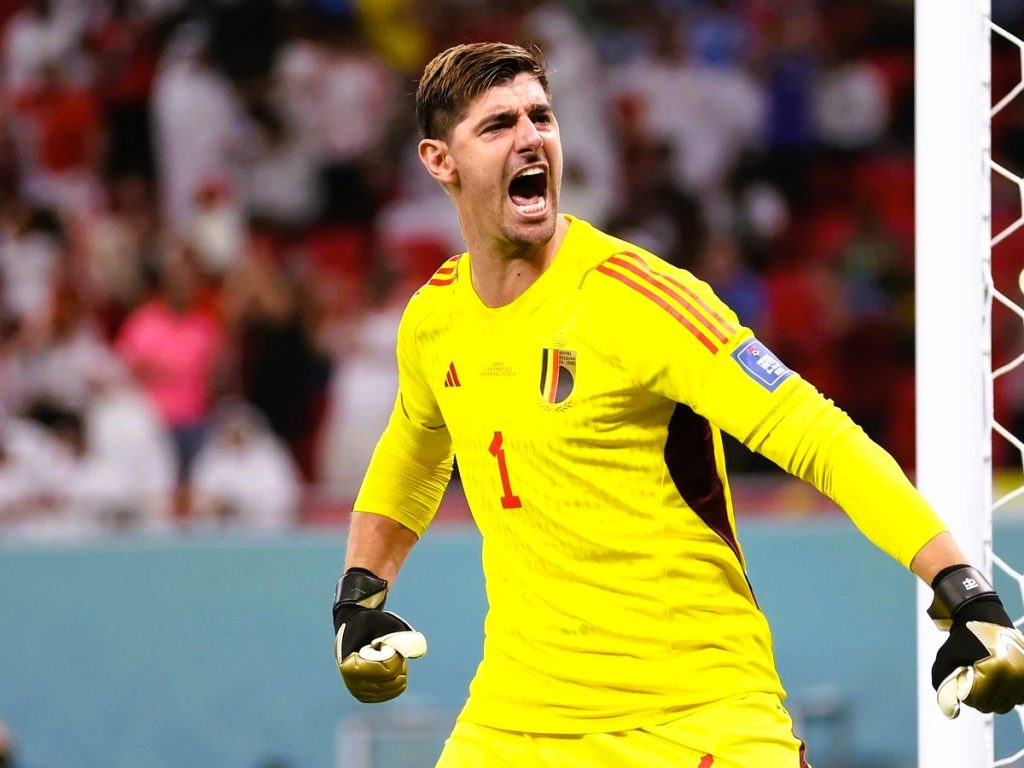
Considered one of the greatest shot-stoppers in history, the Real Madrid star is an impenetrable wall for Belgium. Thibaut Courtois will be at his fourth World Cup with 107 caps, the 2018 Golden Glove, and the calm, unwavering authority of a goalkeeper who has won everything at club level.
His “clutch” ability in knockout football and his command of the penalty area will be essential for a Belgian defense currently undergoing a generational change.
Strikers facing Courtois understand that the angles they thought they would have missed have somehow been lost. For a team with defensive weaknesses, Courtois is not an asset; he is an insurance policy against disaster.
Belgium Schedule – 2026 FIFA World Cup
Group Stage Fixtures
June 15, 2026: Belgium vs. Egypt
June 21, 2026: Belgium vs. Iran
June 26, 2026: New Zealand vs. Belgium
Belgium Squad – 2026 FIFA World Cup
This is subject to fitness and final FIFA submission deadlines and form; final roster to be confirmed closer to the tournament.
Goalkeepers
- Thibaut Courtois (Real Madrid)
- Matz Sels (Nottingham Forest)
- Maarten Vandevoordt (RB Leipzig)
- Senne Lammens (Antwerp)
Defenders
- Timothy Castagne (Fulham)
- Thomas Meunier (Lille)
- Zeno Debast (Sporting CP)
- Arthur Theate (Eintracht Frankfurt)
- Koni De Winter (AC Milan)
- Maxim De Cuyper (Club Brugge)
- Brandon Mechele (Club Brugge)
- Wout Faes (Leicester City)
Midfielders
- Kevin De Bruyne (Napoli)
- Amadou Onana (Aston Villa)
- Youri Tielemans (Aston Villa)
- Axel Witsel (Atlético Madrid)
- Charles De Ketelaere (Atalanta)
- Hans Vanaken (Club Brugge)
- Orel Mangala (Lyon)
Forwards
- Romelu Lukaku (Napoli)
- Jérémy Doku (Manchester City)
- Loïs Openda (RB Leipzig)
- Leandro Trossard (Arsenal)
- Dodi Lukebakio (Sevilla)
- Johan Bakayoko (PSV Eindhoven)
- Michy Batshuayi (Galatasaray)
Belgium World Cup 2026 Preview
Team Strengths and Weaknesses
They are the team that spent seven years at the top of the FIFA rankings and never returned home with a trophy. Now they will be at the 2026 FIFA World Cup as a team in the midst of a generational transition, a formidable threat with a potent mix of established superstars and explosive young talent.
Their “golden generation” has faded, with the team finding new life in a high-intensity 4-3-3 or 4-2-3-1 system that prioritizes technical mastery and quick wide attacks.
Despite moving to SSC Napoli, captain Kevin De Bruyne remains the team’s brains and heart, leading the way with assists and dictating tempos from midfield.
The emergence of Jérémy Doku (Manchester City) and Johan Bakayoko has given Belgium an unrivalled 1v1 threat on the flanks, forcing opponents into deep defensive blocks.
With Thibaut Courtois (Real Madrid), Belgium have a world-class anchor capable of delivering match-winning heroics in high-pressure knockout scenarios.
Belgium’s aggressive high line has sometimes left them vulnerable to quick counter-attacks, especially against teams that can exploit the pace of aging central defenders.
While the starting eleven has been excellent, injuries to key anchors such as Amadou Onana have previously exposed a lack of intensity comparable to that in the reserve ranks.
Most of the “new generation” are playing in their first major global tournament as starters, and their ability to handle the psychological pressure of the later rounds has yet to be tested.
Expectations and Tournament Outlook
Belgium will be the heavy favourites to win Group G at the 2026 FIFA World Cup, hoping to regain their status as a global powerhouse after a disappointing group stage exit in 2022.
The Red Devils are seen as a formidable “dark horse” capable of making a deep run in the competition, if their transitional squad can blend experienced leadership with emerging stars.
After finishing third in 2018, the “minimum” target for this cycle is to reach the quarter-finals to prove the success of their generational transition under manager Rudi Garcia.
A key variable in their approach is the fitness of their creative pillars. Charles de Keteler’s partial meniscus tear could keep him out for a significant period, while Kevin De Bruyne continues his recovery from a long-term thigh injury, with a return expected in March.
As the top seed in Group G, Belgium’s progression path will be strategically favourable. If they win Group G, they will face the third-placed team from Groups A, E, H, I, or J in the Round of 32.
If they finish second, they will face a much tougher test against the runner-up from Group D (which includes the United States).