

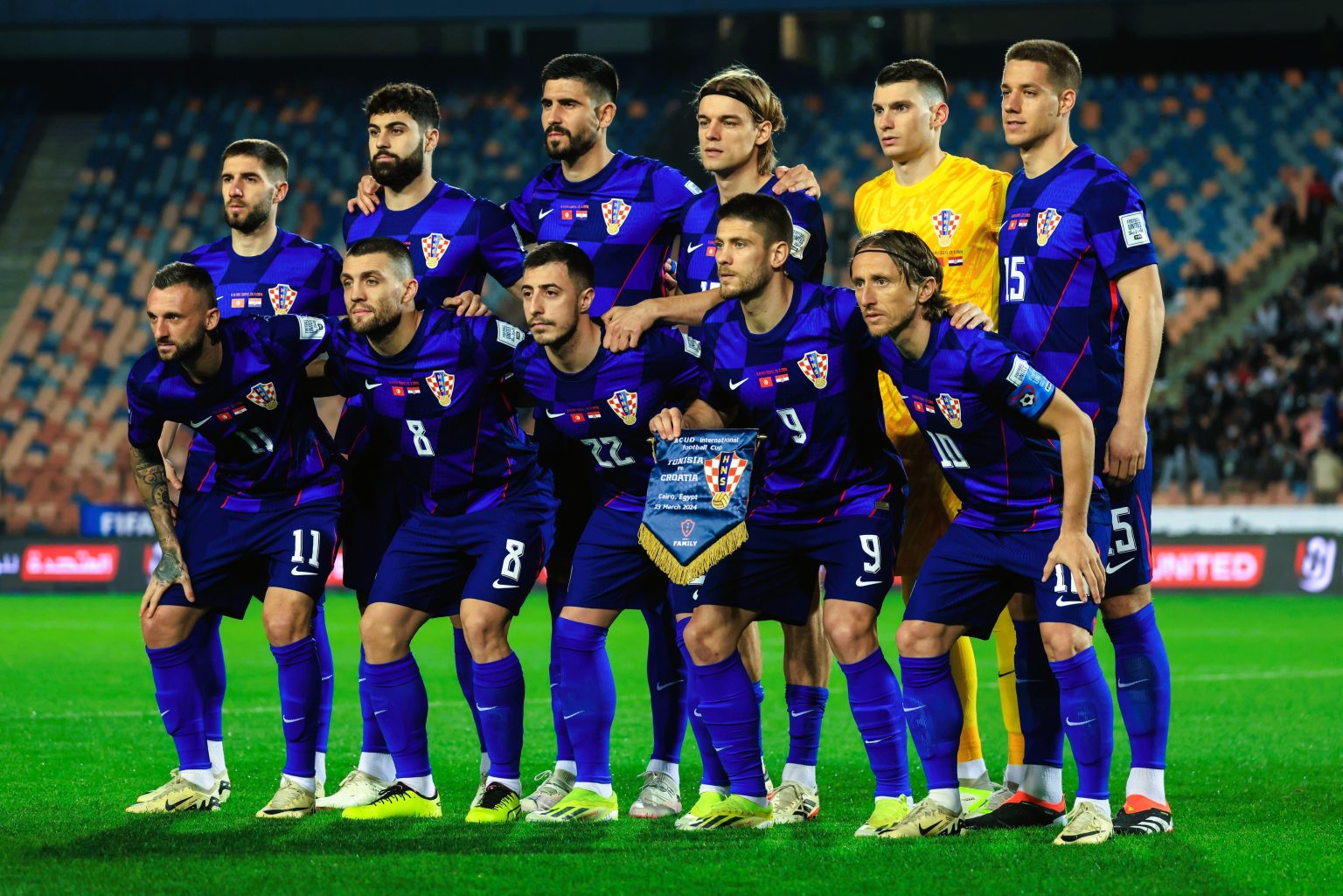
A nation with a population of less than four million has repeatedly appeared on football’s grandest stage — and left a lasting mark. That nation is Croatia.
Can Croatia once again defy football’s laws of gravity, or will the 2026 World Cup represent the final, dazzling sunset of a golden generation that stayed at the peak just a moment too long?
Croatia will enter the 2026 FIFA World Cup as one of international football’s most resilient forces. They have been drawn into Group L alongside England, Ghana, and Panama.
Co-hosted by Canada, Mexico, and the United States, the expanded 48-team tournament will run from June 11 to July 19, 2026, with the final staged at MetLife Stadium. Croatia will open their campaign against England on June 17, 2026, at AT&T Stadium.
Below, we take a closer look at Croatia at the 2026 FIFA World Cup, including the squad, key players, head coach, tournament history, and a complete preview of their ambitions and expectations.
Qualification for 2026
Croatia qualified directly by topping UEFA Group L with an unbeaten record: 7 wins, 1 draw, 0 losses, scoring 26 goals and conceding just 4.
They sealed their spot on November 14, 2025, with a 3-1 victory over the Faroe Islands, finishing ahead of the Czech Republic (who entered the playoffs).
History
The Croatia national football team has not won the World Cup, but has emerged as one of the most successful teams in recent World Cup history.
Since debuting in 1998, they have achieved podium finishes in three of the last six tournaments (missing out only in 2010): third in 1998, runner-up in 2018 (losing 4-2 to France in the final), and third in 2022 (beating Morocco 2-1 in the bronze medal match).
Their overall World Cup record includes 19 wins, 8 draws, and 10 losses in 37 matches, with 57 goals scored and 42 conceded.
This marks their seventh appearance in 2026, continuing a streak of four consecutive qualifications.
Here’s a summary of their past performances:
| Year | Stage Reached | Key Result |
|---|---|---|
| 1998 | Third place | Won third-place match 2-1 vs Netherlands |
| 2002 | Group stage | Eliminated with 1 win, 2 losses |
| 2006 | Group stage | Eliminated with 2 draws, 1 loss |
| 2014 | Group stage | Eliminated with 1 win, 2 losses |
| 2018 | Runners-up | Lost final 4-2 to France |
| 2022 | Third place | Won third-place match 2-1 vs Morocco |
| 2026 | TBD | TBD |
Croatia Coach and Key Players
Head Coach
Zlatko Dalić (October 2017)
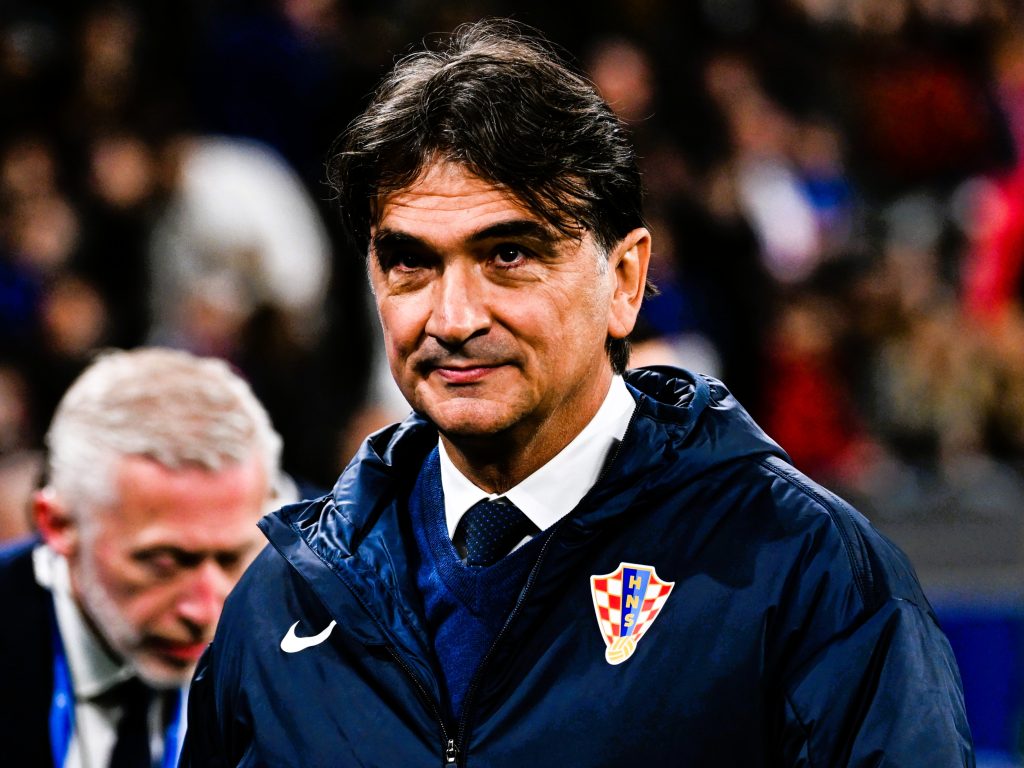
Zlatko Dalić is widely regarded as the most successful manager in Croatian history, having led the team to a legendary runner-up finish at the 2018 World Cup and a third-place podium finish in 2022.
His tenure has been defined by his remarkable ability to maximize the small nation’s performance on the global stage, which has consistently maintained Croatia’s position as a top-10 FIFA-ranking power.
His tactical philosophy, typically centred on a fluid 4-2-3-1, prioritises trust, cohesion, and technical midfield control that has seen Croatia qualify for North America with an undefeated record.
Key Players
Luka Modrić (Midfielder, AC Milan)
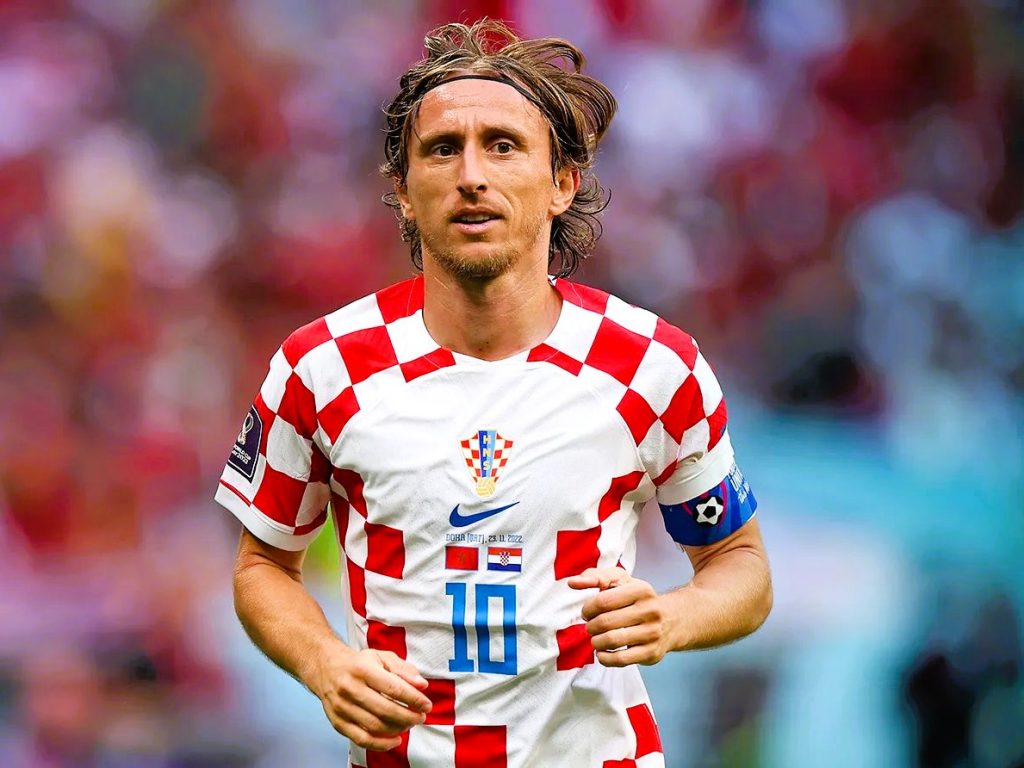
When Luka Modric takes the field in Dallas on June 17, he will do so by donning the captain’s armband for his fifth World Cup—a milestone that seems almost impossible for a player who made his debut for Croatia in a friendly win over Argentina nearly two decades ago.
At 40, with 194 caps and counting, the AC Milan maestro has become the undisputed heart and soul of the Croatian national team.
For opponents, the threat is both clear and unmistakable: Modric sees spaces before they exist, delivers passes that twist around defenders, and controls the tempo with an abrupt authority that belies the chaos he creates. This is almost certainly his last World Cup. He wants to make it count.
Mateo Kovačić (Midfielder, Manchester City)
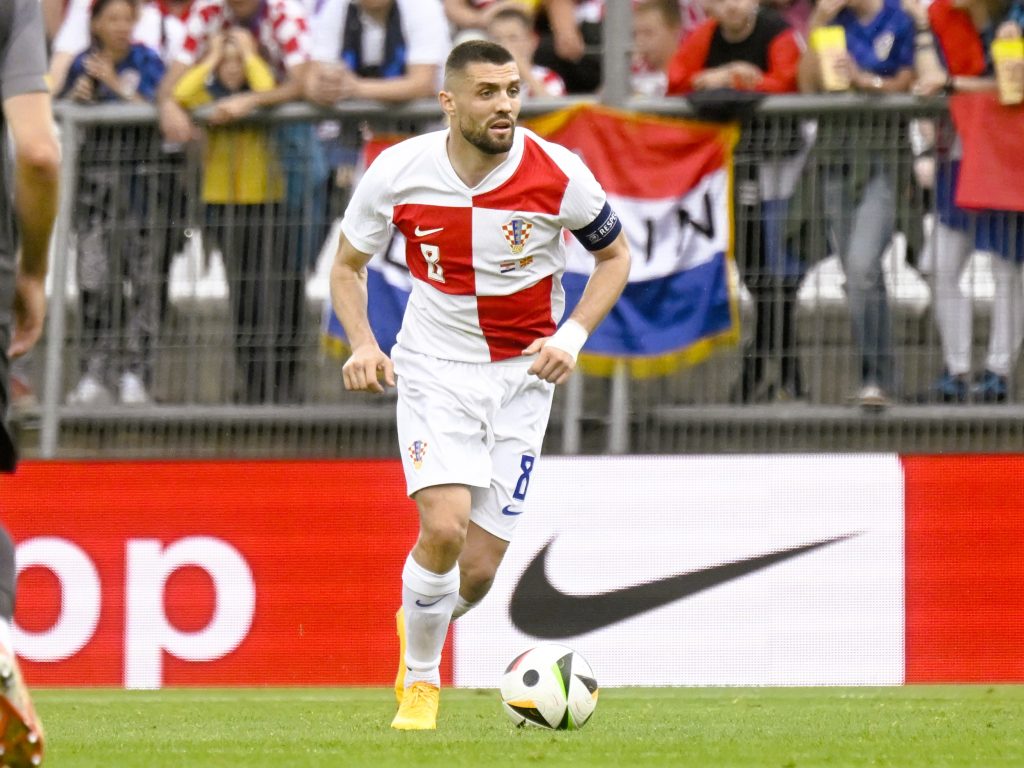
For much of his career, Mateo Kovacic has worked in Modric’s shadow—the Manchester City midfielder has fully stepped into the role of the team’s “metronome” alongside Modric.
Known for his world-class press-resistance and ball-carrying ability, Kovacic is crucial to Croatia’s transition from defense to attack. His partnership with Modric has been one of the most technically sound pairings at the 2026 tournament, ensuring that Croatia can dominate possession even against top-tier opponents.
Joško Gvardiol (Defender, Manchester City)
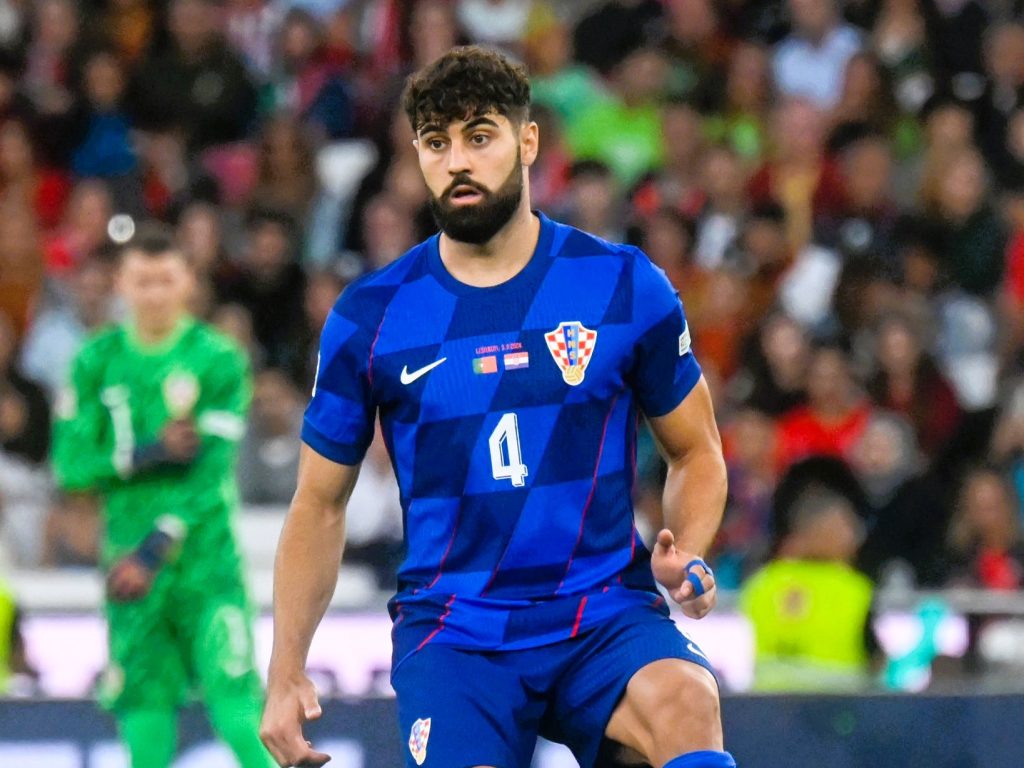
Firmly established as one of the world’s premier defenders, the 24-year-old Manchester City star is a cornerstone of Croatia’s backline. Known for his physical dominance and exceptional ability to push forward, Gvardiol has developed into a versatile asset who can operate as a traditional centre-back or an attacking left-back.
He will arrive in North America as a fully-fledged heir to Croatia’s defensive lineage. His ability to advance from behind and his excellent recovery speed allow Croatia to play a high-line tactical system. Guardiola’s experience in the 2022 bronze medal race has transformed him into an outspoken leader at just 24, acting as a bridge between the old guard and the new.
Provisional Squad
The final 26-man squad remains unannounced, with the tournament starting in June. Based on recent form, call-ups, and expert analyses, here’s a projected squad.
Predicted Squad
Goalkeepers
- Dominik Livaković (Girona)
- Ivica Ivušić (Hajduk Split)
- Ivor Pandur (Hull City)
Defenders
- Joško Gvardiol (Manchester City)
- Josip Stanišić (Bayern Munich)
- Josip Šutalo (Ajax)
- Marin Pongračić (Fiorentina)
- Martin Erlić (Sassuolo)
- Borna Sosa (Ajax)
- Duje Ćaleta-Car (Lyon)
Midfielders
- Luka Modrić (AC Milan)
- Mateo Kovačić (Manchester City)
- Petar Sučić (Dinamo Zagreb)
- Lovro Majer (Wolfsburg)
- Nikola Vlašić (Torino)
- Mario Pašalić (Atalanta)
- Luka Sučić (Real Sociedad)
Forwards
- Andrej Kramarić (Hoffenheim)
- Ivan Perišić (PSV Eindhoven)
- Ante Budimir (Osasuna)
- Bruno Petković (Dinamo Zagreb)
- Igor Matanović (Eintracht Frankfurt)
- Marko Livaja (Hajduk Split
Preview
Team Strengths and Weaknesses
Croatia’s tactical identity is built around technical mastery and rhythm control. The trio of Luka Modric, Mateo Kovacic and Mario Pasalic provide a level of ball retention and “elite craftsmanship” that few nations can match.
Josco Guardiola has matured into one of the world’s leading defenders, capable of playing as a centre-back or left-back. His recovery speed and ball-carrying ability allow Croatia to keep up the pressure.
Despite a population of less than four million, Croatia have reached the semi-finals of two of the last three World Cups. They are known for their composure and tactical awareness in high-stakes knockout scenarios.
The team is being revitalized by exciting prospects such as 18-year-old Luka Vukovic and playmaker Luka Suchic, who are expected to complement the “golden generation”.
The main criticism of the current team is their lack of raw pace, especially in the forward line. This makes them less dangerous on quick, long-range counter-attacks than younger, more athletic sides.
Key talismans such as Modric (40), Ivan Perisic (37), and Andrej Kramaric (34) are in the twilight of their careers. Maintaining a high level of intensity over a month-long tournament in the heat of the North American summer will be a significant physical concern.
While dominating possession, Croatia have struggled to convert possession into goals against disciplined, deep-lying blocks at times, relying heavily on Kramaric’s movement and clinical edge.
Expectations and Tournament Outlook
Croatia once again arrive at the 2026 FIFA World Cup cast as underdogs — a label they have repeatedly defied on football’s biggest stage.
Drawn into a challenging Group L, Croatia face an immediate test against England in their opening match, with the Three Lions’ attacking depth posing a significant early hurdle.
Despite the difficulty of the group, expectations within the Croatian camp remain cautiously optimistic. Having reached the podium in three of the last four World Cups, Croatia enters the tournament with proven tournament intelligence and a history of thriving under pressure.
Matches against Ghana and Panama are viewed as pivotal opportunities to secure progression in the expanded 48-team format, where consistency often outweighs flair.
Head coach Zlatko Dalić remains central to Croatia’s outlook. His tactical discipline, shaped by years of knockout-stage success, emphasizes defensive solidity, midfield control, and mental resilience.
This approach positions Croatia well to advance beyond the group stage, with a realistic target of at least a Round of 16 berth — and potentially more.
Should Croatia progress, the path is likely to grow steeper. Potential knockout encounters against elite nations such as Spain or France would demand another extraordinary collective effort.
In what is widely expected to be Luka Modrić’s final World Cup, the veteran midfielder’s leadership and composure could once again fuel a deep tournament run.
Concerns remain over the physical demands of a condensed schedule and the stamina of an aging core.
However, Croatia’s blend of experienced leaders and emerging talents — including players such as Luka Sučić — provides belief that another semifinal appearance is not beyond reach.
Any knockout exit would feel disappointing given their recent pedigree, yet Croatia’s competitive spirit ensures they remain a dangerous dark horse capable of igniting checkerboard fever across North America.