

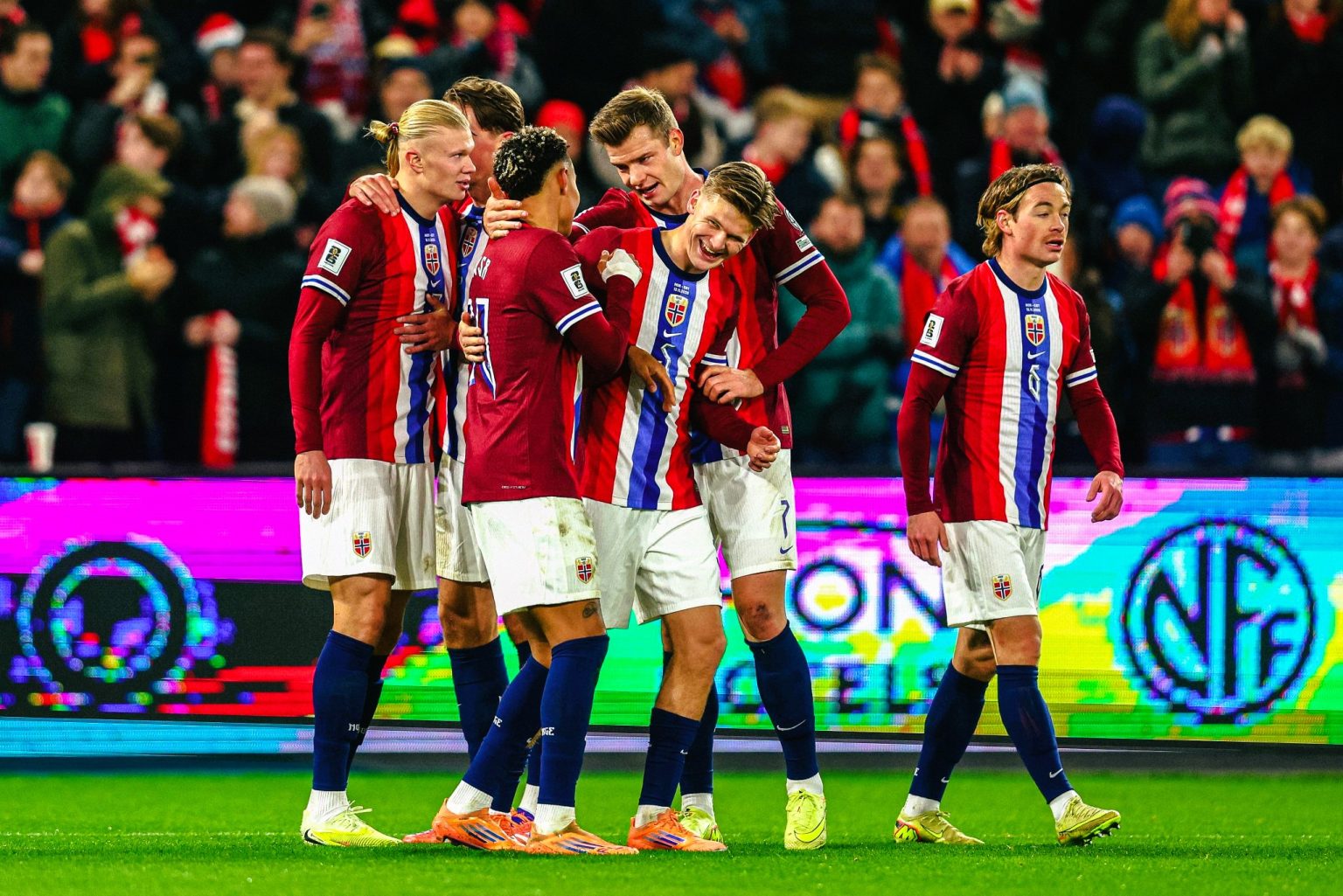
Awakening from a 28-year World Cup slumber, can Erling Haaland’s goal-scoring machine defy the odds and fire Norway out of the group stage for the first time since 1998?
Norway’s journey at the 2026 FIFA World Cup begins in Group I, where they have been drawn alongside reigning giants France, African heavyweights Senegal, and the winner of the Intercontinental Playoff (Bolivia, Suriname, or Iraq). It is a demanding group that will immediately test the resilience of Norway’s long-awaited golden generation.
Co-hosted by Canada, Mexico, and the United States, the expanded 48-team tournament will culminate with the final on Sunday, July 19, 2026, at MetLife Stadium in New York/New Jersey, with Norway’s group matches scheduled across two venues on the U.S. East Coast.
Below, we take a closer look at Norway at the 2026 FIFA World Cup, including the squad, team profile, head coach, key players, tournament history, and a complete preview of their ambitions to turn long-awaited qualification into a memorable knockout-stage run.
Norway’s Road to the 2026 World Cup
Norway qualified for the 2026 FIFA World Cup by finishing top of UEFA qualifying Group I, ending a 28-year absence from the global stage. Their last appearance was in 1998, a tournament that had long before stars like Erling Haaland were born.
This “Golden Generation” secured their place in North America with a historic and impressive qualifying campaign, winning all eight of their qualifying matches, scoring an astonishing 37 goals while conceding just five.
The defining moment of the campaign came on November 16, 2025, when Norway defeated Italy 4-1 at the San Siro, sending the four-time world champions into the play-offs.

Norway at the FIFA World Cup
World Cup Titles and Best Performances
Norway has never won a FIFA World Cup title, but the nation has reached the knockout stages on two occasions.
Their most successful tournament remains the 1998 World Cup in France, where they achieved a historic upset victory over defending champions Brazil to reach the Round of 16.
Before this modern success, Norway’s best result was also a Round of 16 finish during their debut appearance in 1938, though that tournament was a straight knockout competition.
World Cup Performance by Year:
1938 (Round of 16), 1994 (Group stage), 1998 (Round of 16, best performance).
Other Major International Achievements
Norway has long been regarded as a sleeping giant of European football, with their historical achievements defined by two distinct “golden ages”.
Norway’s most celebrated success was the 1936 Olympic bronze medal, where they famously defeated host nation Germany in Berlin.
This achievement established Norway as a formidable force in early international football, a reputation they would regain decades later in the “Drillo” era of the 1990s, when the team reached an astonishing No. 2 in the FIFA world rankings.
Norway Coach and Key Players
Head Coach Profile
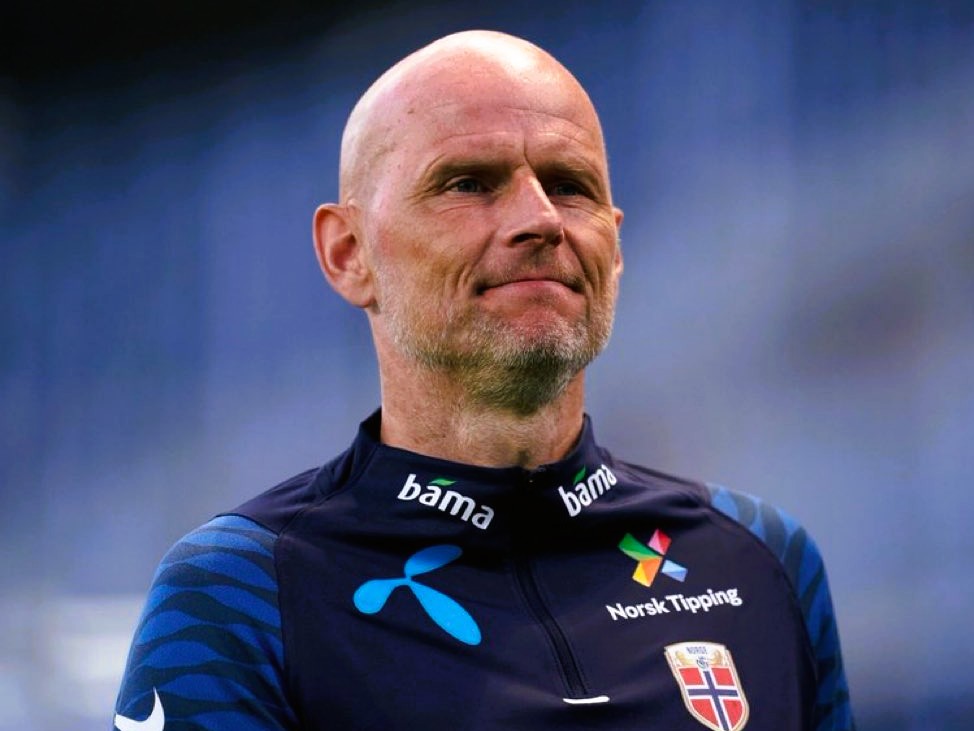
The Norway national football team is led by Stale Solbakken. Appointed in December 2020, Solbakken has led a historic revival for Landslagh, becoming the first manager since Egil “Drillo” Olsen in 1998 to lead the nation to a FIFA World Cup qualification.
Following this successful campaign, Solbakken signed a contract extension in December 2025 that will see him remain in charge until August 2028, allowing him to lead the team through the World Cup in North America and the subsequent Euro 2028 qualifying cycle.
Stale Solbakken has transformed Norway into a high-pressing, possession-dominant team, moving away from the nation’s traditional reactive counter-attacking style. His primary tactical formation is a compact 4-3-3 that can fluidly change to a 4-2-3-1 or a pressing diamond depending on the opposition’s formation.
Key Players to Watch
Erling Haaland (Forward, Manchester City)
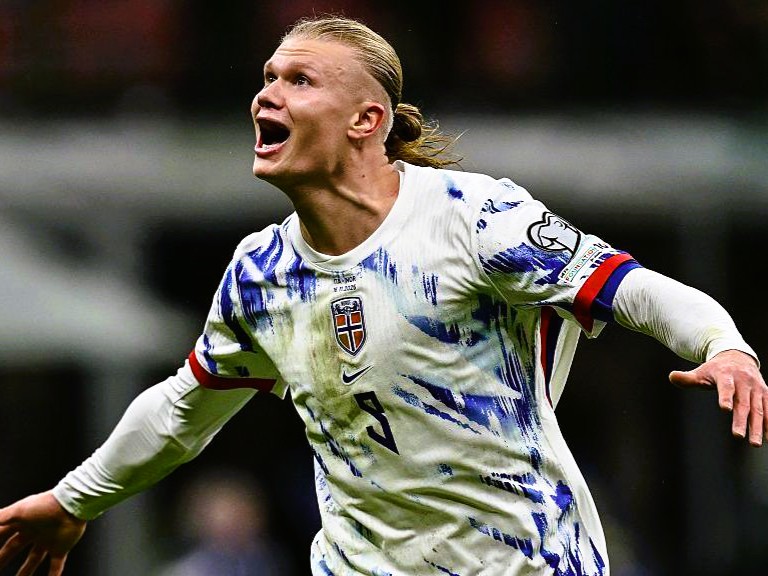
The centrepiece of Norwegian football, 25-year-old Manchester City striker Erling Haaland will arrive at the 2026 World Cup not only as Norway’s most clinical finisher but also on a mission to complete his family’s unfinished business.
His father, Alf-Inge, played in the 1994 World Cup in the United States – a feat the younger Haaland has long sought as the final frontier of his career.
Haaland’s presence alone forces opposition teams into radical tactical shifts, often requiring double or triple-marking that inadvertently opens up crucial space for teammates like Martin Odegaard and Antonio Nusa.
Martin Ødegaard (Midfielder, Arsenal)
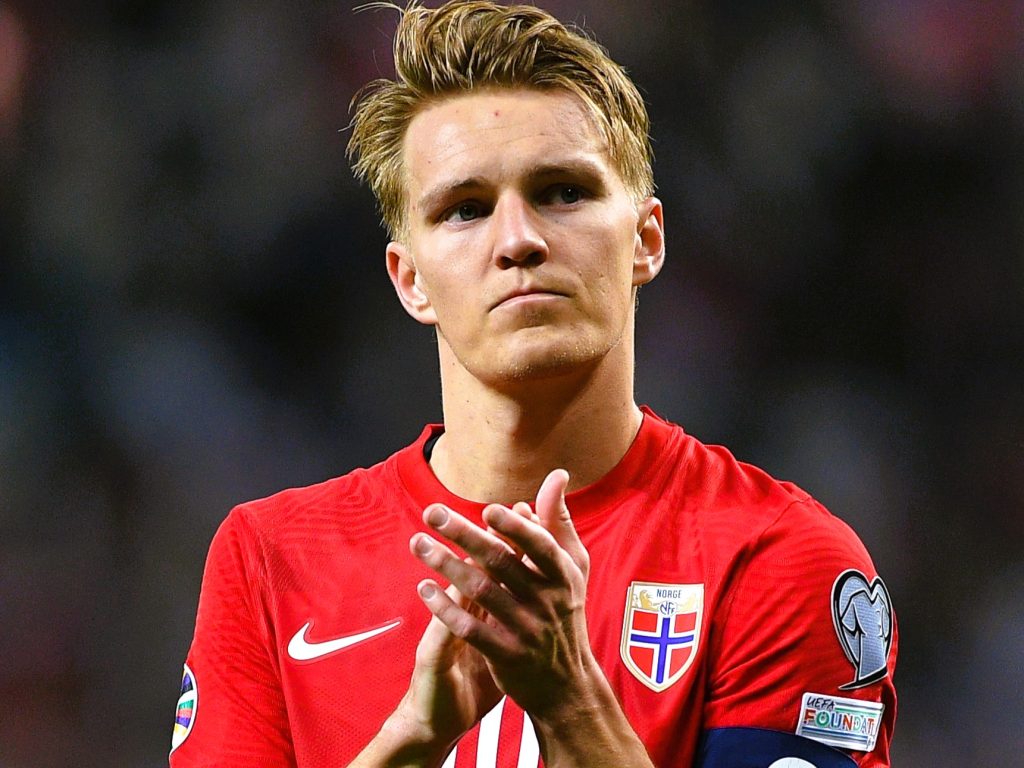
Martin Odegaard was not even born when Norway last played in the World Cup in 1998. Twenty-eight years later, he is the captain of his nation’s comeback and the team’s tactical heartbeat, as the creative “orchestra conductor”.
The Arsenal captain acts as the team’s brain, a tactical “quarterback” who led Europe in assists during the qualifying round.
His ability to thread “eyes of the needle” through compact blocks will be the key to unlocking the World Cup’s most stubborn defenses. Beyond his technical grace, Odegaard is the primary trigger for Norway’s brutal high-pressing, which leads the team’s defensive transitions from the front.
Alexander Sørloth (Forward, Atlético Madrid)
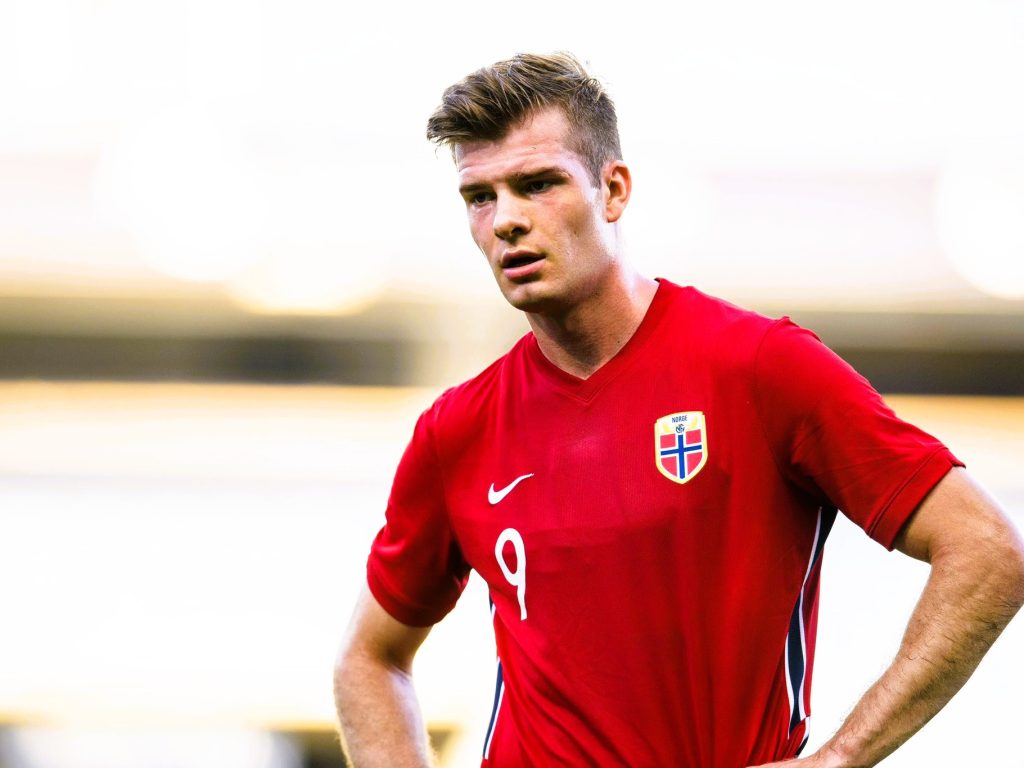
Alexander Sorloth is the answer to the question some nations may be asking: What does a world-class Plan B look like? Sorloth is a dual threat who can either partner Haaland in a devastating twin-tower formation or act as a focal point to keep the game going.
The 1.95m (6ft 5in) Atletico Madrid striker, who has terrorised La Liga defences for three consecutive seasons with his left foot, will be arguably the most devastating second-choice forward in the history of the competition at the 2026 World Cup.
Antonio Nusa (Winger, RB Leipzig)
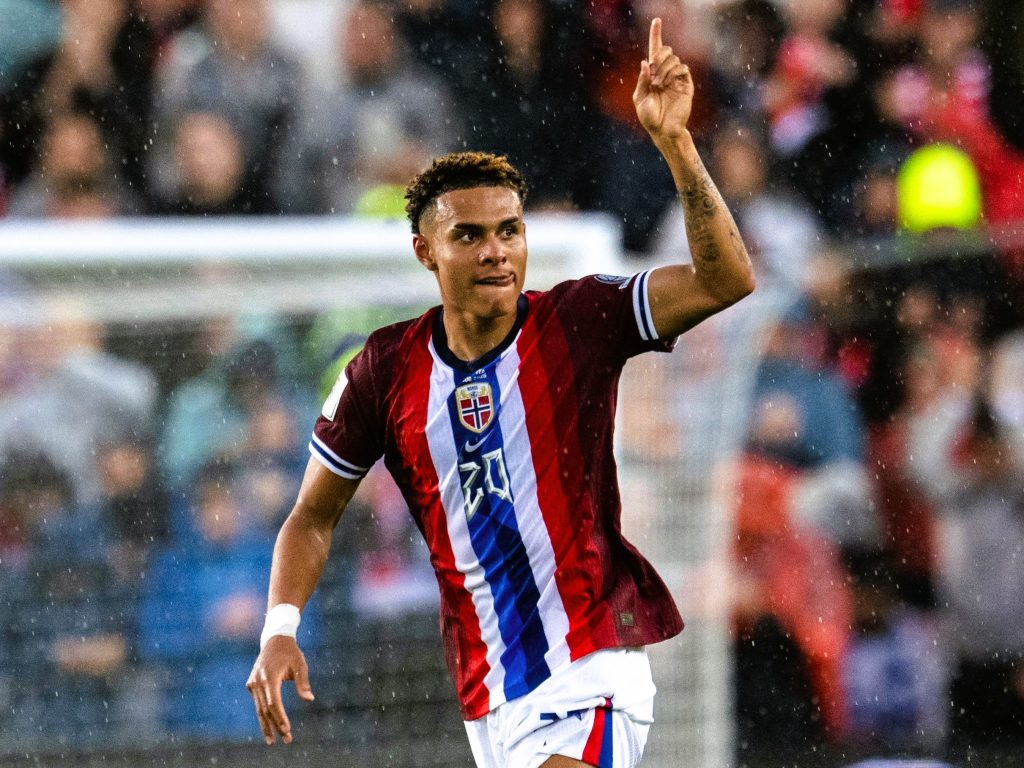
Antonio Nusa The “X-factor” of this golden generation, the 20-year-old RB Leipzig star has emerged as Norway’s most explosive young talent, providing the “electric talent” needed to unlock elite defenses.
The RB Leipzig star provides explosive, one-on-one flair that makes Norway truly multifaceted. When Haaland is overwhelmed by defences, Nusa punishes them with his “electric” dribbling and ability to cut inside from the flanks.
He could truly emerge as a new global superstar in the 2026 tournament.
Norway Schedule – 2026 FIFA World Cup
Group Stage Fixtures
June 16, 2026: Playoff 2 Winner vs. Norway
June 22, 2026: Norway vs. Senegal
June 26, 2026: Norway vs. France
Norway Squad – 2026 FIFA World Cup
This is a projected squad based on recent selections and form; final roster to be confirmed closer to the tournament.
Goalkeepers
- Ørjan Nyland (Sevilla)
- Mathias Dyngeland (Brann)
- Sander Tangvik (Rosenborg)
Defenders
- Kristoffer Ajer (Brentford)
- Julian Ryerson (Borussia Dortmund)
- Leo Skiri Østigård (Napoli)
- Andreas Hanche-Olsen (Mainz 05)
- Marcus Holmgren Pedersen (Sassuolo)
- Birger Meling (FC Copenhagen)
- David Møller Wolfe (AZ Alkmaar)
Midfielders
- Martin Ødegaard (Arsenal)
- Sander Berge (Fulham)
- Morten Thorsby (Union Berlin)
- Kristian Thorstvedt (Sassuolo)
- Patrick Berg (Bodø/Glimt)
- Oscar Bobb (Manchester City)
- Mohamed Elyounoussi (FC Copenhagen)
Forwards
- Erling Haaland (Manchester City)
- Alexander Sørloth (Atlético Madrid)
- Jørgen Strand Larsen (Wolverhampton Wanderers)
- Antonio Nusa (Club Brugge)
- Ola Solbakken (Roma)
- Erik Botheim (Malmö FF)
Norway World Cup 2026 Preview
Team Strengths and Weaknesses
Norway enter the 2026 FIFA World Cup as one of Europe’s most dangerous dark horses, powered by a world-class attacking core and a newfound tactical maturity under Ståle Solbakken.
Their defining strength is an explosive “golden generation” in attack that can overwhelm almost any opponent. However, lingering questions remain over their defensive depth and ability to sustain elite-level intensity against the world’s best.
At the heart of Norway’s ambitions is Erling Haaland, a generational goal-scorer who has netted 16 goals in just eight international appearances, an extraordinary strike rate of two goals per game. He is supported by creative catalysts such as Alexander Sørloth and captain Martin Ødegaard, who led UEFA qualification with seven assists, giving Norway a multi-layered attacking threat capable of dismantling even top-tier defences.
Solbakken’s shift toward a high-pressing, vertical system has transformed Norway into one of Europe’s most direct and ruthless transition teams. They regularly move from defence to attack in under six seconds, a trait that was most vividly showcased in their historic 4–1 comeback victory over Italy at the San Siro, a statement win that announced Norway’s arrival on the global stage.
The emergence of Antonio Nusa and Oscar Bobb has added unpredictability on the flanks, injecting pace, dribbling and crossing quality capable of unlocking deep-lying defensive blocks.
Defensively, however, concerns persist. Despite conceding just five goals in qualifying, Norway’s backline is widely viewed as functional rather than elite, lacking the proven depth of traditional powerhouses such as France or Brazil. When pushing a high line, the absence of dominant, ball-playing centre-backs has occasionally left them vulnerable against technically superior opponents.
In goal, Ørjan Nyland delivered solid performances during qualification, but Norway still lack a truly established, world-class number one comparable to the elite shot-stoppers found among tournament favourites.
Finally, the 2026 World Cup represents Norway’s first major tournament appearance in 28 years. Managing the psychological and physical demands of a month-long global competition remains an untested variable for this talented generation.
Expectations and Tournament Outlook
After a 28-year absence, Norway’s return to the World Cup is no longer about participation — it is about validation.
Ståle Solbakken’s side arrive in North America on the back of a flawless qualifying campaign, having dismantled traditional giants such as Italy and generating the highest expectations in the history of Norwegian football.
Often dismissed by established heavyweights, Norway possess an attacking trio of Haaland, Ødegaard and Nusa that is increasingly regarded as one of the most dynamic and technically gifted units in international football.
Their tournament success will hinge on whether they can translate qualifying dominance into knockout-stage resilience.
Drawn into Group G alongside France and Senegal, Norway face an immediate and unforgiving test, with elite pace, physicality and tactical discipline likely to expose any defensive fragility.
The question is no longer whether Norway can compete on the world stage — but whether Erling Haaland and Martin Ødegaard can transform this long-awaited return into a deep knockout run that redefines Norwegian football forever.