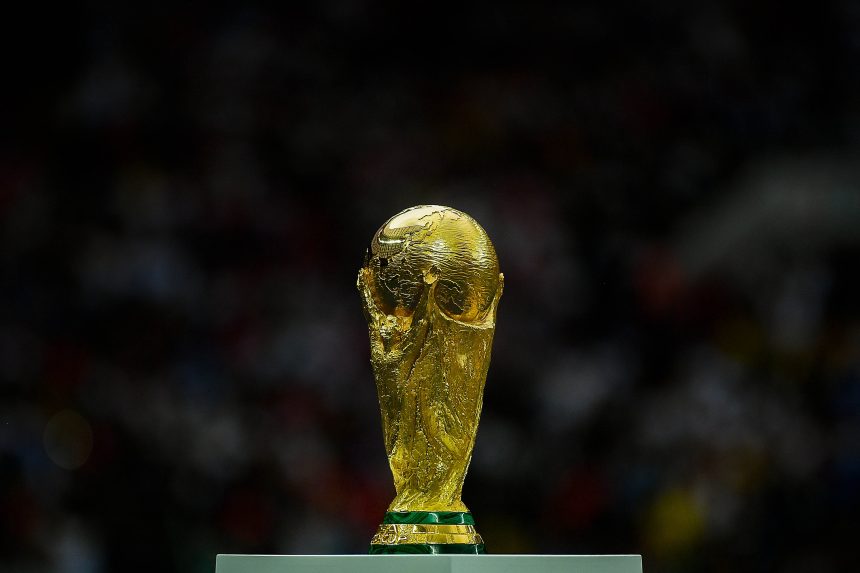










As the 2026 FIFA World Cup draws to a close, the global spotlight shifts to Dallas and Atlanta, where the tournament’s defining moments will unfold in the semifinals.
After a grueling campaign that began with 48 nations across North America, the field is narrowed to just four contenders—the final survivors of football’s most demanding stage. This is the pinnacle of international pressure, where the dreams of billions are decided across 180 relentless minutes. Played on July 14 and July 15, 2026, the semifinals serve as the final gatekeepers to the World Cup trophy.
On those two nights, AT&T Stadium and Mercedes-Benz Stadium will host matches that define legacies.
The bracket paths are fully fixed and pre-determined, with semifinal pairings locked in long before kickoff—ensuring competitive balance and a clear road to the final. The winners advance to the championship match on July 19 at MetLife Stadium, while the defeated sides head to Miami for the third-place play-off, left to wonder how close they came to immortality.
Below is your complete guide to the 2026 FIFA World Cup Semifinals, including dates, venues, matchups, and the road to glory.
Related Guides
→ 2026 FIFA World Cup Knockout Stage Format & Bracket Explained
What Are the Semifinals at the 2026 FIFA World Cup?
The 2026 FIFA World Cup semi-finals represent the final hurdle for teams aiming to reach the championship match of the expanded 48-team tournament.
At this stage, the remaining four nations compete for just two coveted places in the World Cup Final, following a grueling path through the Round of 32, Round of 16, and Quarterfinals. With no safety nets remaining, every match becomes a pure test of quality, mentality, and nerve.



Why the Semifinals Are the Tournament’s Defining Stage
For the 2026 FIFA World Cup, the semi-finals are widely regarded as the tournament’s most decisive and emotionally charged stage—where legends are born and dreams are crushed.
The margins are razor-thin. One mistake, one moment of brilliance, or one penalty save can determine whether a nation advances to the final or watches its title hopes vanish for the next four years. The world’s final four teams collide under immense pressure in matches that often surpass even the final in intensity and drama.
In a competition expanded to a record 48 teams and 104 matches, the semi-finals mark the point where surprise stories from earlier rounds confront football’s elite in uncompromising, single-elimination battles.
Related Guides
How Teams Qualify for the Semifinals
To qualify for the Semifinals of the 2026 FIFA World Cup, teams must successfully navigate the tournament’s demanding “Elite Eight” stage. This round represents the penultimate step of the knockout phase, where the final eight nations are reduced to just four.
After surviving the expanded group stage, the Round of 32, and the Round of 16, a victory in the Quarterfinals becomes the final requirement to reach the tournament’s most exclusive stage.
Qualification is strictly performance-based. Only the winners of Quarterfinal Matches 97 through 100 advance to the semifinals—there are no second chances, repechage routes, or re-entry paths.
Once a team wins its Quarterfinal fixture, it is automatically placed into a pre-determined Semifinal matchup under the official FIFA 2026 bracket structure. This system ensures that the four strongest remaining nations earn the right to compete in Dallas and Atlanta for a place in the World Cup Final.
Bracket Mapping & Fixed Pairings
The 2026 FIFA World Cup Semifinals operate on a rigid, pre-determined bracket system designed to ensure a clear and transparent “path to the final.”
Unlike some sports tournaments that re-seed teams after each round based on their regular-season or group-stage performance, the FIFA knockout tree is fixed from the moment the tournament begins.
This means that every nation knows exactly which side of the bracket they occupy and which potential opponents they must overcome to reach the championship match at New York New Jersey Stadium.
Which Quarterfinal Winners Face Each Other
- Semifinal 1 (Dallas): Winner of QF 97 (from Round of 16 Matches 89/90) vs Winner of QF 98 (from Round of 16 Matches 93/94)
- Semifinal 2 (Atlanta): Winner of QF 99 (from Round of 16 Matches 91/92) vs Winner of QF 100 (from Round of 16 Matches 95/96)
The two halves of the bracket remain completely separate until the final.
Related Guides
→ 2026 FIFA World Cup Round of 16: Schedule, Matchups & Bracket Path
When Are the Semifinal Matches Played?
The semifinal matches of the 2026 FIFA World Cup will be played on Tuesday, July 14 and Wednesday, July 15, 2026, during the final week of the tournament.
These two high-stakes fixtures represent the last obstacle standing between the remaining four teams and a place in the World Cup Final, scheduled for July 19, 2026.
Recovery Time After the Quarterfinals
The semi-finals take place shortly after the conclusion of the quarterfinals, which end on July 11, 2026, creating one of the most demanding stretches of the tournament.
All semifinalists are guaranteed a minimum of three full days of rest following their quarterfinal matches. This 72-hour recovery window is crucial for physical rehabilitation, long-distance travel between host cities, and tactical preparation as coaches finalize plans for the most decisive matches of the competition.
2026 FIFA World Cup Semifinal Schedule
| Match | Date | Venue | Kickoff Time (EST) | Matchup |
|---|---|---|---|---|
| 101 | Tuesday, July 14, 2026 | AT&T Stadium (Dallas/Arlington, TX) | 3:00 PM | Winner Match 97 vs. Winner Match 98 |
| 102 | Wednesday, July 15, 2026 | Mercedes-Benz Stadium (Atlanta, GA) | 3:00 PM | Winner Match 99 vs. Winner Match 100 |
Kickoff Times Across North America
With venues in Texas (Central Time) and Georgia (Eastern Time), fans should be mindful of the local time zones. While exact kickoff times have yet to be confirmed by FIFA, matches are typically scheduled in the afternoon or evening local time to maximise global television audiences. This means viewers on the West Coast (Pacific Time) will be watching earlier in the day.
Time Zones Explained (ET, CT, MT, PT)
- Eastern Time (ET): 3:00 PM (both matches)
- Central Time (CT): 2:00 PM (July 14 in Dallas) / 3:00 PM (July 15 in Atlanta)
- Mountain Time (MT): 1:00 PM (July 14) / 2:00 PM (July 15)
- Pacific Time (PT): 12:00 PM (July 14) / 1:00 PM (July 15)
All times are optimized for prime North American viewing and global broadcast alignment.
Global Broadcast Considerations
FIFA schedules the semi-finals with a global audience in mind. Both semi-finals are scheduled in the afternoon/evening slots in the US to provide the maximum live audience in Europe, Asia and beyond, so that the semi-final drama will be seen by billions of people.
Related Guides
→ 2026 FIFA World Cup Knockout Stage Schedule – Dates & Times
Extra Time and Penalties in the Semifinals
Unlike the group stage, where teams can share points, a clear winner is required to advance in the knockout rounds of the Expanded World Cup. This stage often delivers the tournament’s most dramatic moments, as fatigue and mounting pressure collide in high-stakes, do-or-die scenarios.
If the game remains level at the end of 90 minutes plus stoppage time, the match enters extra time—a 30-minute period divided into two 15-minute halves. There is no golden goal or sudden death; both periods are played in full regardless of scoring.
Should the score still be tied after this grueling 120-minute battle, the winner is determined by a penalty shootout. The shootout begins with five rounds of spot-kicks, after which sudden death is used if necessary, ultimately deciding which nation continues its journey toward the final.
Substitution Rules in Knockout Matches
As the expanded 2026 FIFA World Cup moves into the knockout stages, managing player fatigue becomes a critical strategic factor for coaches. The substitution rules for the Semifinals are designed to balance high-intensity play with player safety, providing managers with flexibility to refresh their squads during regulation and beyond.
During the standard 90-minute regulation period, each team is allowed five substitutions. To minimize disruption to play, these must be made within a maximum of three substitution windows, although any changes made at halftime do not count toward this limit.
If the match remains level and enters extra time, teams are granted one additional substitution, bringing the total possible substitutions to six. This extra-time allowance also includes an additional substitution window, ensuring fresh legs can be introduced for the decisive final 30-minute period.
Additionally, special provisions for concussion substitutions may permit extra changes outside these limits, prioritising player health without compromising the flow of the game.
Related Guides
→ 2026 FIFA World Cup Quarterfinals: Schedule, Matchups & Bracket Path
What Happens After the Semifinals?
The two victorious nations from the clashes in Dallas and Atlanta earn the most prestigious invitation in sports: a place in the FIFA World Cup Final at MetLife Stadium on July 19, 2026. For these two teams, the dream of lifting the trophy becomes a 90-minute reality.
However, the journey does not end immediately for the two defeated semifinalists. In a tradition that honours the top four teams globally, the losers of the semifinals move on to compete in the Third-Place Play-off. This bronze-medal match is scheduled for July 18, 2026, at Hard Rock Stadium in Miami, allowing the world to celebrate the tournament’s standout performers before the grand finale takes centre stage the following day.
FAQ About the Semifinals
Can Semifinal Losers Still Win a Medal?
Yes — the loser of each semifinal plays in the Third-Place Play-off. The winner of that match receives the bronze medal and finishes third overall.
Are Semifinals Played at Neutral Venues?
Yes — all knockout-stage matches, including the semifinals, are played at neutral venues with no home advantage.
How Many Matches Remain After This Stage?
After the semifinals, only three matches remain: the Third-Place Play-off, the Final, and that’s it. The tournament concludes on July 19, 2026.
The 2026 Semifinals represent the ultimate test of nerve and quality. Two matches. Four teams. One step away from immortality. The path to the World Cup trophy has never been clearer — or more brutal.