







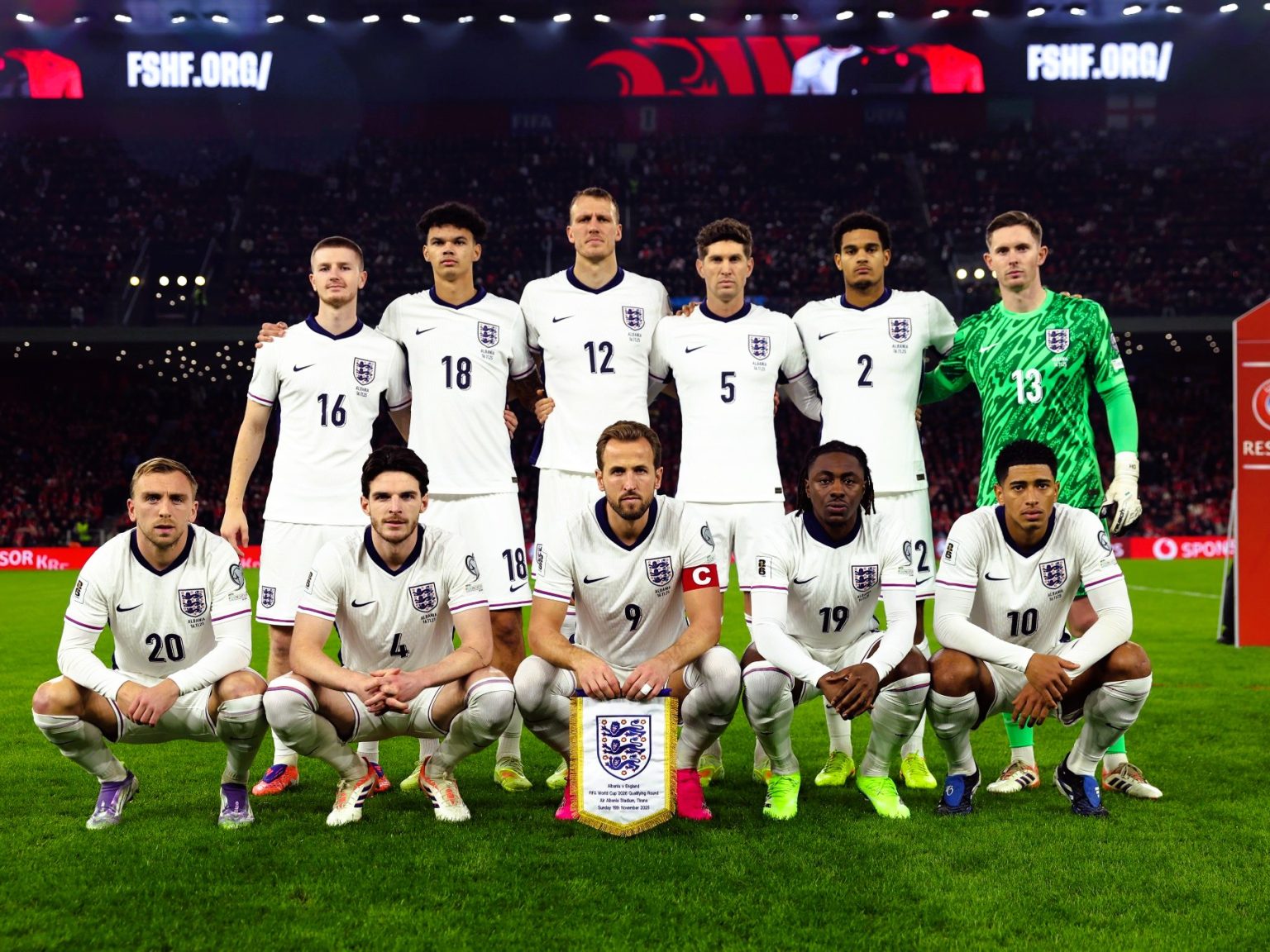

There is a feeling around English football that has been absent for the better part of six decades — genuine, evidence-based belief. Not hope. Not romantic delusion. Belief.
After reaching the final of Euro 2020, the quarter-finals of the 2022 World Cup in Qatar, and the final of Euro 2024, England are no longer pretenders with potential; they are contenders with pedigree.
The 2026 FIFA World Cup, co-hosted by the United States, Canada, and Mexico, represents the most compelling opportunity England have had to end their 60-year wait for major international silverware since the summer of 1966.
The squad is deep, the core players are entering or approaching their peak years, and the manager — Gareth Southgate’s successor — inherits a settled system with world-class individuals embedded within it.
But international football is littered with golden generations that never delivered. Germany in the 1990s. Brazil in the 2010s. Belgium across an entire decade.
England knows this script all too well. So the central question heading into North America is not whether England can win — it’s whether they will. This is a comprehensive, data-driven, candid analysis.
Why England will win the 2026 World Cup
The case for England as outright winners in 2026 is not built on wishful thinking. It is built on structural advantages that few other nations in world football can match.
Squad Depth
England can field two entirely different starting elevens of genuine international quality.



When Bukayo Saka, Phil Foden, and Jude Bellingham are named in the first XI, players of the calibre of Anthony Gordon, Cole Palmer, and Jarrod Bowen are ready to replace them without any significant drop-off in quality.
That depth of talent, particularly in attacking areas, is the kind that wins tournaments — because tournaments are not won in group stages, they are won in the grinding, attrition-heavy knockout rounds where rotation and freshness become decisive.
Peak-Age Players
Perhaps the single most exciting factor about England’s 2026 squad is the age profile of its key players. Jude Bellingham, born in 2003, will be 22 at the tournament — the precise age at which elite midfielders tend to hit their first major peak.
Bukayo Saka will be 24. Phil Foden, the most naturally gifted English player of his generation, will be 26 — firmly in the prime years for a playmaker.
Harry Kane, the striker, will be 32, an age at which elite centre-forwards retain every ounce of their technical and positional quality even as their physical edge softens.
This is a squad that will not be too young and too raw, nor too old and too slow. The timing is close to perfect.
Tournament Experience
England’s younger players will arrive in 2026 having already competed in — and performed at — multiple major tournaments.
The scar tissue from penalty shootout exits and semi-final disappointments has value.
Players who have felt the heat of a World Cup quarter-final or a European Championship final carry an intangible edge over those experiencing it for the first time.
Tactical Flexibility
England possess the personnel to play multiple systems. They can operate with a high press in a 4-3-3, drop into a compact mid-block in a 4-2-3-1, or use Bellingham’s freedom in a 4-4-2 diamond.
That tactical adaptability — the ability to change shape mid-tournament — is one of the hallmarks of every side that has lifted the World Cup in the modern era.
Will England win the 2026 World Cup?
Yes — or at the very least, England are among the three most likely winners.
Based on current squad quality, tournament trajectory, and the competitive landscape of international football, England winning the 2026 FIFA World Cup is a realistic, well-supported probability rather than a long-shot aspiration.
The direct answer: England are genuine favourites.
They are not the favourite — France, Brazil, and Argentina all carry equivalent or slightly higher expectations in the markets — but the gap between England and the very best is smaller than it has been at any World Cup since 1966.
Expect England to reach the semi-finals at a minimum, with a very credible path to the final itself.
England’s Chances of Winning the 2026 FIFA World Cup Analyzed
Raw analysis paints an encouraging picture when England’s metrics are placed alongside their rivals.
FIFA Ranking
England have consistently ranked inside the top five of FIFA’s world rankings through the early 2020s.
While FIFA rankings have well-documented limitations as predictors of tournament success, a consistent top-five position reflects both the quality of results and the calibre of opponents faced.
Squad Market Value
According to Transfermarkt data, England’s senior squad carries one of the highest aggregate market values in international football — typically second only to France, who benefit enormously from the depth and quality flowing through their domestic leagues and the African pipeline.
Market value is an imperfect metric, but it correlates strongly with squad quality at elite level.
Tournament Consistency
In the eight-year window from Euro 2020 to the 2026 World Cup, England will have appeared in: one European Championship final (2020), one World Cup quarter-final (2022), one further European Championship final (2024), and will enter 2026 as the top-seeded European contender in the eyes of most analysts.
No other European nation barring France can match that consistency of deep tournament runs.
Comparison with France and Brazil
The French national team remains the benchmark — deeper in squad, more experienced in the winning mindset (2018 champions), and brutally efficient in knockout football.
Brazil brings flair, the weight of history, and consistent talent production.
England closes the gap on both nations primarily in two areas: midfield quality (Bellingham is arguably the best midfielder in the world entering 2026) and the settled nature of their attacking structure.
Where England trail both rivals is in proven winning culture at the final hurdle, which remains an open question.
England Manager & Tactical Approach
When Gareth Southgate stepped down following Euro 2024, he left English football in a fundamentally different place from where he found it.
His legacy is more complex than the popular narrative allows — four semi-finals or better across five major tournaments is an objective record of consistency that no England manager since Sir Alf Ramsey can match.
But the criticism that followed him was not without foundation. England under Southgate were often reactive, conservative, and — particularly in knockout stages — set up to avoid losing as much as to win.
His successor inherits both a gilded opportunity and a weighty responsibility. The squad Southgate assembled and developed is now ready to play more expansive, dominant football.
The question is whether the new manager has the tactical vision to extract it.
The Tactical Profile Required
England’s optimal system in 2026 is one that trusts the quality of its attackers and gives them freedom.
The days of asking a front three of Saka, Foden, and Bellingham to play within a rigid, low-block structure are over.
This squad demands a manager who plays on the front foot — one who presses high, builds possession through the thirds, and places the opponent under sustained structural pressure rather than retreating into shape.
Formation Preferences
Whether the manager favours a 4-2-3-1, a 4-3-3, or a more fluid pressing structure, the non-negotiables remain constant: Declan Rice as the defensive anchor, Bellingham operating in advanced zones with licence to arrive in the box, and a front line given positional freedom to interchange and exploit space.
Rigid positional maps suffocate this squad’s talent; fluid, position-based pressing frameworks allow it to breathe.
The Southgate Shadow
Whoever holds the position, they will be measured against Southgate’s tournament record while being expected to exceed his ceiling.
The best outcome is a manager who absorbs what made Southgate’s defensive structure so difficult to break down while adding the attacking boldness that, in the biggest moments, Southgate ultimately could not supply.
The manager’s name may change; the expectation remains the same — deliver the trophy that 60 years of hurt demands.
How England Should Lineup to WIN the 2026 World Cup
The optimal formation for England in 2026 is a 4-2-3-1 that allows Bellingham the freedom to operate as an advanced midfielder while maintaining defensive solidity through a double pivot behind him.
Suggested Best XI:
Goalkeeper: Jordan Pickford — still the first choice, an elite shot-stopper with tournament experience.
Right Back: Trent Alexander-Arnold — given freedom to overlap and create, one of the most dangerous right backs in world football when given licence to attack.
Centre Backs: John Stones and Marc Guéhi — composed on the ball, aerially dominant, and comfortable playing out from the back.
Left Back: Luke Shaw (if fit) or Kieran Trippier shifted across — England’s perennial left-back question remains unresolved but manageable.
Double Pivot: Declan Rice and one of Conor Gallagher or Adam Wharton — Rice as the anchor, providing cover for the attacking freedom allowed to Alexander-Arnold and Bellingham.
Right Wing: Bukayo Saka — one of the most consistent wide forwards in world football, dangerous both cutting inside and driving down the line.
Attacking Midfielder: Jude Bellingham — the heartbeat of the team. Needs to operate in the half-space between the lines, arriving late into the box and pressing aggressively without the ball.
Left Wing: Phil Foden — given freedom to drift inside, link with Kane, and pick passes into space behind opposition defensive lines.
Striker: Harry Kane — the focal point. At 32, his movement will have evolved into more positional intelligence, and he remains the most reliable goalscorer in the squad.
The key to this system working is Kane and Bellingham developing the same interplay that Benzema and Modric forged at Real Madrid — a focal striker who drops deep to create, and an advanced midfielder who exploits the space created behind him. When it clicks, it is devastating.
England Squad Depth & Key Players
One of the defining characteristics of every England squad that has reached a major final in the modern era is that the manager never felt compelled to play his best XI every single game.
Depth allows rotation; rotation maintains freshness; freshness wins knockout rounds. By 2026, England possess that depth at virtually every position.
Goalkeeper
Jordan Pickford remains the undisputed number one — a world-class shot-stopper who has defined England’s tournament campaigns across the better part of a decade. Dean Henderson and Aaron Ramsdale provide experienced cover. This is England’s most secure positional area.
Defender
The right-back position is a genuine strength rather than a problem to solve.
Trent Alexander-Arnold, when used in his natural role rather than repurposed in midfield, is among the three best attacking right-backs in the world.
Kyle Walker provides the high-intensity defensive alternative for games where energy and pace off the line are the priority.
At centre-back, the Stones-Guéhi partnership carries calm, technical quality. Levi Colwill and Ezri Konsa provide cover with Premier League-proven quality. The left-back situation — England’s perennial headache — has candidates in Luke Shaw and Rico Lewis, though neither arrives in 2026 without question marks over fitness or experience.
Midfield
This is England’s single greatest positional strength and it is not particularly close.
Declan Rice is the best defensive midfielder in world football at his peak — a player who dominates the pressing game, wins the ball back quickly, and distributes it intelligently under pressure.
Jude Bellingham is the most complete midfielder in Europe. Behind them, Conor Gallagher’s energy and work rate provide exactly the kind of intense, box-to-box contribution that long tournaments demand from squad players.
Adam Wharton’s emergence as a composed, intelligent deep midfielder gives the manager a reliable rotation option in Rice’s position.
Attackers
The forward line is generationally gifted. Bukayo Saka (right wing), Phil Foden (left wing / attacking midfield), and Harry Kane (centre-forward) form the first-choice front three in an attacking system.
The depth behind them is exceptional: Cole Palmer brings creativity and goals from the right half-space; Anthony Gordon brings pace and directness on the left; Jarrod Bowen adds relentless pressing and work ethic as a squad forward.
Ollie Watkins — whose Euro 2024 impact from the bench (including a crucial late goal against the Netherlands) proved that impact substitutions can change tournaments — provides a high-quality alternative striker.
| Position | First Choice | Backup |
|---|---|---|
| Position | First Choice | Backup |
| Goalkeeper | Jordan Pickford | Dean Henderson |
| Right Back | Trent Alexander-Arnold | Kyle Walker |
| Centre Back | John Stones / Marc Guéhi | Levi Colwill |
| Left Back | Luke Shaw | Rico Lewis |
| Defensive Mid | Declan Rice | Adam Wharton |
| Advanced Mid | Jude Bellingham | Conor Gallagher |
| Right Wing | Bukayo Saka | Cole Palmer |
| Left Wing | Phil Foden | Anthony Gordon |
| Striker | Harry Kane | Ollie Watkins |
This squad chart is not a list of starters and makeweights — it is a genuinely two-tier group of elite internationals, and that is what separates England’s 2026 prospects from every previous generation.
Will England perform at their ABSOLUTE BEST in 2026 FIFA World Cup?
This is the question that haunts English football — not whether the talent exists, but whether the occasion will be seized rather than survived.
England’s tournament history is defined by moments of paralysis at decisive junctures.
The Euro 2020 final, played at Wembley with the weight of a nation behind them, ended in a penalty shootout defeat to Italy after England had led at half-time.
In Qatar 2022, they were eliminated by France in a quarter-final that felt entirely winnable, ultimately undone by a Kylian Mbappé penalty and a missed Harry Kane spot-kick.
In Euro 2024, they reached the final but their performances through the knockout stages were laboured, over-reliant on individual brilliance rather than collective expression.
The mental question is real and it is valid. But there is a counter-argument. Every one of those tournament runs added experience, and experience compounds.
The players who were 19 and terrified in the Euro 2020 final penalty shootout will be 24 and veterans of multiple major tournaments by 2026.
The psychological weight of expectation does not disappear, but it becomes more manageable for players who have sat with it and carried it before.
The evidence from club football is also instructive. Bellingham has won a Champions League. Saka has been central to Arsenal’s Premier League title challenges.
Kane is a serial performer in knockout stages for Bayern Munich. These are players who do not wilt when the stage gets bigger — they tend to rise.
Are England right to be among the 2026 World Cup favorites?
The betting markets are rarely wrong for long, and the markets say England belong in the conversation.
Depending on the timing of when odds are taken, England are typically priced between 5/1 and 8/1 to win the 2026 World Cup — sitting behind France and often level with or ahead of Brazil and Argentina.
That pricing is justified. England have the squad quality to beat any team in world football on a given day.
They have the tactical infrastructure to be hard to beat. They have players capable of individual moments that change the direction of a tournament.
And they have a path through the expanded 48-team format that, while longer, provides more games in which a squad with superior depth can assert itself.
The comparison points are instructive. Argentina in 2022 were priced at around 6/1 entering the tournament, and they won it.
Spain entered Euro 2024 with shorter odds than expected and delivered. Favouritism in international football is not a curse — it is a reflection of genuine quality when backed by the right evidence.
What are England’s chances of winning the 2026 FIFA World Cup?
Breaking down the probabilities stage by stage gives a clearer picture than headline odds alone.
| Tournament Stage | England’s Probability |
|---|---|
| Group Stage Exit | ~5% |
| Round of 32 / Round of 16 | ~80% to progress |
| Quarter-Finals | ~60% to reach semi-finals |
| Semi-Finals | ~40% to reach the final |
| Win the Tournament | ~20–22% |
Group Stage: ~95% probability of progressing. England are strong enough to top virtually any group they are placed in, and the expanded format offers some margin for error. Finishing top of the group is critical — it opens a softer bracket in the early knockout rounds.
Round of 32 / Round of 16: ~80% probability of reaching the quarter-finals. The expanded format adds a Round of 32, but England’s squad depth means they can rotate and still field a dominant side against group-stage qualifiers from weaker confederations.
Quarter-Finals: ~60% probability of reaching the semi-finals. This is where it gets genuinely difficult. A potential meeting with a South American powerhouse or a European heavyweight in the last eight is the stage where England’s campaign will be won or lost.
Semi-Finals: ~40% probability of reaching the final. If England can navigate the quarter-final, their peak players will be warmed up, match-sharp, and entering the stage where they have historically fallen short — but may now have the experience to break through.
Final and beyond: ~20-25% probability of lifting the trophy. Accounting for the quality of the other favourites, this is a credible, respectable number. It reflects the reality that even at their best, England will likely need to beat one or two of the world’s finest teams in knockout football to be crowned champions.
Overall win probability: approximately 20-22% — placing them among the top two or three favourites entering the tournament.
England’s possible routes to the 2026 World Cup final analysed
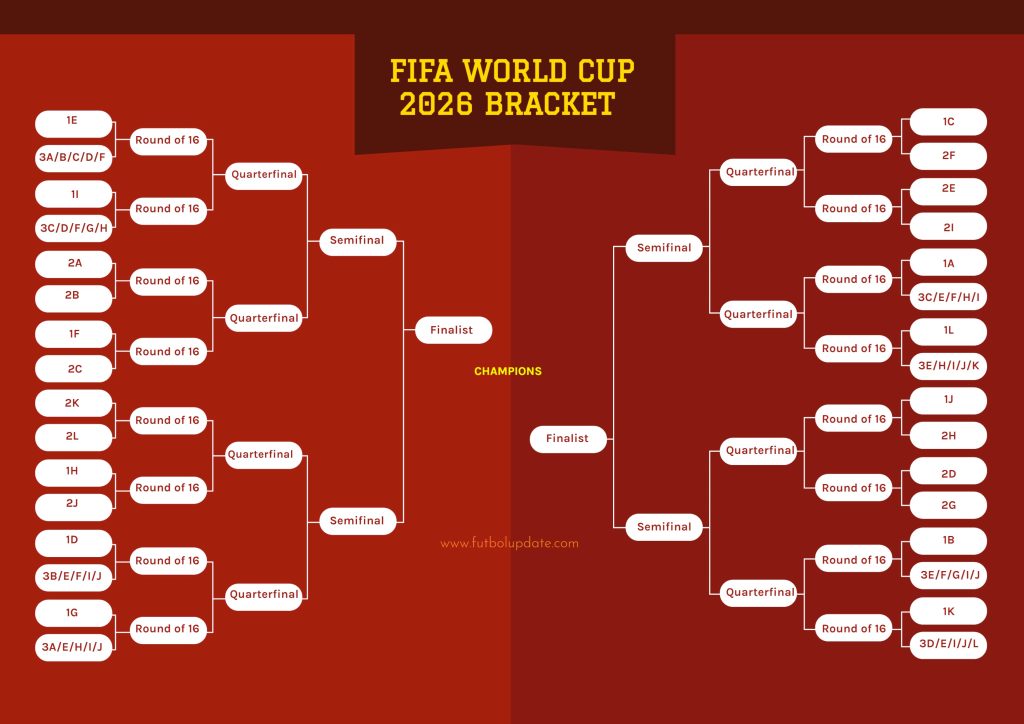
The 2026 World Cup’s expanded 48-team format, played across venues in the USA, Canada, and Mexico, fundamentally alters the path to the final.
With 12 groups of four teams, followed by a Round of 32, the road to the trophy is one game longer than in previous editions — Eight matches in total rather than seven.
England’s path to the 2026 World Cup final has been determined following the final tournament draw, which placed them in Group L.
Group L Fixtures
England will play all three group matches in North America.
- England vs. Croatia: June 17, 2026 – AT&T Stadium, Arlington, TX
- England vs. Ghana: June 23, 2026 – Gillette Stadium, Foxborough, MA
- Panama vs. England: June 27, 2026 – MetLife Stadium, East Rutherford, NJ
Potential Knockout Routes
England’s exact route depends on their final position in Group L. FIFA’s “tennis-style” seeding ensures they cannot face other top-four seeds (Spain, Argentina, and France) until at least the semi-finals or the final, provided they win their groups.
| Round | Route 1: Group Winner (Likeliest) | Route 2: Runner-up | Route 3: 3rd Place Finish |
|---|---|---|---|
| Round of 32 | July 1 in Atlanta vs. 3rd place from Group E/H/I/J/K | July 2 in Toronto, Group K Runner-up | July 3 in Kansas City, Winner Group K |
| Round of 16 | July 5 in Mexico City, Winner of Group A vs best third-placed team (Groups C/E/F/H/I) | July 6 in Arlington, Winner Group H vs Runner-up Group J | July 7 in Vancouver, Winner of Group B vs best third-placed team (Groups E/F/G/I/J) |
| Quarter-final | July 11 in Miami, Winner Match 91 | July 10 in Inglewood, Winner Match 93 | July 11 in Kansas City, Winner Match 95 |
| Semi-final | July 15 in Atlanta, Winner Match 100 | July 14 in Arlington, Winner Match 97 | July 15 in Atlanta, Winner Match 99 |
| Final | July 19 at MetLife Stadium, NJ | July 19 at MetLife Stadium, NJ | July 19 at MetLife Stadium, NJ |
What is stopping England From Winning The 2026 World Cup
No analysis of England’s chances is complete without an unflinching look at the obstacles.
Tactical Rigidity Under Pressure. England have a tendency to become passive and defensive when protecting a lead, inviting pressure rather than maintaining territorial control.
In the biggest games — France in Qatar, Italy in the Euro 2020 final — England managed leads rather than extended them, and paid the price. Tactical inflexibility at decisive moments remains a risk.
Defensive Vulnerabilities. The centre-back pairing, while technically accomplished, has been exposed against the pace and movement of elite forwards.
Kylian Mbappé tormented England in Qatar. The question of how to defend the world’s fastest and most incisive attackers — whether it is Mbappé, Vinicius Jr., or the next generation of Brazilian wide forwards — is one that England’s coaching staff have not yet answered convincingly.
Over-Reliance on Key Players. The system functions best when Bellingham, Saka, and Kane are all performing. When one of the three is below his best — through fatigue, injury, or the inevitable variance that affects even elite players — England can look surprisingly ordinary.
Tournament campaigns of seven games place significant physical demands on the key creative players, and England’s coaching staff will need to manage that load carefully.
Penalty Shootouts. England’s record from the spot has improved significantly — they won their first competitive shootout in a major tournament at the 2018 World Cup against Colombia, and converted in the Euros.
But the spectre of penalty heartbreak lingers, and in a tight tournament, a single missed spot-kick can undo everything that came before it.
England vs Top Rivals – Who Has the Edge?
When placed alongside their most likely title rivals, England’s relative strengths and weaknesses come into sharper focus.
England vs France
France remain the most complete team in world football at the time of writing.
Their depth of talent — produced by an extraordinary pipeline that runs through the domestic league and the African diaspora — is unmatched.
Kylian Mbappé is the best player on the planet, and with Antoine Griezmann’s influence on the team and an engine room of technically gifted midfielders, France present a comprehensive challenge in every area of the pitch.
Where England can compete: the midfield battle. If Bellingham is the dominant figure in the England XI, he can match or exceed what any French midfielder offers.
Rice provides the defensive cover that limits the damage Mbappé can do when France transition. In attack, Kane against French centre-backs is a compelling duel.
Head-to-head, France edge England on overall squad quality and proven tournament-winning mentality — but England’s best can match France’s best, which is not something that was true five or ten years ago.
England vs Brazil
Brazil’s return to South American footballing dominance will be at full force by 2026.
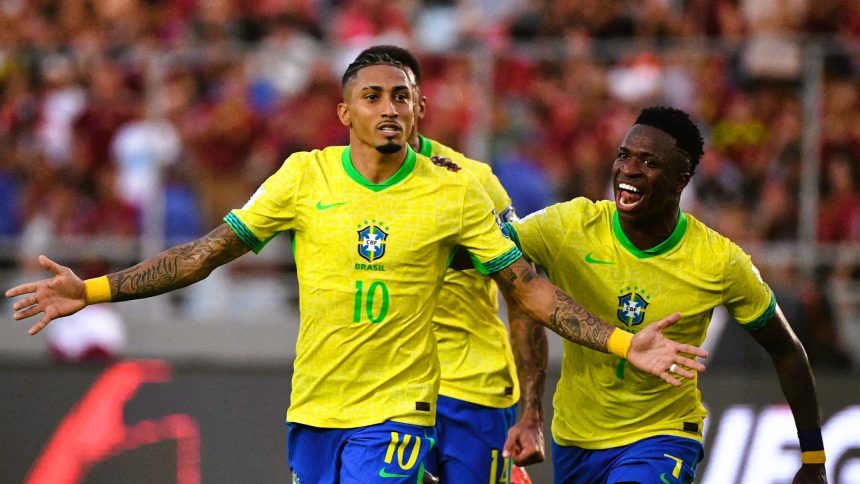
Vinicius Jr. will be 25 and approaching the peak of his powers as the most electric wide forward on the planet.
Supporting him will be Raphinha, Rodrygo, Endrick, and a generation of technically gifted midfielders schooled in European football.
Brazil’s attacking depth is their greatest strength — England’s defensive structure will be tested like never before by the speed and creativity of the Brazilian front line.
England’s edge over Brazil comes in midfield control and set-piece effectiveness, where Rice and Bellingham can impose structure that traditional Brazilian midfielders struggle to replicate.
England vs Argentina
Argentina arrive at 2026 as defending champions, and that matters.
The winning culture, the confidence, the belief that they can do it again — all of that is a genuine asset.
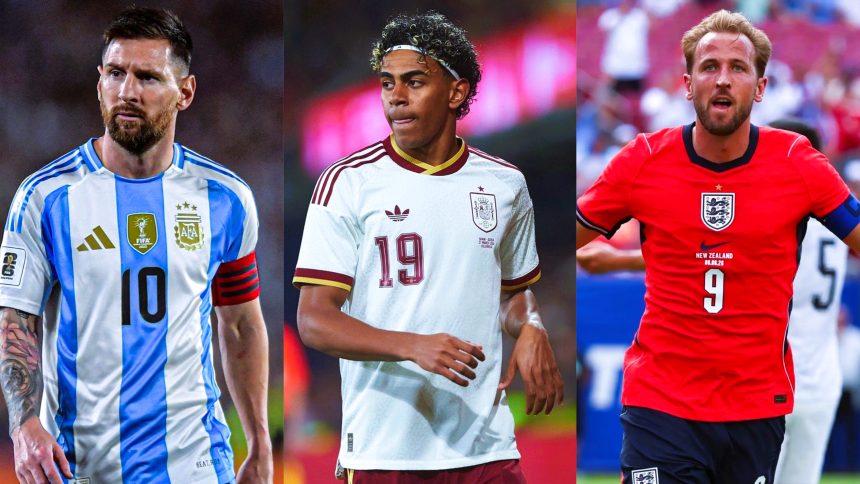
Lionel Messi will be 38 and, while he may play a reduced role, his presence shapes the psychology of the entire squad.
The question for Argentina is what happens when the Messi era truly ends, and 2026 may be the tournament where that transition becomes fully visible.
England, with the age advantage across their squad, hold the upper hand in terms of physical intensity over seven matches.
England’s edge here is energy, depth, and the fact that the next Argentine generation — talented as it is — has not yet proven itself at a World Cup without Messi as the primary architect.
Which key player from England will perform best in the 2026 World Cup?
Jude Bellingham
The most likely candidate for England’s standout performer. At 22, playing at the peak of his physical powers and at a club, Real Madrid, that demands and produces big-game performances, Bellingham has every attribute required to be the defining player of a tournament.
His range of passing, his goalscoring from midfield, his press resistance, and his leadership presence make him the most complete English midfielder since Paul Scholes, but with considerably more physical dynamism.
If England win in 2026, Bellingham’s name will be at the centre of every significant moment.
Bukayo Saka
the second most likely candidate and, in many ways, the safer bet. Saka’s consistency is extraordinary — he does not have poor tournaments.
He creates, he scores, he works defensively, and he rarely squanders big chances. At 24, he will be mature but not yet at the age where the physical demands of a long tournament become a concern. Saka in 2026 will be the player that every opposition coach fears most from England.
Harry Kane
The English Striker carries the obvious caveat — a major tournament without a meaningful goal from Kane is hard to imagine, given his output for club and country.
His record-breaking England goal tally speaks for itself, and at 32, he will be motivated by the knowledge that 2026 may be his last realistic chance to win a major trophy at international level.
That hunger often produces the most determined performances.
Dark Horse Pick: Cole Palmer
If Palmer continues his trajectory from the 2024-25 Premier League season, where he was among the most creative and productive players in European football.
His creativity from the right half-space could provide an entirely different dimension to England’s attack when introduced from the bench or if rotated into the starting XI.
Palmer’s ability to find pockets of space, play quick combination passes, and score from distance makes him the ideal wildcard option that every tournament-winning squad needs.
Final Prediction – How deep will England go in the 2026 World Cup?
Prediction: Final. Possible Winners.
England will reach the final of the 2026 World Cup. This is not sentiment.
It is the logical conclusion of a squad that is peaking at the right time, gaining tournament experience with every campaign, and competing in a format that rewards depth.
A 48-team World Cup played across three host nations creates a longer tournament — one that suits squads with quality throughout, rather than teams that rely on a single elite XI. England benefit from that structure more than almost any rival.
The final, most likely against France or Brazil, will be decided by the fine margins that always separate the very best.
A penalty shootout is a realistic scenario, and while England’s record has improved, the risk remains.
But on balance, the squad that takes the pitch for England in the final of the 2026 World Cup will be the best England side assembled since 1966 — older, wiser, more experienced, and more ruthless than any of its predecessors.
If Bellingham produces a Messi 2022-level tournament performance — sustained brilliance across seven matches — England can win it.
That is a genuine, evidence-based possibility rather than a dream. For the first time in a long time, hope and reason are pointing in the same direction.
FAQs – England’s chances as 2026 World Cup favorites
Will England win the 2026 World Cup?
England are among the two or three most likely winners of the 2026 World Cup, with an estimated win probability of 20-22%.
Who is England’s most important player?
Jude Bellingham. He is the engine of England’s system — the player who both controls games and changes them, who breaks defensive lines with his movement and creates the space that Kane, Saka, and Foden exploit.
What are England’s odds to win the 2026 World Cup?
England are typically priced between 5/1 and 8/1 to win the tournament, depending on the bookmaker and timing of the bet.
This places them among the top three favourites alongside France and one of Brazil or Argentina.
When did England last win the World Cup?
England’s only World Cup triumph came in 1966, when they hosted the tournament at Wembley and defeated West Germany 4-2 in the final.
Geoff Hurst completing a hat-trick in a game that still defines English football’s relationship with international success.
Who are England’s biggest rivals at the 2026 World Cup?
France are England’s primary rival and the team most likely to stand between England and the trophy, based on current squad quality.
Brazil and Argentina are the other principal threats, with Spain — the reigning Euro champions — also capable of mounting a serious challenge.