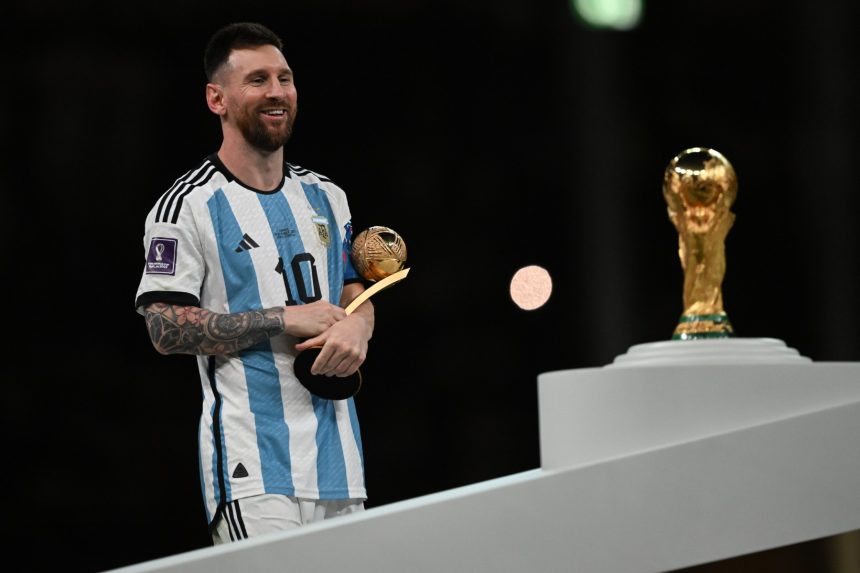









On the night of December 18, 2022, inside a swirling Lusail Stadium, Lionel Messi lifted the FIFA World Cup trophy, and the universe finally seemed to sigh with relief.
The greatest footballer who ever lived had the only thing missing from his impossibly decorated career.
Argentina were world champions. The tears were real, the joy was uncontrollable, and somewhere in the back of every football fan’s mind sat a single nagging question: Will we ever see him do this again?
Three and a half years later, the 2026 FIFA World Cup prepares to unfold across the United States, Canada, and Mexico, and Argentina travel as defending champions.
They come armed with the same core of players who conqured Qatar, a generation of extraordinary young talent emerging behind them, and a coach in Lionel Scaloni who has built one of the most cohesive national team units in the world.
They also come with Messi aged 39 at the tournament’s outset, still capable of the extraordinary, but carrying the quiet finality of a man aware that time, even for geniuses, does not stand still.
This is the story of whether Argentina can do what almost no team in the modern era has managed: win back-to-back World Cups, and the players who will determine whether that historic feat becomes reality.
But it is also, inescapably, a story about one man and what this tournament means to him, to his country, and to football itself.

Why 2026 Could Be Messi’s Last World Cup
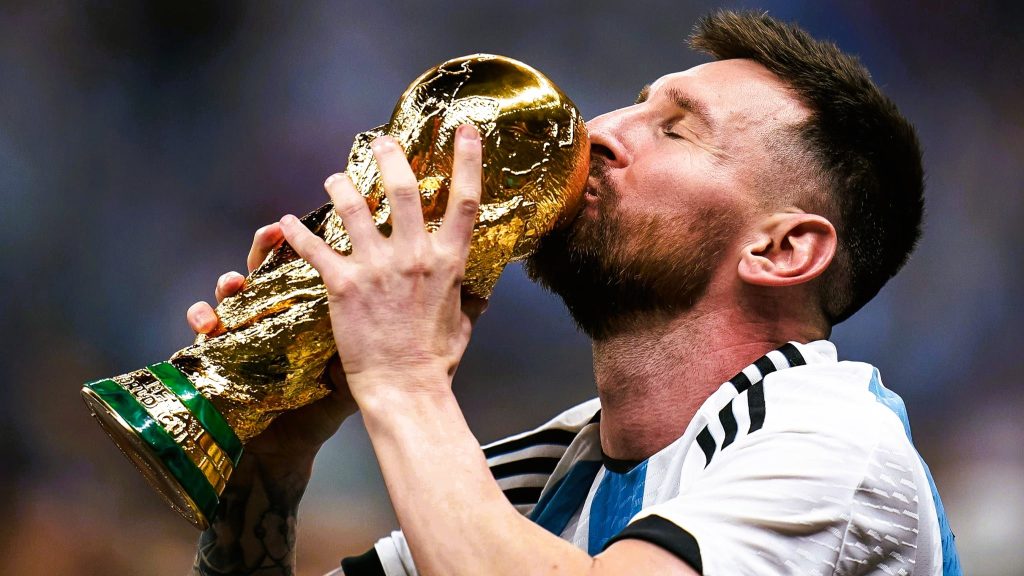
No serious person within football genuinely believes Messi will still be competing at the 2030 World Cup.
At 38 or 39, having spent over two decades at the highest level, the mathematics of elite sport makes a 7th World Cup campaign essentially impossible.
That reality has never been stated aloud by Messi himself with any particular drama.
He is not a man who traffics in theatrical declarations, but it hangs over the 2026 tournament like an unavoidable sense that this may be his final World Cup.
Messi has been the beating heart of the Argentine national team since he debuted as a teenager in 2005.
He has scored 109 international goals, accumulated 180-plus caps, and been the single most important player at every major tournament he has attended.
The 2022 World Cup in Qatar was the crowning moment, the culmination of an improbable journey that included heartbreak in 2014, disappointment in 2018, and the eventual breakthrough.
To leave international football with a second gold medal as a defending champion would be a conclusion so perfectly written that fiction would struggle to replicate it.
There is also, of course, a version where the burden becomes too much.
Where the opposition’s tactical sophistication, the physical demands of a 48-team tournament, or the brutal lottery of knockout football deny Argentina the fairy-tale ending.
Messi has experienced that kind of disappointment before. He knows better than anyone that greatness does not guarantee glory.
But the motivation to go out as a two-time world champion, on the grandest stage the sport provides, is as powerful a driving force as football can offer.
Can Argentina Repeat History?
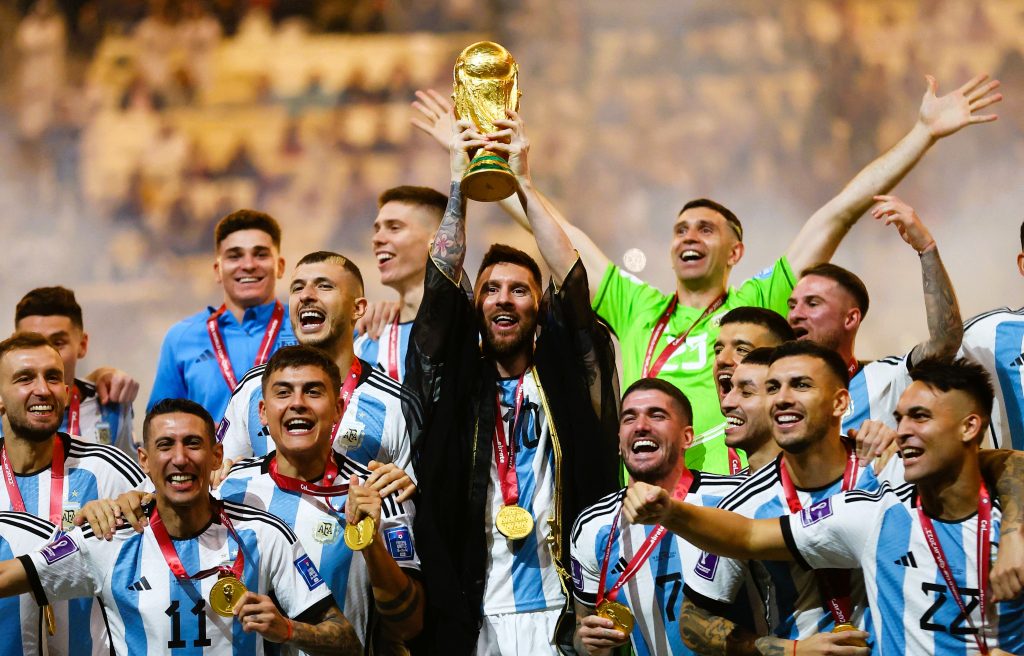
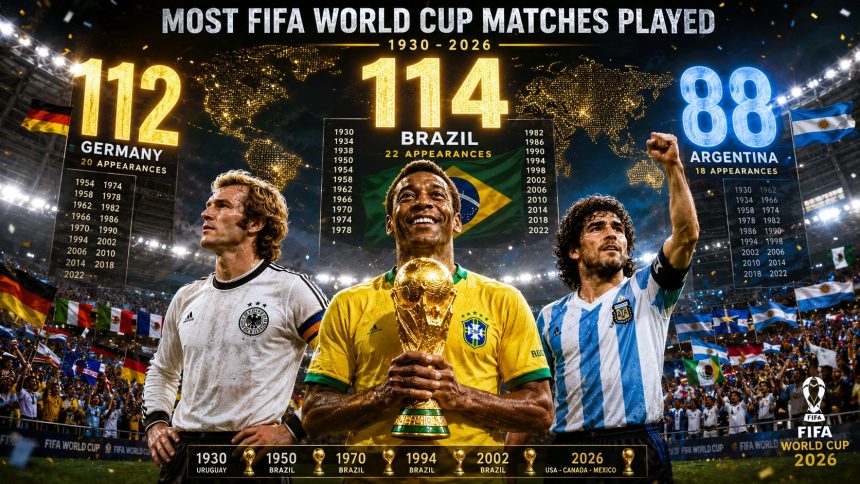
The difficulty of defending a World Cup title is not overstated. Since Brazil achieved back-to-back victories in 1958 and 1962, no nation has successfully retained the trophy.
Italy tried in 1938 and succeeded, making them the only other back-to-back champions in history. France came agonisingly close in 2022, losing the final on penalties despite a remarkable individual performance from Kylian Mbappé.
The pattern is clear: the world catches up, injuries accumulate, tournament chaos intervenes, and defending champions almost always fall short.
Argentina are aware of this history. Scaloni has spent the years since Qatar quietly managing the transition — preserving the core that won in 2022 while carefully integrating younger players capable of carrying the team beyond the Messi era.
The result is a squad that represents both Argentina’s present and its future simultaneously, which is exactly the balance any coach would want heading into a tournament of this magnitude.
The tactical blueprint remains recognisable: a pragmatic, defensively organised structure built around midfield industry and individual quality in the final third.
Scaloni has never been a manager who imposes a rigid philosophical system — he adapts, he rotates, he trusts the players in front of him.
That flexibility, paradoxically, is one of Argentina’s greatest strengths in a tournament where no single game plan survives contact with every opponent.
Historical Context
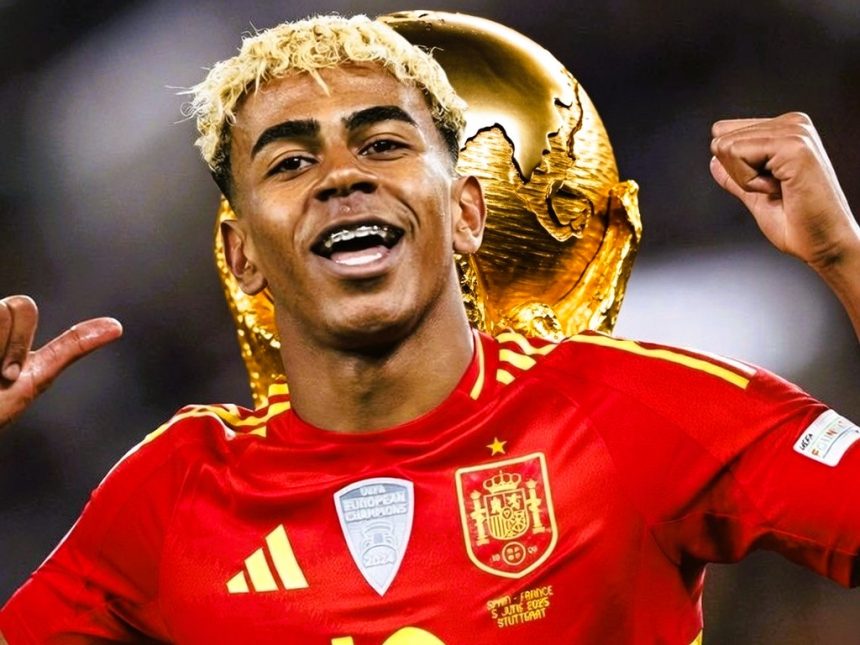
Only Italy (1934, 1938) and Brazil (1958, 1962) have ever retained the FIFA World Cup. France, Germany, and Spain — all dominant nations of the modern era — each failed to defend their titles.
Argentina’s attempt to join this exclusive club represents one of the great challenges in international football.
The Key Players Who Could Define Argentina’s 2026 Campaign
Argentina’s title defence will be shaped by a combination of proven stars, experienced warriors, and emerging talents.
These are the players Scaloni will turn to when the pressure is highest and the margins are thinnest.
Lionel Messi: Forward (Inter Miami CF)
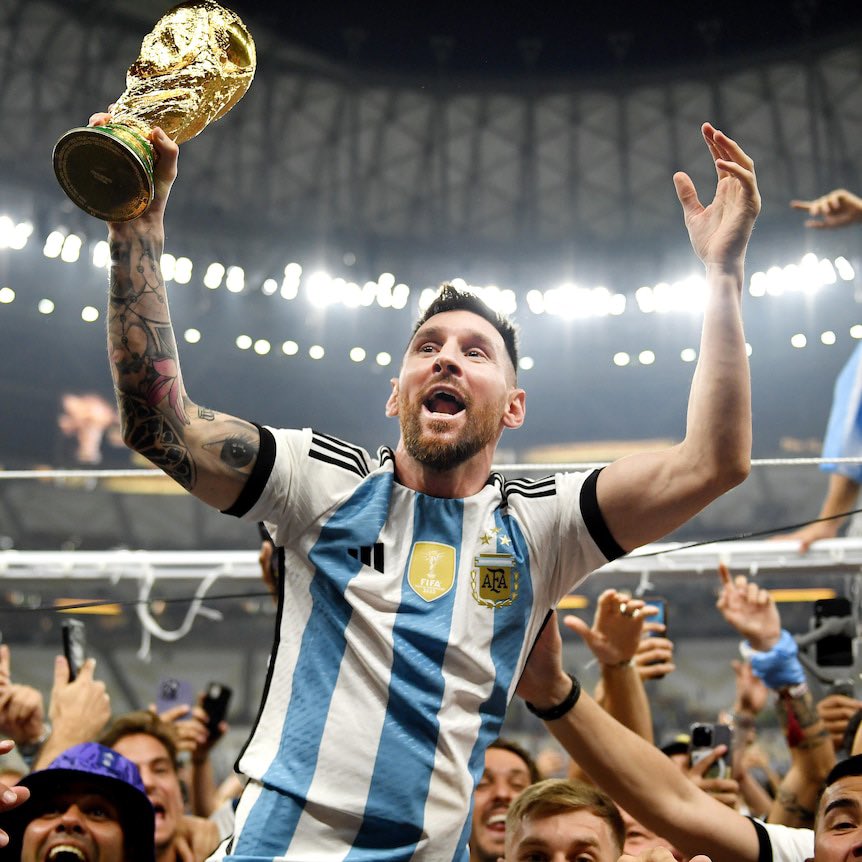
Lionel Messi in 2026 is different to Messi in 2014, but not in the way his critics predicted. He is not slower so much as more deliberate.
At Inter Miami, free from the physical demands of elite club football’s weekly intensity, Messi has remained an extraordinary performer.
Still capable of the dribble that leaves defenders rooted, still finding passes no one else conceived of, still scoring goals that seem to break the laws of geometry.
His importance to Argentina cannot be quantified by statistics alone.
He is the player around whom the team’s entire attacking structure is built, the focal point opponents must account for, and the talisman whose presence alone raises the belief of every player beside him.
He will wear the number 10 shirt, captain the side, and remain, even at 39, the most dangerous player on the pitch when everything is right.
What he adds beyond football is harder to measure and more important than it sounds. Messi provides the group with an emotional centre of gravity.
His calm in crisis, the ice-cold penalty conversion against France in the 2022 final, and the composed brilliance in the semifinal against Croatia are the thing that separates genuinely great players from mythological ones.
If Argentina go deep in 2026, Messi’s fingerprints will be on it.
Julián Álvarez: Centre-Forward (Atlético Madrid)
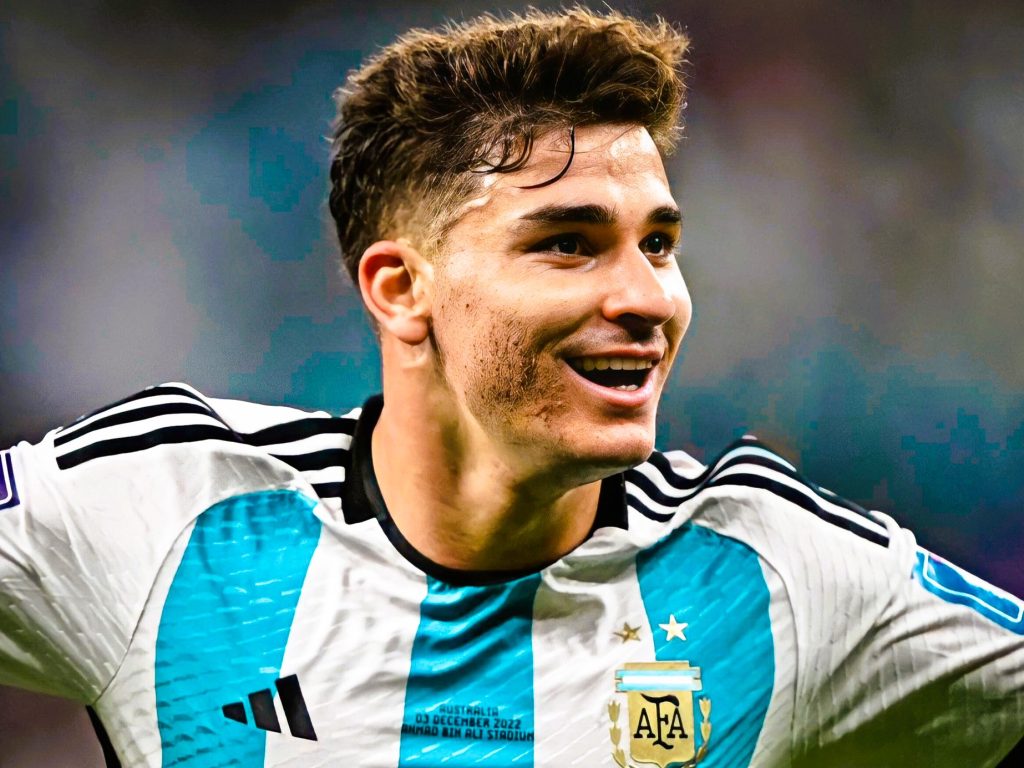
Álvarez arrived at the 2022 World Cup as a promising young striker and left it as one of the tournament’s defining figures.
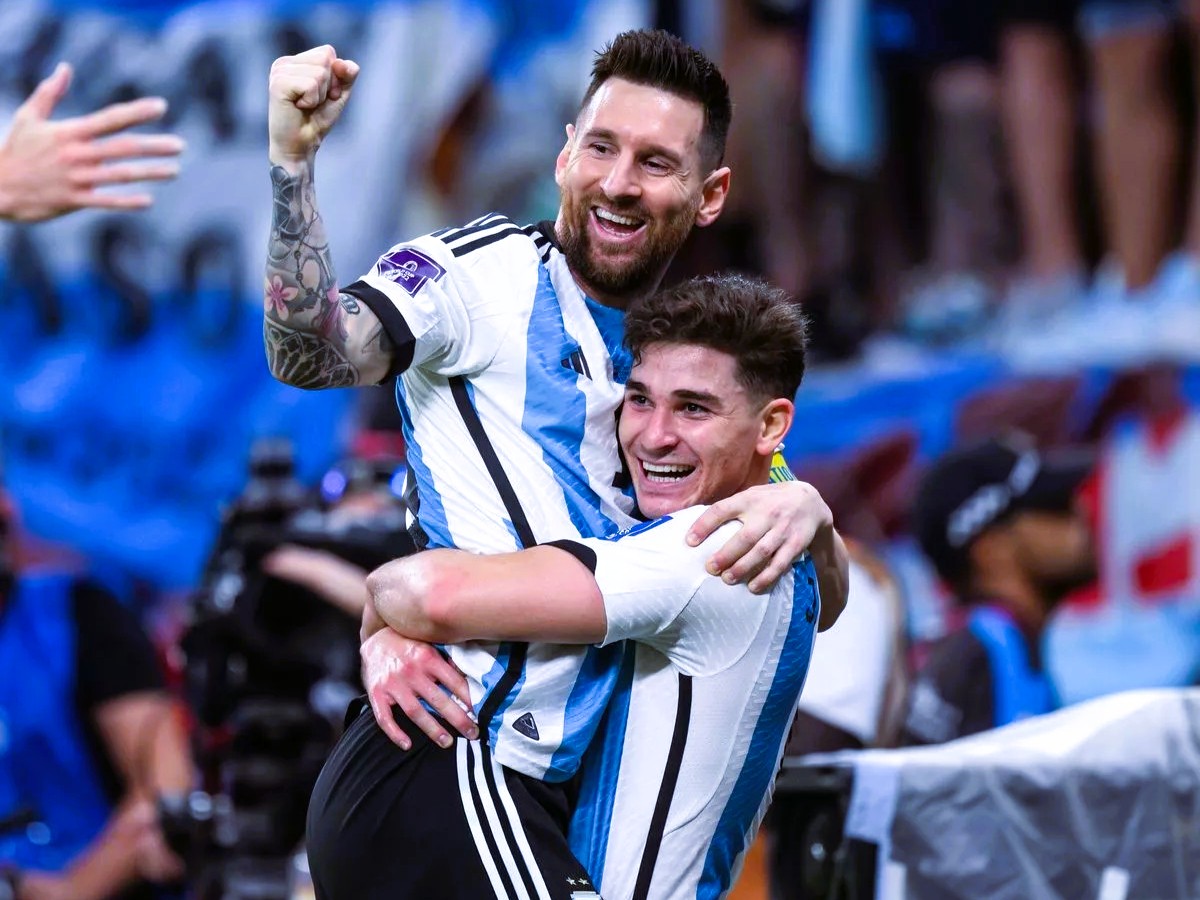
His four goals, including a brilliant solo effort against Croatia that drew comparisons to Diego Maradona’s legendary run in 1986, confirmed that Argentina had found the centre-forward who would carry their attack for the next decade.
At Atlético Madrid, where he moved from Manchester City ahead of the 2025-26 season, Álvarez has continued to develop into a complete modern centre-forward.
His movement is relentless, his finishing has become more clinical, and his ability to press aggressively from the front gives Argentina an added defensive utility.
He is, crucially, the player who can shoulder the scoring responsibility when Messi inevitably drops into deeper areas of the pitch.
At 24, Álvarez is entering the prime years of his career. For Argentina, the timing could not be more fortunate.
He arrives at his second World Cup as a proven performer at the highest level, with a significant tournament pedigree and the hunger of someone who knows what it feels like to win — and wants more of it.
Lautaro Martínez: Striker (Inter Milan)

While Lautaro Martínez did not score in the 2022 World Cup final, his contributions throughout Argentina’s victorious era have made him one of the most important forwards in Scaloni’s squad.
But his importance to this Argentina squad extends beyond single-game heroics.
At Inter Milan, Martínez has been one of the most consistently devastating strikers in world football.
His combination of power, technique, and positional intelligence gives Scaloni a forward who can lead the line against any style of opposition.
He is particularly effective against deep defensive blocks. The kind of organised resistance that eliminates teams through frustration because his movement and link-up play create space for the players around him.
The interplay between Martínez and Álvarez, alongside Messi in a fluid attacking three, remains one of the most dangerous attacking combinations in international football.
Understanding who starts, who rotates, and how Scaloni manages the relationship between his three most potent forwards will be one of the tournament’s most interesting tactical sub-plots.
Enzo Fernández: Central Midfielder (Chelsea)
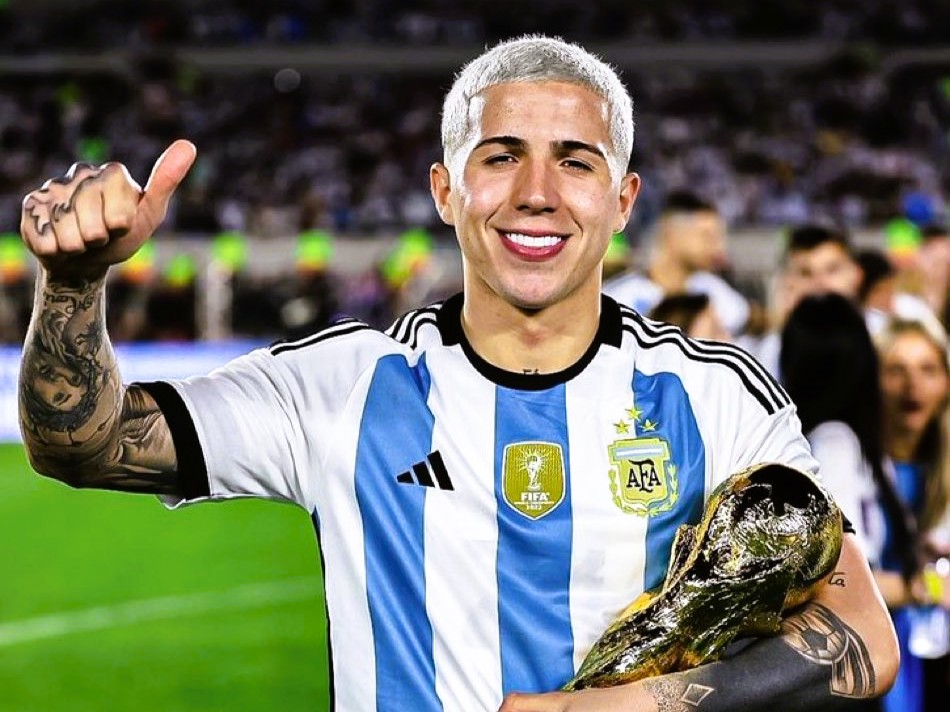
Enzo Fernández won the Best Young Player award at the 2022 World Cup with a performance of such authoritative maturity that many neutrals genuinely forgot they were watching a 21-year-old.
His ability to control the tempo of a game, his intelligent positioning, and his capacity for ball-winning under pressure make him the most important figure in Argentina’s midfield architecture.
At Chelsea, Fernández has experienced the inevitable difficulties of a young player adapting to England’s physical demands, but he has emerged from that transitional period as a more rounded, more powerful version of himself.
His range of passing both short and long has improved considerably, and his reading of the game has developed the kind of tactical sophistication that separates good midfielders from great ones.
Fernández is the player who makes Argentina function between the lines. When he is at his best, the team breathes more easily.
The ball circulates with purpose. The press is coordinated. His partnership with Mac Allister in Argentina’s double-pivot is one of the most balanced midfield combinations in international football.
Alexis Mac Allister: Midfielder (Liverpool)

Mac Allister is the type of midfielder football romantics love: technically immaculate, positionally astute, capable of decisive contributions without seeking the spotlight.
His time at Liverpool under Arne Slot has made him a more complete player — more aggressive in the press, more decisive in transitions, and more confident in the deeper areas where the game is won and lost.
For Argentina, he provides a creative stability that allows Fernández to be more dynamic.
Mac Allister’s ability to receive in tight spaces, turn cleanly, and progress the ball forward with one or two touches is exactly the kind of quality that keeps possession alive under pressure.
He also adds an underrated goal threat from beyond the box — a recurring feature of his play that opponents occasionally forget to account for.
Emiliano Martínez: Goalkeeper, Aston Villa

“Dibu” Martínez is, statistically, one of the two or three best goalkeepers in the world.
His performance in the 2022 World Cup, including those two penalty saves in the quarterfinal shootout against the Netherlands and his tournament-saving stop from Randal Kolo Muani in the dying seconds of normal time in the final.
His save statistics at Aston Villa continue to place him among the elite in the Premier League.
He is a commanding presence, a superb shot-stopper, and a penalty specialist whose psychological games with opposing takers — controversial as they occasionally are — deliver tangible results.
Argentina will go into 2026 knowing that at least one position in their squad is occupied by a world-class performer at the top of his powers.
Argentina’s Rising Generation
One of the most compelling storylines of Argentina’s title defence is the emergence of a generation of young players who threaten to define Argentine football’s next chapter.
Scaloni has resisted the temptation to rush these talents into the squad prematurely, but their time has arrived — and their impact on 2026 could be transformative.
Thiago Almada:Attacking Mid (Atlético Madrid)

Almada represents a different kind of Argentine footballer: technically adventurous, positionally fluid, and capable of conjuring creative solutions in spaces where more conservative players simply recycle possession.
His ability to play through tight lines, find pockets between midfield and defence, and unlock deep-lying opposition structures makes him an interesting weapon for Scaloni to deploy.
The question around Almada has always been whether his qualities, undeniable at club level, can be consistently applied at the intensity of international football’s knockout stages.
The 2026 World Cup will represent the definitive test of that hypothesis. If he can perform, Argentina gains a creative dimension that makes them considerably harder to defend against.
Giuliano Simeone: Winger (Atlético Madrid)

There is something poetically fitting about Giuliano Simeone representing Argentina at a World Cup.
The son of Diego, one of football’s most ferociously competitive figures, Giuliano has grown up inside elite football’s most intense culture — and it shows in every aspect of his game.
He is not a player who shrinks from the occasion. If anything, he seems to grow larger under pressure, which is the most useful quality a young player can possess at a tournament like this.
At Atlético Madrid, Giuliano Simeone has developed into a winger of genuine quality: quick, direct, capable of carrying the ball at pace through compressed defensive structures.
His ability to play on either flank with equal effectiveness gives Scaloni a versatile wide option that can be deployed tactically to exploit specific opposition weaknesses.
He is direct without being reckless, creative without being predictable, and hungry in the way that only players who have been watching their whole lives and are finally participating can be.
The narrative weight of carrying his father’s name at a World Cup is real, but Giuliano Simeone has shown through his performances at club level that he is here on his own merits.
At this tournament, representing a country where the pressure to perform is woven into the national identity, that psychological foundation may prove to be one of his greatest assets.
Nicolás Paz: Attacking Midfielder (Como 1907)
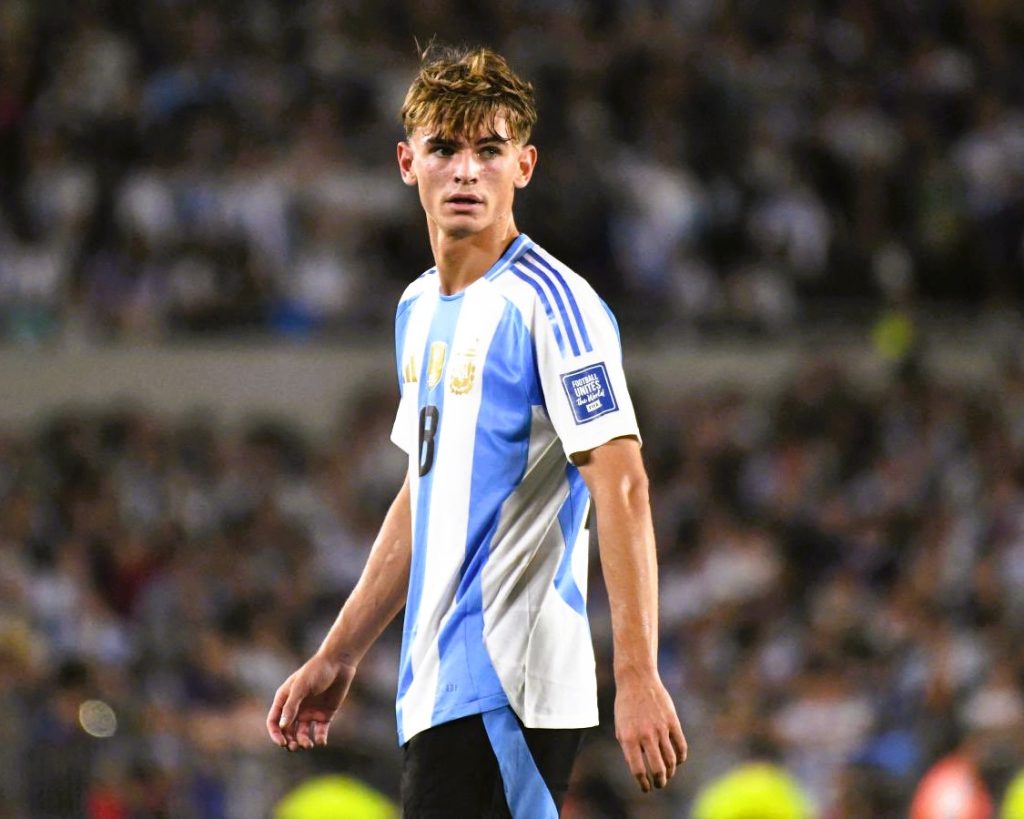
If one player in Argentina’s 2026 squad carries the element of genuine surprise, it is Nicolás Paz.
The son of former Real Madrid midfielder Pablo Paz, Nicolás grew up inside football’s infrastructure before quietly announcing himself as something entirely his own.
A technically sophisticated, tactically intelligent midfielder whose decision-making in tight spaces belongs to a player several years his senior.
At Como, the newly promoted Serie A side backed by ambitious ownership and a vision of progressive football, Paz has been the creative nucleus around which much of their most interesting play has been built.
He drifts between the lines with a naturalness that cannot be coached — finding angles others don’t see, receiving under pressure without ever seeming rushed, and delivering the kind of through-balls and diagonal switches that unlock even well-organised defensive structures.
In a league as tactically demanding as Serie A, where space is a premium and opponents are ferociously well-drilled, Paz has not just competed — he has flourished.
What makes him a potentially transformative option for Scaloni is precisely his unpredictability.
Argentina’s opponents will have comprehensive dossiers on Messi, Álvarez, Fernández, and Mac Allister.
Paz represents a wildcard whose rhythms and instincts are less mapped, less anticipated, and therefore harder to nullify.
He can play as a second striker, a ten behind the front two, or as a hybrid midfielder who ghosts into dangerous areas from deep.
That versatility is a genuine tactical asset in a tournament where Scaloni may need to solve different problems against different opponents.
He is young enough to still be developing, which is both his limitation and his liberation.
At a World Cup, where the margin between timidity and brilliance is razor-thin, players who have nothing to lose and everything to prove are sometimes the ones who define it.
Biggest Strengths and Weaknesses
No squad heading into a World Cup is perfect, and Argentina’s — for all its considerable quality — carries identifiable vulnerabilities alongside its clear strengths.
An honest assessment of both is essential to understanding their realistic chances.
| Area | Assessment | Verdict |
| Attack | Messi, Álvarez, Lautaro, Garnacho, N. González — world-class depth across all forward positions. | Elite |
| Midfield | Fernández and Mac Allister form one of the tournament’s best double-pivots. De Paul adds intensity and experience. | Very Strong |
| Defence | Romero and L. Martínez excellent. Dibu in goal world-class. Full-back positions occasionally exposed against pace. | Strong |
| Squad Depth | Beyond the first XI, quality drops noticeably. Injuries to key players would test Scaloni severely. | Moderate |
| Tactical Flexibility | Scaloni adapts well but the team can be structured in limited ways without Messi at full capacity. | Dependent on Messi |
| Psychological Strength | Qatar veterans know how to win. Experience of pressure moments — penalties, extra time, must-win games — is invaluable. | World-Class |
Can Argentina Become Back-to-Back World Champions?
The honest answer is: yes. Not easily, not inevitably, but genuinely and plausibly. Scaloni’s side are ranked among the two or three best squads at this tournament for a reason.
The core that won in Qatar is still intact, supplemented by younger players who have elevated the overall quality of the group.
Emiliano Martínez remains a match-winning force in a tournament where penalty shootouts eliminate approximately a third of all teams.
Messi, at 39, is still capable of producing the kinds of performances that change the nature of a football match.
The path to back-to-back glory requires luck alongside quality — the favourable draw, the goalkeeper who reaches something unsaveable in extra time, the injury that misses by a day. Argentina cannot control those variables.
What they can control is the preparation, the tactical cohesion, and the collective belief that they are capable of winning this tournament. On all three counts, they are as well-positioned as any team in the competition.
Argentina World Cup 2026 Analysis
Argentina’s greatest asset is not tactical or physical. It is the unshakeable belief, built through hardship and forged in Lusail, that they know how to win when everything is at stake.”
The expanded 48-team format introduces new variables. More matches, slightly longer recovery periods, and the mathematical reality that more weaker teams populate the early rounds.
This could benefit Argentina’s older players by easing them gradually into the tournament’s rhythm.
The flip side is a longer road to the final, requiring more of every squad member and putting greater pressure on depth.
The emergence of González and Giuliano Simeone as options on the flanks gives Scaloni a broader selection pool than he had in Qatar, which is precisely the kind of insurance policy a manager needs across seven matches.
Whatever happens across the stadiums of North America this summer, Lionel Messi’s final World Cup will be watched with a reverence that football reserves only for its true giants.
If Argentina lift the trophy again — in New York, in Los Angeles, in Dallas — it will be remembered as the greatest final chapter in the sport’s history.
That possibility alone makes this the most compelling story the 2026 FIFA World Cup has to tell.