







Few sporting relationships carry the same emotional weight as South America’s bond with the FIFA World Cup. Since the inaugural tournament on home soil in Uruguay in 1930, the continent has consistently produced some of the most electric, prolific, and technically gifted attackers the game has ever seen.
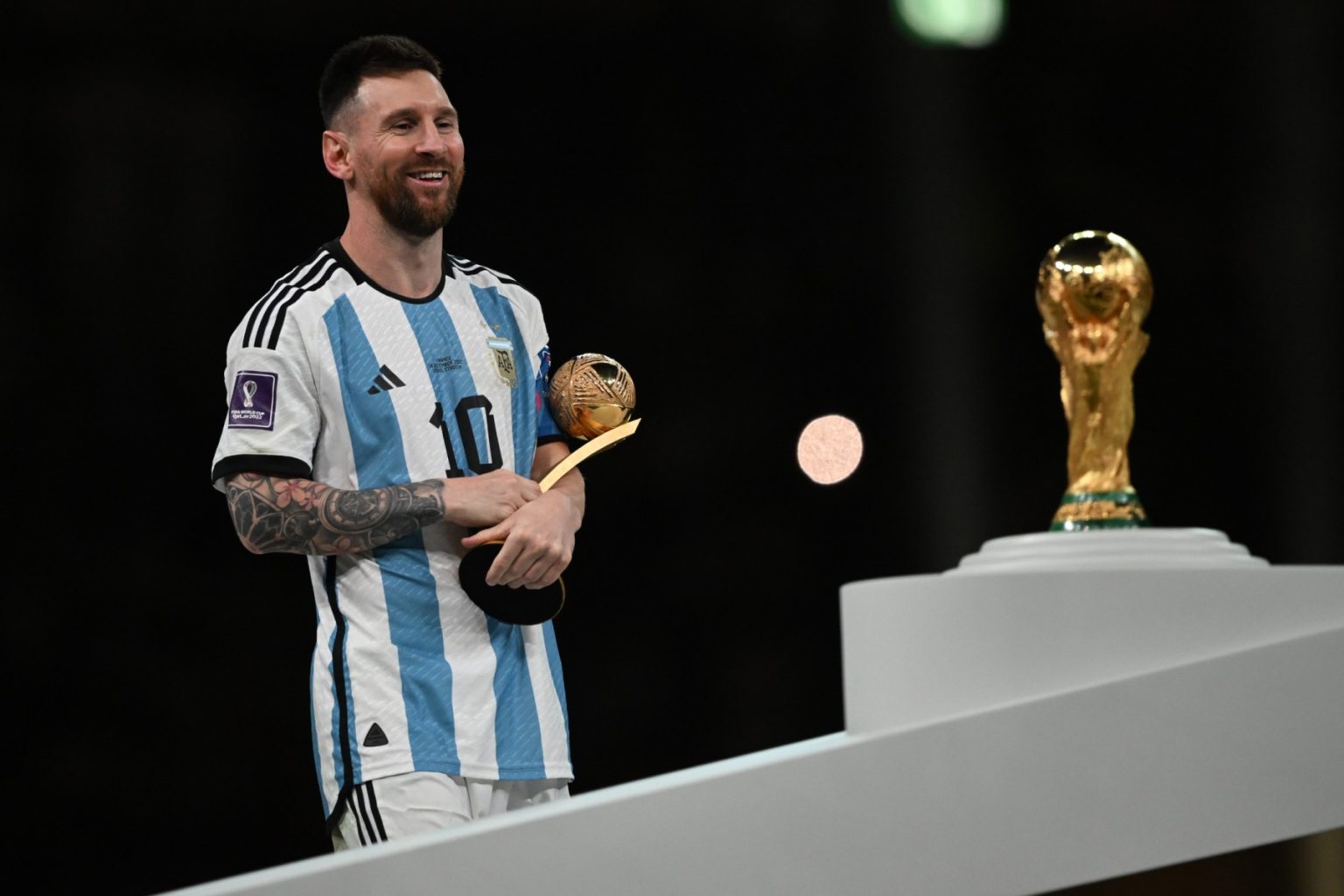
From the black-and-white footage of Pelé’s teenage genius in Sweden to Lionel Messi’s tearful golden embrace of the trophy in Qatar, South American football legends have etched their names into the World Cup’s permanent story.
The FIFA World Cup all-time top scorers list is a testament to this dominance.
While Europe has contributed its share of marksmen, the continent of CONMEBOL has delivered a disproportionate number of the tournament’s truly defining individual performances.
World Cup goals carry a unique gravity — a single strike can immortalize a career, while sustained scoring across multiple tournaments elevates a player into a global legend.
This article ranks and profiles the top South American World Cup top scorers in history, explores the defining Messi vs Ronaldo Nazário World Cup debate, and asks the central question captivating the football world heading into the 2026 tournament: Can Messi break the South American World Cup goal record?
Top South American Goal Scorers in FIFA World Cup History
Before diving into individual profiles, here is the current South American World Cup all-time scoring leaderboard among the continent’s standout contributors:
| Player | Country | WC Goals | Tournaments |
| Ronaldo Nazário | Brazil | 15 | 1994, 1998, 2002, 2006 |
| Lionel Messi | Argentina | 13 | 2006, 2010, 2014, 2018, 2022 |
| Pelé | Brazil | 12 | 1958, 1962, 1966, 1970 |
| Gabriel Batistuta | Argentina | 10 | 1994, 1998, 2002 |
| Teófilo Cubillas | Peru | 10 | 1970, 1978 |
| Jairzinho | Brazil | 7 | 1970 |
| Diego Maradona | Argentina | 8 | 1982, 1986, 1990, 1994 |
| Luis Suárez | Uruguay | 7 | 2010, 2014 |
Ronaldo Nazário – Brazil’s World Cup Icon

There is a reason the football world still refers to him simply as “The Phenomenon.” Ronaldo Nazário sits atop the South American World Cup scoring list with 15 goals across four tournaments — a feat as much about resilience as raw talent.

His greatest chapter came at the 2002 Korea-Japan World Cup, where he delivered one of the most iconic individual tournament runs in football history, scoring eight goals and leading Brazil to their fifth world title.
He combined explosive pace, close control, and cold-blooded finishing that made him essentially undefendable at peak form.
What makes Ronaldo’s World Cup legacy particularly remarkable is the biographical drama surrounding it.
Devastating knee injuries in 1999 and 2000 robbed him of years at the absolute summit of the game, yet he returned to dominate the sport’s grandest stage.
His 2002 Golden Boot performance — completed while playing for a nation that had missed him desperately — stands among the most compelling comeback stories in sporting history.
In 2006, at his fourth and final World Cup in Germany, an out-of-shape Ronaldo still managed three goals, becoming the first player to score eight goals in knockout matches across his World Cup career.
For the FIFA World Cup all-time top scorers list, he finished second only to Germany’s Miroslav Klose (16 goals), and he remains comfortably the highest-scoring South American player in World Cup history.
Lionel Messi – Argentina’s Record Chaser

To understand Lionel Messi’s World Cup journey is to understand the full arc of sporting greatness — the early promise, the painful near-misses, and finally, the transcendent crowning moment that defined everything.
Messi has scored 13 goals in 26 appearances across five World Cups, making him the all-time appearances leader and Argentina’s highest scorer in the tournament’s history.
His 2022 campaign in Qatar was the culmination of everything.
Scoring in every knockout match — including two goals in a final that many call the greatest ever played — Messi claimed the Golden Ball for a record second time and delivered the 2022 World Cup to Argentina after a 36-year wait.
He became the first player in World Cup history to both score and assist in three separate matches in a single edition. He also holds the unique distinction of being the only player ever to score World Cup goals in his teens, twenties, and thirties — a measure of his astonishing longevity.
At just two goals behind Ronaldo Nazário’s South American record of 15, the arithmetic of the record chase heading into 2026 is tantalizing. Messi needs three goals to overtake the Brazilian legend — a total that, in a deep Argentina run, is far from impossible.
Pelé – The First Global Superstar

Long before the word “GOAT” entered sporting vocabulary, there was Edson Arantes do Nascimento. Pelé scored 12 goals across four World Cups for Brazil — won three of them — and remains the benchmark against which all South American attackers are ultimately measured.
His 1958 debut in Sweden remains one of the most astonishing individual introductions to the World Cup stage in history.
At just 17 years and 239 days old, he became the youngest player ever to score in a World Cup — a record that stands to this day.
He then proceeded to score a hat-trick against France, add two more in the final against Sweden, and depart the tournament as football’s first true global phenomenon.
The images of a teenage Pelé weeping on the shoulder of his teammates after the final whistle became one of sport’s most enduring photographs.
His 1970 tournament in Mexico was the poetic coda — a masterclass in creative intelligence and leadership on a team widely considered the most gifted in football history.
He opened the scoring in the final against Italy, set up Jairzinho’s goal, and delivered the no-look pass for Carlos Alberto’s iconic clinching strike.
Brazil retired the Jules Rimet Trophy permanently that day. Pelé’s combination of goals, assists, and sheer football intelligence set a standard that South American World Cup scoring legends have been chasing ever since.
Gabriel Batistuta – Argentina’s Classic Striker

Gabriel Batistuta was everything a traditional number nine was supposed to be: physically imposing, technically excellent, and absolutely lethal in front of goal.
With 10 World Cup goals across three tournaments (1994, 1998, 2002), “Batigol” announced himself as the definitive Argentine goal scorer of his generation and one of the most feared strikers of the 1990s.
His place in World Cup history is secured by a remarkable feat that still stands unique in the tournament’s records: Batistuta is the only player in football history to score hat-tricks in two different World Cups — against Greece in 1994 and against Jamaica in 1998.
He scored with power, precision, and a ruthlessness that made him one of the most consistent finishers of his era. In the broader context of Argentina World Cup goal scorers, only Messi has since surpassed his total.
Batistuta’s legacy extends beyond statistics. He was a player who gave Argentina a genuine world-class threat through a difficult period between their 1986 triumph and the current Messi era — keeping the nation relevant and dangerous on the global stage through sheer individual quality.
Luis Suárez – Uruguay’s Modern Finisher
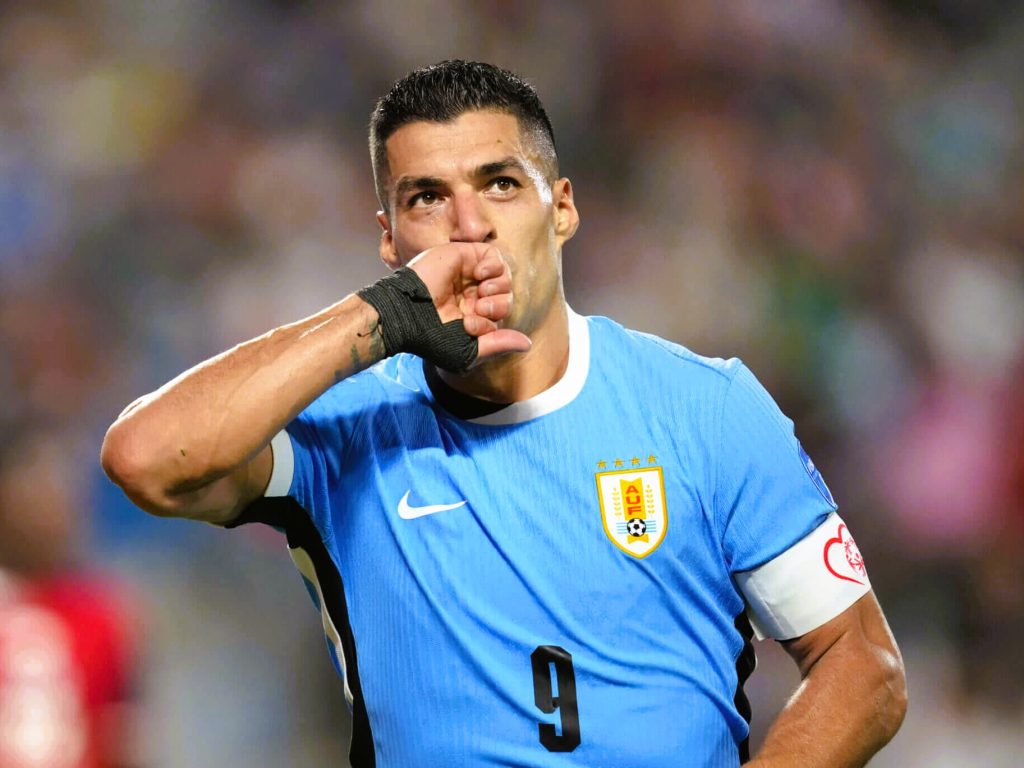
No South American attacker from a smaller nation has made a bigger individual impact on recent World Cups than Luis Suárez.
His seven World Cup goals across four tournaments barely tell the full story of his influence on Uruguay’s campaigns.
In 2010, Suárez was a relentlessly clever, technically sharp forward who gave La Celeste a genuine cutting edge that punched well above the nation’s weight in international football.
His 2014 World Cup — including a brace against England — showcased the clinical nature that made him a top European striker for over a decade.
As one of Uruguay’s World Cup top scorers in the modern era, Suárez’s legacy is that of a small nation’s biggest attacker: someone who consistently elevated his team’s ambitions through individual brilliance and pure competitive fire.
Messi vs Ronaldo Nazário: Who Has the Better World Cup Record?
The debate between Messi and Ronaldo Nazário’s World Cup stats is one of football’s most compelling analytical exercises.
Both are South American legends, both played across multiple cycles, and both delivered performances that will be discussed for generations. But a close examination reveals meaningful differences.
Goal Count Comparison
The headline numbers are clear: Ronaldo leads with 15 goals to Messi’s 13 across their respective careers.
However, the context matters enormously. Messi has played 26 World Cup matches to Ronaldo’s 19 — meaning Ronaldo’s scoring rate of approximately 0.79 goals per game is considerably higher than Messi’s 0.50.
Ronaldo scored his 15 goals in fewer appearances, which is a statistically significant advantage in efficiency terms.
That said, Messi’s 2022 campaign produced seven goals and three assists in seven matches — a contribution rate that arguably surpasses anything Ronaldo produced in a single tournament outside of 2002.
Big Game Impact and Finals Performance
This is where the comparison becomes nuanced. Ronaldo’s 2002 final brace against Germany was the defining statement of a champion at his best.
Messi’s performance in the 2022 final — two goals, the crucial equalizer, and the decisive penalty in the shootout against France — arguably surpassed it on the grandest possible stage, in what many regard as the greatest World Cup final ever played.
Messi also won the Golden Ball at both the 2014 and 2022 editions — the only player in history to win two individual World Cup tournament awards.
His influence on matches went far beyond goals: he was the creative engine, the defensive pressure valve, and the psychological cornerstone of Argentina’s entire campaign.
Consistency Across Tournaments
Ronaldo’s record was defined by two remarkable spikes: the extraordinary 2002 performance, and his 1998 final appearance overshadowed by the pre-match illness controversy against France.
Messi’s record spans five tournaments across 20 years, with productive contributions in four of the five (only 2010 was goalless). His 0.50-per-game average reflects a more sustained, deeper consistency across a longer World Cup career.
On balance: Ronaldo’s efficiency gives him an edge in pure striking terms; Messi’s overall impact and longevity make the comparison genuinely difficult to resolve with statistics alone.
Will Lionel Messi Break the South American World Cup Goal Record?
Messi’s Current Goal Tally
Messi enters the 2026 World Cup with 13 goals — two behind Ronaldo Nazário’s South American record of 15.
In the broader World Cup all-time scoring leaderboard, Germany’s Miroslav Klose holds the global record with 16 goals, meaning just four strikes would give Messi the outright all-time world record.
It is a tantalizing arithmetic that makes the 2026 tournament one of the most compelling record-chase storylines in recent football history.
Chances in 2026 World Cup
The central question heading into summer 2026 is whether Messi will be there at all — and growing evidence suggests he will be.
Having featured in every Argentina squad through the March 2026 international window, Messi has given every practical signal of participation.
His coach, Lionel Scaloni, has publicly guaranteed him a spot in Argentina’s preliminary roster, describing him as the only player automatically included in the 26-man squad.
Prediction markets currently price his participation at approximately 90 percent.
Messi himself has been characteristically measured but clear in his intent.
In multiple interviews, he has said, “It’s something extraordinary to be able to be in a World Cup, and I would love to be there, to be well, and be an important part of helping my team.” He has not confirmed participation unconditionally but has spoken of wanting to defend the title he describes as “the dream of my life.”
At 38 years old — turning 39 during the tournament on June 24, 2026 — he would join an exclusive group of outfield players to feature at a World Cup at that age.
But the expanded 2026 format, growing from 32 to 48 teams, means additional group stage matches and potentially more knockout rounds, giving Messi more opportunities to score than any previous record chaser enjoyed.
Other South American Legends in World Cup History
Diego Maradona’s Influence

Any article about South American football legends and World Cup goals is incomplete without addressing Diego Maradona — even though his statistical goal tally of eight goals across four tournaments does not place him at the very top of the scoring charts.
Maradona’s 1986 World Cup in Mexico was the most dominant individual performance in tournament history by common consensus: goals, assists, dribbles, and sheer leadership that pulled an entire nation on his shoulders to the title.
His “Goal of the Century” against England — rated by FIFA as the greatest World Cup goal ever scored — encapsulated everything about Maradona: the explosive pace, the relentless will, the impossibly precise technique.
His influence on the Argentina World Cup goal-scoring record narrative is profound, because it was Maradona who defined the expectations that every Argentine attacker — including Messi — has been measured against since 1986.
Jairzinho and Historic Performances
In 1970, Brazil’s Jairzinho achieved something no player before or since has managed: he scored in every single match of a World Cup tournament, netting seven goals across six games as Brazil swept to their third world title.
The “Hurricane” was a winger of devastating power and pace who complemented Pelé’s genius perfectly, scoring against Czechoslovakia, England, Romania, Peru, Uruguay, and Italy in the final.
Jairzinho’s record of scoring in every match remains one of the most daunting individual records in World Cup history — a monument to consistent finishing across an entire tournament cycle that speaks to the extraordinary depth of that 1970 Brazilian side.
Crespo, Rivelino, and Forgotten Scorers
The richness of South American World Cup scoring history extends well beyond the headline names.
Hernán Crespo contributed six goals for Argentina across three tournaments between 1998 and 2006 — including a stunning brace against England in the 2002 group stage — and remains one of the continent’s most underappreciated World Cup forwards.
Rivaldo, a crucial partner to Ronaldo in 2002, scored important goals throughout that campaign while providing the creative intelligence that made Brazil’s 2002 attack so difficult to defend.
His composure in high-pressure moments — often overlooked in the retelling of the tournament dominated by Ronaldo’s story — was central to Brazil’s fifth title.
Rivelino, the technically gifted midfielder of the 1970 and 1974 Brazilian sides, contributed goals of significant quality across two World Cups while representing a generation of Brazilian creativity that remains the tactical blueprint for every South American team that followed.
These figures are essential to the full picture of South American football legends’ World Cup goals — a story far richer than any single player or generation can contain.
Frequently Asked Questions (FAQ)
Who is the all-time top scorer among South American players in FIFA World Cup history?
Ronaldo Nazário of Brazil holds the record with 15 goals across four World Cups (1994, 1998, 2002, 2006). He is second only to Germany’s Miroslav Klose (16 goals) on the overall all-time World Cup scoring list.
How many World Cup goals has Lionel Messi scored?
Messi has scored 13 goals in 26 appearances across five World Cups (2006, 2010, 2014, 2018, 2022). He is the all-time leader in World Cup appearances and Argentina’s highest scorer in the tournament.
Can Messi break Ronaldo Nazário’s South American World Cup goal record in 2026?
Yes — it is mathematically very achievable. Messi needs just three goals to surpass Ronaldo Nazário’s record of 15. If Argentina advances deep into the 2026 tournament, which they are expected to do as defending champions, Messi would have ample opportunities. Four goals would also break Miroslav Klose’s all-time global record of 16.
Who is the youngest player ever to play in a FIFA World Cup?
Northern Ireland’s Norman Whiteside holds that record. He was just 17 years and 41 days old when he appeared against Yugoslavia at the 1982 World Cup in Spain — breaking the record previously held by Pelé, who was 17 years and 234 days old at the 1958 tournament.
Who is the youngest player ever to score in a FIFA World Cup?
Pelé holds this record. The Brazilian legend was 17 years and 239 days old when he scored against Wales in the quarterfinal of the 1958 World Cup in Sweden. He went on to score six goals in that tournament, including two in the final, as Brazil claimed their first world title.
How many World Cup goals did Pelé score?
Pelé scored 12 goals across four World Cup tournaments (1958, 1962, 1966, 1970) and won the title three times. He remains the only player in history to win three World Cups.
What is Gabriel Batistuta’s World Cup record?
Batistuta scored 10 goals across three World Cups (1994, 1998, 2002) for Argentina. He is the only player in football history to score hat-tricks in two different World Cup tournaments — against Greece in 1994 and Jamaica in 1998.
Who has more World Cup goals — Messi or Ronaldo Nazário?
Ronaldo Nazário leads with 15 goals to Messi’s 13. However, Ronaldo achieved his tally in 19 matches compared to Messi’s 26, giving Ronaldo a higher goals-per-game ratio (approx. 0.79 vs 0.50). Messi’s overall tournament impact — including assists, Golden Ball awards, and his 2022 championship — means the comparison is far richer than the goal tally alone suggests.
The Future of South American World Cup Scoring Records
South America’s relationship with the FIFA World Cup has always been more than sporting competition — it is a cultural identity, a source of national pride, and the stage on which the continent’s greatest athletes have written their most enduring stories.
From Pelé’s teenage tears in Stockholm to Messi’s weathered triumph in Lusail, the FIFA World Cup top scorers list reads like a biography of the continent’s football soul.
Ronaldo Nazário’s 15 goals stand as the benchmark for the most World Cup goals by a South American player — a record built on explosive talent and extraordinary resilience.
Messi’s 13 goals, spread across five tournaments and 20 years of service, tell a different but equally compelling story of sustained greatness.
Whether or not the record falls in 2026, Messi’s participation at that tournament will be one of football’s most emotionally charged storylines.
The youngest player ever to score in a World Cup — Pelé, at 17 years and 239 days in 1958 — was chasing history at the beginning of his career.
Messi, at nearly 39, is chasing it at the end of his. That symmetry is part of what makes the FIFA World Cup goal scoring record comparison so compelling — and why South American football, generation after generation, continues to produce moments that the rest of the world can only watch in awe.
As Argentina prepare to defend their crown and Messi prepares for what is almost certainly his final World Cup appearance, the record is within reach. Three goals from immortality. For the greatest player of his generation — perhaps of any generation — it is a fitting final chapter.