








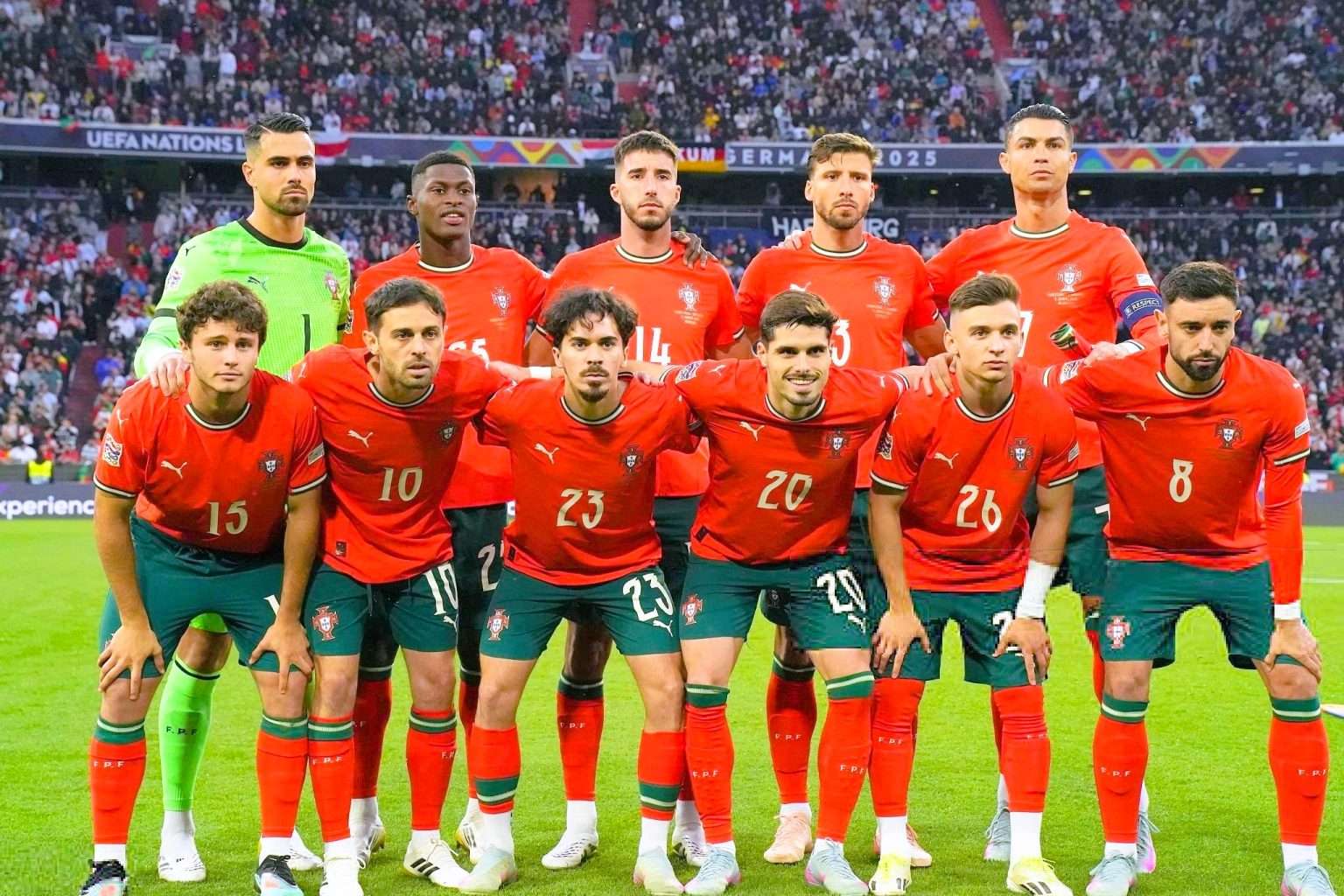

For Cristiano Ronaldo, the 2026 FIFA World Cup could be the final chapter of one of football’s greatest careers.
At 41 years old, the Portuguese superstar is preparing for a record sixth World Cup appearance.
Beyond the history and emotion, North America could also offer Ronaldo one last chance to win the only major trophy missing from his legendary collection: the FIFA World Cup.
The expanded 48-team tournament, which will be held across the United States, Canada and Mexico, features an entirely new format.
A larger group stage and more knockout rounds will create a more demanding and unpredictable path to the final than in previous editions.
For Portugal, the mission is clear. After finishing third in 1966 and fourth in 2006, the Selecao das Quinas are still chasing their first world title.
To finally lift the trophy at MetLife Stadium in New Jersey, they must survive a tournament that promises high-pressure battles, tactical challenges, and potentially giant-killing surprises at every stage.
Portugal have been drawn in Group K alongside DR Congo, Uzbekistan and Colombia.



On paper, it is a favourable group for Roberto Martinez’s side, although Colombia are expected to provide their toughest test in the opening stage.
One projected route could also deliver the dream scenario football fans have waited years to see: Cristiano Ronaldo versus Lionel Messi on the World Cup stage.
From navigating the group stage to surviving the pressure of the expanded knockout rounds, Portugal’s path to World Cup glory will demand experience, squad depth, and an elite mentality.
Explore Portugal’s full route to the 2026 FIFA World Cup final, including the challenges of the group stage, potential knockout opponents, and the best path for Ronaldo and the Selecao to claim their first world title.
Portugal’s path to the 2026 World Cup final
When Does Portugal’s 2026 FIFA World Cup Journey Begin?
They open against debutants DR Congo, face Uzbekistan in the second game, and finish with a tough clash against Colombia that could decide the group winner. All times are in Eastern Time (ET).
Portugal Group Stage Schedule
| Date | Opponent | Venue | Time (ET) |
| June 17, 2026 | Portugal vs. DR Congo | NRG Stadium | 1:00 PM |
| June 23, 2026 | Portugal vs. Uzbekistan | NRG Stadium | 1:00 PM |
| June 27, 2026 | Colombia vs. Portugal | Hard Rock Stadium | 7:30 PM |
Portugal Group Standings
| Team | P | W | D | L | GF | GA | GD | Pts |
|---|---|---|---|---|---|---|---|---|
| Portugal | 0 | 0 | 0 | 0 | 0 | 0 | 0 | 0 |
| Colombia | 0 | 0 | 0 | 0 | 0 | 0 | 0 | 0 |
| Uzbekistan | 0 | 0 | 0 | 0 | 0 | 0 | 0 | 0 |
| DR Congo | 0 | 0 | 0 | 0 | 0 | 0 | 0 | 0 |
How Portugal Qualifies for the Knockout Stage
The 2026 FIFA World Cup introduces an expanded 48-team format, divided into 12 groups of four.
Teams qualify for the knockout stage by finishing in the top two of their group, or as one of the eight best third-placed sides, ranked by points, goal difference, goals scored, and fair-play criteria. This system advances 32 teams to the Round of 32.
As the seeded side in Group K, Portugal have three clear routes to progression. The most straightforward path is finishing first or second, achieved through round-robin matches against Colombia, Uzbekistan, and the intercontinental play-off winner.
Even a third-place finish could be enough, provided Portugal rank among the eight strongest third-placed teams across all 12 groups.
If teams finish level on points, final standings are decided by goal difference, goals scored, head-to-head results, and fair-play points.
However, winning the group carries strategic importance, as it delivers a more favorable knockout-stage bracket and avoids early heavyweight clashes.
Given Portugal’s squad depth and tournament pedigree, progression to the knockout stage is firmly expected rather than merely hopeful.
Portugal Potential Knockout Stage Path
The expanded 48-team format introduces a quadrant-based, “tennis-style” knockout bracket, designed to keep the highest-ranked nations separated until the later rounds of the tournament.
This structure reduces the likelihood of early heavyweight clashes and rewards strong group-stage performance.
Portugal’s knockout-stage pathway at the 2026 FIFA World Cup will be shaped almost entirely by their final position in Group K.
A group-winning finish places them in a more favourable quadrant, increasing the probability of facing a third-placed qualifier in the Round of 32.
By contrast, finishing second or third could push Portugal into a more demanding route, potentially involving cross-country travel between the U.S. East Coast, Canada, or the West Coast, depending on bracket allocation and host-city assignments.
In a tournament where logistics, recovery time, and opponent strength can decide fine margins, topping the group offers Portugal a significant strategic advantage well beyond simple qualification.
Portugal as Group Winner
If Portugal wins Group K in the 2026 FIFA World Cup, they will secure a knockout path that primarily keeps them in the United States for the early rounds, starting with a match in Kansas City.
As the top-seeded team in their group, finishing first allows them to face a third-placed opponent in the newly introduced Round of 32.
If both Portugal and Argentina win their respective groups and navigate their early knockout fixtures, a blockbuster quarter-final showdown between the two giants is scheduled for Kansas City.
| Round | Potential Opponent | Date (2026) | Venue |
|---|---|---|---|
| Round of 32 | 3rd Place (Group D/E/I/J/L) | July 3 | GEHA Field at Arrowhead |
| Round of 16 | Winner of Group B vs best third-placed team (Groups E/F/G/I/J) | July 7 | BC Place |
| Quarter-final | Winner Match 95 | July 11 | GEHA Field at Arrowhead |
| Semi-final | Winner Match 99 | July 15 | Mercedes-Benz Stadium |
| Final | TBD | July 19 | MetLife Stadium |
Portugal as Group Runner-Up
If Portugal finishes as runners-up in Group K, they enter a significantly more demanding knockout pathway in the 2026 FIFA World Cup knockout stages.
This scenario puts them in a bracket where they are likely to avoid defending champions Argentina in the quarter-finals, but before that, they risk a high-stakes Round of 16 showdown against Spain — one of Europe’s most tactically disciplined sides.
| Round | Potential Opponent | Date (2026) | Venue |
|---|---|---|---|
| Round of 32 | Runner-up Group L | July 2 | BMO Field |
| Round of 16 | Winner Group H vs Runner-up Group J | July 6 | AT&T Stadium |
| Quarter-final | Winner Match 94 | July 10 | SoFi Stadium |
| Semi-final | Winner Match 97 | July 14 | AT&T Stadium |
| Final | TBD | July 19 | MetLife Stadium |
Portugal as Best Third-Placed Team
In a surprising scenario for one of Europe’s elite sides, Portugal could still advance to the 2026 FIFA World Cup knockout stage by qualifying as one of the best third-placed teams after finishing third in Group K.
This route acts as a volatile safety net, with Portugal’s exact opponent, venue, and travel demands remaining uncertain until all group-stage matches across the tournament are completed.
Unlike group winners — who are typically rewarded with more favorable Round of 32 matchups — third-placed qualifiers are often paired against established group winners or host nations, creating an immediate high-risk knockout scenario.
As a result, while progression remains possible, this pathway represents Portugal’s most difficult and least predictable route into the latter stages of the tournament.
| Round | Potential Opponent | Date | Venue |
|---|---|---|---|
| Round of 32 | England (Winner Group L) | July 1 | Atlanta |
| Round of 16 | France (Winner Group I) | July 6 | Seattle |
| Quarterfinal | Brazil (Winner Group C) | July 9 | Foxborough |
| Semifinal | Argentina | July 14 | Arlington |
| Final | TBD | July 19 | New York New Jersey |
Portugal’s Best Route to the 2026 FIFA World Cup Final
Portugal’s most favorable route to the 2026 FIFA World Cup final on July 19, 2026, is clearly secured by winning Group K.
Current bracket projections indicate that if Portugal and Argentina both top their respective groups, the two giants are on course for a blockbuster quarter-final meeting in Kansas City — a scenario widely viewed as the optimal moment for Portugal to confront one of the tournament’s strongest contenders before the semi-finals.
Finishing first also keeps Portugal largely within the Central and Western United States–Canada host corridor, avoiding the demanding north–south travel faced by group runners-up, who may be required to shuttle between Toronto, Dallas, and Los Angeles.
As group winners, Portugal would further benefit from a consistent four-day recovery cycle between the Round of 32 and Round of 16 — a decisive advantage in the intensity-heavy 48-team format.
To keep this path intact, Portugal must maximise their points against Colombia, Uzbekistan, and the intercontinental play-off winner in Group K.
Any slip into second or third place would immediately expose them to a final-level Round of 32 test against England, Spain, or Croatia — dramatically increasing the difficulty of their title pursuit.