








When football fans debate the greatest nations in World Cup history, titles won are the instinctive measure. But there is a deeper, more telling statistic: total matches played. Every game a team plays at a World Cup must be earned.
You have to qualify, survive the group stage, and then keep winning under knockout pressure. A nation that accumulates a century of World Cup appearances is not lucky — it is exceptional.
There is an important distinction between World Cup appearances (how many tournaments a nation has qualified for) and total matches played (how many individual games they have contested).
A team can appear in 15 tournaments and go home after three group games each time. Another team might appear less often but reach the final repeatedly, racking up far more matches per tournament.
Total matches played, therefore, rewards both consistency of qualification and sustained excellence once inside the tournament.
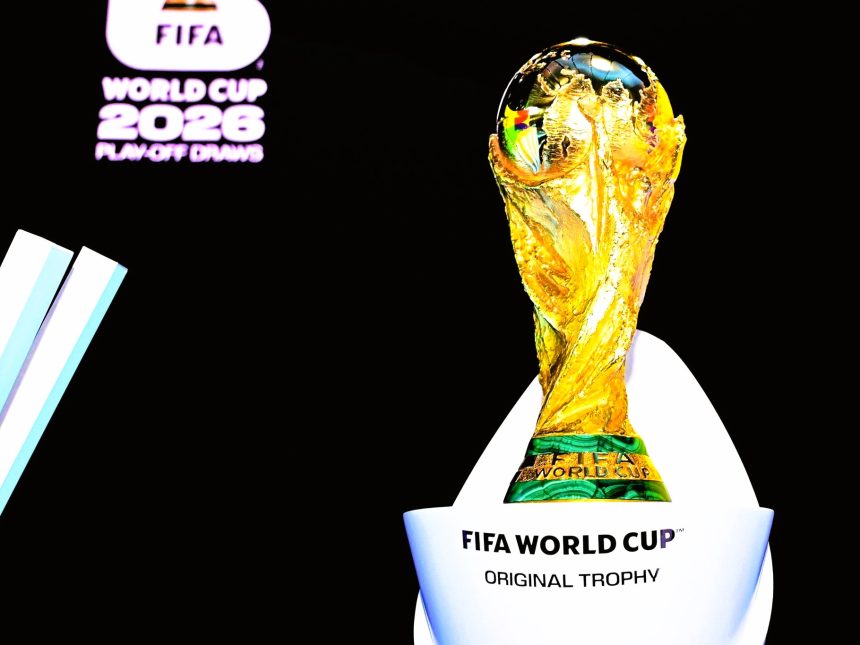
The 2026 FIFA World Cup — the 23rd edition of the tournament, expanding for the first time to 48 teams across the United States, Canada, and Mexico — will offer an unprecedented opportunity to accumulate matches.
With 104 games scheduled across the competition, a team that reaches the final could play as many as eight matches, compared to seven in the 32-team era. That makes 2026 a watershed moment for all-time records.
Against that backdrop, three nations stand supreme: Brazil, Germany, and Argentina — the giants whose names are written deeper into World Cup history than any other.



Which National Team Has Played the Most FIFA World Cup Matches?
Brazil’s All-Time Record
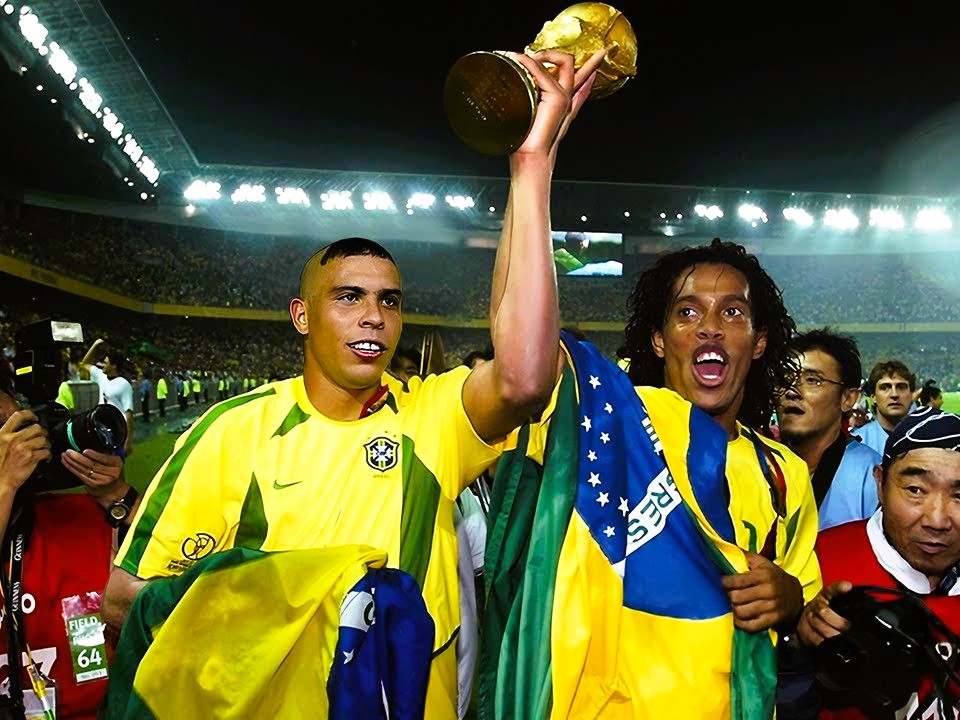
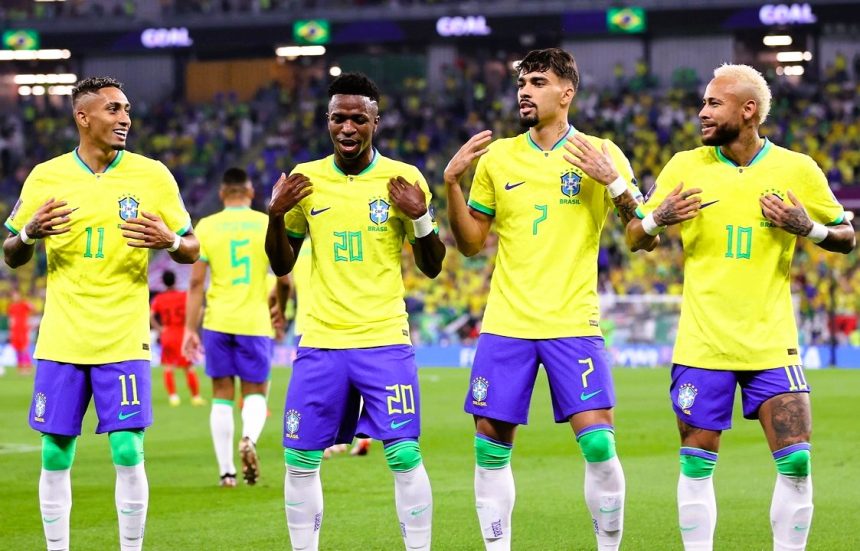
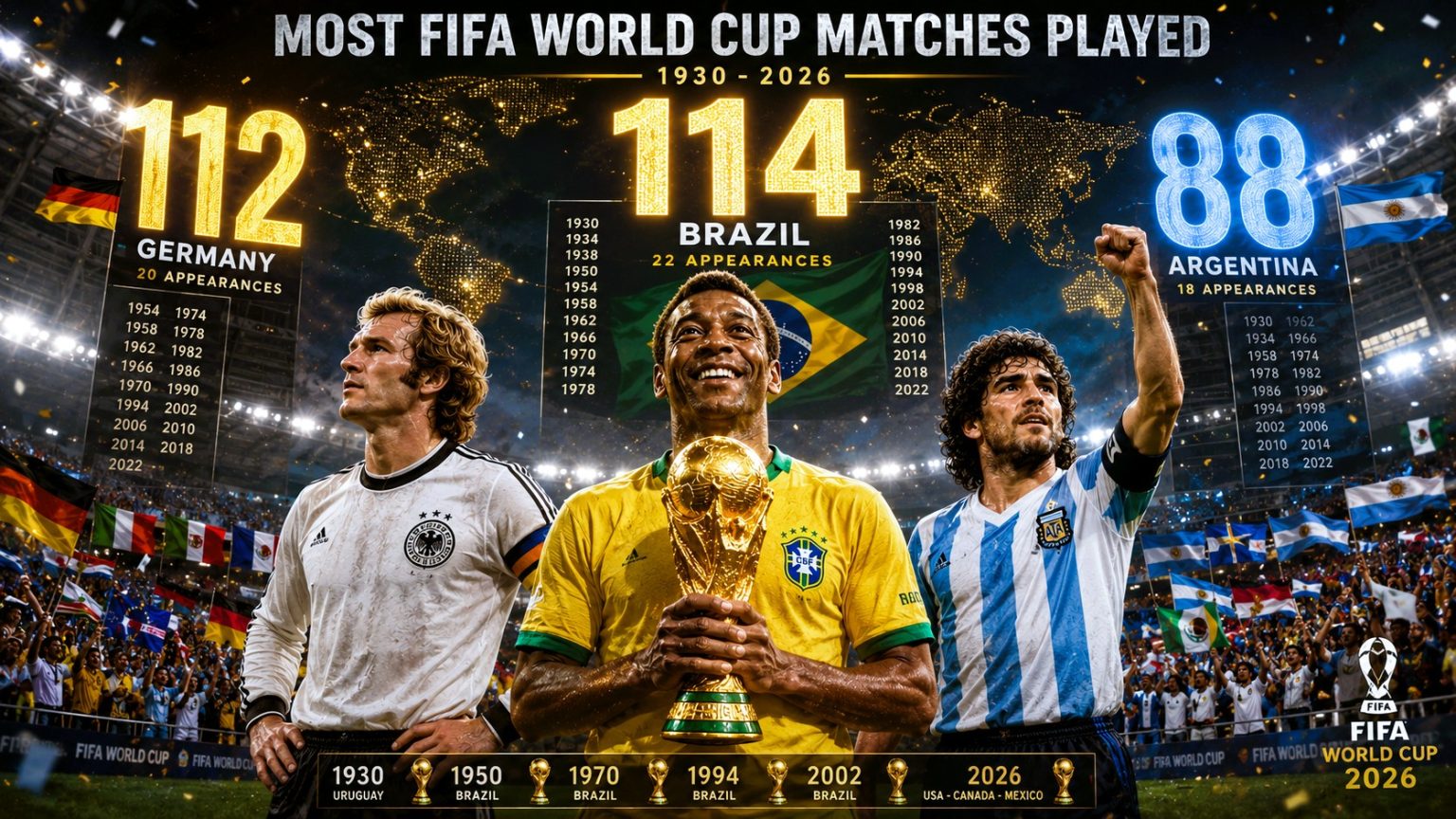
Brazil stands alone. With 114 total matches played across 22 World Cup tournaments (through Qatar 2022), no other nation comes close.
The Seleção have won 76 of those games, drawn 19 and lost just 19 — a win rate of approximately 66.7 percent that speaks to generations of sustained excellence.
The bedrock of Brazil’s record is unique and unrepeatable in World Cup history: they are the only nation to have qualified for every single tournament since the competition began in 1930.
While powerhouses such as England, France, and Italy have all failed to qualify at various points, Brazil has never missed a World Cup.
That 100 percent qualification record gives them a fundamental head start in the matches-played count over every rival.
But appearances alone do not explain the total. Brazil’s matches count is inflated — in the very best sense — because they keep going deep.
Five titles (1958, 1962, 1970, 1994, 2002), two runners-up finishes, two third-place and two fourth-place finishes mean that in tournament after tournament, Brazil are playing in the last days of the competition rather than flying home early.
It is the combination of never missing a tournament and almost always reaching the knockout rounds that makes 114 matches a record few will ever challenge.
Brazil also holds the record for most World Cup matches won (76) and once went 13 consecutive matches without defeat between 2002 and 2006, a streak of total dominance that underlines their all-time knockout efficiency.
Germany — Relentless Knockout Machine
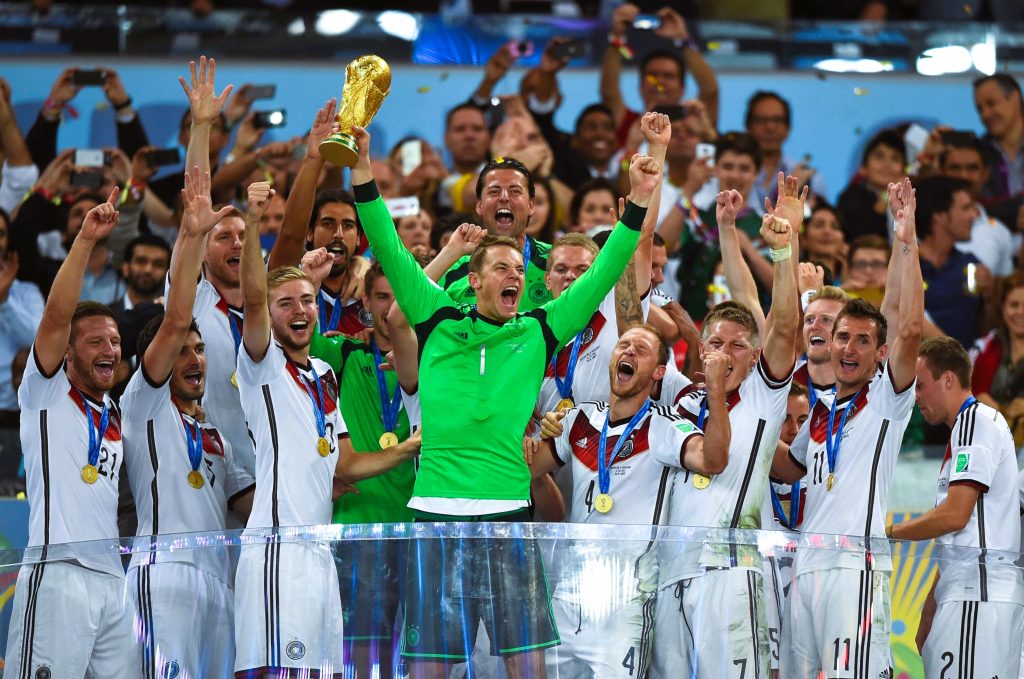
Germany (competing as West Germany from 1954–1988) have played 112 World Cup matches across 20 tournament appearances — the second-highest total in history.
They have won 68, drawn 21 and lost 23, producing a win percentage of around 60.7 percent.
What makes Germany’s record truly remarkable is not just the volume of games but the extraordinary consistency in the knockout rounds.
No nation has appeared in more World Cup finals: eight in total (1954, 1966, 1974, 1982, 1986, 1990, 2002, 2014), winning four of them. No European team has reached the semi-finals more often.
Between 2002 and 2014, Germany reached four consecutive semi-finals — a run of sustained knockout success no other nation has matched in the modern era.
Germany’s total of 112 matches is all the more impressive given they have missed two World Cups (1930, when they did not enter, and 1950, when they were banned following World War II).
That means in the tournaments they have actually attended, their average depth of run is among the finest in history.
Argentina’s Rapid Rise
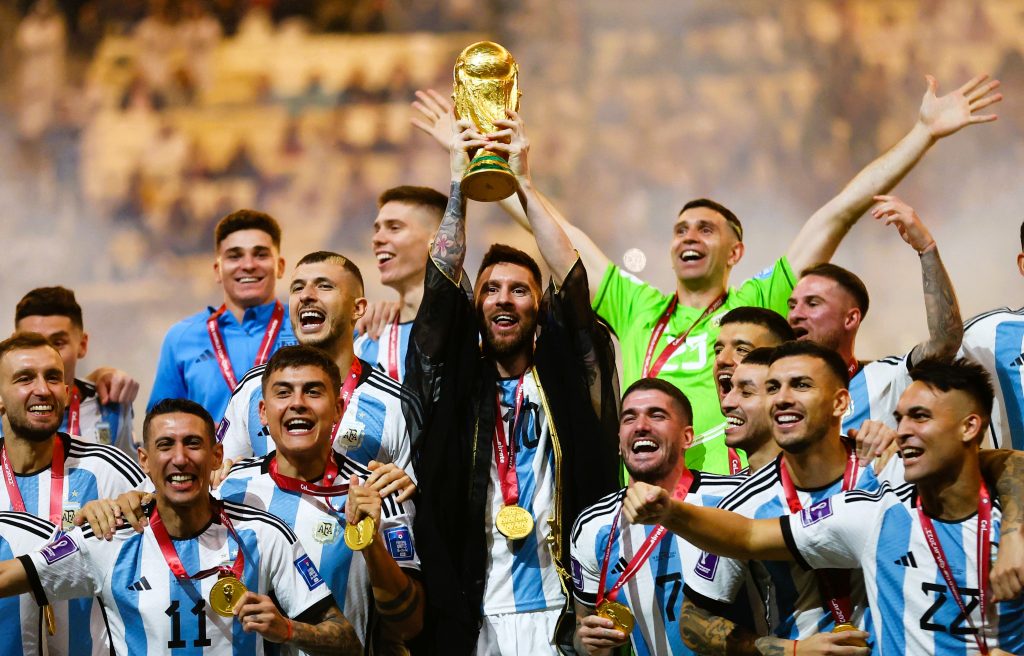
Argentina have played 88 World Cup matches across 18 appearances (through Qatar 2022), and the trajectory of their record in the Lionel Messi era is extraordinary.
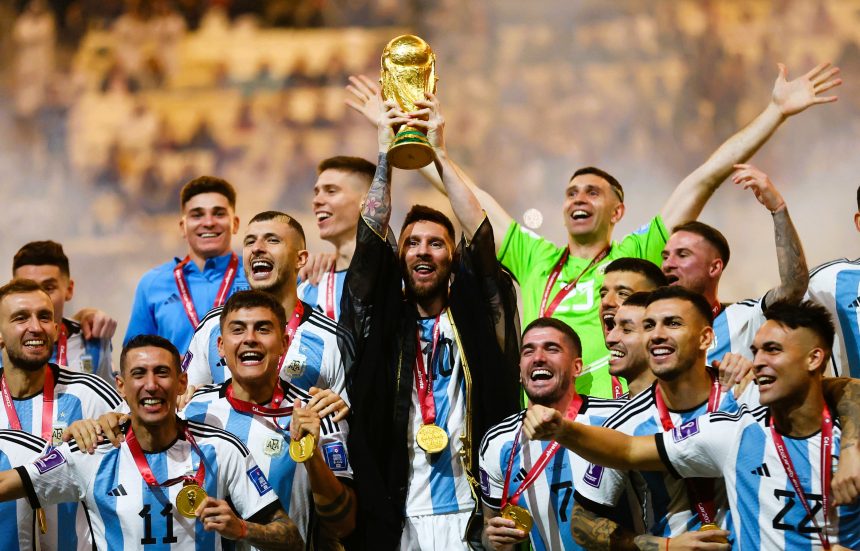
Argentina reached the final in 2014 (losing to Germany) and won the tournament in Qatar 2022, defeating France in one of the greatest finals ever played.
Their run to the final in 2022 alone added eight matches to their all-time tally.
Argentina’s record of three titles, six final appearances, and five semi-final appearances places them firmly in the elite tier.
The Messi era (2006–2022) added significant depth to their all-time knockout record, and with Argentina entering 2026 as reigning champions, further matches — and potentially further glory — await.
National Teams With the Most FIFA World Cup Matches Played (1930–2026)
The following table covers all-time totals through the 2022 FIFA World Cup. Appearances reflect the number of tournaments attended. Best finish is the highest result achieved.
| Nation | Appearances | Matches Played | Wins | Draws | Losses |
 Brazil Brazil | 22 | 114 | 76 | 19 | 19 |
 Germany Germany | 20 | 112 | 68 | 21 | 23 |
 Argentina Argentina | 18 | 88 | 47 | 17 | 24 |
 Italy Italy | 18 | 83 | 45 | 21 | 17 |
 France France | 16 | 73 | 39 | 14 | 20 |
 England England | 16 | 74 | 32 | 22 | 20 |
 Spain Spain | 16 | 67 | 31 | 17 | 19 |
 Netherlands Netherlands | 11 | 55 | 30 | 14 | 11 |
 Uruguay Uruguay | 14 | 59 | 25 | 13 | 21 |
 Belgium Belgium | 14 | 51 | 21 | 10 | 20 |
 Sweden Sweden | 12 | 51 | 19 | 13 | 19 |
 Russia Russia | 11 | 45 | 19 | 10 | 16 |
 Mexico Mexico | 17 | 60 | 17 | 15 | 28 |
 Serbia Serbia | 13 | 49 | 18 | 9 | 22 |
 Portugal Portugal | 8 | 35 | 17 | 6 | 12 |
 Poland Poland | 9 | 38 | 17 | 6 | 15 |
 Switzerland Switzerland | 12 | 41 | 14 | 8 | 19 |
 Hungary Hungary | 9 | 32 | 15 | 3 | 14 |
 Croatia Croatia | 6 | 30 | 13 | 8 | 9 |
 Slovakia Slovakia | 9 | 34 | 12 | 6 | 16 |
Most Successful Nations in FIFA World Cup History
Combining titles, finals appearances, semi-final appearances, and total matches provides a complete portrait of World Cup heritage.
| Nation | Titles | Finals | Semi-Finals | Matches Played |
| Brazil | 5 | 7 | 9 | 114 |
| Germany | 4 | 8 | 13 | 112 |
| Italy | 4 | 6 | 7 | 83 |
| Argentina | 3 | 6 | 5 | 88 |
| France | 2 | 4 | 6 | 73 |
| Uruguay | 2 | 3 | 2 | 59 |
| England | 1 | 2 | 7 | 74 |
| Spain | 1 | 1 | 4 | 67 |
The long-running debate between Brazil and Germany as the definitive World Cup dynasty is genuinely difficult to resolve.
Brazil leads in titles (5 vs 4), total matches (114 vs 112), and wins (76 vs 68). Germany leads in final appearances (8 vs 7) and semi-final appearances (13 vs 9).
Brazil never missed a tournament; Germany missed two, meaning their matches-per-tournament average is actually superior.
What the debate reveals is that the two nations have achieved supremacy in different ways.
Brazil’s dominance is built on total consistency — always present, almost always advancing.
Germany’s legacy is built on knockout efficiency — ruthless when it matters most, with a finals record that no European nation has come close to matching.
The Netherlands and Mexico comparison is equally fascinating. Mexico have made 17 World Cup appearances — more than Argentina or France — yet have never reached a semi-final, with an all-time record of 17 wins and 28 losses.
Their 60 total matches played does not tell a story of deep runs but of persistent qualification followed by persistent quarterfinal exits.
The Netherlands, with only 11 appearances compared to Mexico’s 17, have played 55 matches — with three runners-up finishes (1974, 1978, 2010), making them the most decorated nation never to have won the tournament.
National Teams With the Most FIFA World Cup Knockout Matches
Knockout matches are where World Cup histories are truly forged. The following figures reflect performance from the round of 16 onward (or the equivalent stage in earlier tournament formats).
| Nation | Knockout Matches | Finals Played | Titles |
| Brazil | 55 | 7 | 5 |
| Germany | 54 | 8 | 4 |
| Argentina | 40 | 6 | 3 |
| Italy | 38 | 6 | 4 |
| France | 33 | 4 | 2 |
| Netherlands | 28 | 3 | 0 |
| England | 26 | 2 | 1 |
| Croatia | 19 | 1 | 0 |
Germany’s finals record is without equal in European football. Eight finals appearances — four wins and four losses — mean that for the majority of the World Cups they have attended, Germany have been on the pitch on the final day.
Between 1982 and 1990, they reached three consecutive finals, a feat matched only by Brazil (1994–2002). Germany’s victory over Argentina in the 2014 final, after they demolished Brazil 7-1 in the semi-final at the Maracanã, remains one of the defining moments in the modern tournament.
Argentina’s modern knockout record under the Messi era (2006–2022) is remarkable.
From their quarter-final in 2006 through to the title in 2022, Argentina played some of the most dramatic knockout matches of the modern era, including the 2014 final (lost to Germany in extra time) and the 2022 final (beat France on penalties in a match many consider the greatest ever played).
Croatia’s efficiency is one of the great modern stories. In only six World Cup appearances since their debut as an independent nation in 1998, Croatia have reached one final (2018, lost to France 4-2), a semi-final (2022, lost to Argentina), and a third-place playoff (twice).
With a record of 16 wins, 5 draws and 9 losses in 30 total matches, their knockout conversion rate per appearance is among the highest of any nation in the last three decades.
How the 2026 FIFA World Cup Changes Match Records
48-Team Expansion
The 2026 World Cup in the United States, Canada, and Mexico will be the largest in the tournament’s history.
For the first time, 48 nations will compete across 104 matches — up from 64 in the 32-team format used since 1998. The format introduces a new league-style group phase before the traditional knockout rounds begin.
A team that navigates all the way to the final in 2026 will play eight matches, one more than was possible in the previous format.
That single additional game, compounded across multiple tournaments, will accelerate the all-time match tallies of the established powers significantly.
Records Likely to Be Broken
Brazil enter 2026 on 114 all-time matches. A deep run — quarter-final or better — would push them comfortably past 120 World Cup matches, a landmark no nation has previously reached.
A title run of eight games would move them to 122, which would have been unimaginable even a decade ago.
Germany stand at 112 all-time matches and have the quality to reach the latter stages in 2026. A final appearance, their ninth, would be one of the most consequential records in the history of the sport.
Argentina, as reigning champions, enter 2026 with momentum and a squad built around players who were forged in Qatar.
Eight matches for Argentina in North America would push them past 96 total, and a successful title defence would cement this as perhaps the greatest generation in their history.
FIFA World Cup Match Records and Interesting Facts
- Brazil are the only team to have appeared in all 22 World Cups held between 1930 and 2022. No other nation has a perfect attendance record.
- Germany have appeared in the most World Cup finals — eight in total — making them the most final-experienced nation in the tournament’s history.
- Brazil hold the record for most World Cup matches won, with 76 victories from 114 appearances, and the most World Cup wins in a single tournament (Brazil’s 2002 squad won all seven matches).
- Argentina reached two World Cup finals in the space of eight years (2014 and 2022), winning the second — a feat that reflects the extraordinary consistency of the Messi generation.
- Miroslav Klose of Germany holds the all-time individual scoring record at the World Cup, having netted 16 goals across four tournaments from 2002 to 2014 — more than any other player in the history of the competition.
- Mexico have played the most World Cup matches without reaching a semi-final. In 17 appearances and 60 total matches, they have never advanced beyond the quarter-final stage — a record that defines both their remarkable consistency in qualifying and their persistent inability to go further.
- The Netherlands hold the record for most World Cup final appearances without winning the tournament — three (1974, 1978, 2010) — making them the most successful nation never to have lifted the trophy.
- Lionel Messi has played more individual World Cup matches than any other player — 26 appearances across five tournaments, a record that reflects his extraordinary longevity at the highest level.
- Brazil’s unbeaten run of 13 matches between 1958 and 1966 remains one of the great sustained sequences in World Cup history.
- Croatia have appeared in one World Cup final and two semi-finals in just seven tournaments — a strike rate of finals-stage appearances that only the established giants can rival.
Frequently Asked Questions
Which country has played the most FIFA World Cup matches?
Brazil have played the most World Cup matches in history, with 114 total appearances across all 22 tournaments held between 1930 and 2022. They have won 76 of those matches — also a world record.
Which European nation has the most World Cup matches?
Germany (including their record as West Germany from 1954–1988) lead Europe with 112 total World Cup matches across 20 tournament appearances. They are the second-most experienced nation in World Cup history behind Brazil.
How many World Cup matches has Brazil played?
As of the 2022 FIFA World Cup in Qatar, Brazil have played 114 World Cup matches — more than any other nation. They are also the only team to have qualified for every one of the 22 World Cup tournaments held since 1930.
Which country has the most World Cup wins?
Brazil hold the record for the most World Cup titles, with five championships won in 1958, 1962, 1970, 1994, and 2002. Germany and Italy each have four titles. Argentina, the reigning champions as of 2022, have three.
Which team has played the most World Cup knockout games?
Brazil and Germany are the leading nations for knockout-stage appearances. Germany’s eight World Cup final appearances — the most of any nation — give them an extraordinary knockout record. Brazil’s total of roughly 55 knockout matches (from the round of 16 onward, across various formats) is the highest in history.
What is the maximum number of matches possible at the 2026 World Cup?
At the 2026 FIFA World Cup — the first to feature 48 teams — a nation that reaches the final will play eight matches in the tournament. This is one more than was possible in the 32-team format used from 1998 to 2022, where finalists played seven games.
The Nations That Define World Cup History
The FIFA World Cup is not just a tournament — it is a civilisation’s reflection on what sport can be.
And the nations that have accumulated the most matches have done so by combining extraordinary talent across generations with a culture that prizes tournament performance above almost all else.
Brazil’s unmatched legacy rests on a single, staggering fact: in 22 chances to miss the World Cup, they have never once failed.
Add to that five titles and consistently deep tournament runs, and 114 matches is not a record — it is a monument.
No nation has done more to shape the identity of the World Cup than Brazil, and no nation is better placed to extend that record into 2026 and beyond.
Germany’s relentless consistency tells a different but equally compelling story.
Eight finals, thirteen semi-finals, four titles spread across seven decades — this is a football culture that has transcended individual generations, tactical fashions, and even political history (competing as West Germany through the Cold War era) to remain at the summit of world football generation after generation.
Argentina’s modern resurgence under Lionel Messi adds a chapter to the World Cup story that will be discussed for decades.
From the heartbreak of 2014 to the triumph of 2022, Argentina have played some of the most dramatic knockout football of the modern era, and they enter 2026 as champions with history firmly in their sights.
What total matches played ultimately reveals is that sustained greatness is the hardest thing in football. Any nation can peak once.
To be present, competitive, and dangerous across not one but five, six, or seven decades of World Cup football demands something deeper than talent — it demands an entire footballing culture.
That is what Brazil, Germany, and Argentina have built, and it is why, when the world gathers again in 2026, all three will be expected to add more matches, more memories, and perhaps more glory to their already extraordinary records.
The 2026 World Cup may reshape the all-time rankings more dramatically than any single tournament in history.
With 104 matches, 48 teams, and the possibility of eight games en route to the trophy, the records of tomorrow are being set today — and the nations at the top of the all-time table will fight hard to stay there.