






Last Updated: April 2026 | Updated after every match
The FIFA World Cup 2026 Group F teams bring together a perfect blend of European strength, Asian precision, and African resilience, making this group one of the most tactically diverse in the tournament.
Featuring top contenders like Netherlands alongside competitive sides such as Japan, Sweden, and Tunisia, Group F promises high-quality football and intense battles from the opening matchday.
In this complete guide to the FIFA World Cup 2026 Group F teams, you’ll find everything you need — including the full list of teams, fixtures, standings, match schedule, and expert analysis.
Whether you’re tracking results live or analyzing qualification scenarios, this page provides real-time updates and in-depth insights throughout the tournament.
Group F stands out as a highly competitive group with multiple teams capable of advancing to the knockout stage.
While the Netherlands may enter as favorites, Japan’s tactical discipline, Sweden’s physical strength, and Tunisia’s defensive organization make this group unpredictable and exciting.
Stay with us as we break down the Group F teams, key fixtures, standings, and qualification scenarios, helping you follow every moment from the group stage to the Round of 32.
FIFA World Cup 2026 Group F Overview
What is Group F in the 2026 World Cup?
Group F of the FIFA World Cup 2026 is one of the 12 opening-round brackets in the first-ever 48-team edition of the tournament.
It serves as a high-stakes competitive field featuring a diverse mix of footballing philosophies from Europe, Asia, and Africa.
As of the final draw and play-offs completed on March 31, 2026, the group is headlined by the Netherlands, who enter as the top seed following a dominant UEFA qualifying campaign.
Group F Format & Number of Teams
As part of the tournament’s expansion to 48 teams, Group F follows the newly established structure where it consists of four teams, matching the composition of all 12 groups labeled A through L.
This expanded format ensures a diverse representation of nations, with Group F operating as a round-robin stage where each of the four teams plays exactly three matches against its group opponents.
The qualification rules for this stage are straightforward: the top two teams from Group F automatically earn a spot in the Round of 32.
To accommodate the larger field of teams, the tournament also includes a third-place rule, allowing the eight best third-placed teams across all 12 groups to progress to the knockout stage based on their overall performance.
Why Group F is Important
Group F is particularly significant because it features some of the most consistent “giant-killers” in recent World Cup history.
Japan gained worldwide recognition in 2022 for defeating both Germany and Spain, while Tunisia famously beat the defending champions, France, in the same tournament.
Their presence alongside traditional European powerhouses like the Netherlands and a resilient Sweden side makes this one of the most balanced and unpredictable groups in the 2026 edition.
FIFA World Cup 2026 Group F Teams List
Complete List of Group F Teams
| Team | Confederation | FIFA Ranking (April 2026) | Qualification Method |
|---|---|---|---|
| Netherlands | UEFA | 7th | Winner, UEFA Group G |
| Japan | AFC | 18th | Winner, AFC Third Round Group C |
| Sweden | UEFA | 38th | Winner, UEFA Play-off Path B |
| Tunisia | CAF | 44th | Winner, CAF Group H |
Team-by-Team Analysis
Netherlands

World Ranking: 7th (as of April, 2026)
Coach: Ronald Koeman (Since January 2023)
Key Players: Virgil van Dijk (Captain and Liverpool), Frenkie de Jong (Midfielder, FC Barcelona), Xavi Simons (Midfielder, Tottenham Hotspur).
How they got here: The Netherlands secured their spot by winning Group G of the UEFA (Union of European Football Associations) qualification rounds, finishing ahead of strong teams like Norway and Türkiye.
World Cup Performance by Year: 1934 (Round of 16), 1938 (Round of 16), 1974 (Runners-up), 1978 (Runners-up), 1990 (Round of 16), 1994 (Quarter-finals), 1998 (Fourth place), 2006 (Round of 16), 2010 (Runners-up), 2014 (Third place play-off), 2022 (Quarter-finals).
What Success Looks Like: For the Oranje, success means finally lifting the coveted trophy. Reaching the final is the minimum expectation for many fans and analysts, proving they can go one step further than their previous three final appearances and secure their first-ever World Cup title.
You may also like:
Japan
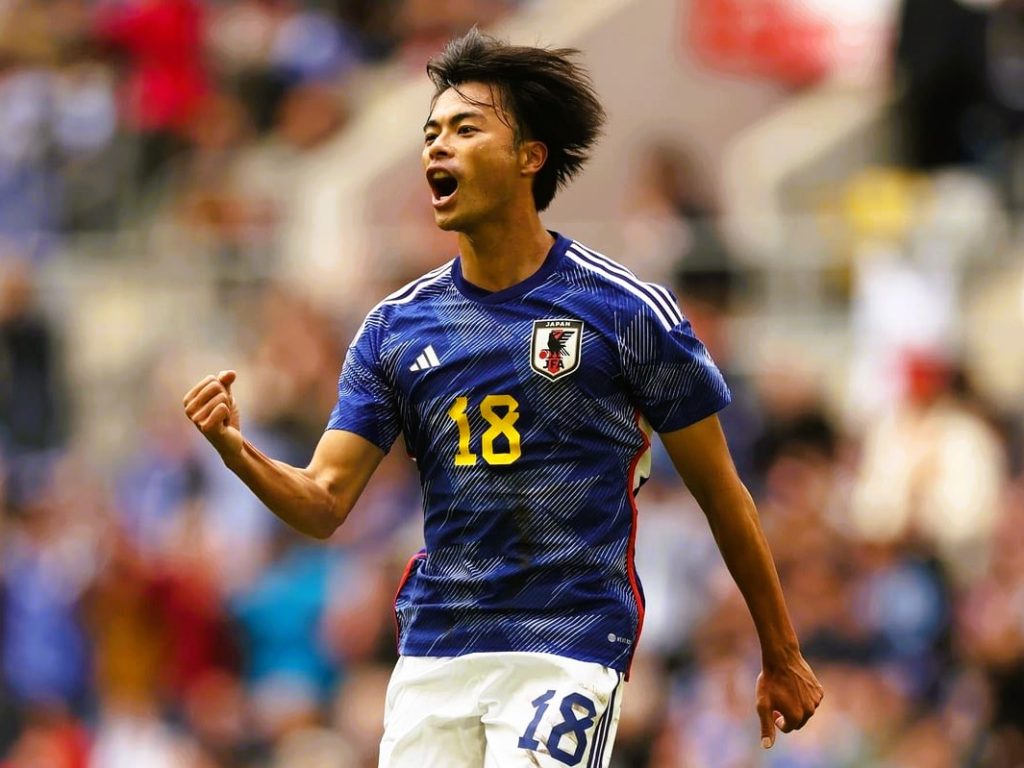
World Ranking: 18th (as of April, 2026)
Coach: Hajime Moriyasu (Since July 2018)
Key Players: Wataru Endō (Captain and Liverpool), Kaoru Mitoma (Winger Brighton & Hove Albion), Takefusa Kubo (Winger, Real Sociedad).
How they got here: Japan secured their spot by winning Group C in the third round of the AFC (Asian Football Confederation) qualifiers, finishing ahead of strong teams like Australia and Saudi Arabia with a dominant performance.
World Cup Performance by Year: 1998 (Group stage), 2002 (Round of 16 co-hosts), 2006 (Group stage), 2010 (Round of 16), 2014 (Group stage), 2018 (Round of 16), 2022 (Round of 16).
What Success Looks Like: Success for the Samurai Blue means breaking their “Round of 16 barrier” and reaching the quarter-finals for the first time in their history. Achieving this goal would represent a significant milestone for Asian football.
You may also like:
Sweden

World Ranking: 38th (as of April, 2026)
Coach: Graham Potter (Since October 2025)
Key Players: Viktor Gyökeres (Forward, Arsenal), Alexander Isak (Forward, Liverpool), Dejan Kulusevski (Forward/Midfielder, Tottenham)
How they got here: In March 2026, they defeated Ukraine 3-1 in the semi-final before clinching their World Cup berth with a last-gasp 3-2 victory over Poland on March 31, 2026
World Cup Performance by Year: 1934 (Quarter-finals), 1938 (Fourth place), 1950 (Third place), 1958 (Runners-up), 1970 (Group stage), 1974 (Quarter-finals), 1978 (Group Stage), 1990 (Group Stage), 2002 (Round of 16), 2006 (Round of 16), 2018 (Quarter-finals).
What Success Looks Like: For Sweden, success in 2026 means re-establishing themselves as a top-tier European power by advancing from Group F.
Reaching the Round of 16 is the baseline expectation given their attacking riches, but with a manager like
Potter known for tactical ingenuity, the squad is aiming to replicate their 2018 Quarter-final run or better.
Tunisia
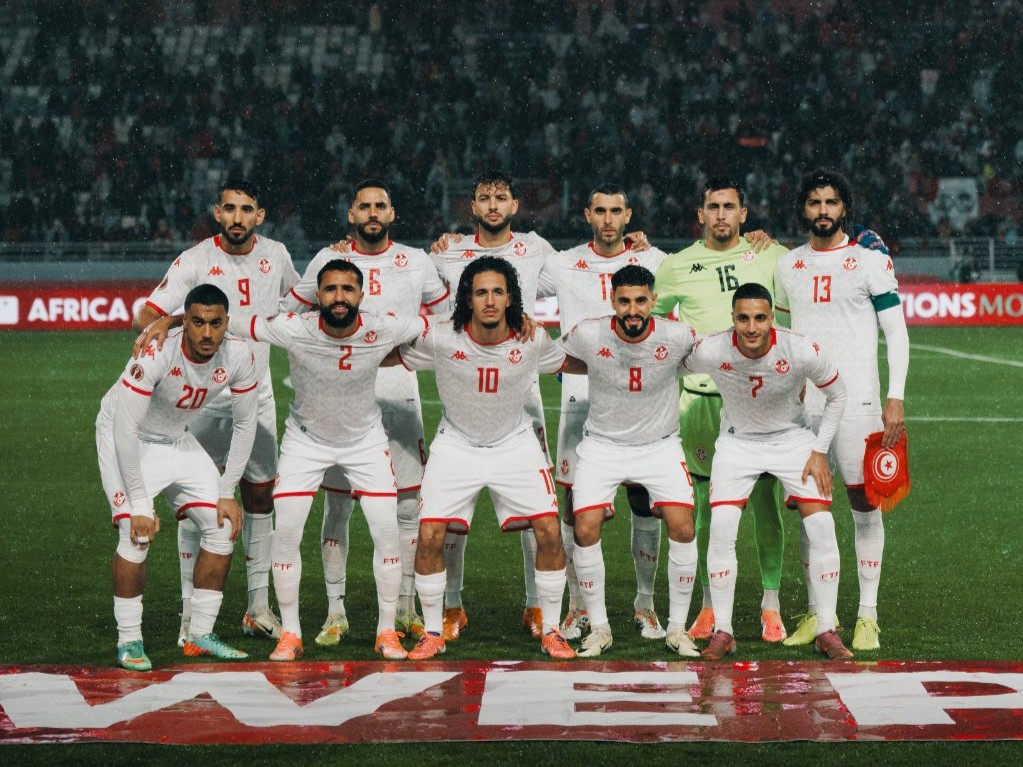
World Ranking: 44th (as of April, 2026)
Coach: Sabri Lamouchi (as of January, 2026))
Key Players: Ellyes Skhiri (Captain and Eintracht Frankfurt), Montassar Talbi (Defender, Lorient), Hannibal Mejbri (Burnley).
How they got here: Tunisia secured their spot in the 2026 World Cup by winning Group H of the CAF (Confederation of African Football) qualifiers, finishing ahead of Namibia and Mali with a strong performance.
World Cup Performance by Year: 1978 (Group stage, first African team to win a World Cup match), 1998 (Group stage), 2002 (Group stage), 2006 (Group stage), 2018 (Group stage), 2022 (Group stage).
What Success Looks Like: Tunisia’s primary goal is to reach the knockout stage for the first time in their history.
Success would mean advancing past the group stage and securing a place in the Round of 32 or Round of 16, breaking a long-standing pattern of group stage exits.
Strongest Team in Group F
The Netherlands enters the group as the clear favourite and top seed. The Oranje boast one of the most balanced squads in the tournament, blending a world-class defensive spine with a revitalised attacking frontline.
Underdog Team to Watch
Sweden occupies a unique position as the “high-level” underdog. Despite qualifying late through the UEFA play-offs, they have an attacking roster that rivals the top seed in the group.
Led by manager Graham Potter, Sweden have a world-class attacking force in Viktor Gökçen and Alexander Isak, making them a “bracket-buster” contender capable of upsetting the Netherlands or Japan in Group F, especially given their recent high-scoring form in European competition.
Group F Fixtures & Match Schedule
Full Match Schedule (Dates & Venues)
All times are in Eastern Time (ET). Venues are in Mexico and the USA for Group F.
| Date | Time (ET) | Match | Venue |
|---|---|---|---|
| Sun, June 14 | 4:00 PM | Netherlands vs. Japan | AT&T Stadium |
| Sun, June 14 | 10:00 PM | Sweden vs. Tunisia | Estadio BBVA |
| Sat, June 20 | 3:00 PM | Netherlands vs. Sweden | NRG Stadium |
| Sat, June 20 | 10:00 PM | Tunisia vs. Japan | Estadio BBVA |
| Thu, June 25 | 3:00 PM | Japan vs. Sweden | AT&T Stadium |
| Thu, June 25 | 3:00 PM | Tunisia vs. Netherlands | Arrowhead Stadium |
Opening Match Details
Group F kicks off on June 14, 2026, with a high-profile showdown between the Netherlands and Japan at AT&T Stadium in Arlington, Texas. Scheduled for 3:00 PM local time, this match is a critical early test for both teams’ aspirations to top the group.
Final Matchday Fixtures
The group concludes on June 25, 2026, with two simultaneous matches designed to maintain competitive integrity.
The Netherlands will travel to GEHA Field at Arrowhead Stadium in Kansas City to face Tunisia, while Japan and Sweden return to Arlington for a potentially decisive clash.
Both games are set for 6:00 PM local time, serving as the final opportunity for teams to secure an automatic top-two spot or bolster their goal difference to qualify as one of the best third-placed teams.
FIFA World Cup 2026 Group F Standings
Live Group F Table
The standings below will update live during the tournament.
| # | Team | P | W | D | L | GF | GA | GD | PTS |
| 1 | Netherlands | 0 | 0 | 0 | 0 | 0 | 0 | 0 | 0 |
| 2 | Japan | 0 | 0 | 0 | 0 | 0 | 0 | 0 | 0 |
| 3 | Sweden | 0 | 0 | 0 | 0 | 0 | 0 | 0 | 0 |
| 4 | Tunisia | 0 | 0 | 0 | 0 | 0 | 0 | 0 | 0 |
Points System Explained
- Win: 3 Points.
- Draw: 1 Point.
- Loss: 0 Points.
Tiebreaker Rules
- Goal difference in all group matches.
- Goals scored in all group matches.
- Points in head-to-head matches.
- Goal difference in head-to-head matches.
- Goals scored in head-to-head matches.
- Fair play points (deductions for cards).
- Drawing of lots.
Key Matches in Group F
Biggest Match in Group F
The Netherlands vs. Japan clash on June 14 at AT&T Stadium is widely regarded as the biggest match in Group F.
As a high-stakes opening-day encounter between the group’s top two seeds, this fixture will likely determine which nation takes the “driver’s seat” for the top spot in the standings.
Potential Decider Match
The final-day showdown between Japan and Sweden in Arlington serves as the potential decider for automatic qualification.
If the Netherlands performs as expected, this match effectively becomes a play-off for second place, pitting Graham Potter’s attacking philosophy against the tactical discipline of the Samurai Blue.
Must-Watch Games for Fans
For fans of historic milestones and tactical contrasts, the must-watch games include Tunisia vs. Japan on June 20, which is officially designated as the 1,000th match in FIFA World Cup history.
Additionally, the Netherlands vs. Sweden fixture in Houston offers a premier all-European battle featuring some of the world’s most elite individual talents.
These matches are expected to be the most influential in shaping the Group F table and determining the knockout stage bracket.
Group F Predictions & Analysis
Predicted Group Winner
Predictions for Group F suggest a highly competitive environment where tactical discipline will likely define the final standings.
Analysts currently favour the Netherlands to top the group; the recent form of Japan and the resurgent attacking power of Sweden make this one of the most unpredictable groups in the 2026 field.
Teams Likely to Qualify
- Netherlands (Top 2)
- Japan (Top 2)
- Sweden (Likely as the best third-place contender)
Possible Surprise Outcomes
The most discussed “surprise” is Japan topping the group over the Netherlands. Following their 2022 upsets over Germany and Spain, many experts believe Japan’s precise pressing system is perfectly suited to exploit the current Dutch squad’s unresolved identity issues.
Qualification Rules for Group F
How Teams Advance to Round of 32
The path out of Group F is determined by a standard round-robin format, with each team playing three matches.
- Automatic Qualification: The teams finishing in 1st and 2nd place in Group F after the final matchday on June 25 will earn a direct ticket to the Round of 32.
- The 32-Team Bracket: Unlike previous editions, surviving the group stage now only places teams in the “Round of 32” rather than the “Round of 16,” meaning an additional knockout victory is required to reach the later stages.
Role of Best Third-Placed Teams
A unique feature of this 48-team tournament is the inclusion of the eight best third-placed teams in the knockout stage.
This means that even if a team like Sweden or Tunisia finishes third in Group F, they can still advance by ranking among the top eight of all 12 third-place finishers across the tournament.
This creates a high-stakes environment for every match, as even a single goal in a losing effort could be the difference-maker in the overall goal-difference tiebreaker used to compare teams from different groups.
Knockout Path Overview
Where a team finishes in Group F dictates their travel schedule and their initial opponent in the single-elimination bracket:
- Group F Winner: Slated to face the Runner-up of Group C (potentially a high-stakes match against a team like Morocco or Brazil).
- Group F Runner-up: Moves to a different side of the bracket to face the Winner of Group C.
- Third-Place Qualifier: If a Group F team advances via the “best third” rule, their opponent is determined by a specific FIFA matrix, likely facing a winner from Group A, Group B, Group D, Group E, or Group I..
Group F Compared to Other Groups
Is Group F Easy or Difficult?
In terms of overall competitive balance, Group F is statistically identified as the most evenly matched and difficult group in the 2026 World Cup.
While it may not feature a single “super-giant” like Argentina or France, its average FIFA ranking of 26.6 is the highest of all 12 groups, suggesting there are no “easy outs.”
Comparison with Group E & Group I
Group F stands in stark contrast to the lopsided nature of other groups:
- Group E (Germany, Ecuador, Ivory Coast, Curaçao): This is considered the easiest group on paper. It contains the second-lowest ranked team in the tournament, Curaçao (82nd), which significantly lowers the group’s average difficulty compared to the balanced Group F.
- Group I (France, Senegal, Norway, Playoff Winner): Widely cited as the “Group of Death” based on star power, featuring Kylian Mbappé, Erling Haaland, and Sadio Mané. While it has higher-rated individual teams than Group F, the presence of a lower-ranked playoff winner (like Iraq or Suriname) makes its average ranking slightly lower than Group F’s average.
Is Group F a “Group of Death”?
Yes, but in a unique way. While Groups I and Group L are often called “Groups of Death” for their heavyweight clashes, Group F is described as the “Group of Mutually Assured Destruction” or the “Group of Coin Flips”.
FAQs – FIFA World Cup 2026 Group F Teams
Which teams are in FIFA World Cup 2026 Group F?
Group F consists of the Netherlands, Japan, Tunisia, and Sweden.
How many teams are in Group F?
There are 4 teams in Group F, which is the standard size for all 12 groups in the expanded 48-team tournament.
Who is the favorite to win Group F?
The Netherlands is the statistical favourite, though Japan is widely considered a strong challenger to win the group.
When does Group F start?
Group F action begins on June 14, 2026, with the Netherlands facing Japan in Arlington and Sweden taking on Tunisia in Guadalupe.