








The 2026 FIFA World Cup, with its expanded 48-team format, has created even more opportunities for competitive balance across the groups—but also increases the likelihood of multiple “Group of Death” scenarios.
With more strong nations, emerging teams, and playoff qualifiers all drawn together, some groups stand out not just for their quality, but for the sheer unpredictability of their outcomes.
A true Group of Death is defined not only by the presence of top-ranked teams but by the minimal gap between them, where every match can swing qualification.
Identifying the toughest group requires analyzing squad depth, tactical styles, recent international performances, and the balance between established powerhouses and dangerous underdogs.
In some cases, a single wildcard team from a playoff or an in-form mid-tier nation can elevate an already competitive group into one of the most difficult in the tournament.
These groups often feature tightly matched teams where goal difference, head-to-head results, and small margins decide who advances.
In this analysis, we break down which group stands out as the true Group of Death in the 2026 World Cup, examining team strength, potential matchups, and knockout implications.
We’ll also provide predictions on how the group could unfold, highlighting the favorites, dark horses, and the key battles that are likely to define the final standings.


What is a Group of Death in the FIFA World Cup?
Definition of a Group of Death
A “Group of Death” refers to a World Cup group stage draw in which multiple high-caliber teams—often three or more ranked inside the global top 30—are clustered together.
The result is a brutal, unforgiving mini-tournament where even the strongest side cannot afford a slip, goal difference becomes decisive, and at least one heavyweight is almost guaranteed to exit before the knockout stage.
In the expanded 48-team 2026 format, the bar for earning the label is higher than ever, yet one group still stands out as the clearest example of competitive carnage.
Why Group of Death matters in tournaments
These groups are the “must-watch” segments of the opening round. They test the mental fortitude of title contenders early on and often produce the highest-quality matches of the group stage.
For fans, it represents the highest stakes; for teams, it means there is zero margin for error from the opening whistle.
Historical examples of famous Group of Deaths
- 2002 (Group F): Argentina, England, Nigeria, and Sweden. Tournament favorites Argentina were shockingly eliminated.
- 2014 (Group B): Spain, Netherlands, Chile, and Australia. The defending champions, Spain, failed to make it out of the group.
- 2022 (Group E): Spain, Germany, Japan, and Costa Rica. Japan’s heroics sent Germany home early for the second consecutive time.
Overview of the 2026 FIFA World Cup Format
Expansion to 48 teams explained
For the first time, 48 nations will compete across Canada, Mexico and the United States from 11 June to 19 July 2026.
The jump from 32 teams adds 16 more slots and creates 12 groups of four instead of eight groups of four.
Hosts Mexico, Canada and the United States received pre-allocated positions for logistical reasons.
Group stage structure (groups & qualification rules)
Each group plays a round-robin. The top two teams advance directly to the Round of 32. The eight best third-placed teams also progress, creating a 32-team knockout bracket.
This safety net softens the blow for some, but in a true Group of Death the fight for every point—and every goal—is ferocious.
Impact of the new format on group difficulty
More teams mean deeper talent pools, yet the expanded format paradoxically dilutes some groups while concentrating elite sides elsewhere.
True “Groups of Death” are rarer, but when they appear they are more punishing because third place is no longer a guaranteed death sentence—only the very best thirds survive.
Criteria Used to Identify the Group of Death
FIFA rankings and team strength
The most common statistical marker is the average FIFA World Ranking of the group. A true Group of Death typically contains multiple top-10 or top-15 teams.
For the 2026 tournament, experts also look at the “spread” or standard deviation of these rankings.
Groups where teams are most tightly matched in quality—meaning any team can beat another on a given day—are often flagged as the toughest draws.
Recent international performance
Historical pedigree matters, but current form is a better predictor of group volatility. Analysts prioritise teams that have shown recent dominance in continental qualifiers or major tournaments like the AFCON 2025, Copa América 2024, and UEFA Nations League 2024/25.
Squad depth and star players
The difficulty of a group is often defined by its “superstar density.” The presence of game-changing individuals forces opponents into specific, high-pressure tactical setups.
Beyond the stars, team depth is important; teams with experienced “bench players” who can influence games toward the end of the season make group schedules more memorable as the tournament progresses.
Tactical styles and matchups
Finally, the “clash of styles” determines how competitive the games will actually be.
A Group of Death often features tactically complex teams with diverse approaches—such as one team favouring high-possession “positional play” and another relying on elite defensive counters.
When a group contains no obvious “weak link” or “easy fixture,” and every tactical matchup feels like a potential upset, it earns its deadly reputation.
Group of Death in the 2026 FIFA World Cup
The 2026 FIFA World Cup promises drama from the very first whistle. As the first edition to feature an expanded 48-team format across 12 groups, the tournament has already produced several strong contenders for the dreaded “Group of Death.”
While the new structure allows some third-placed teams to advance, not all paths are created equal.
Group I, Group L, and Group C stand out as the toughest and most competitive groups, where even top teams face a real risk of early elimination.
However, one group rises above the rest as the true Group of Death—and we break it down in detail below.
Why Group I is the Main Group of Death
Group I stands out as the true Group of Death in the 2026 FIFA World Cup, featuring three teams fully capable of reaching the knockout stages—and even going deep into the tournament.
With a rare mix of elite talent, tactical diversity, and physical intensity, this is widely regarded as the toughest group in the competition.
France enter as one of the tournament favorites, boasting world-class depth in every position and the ability to dominate both possession and transition phases.
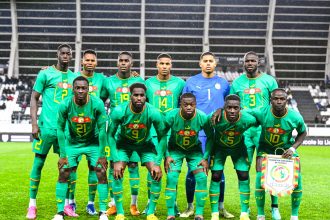
Senegal, meanwhile, bring structure, discipline, and physical power, qualities that have made them one of Africa’s most consistent forces on the global stage.
Norway add a different kind of threat—direct, explosive, and lethal on the counterattack, driven by one of Europe’s most dangerous attacking units.
Completing the group is the Intercontinental Playoff winner—potentially Iraq, Bolivia, or Suriname—an unpredictable wildcard capable of punishing any lapse in focus.
In a 48-team format designed to offer second chances, Group I offers none. Every match feels like a knockout clash, where a single mistake could decide qualification.
This is not just a difficult group—it is the defining Group of Death of the 2026 World Cup.
Teams in Group I (Full Group of Death Lineup)
- France: The 2018 champions and 2022 finalists.
- Senegal: The 2021 African champions and consistent global threat.
- Norway: A rising European power featuring world-class individual talent.
- Intercontinental Playoff Winner: Either Bolivia, Suriname, or Iraq.
France – Squad Strength & Tournament Experience
Led by Kylian Mbappé, France enter the 2026 FIFA World Cup as one of the leading title contenders and the strongest side in this Group of Death.
Their squad depth is unparalleled, with elite options across every position—from a dynamic attack to a defensively solid and tactically flexible core.
Having reached back-to-back World Cup finals, France bring invaluable tournament experience, combining proven winners with a new generation of emerging stars.
This blend of youth and experience allows them to control matches in multiple ways, whether through possession dominance or rapid transitions.
With Didier Deschamps—or a capable successor—at the helm, France possess the tactical versatility to adapt to any opponent.
Their ability to rotate without a drop in quality makes them especially dangerous in a demanding tournament schedule.
In a group filled with strong contenders, France are not just favorites to qualify—they are the benchmark every other team must reach.
Senegal – African Champions’ Tactical Power
The Lions of Teranga are no strangers to giant-killing, and they arrive at the 2026 FIFA World Cup as one of Africa’s most complete and battle-tested sides.
Built on a core of top-level European experience and physical resilience, Senegal are perfectly equipped to thrive in a Group of Death scenario.
Sadio Mané remains the heartbeat of the team, bringing leadership, pace, and clinical finishing in decisive moments.
Behind him, Kalidou Koulibaly anchors a disciplined defense, while midfield engines like Pape Matar Sarr provide energy, control, and transition threat.
Tactically, Senegal are built to frustrate elite opponents. Their compact defensive structure, combined with aggressive pressing and rapid counterattacks, makes them one of the most difficult teams to break down.
In this Group of Death, Senegal are not just contenders—they are genuine disruptors capable of matching top teams stride for stride and capitalizing on even the smallest mistakes.
Norway – Rising European Threat
Norway have waited decades for a return to football’s biggest stage, and they arrive at the 2026 FIFA World Cup with one of the most dangerous attacking duos in world football: Erling Haaland and Martin Ødegaard.
Haaland’s ruthless finishing combined with Ødegaard’s creativity and vision gives Norway the ability to break down even the most organised defenses.
Few teams in this Group of Death possess such a direct and explosive attacking threat.
Around them, Norway’s squad is young, energetic, and technically sharp—blending Scandinavian discipline with top-level European experience.
Their rapid development in recent years has transformed them into a serious contender rather than just an outsider.
While they may lack the tournament pedigree of France or Senegal, Norway’s upward trajectory makes them one of the most dangerous teams in the group.
In a Group of Death where margins are razor-thin, Norway are the wildcard capable of turning balance into chaos—especially with their devastating counterattacks.
Intercontinental Playoff Winner – Potential Surprise Team
The fourth spot remains the great unknown until the playoff concludes, with Iraq widely tipped as the favourites over Bolivia or Suriname.
Whichever side qualifies will bring a “nothing to lose” mentality that has historically produced World Cup surprises. Iraq, in particular, possess a technically disciplined core that has been tested in competitive Asian qualifiers.
While they may lack global star power, their organization, physical intensity, and effectiveness from set pieces make them a dangerous opponent in tightly contested matches.
Against sides that may experience fatigue over the course of the group stage, that physical edge could prove decisive.
This wildcard represents the ultimate equalizer—no team in Group I will afford to underestimate them.
Strength Comparison – Which Team Has the Edge?
While France has the tactical depth and pedigree, Senegal and Norway both possess the individual quality to beat them in a single match.
Senegal’s physical dominance in midfield may contrast sharply with Norway’s direct attacking style, creating a volatile dynamic where any result is possible.
Overall, France is the favourite to top the group, yet the margins are razor-thin; a single red card or missed penalty could flip the standings.
Key Matches That Could Decide the Group
- France vs. Senegal (June 16, New York/New Jersey): A high-stakes opener that sets the tone for the entire group.
- Norway vs. Senegal (June 22, New York/New Jersey): Likely a direct battle for a top-two spot.
- Norway vs. France (June 26, Boston): The final group match that could determine seeding—or survival.
Group I Predictions – Winner, Runner-up & Third Place
- Winner: France (experience and depth edge)
- Runner-up: Norway (Haaland’s individual brilliance)
- Third Place: Senegal (potentially one of the best third-placed teams to advance)
Upset Alert – Which Team Could Shock the Group?
Norway represent the most realistic shock merchants. If Haaland finds his rhythm early, the Scandinavians could topple France and rewrite the narrative. Senegal, too, have the pedigree to send either European giant packing.
But the biggest “what if” remains the playoff winner—imagine Iraq or a Caribbean/CONMEBOL side stealing points and forcing a giant into the playoff lottery. In Group I, the only certainty is uncertainty.
Other Contenders for Group of Death in the 2026 FIFA World Cup
While Group I wears the crown, two other pools come dangerously close to matching its ferocity.
Group L – One of the Toughest Groups in the Tournament
Group L is arguably the most balanced top-to-bottom group, featuring two European giants and two unpredictable regional powers.
- Team Analysis and Squad Quality: England enters with a loaded squad aiming for their first title since 1966. They are joined by Croatia, the 2018 finalists and 2022 semi-finalists, alongside Ghana and Panama.
- Competitive Balance: Croatia’s history of punching above its weight makes them a legitimate threat to England. Meanwhile, Ghana and Panama are known for their physical resilience and ability to frustrate top-tier opponents.
- Why Group L Comes Close: The presence of England and Croatia—two nations with consistent deep tournament runs—makes the battle for the top spot exceptionally fierce.
Group C – Another Highly Competitive World Cup Group
Group C features a historical rematch of the 1998 group stage between Brazil, Morocco, and Scotland.
- Team Breakdown: Brazil (Pot 1), Morocco (Pot 2), Scotland (Pot 3), and Haiti (Pot 4).
- Strength Comparison: Morocco made history as the first African team to reach a semi-final in 2022, while Scotland qualified dramatically with a last-minute winner in their final qualifier.
- Why Group C is Dangerous: With Scotland returning to the world stage after a long absence and Morocco at the peak of its powers, Brazil faces a much more difficult path than in previous years.
Easiest Group in the 2026 FIFA World Cup
Based on the official draw and subsequent analysis by FIFA rankings and sports analysts, Group J and Group E are widely considered the easiest paths in the 2026 FIFA World Cup.
These groups feature the highest average FIFA rankings (meaning the lowest collective team strength) and the most favorable paths for their respective top seeds.
Top Contenders for “Easiest Group”
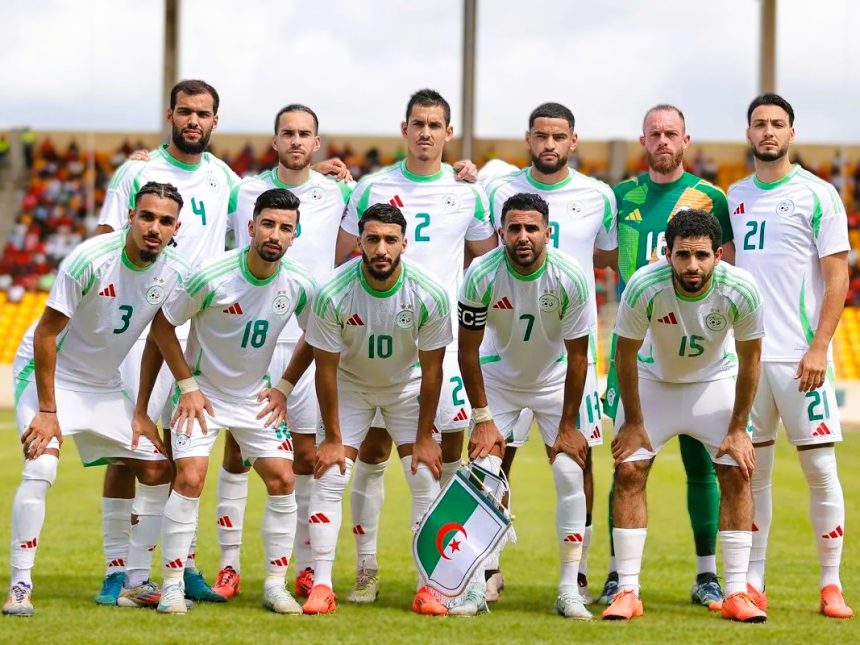
- Group J: Argentina, Austria, Algeria, Jordan
Analysts have labeled this a “gimme” for the defending champions. Argentina (ranked 2nd) faces Jordan (ranked 66th), who are tournament newcomers, and an Algeria side with limited recent knockout experience. Austria is the only other team with significant European pedigree in the group. - Group E: Germany, Ecuador, Ivory Coast, Curaçao
This group has the lowest average FIFA ranking of the tournament (average rank of 39). Germany is seen as the big winner of the draw, facing Curaçao, the smallest nation by population to ever qualify. While Ecuador is a consistent qualifier, the gap in quality to the top seed is considered significant. - Group G: Belgium, Egypt, Iran, New Zealand
Identified by several sources as one of the “softest” draws, particularly for an aging Belgium squad. Their primary competition is Iran and an Egypt side led by Mohamed Salah, while New Zealand (ranked 86th) is the lowest-ranked team in the group.
Why This Group is the Easiest
| Group | Teams | Avg. FIFA Rank | Why it’s Easy |
|---|---|---|---|
| Group E | Germany, Ecuador, Ivory Coast, Curaçao | 39 | Contains the lowest-ranked team (Curaçao). |
| Group J | Argentina, Austria, Algeria, Jordan | 32 | Features a newcomer (Jordan) and lacks depth. |
| Group G | Belgium, Iran, Egypt, New Zealand | 37 | Features fading stars and lower-ranked wildcards. |
2026 FIFA World Cup: Group Difficulty Rankings
The following table ranks the 12 groups from the hardest to easiest based on average FIFA World Rankings and tactical depth.
| Rank | Group | Teams | Avg. Rank | Difficulty |
|---|---|---|---|---|
| 1 | F | Netherlands, Japan, Tunisia, UEFA Playoff B* | 26 | Toughest |
| 2 | I | France, Senegal, Norway, FIFA Playoff 2* | 29 | Group of Death |
| 3 | L | England, Croatia, Ghana, Panama | 29 | Highly Comp. |
| 4 | J | Argentina, Austria, Algeria, Jordan | 32 | Top-Heavy |
| 5 | D | USA, Australia, Paraguay, UEFA Playoff C* | 33 | Physical |
| 6 | K | Portugal, Colombia, Uzbekistan, FIFA Playoff 1* | 34 | High Chaos |
| 7 | C | Brazil, Morocco, Scotland, Haiti | 34 | Scrappy |
| 8 | B | Canada, Switzerland, Qatar, UEFA Playoff A* | 35 | Moderate |
| 9 | A | Mexico, South Korea, South Africa, UEFA Playoff D* | 36 | Balanced |
| 10 | H | Spain, Uruguay, Saudi Arabia, Cabo Verde | 36 | Top-Two Heavy |
| 11 | G | Belgium, Iran, Egypt, New Zealand | 37 | Easy |
| 12 | E | Germany, Ecuador, Ivory Coast, Curaçao | 39 | Easiest |
Explanation of rankings
- Average FIFA Ranking: The primary metric, calculated by taking the average ranking of all four teams in a group. A lower average number indicates a higher concentration of top-ranked teams.
- Playoff Impact: Groups F and I are exceptionally hard due to high-caliber, expected playoff winners (like Sweden or Poland) completing the lineup.
- Superstar Density: Group I is considered the “Group of Death” for featuring elite scorers Kylian Mbappé (France), Erling Haaland (Norway), and Sadio Mané (Senegal).
Surprises and underrated groups
- Group E (The “Easiest” Surprise): While featuring powerhouse Germany and a strong Ecuador side, Group E ranks last due to the inclusion of Curaçao, the lowest-ranked team to qualify.
- Group C (The Underdog Threat): Underrated due to 2022 semifinalists Morocco and a determined Scotland side, providing a serious challenge to Brazil.
- The Hosting Contrast: Among the co-hosts, the USA faces the hardest road (5th hardest), while Canada (8th) and Mexico (9th) received easier paths.
Knockout Stage Impact of the Group of Death
In the expanded 48-team 2026 FIFA World Cup, the “Group of Death” (specifically Group I and Group L) has a profound impact on the knockout stage because the difficulty of the group directly dictates a team’s path through the brand-new Round of 32.
How tough groups affect Round of 16 matchups
The primary risk for teams in a “Group of Death” is the “Runner-up Trap.” Finishing second in a high-calibre group often leads to an immediate clash with another powerhouse in the first knockout round, whereas winning the group provides a statistically “easier” match against a third-placed qualifier.
Potential pathways for group teams
| Group Position | Potential Round of 32 Opponent | Match Venue |
|---|---|---|
| Group I Winner | 3rd Place (Group C/D/F/G/H) | New York New Jersey |
| Group I Runner-up | Runner-up (Group E) | Dallas |
| Group L Winner | 3rd Place (Group E/H/I/J/K) | Philadelphia |
| Group L Runner-up | Runner-up (Group K) | San Francisco Bay Area |
FAQs About the 2026 FIFA World Cup Group of Death
Can a third-placed team advance?
Yes—eight third-placed teams progress. In Group I, even the third side could have a realistic chance of being among the best eight runners-up depending on results elsewhere.
How is the Group of Death determined?
Through a combination of FIFA rankings, recent form, squad quality, tactical matchups and expert consensus. Group I ticks every box.
Final Thoughts on the Group of Death in the 2026 FIFA World Cup
- Summary of Insights: Group I is the “Group of Death” due to the superstar density of Mbappé, Haaland, and Mané.
- Why it’s Most Competitive: Unlike easier groups with clear “pushovers,” Group I features three teams capable of reaching the quarter-finals, meaning at least one elite side will face a disadvantaged knockout seeding.
- What to Watch: Fans should keep a close eye on the goal difference in these groups. In the 48-team era, a single goal could be the difference between facing a 3rd-place underdog or a tournament favorite like France or Germany in the first knockout round.