







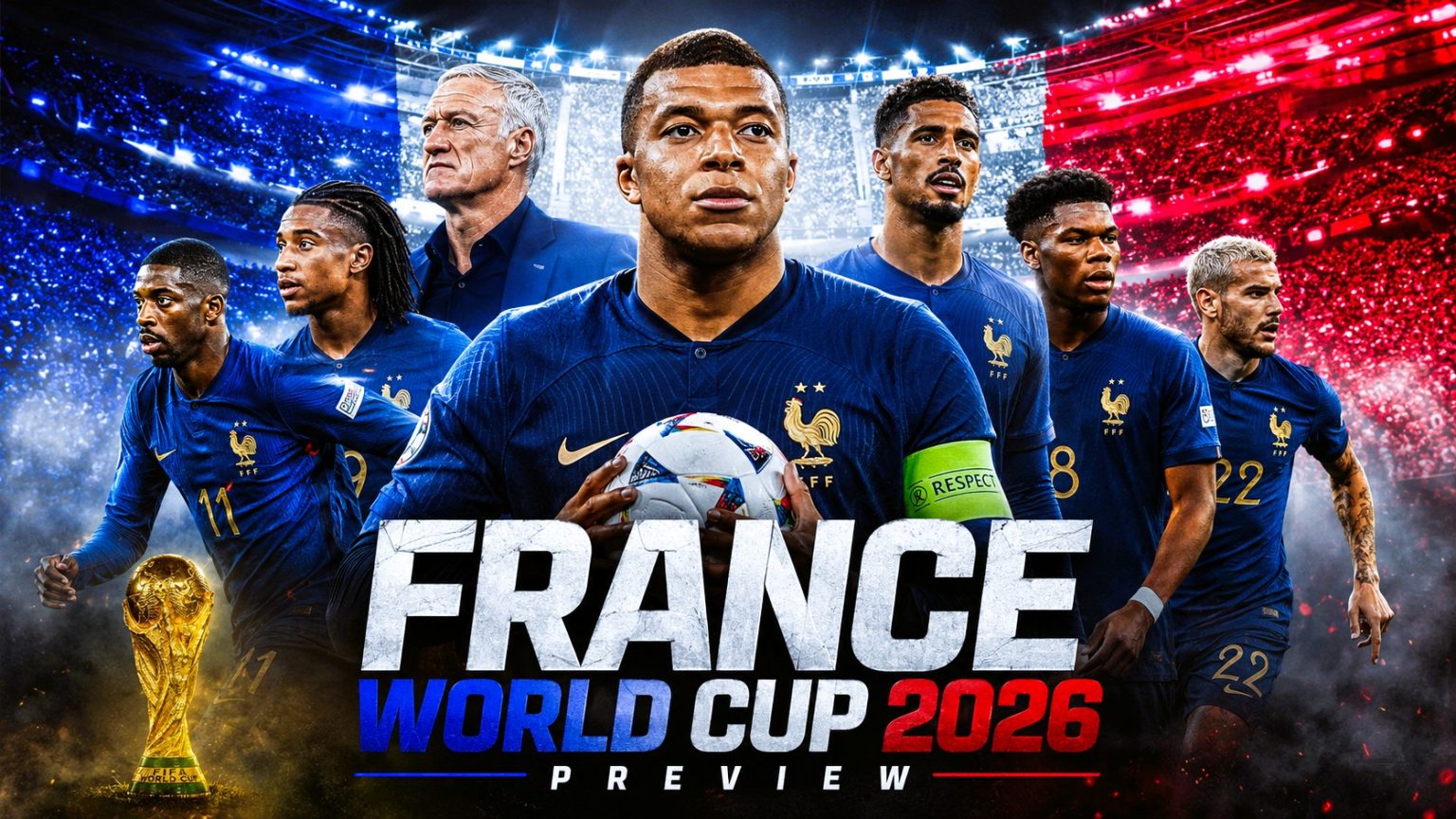

There are nations that go to a World Cup hoping. There are nations that go expecting. And then there is France — a team that arrives in North America this summer as one of the clear tournament favorites, burdened by expectation and armed with perhaps the deepest squad in the field.
Les Bleus enter the FIFA World Cup 2026 with a familiar blend of individual brilliance and collective structure, anchored by the irresistible force of Kylian Mbappé and given new electricity by a generation of attackers that even the most seasoned football observers struggle to keep track of.
Ousmane Dembélé, freshly crowned as 2025 Ballon d’Or winner. Désiré Doué. Michael Olise. Rayan Cherki. The list reads like a fantasy football dream, and it is entirely real.
Coach Didier Deschamps, who has steered the French national team since 2012 and has confirmed this will be his final tournament in charge, carries the weight of legacy into this campaign.
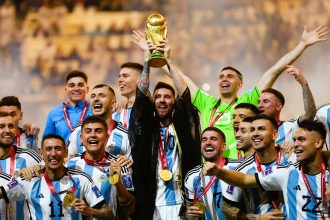
He led France to the 2018 World Cup title in Russia and to the 2022 final in Qatar — where only an Argentina penalty shootout denied Les Bleus back-to-back crowns.
Now, with his 26-man squad officially announced and Group I fixtures set, the question is not whether France can win the 2026 FIFA World Cup, but whether anything can stop them.
France’s Road to the FIFA World Cup 2026
France Qualification Campaign
France’s journey to North America was, as expected, a procession rather than a struggle.
Les Bleus qualified for the 2026 World Cup as UEFA Group D winners, sealing their place in November 2025 without a single defeat across their qualification campaign.

They posted a near-perfect record of 16 points from six matches, topping a group that included Ukraine, Iceland, and Azerbaijan.
The qualification campaign was used methodically by Deschamps — rotating players, testing combinations, managing the fitness of his elite performers, and gradually building the rhythm that will be needed when the stakes are highest.
France’s attack led European qualifying in goals scored while their defence, marshalled by William Saliba and a battery of world-class centre-backs, conceded the fewest.
Key Matches During Qualification
Among the defining moments of France’s World Cup journey was a pair of March 2026 friendly victories that served as a final, emphatic statement of intent.
A rotated French B team dismantled Colombia 3-1, while the first-choice XI beat Brazil 2-1 at Gillette Stadium in Foxborough — the very venue where France will face Norway on June 26.
Mbappé opened the scoring in that Brazil match after Aurélien Tchouaméni won the ball high and Dembélé threaded a through ball, a passage of play that encapsulated everything Deschamps has built.
France’s FIFA Ranking and Form
France enter the tournament ranked third in the world by FIFA, placing them among the top seeds.
That ranking also carries tactical significance: France and England — the world’s third and fourth ranked sides — were deliberately placed in separate pathways to prevent a meeting before a potential final.
Their road to the MetLife Stadium on July 19 is constructed to favour those who win their group.
France Full Squad Analysis for World Cup 2026
Deschamps announced his official 26-man World Cup squad on May 14, 2026, dispensing with the usual preliminary list and going directly to his final selection.
The squad blends seasoned veterans with some of the most exciting young talents in global football.
Goalkeepers
Mike Maignan, Brice Samba, Robin Risser
Mike Maignan remains France’s undisputed number one. The AC Milan goalkeeper has been first choice throughout Deschamps’ squad selections during qualification, and his commanding shot-stopping and ball-playing ability make him one of the top goalkeepers in the tournament.
Notably, Deschamps called up Robin Risser of Lens as a late breakthrough addition — Risser won the Ligue 1 Goalkeeper of the Year award and played a key role in making Lens the second-best defence in the French top flight. Brice Samba rounds out an experienced three-man pool.
Defenders
William Saliba, Ibrahima Konaté, Dayot Upamecano, Maxence Lacroix, Jules Koundé, Théo Hernandez, Lucas Hernandez, Lucas Digne, Malo Gusto
France’s defensive depth is extraordinary. William Saliba, 24, has been one of the best centre-backs in the world at Arsenal and brings an athleticism, composure, and passing range that sets him apart.
Jules Koundé has been exceptional under Hansi Flick at Barcelona, while Ibrahima Konaté provides power and presence alongside Saliba. Lucas Hernandez, a two-time World Cup finalist, adds veteran know-how.
At fullback, Théo Hernandez brings relentless attacking energy on the left, while Koundé and Malo Gusto contest the right.
France’s defensive balance — aggressive, high-line, yet extremely well-organised — makes them one of the most formidable defensive units in world football.
Midfielders
Aurélien Tchouaméni, N’Golo Kanté, Warren Zaïre-Emery, Manu Koné, Adrien Rabiot
This is a midfield built on dynamism and range. Tchouaméni, who was named stand-in captain for France in October 2024, is the engine room: a combative, technically gifted defensive midfielder who can also drive forward.
Alongside him, the remarkable story of N’Golo Kanté continues — now at Fenerbahçe, the 2018 World Cup winner is set for his third World Cup, and Deschamps has trusted him to bring experience to the middle of the park.
Warren Zaïre-Emery, still a teenager by the standards of this squad yet already a seasoned PSG performer, provides exactly the creative spark that younger fans expect.
The absence of Eduardo Camavinga — left out due to a difficult season marked by injury and reduced playing time at Real Madrid — was the biggest surprise of the selection, but Manu Koné and Rabiot (in outstanding form for AC Milan) fill the gap capably.
Attackers
Kylian Mbappé, Ousmane Dembélé, Michael Olise, Désiré Doué, Bradley Barcola, Rayan Cherki, Marcus Thuram, Maghnes Akliouche, Jean-Philippe Mateta
This is where France separate themselves from every other team at the tournament. The attacking options are not just deep — they are historic.
Mbappé leads the line and captains the side. Dembélé, the reigning Ballon d’Or winner, starts on the right.
Michael Olise, now one of the most complete wingers in Europe at Bayern Munich, contests a starting spot. Rayan Cherki — who has had a breakout season at Manchester City under Pep Guardiola — makes his World Cup debut at 22 years old.
Désiré Doué, Barcola and Thuram complete an attacking pool that would be the envy of any coach on the planet.
One absence is keenly felt: Hugo Ekitike, who was in outstanding form for Liverpool before suffering an Achilles injury, has been ruled out entirely.
Deschamps has called up Crystal Palace’s Jean-Philippe Mateta — who was preferred to Randal Kolo Muani — as cover.
France Possible Starting XI at World Cup 2026
Predicted Formation
Deschamps has spent 13 years honing a tactical identity that prioritises defensive structure, rapid transitions, and maximum exploitation of individual quality in the final third. His preferred shape is a 4-2-3-1 or 4-3-3, with flexibility built into both.
France Best Possible Lineup (4-2-3-1)
GK:  Mike Maignan

RB:  Jules Koundé
CB:  William Saliba
CB:  Dayot Upamecano
LB:  Théo Hernandez

DM:  Aurélien Tchouaméni
DM:  N'Golo Kanté / Warren Zaïre-Emery

RM:  Ousmane Dembélé
AM:  Michael Olise
LM:  Bradley Barcola

ST:  Kylian Mbappé
The notable tactical note here: Deschamps has spoken about potentially deploying Olise as a number 10 behind Mbappé rather than on the right wing — a position where the Bayern Munich man is arguably the best in the world. Whether this experiment works or not could define France’s tournament.
Tactical Analysis – How France Could Play in 2026
Attacking Strengths
France’s attack operates at a tempo few teams in world football can match.
Mbappé’s movement and finishing, Dembélé’s mazy dribbling and creativity, and the overlapping fullbacks (particularly Théo Hernandez on the left) create genuine chaos for defensive structures.
Add in the ability to rotate in Cherki, Doué, Barcola and Thuram, and Deschamps can freshen his attack in the knockout stages without losing any quality.
The transition game is particularly dangerous. France are built to absorb pressure, win possession midfield and release pace into space — it is a devastatingly effective model that has worked against even the world’s best teams.
The win over Brazil in March, when Tchouaméni won the ball high and Dembélé carved the through ball for Mbappé in less than three seconds, was a perfect illustration.
Midfield Control
The Tchouaméni-Kanté double pivot provides France with the best of two worlds: the experience and relentless energy of a World Cup winner, and the technical excellence of one of Real Madrid’s most important players in recent seasons.
Zaïre-Emery, should he start, adds a dynamism and creativity that shifts France’s midfield up another gear.
France were unbeaten through European qualifying with the best attacking return and fewest goals conceded — the midfield’s balance was a huge part of that.
Defensive Stability
France’s back four is arguably the most talented in the tournament. Saliba’s passing and reading of the game, Koundé’s athleticism, and the Hernandez brothers’ relentless energy at fullback make them extremely difficult to break down. Maignan behind them is a sweeper-keeper of the highest quality. France conceded the fewest goals of any team in UEFA World Cup qualification.
Weaknesses France Must Improve
No team is without vulnerabilities. France’s record against elite opposition in knockout competition contains moments of near-disaster — the 2022 final was won by Argentina after France imploded from a comfortable position.
A susceptibility to set pieces and a tendency to lose midfield control when opponents press aggressively at high intensity are areas Deschamps must manage.
The injury to Mbappé — who sustained a thigh problem last month that caused him to miss Real Madrid’s La Liga run-in — is the tournament’s most significant fitness question.
Deschamps has confirmed he will be on the plane, but managing his preparation through the group stage will be crucial.
Can Kylian Mbappé Lead France to Another World Cup Title?
Mbappé’s Leadership Role
This is Mbappé’s third World Cup and first as uncontested captain of the side. At 27, he enters the tournament as arguably the finest player on the planet — a distinction he has held for the better part of three years.
His leadership has matured significantly since the raw excitement of 2018; he is now the emotional and tactical reference point for everything France does.
Deschamps described his captain simply: “He is still a player who can decide a game at any moment.” For once in football, the cliché is entirely accurate.
Mbappé’s World Cup Record
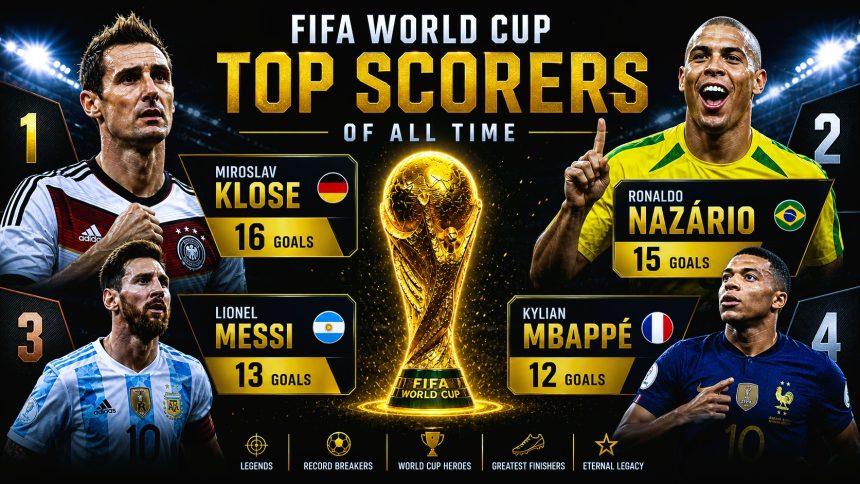
The statistics demand a moment of pause. Mbappé has scored 12 World Cup goals in just 14 appearances across 2018 and 2022.
At 23 years old after Qatar, that tally had already surpassed the World Cup goals of Thierry Henry (6) and Zinedine Zidane (5) for France. He is the top scorer in World Cup final matches in history, with four goals scored across the 2018 and 2022 finals.
Only five players in history have scored more World Cup goals than Mbappé: Miroslav Klose (16), Ronaldo (15), Gerd Müller (14), and Lionel Messi and Just Fontaine (both 13).
A strong tournament in North America could move him into the top three of all time. He begins 2026 needing just four goals to equal Fontaine’s French record of 13 in World Cup competition.
Pressure and Expectations
The thigh injury and an unsettled season at Real Madrid — where managerial turbulence has complicated his preparations — add noise around France’s talisman.
But Mbappé has repeatedly demonstrated that World Cup football unlocks something extra in him. In 2018, he became the second-youngest player in history after Pelé to score in a World Cup final.
In 2022, he claimed the Golden Boot with eight goals, including a hat-trick in the final. The biggest stage suits him.
The real pressure is of legacy. France enters 2026 with the chance to become the first nation to win three World Cups with the same generation of player (Hernandez brothers and Mbappé).
For Deschamps, a third World Cup as manager would be the ultimate capstone. For Mbappé, winning it as captain — rather than as a brilliant young team member — would be the defining moment.
France World Cup 2026 Schedule and Possible Opponents
Group Stage Fixtures — Group I
France’s group-stage schedule is demanding rather than comfortable.
They find themselves in Group I alongside Senegal (AFCON champions), Norway (powered by Erling Haaland), and Iraq (returning to the World Cup for the first time since 1986 after defeating Bolivia in the intercontinental playoff).
| Date | Match | Venue |
| June 16 | France vs. Senegal | MetLife Stadium, East Rutherford, New Jersey |
| June 22 | France vs. Iraq | Lincoln Financial Field, Philadelphia |
| June 26 | Norway vs. France | Gillette Stadium, Foxborough, Massachusetts |
France open their campaign on June 16 against Senegal at MetLife Stadium — the very ground that will host the World Cup Final on July 19.
They then face Iraq in Philadelphia on June 22, before closing the group stage against Norway in Boston on June 26.
Possible Round of 32 Opponents
As group winners, France would face one of the third-place qualifiers in the round of 32 — almost certainly a team from a lower-ranked group.
The expanded 48-team format with its Round of 32 gives France an additional knockout match before the serious business of the Round of 16.
Knockout Stage Route
The tournament bracket has been structured to keep the top-ranked nations apart until the final.
France (ranked 3rd) and England (ranked 4th) are in separate pathways, meaning the two highest-ranked European teams could only meet in the final.
If France wins Group I, their likely path involves opponents from 3rd place (Group C/D/F/G/H) in the later knockout rounds — though Spain and Brazil would only arrive on that side of the bracket in the quarterfinals or beyond.
France World Cup 2026 Predictions
Best-Case Scenario
France win Group I comfortably, negotiate the Round of 32 and Round of 16 without major drama, and then face one of Argentina, Brazil or Spain in the quarterfinal — a marquee clash that their squad, at full strength, is equipped to win.
Mbappé peaks in the knockout rounds, as he historically does. Dembélé produces the performances his Ballon d’Or status demands.
Deschamps coordinates from the bench with the calm authority of a man with nothing left to prove and everything to give.
France lift their third World Cup title in Paris — metaphorically, at MetLife Stadium.
Biggest Threats to France
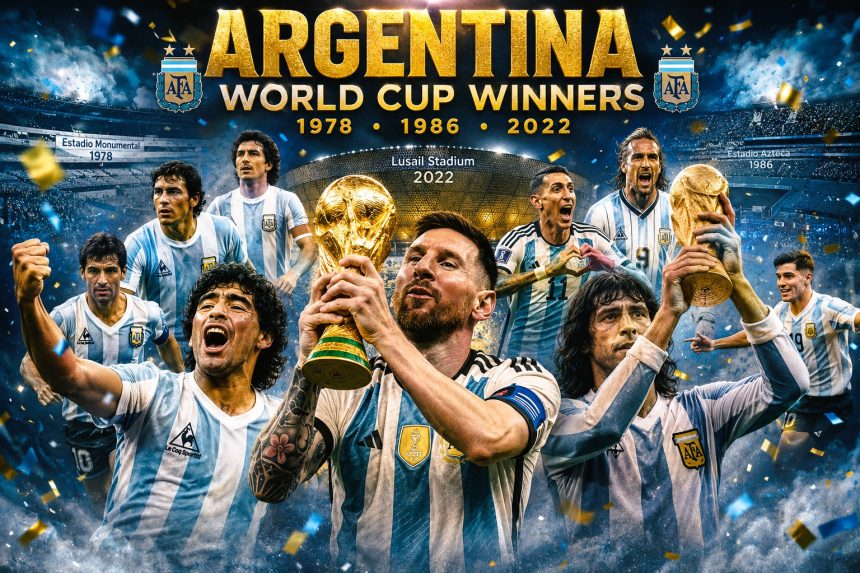
Argentina — the defending champions, led by Lionel Messi in what will be his sixth and almost certainly final World Cup, are motivated by history. They beat France on penalties in 2022; a rematch would be the final football deserves.
Spain — ranked first in the world, with a possession-based identity and one of the tournament’s most complete squads, Spain represent France’s most dangerous potential opponent.
Brazil — though France beat them in March, tournament football has a different weight. Brazil arrive with a point to prove and the talent to threaten any side.
Erling Haaland — even within Group I, Norway’s striker scored 16 goals in European qualifying. A game at Gillette Stadium in late June, with qualification potentially already secured for France, is not a fixture to underestimate.
Injuries — the Mbappé fitness question hangs over everything. A tournament where he cannot play at full capacity is a significantly diminished France.
Can France Reach the Final?
The honest answer is: they are as likely to reach the final as any team in the field, and more likely than most.
The squad has the breadth to manage games across seven matches over five weeks. The tactical foundation is proven.
The individual quality is unmatched. And Deschamps, whatever his critics say, has an extraordinary record of extracting results when the stakes are highest.
The expectation — reasonable and well-founded — is a deep run. A quarterfinal exit would be a major disappointment.
Anything short of the semifinal would represent underperformance given the squad’s quality.
France World Cup History and Previous Success
France’s Previous World Cup Titles
France have won the FIFA World Cup twice. The first came in 1998 on home soil, when a team built around Zinedine Zidane and marshalled by a young Deschamps as captain destroyed Brazil 3-0 in the final at the Stade de France.
It was France’s first world title, and it created the blueprint for Les Bleus’ golden era.
The second came in Russia in 2018, when Deschamps became only one of three men in history to have won the World Cup as both a player and a manager — a list on which he now stands alongside Brazil’s Mário Zagallo and Germany’s Franz Beckenbauer.
France beat Croatia 4-2 in the final in Moscow, with Mbappé becoming the second-youngest player in history after Pelé to score in a World Cup final.
France’s Recent Tournament Performances
The 2022 World Cup in Qatar produced one of the greatest finals in the competition’s history.
France, trailing 2-0 with 10 minutes remaining against Argentina, clawed back to 2-2 through a Mbappé penalty, then 3-3 in extra time through a Mbappé hat-trick goal — before losing on penalties as Gonzalo Montiel’s spot kick decided the tournament.
It was a devastating near-miss that still shapes the motivation of those players who lived through it.
Between World Cups, France were eliminated from Euro 2020 on penalties by Switzerland in the Round of 16 — a result that shocked the football world — and fell to Spain in the semifinal of Euro 2024. The hunger for a major trophy is real.
Legendary French Players
The lineage of French football’s greatest players enriches the 2026 campaign.
Just Fontaine, whose 13 goals at the 1958 World Cup remain the record for a single tournament, set a benchmark that Mbappé now has a realistic chance of approaching.
Zinedine Zidane’s genius defined two decades of global football.
Thierry Henry, Patrick Vieira, and Lilian Thuram — all of them contributed to France’s golden era.
Deschamps himself captained the 1998 winners. This 2026 squad carries all of that weight and ambition.
Conclusion
France enter the FIFA World Cup 2026 as one of the clearest favorites in the history of the competition’s modern era.
The squad depth is unmatched. The attacking options border on obscene. The defensive structure is among the best in world football.
And underpinning everything is a captain — Kylian Mbappé — who treats the World Cup stage as his personal masterpiece.
Deschamps, coaching his final tournament, has assembled what may be the most talented French squad ever selected.
The question he must answer between now and July 19 is not whether France have the quality. They clearly do.
It is whether they have the chemistry, the cohesion, and the fortune to navigate seven matches against the world’s best teams — and emerge as champions.
If Mbappé is fit, if Dembélé produces the Ballon d’Or-level performances the world expects, and if France’s extraordinary depth survives the rigours of the knockout rounds, Les Bleus have everything they need to bring Nombre Trois home to Paris.
Final prediction: France reach the World Cup final. They are favorites to win it.