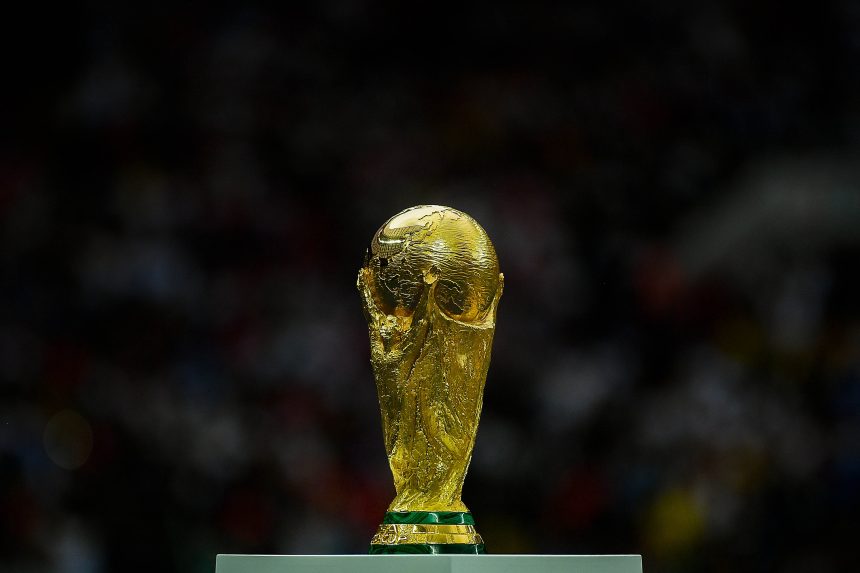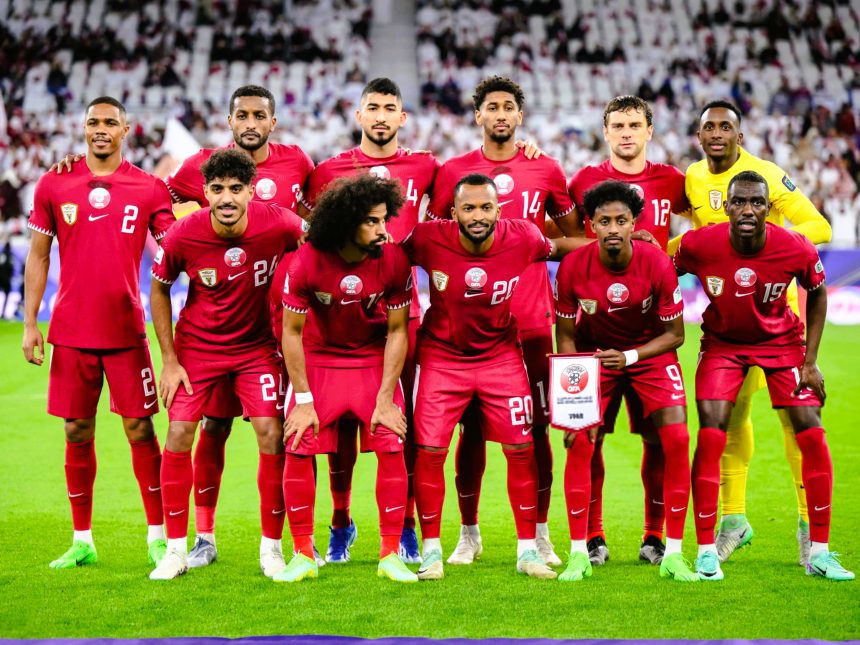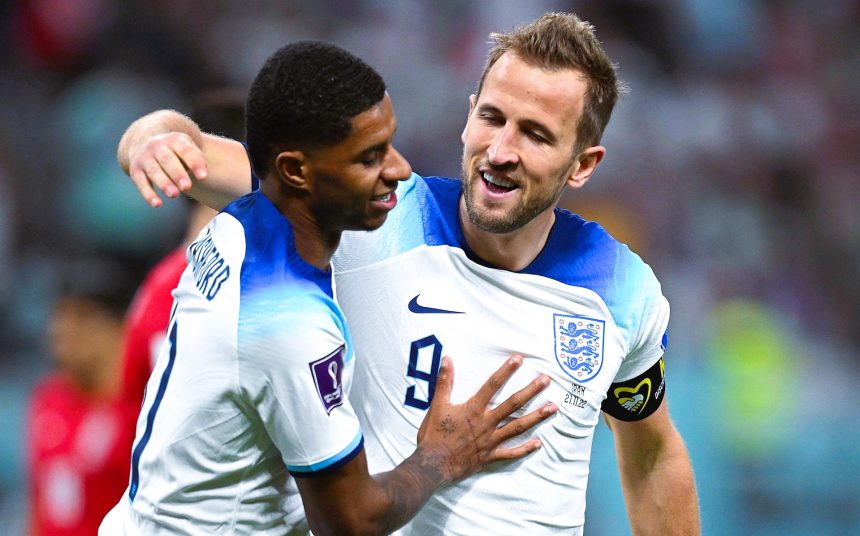










The road to World Cup 2026 has been paved with ambition, heartbreak, and — for four extraordinary nations — the sweetest triumph of footballing history.
When the 2026 FIFA World Cup kicks off on June 11 in the United States, Canada, and Mexico, four countries will step onto the greatest stage in global football for the very first time: Cape Verde, Curaçao, Jordan, and Uzbekistan.
These aren’t just names on a fixture list. They are the FIFA World Cup 2026 debutants, nations whose players will be hearing their national anthems echo through packed American stadiums while millions back home experience the most consequential moments in their football history.
For every fan who has waited decades — and in some cases, a generation — this is what qualification dreams are made of.
The expansion of the tournament to 48 teams has opened the door to newcomers in FIFA World Cup 2026, creating more pathways than ever before for emerging football nations to write their names into the annals of international football.
But make no mistake: Cape Verde, Curaçao, Jordan, and Uzbekistan didn’t just benefit from an extra slot.
They earned their places through grit, tactical evolution, and the kind of belief that only comes from a nation wholly united behind its team.
These are the stories of the first-time FIFA World Cup qualifiers who are about to change their football histories forever.


What Makes FIFA World Cup 2026 Special?
Expansion to 48 Teams
The 2026 FIFA World Cup marks the most significant structural change in the tournament’s history.
For the first time, 48 nations will compete — up from the 32-team format used since 1998.
This FIFA World Cup expansion increased the number of participating spots across every confederation, meaning more opportunities for emerging football nations to punch through to the global stage.
The expanded 48-team FIFA World Cup created 12 groups of four, with the top two from each group advancing automatically alongside the eight best third-placed teams, producing a 32-team knockout bracket.
In total, 104 matches will be played across 39 days — a record for a single tournament — with each finalist potentially playing eight games.
Host Nations for FIFA 2026
The tournament is spread across 16 cities in three countries: the United States (11 cities including Los Angeles, New York/New Jersey, Dallas, Atlanta, and Miami), Mexico (Mexico City, Guadalajara, and Monterrey), and Canada (Toronto and Vancouver).
The tri-nation hosting arrangement makes it the biggest football tournament in history in terms of geography, commercial reach, and anticipated attendance.
Why New Nations Have Better Chances
The FIFA World Cup expansion fundamentally altered the qualification mathematics. More continental qualifier spots meant that teams sitting just outside the traditional thresholds could now secure their tickets.
But the numbers only tell part of the story. For teams like Uzbekistan and Cape Verde, improvements in squad depth, diaspora player recruitment, and coaching infrastructure came together at precisely the right moment.
The expansion didn’t hand them a gift — it gave them the platform that their footballing development had been building toward for years.
FIFA World Cup 2026 Debutants: The Four Historic First-Timers
Cape Verde — The Blue Sharks Bite Back
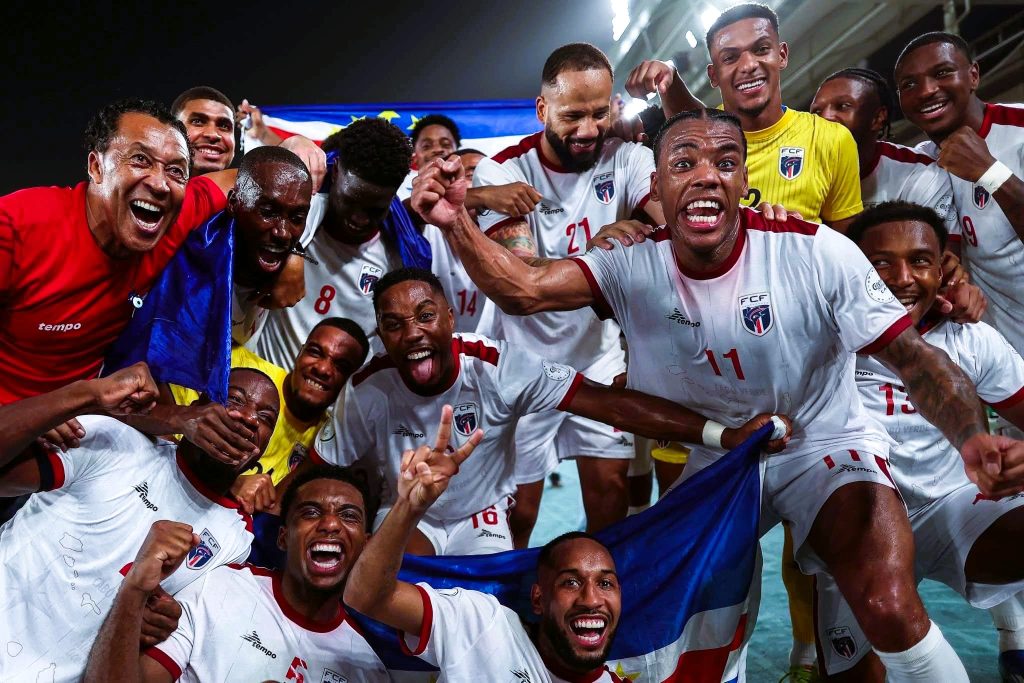
Group H: vs. Spain, Uruguay, Saudi Arabia FIFA Ranking: 69th
Of all the FIFA World Cup 2026 debutants, Cape Verde may carry the most emotionally resonant story.
An archipelago of ten inhabited islands scattered roughly 600 kilometres off the coast of Senegal, with a population barely exceeding 525,000 people, Cape Verde became the first-ever World Cup qualifier by land area from the African continent — and one of the smallest nations by population ever to make it to the finals.
The moment came on October 13, 2025. A 3-0 home victory over Eswatini in Praia, combined with Cameroon’s 0-0 draw against Angola, sealed it.
The Cape Verdean government declared a half-day national holiday. Streets erupted. A country that only gained independence from Portugal in 1975, and only affiliated with FIFA in 1986, had arrived on the world stage.
Coach Pedro Leitão Brito — universally known as “Bubista” — has been the architect of this historic qualification campaign. A 2025 CAF Coach of the Year nominee, Bubista built the Blue Sharks around a disciplined 4-2-3-1 formation that emphasises defensive compactness and rapid counter-attacking transitions through wide channels.
The approach produced extraordinary results during CAF qualification: seven wins, two draws, one defeat across ten matches, a goal difference of +8, and a final group table that placed them four points clear of Cameroon, who had been widely tipped as the pre-qualification favourites.
The soul of the squad is captain Ryan Mendes, a 36-year-old forward who is both the most-capped player and all-time leading goalscorer in Cape Verdean football history.
Alongside Mendes, goalkeeper Vozinha provides experienced last-line reliability, while defender Roberto Lopes — born in Ireland, first contacted through LinkedIn, and a consistent figure since 2019 — adds an extraordinary personal dimension to Cape Verde’s cosmopolitan squad story.
Striker Duk, who plays for Udinese in Serie A, provides genuine creative spark in attack.
Cape Verde’s Group H draw is brutal on paper — Spain, one of the tournament favourites, alongside South American hardened Uruguay and an improving Saudi Arabia.
But the Blue Sharks have already proven everyone wrong once. In a group stage played with the freedom of a team with nothing to lose and everything to gain, they arrive as one of the most intriguing first-time FIFA World Cup qualifiers the tournament has ever seen.
Curaçao — The Caribbean Giant-Killers
Group E: vs. Germany, Ecuador, Ivory Coast FIFA Ranking: 82nd
Curaçao’s qualification is, by any reasonable measure, the most stunning achievement of the entire 2026 World Cup cycle.
A Caribbean island with a population of approximately 150,000 people — smaller than many European cities — Curaçao will become the smallest nation by population ever to participate in a FIFA World Cup.
That record alone would be remarkable. That they earned it by going undefeated across ten CONCACAF qualifying matches makes it simply extraordinary.
The Curaçao football story is a testament to the modern era’s most powerful force in international football: dual-national player development.
The island nation has leaned heavily on players of Curaçao heritage who were raised and developed in the Netherlands’ professional footballing system — a growing trend among emerging football nations that sits at the intersection of diaspora identity and elite athletic preparation.
Key forward Jearl Margaritha has been a consistent danger throughout qualifying, while striker Rangelo Janga announced himself to a global audience with a stunning hat-trick against Barbados during the qualification campaign.
Their CONCACAF journey included a crucial draw against Jamaica that sealed their historic World Cup ticket.
The group stage draw, however, has given Curaçao a genuinely formidable challenge. Group E features Germany — a four-time World Cup winner — alongside Ecuador and Ivory Coast.
Fans in Willemstad who watched the draw live in a hotel described the moment as history being written in real time, and celebrated regardless of the opposition: “It will be a party whether we win, lose, or draw,” one supporter told ESPN. “We’ll just be celebrating the fact we can play on such a big stage.”
For the football nations to watch at 2026, Curaçao occupies a unique category — not just as a potential dark horse debutant, but as living proof that the expanded World Cup is doing exactly what FIFA intended: giving voice to footballing cultures that would otherwise remain forever in the shadows of the game’s great events.
Jordan — The Middle East’s New Qualifier

Group J: vs. Austria, Algeria, Argentina FIFA Ranking: Not in top 50 at qualification
Jordan’s debut at the 2026 FIFA World Cup carries particular significance in the context of Asian and Arab football.
The Nashama — “The Brave Ones” — qualified through the competitive AFC qualifying process, finishing second in their group during the decisive third round phase, and secured a historic berth that makes them one of only a handful of Middle Eastern nations ever to reach the tournament through the traditional qualifying route rather than as a tournament host.
The qualification story centred on a decisive victory: a 3-0 triumph over Oman in which Ali Olwan scored all three goals, completing a performance that encapsulated Jordan’s attacking identity under their coaching setup.
Olwan has been the standout figure throughout the AFC qualifying campaign, providing the goals that transformed Jordan’s bold ambitions into concrete reality.
Jordan’s rise reflects a broader trend in Asian football, where nations that once served as warm-up opponents for regional powers are now genuine competitors capable of beating anyone on a given day.
The AFC qualification process has never been more competitive, and Jordan’s navigation of it — past established footballing nations in a region that produced nine World Cup qualifiers — represents a genuine breakthrough for Jordanian football infrastructure.
Their Group J draw has placed them against Austria, Algeria, and the ultimate test: Argentina, the defending world champions, with Lionel Messi providing what could be the most talked-about match of Jordan’s footballing history when the two nations meet.
For a team making their first appearance at the global tournament, facing the world’s best player in a World Cup group stage is as historically charged as football gets.
Key winger Musa Al-Taamari, who plays for Rennes in France’s Ligue 1, gives Jordan a genuinely elite-level weapon in attack and will be the player to watch when the Nashama make their debut on the world stage.
Uzbekistan — Central Asia’s Historic Breakthrough

Group K: vs. Portugal, DR Congo, Colombia FIFA Ranking: Competitive AFC tier
Uzbekistan’s arrival at the FIFA World Cup 2026 ends decades of near-misses and is one of the most celebrated sporting moments in Central Asian history.
The first Central Asian nation ever to qualify for a World Cup, Uzbekistan secured their historic berth with a goalless draw against the United Arab Emirates in Abu Dhabi — remaining unbeaten throughout the entire second qualifying round and sealing their place with a game to spare.
The celebration at full-time was not just relief — it was exorcism. Uzbekistan has a history of heartbreaking qualification failures, of teams that came achingly close only to fall short in the final rounds.
The expanded 48-team format provided the additional pathway, but it was a golden generation of Uzbek players who walked through it.
The squad is coached by Italian World Cup winner Fabio Cannavaro, who brought both tactical discipline and international credibility to a programme that has been building momentum throughout the 2020s.
Cannavaro’s experience on football’s biggest stage — he lifted the 2006 World Cup trophy as Italy’s captain — makes him an invaluable guide for players experiencing a tournament of this scale for the first time.
Goalkeeper Utkir Yusupov was a hero during the qualification campaign, producing a series of crucial saves in the UAE draw that clinched the historic ticket.
The squad also carries the distinction of representing one of the world’s two “doubly landlocked” countries — a nation surrounded entirely by other landlocked states, sharing that geographical curiosity only with Liechtenstein.
In Group K, Uzbekistan face Portugal — tournament contenders with one of the world’s best squads — alongside Colombia and DR Congo. It is a tough draw, but for a nation that spent decades dreaming of this moment, every match will be approached as a celebration as much as a competition.
How the FIFA World Cup 2026 Qualification Format Worked
The road to 2026 was shaped by a multi-stage qualification system across six confederations:
AFC (Asia) — 9 Spots: The most complex process, involving multiple rounds of grouping that ultimately produced nine Asian qualifiers.
Jordan and Uzbekistan both navigated the demanding third round of home-and-away group matches, with the top two finishers from each group earning automatic qualification.
Japan was the first team globally to qualify for the 2026 World Cup.
CAF (Africa) — 10 Spots: The expanded African allocation — up from five spots in previous tournaments — saw ten nations qualify through a group-stage format.
Cape Verde topped Group D, defeating Cameroon in what proved a pivotal result.
CONCACAF (North/Central America & Caribbean) — 6 Spots (excluding hosts): Panama, Curaçao, and Haiti joined the three automatic host nations.
Curaçao’s unbeaten run through CONCACAF qualifying was the most dramatic overperformance of any confederation.
CONMEBOL (South America) — 6 Spots: Argentina, Brazil, Colombia, Ecuador, Paraguay, and Uruguay all advanced through the traditional South American table format.
UEFA (Europe) — 16 Spots: The European quota was contested through the Nations League-linked playoff system, with notable absentees including Italy (missing their third consecutive World Cup) and Denmark.
OFC (Oceania) — 1 Spot: New Zealand qualified as the Oceanian representative.
The Record Books and Where These Nations Stand
History provides useful context for the 2026 debutants. The record for World Cup newcomers in a single tournament — excluding the inaugural 1930 edition — stands at six, set in 2006 when Angola, Ivory Coast, Ghana, Togo, Trinidad and Tobago, and Ukraine all made their debuts in Germany.
With four debutants, the 2026 tournament falls short of that record but still represents a meaningful expansion of the game’s geographic reach. Notably:
- Curaçao (population ~150,000) is the smallest nation by population ever to compete in a World Cup.
- Cape Verde became the smallest country by land area to qualify before Curaçao surpassed even that record five weeks later.
- Uzbekistan is the first Central Asian country ever to reach the finals.
- Jordan is one of a small group of Middle Eastern nations to qualify through traditional competition rather than as a host.
No debutant has ever won the FIFA World Cup. However, debut nations have consistently surprised, with several — including Croatia in 1998 (third place) and the United States in 1930 (third place in the very first edition) — far outperforming expectations on their maiden appearances.
Can Any of the 2026 Debutants Reach the Knockout Stage?
The honest assessment of the 2026 debutants’ group stage draws is challenging:
Cape Verde (Group H: Spain, Uruguay, Saudi Arabia) face two potential powerhouse opponents in Spain and Uruguay.
But they have already beaten Cameroon away from home during qualifying, and Bubista’s tactical setup has proven capable of grinding out results against superior opposition.
Curaçao (Group E: Germany, Ecuador, Ivory Coast) face the stiffest draw of any debutant.
Germany’s firepower will test their defensive organization severely. However, the new 48-team format means the eight best third-placed teams advance — giving even the smallest nations a mathematical chance if they can pick up a point or two.
Jordan (Group J: Austria, Algeria, Argentina) have a realistic path to at least one positive result against Austria or Algeria.
Argentina, with Messi, represents a different challenge entirely, but two points from three games could be sufficient for a third-place advancement in a competitive group.
Uzbekistan (Group K: Portugal, DR Congo, Colombia) may find that the DR Congo match offers their most realistic opportunity for points.
A strong performance there, combined with anything taken from Colombia, could set up a historic advancement.
The Bigger Picture: FIFA World Cup Expansion and Its Legacy
The presence of Cape Verde, Curaçao, Jordan, and Uzbekistan at the 2026 World Cup is about more than four nations’ football stories.
It is evidence that the global football competition is genuinely becoming global — that the road to World Cup 2026 now runs through Willemstad and Tashkent, through Praia and Amman, and not just through the traditional powerhouses of Europe and South America.
Critics of the 48-team expansion argued it would dilute quality.
What Cape Verde, Curaçao, Jordan, and Uzbekistan demonstrate is a different truth: football has been developing in corners of the world that larger competitions have historically overlooked, and those nations were ready before the door was fully opened.
The expansion didn’t create these teams — it finally let them in. This is what the road to World Cup 2026 was always meant to look like.
Not just a parade of familiar names, but the arrival of new football countries whose debut appearance on the world stage transforms the tournament into something more representative of the sport’s true global reach.
Predictions: Who Has the Best Chance to Make an Impact?
Most Likely to Spring a Surprise: Cape Verde. Bubista’s tactical discipline and squad cohesion, combined with a qualification campaign that already saw them beat Cameroon away from home, suggests a team capable of grinding out a famous result.
Saudi Arabia, in particular, represents an achievable target in Group H.
Best Player to Watch: Musa Al-Taamari (Jordan/Rennes) is operating at the highest European club level and brings a class that could expose weaknesses in any group stage opponent.
Ryan Mendes of Cape Verde, at 36, will approach every match knowing this is his — and perhaps his nation’s — only World Cup.
Biggest Cultural Moment: When Curaçao’s national anthem plays before their first group game, in front of a crowd likely larger than the island’s entire population, it will be one of the most emotionally charged moments of the tournament.
Dark Horse to Watch: Uzbekistan under Cannavaro. The Italian has a rare ability to organize defensively while maximizing counter-attacking potential — precisely what a debutant nation needs against established opposition.
FAQs About FIFA World Cup 2026 Debutants
Which countries will make their FIFA World Cup debut in 2026?
Four nations are making their first-ever FIFA World Cup appearance: Cape Verde, Curaçao, Jordan, and Uzbekistan.
How many teams will play in FIFA World Cup 2026?
A record 48 teams, expanded from the 32-team format used since France 1998.
Which nation has the best chance to qualify from the group stage?
Cape Verde and Jordan have the most realistic paths, given their opponents in Group H and Group J respectively offer at least one winnable match. Jordan’s games against Austria and Algeria will be crucial.
Has any debutant ever won the FIFA World Cup?
No. The closest a debutant came to tournament glory was Croatia in their first appearance in 1998, where they finished third.
Why is FIFA expanding the World Cup to 48 teams?
FIFA’s rationale for the expansion combines commercial goals (more matches, more broadcast revenue) with a genuine effort toward broader global representation in football. The 2026 edition — with its four historic debutants — suggests the sporting argument for expansion is holding up.
Which is the smallest nation ever to qualify for the World Cup?
Curaçao, with a population of approximately 150,000 people, is now the smallest nation by population ever to qualify for a FIFA World Cup.
Conclusion
Four nations. Four debut appearances. One extraordinary summer of football on soccer’s biggest stage.
Cape Verde, Curaçao, Jordan, and Uzbekistan represent everything that is thrilling about the 2026 FIFA World Cup.
They are football breakthrough teams that refused to accept their limitations, rising football nations whose golden generations arrived at precisely the right moment, and countries with no previous World Cup appearance who will now carry the weight of their nations’ dreams into packed American stadiums.
The FIFA World Cup 2026 debutants won’t all win their group stages. They may not all advance to the knockout rounds.
But their first appearance in international football’s greatest tournament will be historic regardless — for their players, for their supporters, and for the global game that is, with each expansion cycle, becoming more genuinely worldwide.
The road to World Cup 2026 has been long for all of them. The Blue Sharks, the Braavos Yellows, the Nashama, and the White Wolves of Uzbekistan are finally here.