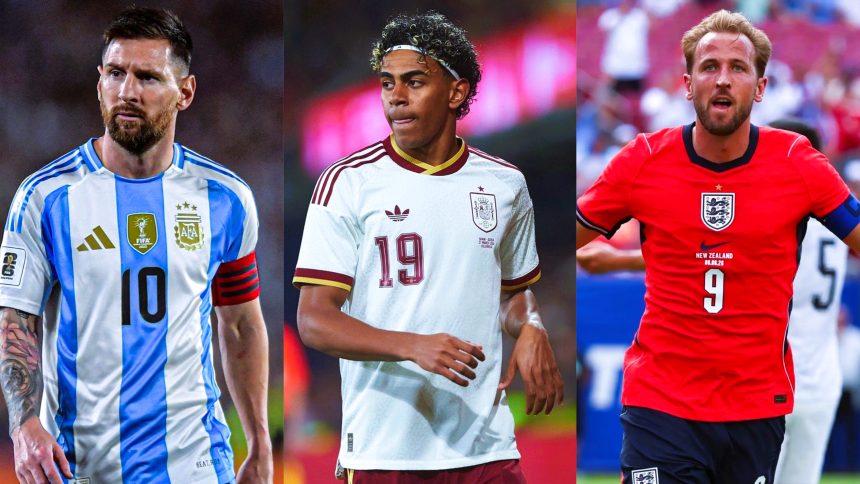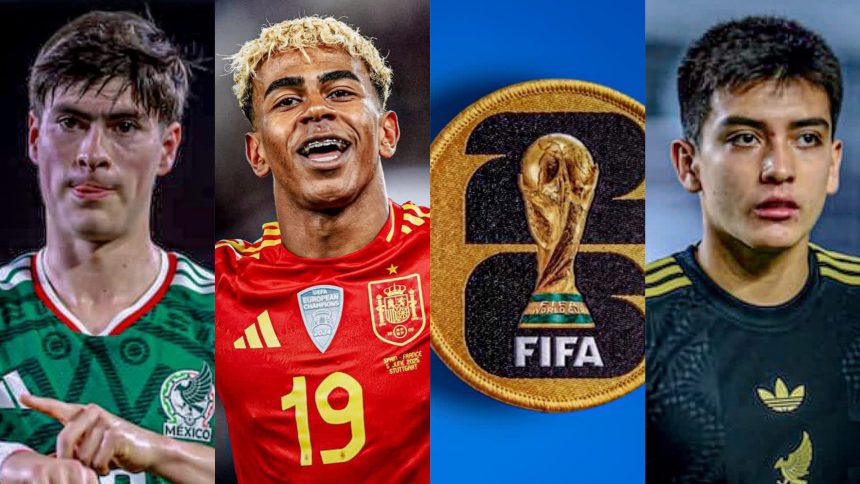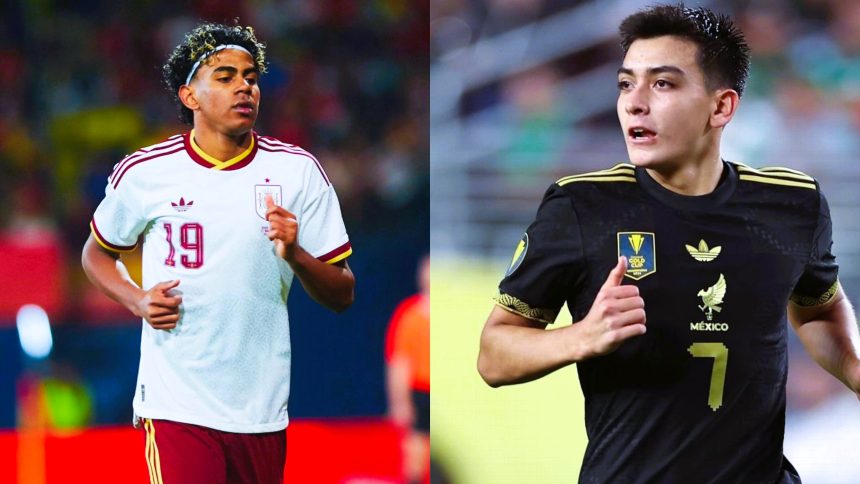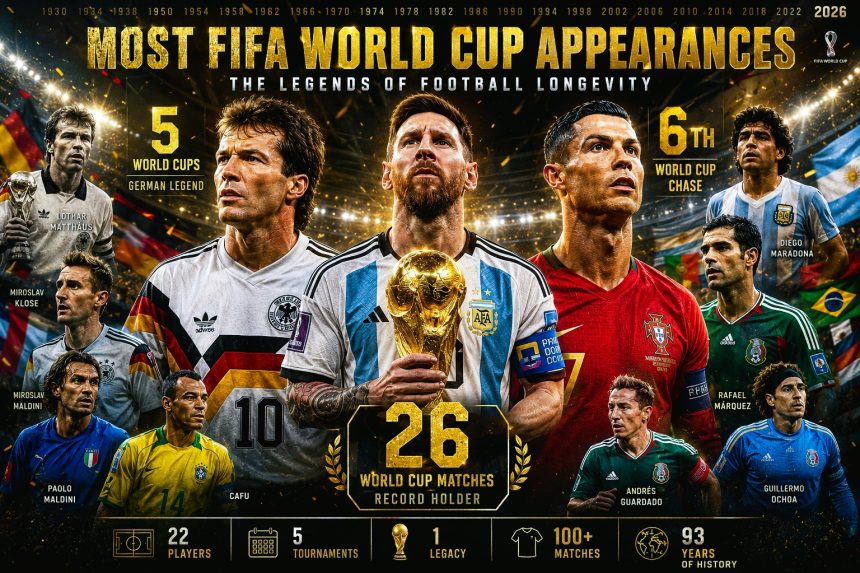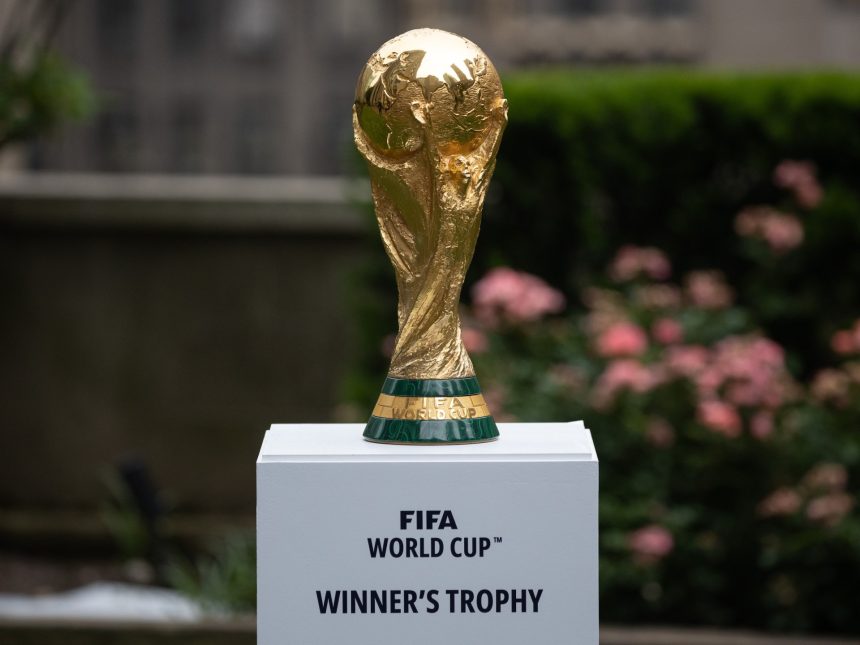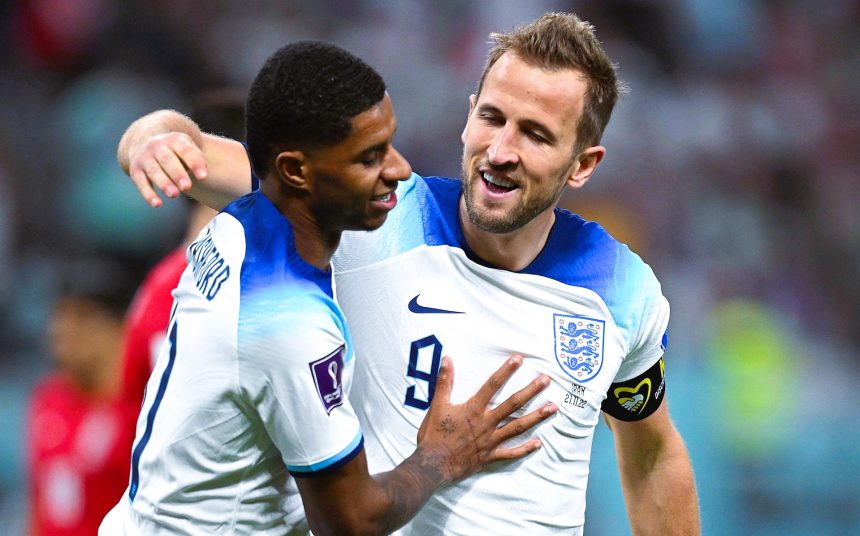








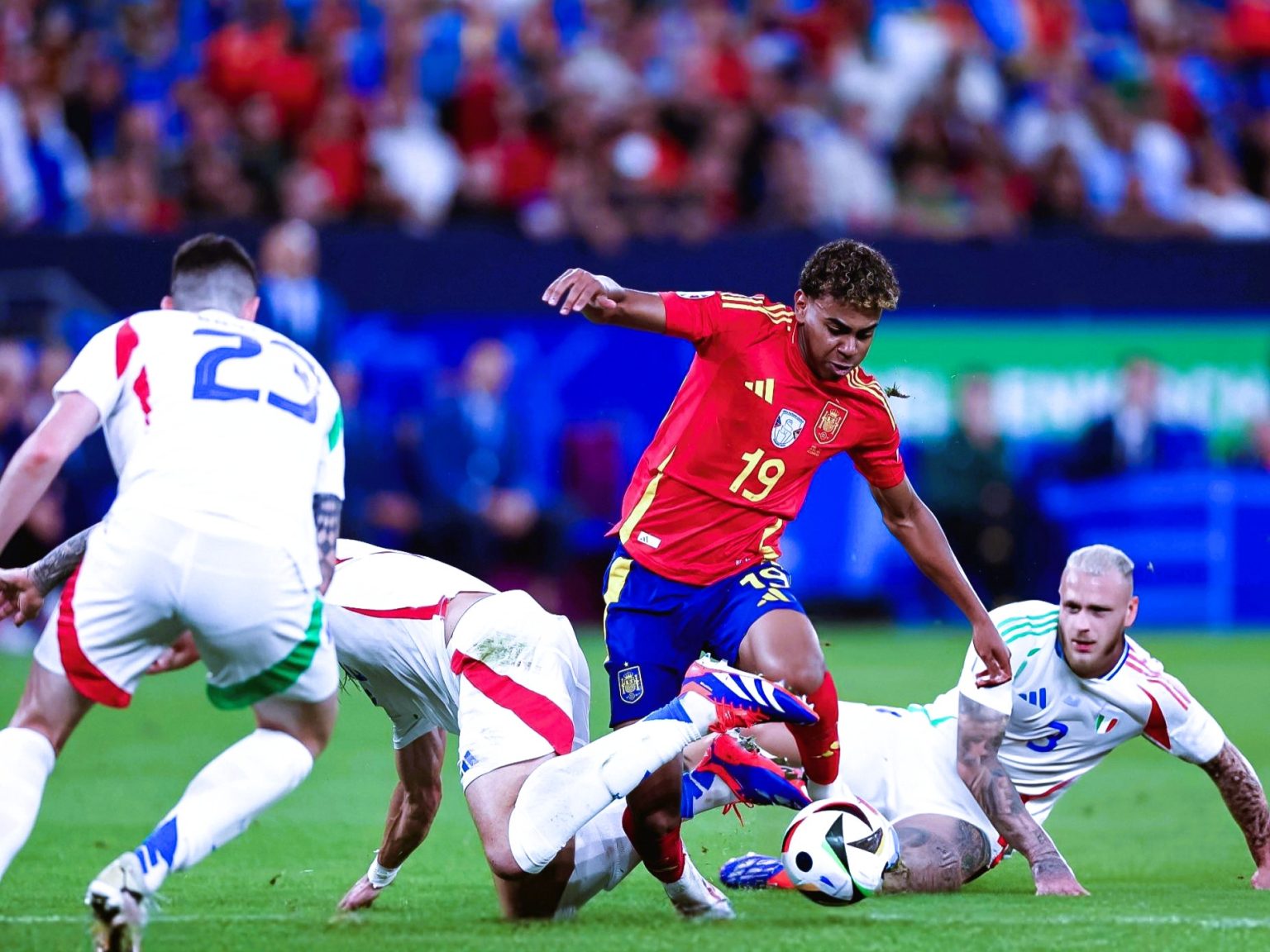

The FIFA World Cup has always been a stage where football’s next generation announces itself to the world.
Every four years, football’s greatest young talents transform into global superstars overnight.
No other tournament offers the same combination of pressure, audience, and legacy-defining moments.
Few individual honors carry more prestige than the FIFA World Cup Best Young Player Award, an accolade that has consistently identified football’s next generation of superstars.
The award has repeatedly served as a launching pad for football’s brightest young talents, transforming promising prospects into household names.
The roll call of past winners reads like a monument to football’s history.
Lukas Podolski announced himself to the world in 2006, becoming a cornerstone of German football for a decade.
Thomas Müller, winner in 2010, went on to become one of Germany’s all-time greats. Paul Pogba’s 2014 award cemented the then-21-year-old as the next great midfielder. Kylian Mbappé’s 2018 coronation effectively launched an era.


And Enzo Fernández, the surprise winner in 2022, proved that even under-the-radar performances at the right tournament can alter a career’s entire trajectory.
Now, with the 2026 FIFA World Cup to be held in the United States, Canada and Mexico, the tournament has expanded to its first 48-team format, with the Young Player of the Year field set to be the most extraordinary in the award’s history.
Several teenage sensations and emerging stars are already starring for some of Europe’s biggest clubs, arriving at the World Cup as established international players rather than mere prospects.
Lamine Yamal, the 18-year-old Barcelona phenomenon, enters as the overwhelming favourite after producing one of the greatest teenage seasons football has ever seen.
Désiré Doué, a Champions League winner at 20, arrives full of momentum.
Endrick, the Brazilian teenager who reignited his career with a loan spell at Lyon, is ready to write his World Cup story.
Warren Zaïre-Emery gives France a midfield heartbeat and a future captain.
And Arda Güler, fresh from winning the Champions League Best Young Player Award with Real Madrid, has Turkish football dreaming.
The question of who takes home the award in July will depend on individual brilliance, team success, and those unmissable moments that define World Cups.
Some will arrive in North America as prospects. Others will arrive as stars. But only one can leave with the 2026 FIFA World Cup Best Young Player Award. Here are the 5 players most likely to claim it
What Is the FIFA World Cup Best Young Player Award?
The FIFA World Cup Young Player of the Year Award, historically known as the Best Young Player Award, is one of the most prestigious individual honours available to emerging footballers on the sport’s biggest stage.
Awarded at the end of each FIFA World Cup, it recognizes the tournament’s outstanding young player and has become a symbol of future greatness.
Since its introduction in 2006, the award has consistently identified talents who would go on to become some of the defining stars of their generation.
The honour was first awarded at the 2006 FIFA World Cup in Germany, where Lukas Podolski claimed the inaugural prize after helping the hosts reach the semi-finals.
Since then, the award has been won by players who later established themselves among the elite of world football, including Thomas Müller, Paul Pogba, Kylian Mbappé, and Enzo Fernández.
To be eligible, players must be no older than 21 at the start of the calendar year in which the World Cup takes place.
This age restriction ensures the award remains focused on football’s brightest emerging talents rather than already-established veterans.
The winner is selected by FIFA’s Technical Study Group, a panel of expert football analysts who monitor every match of the tournament and select the winner based on overall performance, impact, and contribution to their team’s campaign.
In 2009, FIFA ran a massive global fan survey to retrospectively award the title to the standout young player from every historical World Cup dating back to 1958, cementing Pelé as the very first historical winner.
Historically, the award has overwhelmingly favoured attacking players. The reason is straightforward: goals, assists, and match-winning moments tend to define World Cup narratives.
Players who produce memorable highlights on the biggest stage naturally attract more attention than those whose contributions are less visible on the scoresheet.
As a result, forwards, wingers, and attacking midfielders often have an advantage in the voting process.
Spectacular goals, decisive assists, and game-changing dribbles frequently leave a stronger impression than a defender’s positioning or a midfielder’s tactical discipline, even when those qualities are equally valuable to a team’s success.
Deep tournament runs also play a significant role in determining the winner.
Players representing nations that reach the semi-finals, final, or win the World Cup receive far greater exposure than those eliminated early, giving them more opportunities to influence crucial matches and capture global attention.
This combination of individual brilliance, attacking output, and team success explains why many of the leading contenders for the 2026 FIFA World Cup Young Player of the Year Award come from nations expected to challenge for the trophy.
Spain, France, Brazil, Portugal, and Argentina all possess elite young talents capable of making a lasting impact on the tournament and following in the footsteps of the award’s illustrious previous winners.
Previous Winners
| Year | Winner | Country | Position | Tournament Result |
| 2006 | Lukas Podolski | Germany | Forward | 3rd Place |
| 2010 | Thomas Müller | Germany | Attacking MF | 3rd Place |
| 2014 | Paul Pogba | France | Midfielder | Quarter-Final |
| 2018 | Kylian Mbappé | France | Forward | Champions |
| 2022 | Enzo Fernández | Argentina | Midfielder | Champions |
Top 5 Favorites to Win the 2026 World Cup Best Young Player Award
Our rankings consider six key factors: current form and end-of-season statistics, club performances in 2025/26, international importance and starting role, the nation’s realistic chances of a deep tournament run, the player’s potential to produce a defining World Cup moment, and overall trajectory heading into the summer.
Here are the Five players we believe will compete hardest for this honour.
5. João Neves — Portugal
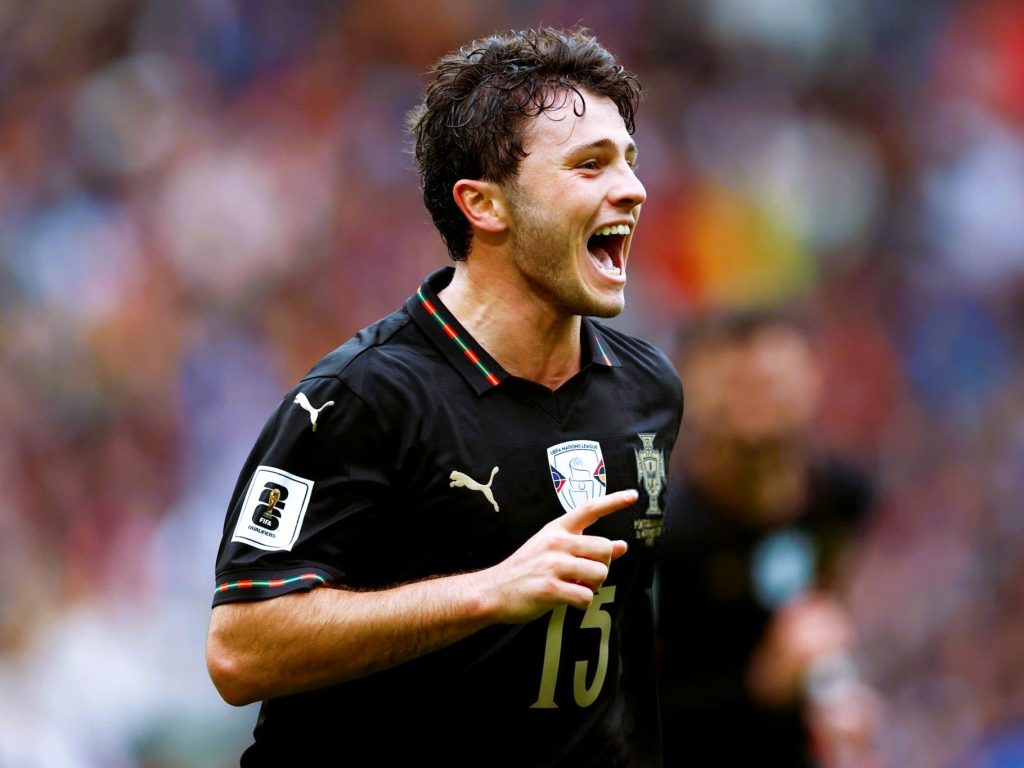
Joao Neves has developed into one of the most complete young midfielders in Europe.
Portugal enter the World Cup with one of the strongest squads in the tournament, and Neves could play a key role in controlling the game against elite opposition.
With Cristiano Ronaldo certainly in his last World Cup, the pressure is on the next generation. And Neves is exactly the kind of player who can absorb that pressure and not crumble under it.
Midfielders rarely get as much attention as forwards, but impressive performances in important matches can put him firmly in the prize talks.
His progressive passing and midfield control could underpin Portugal’s entire campaign.
If Portugal reach the semi-finals or final and Neves is their most consistent performer over six or seven matches, he becomes a serious contender.
4. Warren Zaïre-Emery — France
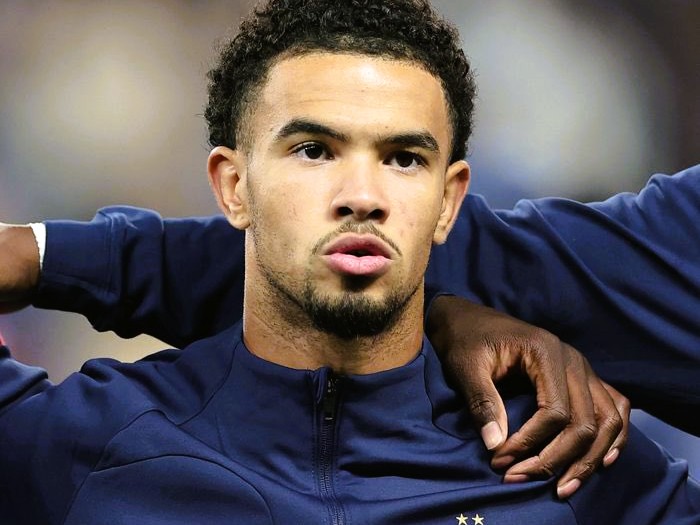
Warren Zaire-Emery has emerged as one of the most complete young midfielders in European football.
Few players of his age have accumulated as much experience at the highest level as Warren Zaire-Emery.
The 19-year-old, who won the Champions League back-to-back in 2024/25 and 2025/26 with PSG, has amassed a wealth of experience at an age when most players are still finding their feet at senior level.
France enter this tournament as the favourites – perhaps second favourites behind Spain – with a squad of exceptional depth.
Didier Deschamps has repeatedly stressed his faith in Zaire-Emery, and there is a growing consensus in France that the PSG midfielder is poised to become the nation’s most important central player for the next decade.
There is real competition in France’s midfield, and Zaire-Emery’s contributions are often ones that don’t appear in the headline statistics.
Creating space, reusing possession, pressing effectively – these are hallmarks of his game but not the elements that generate awards votes.
In a competition where the pressure increases with each knockout round, that mental structure is invaluable.
A goal in the semi-finals, a complete performance against a top opponent, would immediately put him in the prize conversation.
3. Endrick — Brazil
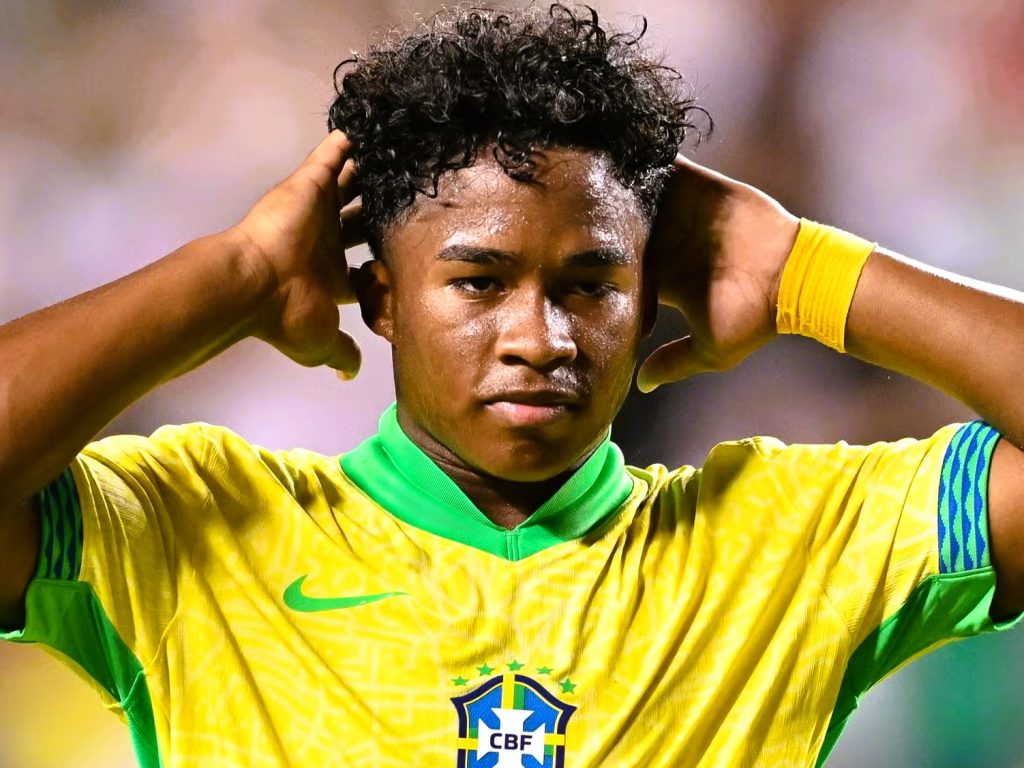
Brazilian football fans have high hopes for Andrić, and for good reason.
Andrić’s journey to the 2026 World Cup is one of football’s great redemption arcs.
The explosive striker has excellent finishing, pace and a natural goal-scoring instinct. Even at a young age, he has demonstrated the ability to score decisive goals under pressure.
Andrić’s greatest asset for this award is his narrative appeal. He is the kind of player the world wants to see succeed.
Brazil has not won the World Cup since 2002 – a 24-year drought that has weighed heavily on the five-time champions.
The depth of Brazil’s attack – Vinicius, Rafinha, Neymar, Martinelli – means Andrić is not guaranteed a starting role.
He may have to make his mark from the bench at the start of the World Cup. If Brazil struggles in the group stage or is knocked out early in the knockout stages, his total playing time may not be enough to challenge the clear leaders.
If Andric excels in the knockouts and Brazil reaches the final, it will be impossible to ignore him.
2. Désiré Doué — France
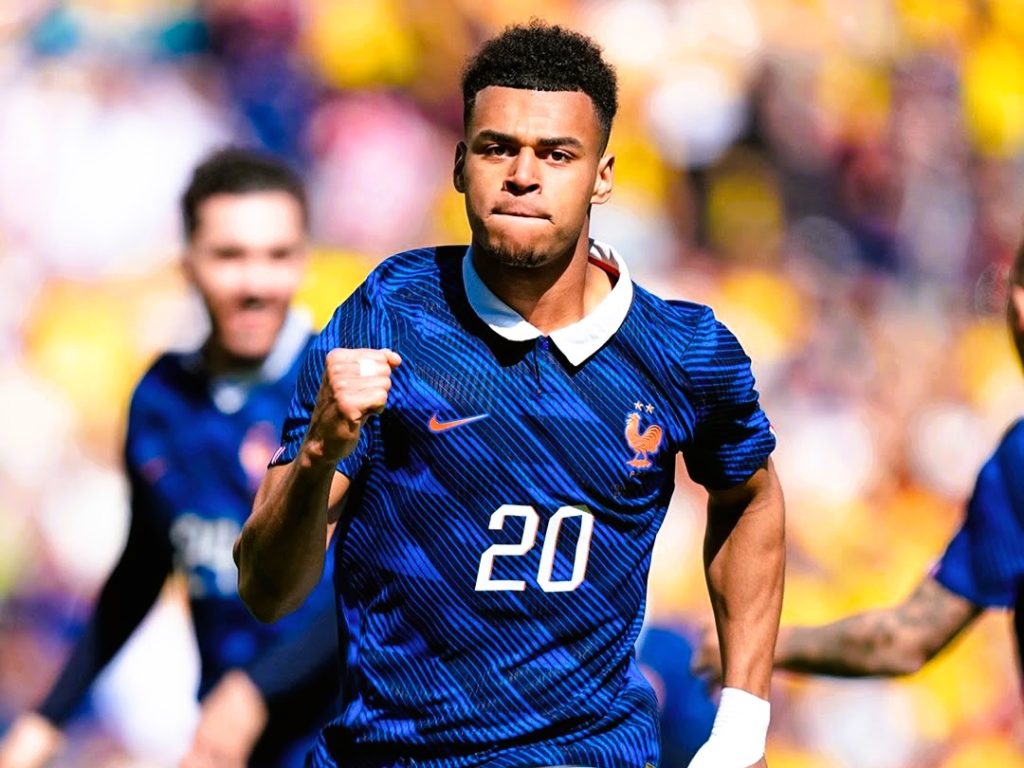
Désiré Doué enters the tournament as one of the most exciting young talents in world football.
The PSG winger, who has now won two consecutive Champions League titles with the Parisian club, has emerged as one of Luis Enrique’s most trusted players.
France are one of three or four real contenders to win this World Cup, and Doué is expected to play a central role in their attack alongside Kylian Mbappe and Marcus Thuram.
His versatility, capable of playing on both wings and dropping into midfield, gives Deschamps tactical options that no other young player in this squad offers.
The one thing standing between Duey and this award is Lamine Yamal. In almost any other year, a player of Doué ‘s profile and current form would be the clear favourite. But 2026 is no other year.
1. Lamine Yamal — Spain
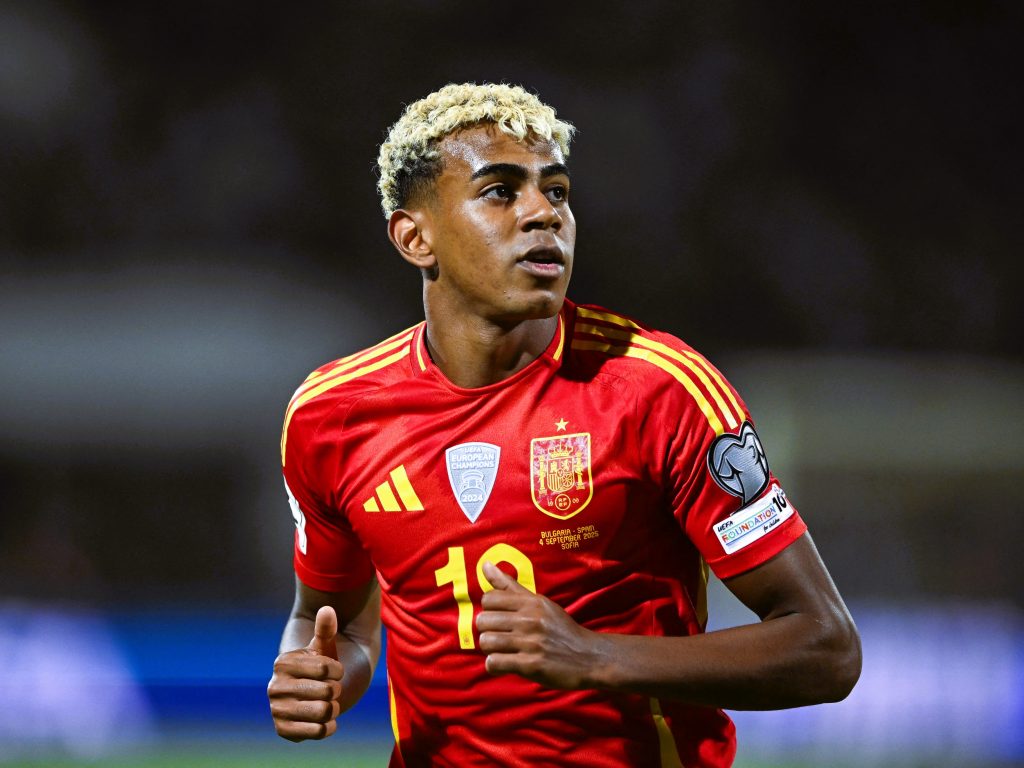
Lamine Yamal enters the 2026 FIFA World Cup as the heavy favourite to win the 2026 World Cup Best Young Player Award. He looks destined to redefine the award’s meaning.
The Barcelona superstar has already established himself among the world’s best players despite being a teenager.
It’s not just his output that makes Lamine Yamal so dangerous as a World Cup player – it’s his superb dribbling, his ice-cold composure in decisive moments, and his exceptional game intelligence.
Having helped Spain win major international honours and emerging as a genuine Ballon d’Or contender, Yamal comes to the World Cup with huge expectations.
In 2025/26 he finished the La Liga season with 16 goals and 11 assists, being named La Liga Player of the Season, leading Barcelona to two consecutive titles.
Most importantly, he has the ability to single-handedly decide games. World Cups are remembered for iconic moments, and few young players are more likely to deliver those moments.