





Winning a single trophy in professional football is hard. Winning dozens of them, across different clubs, countries and generations of teammates, is close to impossible.
It takes longevity that survives injuries and managerial changes. It takes consistency across two decades, not two seasons. It takes a place at an elite club, or several elite clubs.
It takes international success, which is far rarer than domestic success. It takes the adaptability to win in new leagues, new systems and new football cultures.
And it takes leadership, the sort that keeps a dressing room hungry long after the trophies have started to pile up.
This guide ranks the most decorated footballers in history using official senior trophies only. Youth titles, preseason competitions, testimonial matches, exhibition trophies and unofficial honours are excluded.
What remains is a list of the true serial winners of the men’s game, from Brazilian full-backs to Egyptian midfield anchors to the two players who have spent the best part of two decades trading records with one another.
Trophy counts for active players are moving targets. Lionel Messi, Cristiano Ronaldo and several others on this list are still adding to their tallies in 2026.
Every figure below reflects the most reliable count available at the time of writing, and we flag the players and competitions where sources disagree.
Who Has Won the Most Trophies in Football History?
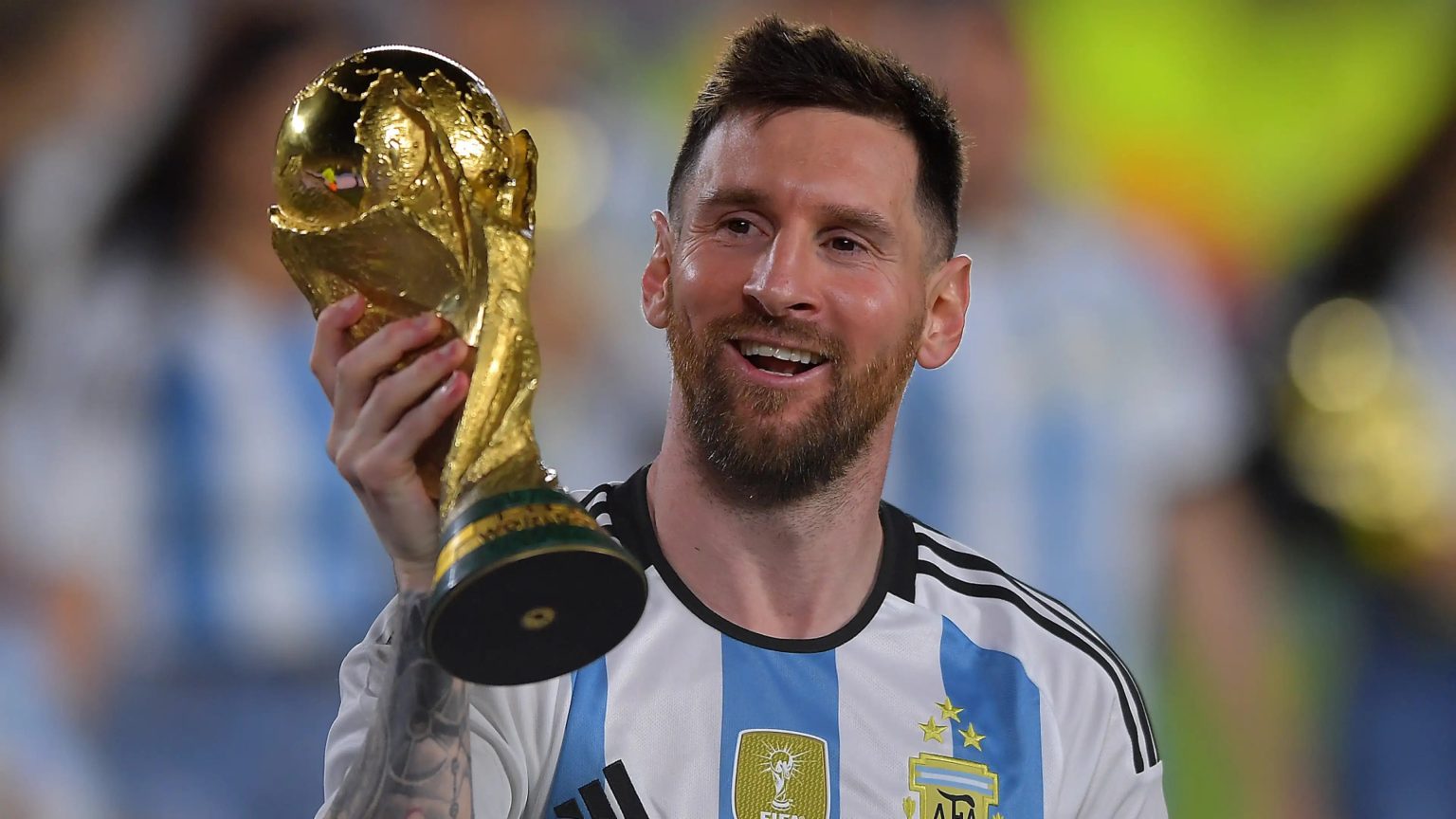
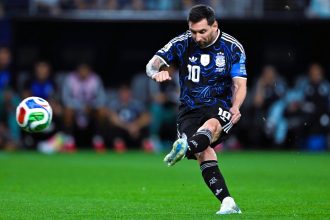
Lionel Messi has won the most trophies in football history, holding the record with 46 senior titles for club and country.
The Argentine superstar solidified his place at the absolute top of the all-time list after winning the 2024 Copa América with Argentina and the 2024 MLS Supporters’ Shield with Inter Miami, officially surpassing his former Barcelona teammate Dani Alves.
| Rank | Player | Country | Official Trophies | Status |
| 1 | Lionel Messi | Argentina | 46 | Active |
| 2 | Dani Alves | Brazil | 43 | Retired |
| 3 | Hossam Ashour | Egypt | 39 | Retired |
| 4 | Gerard Piqué | Spain | 37 | Retired |
| 5 | Sergio Busquets | Spain | 37 | Active |
| 6 | Maxwell | Brazil | 37 | Retired |
| 7 | Cristiano Ronaldo | Portugal | 36 | Active |
| 8 | Andrés Iniesta | Spain | 35 | Retired |
| 9 | Xavi | Spain | 35 | Retired |
| 10 | Thomas Müller | Germany | 35 | Active |
| 11 | Ryan Giggs | Wales | 35 | Retired |
| 12 | Kenny Dalglish | Scotland | 35 | Retired |
| 13 | Toni Kroos | Germany | 34 | Retired |
| 14 | Zlatan Ibrahimović | Sweden | 33 | Retired |
| 15 | Nacho Fernández | Spain | 30 | Active |
| 16 | Luka Modrić | Croatia | 29 | Active |
| 17 | David Alaba | Austria | 28 | Active |
| 18 | Karim Benzema | France | 27 | Active |
| 19 | Ángel Di María | Argentina | 25 | Active |
| 20 | Marcelo | Brazil | 25 | Retired |
Figures for active players will keep changing throughout 2026. Bookmark this page and check back for updates as the season progresses.
How We Counted These Trophies
Not every “trophy” claimed in a highlight reel or a viral graphic holds up to scrutiny. To keep this ranking honest, we only counted the following categories of silverware.
- Domestic league titles
- Domestic cups
- Domestic super cups, where officially recognised by the relevant federation
- Continental club competitions, such as the UEFA Champions League, Europa League, UEFA Super Cup, Copa Libertadores and CAF Champions League
- The FIFA Club World Cup and its predecessor, the Intercontinental Cup, as officially recognised by FIFA
- Major international trophies, including the FIFA World Cup, continental championships such as the UEFA European Championship and Copa América, and competitions like the UEFA Nations League
We excluded preseason and exhibition trophies, such as the International Champions Cup or friendly-tournament silverware.
We excluded individual awards like the Ballon d’Or, since this piece is about team success.
And we excluded youth-level honours, since a Toulon Tournament win at 17 does not belong in the same conversation as a Champions League final.
Where sources genuinely disagree, usually because a federation quietly recognises a competition that a player’s official website does not, we note the range rather than pretending there is a single, uncontested number.
Trophy counting is closer to an editorial judgment call than an exact science, and any list claiming false precision should be treated with some caution.
The Top 10 Most Decorated Footballers in History
1. Lionel Messi (Argentina)
- Position: Forward.
- Status: Active.
- Total official senior trophies: 46 (sources range from 44 to 46 depending on how borderline honours are classified).
Messi’s trophy count is a genuinely moving number, and it is closing in on Dani Alves by the year. Some tallies already place him ahead.
The gap depends on whether you count a handful of contested honours, including an early Supercopa de España he did not play in, and whether MLS conference trophies that fall outside FIFA’s official recognition should be included.
What is not contested is the scale of his achievement. At Barcelona, Messi won ten La Liga titles, four Champions Leagues, seven Copa del Rey trophies and eight Supercopa de España titles across 17 seasons.
He added silverware at Paris Saint-Germain before moving to Inter Miami, where he has continued winning, including an MLS Cup and consecutive individual scoring titles.
Internationally, Messi ended a long wait for Argentina with the 2021 Copa América.
He then delivered the trophy that had eluded him for over a decade, the 2022 FIFA World Cup, and followed it with another Copa América title in 2024.
He remains central to Argentina’s squad as reigning champions heading into the 2026 FIFA World Cup, a tournament still in progress at the time of writing.
Messi’s winning habit rests on a rare combination. He had generational talent inside one of the greatest club sides ever built.
He had Xavi, Iniesta, Busquets and Piqué alongside him for over a decade. And unlike many generational talents, he sustained elite output into his late thirties, which is why his total keeps climbing while most of his era-defining rivals have already retired.
2. Dani Alves (Brazil)
- Position: Right-back.
- Status: Retired.
- Total official trophies: 43.
Dani Alves is the benchmark figure in this entire conversation. No player in the modern history of the sport has assembled a bigger collection of official senior honours.
His career began at Bahia in his native Brazil. It gathered pace at Sevilla, where he won back-to-back UEFA Cups and a Copa del Rey.
Then came Barcelona, the club where his trophy cabinet exploded. Alves won a treble in his first season at Camp Nou.
He went on to add six La Liga titles, three Champions League crowns, multiple Copa del Rey triumphs and a string of Spanish and European Super Cups across eight seasons.
Rather than winding down, Alves kept adding to the pile. He won Serie A and the Coppa Italia in a single season at Juventus.
He then moved to Paris Saint-Germain and collected back-to-back Ligue 1 titles. On the international stage, he won two Copa América titles with Brazil and an Olympic gold medal in Tokyo.
Why did Alves win so much? Longevity is the first answer. He played at an elite level from his late teens into his late thirties.
Adaptability is the second. Few players have moved between Spain, Italy, France and Brazil and kept winning at every stop.
And he was rarely a passenger. Alves was a key attacking outlet in Pep Guardiola’s Barcelona, a side widely considered one of the greatest club teams ever assembled, which gave him a platform that few defenders in history have enjoyed.
3. Hossam Ashour (Egypt)
- Position: Defensive midfielder.
- Status: Retired.
- Total official trophies: 39.
Hossam Ashour is the most decorated footballer to come out of Africa, and his name deserves to sit alongside the European superstars who usually dominate this conversation.
Ashour spent virtually his entire career at Al Ahly, the Egyptian giant regarded as the most successful club in world football by total honours.
Across 17 seasons, he won 13 Egyptian Premier League titles, four Egypt Cups and multiple Egyptian Super Cups.
On the continental stage, he lifted six CAF Champions League trophies, one CAF Confederation Cup and several CAF Super Cups.
Ashour’s story is a reminder that trophy dominance is not exclusive to the “Big Five” European leagues.
Al Ahly’s grip on Egyptian and North African football for two decades gave him a route to silverware that few players anywhere in the world could match.
He was appointed club captain in 2018 and lifted his first trophy wearing the armband that same season.
Why did he win so much? Simple loyalty played a part. Ashour stayed at one dominant club for almost his whole career, rather than chasing bigger paydays elsewhere.
Al Ahly’s structural dominance in Egyptian football, where competition for domestic honours has historically been thinner than in Europe’s top leagues, also helped.
But consistency and leadership were just as important. Ashour was a first-choice midfielder for the best part of 15 years at a club that expected nothing less than titles every season.
4. Gerard Piqué (Spain)
- Position: Centre-back.
- Status: Retired.
- Total official trophies: 37.
Gerard Piqué belongs to arguably the most decorated generation of teammates in the sport’s history, the Barcelona and Spain core that dominated both club and international football from 2008 to 2015.
Piqué began at Barcelona’s La Masia academy before a formative spell at Manchester United, where he won a Premier League title, a League Cup and a Champions League.
His return to Barcelona in 2008 triggered the most productive stretch of his career.
He won nine La Liga titles, three Champions League trophies and seven Copa del Rey titles, and he was part of both of Barcelona’s historic treble-winning campaigns, in 2008-09 and 2014-15.
Internationally, Piqué won the 2010 FIFA World Cup and the 2012 UEFA European Championship with Spain, cementing his place inside one of the greatest international sides ever assembled.
Piqué’s success came from being in the right place at exactly the right time, twice.
He experienced a dominant Manchester United side as a teenager, then walked into arguably history’s best club team at Barcelona. His composure on the ball and leadership at the back made him more than a passenger in both.
5. Sergio Busquets (Spain)
- Position: Defensive midfielder.
- Status: Active.
- Total official trophies: 37.
Sergio Busquets rarely receives the acclaim given to the attacking stars he played behind, but his trophy haul places him among the very best winners the sport has produced.
A one-club man at Barcelona for his entire European career, Busquets won nine La Liga titles, three Champions League trophies and multiple Copa del Rey titles across 15 seasons.
He was the deep-lying anchor for both of the club’s treble-winning campaigns. Internationally, he won the 2010 FIFA World Cup and the 2012 UEFA European Championship with Spain.
Busquets later joined Lionel Messi at Inter Miami, adding further silverware in MLS and reinforcing a trophy-collecting partnership that began at Camp Nou and continued years later in Florida.
Busquets is the clearest example on this list of a player whose winning was built on positional discipline rather than individual brilliance.
He rarely dominated headlines, but Pep Guardiola, Vicente del Bosque and later coaches all built their most successful sides with him shielding the back line.
6. Maxwell (Brazil)
- Position: Left-back.
- Status: Retired.
- Total official trophies: 37.
Maxwell is one of football’s great trophy nomads. Rather than staying loyal to one dominant club, he moved between four different giants across four different countries and won at every single one.
His career began with a Copa do Brasil win at Cruzeiro. He then moved to Ajax in the Netherlands, winning multiple Eredivisie titles and domestic cups.
A move to Inter Milan brought three Serie A titles. Barcelona brought a Champions League and La Liga success during his short spell there.
He finished his career at Paris Saint-Germain, where he won Ligue 1 titles in successive seasons before retiring in 2017.
Maxwell’s trophy count is remarkable precisely because it was not built on staying at one super-club for two decades.
He is proof that a smart, low-profile career move, timed to land at a club on the verge of a dominant cycle, can be just as effective a route to silverware as staying put.
7. Cristiano Ronaldo (Portugal)
- Position: Forward.
- Status: Active.
- Total official trophies: 36 (sources range from 33 to 37, largely over whether the Arab Club Champions Cup counts as a major honour).
Cristiano Ronaldo’s trophy cabinet spans five clubs across four countries, plus a landmark international triumph that took him longer to secure than almost anything else in his career.
He began at Sporting CP before moving to Manchester United, where he won three Premier League titles, an FA Cup, two League Cups and a Champions League.
At Real Madrid, he added two La Liga titles, two Copa del Rey trophies and four Champions League titles across an extraordinary run that included a historic three-peat in Europe’s top competition.
A single but successful season at Juventus brought Serie A and Coppa Italia glory. After moving to Saudi Arabia’s Al Nassr, Ronaldo finally added a domestic league title in that country in the 2025-26 season, his first Saudi Pro League crown.
Internationally, Ronaldo captained Portugal to a first major trophy at Euro 2016, then added the inaugural UEFA Nations League in 2019.
A FIFA World Cup remains the one gap in his collection, and he is competing at the 2026 tournament in pursuit of it.
Ronaldo’s trophy count is driven by sheer physical longevity and a refusal to accept a ceremonial role late in his career.
Where many of his contemporaries wound down in their mid-thirties, Ronaldo kept adding league titles into his forties, most recently in Saudi Arabia.
8. Andrés Iniesta (Spain)
- Position: Attacking midfielder.
- Status: Retired.
- Total official trophies: 35 (sources range from 32 to 38 depending on whether spells at Vissel Kobe and Emirates Club are included).
Andrés Iniesta is regarded as the most decorated Spanish footballer of all time, and the moment that defines his career, a World Cup-winning goal in extra time, remains one of the sport’s most iconic images.
At Barcelona, Iniesta won nine La Liga titles, four Champions League trophies and six Copa del Rey titles across 16 seasons. He was a key figure in both treble-winning campaigns.
Internationally, he won the 2010 FIFA World Cup, scoring the winning goal in the final, and added two UEFA European Championship titles either side of it.
After leaving Barcelona in 2018, Iniesta continued winning abroad. He lifted the J1 League with Vissel Kobe in Japan before finishing his career with a short spell at Emirates Club in the UAE.
Iniesta’s success came from a rare marriage of humility and decisive quality. He rarely sought the spotlight, but his creativity unlocked matches that his teammates could not, none more famously than the 2010 World Cup final.
9. Xavi (Spain)
- Position: Central midfielder.
- Status: Retired.
- Total official trophies: 35 (sources range from 31 to 35 depending on whether his spell at Al Sadd in Qatar is included).
Xavi is the metronome around whom Barcelona’s tiki-taka era was built, and his trophy count reflects nearly two decades at the centre of the sport’s most dominant club side.
Across 17 seasons at Barcelona, Xavi won eight La Liga titles, four Champions League trophies and three Copa del Rey titles, alongside multiple Spanish and European Super Cups.
Internationally, he was central to Spain’s unprecedented run of three consecutive major tournament wins: the 2008 and 2012 UEFA European Championships either side of the 2010 FIFA World Cup.
He finished his playing career at Al Sadd in Qatar, adding several more domestic honours before retiring in 2019.
Xavi’s trophy haul is a testament to elite tactical intelligence sustained over an unusually long career.
He won just one trophy in his first seven years as a senior player, then averaged roughly two and a half trophies a year for the following decade, once Barcelona’s possession-based philosophy fully clicked into place under Pep Guardiola.
10. Thomas Müller (Germany)
- Position: Forward.
- Status: Active.
- Total official trophies: 35, the most of any German footballer in history.
Thomas Müller is Bayern Munich’s ultimate one-club loyalist, and his trophy count reflects one of the most sustained periods of domestic dominance in world football.
Across his time at Bayern, Müller won ten Bundesliga titles, six DFB-Pokal trophies and multiple German Super Cups.
He was central to the club’s 2013 and 2020 treble-winning campaigns, and he lifted the Champions League trophy on both occasions.
Internationally, Müller won the 2014 FIFA World Cup with Germany, scoring five goals across that tournament.
Müller’s success is built on a rare footballing intelligence that has never fully translated into a conventional position label.
He calls his own playing style “Raumdeuter,” or “space interpreter,” and that instinctive reading of the game has made him indispensable to Bayern’s trophy-winning machine for well over a decade.
Club Trophies vs International Trophies: A Comparison
| Rank | Player | Club Trophies | International Trophies | Total |
| 1 | Dani Alves | 40 | 3 | 43 |
| 2 | Lionel Messi | 43 | 3 | 46 |
| 3 | Hossam Ashour | 39 | 0 | 39 |
| 4 | Gerard Piqué | 35 | 2 | 37 |
| 5 | Sergio Busquets | 35 | 2 | 37 |
| 6 | Maxwell | 37 | 0 | 37 |
| 7 | Cristiano Ronaldo | 33 | 3 | 36 |
| 8 | Andrés Iniesta | 32 | 3 | 35 |
| 9 | Xavi | 32 | 3 | 35 |
| 10 | Thomas Müller | 34 | 1 | 35 |
The split above highlights something important. Most of the very biggest trophy hauls are overwhelmingly built on club football.
International honours are simply scarcer. There are far fewer major international tournaments per decade than domestic league seasons and cup competitions, and only one nation lifts each trophy every two to four years.
Hossam Ashour and Maxwell, both with zero international trophies, prove that a career can sit near the very top of this list on club success alone.
Active Players With the Most Trophies
| Rank | Player | Club | Total Trophies |
| 1 | Lionel Messi | Inter Miami | 46 |
| 2 | Sergio Busquets | Inter Miami | 37 |
| 3 | Cristiano Ronaldo | Al Nassr | 36 |
| 4 | Thomas Müller | Vancouver Whitecaps | 35 |
| 5 | Nacho Fernández | Al-Qadsiah | 30 |
| 6 | Luka Modrić | AC Milan | 29 |
| 7 | David Alaba | Real Madrid | 28 |
| 8 | Karim Benzema | Al Ittihad | 27 |
| 9 | Ángel Di María | Benfica | 25 |
Lionel Messi is comfortably the most decorated active footballer in the world, and his total is still rising with Inter Miami and Argentina both competing for further honours in 2026.
Retired Players With the Most Trophies
| Rank | Player | Career Span | Total Trophies |
| 1 | Dani Alves | 2001-2023 | 43 |
| 2 | Hossam Ashour | 2003-2022 | 39 |
| 3 | Gerard Piqué | 2004-2022 | 37 |
| 4 | Maxwell | 2000-2017 | 37 |
| 5 | Andrés Iniesta | 2002-2024 | 35 |
| 6 | Xavi | 1998-2019 | 35 |
| 7 | Ryan Giggs | 1990-2014 | 35 |
| 8 | Kenny Dalglish | 1966-1990 | 35 |
| 9 | Toni Kroos | 2007-2024 | 34 |
| 10 | Zlatan Ibrahimović | 1999-2023 | 33 |
Players With the Most International Trophies
Major international honours are the scarcest category of trophy in football. Only one national team wins a World Cup every four years, and continental championships follow a similarly narrow cycle. That scarcity is what makes the players below so notable.
| Player | Country | International Trophies | Honours |
| Lionel Messi | Argentina | 3 | 2021 Copa América, 2022 FIFA World Cup, 2024 Copa América |
| Cristiano Ronaldo | Portugal | 3 | Toulon-era honours excluded; 2016 UEFA Euro, 2019 UEFA Nations League |
| Andrés Iniesta | Spain | 3 | 2008 UEFA Euro, 2010 FIFA World Cup, 2012 UEFA Euro |
| Xavi | Spain | 3 | 2008 UEFA Euro, 2010 FIFA World Cup, 2012 UEFA Euro |
| Gerard Piqué | Spain | 2 | 2010 FIFA World Cup, 2012 UEFA Euro |
| Sergio Busquets | Spain | 2 | 2010 FIFA World Cup, 2012 UEFA Euro |
| Dani Alves | Brazil | 3 | 2007 Copa América, 2019 Copa América, 2016 Olympic gold |
Spain’s 2008 to 2012 golden generation stands out here. Xavi, Iniesta, Piqué and Busquets all won either two or three major international trophies within the same four-year window, a run of international dominance that no team has matched since.
Players With the Most UEFA Champions League Titles
Five players share the all-time record for UEFA Champions League titles won, with six each: Francisco Gento of Real Madrid’s 1950s and 1960s dynasty, and the modern quartet of Nacho Fernández, Luka Modrić, Toni Kroos and Dani Carvajal, all of whom reached the mark together in the 2024 final.
| Player | Champions League Titles | Clubs |
| Francisco Gento | 6 | Real Madrid |
| Nacho Fernández | 6 | Real Madrid |
| Luka Modrić | 6 | Real Madrid |
| Toni Kroos | 6 | Bayern Munich, Real Madrid |
| Dani Carvajal | 6 | Real Madrid |
| Cristiano Ronaldo | 5 | Manchester United, Real Madrid |
| Karim Benzema | 5 | Real Madrid |
| Marcelo | 5 | Real Madrid |
| Paolo Maldini | 5 | AC Milan |
| Andrés Iniesta | 4 | Barcelona |
Real Madrid’s academy graduates and long-serving squad players, rather than its highest-profile Galácticos, dominate the very top of this particular list. Nacho, in particular, spent much of his career as a squad rotation option rather than a guaranteed starter, yet still matched Gento’s historic mark.
Players With the Most Domestic League Titles
Ryan Giggs holds a rare and possibly unbreakable domestic record. His 13 Premier League titles with Manchester United stand well clear of any other player in English football history.
Hossam Ashour’s 13 Egyptian Premier League titles with Al Ahly match that number exactly, in a different footballing environment shaped by one club’s near-total domestic dominance.
Thomas Müller and David Alaba both sit on ten Bundesliga titles apiece with Bayern Munich, reflecting German football’s own long era of single-club dominance.
Lionel Messi holds the individual record for La Liga titles won by a non-Spanish player, with ten during his time at Barcelona.
Comparing across leagues is not perfectly apples-to-apples. Some domestic competitions have historically been far more competitive than others, and a club’s period of dominance often says as much about the wider league’s financial structure as it does about any individual player.
Clubs That Helped Create Football’s Most Decorated Players
A handful of clubs appear over and over again across this list, and that is not a coincidence.
FC Barcelona produced the deepest concentration of decorated players on this list, with Messi, Iniesta, Xavi, Busquets, Piqué and Alves all spending the peak of their careers at Camp Nou during the club’s 2008 to 2015 golden era.
Two treble-winning campaigns in seven years gave that entire generation a springboard few clubs in history have matched.
Real Madrid CF built a different kind of dynasty, centred on relentless Champions League success rather than a single dominant tactical era.
Nacho, Modrić, Kroos, Benzema, Marcelo and Alaba all built the bulk of their trophy counts inside a club culture explicitly obsessed with the European Cup above all else.
Bayern Munich gave Thomas Müller and David Alaba a springboard built on total Bundesliga dominance, rarely challenged domestically and regularly deep in the Champions League.
Manchester United F.C. shaped Ryan Giggs’ entire career and gave Cristiano Ronaldo and Gerard Piqué their first taste of major honours before both moved on to even bigger trophy hauls in Spain.
Paris Saint-Germain F.C. became a late-career trophy accelerator for several players on this list, including Dani Alves, Maxwell, Zlatan Ibrahimović and Ángel Di María, all of whom used PSG’s growing Ligue 1 dominance to extend their trophy counts into their thirties.
Sustained club success creates a compounding effect. Once a club builds a winning culture and squad depth, individual players inside that system accumulate trophies far faster than equally talented players at less dominant clubs, simply through repeated exposure to high-stakes finals and title run-ins.
What Makes a Player Win So Many Trophies?
Several recurring traits separate the players on this list from equally gifted contemporaries who won far less.
- Elite clubs. Almost every name here spent their prime years at one of a handful of super-clubs with the financial and squad depth to compete on multiple fronts every season.
- Consistency. Trophy counts reward players who rarely have a genuinely poor season, since one dip in form can cost a title race that only comes around once a year.
- Longevity. Careers stretching past age 35, like those of Ronaldo, Messi, Iniesta and Giggs, simply provide more opportunities to add to the pile.
- Fitness. Players who avoid long-term injuries accumulate appearances, and appearances are the raw material of trophies.
- Squad depth. Being part of a rotation system, rather than an undroppable but exhausted every-week starter, has extended several careers on this list well past the point most players retire.
- Great managers. Pep Guardiola, Carlo Ancelotti and Zinedine Zidane appear repeatedly behind these trophy hauls, each capable of building systems that maximised silverware.
- Adaptability. Players like Maxwell and Zlatan Ibrahimović prove that moving countries and adjusting to new footballing cultures does not have to interrupt a winning habit.
- Mentality. Several of these players have spoken publicly about refusing to accept a single trophy as “enough,” treating each title as a platform for the next.
20 Interesting Facts About Football’s Most Decorated Players
- Lionel Messi is the most decorated active footballer in the world, with 46 official senior trophies.
- Dani Alves is widely regarded as the most decorated retired footballer in men’s football history.
- Five players share the all-time record for UEFA Champions League titles, with six apiece.
- Ryan Giggs holds the individual record for most English top-flight league titles won by a player, with 13.
- Hossam Ashour matches that exact figure in Egypt, with 13 Egyptian Premier League titles at Al Ahly.
- Lionel Messi holds the record for most La Liga titles won by a non-Spanish player.
- Cristiano Ronaldo and Lionel Messi have spent nearly two decades trading the unofficial title of the sport’s most decorated active player.
- Al Ahly, Hossam Ashour’s only major club, is recognised as the most decorated football club in the world by total honours.
- FC Barcelona’s 2008 to 2015 era produced six of the players on this list.
- Real Madrid’s modern Champions League dynasty produced five of the players on this list.
- Maxwell won league titles in four different European countries across a single career.
- Zlatan Ibrahimović never won a UEFA Champions League title despite his enormous domestic trophy count.
- Xavi and Andrés Iniesta, the two most decorated Spanish players in history, never played against each other competitively.
- Andrés Iniesta’s 2010 World Cup winning goal remains one of the most replayed moments in the tournament’s history.
- Dani Alves is the most decorated defender in European club competition history.
- Ángel Di María has scored in both an Olympic final and a FIFA World Cup final.
- Thomas Müller has appeared in more Champions League matches than any player except Cristiano Ronaldo.
- Marcelo is Real Madrid’s most decorated player in club history by total trophies won.
- Spain’s golden generation of Xavi, Iniesta, Piqué and Busquets won three major international tournaments in a row between 2008 and 2012.
- Several players on this list, including Messi, Ronaldo, Busquets and Müller, were still actively adding to their trophy totals as of 2026.
Conclusion
Dani Alves stands as the benchmark for trophy-collecting in men’s football history, and Lionel Messi is the active player with the clearest chance of eventually surpassing him.
Beyond that top pairing, this list tells a story about football’s structural realities.
Sustained club success at a handful of super-clubs, particularly Barcelona and Real Madrid, does more to build a towering trophy count than individual brilliance alone.
Trophy counts for the active players on this list will keep changing throughout 2026 and beyond.
Messi, Ronaldo, Busquets, Müller, Modrić, Alaba, Benzema, Nacho and Di María are all still competing for silverware, and any one of them could shift these rankings before the year is out.
Check back on this page for updates as the current football season, and the ongoing 2026 FIFA World Cup, continue to unfold.