



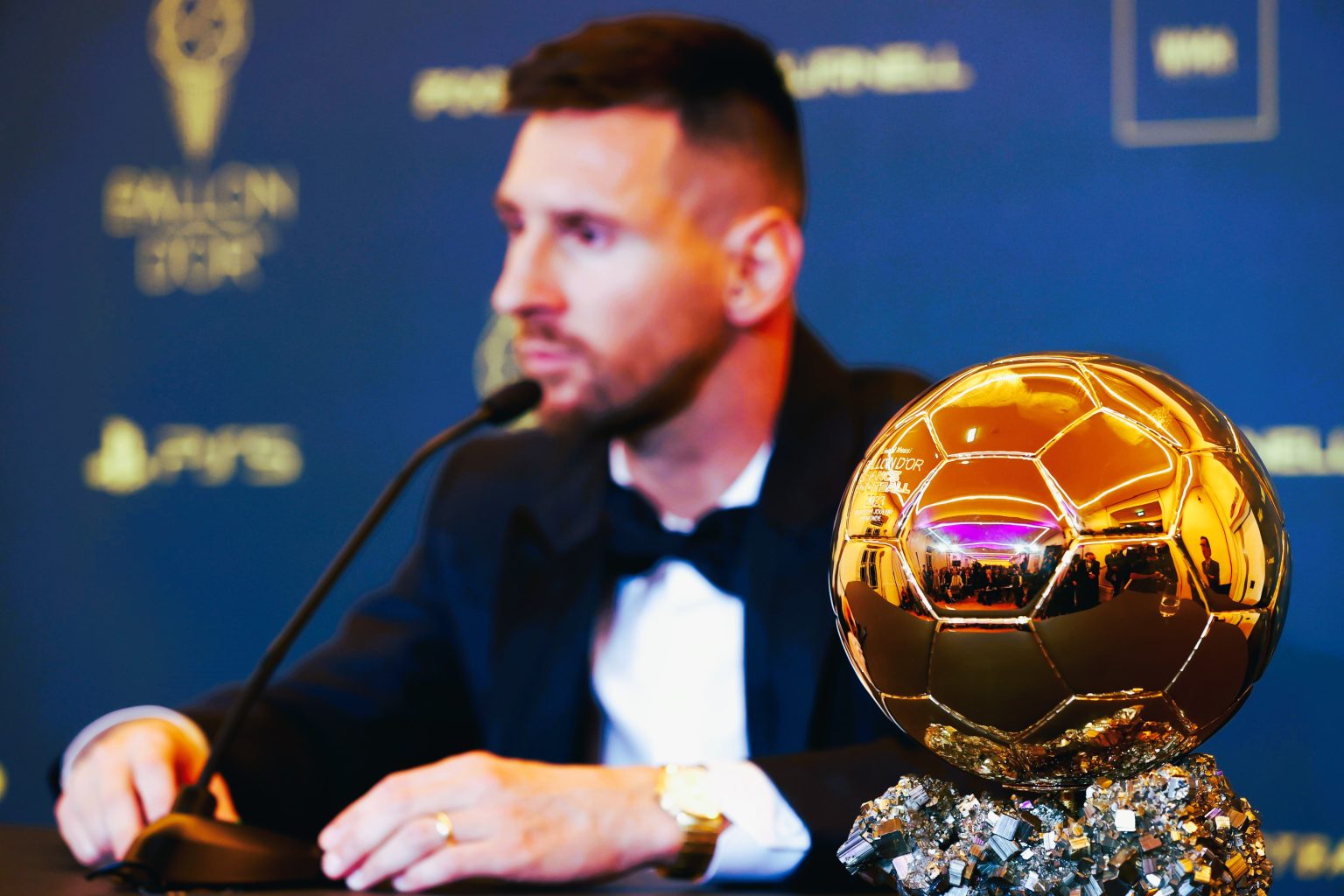

There is no trophy in club football quite like the Ballon d’Or. Not the Champions League. Not the league title. Not even the World Cup, because that belongs to nations.
The Ballon d’Or belongs to one person, the player that the football world decides, in a given year, stands above everyone else on the planet.
Since 1956, the Ballon d’Or winners list has read like a who’s who of the game’s immortals.
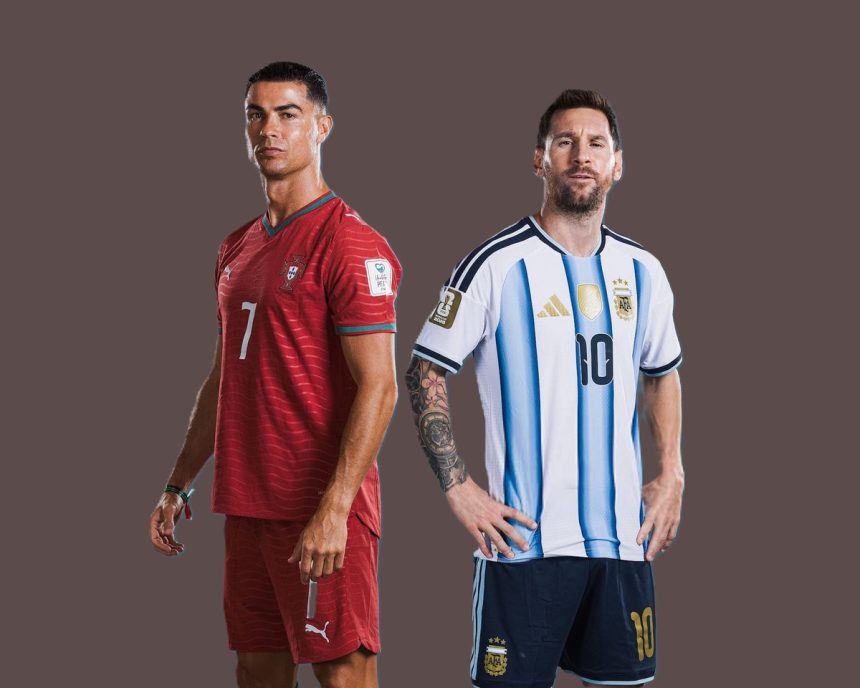
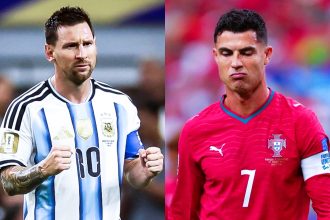
Stanley Matthews. Alfredo Di Stéfano. Johan Cruyff. Michel Platini. Ronaldo. Zidane. And then, for the better part of two decades, a two-man war between Lionel Messi and Cristiano Ronaldo that reshaped what it meant to dominate football’s most prestigious individual award.
This is the complete story — every winner, every record, every controversy, and every number that defines football’s Golden Ball.
What is the Ballon d’Or Award?
History of the Ballon d’Or
The Ballon d’Or was born in 1956, the brainchild of French journalists Gabriel Hanot and Jacques Ferran at France Football magazine.
The original concept was straightforward: identify the best footballer in Europe each year and celebrate them publicly.
Stanley Matthews of Blackpool became the inaugural winner, collecting the award at the remarkable age of 41.

In its early decades, the award was strictly European — only players from European clubs and European nations could win.
That changed in 1995, when eligibility expanded to include any player at a European club regardless of nationality. By 2007, the award went fully global, allowing players from any club or country to compete.
Between 2010 and 2015, the Ballon d’Or merged with FIFA’s World Player of the Year award to create the FIFA Ballon d’Or.
The partnership ended in 2016, and the two bodies reverted to running separate ceremonies. Since then, France Football has operated the Ballon d’Or independently, restoring its original identity.
The award was not given in 2020 due to the COVID-19 pandemic — the only year in its history it was cancelled.
Who Organises It?
France Football magazine, a publication of the L’Équipe group, has organized the Ballon d’Or since its creation.
The ceremony is traditionally held in Paris, usually at the Théâtre du Châtelet, and has grown into one of football’s most-watched annual events.
How Voting Works
The winner is determined by a panel of journalists, one representative from each of the top 100 countries in the FIFA men’s rankings.
Each journalist selects their top five players from a 30-man shortlist, assigning points on a descending scale. The player with the most accumulated points wins the Golden Ball.
The shortlist itself is compiled by France Football, with criteria including individual brilliance, collective team success, and sportsmanship across a single European football season typically running from August to July.
Complete Ballon d’Or Winners List (1956–2026)
| Year | Winner | Country | Club |
| 1956 | Stanley Matthews | England | Blackpool |
| 1957 | Alfredo Di Stéfano | Argentina/Spain | Real Madrid |
| 1958 | Raymond Kopa | France | Real Madrid |
| 1959 | Alfredo Di Stéfano | Argentina/Spain | Real Madrid |
| 1960 | Luis Suárez | Spain | Barcelona |
| 1961 | Omar Sívori | Italy/Argentina | Juventus |
| 1962 | Josef Masopust | Czechoslovakia | Dukla Prague |
| 1963 | Lev Yashin | Soviet Union | Dynamo Moscow |
| 1964 | Denis Law | Scotland | Manchester United |
| 1965 | Eusébio | Portugal | Benfica |
| 1966 | Bobby Charlton | England | Manchester United |
| 1967 | Flórián Albert | Hungary | Ferencváros |
| 1968 | George Best | Northern Ireland | Manchester United |
| 1969 | Gianni Rivera | Italy | AC Milan |
| 1970 | Gerd Müller | West Germany | Bayern Munich |
| 1971 | Johan Cruyff | Netherlands | Ajax |
| 1972 | Franz Beckenbauer | West Germany | Bayern Munich |
| 1973 | Johan Cruyff | Netherlands | Barcelona |
| 1974 | Johan Cruyff | Netherlands | Barcelona |
| 1975 | Oleg Blokhin | Soviet Union | Dynamo Kyiv |
| 1976 | Franz Beckenbauer | West Germany | Bayern Munich |
| 1977 | Allan Simonsen | Denmark | Borussia Mönchengladbach |
| 1978 | Kevin Keegan | England | Hamburg |
| 1979 | Kevin Keegan | England | Hamburg |
| 1980 | Karl-Heinz Rummenigge | West Germany | Bayern Munich |
| 1981 | Karl-Heinz Rummenigge | West Germany | Bayern Munich |
| 1982 | Paolo Rossi | Italy | Juventus |
| 1983 | Michel Platini | France | Juventus |
| 1984 | Michel Platini | France | Juventus |
| 1985 | Michel Platini | France | Juventus |
| 1986 | Igor Belanov | Soviet Union | Dynamo Kyiv |
| 1987 | Ruud Gullit | Netherlands | AC Milan |
| 1988 | Marco van Basten | Netherlands | AC Milan |
| 1989 | Marco van Basten | Netherlands | AC Milan |
| 1990 | Lothar Matthäus | West Germany | Internazionale |
| 1991 | Jean-Pierre Papin | France | Marseille |
| 1992 | Marco van Basten | Netherlands | AC Milan |
| 1993 | Roberto Baggio | Italy | Juventus |
| 1994 | Hristo Stoichkov | Bulgaria | Barcelona |
| 1995 | George Weah | Liberia | AC Milan |
| 1996 | Matthias Sammer | Germany | Borussia Dortmund |
| 1997 | Ronaldo | Brazil | Barcelona / Inter Milan |
| 1998 | Zinedine Zidane | France | Juventus |
| 1999 | Rivaldo | Brazil | Barcelona |
| 2000 | Luís Figo | Portugal | Real Madrid |
| 2001 | Michael Owen | England | Liverpool |
| 2002 | Ronaldo | Brazil | Real Madrid |
| 2003 | Pavel Nedvěd | Czech Republic | Juventus |
| 2004 | Andriy Shevchenko | Ukraine | AC Milan |
| 2005 | Ronaldinho | Brazil | Barcelona |
| 2006 | Fabio Cannavaro | Italy | Real Madrid / Juventus |
| 2007 | Kaká | Brazil | AC Milan |
| 2008 | Cristiano Ronaldo | Portugal | Manchester United |
| 2009 | Lionel Messi | Argentina | Barcelona |
| 2010 | Lionel Messi | Argentina | Barcelona |
| 2011 | Lionel Messi | Argentina | Barcelona |
| 2012 | Lionel Messi | Argentina | Barcelona |
| 2013 | Cristiano Ronaldo | Portugal | Real Madrid |
| 2014 | Cristiano Ronaldo | Portugal | Real Madrid |
| 2015 | Lionel Messi | Argentina | Barcelona |
| 2016 | Cristiano Ronaldo | Portugal | Real Madrid |
| 2017 | Cristiano Ronaldo | Portugal | Real Madrid |
| 2018 | Luka Modrić | Croatia | Real Madrid |
| 2019 | Lionel Messi | Argentina | Barcelona |
| 2020 | Not awarded (COVID-19 pandemic) | — | — |
| 2021 | Lionel Messi | Argentina | Paris Saint-Germain |
| 2022 | Karim Benzema | France | Real Madrid |
| 2023 | Lionel Messi | Argentina | Inter Miami CF |
| 2024 | Rodri | Spain | Manchester City |
| 2025 | Ousmane Dembélé | France | Paris Saint-Germain |
| 2026 | TBD — yet to be decided | — | — |
Players With the Most Ballon d’Or Awards
Lionel Messi — 8 Wins
Nobody in the history of the Ballon d’Or has come close to Messi. Eight golden balls. The first arrived in 2009, after a season in which he helped Barcelona win the treble.
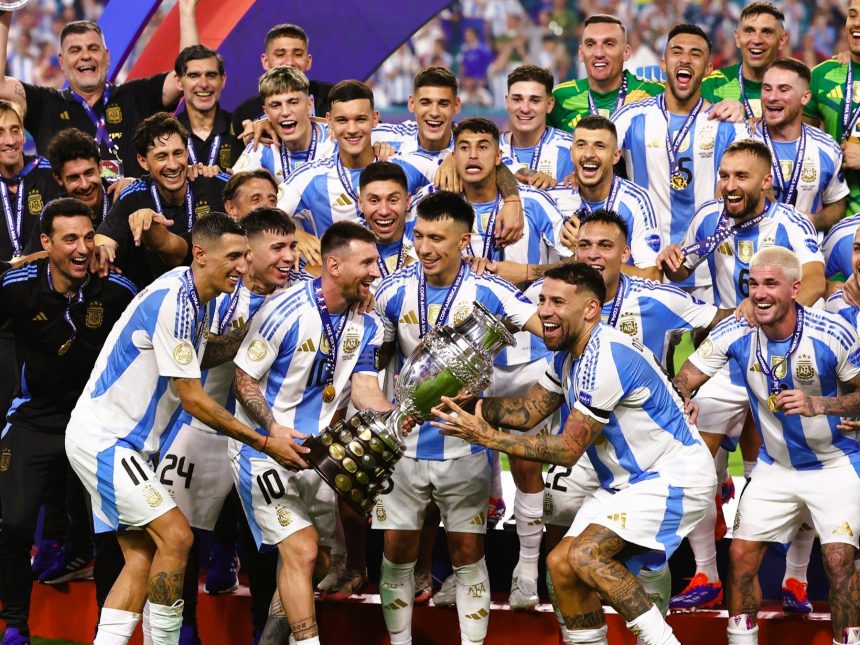
Four more followed in consecutive years, 2010 through 2012. He added a fifth in 2015, a sixth in 2019, a seventh in 2021, and then an eighth in 2023, the last one the most emotionally loaded, coming after he led Argentina to the World Cup they had waited 36 years to win.
Cristiano Ronaldo — 5 Wins
Ronaldo’s five Ballon d’Or wins (2008, 2013, 2014, 2016, 2017) would be the dominant story of any era that didn’t feature Messi.
His 2008 win came with Manchester United, delivering the Premier League and Champions League in one extraordinary season.
The other four came in Madrid whites. Across his career he has the most Ballon d’Or nominations in history — 18 in total.
Michel Platini — 3 Wins
Platini won three consecutive Ballons d’Or from 1983 to 1985, all while wearing the black and white stripes of Juventus.
In those three years combined, he scored 68 league goals from midfield. The record still stands as one of the most concentrated bursts of individual dominance the award has ever seen.
Johan Cruyff — 3 Wins
Cruyff won his first Golden Ball in 1971 with Ajax, then claimed back-to-back awards in 1973 and 1974 with Barcelona.
His total might have been higher; he boycotted the 1974 World Cup for personal reasons, potentially denying himself a fourth. The debate never ends.
Marco van Basten — 3 Wins
Van Basten’s career was brutal in its brevity. A catastrophic ankle injury forced him to retire at just 29.
Before that, he won three Ballons d’Or (1988, 1989, 1992) and produced perhaps the greatest single performance in European Championship history at Euro 1988. What the game lost when that ankle gave out is impossible to calculate.
Ballon d’Or Winners by Country
| Rank | Country | Wins | Notable Winners |
| 1 | Argentina | 8 | Lionel Messi (8) |
| 1 | France | 8 | Platini (3), Kopa (1), Papin (1), Zidane (1), Benzema (1), Dembélé (1) |
| 3 | Germany | 7 | Beckenbauer (2), Rummenigge (2), Matthäus (1), Müller (1), Sammer (1) |
| 3 | Netherlands | 7 | Cruyff (3), van Basten (3), Gullit (1) |
| 3 | Portugal | 7 | C. Ronaldo (5), Figo (1), Eusébio (1) |
| 6 | Brazil | 5 | Ronaldo (2), Rivaldo (1), Ronaldinho (1), Kaká (1) |
| 6 | England | 5 | Matthews (1), Charlton (1), Keegan (2), Owen (1) |
| 8 | Italy | 4 | Rivera (1), Rossi (1), Baggio (1), Cannavaro (1) |
| 9 | Soviet Union | 3 | Yashin (1), Blokhin (1), Belanov (1) |
| 10 | Spain | 2 | Suárez (1), Rodri (1) |
| 11 | Ukraine | 1 | Shevchenko (1) |
| 11 | Czech Republic | 1 | Nedvěd (1) |
| 11 | Bulgaria | 1 | Stoichkov (1) |
| 11 | Liberia | 1 | Weah (1) |
| 11 | Croatia | 1 | Modrić (1) |
| 11 | Denmark | 1 | Simonsen (1) |
| 11 | Hungary | 1 | Albert (1) |
| 11 | Czechoslovakia | 1 | Masopust (1) |
| 11 | Scotland | 1 | Law (1) |
| 11 | Northern Ireland | 1 | Best (1) |
Ballon d’Or Winners by Club
| Club | Wins | Key Winners |
| Real Madrid | 12 | Di Stéfano (2), Kopa (1), Figo (1), Zidane (1), C. Ronaldo (4), Benzema (1), Cannavaro (1), Ronaldo 2002 (1) |
| Barcelona | 12* | Cruyff (2), Suárez (1), Stoichkov (1), Rivaldo (1), Ronaldinho (1), Messi (6) |
| AC Milan | 7 | Gullit (1), van Basten (3), Weah (1), Shevchenko (1), Kaká (1) |
| Juventus | 7 | Sívori (1), Rossi (1), Platini (3), Baggio (1), Nedvěd (1) |
| Bayern Munich | 5 | Müller (1), Beckenbauer (2), Rummenigge (2) |
| Manchester United | 4 | Law (1), Charlton (1), Best (1), C. Ronaldo 2008 (1) |
| Paris Saint-Germain | 2 | Messi (2021), Dembélé (2025) |
| Inter Milan | 2 | Matthäus (1990), Ronaldo (1997 partial) |
| Manchester City | 1 | Rodri (2024) |
| Inter Miami CF | 1 | Messi (2023) |
| Dynamo Kyiv | 2 | Blokhin (1975), Belanov (1986) |
| Ajax | 1 | Cruyff (1971) |
| Marseille | 1 | Papin (1991) |
| Hamburg | 2 | Keegan (1978, 1979) |
| Borussia Mönchengladbach | 1 | Simonsen (1977) |
Youngest Ballon d’Or Winners
The Ballon d’Or is rarely kind to the very young. It rewards those who have both the ability and the desire to prove themselves at the highest level. These are the youngest players to have ever claimed it:
| Rank | Player | Year | Age at Award |
| 1 | Ronaldo (Brazil) | 1997 | 21 years, ~5 months |
| 2 | Michael Owen | 2001 | 22 years, 4 days |
| 3 | Lionel Messi | 2009 | 22 years, 157 days |
| 4 | George Best | 1968 | 22 years, 215 days |
| 5 | Cristiano Ronaldo | 2008 | 23 years, ~9 months |
| 6 | Marco van Basten | 1988 | 24 years, 57 days |
Ronaldo Nazário remains the only player in history to win the award before their 22nd birthday. His 1997 campaign — splitting time between Barcelona and Inter Milan — was one of the most explosive individual seasons the game had ever witnessed.
Oldest Ballon d’Or Winners
At the other end of the spectrum, these are the players who proved that age is no barrier to greatness:
| Rank | Player | Year Won | Approx. Age |
| 1 | Stanley Matthews | 1956 | ~41 years, 10 months |
| 2 | Lionel Messi | 2023 | ~36 years |
| 3 | Karim Benzema | 2022 | ~34 years, 10 months |
| 4 | Lev Yashin | 1963 | ~34 years, 1 month |
| 5 | Lionel Messi | 2021 | ~34 years |
| 6 | Alfredo Di Stéfano | 1959 | ~33 years, 5 months |
| 7 | Luka Modrić | 2018 | ~33 years |
| 7 | Fabio Cannavaro | 2006 | ~33 years |
| 9 | Cristiano Ronaldo | 2017 | ~32 years |
| 10 | Michel Platini | 1985 | ~30 years |
Stanley Matthews winning at 41 remains the most astonishing age-related feat in the award’s history — and likely will be forever.
Messi’s 2023 win at 36 placed him second, while Benzema at 34 years and 10 months in 2022 was the oldest to win in over six decades when the Messi/Yashin entries are set aside.
The modern era has proven remarkably kind to those who age gracefully — Matthews, Messi, Benzema, and Yashin all claimed the Golden Ball well into their thirties.
Ballon d’Or Records and Statistics
- Most wins: Lionel Messi — 8 (2009, 2010, 2011, 2012, 2015, 2019, 2021, 2023)
- Most consecutive wins: Lionel Messi — 4 in a row (2009–2012). Michel Platini held the consecutive record for decades with 3 (1983–1985) before Messi surpassed him
- Most nominations: Cristiano Ronaldo — 18 career nominations, the most of any player in Ballon d’Or history.
- Only goalkeeper to win: Lev Yashin (1963, Dynamo Moscow/Soviet Union). Sixty-plus years on, no other goalkeeper has come close. Yashin’s win remains one of the most remarkable outliers in the award’s entire history.
- Only defender to win: Fabio Cannavaro (2006) and Franz Beckenbauer (1972, 1976). Cannavaro’s victory came after Italy won the World Cup, with the captain marshalling one of the most watertight defences the tournament has ever seen.
- First non-European winner: George Weah of Liberia (1995), the same year eligibility was first extended beyond Europe. No African player has won it since.
- Only defensive midfielder to win (modern era): Rodri (2024), the first player in that mould to claim the award since Matthäus in 1990.
Controversial Winners
The Ballon d’Or has never been without debate. These are the editions that still spark arguments decades on.
2010 — The Iniesta Debate
Spain had just won the World Cup. Andrés Iniesta scored the winning goal in the final. David Villa was the tournament’s joint top scorer.
Wesley Sneijder had dragged Inter to a treble and the Netherlands to the final. And yet, Lionel Messi won the award for the second consecutive year.
The context matters: the 2010 edition was the FIFA Ballon d’Or, and players and national team coaches also voted. Messi had scored 47 goals that season for Barcelona.
But to many, 2010 belonged to Iniesta, and the Golden Ball never found its way to him.
2013 — The Ribéry Question
This remains perhaps the most contested Ballon d’Or in the award’s history. Franck Ribéry had helped Bayern Munich win a treble — Bundesliga, DFB-Pokal, and Champions League.
He entered the voting as the clear favourite. Then, with the deadline extended for the first time due to what FIFA described as a “lack of eligible voters,” Cristiano Ronaldo won — just ahead of Messi, with Ribéry third.
The circumstances surrounding the vote extension were never fully explained. Ribéry’s supporters still believe he was robbed.
2018 — The Modrić Moment
Luka Modrić broke a 10-year Messi-Ronaldo stranglehold. His campaign was genuinely exceptional: Champions League winner with Real Madrid, World Cup finalist and best player of the tournament with Croatia.
Many felt his win was fully merited. But others — particularly in Argentina and Portugal — argued that Messi’s club season had been superior. Modrić himself has become one of the award’s most universally respected winners.
2021 — The Lewandowski Shadow
The ghost of 2020 hung over the 2021 ceremony. The pandemic year had been cancelled — the year Robert Lewandowski scored 55 goals in 47 appearances and Bayern Munich won the treble.
When 2021 arrived, Lewandowski was again the strongest club-level performer (48 goals, 40 games). But Messi had won the Copa América with Argentina, and the voters leaned toward him.
Messi won his seventh; Lewandowski finished second. Even Messi acknowledged in his own acceptance speech that the Pole had deserved his moment.
It is the cleanest case of an outstanding player being denied, and the wound remains fresh for many.
Ballon d’Or vs FIFA The Best
Two awards. Two different bodies. Plenty of confusion.
The Ballon d’Or predates FIFA’s individual award by decades. France Football launched it in 1956; FIFA’s standalone award — now called The Best — only launched in its current form in 2017.
The two merged between 2010 and 2015 as the FIFA Ballon d’Or, then separated again.
Voting: The Ballon d’Or is decided exclusively by journalists — one from each of the top 100 FIFA-ranked nations.
The Best uses a four-part system: national team coaches, national team captains, journalists, and fans, each accounting for 25% of the total.
Time period: The Ballon d’Or evaluates a European season, typically from August to July. The Best uses the calendar year, January to December.
This difference in timeframe can and does produce different winners in the same cycle.
Prestige: The Ballon d’Or retains a clear advantage in terms of historical weight and cultural significance. Players have grown up dreaming of the Golden Ball.
The Best is still building its identity. When the two awards align on the same winner, it carries extra authority.
When they diverge, it tends to generate debate about the relative merits of each voting system.
Trophy: The Ballon d’Or is a gleaming golden ball on a pyrite crystal base. The Best is a platinum and carbon design modelled loosely on the World Cup trophy.
Latest Winner: Ousmane Dembélé (2025)
The 2025 Ballon d’Or went to Ousmane Dembélé — a result that would have seemed implausible just a few years ago.
Dembélé’s 2024–25 season with Paris Saint-Germain was transformational. Operating as a central striker rather than his natural wide position, he was the engine behind PSG’s historic quadruple — Ligue 1, Coupe de France, Champions League, and Coupe de la Ligue.
His adaptability, consistency, and decisive contributions across all four competitions made a compelling case that even his fiercest rivals could not override.
Lamine Yamal finished second, having produced a breathtaking debut senior season at Barcelona. Mohamed Salah and Vitinha completed the top four. Kylian Mbappé, despite his Real Madrid move, finished seventh.
Dembélé is the first French player to win since Karim Benzema in 2022, and only the second PSG player to win the award in the club’s history.
FAQ: Everything You Need to Know
Who has won the most Ballon d’Or awards?
Lionel Messi holds the all-time record with eight wins (2009, 2010, 2011, 2012, 2015, 2019, 2021, 2023). No other player is close. Cristiano Ronaldo is second with five.
Who was the first Ballon d’Or winner?
Stanley Matthews of Blackpool (and formerly Stoke City) won the inaugural award in 1956 at the age of 41 — still the oldest player ever to receive it.
Which country has won the Ballon d’Or the most?
Argentina leads all nations with 8 wins, though all eight belong to one player: Lionel Messi. France, Germany, the Netherlands, and Portugal each have 7 wins, but they are spread across multiple winners.
How many times has Messi won the Ballon d’Or?
Eight times. His wins span from 2009 to 2023 — a 14-year window of sustained excellence that defines the modern era of the award.
How many times has Cristiano Ronaldo won?
Five times: 2008, 2013, 2014, 2016, and 2017. He also holds the record for most career Ballon d’Or nominations (18).
Which club has produced the most winners?
Real Madrid and Barcelona are tied, each having produced 12 Ballon d’Or winners based on the club the player represented at the time of winning.
Who is the youngest ever Ballon d’Or winner?
Ronaldo Nazário (Brazil), who won in 1997 at approximately 21 years and five months old, is the only player in history to win the award before turning 22.
Who was the first Ballon d’Or winner? Stanley Matthews of Blackpool (and formerly Stoke City) won the inaugural award in 1956 at the age of 41 — still the oldest player ever to receive it.
Which country has won the Ballon d’Or the most? Argentina leads all nations with 8 wins, though all eight belong to one player: Lionel Messi. France, Germany, Netherlands, and Portugal each have 7 wins but spread across multiple winners.
How many times has Messi won the Ballon d’Or? Eight times. His wins span from 2009 to 2023 — a 14-year window of sustained excellence that defines the modern era of the award.
How many times has Cristiano Ronaldo won? Five times: 2008, 2013, 2014, 2016, and 2017. He also holds the record for most career Ballon d’Or nominations (18).
Has a goalkeeper ever won the Ballon d’Or? Only once. Lev Yashin of Dynamo Moscow and the Soviet Union won in 1963. He remains the sole goalkeeper in the award’s 70-year history to claim the Golden Ball.
How are votes cast? A panel of journalists — one from each of FIFA’s top 100-ranked nations — votes for their preferred top five from a 30-man shortlist. Points are allocated on a decreasing scale. The player with the highest total wins.
Which club has produced the most winners? Real Madrid and Barcelona are tied, each having produced 12 Ballon d’Or winners based on the club the player represented at the time of winning.
Conclusion
The Ballon d’Or is not just an award. It is football’s most detailed annual ledger, a record of who moved the game, who changed matches, who defined eras.
Every name on the Ballon d’Or winners list is there because, in that particular year, the rest of the world stepped back and said: That one is the best of all of us.
From Matthews at 41, to Cruyff at his baroque peak, to Platini’s midfield mastery, to Ronaldo at 21 making defenders look foolish in slow motion, the list is a document of the sport’s best moments and its best people.
And then there is Messi. Eight. A number that does not feel real and yet is the truest number in the award’s entire 70-year existence.
The 2026 edition is yet to be decided. New names are emerging. New debates will follow. But the Ballon d’Or winners list never loses its power — because football never stops producing players who make you wonder if you’re watching something that will never be matched.
Sources: France Football, Britannica, FIFA, Sports Illustrated. Data current as of June 2026. The 2026 Ballon d’Or winner is TBD and will be updated upon official announcement.