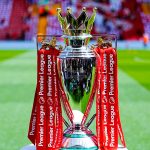




The Premier League has redefined English football since its inception in 1992, becoming the world’s most-watched and wealthiest football league.
Over three decades, it has delivered some of the most dramatic, controversial, and unforgettable title races in football history, producing legendary champions and iconic moments that still define the game today.
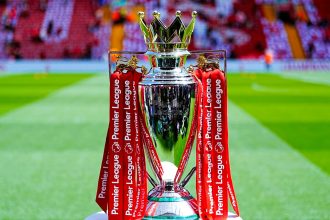
Every year, millions of fans search for the Premier League winners list to settle debates, confirm records, and relive footballing glory.
Since English football’s top flight was rebranded as the Premier League in 1992, the sport has been transformed beyond recognition, from tactical evolution to global commercial dominance.
Whether you’re a long-time supporter checking history, a student researching English football, or simply settling a debate, this is your definitive guide to every EPL champion from 1992 to 2026.
Complete Premier League Winners List by Year (1992–2026)
Here is the full Premier League champions list, season by season, with the manager at the helm for each title-winning campaign.
| Season | Champion | Manager | Points |
| 1992–93 | Manchester United | Sir Alex Ferguson | 84 |
| 1993–94 | Manchester United | Sir Alex Ferguson | 92 |
| 1994–95 | Blackburn Rovers | Kenny Dalglish | 89 |
| 1995–96 | Manchester United | Sir Alex Ferguson | 82 |
| 1996–97 | Manchester United | Sir Alex Ferguson | 75 |
| 1997–98 | Arsenal | Arsène Wenger | 78 |
| 1998–99 | Manchester United | Sir Alex Ferguson | 79 |
| 1999–2000 | Manchester United | Sir Alex Ferguson | 91 |
| 2000–01 | Manchester United | Sir Alex Ferguson | 80 |
| 2001–02 | Arsenal | Arsène Wenger | 87 |
| 2002–03 | Manchester United | Sir Alex Ferguson | 83 |
| 2003–04 | Arsenal | Arsène Wenger | 90 |
| 2004–05 | Chelsea | José Mourinho | 95 |
| 2005–06 | Chelsea | José Mourinho | 91 |
| 2006–07 | Manchester United | Sir Alex Ferguson | 89 |
| 2007–08 | Manchester United | Sir Alex Ferguson | 87 |
| 2008–09 | Manchester United | Sir Alex Ferguson | 90 |
| 2009–10 | Chelsea | Carlo Ancelotti | 86 |
| 2010–11 | Manchester United | Sir Alex Ferguson | 80 |
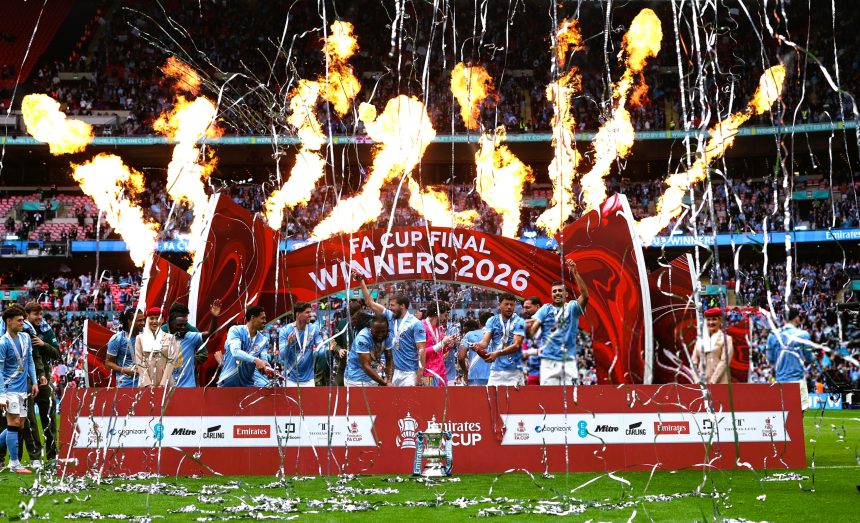
| 2011–12 | Manchester City | Roberto Mancini | 89 |
| 2012–13 | Manchester United | Sir Alex Ferguson | 89 |
| 2013–14 | Manchester City | Manuel Pellegrini | 86 |
| 2014–15 | Chelsea | José Mourinho | 87 |
| 2015–16 | Leicester City | Claudio Ranieri | 81 |
| 2016–17 | Chelsea | Antonio Conte | 93 |
| 2017–18 | Manchester City | Pep Guardiola | 100 |
| 2018–19 | Manchester City | Pep Guardiola | 98 |
| 2019–20 | Liverpool | Jürgen Klopp | 99 |
| 2020–21 | Manchester City | Pep Guardiola | 86 |
| 2021–22 | Manchester City | Pep Guardiola | 93 |
| 2022–23 | Manchester City | Pep Guardiola | 89 |
| 2023–24 | Manchester City | Pep Guardiola | 91 |
| 2024–25 | Liverpool | Arne Slot | 84 |
| 2025–26 | Arsenal | Mikel Arteta | 85 |
Most Successful Premier League Clubs of All Time
When it comes to the Premier League title winners’ roll of honour, a handful of clubs stand head and shoulders above the rest.
| Rank | Club | Premier League Titles |
| 1 | Manchester United | 13 |
| 2 | Manchester City | 8 |
| 3 | Arsenal | 4 |
| 4 | Chelsea | 5 |
| 5 | Liverpool | 2 |
| 6 | Blackburn Rovers | 1 |
| 7 | Leicester City | 1 |
Manchester United remain the most decorated club in Premier League history. Sir Alex Ferguson’s extraordinary 26-year reign at Old Trafford produced 13 of those titles, including eight of the first 11 seasons of the competition.
The Scot’s ability to rebuild squads, reinvent his tactics, and outlast every rival makes him widely regarded as one of the greatest.
Manchester City have undergone the most dramatic transformation the game has ever seen.
From the club that nearly went bankrupt in the 1990s to a global superpower after Abu Dhabi investment in 2008, City’s eight league titles, six of them delivered by Pep Guardiola, represent the sport’s most sustained example of what elite coaching combined with serious financial backing can produce.
Chelsea own five English top-flight titles, with two distinct golden eras: the José Mourinho dynasty of the mid-2000s and title victories under Carlo Ancelotti and Antonio Conte.
Roman Abramovich’s 2003 takeover changed the financial landscape of English football overnight.
Arsenal’s four titles span three decades of excellence. Arsène Wenger’s reign produced a revolution in training, nutrition, and style of play, and the Invincibles of 2003–04 remain one of the most remarkable sporting achievements in English football history.
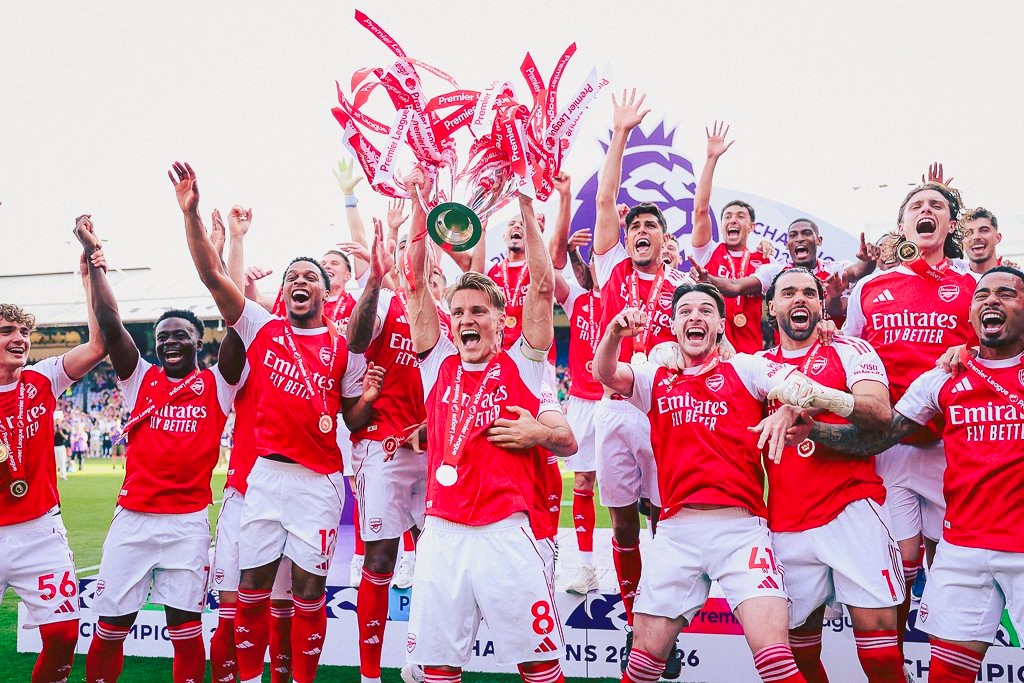
After a 22-year title drought, Mikel Arteta finally delivered the Gunners a fourth Premier League crown in 2025–26.
Liverpool have won the title twice since 1992, but both victories were seismic. Jürgen Klopp ended a 30-year wait in devastating fashion in 2019–20, and Arne Slot backed it up with a dominant campaign in 2024–25, underscoring that the Klopp era’s foundations were genuinely world-class.
Premier League Title Records and Statistics
The Premier League has produced some staggering numbers across its 34-year history. Here are the records that define the competition.
| Record | Detail | Club/Manager |
| Most titles | 13 | Manchester United / Sir Alex Ferguson |
| Most consecutive titles | 4 (2021–2024) | Manchester City / Pep Guardiola |
| Most points in a season | 100 (2017–18) | Manchester City |
| Most goals in a season | 106 (2017–18) | Manchester City |
| Fewest goals conceded | 15 (2004–05) | Chelsea |
| Unbeaten season | 38 games (2003–04) | Arsenal (Invincibles) |
| Biggest winning margin | 19 points (1999–2000) | Manchester United |
| Most managerial titles | 13 | Sir Alex Ferguson |
| Youngest title-winning manager | 42 years (2004–05) | José Mourinho |
Manchester City’s 2017–18 Centurions season deserves special mention. Pep Guardiola’s side won 32 of their 38 matches, scored 106 goals, and finished 19 points clear of their nearest rivals a performance that redefined what was thought to be possible in the modern era.
Arsenal’s Invincibles of 2003–04 occupy a place entirely their own in Premier League records.
No side before or since has gone an entire season without losing. Patrick Vieira, Thierry Henry, Robert Pires, and Ashley Cole a team of individual brilliance operating as a perfect collective unit.
Sir Alex Ferguson’s 13 titles across 21 seasons set a standard of consistency that makes him, statistically, the greatest manager in the competition’s history. No other manager has won more than six.
FAQs About Premier League Winners
Who won the first Premier League title?
Manchester United won the inaugural Premier League title in the 1992–93 season, finishing with 84 points under Sir Alex Ferguson.
Which team has won the most Premier League titles?
Manchester United lead the all-time Premier League champions list with 13 titles. However, Manchester City have won 8 titles, with six of those coming under Pep Guardiola.
How many clubs have won the Premier League?
Only seven clubs have won the Premier League since its formation in 1992: Manchester United, Manchester City, Arsenal, Chelsea, Liverpool, Blackburn Rovers, and Leicester City.
Who won the latest Premier League title?
Arsenal won the 2025–26 Premier League title under manager Mikel Arteta, ending a 22-year wait for the Gunners.
What is the record for most points in a Premier League season?
Manchester City set the record for most points in a single Premier League season in 2017–18 with 100 points, becoming the first team in English top-flight history to reach a century of points. Pep Guardiola’s side won 32 of their 38 matches.
Has any team gone unbeaten in the Premier League?
Only once. Arsenal’s 2003–04 “Invincibles” side went the entire 38-game season without losing, finishing with 26 wins and 12 draws under Arsène Wenger. It remains one of the most remarkable achievements in football history and a record that has never been threatened since.
Conclusion
The Premier League winners list tells a story that goes far beyond statistics. It’s the story of how Sir Alex Ferguson built and rebuilt dynasty after dynasty at Old Trafford.
It’s the story of how Arsène Wenger transformed English football with ideas about diet, training, and aesthetics that were revolutionary at the time.
It’s the story of Roman Abramovich’s billions arriving in West London and upending the natural order. It’s a 5,000-to-1 miracle in Leicester.
It’s Agüero. It’s Klopp weeping on the touchline as his Liverpool side finally ended 30 years of hurt.
And it’s Mikel Arteta, once a player at Arsenal who watched Wenger’s Invincibles train, now a manager who has returned the Gunners to the very summit of English football after 22 years.
Eight clubs are the only ones who know what it feels like to lift that trophy. Thirty-four seasons of drama, heartbreak, brilliance, and history and the next chapter is always just around the corner.