







International football is the version of the game stripped of club money, transfer fees, and squad depth.
A player turns out for the shirt he was born into, against opponents he cannot choose, in front of supporters who have waited a lifetime for these nights.
Scoring once in that environment is hard. Scoring for two decades, against backlines built specifically to stop you, is something else entirely.
That is what makes the list of the most international goals in football history such a closely watched, fiercely debated one.
It rewards longevity as much as talent, and it has produced one of modern sport’s most remarkable individual rivalries.
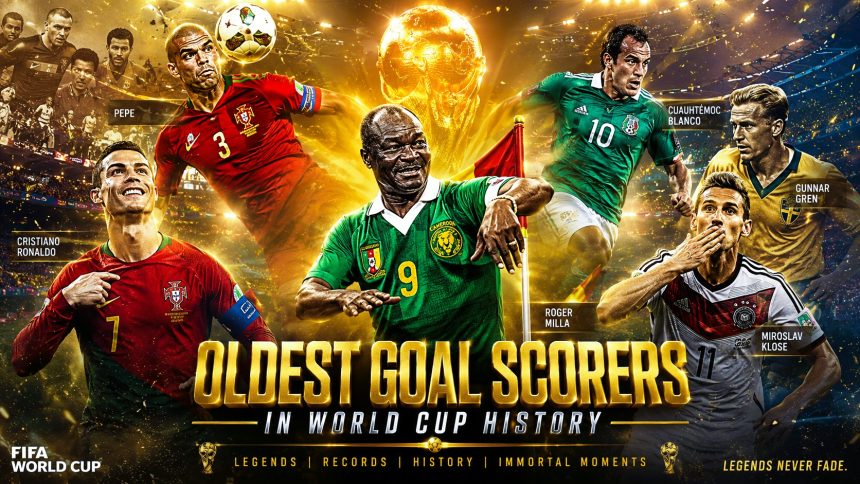
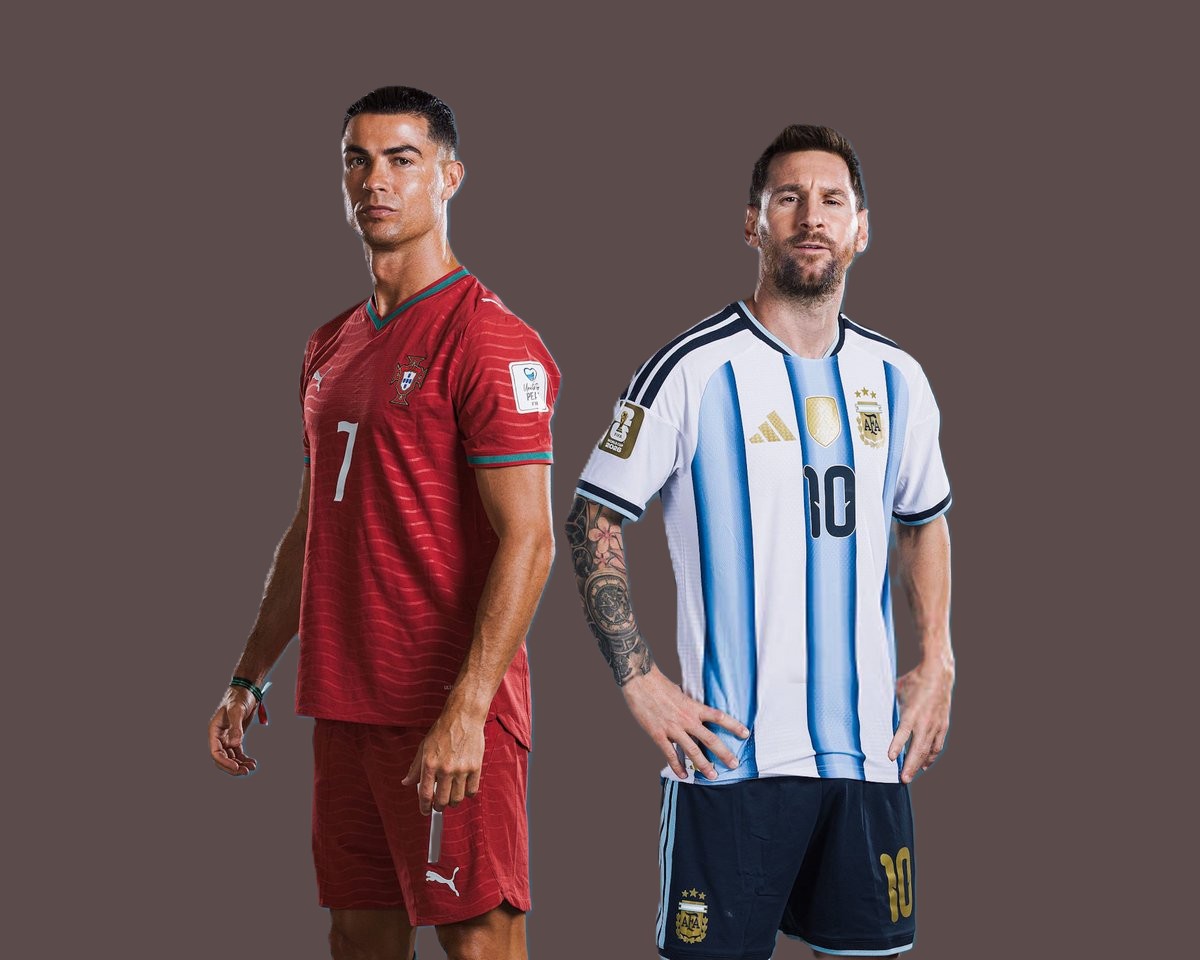
At the top of that list sits Cristiano Ronaldo, whose tally for Portugal has become one of the most secure records in world football.
Behind him, Lionel Messi continues to add to his own Argentina total at this very World Cup.
Both numbers sit inside a broader story involving an Iranian forward who once seemed untouchable, a Malaysian icon who scored before either of them was born, and an Indian captain who spent two decades quietly climbing into a company usually reserved for South American and European superstars.
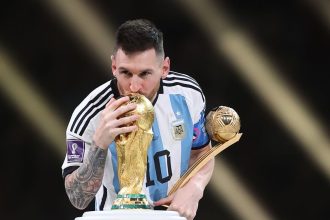
This piece tracks every name that matters, the FIFA-recognised matches that count, and the records still waiting to fall.
Who has scored the most international goals in football history?
Cristiano Ronaldo has scored 143 international goals for Portugal, the most of any player in men’s football history.
He surpassed Iran’s Ali Daei (108 goals) in September 2021 and continues to extend the record at the 2026 World Cup, with Lionel Messi (118, Argentina) the closest active challenger.
Most International Goals in Football History (Men’s Ranking 2026)
Below is the complete ranking of the highest international goal scorers in men’s football, current through the opening rounds of the 2026 FIFA World Cup.
Two names occupy a tier of their own. Everyone else, however brilliant, is chasing a gap that has only widened with time.
| Rank | Player | Country | Goals | Caps | Career | Status |
| 1 | Cristiano Ronaldo | Portugal | 143 | 229 | 2003–present | Active |
| 2 | Lionel Messi | Argentina | 118 | 200 | 2005–present | Active |
| 3 | Ali Daei | Iran | 108 | 148 | 1993–2006 | Retired |
| 4 | Sunil Chhetri | India | 95 | 157 | 2005–2025 | Retired |
| 5 | Romelu Lukaku | Belgium | 90 | 127 | 2010–present | Active |
| 6 | Robert Lewandowski | Poland | 89 | 167 | 2008–present | Active |
| 6 | Mokhtar Dahari | Malaysia | 89 | 142 | 1972–1985 | Retired |
| 8 | Ali Mabkhout | UAE | 85 | 114 | 2009–2023 | Retired |
| 9 | Harry Kane | England | 81 | 115 | 2015–present | Active |
| 10 | Neymar | Brazil | 79 | 128 | 2010–present | Active |
Figures reflect official senior international totals as recognized by FIFA and the relevant national federations, current through mid-June 2026. Totals for active players will continue to change during the World Cup.
Related: Explore our complete guides to the UEFA Champions League Winners List, the UEFA Conference League Winners List, the Ballon d’Or Winners List, and the La Liga Winners List, and league champions from England, Spain, Italy, Germany, and beyond.
Top 10 Players with the Most International Goals
Numbers alone do not explain how these careers were built. Each player on this list reached the summit through a different route, some through pure finishing instinct, others through aerial dominance, set-piece mastery, or simple, unmatched longevity.
Here is the story behind every name in the top ten.
1. Cristiano Ronaldo
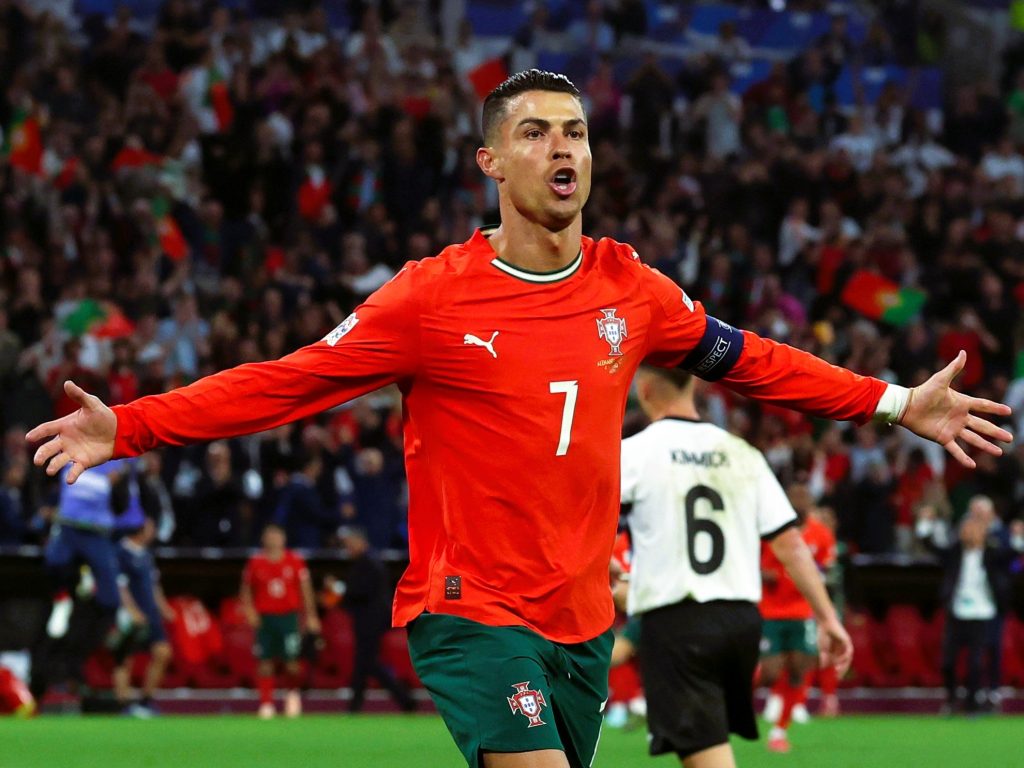
Cristiano Ronaldo made his Portugal debut in 2003 as a gifted but raw teenage winger and did not score in either of his first two caps.
Few could have predicted that the player who eventually emerged would redefine what an international career could look like.
Ronaldo’s playing style evolved across two decades, from a dribbling wide forward at Manchester United to the penalty-box poacher and aerial threat who has carried Portugal through his late thirties and into his forties.
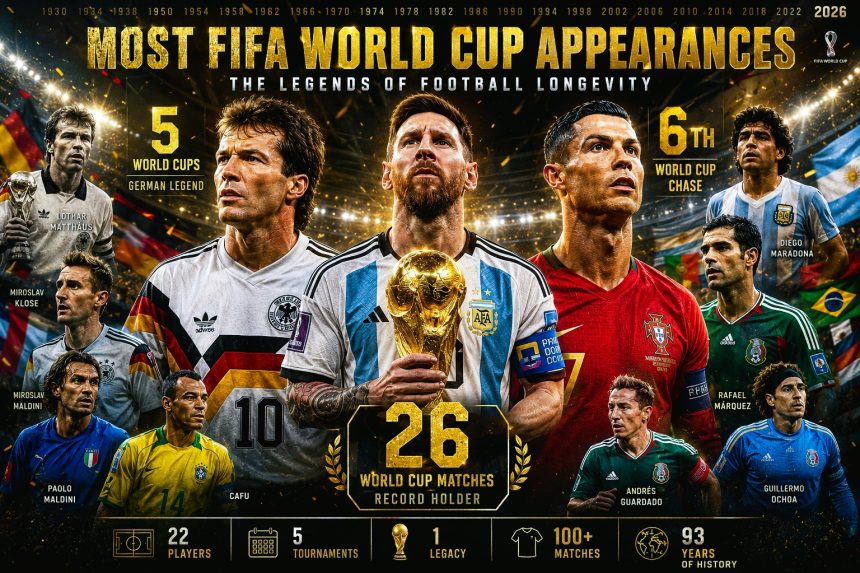
His major tournament resume is just as deep as his goal tally. Ronaldo has played at six World Cups, the first player in history to do so, and remains the only man to score in five separate editions of the tournament.
He has lifted the UEFA European Championship with Portugal in 2016 and added two UEFA Nations League titles, giving him major honours to match his individual numbers, something that eluded him for much of his early international career.
The goal that mattered most statistically came on September 1, 2021, when Ronaldo scored twice against the Republic of Ireland in a World Cup qualifier in Faro to move clear of Ali Daei and become outright record holder.
He has barely slowed since, scoring in 22 consecutive years for Portugal, a streak that itself stands as a world record for consistency. He also shares the record for most international hat-tricks, with ten.
What makes Ronaldo’s case for the greatest international goalscorer of all time so strong is not just the total, but the spread.
He has scored against more than 48 different national teams, in World Cups, European Championships, Nations League fixtures, qualifiers, and friendlies alike.
His legacy is no longer in question: he is the best international scorer in history. The numbers have settled that question.
The remaining question is simply how much higher the figure climbs before he eventually steps away.
2. Lionel Messi
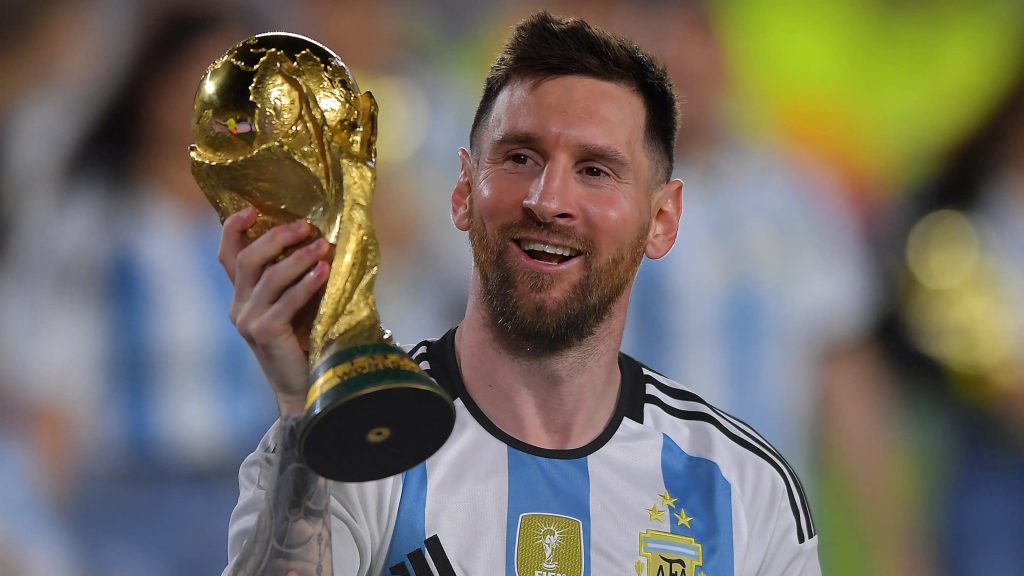
Lionel Messi’s path to second on the all-time list took longer to gather pace than Ronaldo’s.
Early in his Argentina career, Messi’s brilliance at Barcelona did not always translate cleanly into the national team setup, and questions about his international output followed him for years.
That entire narrative collapsed once Messi began delivering at the highest level for his country, culminating in the 2021 Copa América title and the long-awaited 2022 World Cup win in Qatar, where he produced arguably the greatest individual tournament performance in the competition’s history.
Messi’s playing style for Argentina has always been built around vision and control rather than pure physical dominance, drifting into pockets of space, drawing defenders, and either finishing himself or creating for others.
That adaptability has let him remain prolific into his late thirties, an age at which most forwards have lost a step.
His 2026 World Cup has already produced one of the defining moments of his international career.
In Argentina’s opening match against Algeria, Messi scored a hat-trick to move to 118 international goals while playing his 200th cap, tying Miroslav Klose’s all-time World Cup scoring record of 16 in the same performance.
It was his eleventh international hat-trick, a tally that itself sits at the top of the all-time list alongside Ronaldo’s ten.
Messi will turn 39 during this tournament and has been characteristically reluctant to confirm whether this World Cup is his last.
Whatever the answer, his international legacy is already secure: a World Cup winner, a Copa América champion, and the only realistic challenger to Ronaldo’s scoring record, even if the gap between them remains a significant 25 goals.
3. Ali Daei
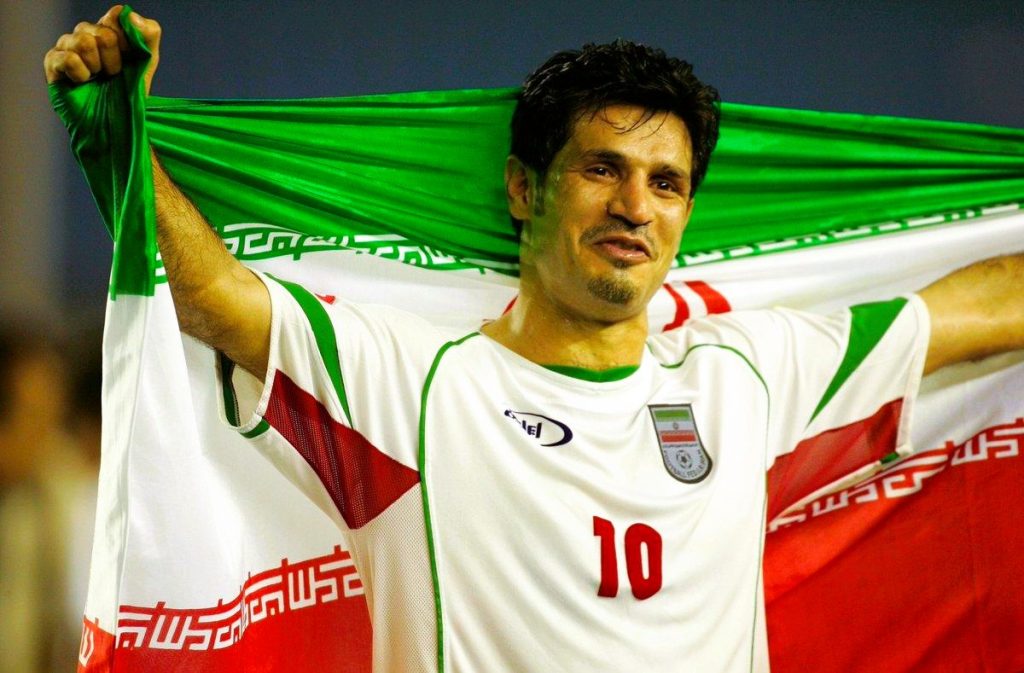
For more than fifteen years, Ali Daei’s name sat alone at the top of football’s international scoring charts, and for an entire generation of fans, the idea that anyone could surpass him felt remote.
The Iranian forward, a powerful, aerially dominant target man, built his total largely through AFC Asian Cup and World Cup qualification campaigns, where his physical presence overwhelmed defenders across the region.
Daei became the first male player in history to score 100 international goals, reaching the milestone with four goals, including the landmark strike itself, in a 7-0 World Cup qualifying win over Laos at Tehran’s Azadi Stadium in November 2004.
He finished his career with 108 goals from 148 appearances for Iran between 1993 and 2006, a rate of better than two goals every three games sustained across an entire career.
His major tournament record includes captaining Iran at three World Cups and remaining the country’s all-time top scorer by a vast distance.
Off the pitch, Daei has remained closely tied to Iranian football as a club manager and pundit, and he was among the first to publicly congratulate Ronaldo when the Portuguese star drew level with his mark in 2021.
Daei’s record stood for so long that it shaped how an entire era of football fans understood the ceiling of international goalscoring.
Even now, surpassed by two players, his total remains the standard against which every non-European or South American forward is measured, and he is still, comfortably, the highest-scoring player Asian football has ever produced.
4. Sunil Chhetri
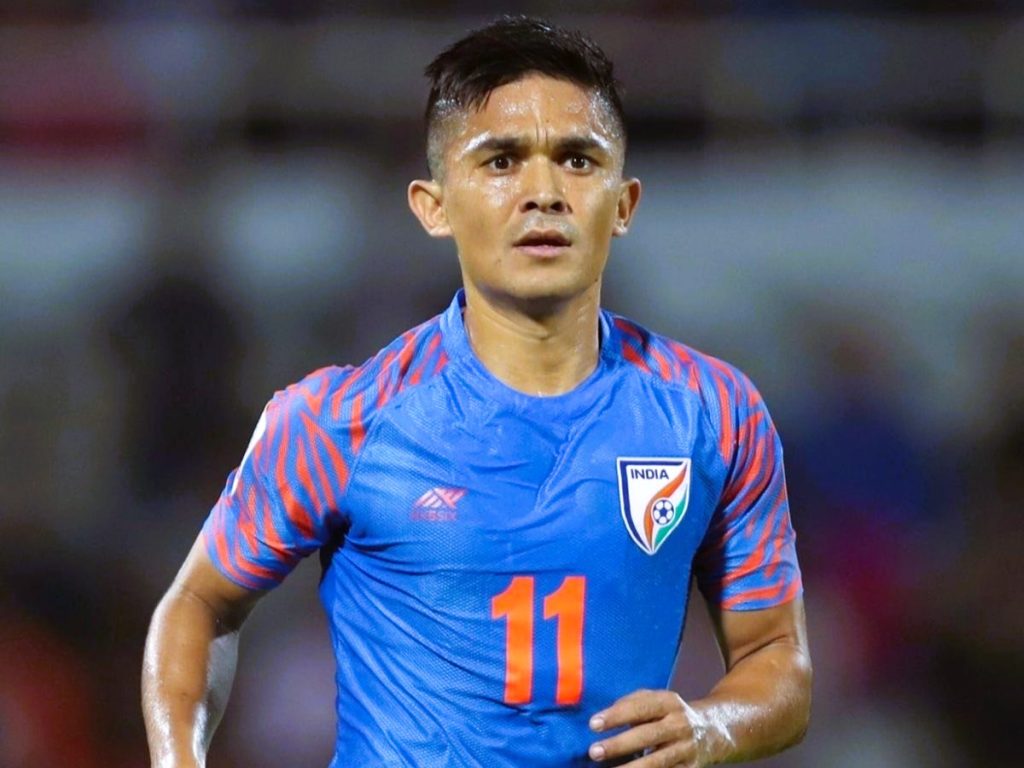
Sunil Chhetri’s presence on this list, ahead of Robert Lewandowski, Romelu Lukaku, Harry Kane, and Neymar, is one of international football’s most remarkable statistical stories.
Playing almost his entire career outside Europe’s major leagues, mostly in the Indian Super League with a short stint at Sporting CP, Chhetri quietly built a goal tally that places him in direct conversation with Ronaldo and Messi on the all-time list.
Chhetri made his India debut in 2005 and scored on that very first appearance against Pakistan.
His playing style relied on sharp movement, clinical finishing, and an unusually long peak for a player without elite physical attributes, sustaining a high scoring rate well into his late thirties.
He led India to multiple SAFF Championship titles and the 2018 Intercontinental Cup, and was named India’s Player of the Year a record seven times.
He initially announced his retirement in 2024, only to return for further World Cup qualifying duty before a final, definitive farewell after India’s 2027 Asian Cup qualification campaign fell short in late 2025.
His last international appearance ended in a defeat to Singapore, closing out a career total of 95 goals from 157 caps.
Chhetri’s legacy extends well beyond the numbers. He is widely credited with raising the profile of football in a country dominated by cricket, and his farewell tour through 2024 and 2025 drew sold-out crowds across India desperate to send off the player who had carried the national team’s attack for two decades.
5. Romelu Lukaku
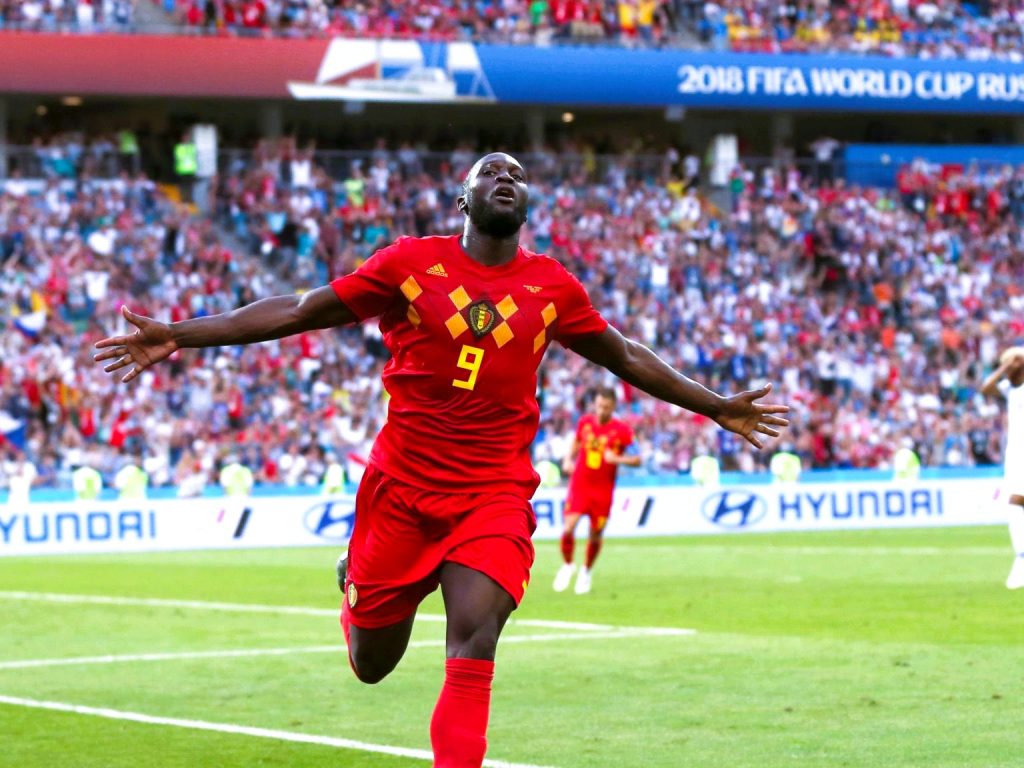
Romelu Lukaku made his Belgium debut as a teenager in 2010 and has remained the country’s most reliable goalscoring outlet through the so-called Golden Generation era and beyond.
Built as a powerful, physically dominant striker who combines pace with finishing instinct, Lukaku has overwhelmed defenses across Europe and led Belgium’s frontline through three World Cups.
His major tournament highlights include a four-goal haul at the 2018 World Cup as Belgium reached the semi-finals, their best finish in decades, and a key role in the team’s run to the Euro 2020 quarter-finals.
Lukaku has long held Belgium’s all-time scoring record, a mark he claimed from Romelu Lukaku’s own predecessors in the national team’s attack and has continued to extend with every qualifying campaign.
Now in his early thirties, Lukaku remains Belgium’s central attacking focal point heading into the 2026 World Cup, with his goals-per-match rate among the best of any player inside the top ten on this list.
His combination of total goals and efficiency makes him one of the most statistically dominant strikers of his generation, even if individual recognition has not always matched his output.
6. Robert Lewandowski
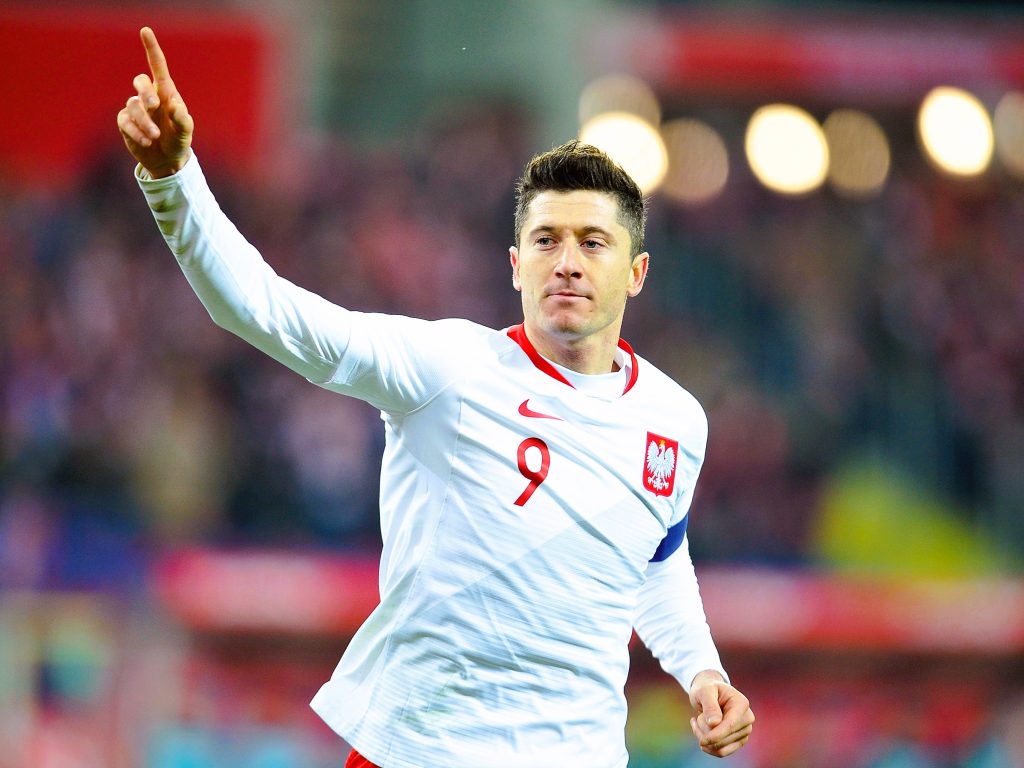
Robert Lewandowski has spent nearly two decades as Poland’s most important attacking player, scoring on debut in 2008 and going on to become not just his country’s record goalscorer but one of the most clinical finishers of his generation at club level for Borussia Dortmund, Bayern Munich, and Barcelona.
His international career has been built on positional intelligence, aerial precision, and an instinct for finding space inside the penalty area that has rarely deserted him.
Lewandowski’s major tournament resume includes appearances at the 2018 and 2022 World Cups and multiple European Championships, though deep individual runs at major tournaments have been a rare frustration relative to his club achievements.
His most painful recent moment came in March 2026, when Poland lost a World Cup qualifying play-off final to Sweden, ending any chance of a farewell appearance at this summer’s tournament.
Despite missing out on the 2026 World Cup, Lewandowski’s place among the all-time international scoring elite is secure.
His tally of 89 goals ties him with Malaysia’s Mokhtar Dahari for sixth on the all-time list, an achievement built almost entirely within the more difficult environment of European qualifying football rather than against the weaker regional opposition that boosted several other names on this list.
7. Neymar
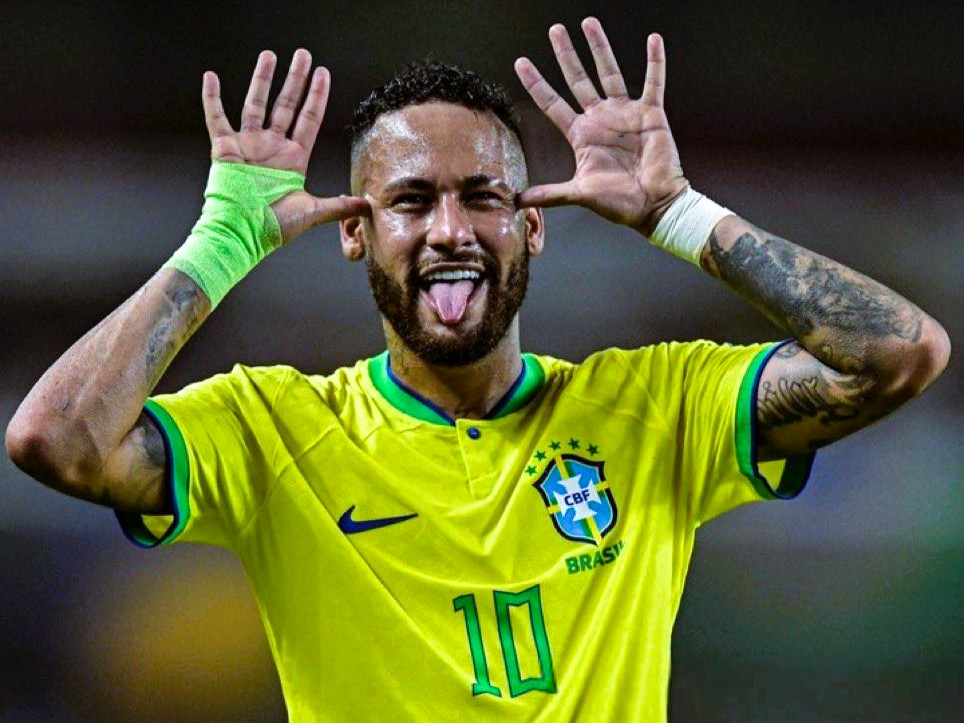
Neymar made his Brazil debut in 2010 as a teenage prodigy already carrying the weight of comparisons to Pelé, and despite a career interrupted repeatedly by injury, he eventually surpassed Pelé’s long-standing Brazil scoring record.
He claimed the record outright with a brace against Bolivia in September 2023, taking his tally to 79 goals at the time and securing his place as the most prolific scorer in Brazilian football history.
Neymar’s playing style combines close control, flair, and an instinct for the spectacular that has made him one of the most watched players of his generation, even when his output has been overshadowed by fitness concerns.
His major tournament career includes an Olympic gold medal in 2016 and Copa América success, though a long-awaited World Cup title with Brazil has remained elusive across four campaigns.
Injuries cost Neymar significant stretches of his prime years, and his path back into Carlo Ancelotti’s Brazil squad for the 2026 World Cup was closely watched given his fitness history.
His experience and goal-scoring pedigree nonetheless make him a key figure for a Brazil side chasing a record sixth World Cup title.
Whatever happens this summer, Neymar’s status as Brazil’s all-time leading scorer, ahead of legends like Pelé and Ronaldo Nazário, already cements his international legacy regardless of how this tournament concludes.
8. Harry Kane
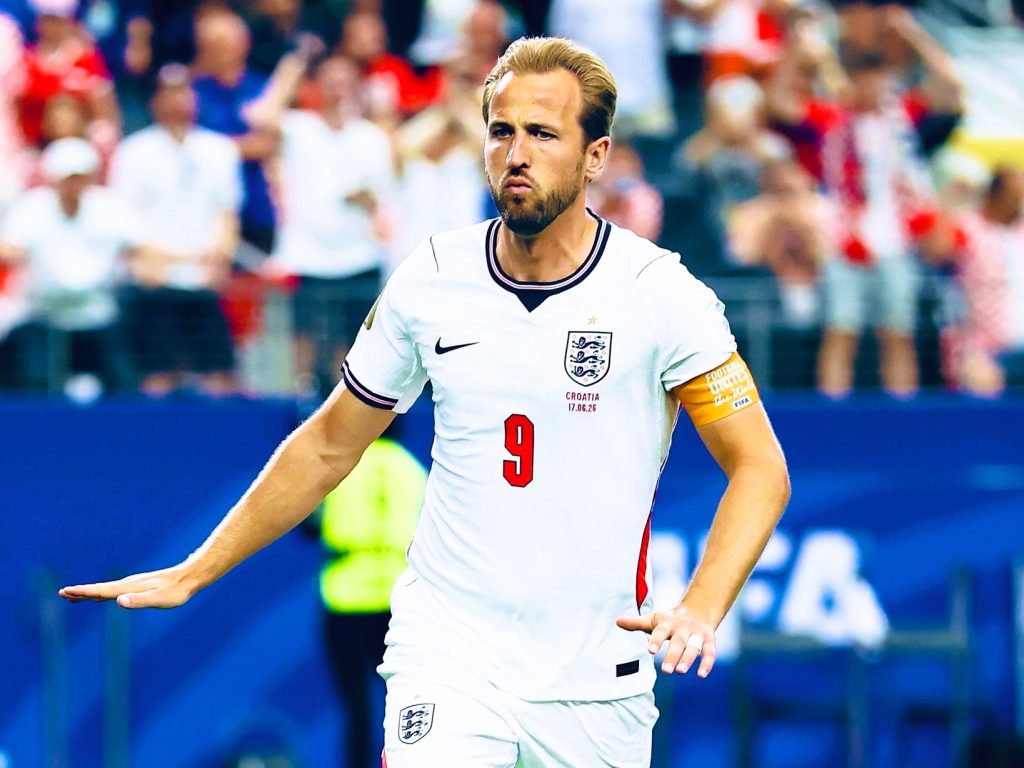
Harry Kane has been England’s most important attacking player since the mid-2010s, combining clinical penalty-box finishing with an underrated playmaking range that has made him one of the most complete forwards of his era.
He became England’s all-time leading scorer in March 2023, overtaking Wayne Rooney, and has continued to extend that record through his move to Bayern Munich and into his thirties.
Kane’s major tournament record is studded with personal milestones, even without the trophy that has eluded him.
He won the Golden Boot at the 2018 World Cup, scoring six goals including a hat-trick against Panama, and has reached two European Championship finals with England.
At the 2026 World Cup, Kane equalled Gary Lineker’s England record of ten World Cup goals with a brace against Croatia in the team’s opening match, also becoming the player with the most penalty goals, excluding shootouts, in World Cup history.
Now captaining a Thomas Tuchel side many consider England’s best chance in decades to finally win the World Cup, Kane heads into the knockout stages with both personal and team history within reach.
England’s perfect, unbeaten qualifying campaign, with no goals conceded, underlined just how central his goalscoring threat remains to the team’s identity.
Whatever happens in 2026, Kane’s place as England’s record scorer is permanent, and his case as one of the most efficient finishers of his generation, in club football and country alike, is already well established.
9. Mokhtar Dahari
Mokhtar Dahari, known across Southeast Asia simply as “Supermokh,” remains one of the most beloved figures in Malaysian sporting history.
Making his international debut at just 19 years old in 1972, Dahari combined physical power, technical ability, and an instinct for the spectacular that made him a continental star at a time when Southeast Asian football rarely earned global attention.
For nearly two decades after his retirement, Dahari held the title of the world’s all-time leading international goalscorer, a record only surpassed when Ali Daei passed his mark in 2004.
His 89 goals in 142 appearances for Malaysia, scored between 1972 and 1985, remain a national point of pride and a benchmark that no subsequent Malaysian player has come close to approaching.
Dahari’s legacy extends well beyond statistics. He inspired a generation of Malaysian footballers and remains a cultural icon decades after his playing career ended and after his death in 1991.
Stadiums, awards, and youth competitions across Malaysia continue to bear his name, a reflection of how deeply his goalscoring exploits are woven into the country’s football identity.
His tied sixth-place position on this all-time list, alongside the much more recently retired Robert Lewandowski, is a reminder that elite international goalscoring is not a phenomenon confined to football’s traditional powerhouses.
10. Ali Mabkhout
Ali Mabkhout made his UAE debut in 2009 and went on to become his country’s all-time leading goalscorer, surpassing the previous record held by Adnan Al Talyani with a hat-trick against Indonesia in October 2019.
His instinctive movement inside the penalty area and reliable finishing made him the focal point of the UAE attack for the better part of fifteen years.
Mabkhout’s standout international achievement came at the 2019 AFC Asian Cup, where he finished as the tournament’s top scorer and helped the UAE reach the semi-finals as hosts.
He briefly moved ahead of Lionel Messi on the all-time active goalscorers list during 2021 World Cup qualifying, a remarkable statistical footnote given the gulf in profile between the two players.
Despite his pedigree, Mabkhout was a surprise omission from UAE’s squad at the 2023 Asian Cup and has not added to his international total since, with his club career at Al Jazira and later Al-Nasr continuing into his mid-thirties.
His tally of 85 goals from 114 caps stands as the highest by any player from the Gulf region and places him firmly inside the all-time top ten.
Mabkhout’s career is a reminder of how quickly even elite international goalscorers can fall outside the news cycle once their national team careers wind down, despite numbers that, in almost any other context, would be celebrated as historic.
Active Players with the Most International Goals
Several of the names above are still adding to their totals in real time, which keeps this list genuinely alive rather than a fixed historical record.
Ronaldo and Messi remain the headline act, but the chasing pack below them is closely bunched, and the 2026 World Cup itself will likely shuffle a few positions before the final whistle in July.
| Rank | Player | Country | Goals | Age | 2026 World Cup |
| 1 | Cristiano Ronaldo | Portugal | 143 | 41 | Yes |
| 2 | Lionel Messi | Argentina | 118 | 38 | Yes |
| 3 | Romelu Lukaku | Belgium | 90 | 32 | Yes |
| 4 | Robert Lewandowski | Poland | 89 | 37 | No |
| 5 | Harry Kane | England | 81 | 32 | Yes |
| 6 | Neymar | Brazil | 79 | 34 | Yes |
The most realistic record left on the table belongs to nobody currently playing. Messi sits 25 goals behind Ronaldo with no clear path to closing that gap given his age and Argentina’s reduced fixture list after this World Cup.
Lukaku, the youngest player inside the top tier, has the most theoretical runway left, but even sustained scoring through his mid-thirties would leave him well short of Ronaldo’s mark.
Barring an entirely unexpected emergence from a player currently in his early twenties, Ronaldo’s record looks set to stand for a long time after he eventually retires.
Most International Goals by National Team
Every nation has its own scoring icon, and the names below illustrate just how wide the gap is between football’s true superpowers and countries with smaller talent pools, while also showing that goalscoring greatness is not confined to any one part of the world.
| Country | All-Time Leading Scorer | Goals |
| Portugal | Cristiano Ronaldo | 143 |
| Argentina | Lionel Messi | 118 |
| Iran | Ali Daei | 108 |
| India | Sunil Chhetri | 95 |
| Belgium | Romelu Lukaku | 90 |
| Poland | Robert Lewandowski | 89 |
| Brazil | Neymar | 79 |
| England | Harry Kane | 81 |
| Hungary | Ferenc Puskás | 84 |
| Malaysia | Mokhtar Dahari | 89 |
| UAE | Ali Mabkhout | 85 |
Hungary’s case stands apart from the rest of this group. Ferenc Puskás scored his 84 goals in the 1950s, an era of far fewer international fixtures than the modern calendar provides, making his rate of production arguably the most efficient of anyone on this list relative to the football of his time.
Ronaldo only passed Puskás’s long-standing European record during the 2018 World Cup, decades after the Hungarian legend’s career ended.
Interesting International Goals Records
- Most international goals ever: Cristiano Ronaldo, 143 for Portugal.
- Most international hat-tricks: Lionel Messi, 11 for Argentina, one ahead of Ronaldo’s 10.
- Most goals in World Cup qualifying: Cristiano Ronaldo and Carlos Ruiz, tied at 39 each.
- First player to score 100 international goals: Ali Daei, against Laos in November 2004.
- Longest annual scoring streak: Cristiano Ronaldo, having scored in 22 consecutive calendar years for Portugal.
- Most World Cup goals by an individual player: Lionel Messi and Miroslav Klose, tied at 16, after Messi’s hat-trick against Algeria in 2026.
- Most career international caps: Cristiano Ronaldo, with 229 appearances for Portugal.
- Most goals scored against the most different nations: Cristiano Ronaldo, having scored against more than 48 different national teams.
How FIFA Counts International Goals
Not every match a player appears in counts toward their official international total, and the rules governing what qualifies can confuse casual fans.
Senior internationals only. Only goals scored for a national team’s senior “A” side count toward all-time records. Under-21, under-23, or youth-level appearances are excluded entirely, regardless of how many goals a player scores at that level.
Official friendlies count. As long as a friendly is sanctioned by FIFA and played between recognized senior national teams, goals scored in it count fully toward a player’s official total.
World Cup, qualifiers, and continental championships all count. Every goal scored in a FIFA World Cup, World Cup qualifier, continental championship such as the UEFA Euro, Copa América, AFC Asian Cup, or Africa Cup of Nations, and their respective qualifying campaigns, counts toward the official tally.
The Nations League counts. Since its introduction in 2018, UEFA Nations League goals have been treated identically to other official senior fixtures for record-keeping purposes.
Why Olympic goals usually do not count. Men’s Olympic football is contested mainly by under-23 squads with limited senior-player eligibility, and as a result, it is not classified as senior “A” international football by FIFA.
Goals scored at the Olympics, therefore, do not count toward a player’s official international goal total, which is why Neymar’s 2016 Olympic gold medal, for example, does not factor into his Brazil scoring record.
Final Word
International football rewards exactly the qualities that make this list so compelling: longevity, consistency, and the ability to keep producing when an entire opponent’s game plan is built around stopping you.
Cristiano Ronaldo’s 143 goals stand as one of the most secure records in world football, a number built across 23 years and six World Cups that looks unlikely to be threatened any time soon.
Lionel Messi’s 118, still growing in real time at this very World Cup, ensures the conversation about the greatest international goalscorer of all time will continue for as long as both men remain part of football’s collective memory.
Behind them, a fascinating supporting cast tells the rest of the story: Ali Daei’s record that stood for fifteen years, Sunil Chhetri’s quiet two-decade climb into the same sentence as football’s two biggest icons, and a new generation, Lukaku, Kane, Neymar, and whoever emerges next, chasing numbers that once seemed impossible and now simply seem distant.
The list is never finished. It updates every time a qualifier kicks off, every time a World Cup begins, every time a young forward steps onto the pitch in his national colors for the first time.