



The UEFA Europa League is the second-most prestigious club competition in European football, sitting just below the UEFA Champions League in the continental hierarchy.
Every season, clubs from across Europe compete for the chance to be crowned Europa League champions and with a Champions League place now on offer for the winner, the stakes have never been higher.
The competition traces its origins to 1971, when UEFA launched the UEFA Cup as a successor to the Inter-Cities Fairs Cup.
It ran under that name for nearly four decades before being restructured and rebranded as the UEFA Europa League ahead of the 2009–10 season.
New branding, a new trophy, and a modernised format breathed fresh life into a competition that has always punched above its weight in terms of drama, upsets, and unforgettable finals.
Over 55 editions, the UEFA Europa League winners list has grown to feature some of the most celebrated names in club football.
Sevilla have dominated the modern era like no other, while clubs from England, Italy, Germany, and the Netherlands have all left their mark across the decades.
From Tottenham Hotspur’s inaugural triumph in 1972 to Aston Villa’s emotional victory in Istanbul in 2026, the competition’s history is rich, diverse, and endlessly compelling.
This article covers the complete UEFA Europa League winners list from 1972 to 2026, including every champion, runner-up, final score, and venue.
You will also find the full roll of honour, records, winners by country, a breakdown of the most successful clubs, and answers to the most commonly asked questions about the competition.
Whether you are searching for a specific season’s result, researching records, or simply exploring European football history, this is your definitive guide to the Europa League winners list.
Who Has Won the UEFA Europa League the Most?
Sevilla FC have won the UEFA Europa League more times than any other club, with seven titles (2006, 2007, 2014, 2015, 2016, 2020, and 2023).
Their dominance of the competition is unmatched in European football history. The most recent champions are Aston Villa, who defeated SC Freiburg 3–0 in the 2026 final in Istanbul.
UEFA Europa League Winners List (1972–2026)
The table below covers every UEFA Cup and Europa League final from 1971–72 through to 2025–26.
Finals were played over two legs from 1972 to 1997; a single-match final at a neutral venue has been used since 1998.
| Season | Champion | Score | Runner-Up | Venue |
| 1971–72 | Tottenham Hotspur | 3–2 (agg) | Wolverhampton Wanderers | Two legs (Molineux / White Hart Lane) |
| 1972–73 | Liverpool | 3–2 (agg) | Borussia Mönchengladbach | Two legs (Anfield / Bökelbergstadion) |
| 1973–74 | Feyenoord | 4–2 (agg) | Tottenham Hotspur | Two legs (White Hart Lane / De Kuip) |
| 1974–75 | Borussia Mönchengladbach | 5–1 (agg) | Twente | Two legs (Rheinstadion / Diekman Stadion) |
| 1975–76 | Liverpool | 4–3 (agg) | Club Brugge | Two legs (Anfield / Olympiastadion Bruges) |
| 1976–77 | Juventus | 2–2 agg # | Athletic Bilbao | Two legs (Stadio Comunale / San Mamés) |
| 1977–78 | PSV Eindhoven | 3–0 (agg) | Bastia | Two legs (Stade Armand Cesari / Philips Stadion) |
| 1978–79 | Borussia Mönchengladbach | 2–1 (agg) | Red Star Belgrade | Two legs (Stadion Crvena Zvezda / Rheinstadion) |
| 1979–80 | Eintracht Frankfurt | 3–3 agg # | Borussia Mönchengladbach | Two legs (Bökelbergstadion / Waldstadion) |
| 1980–81 | Ipswich Town | 5–4 (agg) | AZ | Two legs (Portman Road / Olympisch Stadion) |
| 1981–82 | IFK Göteborg | 4–0 (agg) | Hamburger SV | Two legs (Nya Ullevi / Volksparkstadion) |
| 1982–83 | Anderlecht | 2–1 (agg) | Benfica | Two legs (Heysel Stadium / Estádio da Luz) |
| 1983–84 | Tottenham Hotspur | 2–2 agg * | Anderlecht | Two legs (Constant Vanden Stock / White Hart Lane) |
| 1984–85 | Real Madrid | 3–1 (agg) | Videoton | Two legs (Sóstói Stadion / Santiago Bernabéu) |
| 1985–86 | Real Madrid | 7–3 (agg) | 1. FC Köln | Two legs (Santiago Bernabéu / Olympiastadion Berlin) |
| 1986–87 | IFK Göteborg | 2–1 (agg) | Dundee United | Two legs (Nya Ullevi / Tannadice Park) |
| 1987–88 | Bayer Leverkusen | 3–3 agg * | Espanyol | Two legs (Estadi de Sarrià / Ulrich Haberland Stadion) |
| 1988–89 | Napoli | 5–4 (agg) | VfB Stuttgart | Two legs (Stadio San Paolo / Neckarstadion) |
| 1989–90 | Juventus | 3–1 (agg) | Fiorentina | Two legs (Stadio Comunale / Stadio Partenio) |
| 1990–91 | Inter Milan | 2–1 (agg) | Roma | Two legs (San Siro / Stadio Olimpico) |
| 1991–92 | Ajax | 2–2 agg # | Torino | Two legs (Stadio delle Alpi / Olympisch Stadion) |
| 1992–93 | Juventus | 6–1 (agg) | Borussia Dortmund | Two legs (Westfalenstadion / Stadio delle Alpi) |
| 1993–94 | Inter Milan | 2–0 (agg) | Austria Salzburg | Two legs (Ernst-Happel-Stadion / San Siro) |
| 1994–95 | Parma | 2–1 (agg) | Juventus | Two legs (Stadio Ennio Tardini / San Siro) |
| 1995–96 | Bayern Munich | 5–1 (agg) | Bordeaux | Two legs (Olympiastadion Munich / Parc Lescure) |
| 1996–97 | Schalke 04 | 1–1 agg * | Inter Milan | Two legs (Parkstadion / San Siro) |
| 1997–98 | Inter Milan | 3–0 | Lazio | Parc des Princes, Paris |
| 1998–99 | Parma | 3–0 | Marseille | Luzhniki Stadium, Moscow |
| 1999–2000 | Galatasaray | 0–0 * | Arsenal | Parken Stadium, Copenhagen |
| 2000–01 | Liverpool | 5–4 § | Deportivo Alavés | Westfalenstadion, Dortmund |
| 2001–02 | Feyenoord | 3–2 | Borussia Dortmund | De Kuip, Rotterdam |
| 2002–03 | Porto | 3–2 † | Celtic | Estadio Olímpico, Seville |
| 2003–04 | Valencia | 2–0 | Marseille | Nya Ullevi, Gothenburg |
| 2004–05 | CSKA Moscow | 3–1 | Sporting CP | Estádio José Alvalade, Lisbon |
| 2005–06 | Sevilla | 4–0 | Middlesbrough | PSV Stadion, Eindhoven |
| 2006–07 | Sevilla | 2–2 * | Espanyol | Hampden Park, Glasgow |
| 2007–08 | Zenit Saint Petersburg | 2–0 | Rangers | City of Manchester Stadium |
| 2008–09 | Shakhtar Donetsk | 2–1 † | Werder Bremen | Şükrü Saracoğlu Stadium, Istanbul |
| 2009–10 | Atlético Madrid | 2–1 † | Fulham | Volksparkstadion, Hamburg |
| 2010–11 | Porto | 1–0 | Braga | Lansdowne Road, Dublin |
| 2011–12 | Atlético Madrid | 3–0 | Athletic Bilbao | Arena Națională, Bucharest |
| 2012–13 | Chelsea | 2–1 | Benfica | Amsterdam Arena |
| 2013–14 | Sevilla | 0–0 * | Benfica | Juventus Stadium, Turin |
| 2014–15 | Sevilla | 3–2 | Dnipro Dnipropetrovsk | National Stadium, Warsaw |
| 2015–16 | Sevilla | 3–1 | Liverpool | St. Jakob-Park, Basel |
| 2016–17 | Manchester United | 2–0 | Ajax | Friends Arena, Solna |
| 2017–18 | Atlético Madrid | 3–0 | Marseille | Parc Olympique Lyonnais, Lyon |
| 2018–19 | Chelsea | 4–1 | Arsenal | Olympic Stadium, Baku |
| 2019–20 | Sevilla | 3–2 | Inter Milan | Stadion Köln, Cologne |
| 2020–21 | Villarreal | 1–1 * | Manchester United | Stadion Gdańsk, Gdańsk |
| 2021–22 | Eintracht Frankfurt | 1–1 * | Rangers | Ramón Sánchez Pizjuán, Seville |
| 2022–23 | Sevilla | 1–1 * | Roma | Puskás Aréna, Budapest |
| 2023–24 | Atalanta | 3–0 | Bayer Leverkusen | Dublin Arena, Dublin |
| 2024–25 | Tottenham Hotspur | 1–0 | Manchester United | San Mamés, Bilbao |
| 2025–26 | Aston Villa | 3–0 | SC Freiburg | Beşiktaş Stadium, Istanbul |
UEFA Europa League Roll of Honour
The table below shows every club to have won the UEFA Cup or UEFA Europa League, ordered by number of titles.
| Club | Titles | Runner-Up | First Title | Latest Title |
| Sevilla (Spain) | 7 | 0 | 2006 | 2023 |
| Inter Milan (Italy) | 3 | 2 | 1991 | 1998 |
| Tottenham Hotspur (England) | 3 | 1 | 1972 | 2025 |
| Liverpool (England) | 3 | 1 | 1973 | 2001 |
| Juventus (Italy) | 3 | 1 | 1977 | 1993 |
| Atlético Madrid (Spain) | 3 | 0 | 2010 | 2018 |
| Borussia Mönchengladbach (Germany) | 2 | 2 | 1975 | 1979 |
| Feyenoord (Netherlands) | 2 | 0 | 1974 | 2002 |
| Eintracht Frankfurt (Germany) | 2 | 0 | 1980 | 2022 |
| IFK Göteborg (Sweden) | 2 | 0 | 1982 | 1987 |
| Real Madrid (Spain) | 2 | 0 | 1985 | 1986 |
| Parma (Italy) | 2 | 0 | 1995 | 1999 |
| Porto (Portugal) | 2 | 0 | 2003 | 2011 |
| Chelsea (England) | 2 | 0 | 2013 | 2019 |
| Manchester United (England) | 1 | 2 | 2017 | 2017 |
| Anderlecht (Belgium) | 1 | 1 | 1983 | 1983 |
| Bayer Leverkusen (Germany) | 1 | 1 | 1988 | 1988 |
| Ajax (Netherlands) | 1 | 1 | 1992 | 1992 |
| PSV Eindhoven (Netherlands) | 1 | 0 | 1978 | 1978 |
| Ipswich Town (England) | 1 | 0 | 1981 | 1981 |
| Napoli (Italy) | 1 | 0 | 1989 | 1989 |
| Bayern Munich (Germany) | 1 | 0 | 1996 | 1996 |
| Schalke 04 (Germany) | 1 | 0 | 1997 | 1997 |
| Galatasaray (Turkey) | 1 | 0 | 2000 | 2000 |
| Valencia (Spain) | 1 | 0 | 2004 | 2004 |
| CSKA Moscow (Russia) | 1 | 0 | 2005 | 2005 |
| Zenit Saint Petersburg (Russia) | 1 | 0 | 2008 | 2008 |
| Shakhtar Donetsk (Ukraine) | 1 | 0 | 2009 | 2009 |
| Villarreal (Spain) | 1 | 0 | 2021 | 2021 |
| Atalanta (Italy) | 1 | 0 | 2024 | 2024 |
| Aston Villa (England) | 1 | 0 | 2026 | 2026 |
Most Successful Clubs in Europa League History
Sevilla FC — 7 Titles
Sevilla’s relationship with the Europa League is unlike anything else in modern club football. Their seven titles — won in 2006, 2007, 2014, 2015, 2016, 2020, and 2023 — represent the greatest sustained dominance any club has shown in a major continental competition.
Under manager Unai Emery, they won three consecutive titles from 2014 to 2016, a feat never matched before or since. Key figures include Ivan Rakitić, Freddie Kanouté, Kevin Gameiro, and Ever Banega.
Their 2006 win over Middlesbrough was a statement of arrival; by their seventh triumph, they had become the competition’s defining institution.
Inter Milan — 3 Titles
Inter Milan’s three UEFA Cup wins came in a golden period between 1991 and 1998. Under Giovanni Trapattoni and then Mircea Lucescu, they were serial contenders.
Their 1998 single-match final against Lazio in Paris — a 3–0 win — was the first final at a neutral venue and Ronaldo’s brilliance was central to it.
The Italian giants also reached the 1997 final (losing to Schalke on penalties) and the 2020 final, where they fell to Sevilla 3–2 in Cologne’s ghost final during the pandemic.
Tottenham Hotspur — 3 Titles
Tottenham are the competition’s inaugural champions, winning the very first UEFA Cup in 1972. Their second title came in 1984 in a dramatic penalty shootout win over Anderlecht.
Their third arrived in 2025, beating Manchester United 1–0 in Bilbao in another all-English final — a result that ended a lengthy wait for silverware and validated the Ange Postecoglou era.
Spurs hold a unique place in the competition’s history as both founding champions and modern winners.
Liverpool — 3 Titles
Liverpool’s UEFA Cup pedigree spans three decades. Their 1973 and 1976 victories came during their domestic dominance under Bill Shankly and Bob Paisley.
The 2001 final against Alavés — a 5–4 golden-goal thriller in Dortmund, with goals flying in from both sides throughout — is regularly cited as the greatest final in the competition’s history.
The Reds have also reached one final since (2016, losing to Sevilla), meaning the competition has consistently featured Liverpool across different eras.
Juventus — 3 Titles
Juventus’ three UEFA Cup titles (1977, 1990, 1993) reflect a club that competed ruthlessly across every European competition. Their 1977 away-goals win over Athletic Bilbao was narrow.
The 1993 final, a 6–1 aggregate demolition of Borussia Dortmund, showcased a truly dominant side featuring Roberto Baggio and Gianluca Vialli at their peak.
They also reached the 1995 final, losing to city rivals Parma — one of the more remarkable all-Italian club rivalries the competition has produced.
Atlético Madrid — 3 Titles
Under Diego Simeone’s predecessor and then Simeone himself, Atlético Madrid became a European force partly through Europa League success.
Their 2010 golden-goal win over Fulham was one of the great dramatic finales. They followed it with a dominant 3–0 win over Athletic Bilbao in 2012.
In 2018, in Lyon, they were imperious again — beating Marseille 3–0 with Antoine Griezmann running the show. Three finals, three wins. Their record in the competition is perfect.
Chelsea — 2 Titles
Chelsea’s 2013 win over Benfica in Amsterdam came in a tense final settled by a Branislav Ivanović header.
Their 2019 triumph was one of the most one-sided Europa League finals in history — a 4–1 thrashing of Arsenal in Baku that also happened to be an all-London affair.
Eden Hazard signed off on his Chelsea career in spectacular fashion, scoring twice and pulling the strings throughout.
Both titles came during periods when Chelsea were chasing but not yet commanding the Champions League.
Porto — 2 Titles
Porto’s 2003 UEFA Cup win under José Mourinho was the launchpad for one of the most successful managerial careers in history.
Derlei’s extra-time goal against Celtic in Seville sealed it in one of the most intense atmospheres a European final has ever produced.
Porto returned in 2011 under Villas-Boas, beating fellow Portuguese side Braga 1–0 in Dublin — an all-Portuguese final that marked another era of dominance for the Dragon Stadium club.
Borussia Mönchengladbach — 2 Titles
Die Fohlen were genuine European heavyweights in the 1970s. Back-to-back UEFA Cup wins in 1975 and 1979 confirmed their status as one of the continent’s great clubs of that era.
They also reached two finals they lost — in 1973 against Liverpool and in 1980 against Eintracht Frankfurt in an all-German affair.
With legends like Günter Netzer and Berti Vogts in their ranks, they remain among the most successful clubs ever to compete in the competition.
Real Madrid — 2 Titles
Real Madrid’s back-to-back wins in 1985 and 1986 made them the first club to retain the UEFA Cup.
These victories came during a transitional period in club history, but were evidence that the Galácticos’ predecessor squads were still hugely capable at the European level.
The 1986 aggregate win over 1. FC Köln — 7–3 across two legs — remains one of the most comprehensive victories in any UEFA Cup or Europa League final.
Europa League Winners by Country
| Country | Titles | Winning Clubs |
| Spain | 14 | Sevilla (7), Atlético Madrid (3), Real Madrid (2), Valencia (1), Villarreal (1) |
| England | 10 | Tottenham (3), Liverpool (3), Chelsea (2), Man Utd (1), Ipswich (1), Aston Villa (1) |
| Italy | 10 | Juventus (3), Inter Milan (3), Parma (2), Napoli (1), Atalanta (1) |
| Germany | 7 | Mönchengladbach (2), Eintracht Frankfurt (2), Bayer Leverkusen (1), Bayern Munich (1), Schalke (1) |
| Netherlands | 4 | Feyenoord (2), PSV Eindhoven (1), Ajax (1) |
| Portugal | 2 | Porto (2) |
| Russia | 2 | CSKA Moscow (1), Zenit Saint Petersburg (1) |
| Sweden | 2 | IFK Göteborg (2) |
| Belgium | 1 | Anderlecht (1) |
| Ukraine | 1 | Shakhtar Donetsk (1) |
| Turkey | 1 | Galatasaray (1) |
Spain’s 14 titles make the country the most successful nation in the history of the competition by some distance. Sevilla alone account for half of those wins. Atlético Madrid have added three more in the Europa League era, and Valencia and Villarreal have each contributed a title. La Liga clubs are famed for their tactical intelligence, physical conditioning, and experience in European knockout formats — all qualities that translate well to the Europa League’s demands.
England’s Depth
England’s 10 titles come from six different clubs — more different winners than any other country. That reflects the breadth of English club football rather than the sustained dominance of one club. Liverpool and Tottenham lead with three titles each, but Chelsea, Manchester United, Ipswich Town, and Aston Villa have all added to the country’s total across wildly different eras. English clubs also have the most final appearances overall, reflecting their consistent presence in European competition.
Italy’s Golden Era
Italian clubs won the UEFA Cup six times in seven years between 1989 and 1995, including wins by Napoli, Juventus (twice), Inter Milan, Parma, and a Parma return. Serie A in that era was the richest, most competitive league in the world, and the quality filtered directly into European results. Atalanta’s 2024 win proved Italian clubs can still dominate when tactically focused, even if their sustained continental presence has faded somewhat.
Greatest Europa League Finals Ever
Liverpool 5–4 Deportivo Alavés, 2001 (Dortmund)
Widely considered the greatest final in the competition’s entire 55-year history. Liverpool took a 3–1 lead, Alavés fought back to 3–3, Liverpool went ahead again at 4–3, Alavés equalised to make it 4–4, and then substitute Delphi Geli’s own goal in extra time handed Liverpool victory by the golden goal rule. Nine goals in a UEFA Cup final had never been seen before and has never been matched since. Gerard Houllier’s Liverpool side played football of breathtaking intensity and attacking intent, while Alavés — a modest Spanish club from the Basque Country — gave everything they had.
Porto 3–2 Celtic, 2003 (Seville)
José Mourinho’s final before he became globally famous. A boiling atmosphere in Seville’s Estadio Olímpico, two sets of passionate fans, and a genuinely tight game decided in extra time when Derlei scored the winner. Celtic were desperately unlucky not to take it to penalties. This was Mourinho’s blueprint for knockout football — organised, aggressive, and lethal on the counterattack. The final confirmed Porto and Mourinho as one of the great pairings in continental football history.
Chelsea 4–1 Arsenal, 2019 (Baku)
An all-London final played 3,000 miles from either club’s home ground. Eden Hazard was extraordinary, scoring twice and creating a third. Arsenal competed for much of the first half but were overwhelmed in the second. The scoreline flattered Chelsea slightly but only slightly — they were genuinely the better side over ninety minutes. It was the final that confirmed Hazard’s exit from Stamford Bridge was inevitable and that this Chelsea side, however well they performed in the Europa League, needed Champions League football to retain him.
Villarreal 1–1 (11–10 pens) Manchester United, 2021 (Gdańsk)
One of the great penalty shootout finals. After a 1–1 draw, both teams converted all eleven penalties before Davíd de Gea, United’s goalkeeper, missed the decisive kick. Gerónimo Rulli, Villarreal’s goalkeeper, scored his penalty and saved De Gea’s. The shoot-out became the longest in major European final history. Unai Emery won his fourth Europa League trophy, equalling and then surpassing every managerial record in the competition. United’s failure to win a trophy since 2017 was compounded by a result that stung all the more sharply for coming so close.
Atalanta 3–0 Bayer Leverkusen, 2024 (Dublin)
Leverkusen had gone the entire Bundesliga season unbeaten. Many regarded them as one of the finest club sides in European football. Atalanta — efficient, aggressive, and brilliantly organised under Gian Piero Gasperini — took them apart inside 90 minutes. Ademola Lookman scored a hat-trick in one of the most remarkable individual performances in any European final in recent memory. The result shocked the football world. For Bergamo, it was a night that transcended sport.
Eintracht Frankfurt 1–1 (5–4 pens) Rangers, 2022 (Seville)
The final was played at Sevilla’s own Ramón Sánchez Pizjuán — one of Europe’s most atmospheric stadiums. Rangers, making their first European final since 2008, were a missed penalty away from lifting the trophy. Frankfurt’s supporters turned the city of Seville into a sea of black, red, and white. The penalty shootout went all the way to the final kicks and when Pedro Pereira’s shot was saved, Frankfurt exploded. It was a deeply emotional victory for a club that had been through severe financial difficulties within living memory of many of their supporters.
UEFA Europa League Trophy
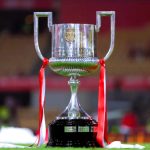
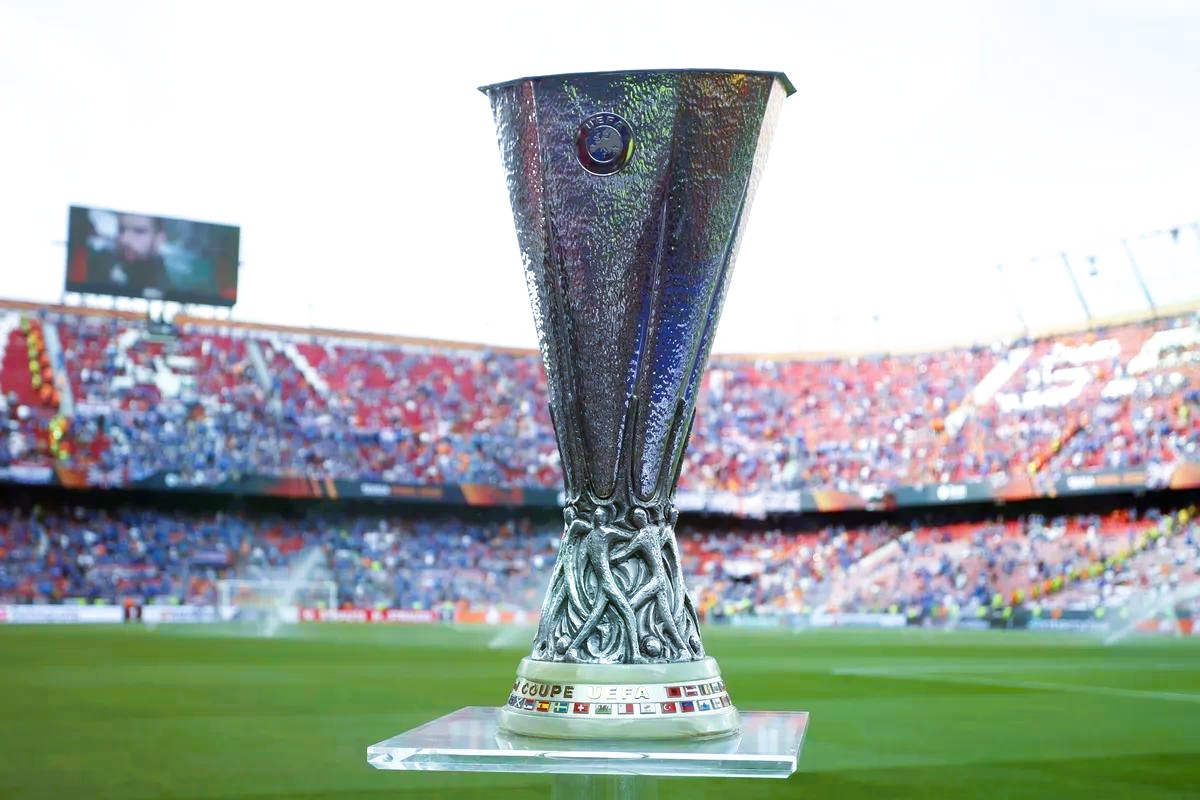
The UEFA Europa League trophy is one of the most distinctive in club football — visually quite different from the Champions League’s ornate urn. The current trophy was commissioned in 2009 when the competition was rebranded, replacing the original UEFA Cup trophy which had been used since 1972.
The trophy is approximately 65 centimetres tall and weighs around 15 kilograms. It is made from silver-plated metal and features a circular base that widens as it rises through the column, before curving open at the top. The design is meant to evoke a sense of dynamism and movement — a break from the more traditional urn shapes used elsewhere in football’s trophy cabinet.
The original UEFA Cup trophy, used between 1972 and 2009, was markedly different — a tall, narrow design with handles on either side, more similar in silhouette to the Champions League trophy than the current Europa League design. Several clubs — Tottenham Hotspur among them — kept winning it across different eras and are thus familiar with both versions of the silverware.
Winning clubs receive a full-size replica of the trophy to keep, as the UEFA Europa League requires UEFA to retain the original for the next season’s presentation. This practice is common across UEFA’s competitions and means clubs are not displaying the actual trophy but an identical replica during their victory parades and celebrations.
The trophy is manufactured by specialist silversmiths under contract to UEFA. It is one of the most photographed pieces of silverware in European sport and has become an iconic image, instantly recognisable on broadcasts and in clubs’ trophy cabinets around the world.
UEFA Cup vs UEFA Europa League
| Feature | UEFA Cup (1972–2009) | UEFA Europa League (2009–present) |
| Full Name | UEFA Cup | UEFA Europa League |
| Years Active | 1971–72 to 2008–09 | 2009–10 to present |
| Editions Played | 38 | 17 (to 2025–26) |
| Final Format | Two legs (1972–97), then single match | Single match at neutral venue |
| Teams in Competition | Varied; large field from early rounds | 36 in league phase (from 2024–25) |
| Champions League Pathway | No | Yes — winner enters UCL the following season |
| Predecessor | Inter-Cities Fairs Cup | UEFA Cup |
| Trophy | Tall urn with handles | Wide-based circular design |
| Intertoto Integration | No | Yes (2009–10 transition) |
| Prize Money | Limited | Significantly higher; grows annually |
| Group Stage | No | Yes (now league phase format) |
| Broadcast Reach | Limited in early years | Global broadcast deal with dedicated anthem and branding |
Europa League Records
Most Titles
| Club | Titles |
| Sevilla | 7 |
| Inter Milan | 3 |
| Tottenham Hotspur | 3 |
| Liverpool | 3 |
| Juventus | 3 |
| Atlético Madrid | 3 |
Most Finals Reached
| Club | Finals | W | L |
| Sevilla | 7 | 7 | 0 |
| Inter Milan | 5 | 3 | 2 |
| Juventus | 4 | 3 | 1 |
| Tottenham Hotspur | 4 | 3 | 1 |
| Liverpool | 4 | 3 | 1 |
| Manchester United | 3 | 1 | 2 |
| Benfica | 3 | 0 | 3 |
| Marseille | 3 | 0 | 3 |
Most Consecutive Titles
Sevilla holds the record with three consecutive Europa League titles in 2014, 2015, and 2016, an achievement no club has come close to matching.
Real Madrid were the first back-to-back winners in 1985 and 1986.
Most Successful Manager
Unai Emery is the most decorated manager in Europa League history with five titles, three with Sevilla (2014, 2015, 2016), one with Villarreal (2021), and one with Aston Villa (2026). No other manager has won it more than once.
Penalty Shootout Finals
| Year | Winner | Loser | Score |
| 1984 | Tottenham Hotspur | Anderlecht | 4–3 pens |
| 1988 | Bayer Leverkusen | Espanyol | 3–2 pens |
| 1997 | Schalke 04 | Inter Milan | 4–1 pens |
| 2000 | Galatasaray | Arsenal | 4–1 pens |
| 2007 | Sevilla | Espanyol | 3–1 pens |
| 2014 | Sevilla | Benfica | 4–2 pens |
| 2021 | Villarreal | Manchester United | 11–10 pens |
| 2022 | Eintracht Frankfurt | Rangers | 5–4 pens |
| 2023 | Sevilla | Roma | 4–1 pens |
Biggest Final Victory
Real Madrid’s 5–1 victory over 1. FC Köln in the first leg of the 1986 final (7–3 aggregate) and Chelsea’s 4–1 single-match win over Arsenal in 2019 stand among the most lopsided finals in the competition’s history.
UEFA Europa League Trophy
Unlike the UEFA Champions League trophy, the Europa League trophy has no handles. Standing approximately 65 cm (25.6 inches) tall and weighing around 15 kilograms (33 pounds), it is the heaviest UEFA club competition trophy.
Designed by the Bertoni workshop in Milan, the silver trophy features a striking hexagonal base with footballers appearing to hold the cup aloft, symbolising teamwork and determination.
One of the competition’s unique traditions is that the original trophy always remains the property of UEFA.
The winning club receives the trophy during the post-match ceremony before returning it to UEFA, while a full-size replica is later presented for permanent display.
Since the Europa League winner also qualifies automatically for the following season’s UEFA Champions League, lifting the trophy has become even more valuable in the modern era.
UEFA Cup vs UEFA Europa League
Although they are officially considered the same competition, the UEFA Cup and the UEFA Europa League differ in branding, format, and commercial identity. The competition retained its historical records following the 2009 rebrand.
| Category | UEFA Cup | UEFA Europa League |
| Years | 1971–72 to 2008–09 | 2009–10 to Present |
| Name | UEFA Cup | UEFA Europa League |
| Final Format | Two legs until 1997, single final afterward | Single-match final |
| Group Stage | Introduced in 2004 | Expanded league/group formats |
| Champions League Qualification | No | Yes (since 2015) |
| Current Format | Knockout competition | League Phase + Knockout Stage |
UEFA Europa League Records
- Most titles: Sevilla – 7
- Most consecutive titles: Sevilla – 3 (2014–2016)
- Most finals: Sevilla – 7
- Most successful manager: Unai Emery – 4 titles
- First champions: Tottenham Hotspur (1972)
- Latest champions: Aston Villa (2026)
- Most successful country: Spain (14 titles)
- First single-match final: 1998 (Inter Milan vs Lazio)
- First Europa League champions: Atlético Madrid (2010)
- Only Swedish winners: IFK Göteborg
Interesting Facts About UEFA Europa League Winners
- Tottenham Hotspur won the inaugural UEFA Cup in 1972.
- Sevilla have never lost a Europa League final.
- The competition was known as the UEFA Cup until 2009.
- Real Madrid became the first club to successfully defend the UEFA Cup.
- Liverpool’s 2001 victory came via a golden-goal own goal.
- Galatasaray became the first Turkish club to win a major European trophy in 2000.
- CSKA Moscow became the first Russian club to lift the trophy in 2005.
- Shakhtar Donetsk won the final UEFA Cup before the competition was renamed.
- Atalanta ended Bayer Leverkusen’s unbeaten season in the 2024 final.
- Unai Emery is the competition’s most successful manager with four titles.
- Spain has produced more winners than any other nation.
- Since 2015, the winner automatically qualifies for the UEFA Champions League.
- Sevilla won three consecutive Europa League titles between 2014 and 2016.
- The trophy is the heaviest of UEFA’s major club competitions.
- More than 30 different clubs have won the competition.
Frequently Asked Questions (FAQs)
Who has won the UEFA Europa League the most?
Sevilla are the most successful club in the history of the competition with seven titles, all won between 2006 and 2023.
Who won the first UEFA Cup?
Tottenham Hotspur won the inaugural UEFA Cup in 1972 after defeating Wolverhampton Wanderers over two legs.
When did the UEFA Cup become the Europa League?
The competition was renamed the UEFA Europa League before the start of the 2009–10 season as part of UEFA’s commercial and structural overhaul.
Does the Europa League winner qualify for the Champions League?
Yes. Since the 2014–15 season, the Europa League champions have automatically qualified for the following season’s UEFA Champions League.
Which country has won the most Europa League titles?
Spain is the most successful nation in the competition’s history with 14 titles, led by Sevilla’s record seven championships.
Conclusion
From Tottenham Hotspur lifting the inaugural UEFA Cup in 1972 to Aston Villa’s memorable triumph in 2026, the UEFA Europa League has produced more than five decades of unforgettable European nights.
While it may sit below the UEFA Champions League in the continental hierarchy, its history is filled with iconic clubs, legendary players, dramatic finals, and remarkable underdog stories.
Sevilla’s unprecedented seven-title haul has set the benchmark for excellence, but the competition’s rich roll of honour also reflects the strength and diversity of European football.
With clubs from across the continent continuing to compete for silverware and a place in the UEFA Champions League, the Europa League remains one of the most prestigious and entertaining tournaments in world football.
Related: Explore our complete guides to the UEFA Champions League Winners List, the UEFA Conference League Winners List, the Ballon d’Or Winners List, and the La Liga Winners List, and league champions from England, Spain, Italy, Germany, and beyond.