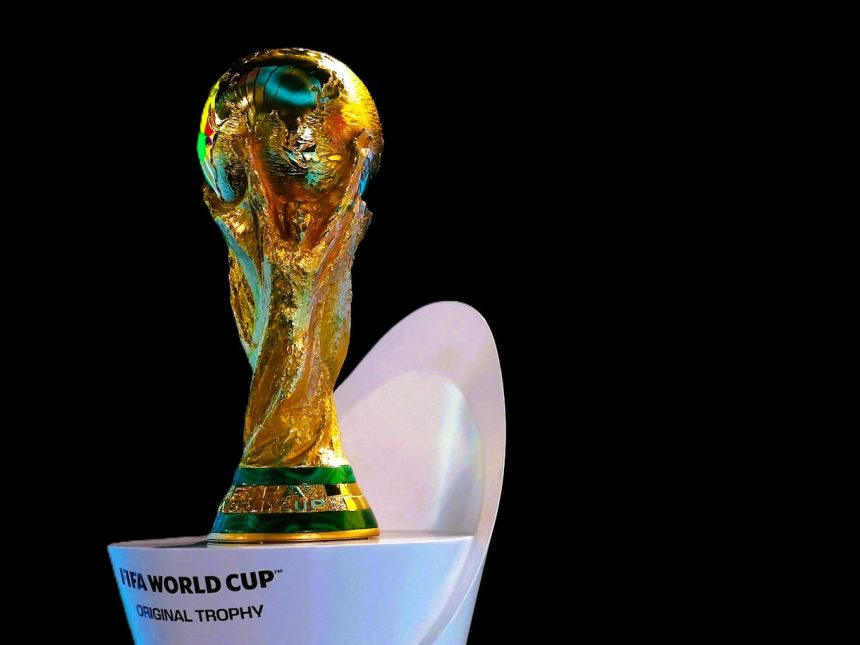






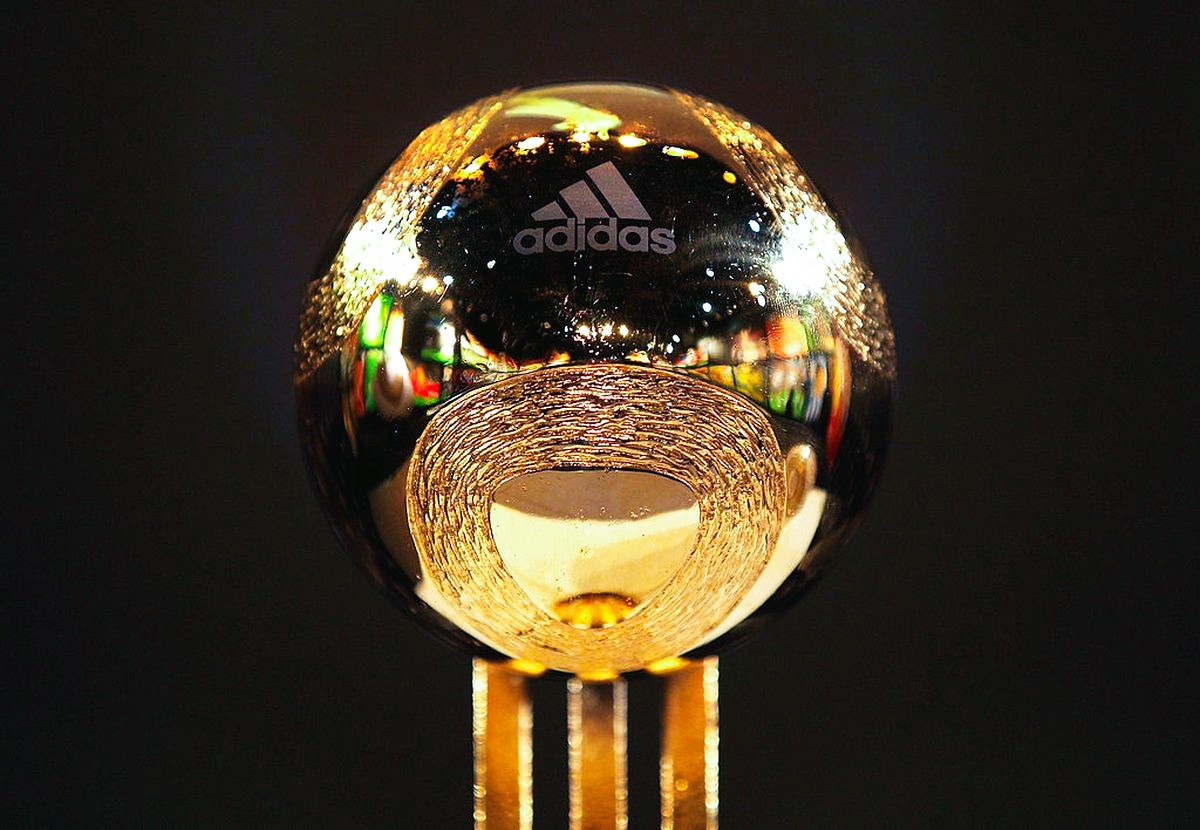

Football’s greatest individual honour at the sport’s grandest stage — the FIFA World Cup Golden Ball is awarded to the best player of the entire tournament. It does not care whether your team lifts the trophy.
What it measures is brilliance: leadership under pressure, match-defining moments, and the ability to elevate an entire nation for four unforgettable weeks every four years.
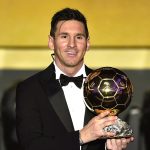
The most recent winner is Lionel Messi (Argentina, 2022) — the only player in history to claim the Golden Ball twice.
He scored seven goals, registered three assists, delivered a record five Man of the Match performances, and became the first player ever to score in the group stage, round of 16, quarter-final, semi-final, and final of a single World Cup.
Who was the best player in every World Cup since 1930? Read on for the complete answer.
What Is the FIFA World Cup Golden Ball?
The FIFA World Cup Golden Ball is the tournament’s highest individual honour — presented to the single player judged to have performed at the greatest overall level across the competition.
Unlike the Golden Boot (top scorer) or the Golden Glove (best goalkeeper), the Golden Ball considers the full picture: creativity, leadership, impact in knockout rounds, and the ability to decide matches when stakes are highest.
The award recognizes not just what a player scored, but what they made possible — the passes, the pressure-lifting moments, the clutch performances that a team cannot win without.

Award history and introduction
FIFA officially introduced the Golden Ball at the 1982 World Cup in Spain, sponsored by Adidas and France Football.
However, recognising that every tournament deserved a best-player designation, FIFA and football historians retrospectively assigned the award back to 1930 using verified expert selections.
The retroactive picks for 1930–1978 draw primarily from football historian Ejikeme Ikwunze’s authoritative book World Cup (1930–2010): A Statistical Summary, which is part of FIFA’s official library.
For the 1966 tournament, France Football selected Bobby Charlton at the time with L’Equipe. The 1978 award was settled by a group of journalists and experts — a process FIFA officially recognises.
This means the Golden Ball now spans the full 92-year history of the World Cup, from Uruguay 1930 to Qatar 2022.
How is the winner selected?
Since the official era began in 1982, the selection follows a two-step process.
First, the FIFA Technical Study Group watches every match and compiles a shortlist of the tournament’s standout performers.
Then, accredited international media representatives vote on that shortlist, weighing technical skill, leadership, consistency, and impact in knockout matches.
Goals are important but not the sole criterion — which is why a goalkeeper (Oliver Kahn, 2002) and losing-side players have won the award.
The vote produces three winners: the Golden Ball (first place), the Silver Ball (second place), and the Bronze Ball (third place).
At Qatar 2022, Messi took gold, Kylian Mbappé received the Silver Ball, and Luka Modrić was awarded the Bronze Ball.
FIFA World Cup Golden Ball Winners List (1930–2022)
| Year | Host Country | Golden Ball Winner | National Team | Result |
| 1930 | 🇺🇾 Uruguay | José Nasazzi | 🇺🇾 Uruguay | Champions |
| 1934 | 🇮🇹 Italy | Giuseppe Meazza | 🇮🇹 Italy | Champions |
| 1938 | 🇫🇷 France | Leônidas | 🇧🇷 Brazil | 3rd Place |
| 1950 | 🇧🇷 Brazil | Zizinho | 🇧🇷 Brazil | Runners-up |
| 1954 | 🇨🇭 Switzerland | Ferenc Puskás | 🇭🇺 Hungary | Runners-up |
| 1958 | 🇸🇪 Sweden | Pelé | 🇧🇷 Brazil | Champions |
| 1962 | 🇨🇱 Chile | Garrincha | 🇧🇷 Brazil | Champions |
| 1966 | 🏴 England | Bobby Charlton | 🏴 England | Champions |
| 1970 | 🇲🇽 Mexico | Pelé | 🇧🇷 Brazil | Champions |
| 1974 | 🇩🇪 West Germany | Johan Cruyff | 🇳🇱 Netherlands | Runners-up |
| 1978 | 🇦🇷 Argentina | Mario Kempes | 🇦🇷 Argentina | Champions |
| 1982 | 🇪🇸 Spain | Paolo Rossi | 🇮🇹 Italy | Champions |
| 1986 | 🇲🇽 Mexico | Diego Maradona | 🇦🇷 Argentina | Champions |
| 1990 | 🇮🇹 Italy | Salvatore Schillaci | 🇮🇹 Italy | 3rd Place |
| 1994 | 🇺🇸 USA | Romário | 🇧🇷 Brazil | Champions |
| 1998 | 🇫🇷 France | Ronaldo Nazário | 🇧🇷 Brazil | Runners-up |
| 2002 | 🇰🇷🇯🇵 S.Korea/Japan | Oliver Kahn | 🇩🇪 Germany | Runners-up |
| 2006 | 🇩🇪 Germany | Zinedine Zidane | 🇫🇷 France | Runners-up |
| 2010 | 🇿🇦 South Africa | Diego Forlán | 🇺🇾 Uruguay | 4th Place |
| 2014 | 🇧🇷 Brazil | Lionel Messi | 🇦🇷 Argentina | Runners-up |
| 2018 | 🇷🇺 Russia | Luka Modrić | 🇭🇷 Croatia | Runners-up |
| 2022 | 🇶🇦 Qatar | Lionel Messi ★★ | 🇦🇷 Argentina | Champions |
Golden Ball Winners by Year — Player Spotlights
Eight performances stand above all others in Golden Ball history — from Maradona’s impossible 1986 campaign to Messi’s transcendent 2022 final chapter.
Qatar, 2022: Lionel Messi
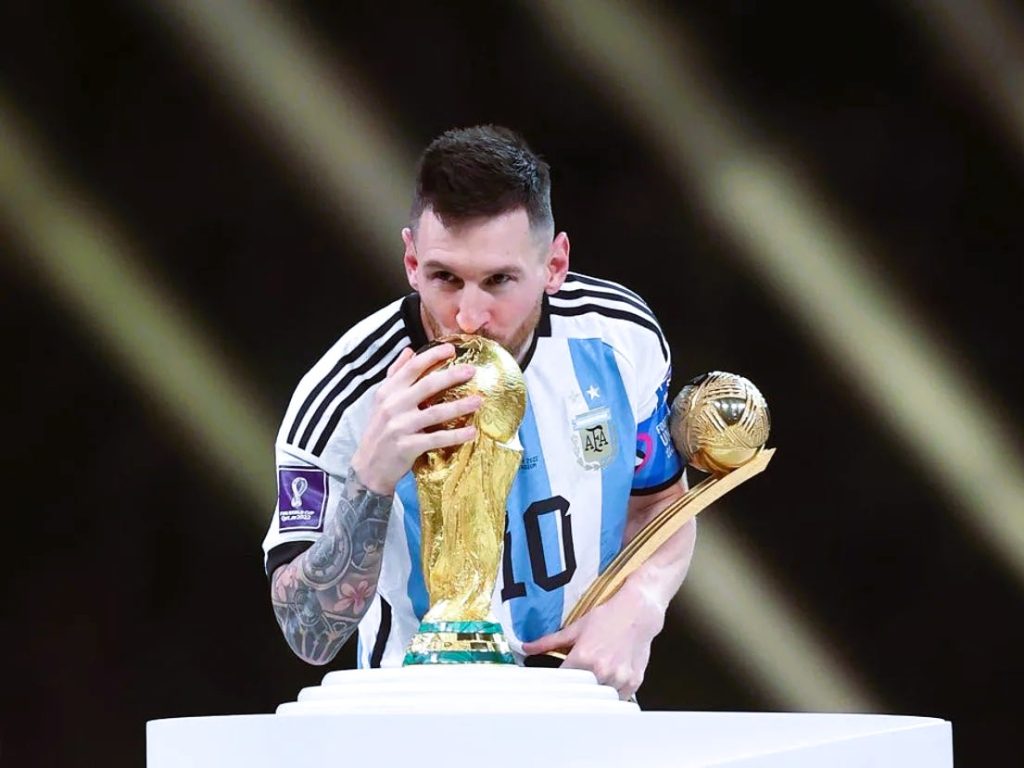
In what many consider the greatest individual World Cup performance in history, Messi won the tournament he had spent his career chasing.
He scored 7 goals, contributed 3 assists, converted the winning penalty in a shootout against France, and captained Argentina to their third world title.
His second Golden Ball — and arguably the most deserved in the award’s history — sealed his status as football’s greatest player.
Russia, 2018: Luka Modrić
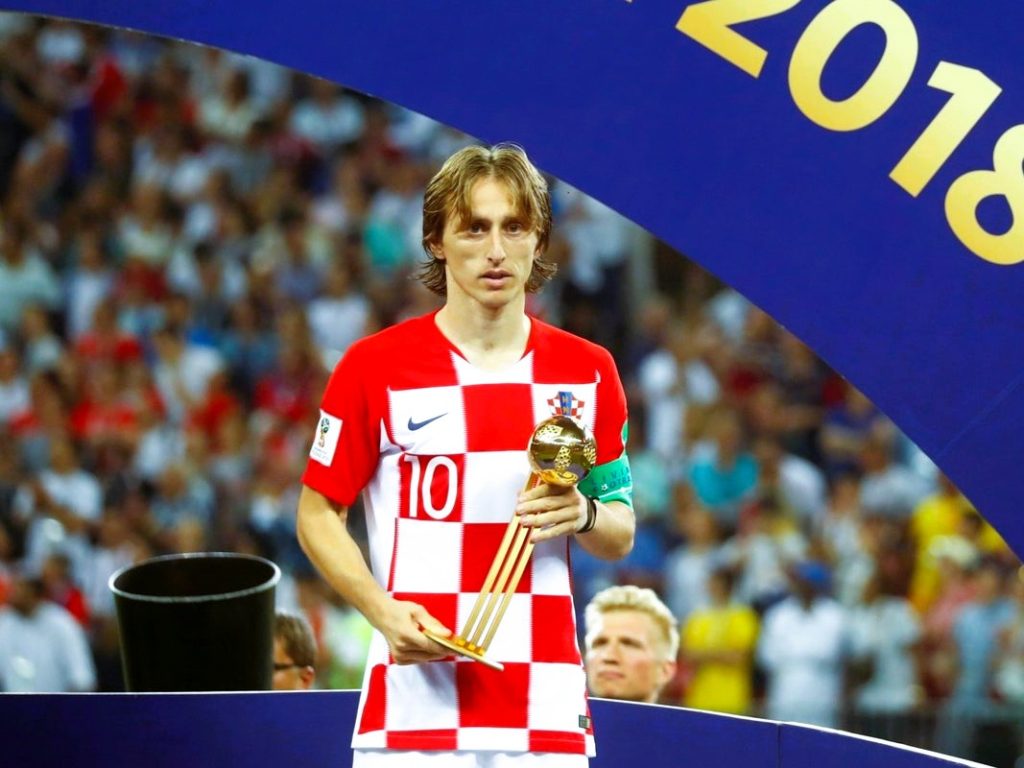
The Luka Modrić Golden Ball 2018 was historic on multiple levels.
The Real Madrid midfield maestro became the first player from Croatia to win the award and ended the decade-long duopoly of Messi and Ronaldo in world football’s individual honors.
Modrić orchestrated Croatia’s stunning run to the final with imperious displays of vision, passing range, and defensive work rate, earning universal praise from coaches and critics alike.
Brazil, 2014: Lionel Messi
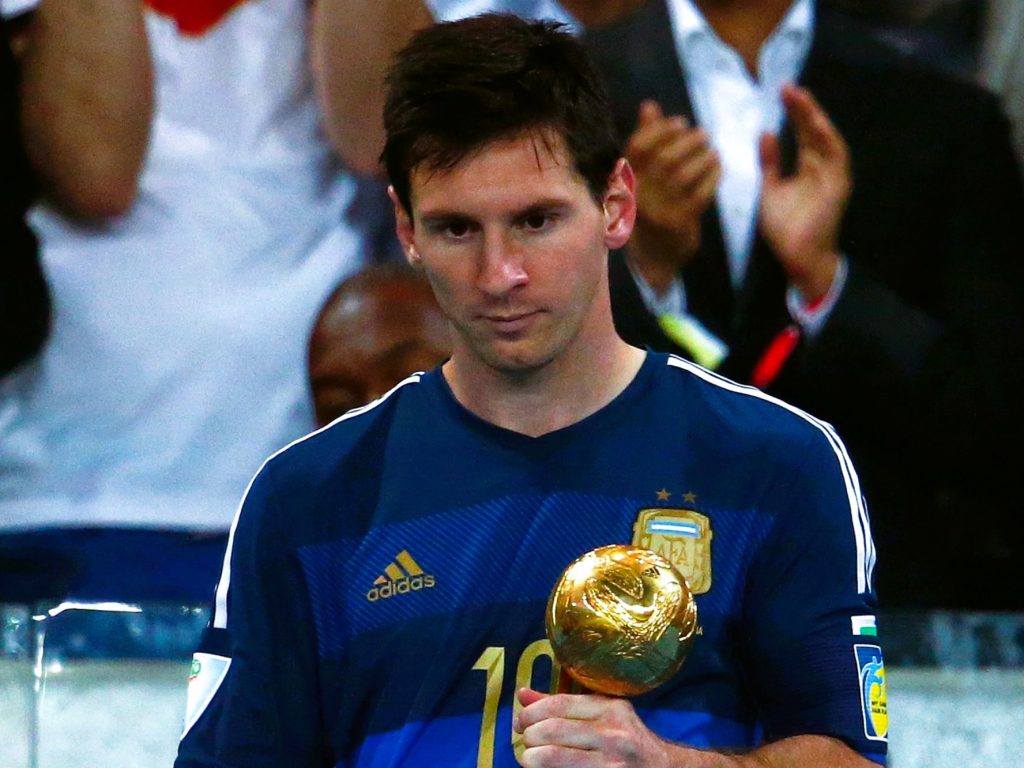
Messi’s first Golden Ball sparked significant debate — Argentina fell to Germany in the final, and some felt Thomas Müller or Manuel Neuer were more deserving.
Yet Messi’s four goals and constant creative menace had carried Argentina through difficult knockout ties.
The award recognized his consistent brilliance even as his team ultimately fell short of glory.
South Africa, 2010: Diego Forlán
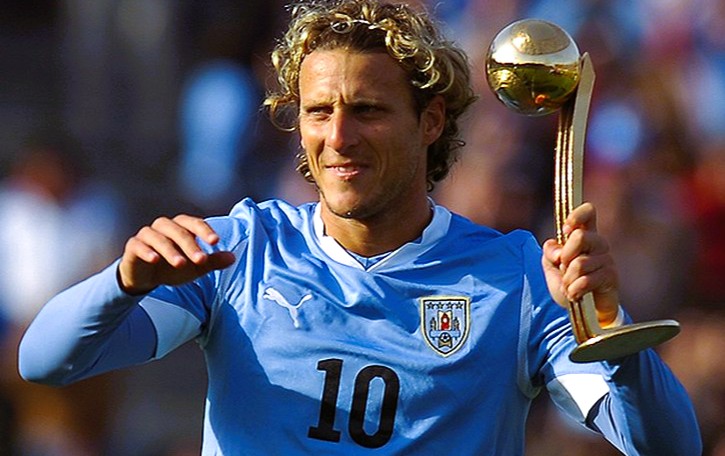
Uruguay’s veteran striker became an unlikely hero at 31, delivering the tournament’s most explosive individual displays outside the finalists.
Forlán’s long-range strikes, relentless pressing, and leadership qualities guided Uruguay to a stunning fourth-place finish.
His winner against Ghana in the quarters and stunning volleyed efforts made him one of the most exciting players in South Africa.
Germany, 2006: Zinedine Zidane
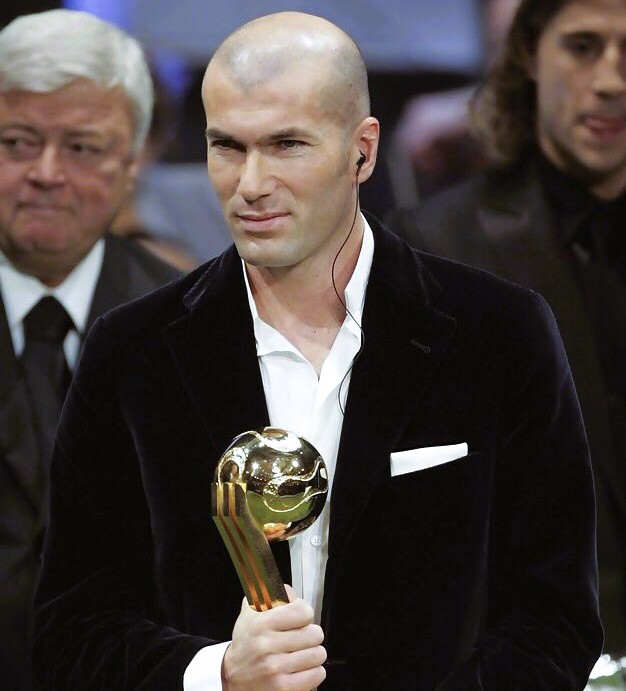
The Zinedine Zidane Golden Ball 2006 was both celebrated and complicated. Zidane ended his legendary career with a tournament of extraordinary elegance — five goals including a sublime Panenka penalty in the final — before his infamous headbutt on Marco Materazzi led to a red card in extra time.
Despite that dramatic ending, his overall contribution to France’s run was undeniable, and the award honored the totality of his tournament genius.
Korea/Japan 2002: Oliver Kahn
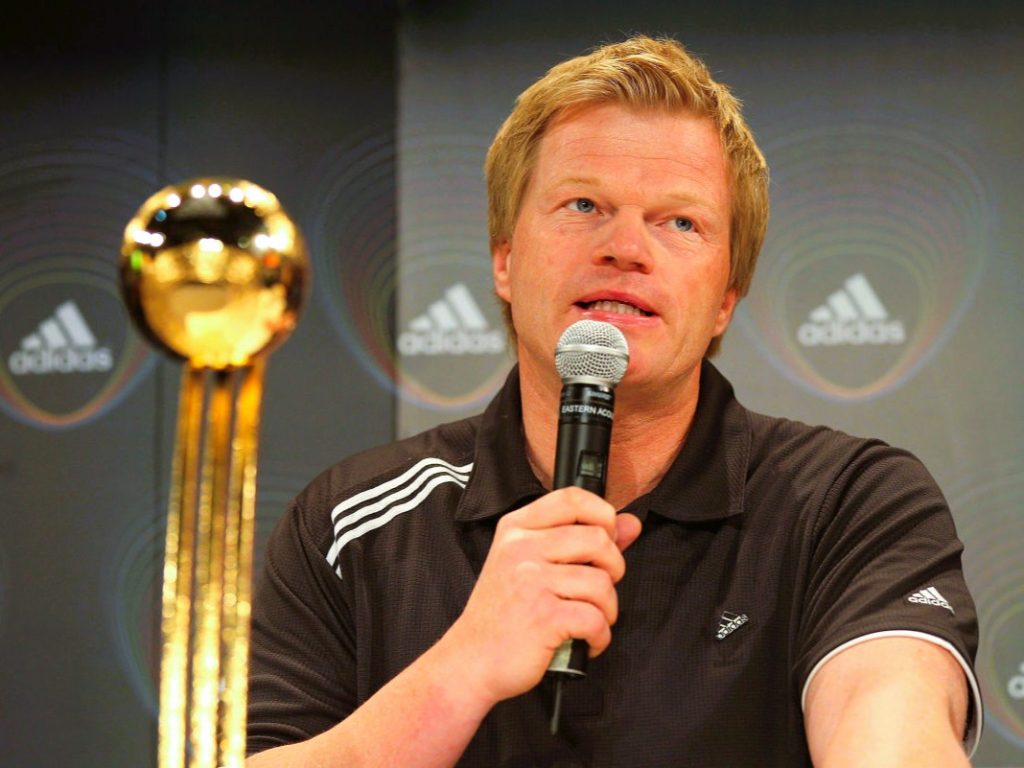
The only goalkeeper in World Cup history to win the Golden Ball. Kahn’s heroics kept a workmanlike German side alive through tournament after tournament, making crucial saves in virtually every knockout round.
His error in the final against Brazil did not diminish a remarkable campaign that forced a complete rethink of how the award judges impact.
France 1998: Ronaldo Nazário
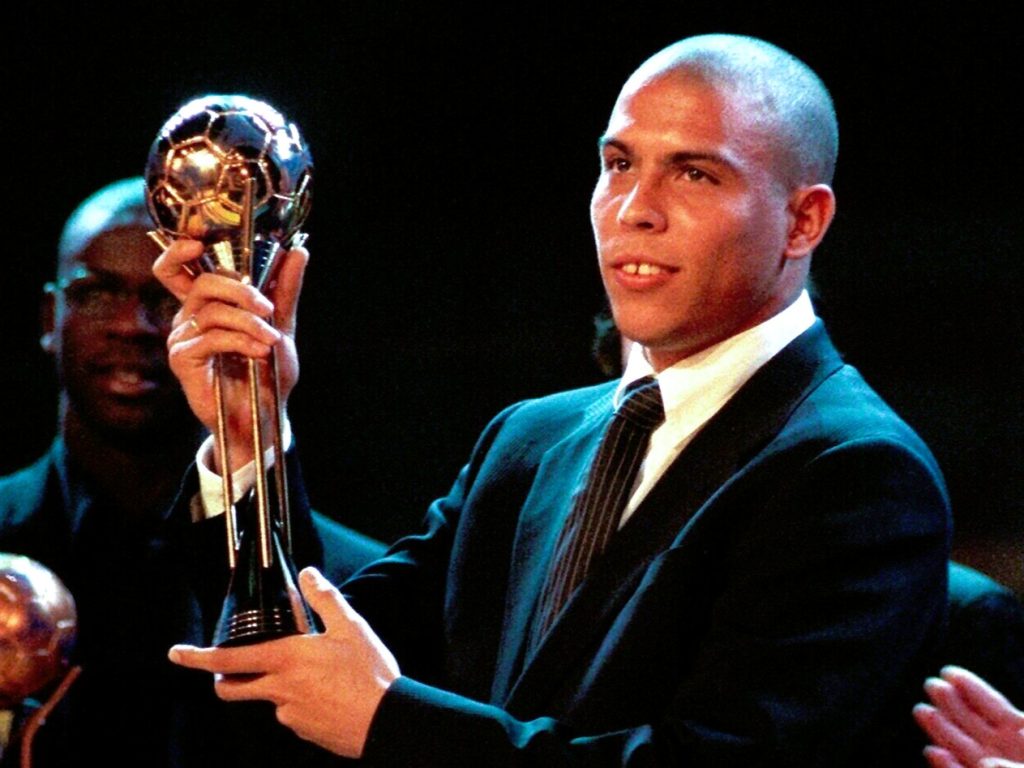
The Ronaldo Nazário Golden Ball 1998 will forever be shadowed by one of football’s great mysteries.
The Brazilian phenomenon scored 4 goals and was overwhelmingly the tournament’s most dangerous attacker — until the final, when a mysterious seizure left him visibly distressed and Brazil were beaten by France.
Despite the controversy surrounding his final appearance, his earlier dominance made him the clear best player. He would have his revenge in 2002.
USA, 1994: Romário
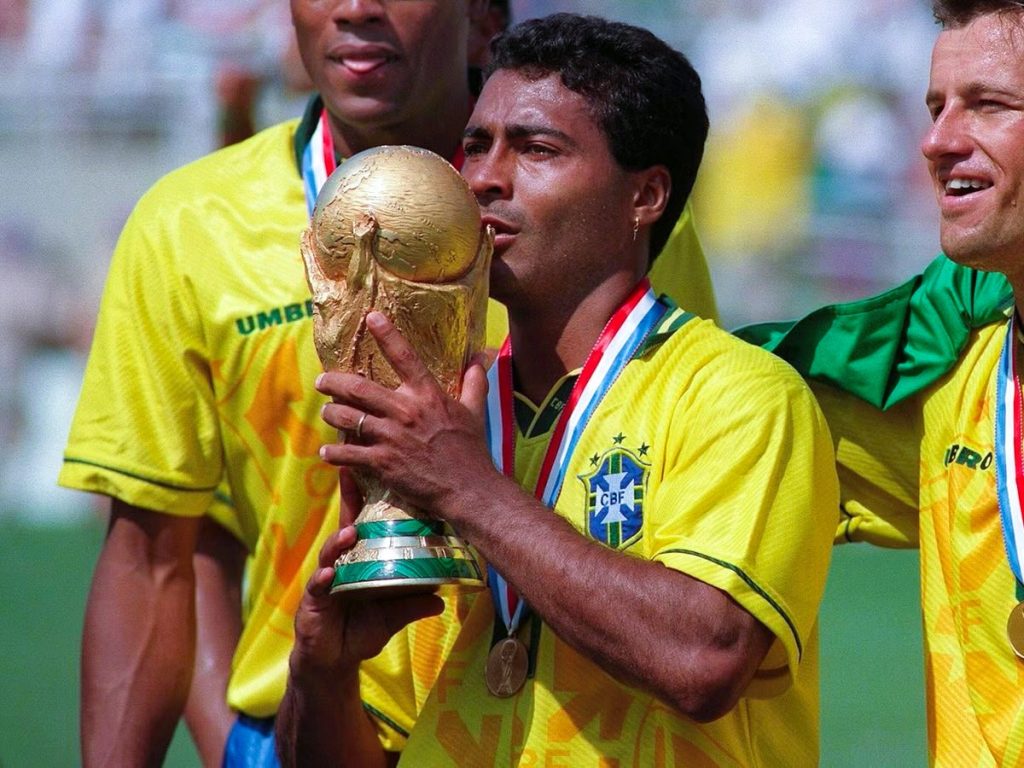
The diminutive Brazilian striker was the heartbeat of Brazil’s fourth world title. Romário’s five goals and six assists were statistical proof of his impact, but statistics alone couldn’t capture the way he danced past defenders with predatory instinct.
His partnership with Bebeto — celebrated with their iconic baby-rocking goal celebration — remains one of the tournament’s greatest attacking duos.
Italy, 1990: Salvatore Schillaci
Italia ’90 belonged to “Toto” Schillaci, who came from nowhere to become the tournament’s most compelling story.
The Juventus striker claimed the Golden Boot with six goals — each accompanied by the image of his wide, disbelieving eyes — and the Golden Ball in a tournament remembered for low scoring and tactical caution.
Schillaci’s eruption of attacking form lit up an otherwise dour World Cup.
Mexico 1986: Diego Maradona
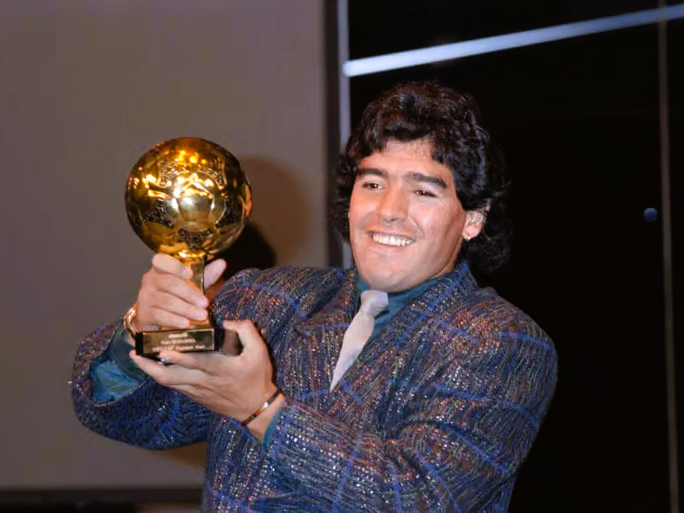
The Diego Maradona Golden Ball 1986 is the gold standard — the single greatest individual World Cup tournament ever contested.
Maradona scored five goals and created five more, effectively winning Argentina the title on his own.
His two goals against England in the quarter-final remain the most debated and celebrated in football history: the audacious “Hand of God” followed 180 seconds later by the Goal of the Century, a 60-metre solo run past five defenders.
Mexico 1986 was Maradona’s World Cup.
Spain 1982: Paolo Rossi
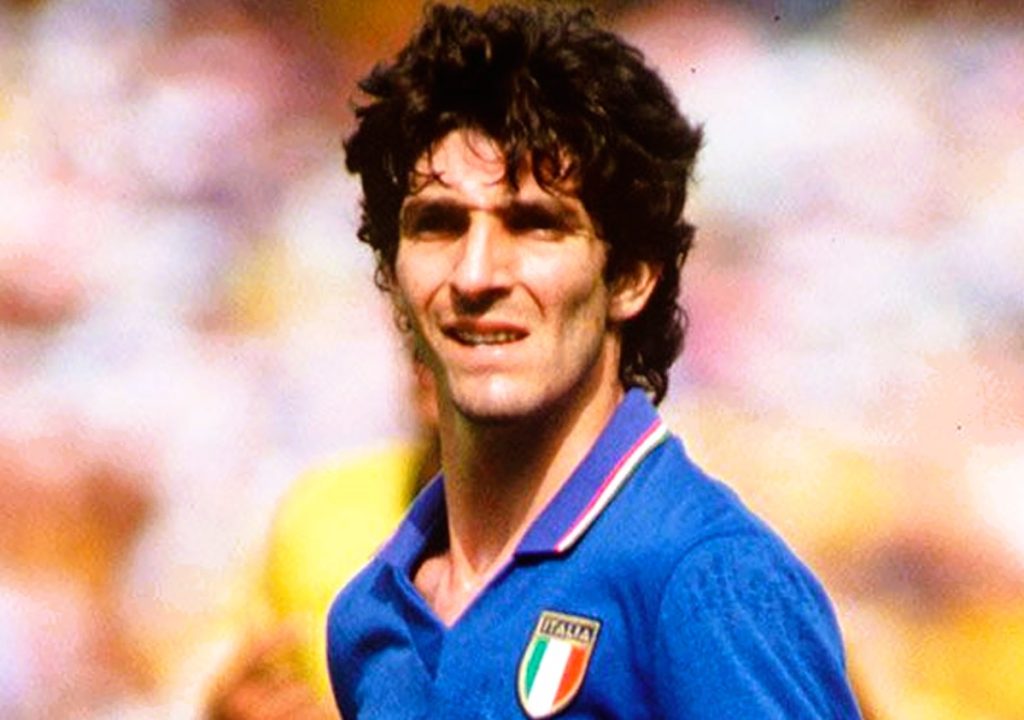
One of football’s most extraordinary comeback stories. Rossi had returned from a two-year match-fixing ban just weeks before the tournament and appeared washed out after a goalless group stage.
Then came the second round against Brazil — Rossi scored a hat-trick, essentially eliminating one of history’s greatest club sides.
He added two more against Poland and one in the final against West Germany. Six goals in three knockout games won him the Golden Ball and the Golden Boot simultaneously.
Argentina 1978: Mario Kempes
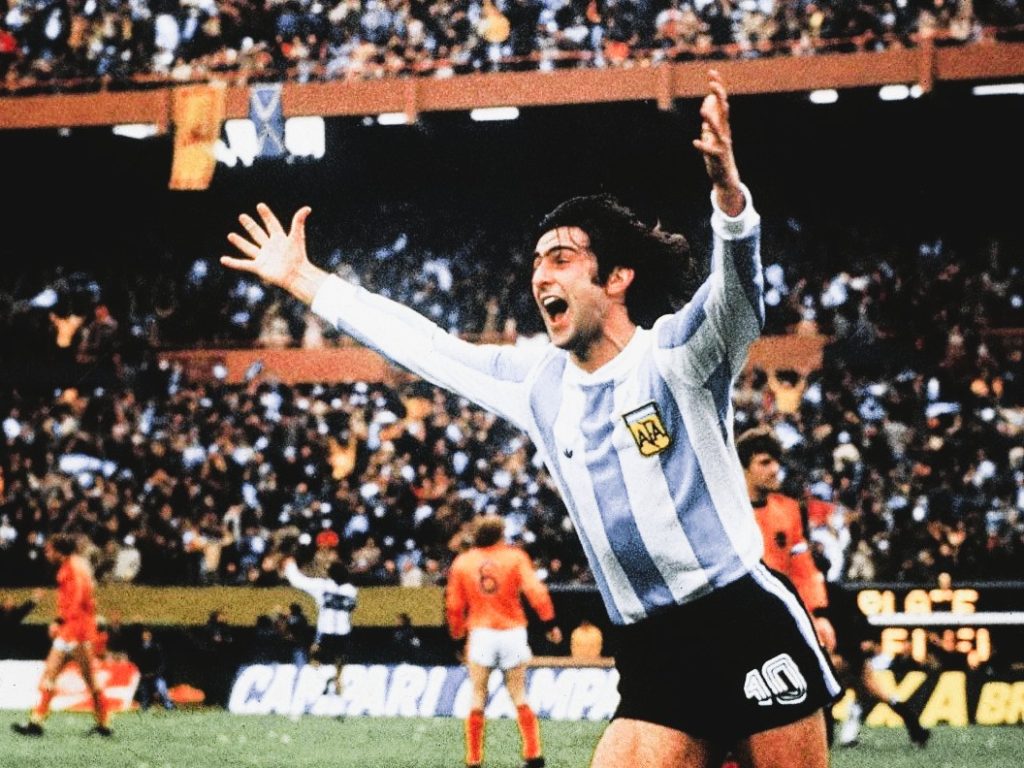
The first formally awarded Golden Ball went to Argentina’s tournament top scorer. Kempes was electric throughout the competition — powerful, technically gifted, and ice-cold under pressure.
His two goals in the final against the Netherlands, including a breathtaking run and finish in extra time, secured the trophy.
Argentina played in front of a famously passionate home crowd amid political controversy, and Kempes was their undoubted icon.
Golden Ball Winners vs World Cup Champions
One of football’s most compelling tensions: the Golden Ball does not require a championship.
Of the 11 official awards since 1982, six went to players from non-champion teams — Modrić (2018), Messi (2014), Forlán (2010), Zidane (2006), Kahn (2002), and Ronaldo (1998) all won from teams that did not lift the trophy.
The award celebrates what sport at its best can offer: individual brilliance that transcends the collective result.
A player can lead a lesser team to within touching distance of glory, and that journey — the goals against the odds, the performances when it matters most — can earn more recognition than a comfortable champion’s victory march.
Players who won the Golden Ball AND the World Cup in the same tournament: Nasazzi (1930), Meazza (1934), Pelé (1958 & 1970), Garrincha (1962), Kempes (1978), Rossi (1982), Maradona (1986), Romário (1994), and Messi (2022).
Most Iconic Golden Ball Performances
1. Lionel Messi, Qatar 2022 — The Crowning Achievement
For a player who had spent 15 years being measured against Diego Maradona, winning the 2022 World Cup was an act of sporting completion.
Messi’s 2022 Golden Ball performance was perhaps the most complete we have ever witnessed from a single player: 7 goals across 7 matches, 3 assists, a converted shootout penalty against France, and the leadership that held Argentina together through the most dramatic final in the tournament’s 92-year history.
The 3-3 draw with France — followed by a shootout — will be replayed on screens for generations.
2. Diego Maradona, Mexico 1986 — The One-Man Army
The Diego Maradona Golden Ball 1986 remains the single most dominant individual tournament in World Cup history. Five goals, five assists, an average match rating that no analyst has surpassed across six decades of data.
Argentina were not a great team — they were a good one, elevated to champions by a footballer operating at levels beyond ordinary human comprehension.
The quarter-final against England — with its dual headlines of divine intervention and earthly genius — gave football two of its defining moments within four minutes.
3. Zinedine Zidane, Germany 2006 — Swan Song with a Shadow
The Zinedine Zidane Golden Ball 2006 encapsulates everything complex and beautiful about football’s human drama.
Zidane came out of international retirement for this tournament and proceeded to deliver a masterclass in orchestral football — drifting through games with languid grace, finding passes others couldn’t see, and scoring one of the most audacious penalties ever taken in a World Cup final.
Then came the headbutt. His dismissal with 10 minutes of extra time remaining was the final act of a career that had contained multitudes — elegance and aggression, composure and combustion, genius and fallibility.
4. Ronaldo Nazário, France 1998 — The Undimmed Brilliance
The story of the Ronaldo Nazário Golden Ball 1998 cannot be told without addressing the final, but it also cannot be reduced to it.
For six games before that night in Paris, Ronaldo was untouchable — the fastest, strongest, most technically accomplished centre-forward in world football, destroying defenses with an ease that seemed almost disrespectful.
The seizure that occurred hours before the final remains unexplained; what followed on the pitch was a shadow of the Ronaldo the world had seen.
He returned in 2002 and scored twice in the final to claim the title that 1998 denied him.
5. Luka Modrić, Russia 2018 — The Midfield Maestro
The Luka Modrić Golden Ball 2018 broke a pattern and made a statement. In a tournament era dominated by forwards, Modrić showed that midfield artistry could still command the ultimate recognition.
His engine, his passing range, his ability to dictate tempo and steal possession — these qualities drove Croatia through Denmark, Russia, and England on the way to a maiden World Cup final.
At 32, Modrić performed at a level that earned him the Ballon d’Or later that year, ending the Messi-Ronaldo decade in individual football’s ultimate award.
FIFA World Cup Golden Ball Winners by Country
Brazil leads all nations with the most Golden Ball recipients across World Cup history, reflecting decades of exceptional individual talent. Argentina is second, driven almost entirely by Maradona and Messi.
| Country | Players | Total |
| 🇧🇷 Brazil | Pelé ×2, Leônidas, Garrincha, Zizinho, Ronaldo Nazário, Romário | 7 |
| 🇦🇷 Argentina | José Nasazzi*, Mario Kempes, Diego Maradona, Lionel Messi ×2 | 4 |
| 🇮🇹 Italy | Giuseppe Meazza, Paolo Rossi, Salvatore Schillaci | 3 |
| 🇩🇪 Germany | Oliver Kahn | 1 |
| 🇫🇷 France | Zinedine Zidane | 1 |
| 🇺🇾 Uruguay | José Nasazzi, Diego Forlán, Zizinho* | 2 |
Golden Ball vs Golden Boot vs Golden Glove
Three individual awards, three very different criteria. Understanding the difference is essential for appreciating what each recognises — and why winning more than one in the same tournament is extraordinarily rare.
| Category | Golden Ball | Golden Boot | Golden Glove |
| Who | Best overall player | Top goal scorer | Best goalkeeper |
| Criteria | Full performance (overall impact) | Goals scored (+ assists, minutes as tiebreakers) | Goalkeeper performance |
| Voting | Media panel | Statistical (no voting) | Technical study group |
| Introduced | 1982 (official award) | 1982 (as Golden Shoe) | 1994 |
| GK Eligible? | Yes (e.g. Oliver Kahn) | No | Yes (only goalkeepers) |
| Winner Needs to Win WC? | No — can lose the final | No — can lose | No — can lose |
The only player to win the Golden Boot and Golden Ball in the same tournament is Gerd Müller (1970) — underlining how rare it is to combine volume scoring with overall best-player recognition.
Paolo Rossi (1982) and Salvatore Schillaci (1990) also won both, making three players in history to claim the double.
FIFA World Cup Golden Ball FAQs
Who won the Golden Ball in the 2022 FIFA World Cup?
Lionel Messi of Argentina won the Golden Ball at the 2022 FIFA World Cup in Qatar. He scored seven goals, registered three assists, claimed a record five Man of the Match awards, and became the first player in World Cup history to score in all four knockout rounds and the final of the same tournament. Argentina won the title on penalties against France after a 3-3 draw after extra time.
Who has won the most Golden Ball awards at the World Cup?
Lionel Messi is the only player in history to win the FIFA World Cup Golden Ball twice — in 2014 (runners-up with Argentina) and 2022 (champions). No other player has won the award more than once. Pelé won retrospective awards in both 1958 and 1970, depending on the historical source used, making him arguably the only other two-time recipient.
Can a player from a losing team win the Golden Ball?
Yes — and it happens regularly. Of the 11 official Golden Ball winners since 1982, six came from teams that did not win the World Cup: Ronaldo (1998, Brazil runners-up), Oliver Kahn (2002, Germany runners-up), Zinedine Zidane (2006, France runners-up), Diego Forlán (2010, Uruguay 4th place), Lionel Messi (2014, Argentina runners-up), and Luka Modrić (2018, Croatia runners-up). The award is explicitly about individual performance, not team result.
What is the difference between the Golden Ball and the Golden Boot?
The Golden Ball is awarded to the best overall player of the tournament, based on a vote by accredited media representatives who assess the full range of a player’s contributions — goals, assists, leadership, and impact in knockout matches.
The Golden Boot is a purely statistical award given to the top goal scorer of the tournament. If two players finish level on goals, tiebreakers apply: first assists, then minutes played.
Only three players have ever won both awards at the same World Cup: Gerd Müller (1970), Paolo Rossi (1982), and Salvatore Schillaci (1990).
When was the Golden Ball officially introduced?
The FIFA World Cup Golden Ball was officially introduced at the 1982 World Cup in Spain, sponsored by Adidas and France Football.
However, FIFA and football historians later retroactively assigned best-player recognition back to 1930, using historical expert selections and documented records.
The retroactive awards for 1930–1978 are based on sources including football historian Ejikeme Ikwunze’s book, France Football’s 1966 selection of Bobby Charlton, and other period-specific expert panels recognised by FIFA.
Is the Golden Ball the same as the Ballon d’Or?
No — they are entirely separate awards. The Golden Ball covers only the FIFA World Cup tournament (four to seven weeks every four years), judging performances across that single competition.
The Ballon d’Or is an annual award issued by France Football and covered by a large panel of international journalists, assessing a player’s full season across both club and international football.
They have different voters, different criteria, and are awarded at completely different times.
That said, a dominant World Cup performance almost always influences Ballon d’Or voting in the same year — as Messi’s 2022 Golden Ball directly contributed to his 2023 Ballon d’Or win.
Who Could Win the Golden Ball at World Cup 2026?
The 2026 FIFA World Cup, hosted jointly across the United States, Canada, and Mexico, will be the first ever to feature 48 nations and an expanded 104-match format.
The expanded field means more matches, more opportunities for individual brilliance to accumulate, and more potential upsets that could elevate unexpected stars to global prominence.
With Messi’s future at the international level uncertain following his 2022 triumph, the next World Cup Golden Ball race could be genuinely wide open.
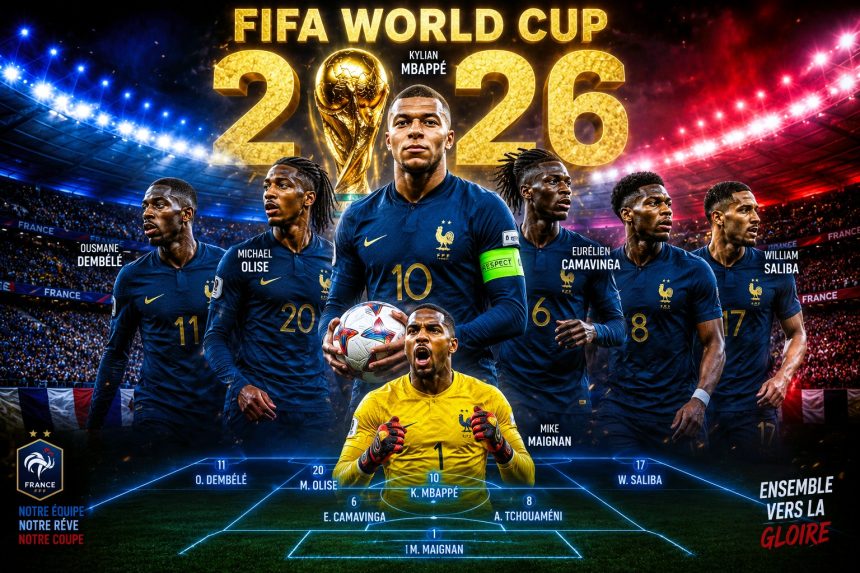
Mbappé is the clear favourite after his eight-goal Golden Boot at Qatar 2022.
If France can go one further and win the title, a Golden Ball to match his Golden Boot would complete one of football’s most anticipated individual stories.
Haaland, yet to appear at a senior World Cup after Norway’s failure to qualify for 2022, could be a generational force if the Norwegians finally break through in 2026.
Top Golden Ball candidates at World Cup 2026
- Lamine Yamal
- Kylian Mbappé
- Lionel Messi
- Bruno Fernandes
- Vinicius Jr
- Jude Bellingham
- Erling Haaland
- Pedri