



Winning one trophy as a football manager is hard. Winning fifty is close to impossible.
A single title can be luck, a good squad, or a soft draw. A trophy cabinet built across three decades cannot.
It requires tactical innovation that survives changing eras. It requires recruitment that keeps working season after season. It requires the ability to rebuild a winning team while it is still winning.
It requires leadership that keeps dressing rooms hungry long after the players have nothing left to prove.
This list ranks the most decorated managers in football history by official senior trophies.
It counts domestic league titles, domestic cups, domestic super cups where officially recognised, continental club competitions, the FIFA Club World Cup and Intercontinental Cup where officially recognised, and major senior international tournaments.
It excludes youth competitions, preseason tournaments, friendly cups, and unofficial exhibitions. Those do not count toward a manager’s official honours list, no matter how often they show up in casual trophy counts online.
Manager With Most Trophies in Football History
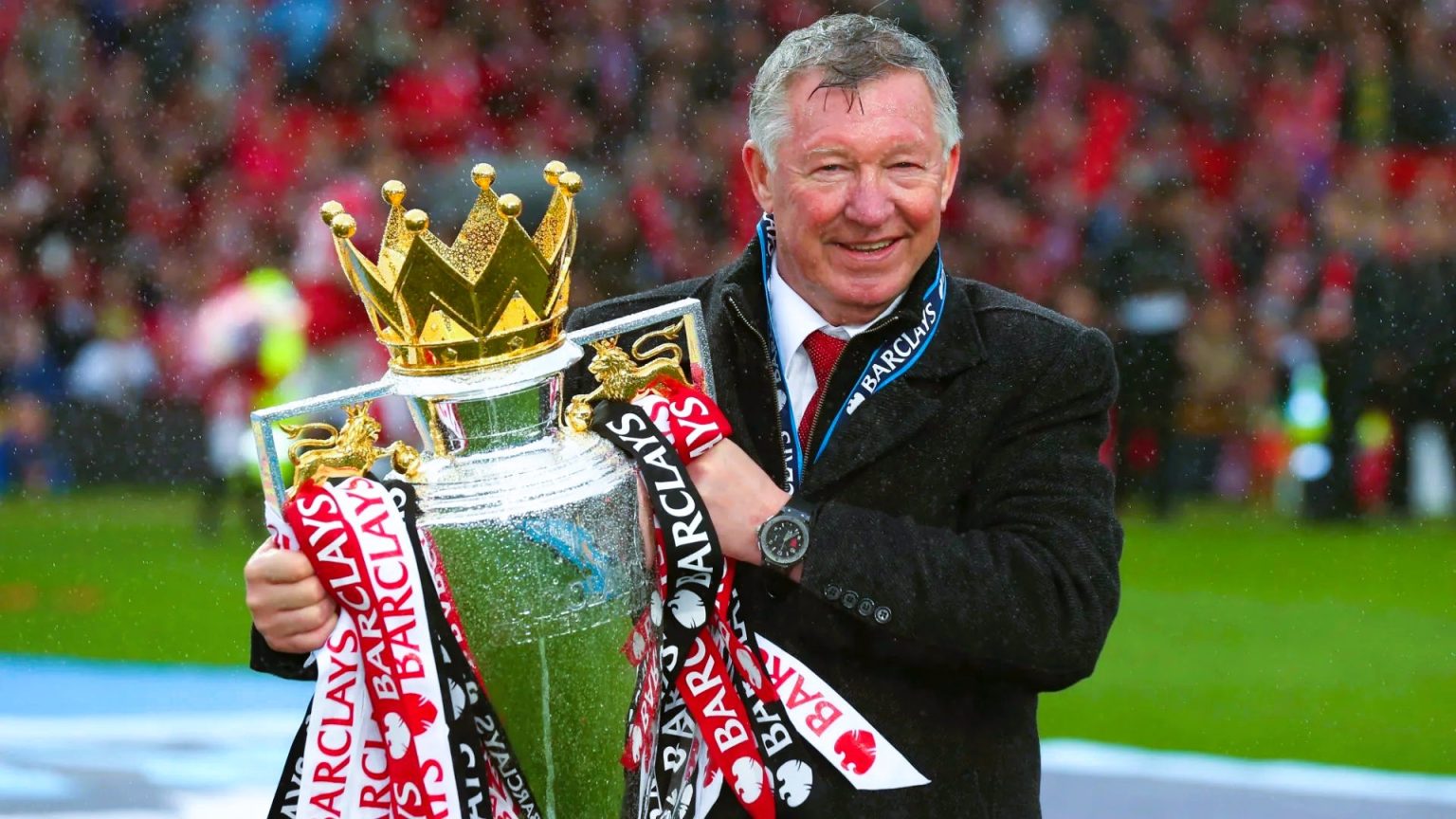
Sir Alex Ferguson is the manager with the most official trophies in football history, with 49 major honours won across St Mirren, Aberdeen, and Manchester United.

Pep Guardiola sits second with 41, split between Barcelona, Bayern Munich, and Manchester City. Mircea Lucescu, who passed away in April 2026, ranks third with 38 trophies across a five-decade career in Romania, Italy, Turkey, and Ukraine.
| Rank | Manager | Country | Official Trophies | Status |
| 1 | Sir Alex Ferguson | Scotland | 49 | Retired |
| 2 | Pep Guardiola | Spain | 41 | Between clubs (left Man City, May 2026) |
| 3 | Mircea Lucescu | Romania | 38 | Deceased (April 2026) |
| 4 | Valeriy Lobanovskyi | Ukraine | ~33 | Deceased |
| 5 | Carlo Ancelotti | Italy | ~31 | Active (Brazil national team) |
| 6 | Giovanni Trapattoni | Italy | ~24 | Retired |
| 7 | José Mourinho | Portugal | ~26 | Active (joining Real Madrid, July 2026) |
| 8 | Jock Stein | Scotland | ~25 | Deceased |
| 9 | Ernst Happel | Austria | ~20 | Deceased |
| 10 | Ottmar Hitzfeld | Germany | ~20 | Retired |
| 11 | Arsène Wenger | France | ~17 | Retired |
| 12 | Unai Emery | Spain | ~17 | Active (Aston Villa) |
| 13 | Luiz Felipe Scolari | Brazil | ~15 | Semi-retired |
| 14 | Marcelo Gallardo | Argentina | ~14 | Active |
| 15 | Massimiliano Allegri | Italy | ~14 | Active (AC Milan) |
| 16 | Diego Simeone | Argentina | ~10 | Active (Atlético Madrid) |
| 17 | Ramón Díaz | Argentina | ~10 | Active |
| 18 | Vicente del Bosque | Spain | ~9 | Retired |
| 19 | Thomas Tuchel | Germany | ~8 | Active (England national team) |
| 20 | Brian Clough | England | ~8 | Deceased |
Trophy totals for active or recently active managers (Guardiola, Mourinho, Ancelotti, Simeone) were current as of early July 2026.
Guardiola left Manchester City in May 2026 and is currently not managing a club. Mourinho is set to take over Real Madrid on 13 July 2026.
Mircea Lucescu passed away in April 2026. The 2026 FIFA World Cup is still in progress at the time of writing, so Ancelotti’s Brazil total does not yet include a possible World Cup win.
Please recheck these five names against your live sources on publish day, since they are the fastest-moving figures in the piece.
Methodology
This ranking counts domestic league titles, domestic cups, and domestic super cups where an official body recognises them.
It counts continental club trophies such as the UEFA Champions League, Europa League, Copa Libertadores, and their historical equivalents. It counts the FIFA Club World Cup and the old Intercontinental Cup.
It counts major senior international tournaments won as a head coach, including the World Cup, continental championships like the European Championship and Copa América, and the Confederations Cup while it existed.
Trophy totals vary between sources. Some outlets count assistant-manager credits, reserve-team honours, or lower-tier promotions as trophies.
Others exclude domestic super cups entirely. This is why you will see Ferguson credited with anywhere from 38 to 49 depending on the source, and why Guardiola’s total moved from 40 to 41 the moment he added the 2026 FA Cup.
Where a total is genuinely contested, this article flags it rather than presenting a false precision.
Explore more football records and rankings on FutbolUpdate, including our breakdowns of the most hat-tricks in football history, Richest Footballers in the World, and the Most Free-Kick Goals in Football History.
Top 20 Most Decorated Managers in Football History
1. Sir Alex Ferguson
- Nationality: Scotland
- Clubs managed: East Stirlingshire, St Mirren, Aberdeen, Manchester United
- Status: Retired
- Total official trophies: 49
Ferguson is the standard every other name on this list gets measured against.
His career started small. He guided St Mirren from Scotland’s second tier into the top flight. He then took charge of Aberdeen in 1978, a club that had spent decades in the shadow of Celtic and Rangers. Ferguson broke that shadow.
Aberdeen won three Scottish league titles, four Scottish Cups, and, most famously, the 1983 European Cup Winners’ Cup, beating Real Madrid in the final. That single result convinced Manchester United he was worth the risk.
The Old Trafford years turned that risk into the most successful managerial spell British football has ever produced.
Across 26 seasons, Ferguson won 38 trophies, including a record 13 Premier League titles, five FA Cups, and two Champions League crowns, in 1999 and 2008.
The 1999 treble, completed with a stoppage-time win over Bayern Munich in the Champions League final, remains the definitive image of his career.
Ferguson’s tactical philosophy shifted with the era. He built physical, direct teams in the early 1990s and more possession-based, technically flexible sides by the 2000s.
What never changed was his refusal to let any single generation of players get comfortable.
He broke up winning teams to rebuild them before they declined, a decision that cost him short-term criticism and won him long-term dominance.
Interesting fact: Ferguson coined the phrase “squeaky-bum time,” which later entered the Oxford English Dictionary.
2. Pep Guardiola
- Nationality: Spain
- Clubs managed: Barcelona B, Barcelona, Bayern Munich, Manchester City
- Status: Left Manchester City in May 2026, currently a City Football Group global ambassador
- Total official trophies: 41
No manager has reshaped how football is coached more than Guardiola.
At Barcelona between 2008 and 2012, Guardiola turned a talented squad into the most influential club side of its generation.
His version of positional play, built around Xavi, Iniesta, and Messi, produced 14 trophies in four seasons, including two Champions League titles and the first treble in Spanish football history.
At Bayern Munich, he won three straight Bundesliga titles and refined his ideas against a different tactical culture.
At Manchester City, he built a dynasty from scratch, winning 20 trophies in ten years, including six Premier League titles and City’s first Champions League crown in 2023. His sides delivered English football’s only 100-point season and a rare domestic quadruple bid.
Guardiola announced his departure from City in May 2026, ending his final campaign with an FA Cup and Carabao Cup double.
He has since taken on an ambassador and technical adviser role with City Football Group rather than another dugout, though he has spoken openly in the past about wanting to manage a national team.
Interesting fact: Guardiola is the only manager to complete the continental treble at two different clubs, Barcelona in 2009 and Manchester City in 2023.
3. Mircea Lucescu
- Nationality: Romania
- Clubs managed: Corvinul Hunedoara, Dinamo București, Pisa, Brescia, Reggiana, Internazionale, Rapid București, Galatasaray, Beșiktaş, Shakhtar Donetsk, Zenit Saint Petersburg, Dynamo Kyiv, Turkey and Romania national teams
- Status: Passed away in April 2026, aged 80
- Total official trophies: 38
Lucescu’s career spanned nearly five decades, and almost none of it was spent at glamour clubs.
His defining spell came at Shakhtar Donetsk, where he worked for twelve years and became the most successful coach in the club’s history. He won eight Ukrainian Premier League titles, six Ukrainian Cups, seven Ukrainian Super Cups, and the 2008-09 UEFA Cup, Shakhtar’s first European trophy.
He also won league titles in Romania with Dinamo București and Rapid București, and in Turkey with both Galatasaray and Beșiktaş, a rare feat of sustained success across four different football cultures.
Lucescu was still coaching in his 80th year, taking charge of the Romania national team until shortly before his death.
He remained active in the game longer than almost any manager in history and was widely credited as a pioneer of match analytics, having co-developed one of football’s earliest player-tracking systems in the early 1990s.
Interesting fact: Lucescu mentored a teenage Andrea Pirlo at Brescia and worked alongside a young Diego Simeone as a player at Pisa.
4. Valeriy Lobanovskyi
- Nationality: Soviet Union / Ukraine
- Clubs managed: Dnipro, Dynamo Kyiv, USSR national team, Kuwait, United Arab Emirates
- Status: Deceased (2002)
- Total official trophies: Over 30
Lobanovskyi treated football as a science before that was fashionable.
Across three spells at Dynamo Kyiv, he won multiple Soviet Top League titles and Soviet Cups, then continued winning Ukrainian league titles and cups after independence in 1991.
His Dynamo sides lifted the European Cup Winners’ Cup twice, in 1975 and 1986, and the 1975 UEFA Super Cup. He also managed the USSR national team to the final of Euro 1988.
His methods, built on data-driven fitness testing and rigid positional discipline, influenced generations of Eastern European coaching, including Lucescu himself.
5. Carlo Ancelotti
- Nationality: Italy
- Clubs managed: Reggiana, Parma, Juventus, AC Milan, Chelsea, Paris Saint-Germain, Real Madrid, Bayern Munich, Napoli, Everton, Brazil national team
- Status: Active, in charge of Brazil at the 2026 World Cup
- Total official trophies: Approximately 31 as of mid-2026
Ancelotti is the only manager to win the top domestic league in all five of Europe’s major footballing nations: Italy, England, France, Germany, and Spain.
His hallmark trophy is the UEFA Champions League, which he has won a record five times, three as a player with Milan and five more as a coach across spells with Milan, Real Madrid, and Real Madrid again.
His two most recent Champions League wins, in 2022 and 2024, both came alongside La Liga titles, giving him back-to-back doubles in his second Real Madrid stint.
In 2025, Ancelotti took his first full-time international job, becoming Brazil’s head coach. He guided the Seleção through 2026 World Cup qualifying and into the tournament itself, which was still ongoing at the time of writing.
Ancelotti’s calm man-management style, built on trust rather than confrontation, has made him a preferred choice for dressing rooms full of established stars.
Interesting fact: Ancelotti is the only coach to reach five Champions League finals in charge of a single club, Real Madrid.
6. Giovanni Trapattoni
- Nationality: Italy
- Clubs managed: Milan, Juventus, Internazionale, Bayern Munich, Cagliari, Fiorentina, Benfica, Red Bull Salzburg, Italy and Republic of Ireland national teams
- Status: Retired
- Total official trophies: Approximately 24
Trapattoni won league titles in four different countries, Italy, Germany, Portugal, and Austria, a spread of domestic success almost no other manager on this list can match.
His peak came at Juventus, where he won six Serie A titles across two spells and became one of a small group of managers to win all three historic UEFA club competitions: the European Cup, the Cup Winners’ Cup, and the UEFA Cup.
His 1985 European Cup win, played the night of the Heysel disaster, remains one of the most sombre trophy lifts in the sport’s history.
Trapattoni’s football was disciplined and pragmatic rather than expansive, built around a reliable defensive shape that could absorb pressure from more talented opponents.
7. José Mourinho
- Nationality: Portugal
- Clubs managed: Benfica, União de Leiria, Porto, Chelsea, Internazionale, Real Madrid, Manchester United, Tottenham Hotspur, Roma, Fenerbahçe, Benfica
- Status: Active, appointed Real Madrid head coach from 13 July 2026
- Total official trophies: Approximately 26
Mourinho remains the only manager to win all three current UEFA club competitions, the Champions League, Europa League, and Europa Conference League, and one of only seven to win the European Cup with two different clubs.
He announced himself by winning the Champions League with Porto in 2004, an outsider result that remains one of the biggest shocks in the competition’s history.
He repeated the trick with Inter Milan in 2010, completing Italian football’s first treble along the way.
Between those two peaks he won Premier League titles with Chelsea and reshaped English football’s expectations around defensive organisation and psychological warfare in press conferences.
His recent career has been quieter by his own standards, though he still won the inaugural Europa Conference League with Roma in 2022.
In June 2026, Real Madrid confirmed his return to the club 13 years after his first spell there, giving one of the sport’s most decorated managers another shot at Europe’s biggest job.
8. Jock Stein
- Nationality: Scotland
- Clubs managed: Dunfermline Athletic, Hibernian, Celtic, Scotland national team
- Status: Deceased (1985)
- Total official trophies: Approximately 25
Stein built the “Lisbon Lions,” the Celtic side that beat Inter Milan in the 1967 European Cup final to become the first British club to win the competition.
Across 13 years at Celtic, Stein won ten Scottish league titles, including nine in a row, along with multiple Scottish Cups and League Cups.
His teams played fast, attacking football built entirely on players born within thirty miles of Celtic Park, a detail that still gets cited whenever academy-based success comes up in football conversation.
9. Ernst Happel
- Nationality: Austria
- Clubs managed: ADO Den Haag, Feyenoord, Sevilla, Club Brugge, Standard Liège, Hamburger
- SV, Swarovski Tirol, Austria national team
- Status: Deceased (1992)
- Total official trophies: Approximately 20
Happel won top-flight league titles in six different European countries, an achievement no other manager on this list has matched.
He won the European Cup with two different clubs, Feyenoord in 1970 and Hamburger SV in 1983, more than a decade apart. He also guided Austria to a memorable 3-2 win over West Germany at the 1978 World Cup, a result still referred to in Austria as the “Miracle of Córdoba.”
10. Ottmar Hitzfeld
- Nationality: Germany
- Clubs managed: Grasshopper, Borussia Dortmund, Bayern Munich, Switzerland national team
- Status: Retired
- Total official trophies: Approximately 20
Hitzfeld is one of only a handful of managers to win the Champions League with two different clubs, Borussia Dortmund in 1997 and Bayern Munich in 2001.
He remains Bayern’s most successful modern coach by trophy count before Guardiola’s arrival two decades later, winning multiple Bundesliga titles and DFB-Pokal trophies during two separate spells at the club.
Managers With the Most UEFA Champions League Titles
| Manager | Champions League / European Cup Titles |
| Carlo Ancelotti | 5 |
| Pep Guardiola | 3 |
| Bob Paisley | 3 |
| Zinedine Zidane | 3 |
| José Mourinho | 2 |
| Ottmar Hitzfeld | 2 |
| Ernst Happel | 2 |
| Sir Alex Ferguson | 2 |
| Brian Clough | 2 |
Managers With the Most Domestic League Titles
Sir Alex Ferguson leads this category outright, with 13 Premier League titles at Manchester United on top of three Scottish titles at Aberdeen and one at St Mirren.
Jock Stein’s ten Scottish league titles at Celtic, nine of them consecutive, remain one of the most dominant domestic runs anywhere in Europe.
In Italy, Giovanni Trapattoni’s six Serie A titles with Juventus still stand as the club’s most successful managerial spell by trophy count.
Active Managers With the Most Trophies
| Rank | Manager | Current Club | Approx. Trophies |
| 1 | Carlo Ancelotti | Brazil | ~31 |
| 2 | José Mourinho | Real Madrid (from July 2026) | ~26 |
| 3 | Unai Emery | Aston Villa | ~17 |
| 4 | Marcelo Gallardo | Free agent / recently at Al-Ittihad | ~14 |
| 5 | Massimiliano Allegri | AC Milan | ~14 |
Pep Guardiola is not included in this table because he currently holds no managerial post, having left Manchester City in May 2026 for an ambassadorial role with City Football Group.
Retired and Deceased Managers With the Most Trophies
| Rank | Manager | Status | Total Trophies |
| 1 | Sir Alex Ferguson | Retired | 49 |
| 2 | Mircea Lucescu | Deceased, April 2026 | 38 |
| 3 | Valeriy Lobanovskyi | Deceased | ~33 |
| 4 | Giovanni Trapattoni | Retired | ~24 |
| 5 | Jock Stein | Deceased | ~25 |
Most Successful Managers by Country
- Spain: Pep Guardiola and Vicente del Bosque both come from a Spanish coaching tradition built on possession and control, though their career shapes differ sharply, club dynasty versus national-team peak.
- Italy: Carlo Ancelotti, Giovanni Trapattoni, and Massimiliano Allegri represent three generations of Italian pragmatism, each adapting Serie A’s defensive foundations to different eras.
- England: Brian Clough remains the country’s most romantic managerial story, though English football has produced fewer serial trophy winners than Scotland, Spain, or Italy.
- Germany: Ottmar Hitzfeld and Thomas Tuchel both won the Champions League with German clubs decades apart, bookending a golden run for Bundesliga coaching exports.
- France: Arsène Wenger’s influence on France’s coaching reputation abroad outweighs his relatively modest trophy count next to this list’s leaders.
- Portugal: José Mourinho remains Portugal’s benchmark, the only manager from the country to win the Champions League with two different clubs.
- Argentina: Diego Simeone, Marcelo Gallardo, and Ramón Díaz form arguably the strongest single-country group on this list, each built on discipline, intensity, and squad loyalty.
- Brazil: Luiz Felipe Scolari’s 2002 World Cup remains the country’s clearest individual managerial achievement of the modern era.
Clubs That Created Football’s Greatest Managers
Certain clubs do not just win trophies. They manufacture managerial legends.
Manchester United gave Ferguson 26 years of patience through a rocky start, time no modern boardroom would grant.
That patience produced the most decorated managerial career in English football history. FC Barcelona gave Guardiola control over an entire footballing philosophy, letting a first-time coach reshape a global institution from the youth ranks up.
Real Madrid has become football’s ultimate proving ground for elite coaches, having employed Ancelotti, Mourinho, del Bosque, and Zidane, often more than once, betting repeatedly that short-term results matter less than long-term prestige.
Bayern Munich built a conveyor belt of Bundesliga-winning coaches from Hitzfeld through Guardiola, while Liverpool’s mid-century dynasty under Bill Shankly and Bob Paisley set the template that Ferguson later borrowed at Old Trafford.
Sustained success at these institutions works both ways. The club’s infrastructure protects the manager, and the manager’s success entrenches the club’s status, a loop that keeps repeating at the very top of the sport.
What Makes a Great Manager?
- Tactical flexibility: the ability to change system mid-season, not just between jobs.
- Leadership: commanding respect from senior professionals who earn more than the manager himself.
- Squad rotation: managing fitness and morale across a 50-plus match season.
- Youth development: trusting academy players in must-win fixtures.
- Recruitment: identifying undervalued players before rivals do.
- Adaptability: succeeding in different leagues, cultures, and languages.
- Longevity: staying relevant as tactical trends shift underneath you.
- Man-management: handling egos without losing the dressing room.
- Winning mentality: refusing to accept decline as inevitable.
Club Success vs International Success
Most of the names at the top of this list built their reputations at club level, not with national teams.
The reason is structural. Club managers work with their squads almost every day, all season, for years at a time.
International managers get a handful of days together every few months, then a short tournament window every two years. That gap makes it far harder to install a detailed tactical system or build the kind of squad depth that produces repeat trophies.
Vicente del Bosque and Luiz Felipe Scolari are rare exceptions who converted major international jobs into career-defining triumphs, but even they built their trophy cabinets primarily at club level first.
Tactical Evolution of the Greatest Managers
Football’s greatest managers have not just won inside a tactical system. Several of them invented the systems that followed them.
Total Football, developed in the Netherlands in the 1970s, influenced Ernst Happel’s positional flexibility at Feyenoord and later shaped Guardiola’s entire coaching philosophy through his time at Barcelona.
Catenaccio’s defensive discipline runs through Trapattoni’s Juventus and Italy sides.
Gegenpressing, the aggressive counter-press popularised by German football in the 2010s, defined Tuchel’s Dortmund and Klopp’s Liverpool, drawing directly on ideas Hitzfeld had already tested a decade earlier.
Positional play, Guardiola’s signature contribution, has since been absorbed into hybrid systems by managers like Ancelotti and Emery, who blend possession principles with more direct, transitional football depending on the opponent.
20 Interesting Facts About Football’s Most Decorated Managers
- Sir Alex Ferguson is the most decorated manager in football history, with 49 official trophies.
- Pep Guardiola is the most decorated active-era manager, with 41 trophies across three clubs.
- Carlo Ancelotti has won the Champions League a record five times as a manager.
- Mircea Lucescu managed for nearly five decades, one of the longest careers in the sport’s history.
- Jock Stein’s Celtic won nine consecutive Scottish league titles between 1966 and 1974.
- Ernst Happel is the only manager to win league titles in six different European countries.
- José Mourinho is the only manager to win all three current UEFA club competitions.
- Brian Clough won back-to-back European Cups with Nottingham Forest, a club that had never previously won England’s top flight.
- Giovanni Trapattoni won league titles in four different countries.
- Vicente del Bosque is the only manager to win the World Cup, the European Championship, and the Champions League.
- Ottmar Hitzfeld won the Champions League with two different German clubs, Dortmund and Bayern Munich.
- Arsène Wenger holds the record for most FA Cup wins by a manager, with seven.
- Unai Emery has won the Europa League a record four times.
- Diego Simeone has managed Atlético Madrid since December 2011, one of the longest single-club tenures in modern European football.
- Marcelo Gallardo’s two Copa Libertadores titles with River Plate came six seasons apart, in 2015 and 2018.
- Luiz Felipe Scolari won the Copa Libertadores with two different Brazilian clubs before winning the 2002 World Cup.
- Valeriy Lobanovskyi pioneered data-driven fitness testing in football decades before it became standard practice.
- Ferguson’s 1999 Manchester United side remains the only English club to win a continental treble.
- Guardiola’s Manchester City won all four available English domestic trophies in the 2018-19 season.
- Massimiliano Allegri has reached the Champions League final twice with Juventus without winning it, a rare gap in an otherwise decorated career.
Conclusion
Football’s greatest managers built their legacies through tactical innovation, sustained leadership, and a refusal to let success turn into complacency.
Ferguson’s 49 trophies still sit at the top of this list, but the gap behind him keeps narrowing every season.
This is also a list that will not stay still. Guardiola’s next move remains unknown. Mourinho begins a new chapter at Real Madrid in July 2026.
Ancelotti’s total could change again depending on how Brazil’s World Cup campaign finishes.
Anyone republishing or updating this article should treat the top ten as a snapshot, not a permanent record, and revisit the figures every time a major final is played.