







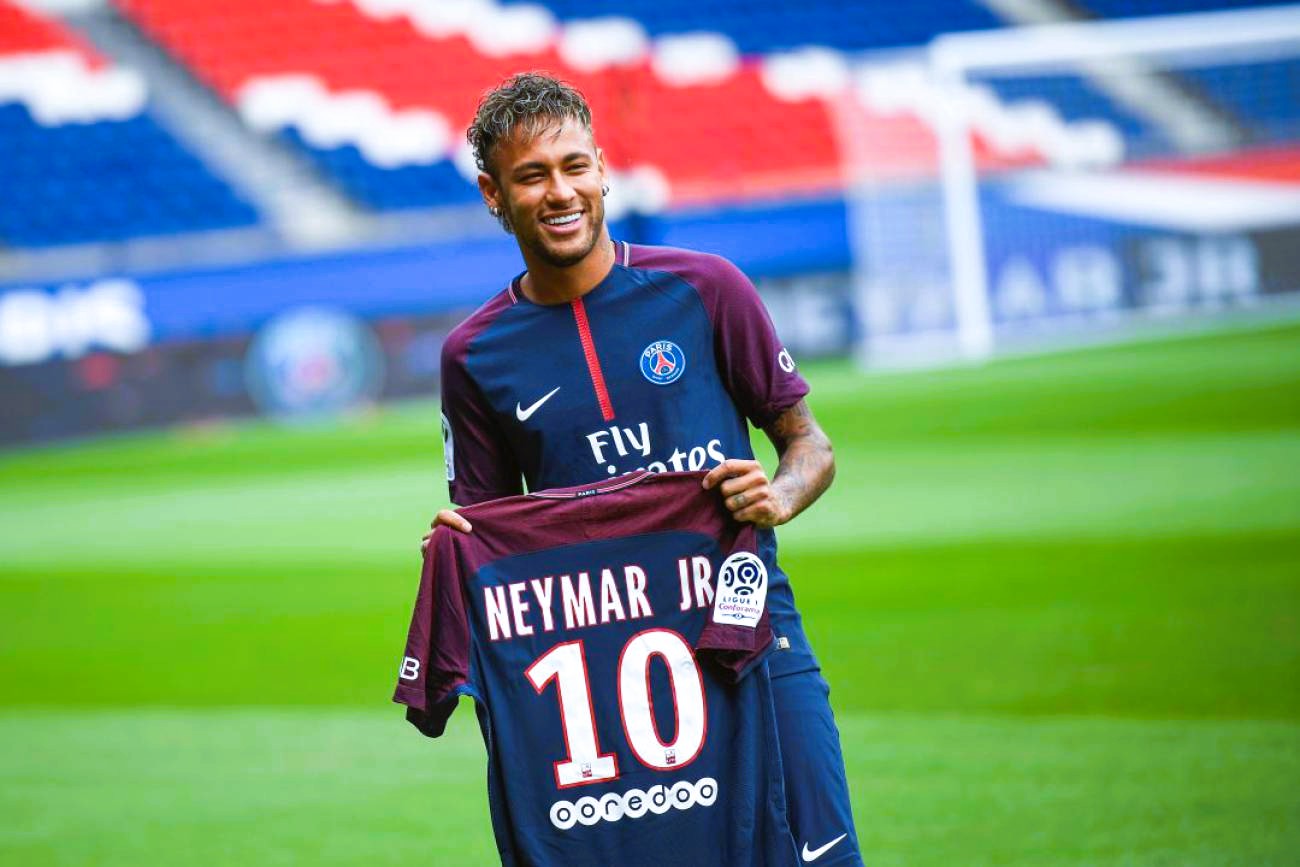

On August 3, 2017, Paris Saint-Germain handed €222 million to Barcelona for Neymar, more than double the previous world record, and football’s transfer market was permanently changed. In one afternoon, what clubs thought a player could be worth was reset entirely.
The conditions that made it possible have only deepened since. Premier League broadcast deals now generate over £3 billion per domestic cycle.
State-backed ownership at PSG, Newcastle and elsewhere has introduced buyers with effectively unlimited resources. Saudi Arabia entered the market in 2023, distorting valuations further.
The result is a world where nine-figure transfers are routine, Liverpool spent £480m in a single summer, and the question is not whether Neymar’s record will fall — but when.
Below, we rank and analyse the 20 most expensive football transfers of all time, with context on every deal, honest verdicts, and the full financial story behind them.
Quick Answer: Who Is the Most Expensive Football Transfer of All Time?
Neymar is the most expensive football transfer of all time. Paris Saint-Germain paid FC Barcelona €222 million (approximately £200 million) in August 2017, activating the Brazilian forward’s release clause.
This world record has stood for nearly nine years and remains the benchmark for every subsequent transfer negotiation in world football.
Top 20 Most Expensive Football Transfers of All Time
| Rank | Player | From | To | Fee (€m) | Year |
| 1 | Neymar Jr. | Barcelona | PSG | €222m | 2017 |
| 2 | Kylian Mbappé | Monaco | PSG | €180m | 2018 |
| 3 | Alexander Isak | Newcastle United | Liverpool | ~€150m | 2025 |
| 4 | Philippe Coutinho | Liverpool | Barcelona | €145m | 2018 |
| 5 | Ousmane Dembélé | Borussia Dortmund | Barcelona | €135m | 2017 |
| 6 | Florian Wirtz | Bayer Leverkusen | Liverpool | €125m | 2025 |
| 7 | João Félix | Benfica | Atlético Madrid | €127m | 2019 |
| 8 | Enzo Fernández | Benfica | Chelsea | €121m | 2023 |
| 9 | Antoine Griezmann | Atlético Madrid | Barcelona | €120m | 2019 |
| 10 | Jack Grealish | Aston Villa | Manchester City | €117m | 2021 |
| 11 | Moïses Caicedo | Brighton | Chelsea | €116m | 2023 |
| 12 | Declan Rice | West Ham United | Arsenal | €116m | 2023 |
| 13 | Jude Bellingham | Borussia Dortmund | Real Madrid | €115m | 2023 |
| 14 | Romelu Lukaku | Inter Milan | Chelsea | €115m | 2021 |
| 15 | Paul Pogba | Juventus | Manchester United | €105m | 2016 |
| 16 | Harry Kane | Tottenham Hotspur | Bayern Munich | €100m | 2023 |
| 17 | Gareth Bale | Tottenham Hotspur | Real Madrid | €101m | 2013 |
| 18 | Antony | Ajax | Manchester United | €95m | 2022 |
| 19 | Randal Kolo Muani | Eintracht Frankfurt | PSG | €95m | 2023 |
| 20 | Cristiano Ronaldo | Manchester United | Real Madrid | €94m | 2009 |
Note: Fees based on confirmed reports from Transfermarkt, Sky Sports, and official club communications. Some include add-ons. Fees converted to euros at approximate exchange rates at time of transfer.

Full Transfer Profiles: The Top 20 Most Expensive Football Transfers Ever
1. Neymar Jr. — Barcelona to PSG (€222m, 2017)
PSG triggered Neymar’s release clause in August 2017, paying more than double the previous world record in a single afternoon.
The move was driven by Neymar’s desire to escape Messi’s shadow and by PSG’s Qatari owners seeking global legitimacy.
He delivered 118 goals in 173 appearances and reached the Champions League final in 2020, but recurring injuries prevented him from completing a full season in Paris.
Champions League glory — the whole point — never arrived. The transfer fee, however, rewired the entire market permanently.
2. Kylian Mbappé — Monaco to PSG (€180m, 2018)
Initially a loan, then made permanent for €180m, PSG acquired the most expensive teenager in football history and, by departure, the club’s all-time top scorer.
Mbappé delivered 256 goals in 308 appearances, won seven Ligue 1 titles, drove PSG to their first Champions League title, and became France’s record international scorer.
He left for Real Madrid on a free in 2024. The commercial returns alone — shirt sales, sponsorships, broadcast uplift- likely exceeded the fee. A textbook justification of a record-breaking outlay.
3. Alexander Isak — Newcastle United to Liverpool (~€150m / £130m, 2025)
The transfer saga of summer 2025 ended on deadline day with Liverpool landing Isak for an official £125m (Newcastle sources put the full figure at £130m including solidarity payments).
The Swedish striker had scored 62 goals in 109 Newcastle appearances, including 23 Premier League goals in his final season.
At 25, he arrived at Anfield as the best centre-forward in the Premier League.
He is the most expensive transfer in British football history and the centrepiece of Liverpool’s record-breaking £480m summer rebuild.
4. Philippe Coutinho — Liverpool to Barcelona (€145m, 2018)
Barcelona’s Neymar replacement fund produced one of football’s great cautionary tales. Coutinho was a brilliant player but an entirely wrong fit for the 4-3-3 that defines Barcelona’s DNA.
He spent two of four seasons on loan at Bayern Munich and Aston Villa, made 76 La Liga appearances, and departed having never approached his Liverpool standards.
The silver lining belonged to Anfield: Liverpool used the windfall to sign Virgil van Dijk and Alisson Becker, the defensive cornerstones of their subsequent Champions League dynasty.
5. Ousmane Dembélé — Borussia Dortmund to Barcelona (€135m, 2017)
Barcelona moved frantically after Neymar’s exit, paying €135m for a 20-year-old with just one Bundesliga season behind him.
Dembélé’s raw talent was undeniable, but recurring hamstring injuries defined his first four years at Camp Nou.
He left for PSG on a free in 2023, and it was in Paris under Luis Enrique’s system that he finally became the consistent, decisive winger his ability always promised, contributing directly to PSG’s historic Champions League title.
6. Florian Wirtz — Bayer Leverkusen to Liverpool (€125m, 2025)
Confirmed on June 20, 2025, Wirtz’s £100m (plus £16m add-ons) move made him the most expensive Bundesliga departure ever and, briefly, the British transfer record holder.
Bayern Munich had been his expected destination for years; Xabi Alonso’s influence at Anfield proved decisive.
The 22-year-old Bundesliga Player of the Season in 2023-24 — who had helped Leverkusen to an unbeaten domestic double brought creative depth and goal threat that Liverpool had lacked.
Early Premier League adaptation was gradual, but the underlying quality was evident throughout.
7. João Félix — Benfica to Atlético Madrid (€127m, 2019)
Atlético spent €127m on a 19-year-old fresh from half a season at Benfica, a breathtaking gamble on pure potential.
Félix had the talent to justify it: inventive, technically brilliant, instinctive. But Simeone’s press-and-discipline system was the worst possible environment for a luxury creative.
Six years, multiple loan spells at Chelsea, Barcelona and AC Milan, and a 2025 move to Al Nassr later, Félix has never found a permanent home that suited him. A transfer tragedy driven by positional mismatch.
8. Enzo Fernández — Benfica to Chelsea (€121m, 2023)
Chelsea paid a British record £106.8m on January deadline day 2023, enamoured by Fernández’s World Cup-winning performances with Argentina.
Benfica, who had signed him from River Plate months earlier for a fraction of that fee, pocketed a staggering windfall.
At Chelsea, Fernández has shown quality in flashes but never delivered the consistent dominance a nine-figure fee demands, hampered by constant managerial changes and a rebuilding squad around him. The case for the fee is still being constructed.
9. Antoine Griezmann — Atlético Madrid to Barcelona (€120m, 2019)
The transfer was poisoned before it began: Griezmann had publicly promised Atlético fans he would stay, then reversed course weeks later to trigger his €120m clause.
At Barcelona, three managers failed to integrate him — the 4-3-3 demanded a different profile entirely.
He was loaned back to Atlético in 2021 and eventually transferred permanently for a fraction of his original fee.
His subsequent renaissance there, as one of La Liga’s most influential players in his thirties, only underlined how catastrophically wrong the original fit had been.
10. Jack Grealish — Aston Villa to Manchester City (€117m / £100m, 2021)
The first British player to command £100m became a winner at City Premier League titles, Champions League, FA Cup, but never the consistent starter his fee implied.
Guardiola used him as a rotation option more than a cornerstone, and his goal and assist returns never matched those of a player in his bracket.
He contributed to City’s 2022-23 treble season, but the fee reflected a “British premium” more than a hard-headed assessment of his ceiling in an elite squad.
The Biggest Transfer Success Stories
Not every record fee ends in disappointment. The transfers that have truly delivered are Mbappé to PSG, Bellingham to Real Madrid, Rice to Arsenal, and the original Ronaldo to Madrid.
These shares common characteristics: clear tactical fit, the right club environment, stability in management, and a player who arrived hungry rather than complacent.
Mbappé’s €180m deal arguably produced the greatest return per euro of any transfer in this list.
His seven seasons in Paris generated an estimated billion euros in commercial value, global brand partnerships, shirt sales and broadcast uplift, before he left on a free.
Bellingham’s €115m fee is already beginning to look like a discount given his trajectory.
Closer to home, Declan Rice represents arguably the best piece of Premier League business since Liverpool signed Virgil van Dijk from Southampton in 2018.
At €116m, Arsenal acquired a midfielder who immediately became indispensable, won the league, and delivered consistently across multiple Champions League campaigns.
Jürgen Klopp once said of Van Dijk that you cannot put a price on a player who transforms a team’s character. Rice, at Arsenal, has done something similar.
Top Transfer Success Rankings
| Player | Fee | Major Trophies | Verdict |
| Cristiano Ronaldo (to Real Madrid) | €94m | 4 UCL, 2 La Liga, 1 Copa | Exceptional |
| Kylian Mbappé (to PSG) | €180m | 7 L1, 1 UCL, WC winner | Excellent |
| Jude Bellingham (to Real Madrid) | €115m | 1 UCL, 1 La Liga (so far) | Excellent |
| Declan Rice (to Arsenal) | €116m | 1 Premier League | Outstanding value |
| Gareth Bale (to Real Madrid) | €101m | 4 UCL | Good (injury caveat) |
The Biggest Transfer Flops in History
For every Bellingham, there is an Antony. The gap between expectation and reality in record-breaking transfers can be brutal.
Several themes connect the biggest flops: poor positional fit, clubs in managerial turmoil, players arriving at peak market value rather than peak playing ability, and the weight of an extraordinary fee distorting the player’s natural confidence.
Romelu Lukaku’s return to Chelsea in 2021 stands as perhaps the clearest case study. A player who had been elite at Inter, the Serie A Player of the Season, a dominant physical forward, was brought back to a club that had changed tactically since his first spell.
His interview expressing a desire to leave destroyed the relationship almost immediately. Chelsea paid €115m and extracted almost nothing.
João Félix’s €127m saga is perhaps more tragic than catastrophic. There was never any doubt about his ability.
But the combination of Simeone’s system, the injuries, the lack of consistency and an unfortunate sequence of loans to clubs that could not get the best from him resulted in a career that has, so far, failed to match the potential that justified his fee.
Paul Pogba’s €105m world-record return to Manchester United remains one of the most debated transfers in Premier League history.
He won things at Juventus after leaving United, and won things away from United after leaving the second time.
In between six years of inconsistency, fine individual performances, and a collective failure to perform at the level his talent demanded.
Most Expensive Transfers by League
Premier League
English football dominates this list from the middle down. The Premier League’s extraordinary broadcasting revenues of over £10 billion annually, when domestic and international deals are combined, have made its clubs the most powerful buyers in the world.
The top five most expensive transfers in English football history are all recent: Isak (£130m), Wirtz (£116m potential), Caicedo (£115m), Enzo Fernández (£106.8m) and Rice (£105m). No other league comes close to this density of nine-figure deals.
La Liga
Spain accounts for the two most expensive transfers of all time at the selling end, with Neymar and Coutinho both leaving Barcelona for enormous fees.
As a buying league, Real Madrid’s signings of Ronaldo (2009), Bale (2013), and Bellingham (2023) represent three separate world records.
Barcelona’s post-Neymar panic is reflected in Dembélé, Coutinho and Griezmann all appearing in the top ten.
Ligue 1
PSG are responsible for three of the top ten most expensive transfers ever: Neymar, Mbappé, and Kolo Muani.
As a league, Ligue 1 has an unusual transfer profile: one dominant club with near-unlimited resources surrounded by far more modest operations.
The Saudi-backed ownership at PSG has created spending power in a different category from that of any other club in France.
Bundesliga
Germany has historically been resistant to the inflation that has gripped England and Spain, favouring youth development over extravagant signings.
Florian Wirtz’s €125m 2025 departure from Leverkusen broke the Bundesliga outgoing transfer record.
Harry Kane’s arrival at Bayern Munich for €100m marked the first time a German club had spent nine figures on a single player.
Serie A
Italian football’s financial constraints have largely kept Serie A clubs out of the market for truly elite players at record fees.
Inter Milan’s sale of Lukaku to Chelsea for €115m in 2021 is the most expensive departure from an Italian club in history.
Most Expensive Transfers by Club
Liverpool
Liverpool’s summer of 2025 was unprecedented. They broke the British transfer record twice — Wirtz (£116m potential) and Isak (£130m) — and spent approximately £480m in total.
Their record spend is now Alexander Isak at £130m. For context, Liverpool’s total transfer spending in the Klopp era (2015–2024) was approximately £900m.
They spent more than half that in a single summer under Slot.
Real Madrid
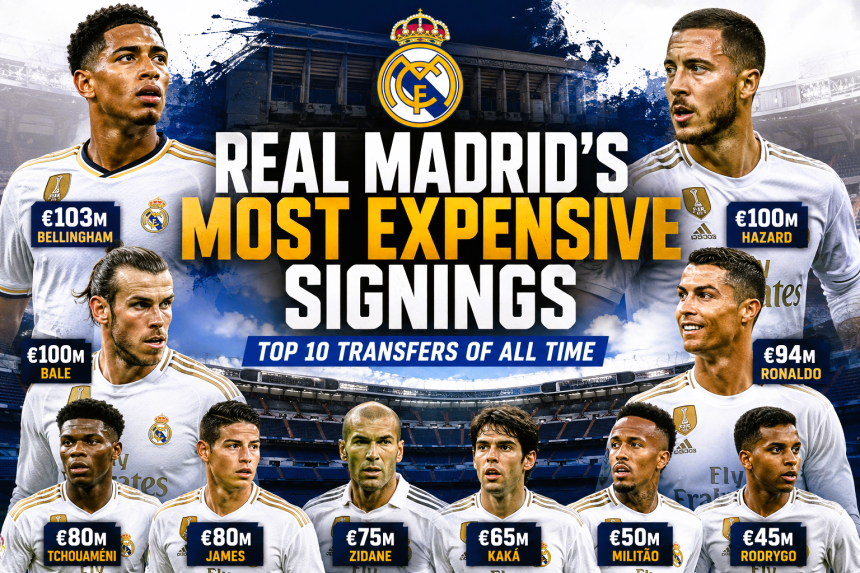
Madrid have held the world record three times: Ronaldo (€94m, 2009), Bale (€101m, 2013), and they were record-setters internally with Kaká (€65m, 2009) and Zidane (€77.5m, 2001) before that.
Bellingham at €115m is their latest statement signing. The pattern at Madrid is clear: they identify the best player in the world in each era and pay the necessary price.
Barcelona
No club has made more catastrophic, expensive transfers than Barcelona in the late 2010s. Dembélé (€135m), Coutinho (€145m), Griezmann (€120m) — three of the top ten transfers ever, all broadly failures.
Barcelona also received the most in a single transfer in history, €222m for Neymar, but spent the equivalent trying to replace him.
Chelsea
Under Roman Abramovich and later the Boehly-Clearlake regime, Chelsea have been one of football’s most prolific spenders.
Lukaku (€115m), Fernández (€121m), and Caicedo (€116m) all rank in the top 12 most expensive transfers ever. The return on that investment has been, at best, mixed.
PSG
Neymar, Mbappé, and Kolo Muani. Paris Saint-Germain have spent approximately €500m on those three players alone.
Add Dembélé’s arrival on a free in 2023 and the broader investment in the squad, and PSG represent the single most expensive transfer experiment in football history.
The Champions League title that finally arrived in 2025 provides some vindication.
Manchester United
United have appeared in this list more times than any other club when considering the full top 100.
Pogba (€105m), Lukaku (€75m to Inter and then €115m back to Chelsea), Sancho, and Antony.
The post-Ferguson era has been defined by expensive, largely unsuccessful transfer decisions.
Evolution of the World Football Transfer Record
| Year | Player | From | To | Fee |
| 1975 | Giuseppe Savoldi | Bologna | Napoli | £1.2m |
| 1982 | Diego Maradona | Boca Juniors | Barcelona | £5m |
| 1996 | Ronaldo Nazário | PSV | Barcelona | £12.9m |
| 2001 | Zinedine Zidane | Juventus | Real Madrid | €77.5m |
| 2009 | Kaká | AC Milan | Real Madrid | €65m |
| 2009 | Cristiano Ronaldo | Manchester United | Real Madrid | €94m |
| 2013 | Gareth Bale | Tottenham | Real Madrid | €101m |
| 2016 | Paul Pogba | Juventus | Manchester United | €105m |
| 2017 | Neymar Jr. | Barcelona | PSG | €222m |
Zidane’s 2001 record held for eight years — an eternity by modern standards. Bale broke Ronaldo’s record in 2013.
Pogba broke Bale’s record just three years later. Then Neymar demolished Pogba’s record by doubling it.
The pace of escalation at the top has since flattened; no one has come close to €222m in the nine years since.
The record that is approaching Neymar’s ceiling is not a single transfer but an era: Liverpool’s summer of 2025 showed that a club can spend £130m on a single player and still operate within financial rules.
The infrastructure for a new world record now exists. The question is only when and who.
Football Transfer Statistics: Who, What and Where
Most Expensive Transfers by Nationality
| Nationality | Players in Top 20 | Notable Players |
| Brazil | 3 | Neymar, Coutinho, Antony |
| France | 3 | Mbappé, Griezmann, Kolo Muani |
| England | 3 | Grealish, Bellingham, Rice |
| Portugal | 2 | Ronaldo, João Félix |
| Belgium | 2 | Lukaku, Caicedo (Ecuador) |
| Germany | 1 | Wirtz |
| Sweden | 1 | Isak |
| Argentina | 1 | Enzo Fernández |
Most Expensive Transfers by Position
| Position | Record Holder | Fee | Year |
| Forward/Winger | Neymar Jr. | €222m | 2017 |
| Striker | Alexander Isak | ~€150m | 2025 |
| Attacking Midfielder | Florian Wirtz | €125m | 2025 |
| Central Midfielder | Enzo Fernández | €121m | 2023 |
| Defender | Joško Gvardiol | €90m | 2023 |
| Goalkeeper | Kepa Arrizabalaga | €80m | 2018 |
Most Expensive Transfers by Club (as Buyer)
| Club | Top 20 Appearances | Largest Single Fee |
| Chelsea | 4 | €121m (Enzo Fernández) |
| Barcelona | 3 | €145m (Coutinho) |
| PSG | 3 | €222m (Neymar) |
| Liverpool | 2 | ~€150m (Isak) |
| Real Madrid | 3 | €115m (Bellingham) |
| Manchester United | 2 | €105m (Pogba) |
| Atlético Madrid | 2 | €127m (João Félix) |
The Future of Record-Breaking Transfers
Football’s transfer market is not broken, it is simply a mirror of the economic forces that surround it.
When broadcast deals worth billions flow into twenty Premier League clubs every year, when state-backed owners in Paris and Riyadh and Newcastle invest without the traditional constraints of profitability, when the global commercial value of a Mbappé or a Bellingham runs to hundreds of millions in shirt sales and sponsorships, fees of €100m or more become not exceptional but expected.
Neymar’s €222m world record has now stood for nearly nine years. That longevity is partly a reflection of the economic disruptions that followed — COVID-19 in 2020, the FFP tightening and partly a reflection of the fact that the combination of factors that produced that specific deal (a willing buyer with unlimited resources, a willing seller facing serious financial pressure, a player who had triggered his own release clause, a fee that was already set in the contract) is difficult to replicate exactly.
But those conditions are not impossible to replicate. Liverpool’s summer of 2025 demonstrated that a single club, operating within UEFA’s financial rules, can spend £130m on one player and £480m in a single window.
The market’s ceiling has risen. A player of genuine world-record quality — a player who combines Mbappé’s youth with Ronaldo’s goal record and Bellingham’s versatility — will one day attract a fee that makes even Neymar’s look modest.
Whether that day comes in 2027, 2030, or 2035 is impossible to predict. What is certain is that the journey of football transfer records — from Willie Groves’s £100 in 1893 to Neymar’s €222m in 2017 — is far from over.
The numbers will keep rising, the debates will keep intensifying, and millions of fans will keep watching, refreshing their feeds and arguing about whether the latest world record is genius or madness.
That is, after all, one of football’s great pleasures. The transfer market is a theatre. And the box office has never been more expensive.
If you found this article useful, explore our related guides: UEFA Champions League Winners, and Ballon d’Or Winners List.