








Few nations have woven their identity so tightly around the FIFA World Cup as Argentina.
From the inaugural tournament in Uruguay in 1930 to the golden triumph in Qatar in 2022, La Albiceleste have produced some of the most electrifying, jaw-dropping goalscorers the sport has ever seen.
The Argentina World Cup story is, in many ways, a story told through goals — thunderous strikes, elegant chips, breakaway finishes, and moments of sheer individual brilliance that have stopped the world cold.
Argentina’s FIFA World Cup history spans nearly a century and three world titles (1978, 1986, 2022), and running through each era is a lineage of elite forwards, creative midfielders, and instinctive strikers who have shouldered the weight of an entire nation’s passion. Guillermo Stábile blazed the trail in 1930.
Mario Kempes sent Buenos Aires into raptures in 1978. Diego Maradona transcended the sport itself in 1986.
Gabriel Batistuta rewrote the record books across three tournaments in the 1990s. And Lionel Messi — perhaps the greatest footballer who ever lived — capped his extraordinary career with a record-shattering World Cup in 2022.
This article ranks the top Argentina World Cup scorers of all time, profiles each player’s tournament legacy, examines Argentina’s greatest individual FIFA World Cup goals, and looks ahead to the 2026 edition, where a new generation of Argentine stars are ready to write the next chapter.
Who Has Scored the Most Goals for Argentina at the FIFA World Cup?
Lionel Messi is Argentina’s all-time top World Cup scorer, with 13 goals across five FIFA World Cup tournaments (2006, 2010, 2014, 2018, 2022).
He surpassed Gabriel Batistuta’s long-standing record of 10 goals — itself considered one of the most impressive scoring tallies in Argentine football history — when he netted his 11th World Cup goal against Australia in the Round of 16 at Qatar 2022.
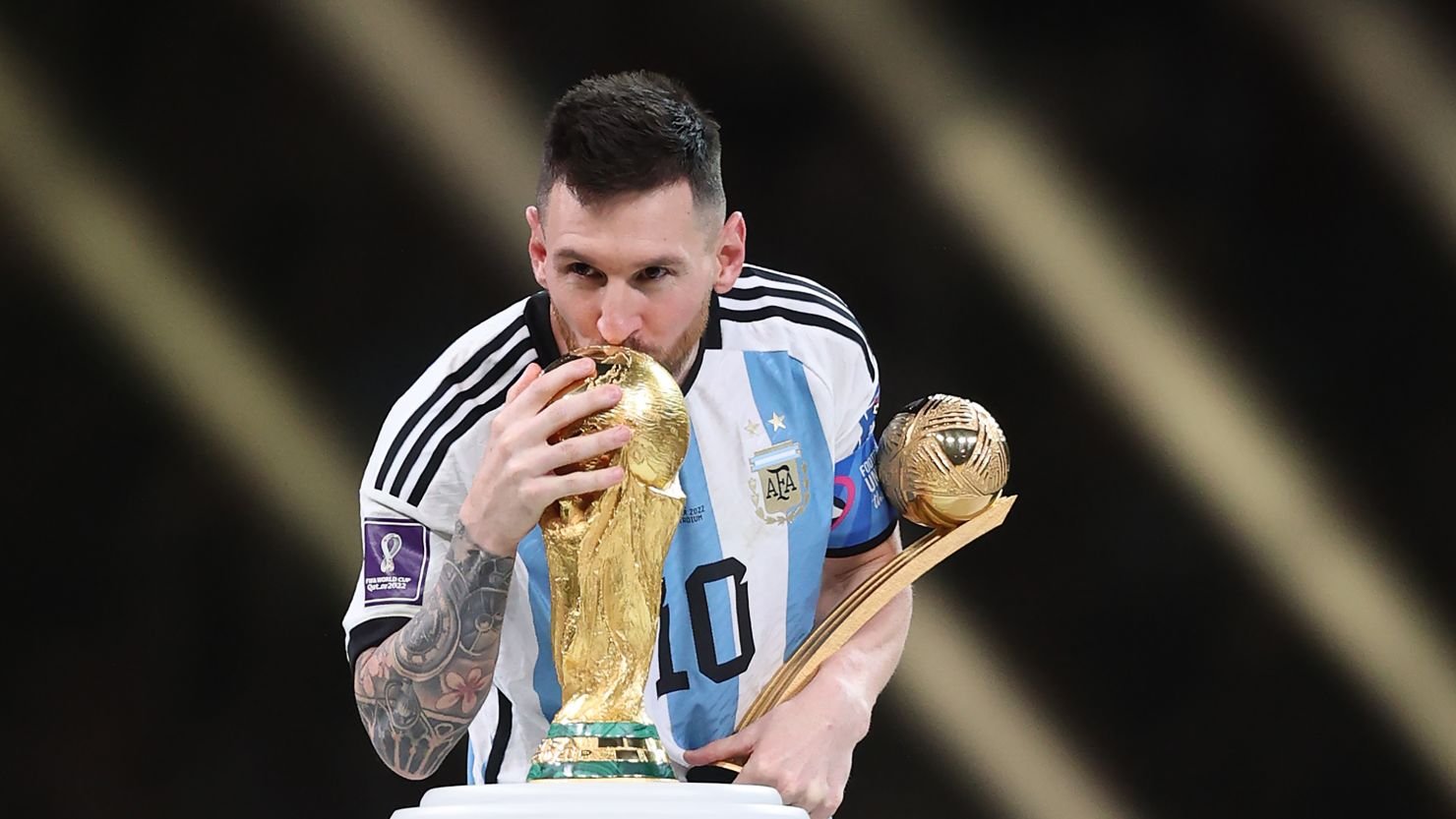
Messi’s 2022 tournament was historic in every sense: seven goals, three assists, a Player of the Tournament award, and a World Cup winner’s medal that completed football’s most celebrated individual résumé.
In doing so, he not only became Argentina’s greatest World Cup scorer but etched his name alongside the greatest performers in the tournament’s entire history.
Batistuta, who held the record for over two decades, remains one of the most feared strikers ever to grace a World Cup stage.
His 10 goals in 12 appearances across three tournaments (1994, 1998, 2002) speak to a relentless goalscoring instinct that made him a legend at club and international level alike.
Argentina Players with the Most FIFA World Cup Goals
Argentina World Cup Goalscorers Ranking
| Rank | Player | Goals | Matches | World Cups Played |
|---|---|---|---|---|
| 1 | Lionel Messi | 13 | 26 | 5 (2006, 2010, 2014, 2018, 2022) |
| 2 | Gabriel Batistuta | 10 | 12 | 3 (1994, 1998, 2002) |
| 3 | Guillermo Stábile | 8 | 4 | 1 (1930) |
| 4 | Diego Maradona | 8 | 21 | 4 (1982, 1986, 1990, 1994) |
| 5 | Mario Kempes | 6 | 18 | 3 (1974, 1978, 1982) |
| 6 | Gonzalo Higuaín | 5 | 14 | 3 (2010, 2014, 2018) |
| 7 | Julián Álvarez | 4 | 7 | 1 (2022) |
| 8 | Hernán Crespo | 4 | 8 | 3 (1998, 2002, 2006) |
| 9 | Claudio Caniggia | 4 | 9 | 3 (1990, 1994, 2002*) |
| 10 | Jorge Valdano | 4 | 9 | 2 (1982, 1986) |
| 11 | Leopoldo Luque | 4 | 5 | 1 (1978) |
| 12 | René Houseman | 4 | 12 | 2 (1974, 1978) |
| 13 | Daniel Bertoni | 4 | 11 | 2 (1978, 1982) |
Stats through the 2022 FIFA World Cup. 2026 totals will be updated after the tournament.
Top 5 Argentine goal scorers in World Cups
Lionel Messi — 13 World Cup Goals

The greatest Argentina World Cup scorer of all time, and arguably the greatest individual performer in World Cup history.
Messi’s 13 goals across five tournaments tell only part of the story — his eight assists, his ability to produce in knockout matches, his two finals performances, and the manner in which he shepherded Argentina to victory in Qatar 2022 make him the definitive figure of his generation on the world stage.
He scored in every single round of the 2022 knockout stages, from the Round of 16 through to the final. No Argentine has come close to his World Cup legacy.
But Messi’s World Cup story began long before that December evening in Lusail. He scored his first World Cup goal in 2006 against Serbia & Montenegro — a cool, composed finish — at just 18 years of age.
He added three more in 2010, including a string of assists that helped fire Argentina to the quarter-finals.
The 2014 tournament in Brazil was Messi’s most sustained individual performance before Qatar: four goals and the Golden Ball, as Argentina reached the final where they fell to Germany in extra time.
The 2018 edition in Russia was more muted — one goal, an early exit in the Round of 16 — but it only sharpened Messi’s hunger for the one trophy that had eluded him. Then came Qatar. Then came everything.
His ratio of knockout-stage goals — more than half his total tally scored when the margin for error is zero — underlines a temperament that defied every doubt about his ability to perform on football’s largest stage.
2. Gabriel Batistuta — 10 World Cup Goals

Before Messi, there was Gabriel Omar Batistuta, and for Argentina supporters of a certain generation, Batigol remains the embodiment of World Cup power and precision.
Batistuta scored 10 goals in just 12 World Cup appearances — a goals-per-match ratio (0.83) that surpasses Messi’s, and a tally that stood as Argentina’s all-time record for more than two decades.
He was the kind of centre-forward who made goalscoring look effortless: explosive in the air, lethal with his left foot, ice-cold under pressure.
His 1994 campaign in the United States announced him to the world. He scored a hat-trick against Greece in Argentina’s opening match, becoming only the second player in history to score a hat-trick in consecutive World Cups (having also netted one against Greece in the same stadium four years earlier in qualifying).
The 1998 World Cup in France was his finest hour: five goals in four matches, including a stunning free-kick against England that left David Seaman rooted to the spot. He became only the second player ever — after Pelé — to score in three consecutive World Cups.
By 2002, at 33, Batistuta was no longer the physical force he had been, but he still found the net in South Korea, adding to a legacy that remains the gold standard for Argentine centre-forwards in World Cup history.
3. Diego Maradona — 8 World Cup Goals

If Gabriel Batistuta was Argentina’s greatest World Cup goalscorer before Messi, Diego Maradona was Argentina’s greatest World Cup player — full stop.
His eight World Cup goals across four tournaments do not capture the full scale of his influence.
Maradona was the most important player at the 1986 World Cup in Mexico, and quite possibly the most important player any World Cup has ever seen.
In 1986, Maradona scored five goals and provided five assists as Argentina lifted the trophy.
Two of those goals came in the same match — the quarter-final against England — and both are immortalised in football folklore.
The first, punched into the net with his hand and declared with the phrase “the Hand of God,” was audacious and controversial in equal measure.
The second, 60 seconds later, saw him run from inside his own half, beat five England players and the goalkeeper, and slot home what FIFA named the Goal of the Century in a 2002 poll.
In 1982, Maradona was still developing but showed flashes. In 1990, despite playing through injury and a severe flu, he dragged Argentina to a second consecutive final, where they lost to West Germany.
By 1994, he was a fading force, but his extraordinary goal against Greece reminded everyone what he had once been.
Eight World Cup goals barely tell the story of Diego Maradona. His assists, his dribbles, his leadership, his sheer force of personality — all of it made him the beating heart of Argentina’s greatest World Cup era.
4. Guillermo Stábile — 8 World Cup Goals
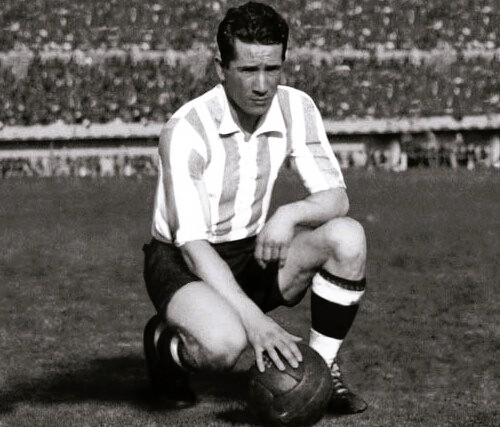
No discussion of Argentina World Cup scorers is complete without acknowledging the man who started it all.
Guillermo Stábile holds the most extraordinary goalscoring record in Argentine World Cup history on a per-match basis: eight goals in four matches at the inaugural 1930 World Cup in Uruguay.
Playing as a centre-forward in only his second international appearance, Stábile exploded onto the world stage with a hat-trick against Mexico in Argentina’s second group match.
He scored twice against Chile, twice more against the United States in the semi-final, and once in the final against Uruguay — which Argentina lost 4–2.
Despite finishing on the losing side, he won the Golden Boot as the tournament’s top scorer, a distinction that still stands nearly 100 years later.
His goals-per-match ratio of 2.00 remains unmatched in Argentine — or indeed, World Cup — history.
5. Mario Kempes — 6 World Cup Goals

The hero of 1978. Mario Kempes arrived at the World Cup in Argentina having been left out of the 1974 squad, and he repaid coach César Luis Menotti’s faith with one of the finest individual tournaments any Argentine has produced.
Six goals, the Golden Boot, the decisive brace in the final against the Netherlands — including the all-important goal that put Argentina ahead in extra time — cemented his status as a national icon.
He remains the only man to win both the Golden Boot and a World Cup winners’ medal for Argentina.
Argentina’s Greatest World Cup Goals
Argentina have produced some of the most celebrated goals in World Cup history. Here are five that transcended sport and became cultural moments.
Maradona vs England (1986 Quarter-Final)
The “Goal of the Century” needs no preamble. Diego Maradona received the ball in his own half, accelerated past Peter Reid and Peter Beardsley, glided past Terry Butcher twice, left Terry Fenwick on the floor, and rounded Peter Shilton before rolling the ball into an empty net.
The BBC’s Barry Davies could barely find the words. Sixty seconds earlier, Maradona had used his hand to score. Together, those two moments in four minutes summarise the man’s genius and mischief better than any biography.
Messi vs Mexico (2022 Group Stage)
When Argentina — the reigning champions — lost their opening match of Qatar 2022 to Saudi Arabia, the tournament’s narrative shifted dramatically.
Four days later, with Argentina requiring a win against Mexico to survive, Messi stepped up. In the 64th minute, he received the ball 25 yards from goal, took a single touch to control it, and lashed an unstoppable shot into the bottom corner with his left foot.
Argentina won 2–0. The tournament was back on. Messi’s celebration — arms outstretched, face turned to the sky — became one of the iconic images of Qatar 2022.
Di María vs France (2022 World Cup Final)
Ángel Di María had endured a difficult tournament on the fringes of the starting lineup, but when he was needed most, he delivered.
In the 36th minute of the final against France, Di María — having won the penalty that gave Messi the opening goal — drifted in from the left, received a perfectly weighted through ball from Alexis Mac Allister, and slotted a delicate finish across Hugo Lloris.
It looked, for a moment, as though Argentina had won the World Cup. France’s comeback would make it far more complicated, but Di María’s goal remained one of the tournament’s most beautiful.
Kempes vs Netherlands (1978 World Cup Final)
Mario Kempes was the heartbeat of Argentina’s first World Cup triumph.
In the final against the Netherlands, with the score at 1–1 and the game heading into extra time, Kempes drove at the Dutch defence, had a shot blocked, recovered the ball amid a crowd of bodies, and somehow forced it over the line.
Argentina would go on to win 3–1. Kempes finished the tournament with six goals, the Golden Boot, and a place in Argentine sporting history that will never fade.
Maxi Rodríguez vs Mexico (2006 Round of 16)
With the score level at 1–1 after extra time appeared inevitable, Maxi Rodríguez received a high ball 30 yards from goal in the 98th minute and — without letting it drop — struck a thunderous left-foot volley that screamed past Oswaldo Sánchez.
It is considered one of the best goals in World Cup history and was later voted FIFA’s Goal of the Tournament.
Argentina FIFA World Cup Records and Statistics
Most Goals in a Single World Cup for Argentina
| Player | Tournament | Goals |
| Guillermo Stábile | 1930 | 8 |
| Mario Kempes | 1978 | 6 |
| Lionel Messi | 2022 | 7 |
| Gabriel Batistuta | 1998 | 5 |
| Julián Álvarez | 2022 | 4 |
Messi’s seven-goal haul in Qatar 2022 became the highest by an Argentine player in the modern era, second only to Guillermo Stábile’s extraordinary eight-goal campaign at the 1930 World Cup.
Most Knockout Stage Goals
Lionel Messi leads this category with seven knockout-stage goals — more than any other Argentine player in World Cup history. Gabriel Batistuta scored four in the knockout stages; Mario Kempes four in 1978.
Youngest Argentina World Cup Scorer
Norberto Méndez scored for Argentina at just 18 years and 46 days at the 1930 World Cup. In the modern era, Kun Agüero scored against South Korea in 2010 at 22 years old, while Julián Álvarez became one of the youngest Argentine World Cup scorers at 22 in 2022.
Oldest Argentina World Cup Scorer
Lionel Messi scored at 35 years old at the 2022 World Cup in Qatar, making him Argentina’s oldest World Cup scorer in the modern era.
Most World Cup Matches for Argentina
| Player | Total Matches | Editions Played |
|---|---|---|
| Lionel Messi | 26 | 2006, 2010, 2014, 2018, 2022 |
| Diego Maradona | 21 | 1982, 1986, 1990, 1994 |
| Javier Mascherano | 20 | 2006, 2010, 2014, 2018 |
| Ángel Di María | 18 | 2010, 2014, 2018, 2022 |
| Mario Kempes | 18 | 1974, 1978, 1982 |
| Oscar Ruggeri | 16 | 1986, 1990, 1994 |
Lionel Messi’s FIFA World Cup Goal Record
Messi’s World Cup journey is one of football’s most richly documented narratives — from teenage prodigy to global icon to world champion. Here is a full breakdown of his goals by tournament:
| Tournament | Goals | Assists | Result |
| Germany 2006 | 1 | 1 | QF exit |
| South Africa 2010 | 0 | 4 | QF exit |
| Brazil 2014 | 4 | 1 | Final (lost) |
| Russia 2018 | 1 | 0 | R16 exit |
| Qatar 2022 | 7 | 3 | Winner |
| Total | 13 | 9 |
His 2022 haul of seven goals surpassed his own record for Argentina in a single tournament (four, set in 2014), and placed him fourth in the all-time single-tournament scoring list behind Just Fontaine (13, 1958), Sándor Kocsis (11, 1954), and Gerd Müller (10, 1970).
Of Messi’s 13 World Cup goals, seven have come in the knockout stages — the rounds of 16, quarters, semis, and finals — demonstrating a capacity to perform when the stakes are highest that silenced a generation of critics. His two goals in the 2022 final against France — a calm penalty and a stunning extra-time volley — are among the most pressure-laden goals any player has ever scored in world football.
Argentina at the 2026 FIFA World Cup
The 2026 FIFA World Cup — hosted across the United States, Canada, and Mexico — arrives as Argentina enter tournament football as defending world champions for the first time since 1990.
The question that will dominate pre-tournament discussion in Buenos Aires and beyond is simple: will Lionel Messi play?
At 38 years old in June 2026, Messi’s participation is uncertain but not impossible. He has spoken publicly about his desire to continue playing, and his form at Inter Miami has remained exceptional.
If he does feature in even a handful of matches, he has the opportunity to extend his record to 14, 15, or more World Cup goals — a tally that would be virtually unassailable for generations to come.
Can Julián Álvarez Break Into Argentina’s Top 5 by 2026?
The arithmetic is straightforward: Julián Álvarez currently has four World Cup goals. To break into Argentina’s all-time top five, he would need to overtake Mario Kempes on six.
Scoring three goals in a single World Cup — a very achievable target for a striker of Álvarez’s calibre — would place him fifth, ahead of Kempes, and only four goals shy of Maradona.
At 26 years old in 2026, Álvarez will be in the prime of his career. He is now playing at the highest level of European club football, where he has scored at consistently impressive rates.
If Argentina progress deep into the 2026 tournament — and as defending champions, they are well placed to do so — Álvarez is likely to be their lead striker throughout, with Messi (if present) playing in a deeper, more creative role.
The possibility of Álvarez reaching 8–10 World Cup goals before his career ends is entirely realistic. He could appear in the 2026, 2030, and potentially 2034 World Cups.
By that point, he would almost certainly be Argentina’s second-highest World Cup scorer of all time — and the only question would be how close he could get to Messi’s 13.
Argentina’s scoring tradition is in safe hands.
FAQs
Who scored the most World Cup goals for Argentina?
Lionel Messi, with 13 goals across five FIFA World Cup tournaments (2006, 2010, 2014, 2018, 2022).
How many World Cup goals does Messi have?
Thirteen, including seven at the 2022 World Cup in Qatar — where he won the Golden Ball and the World Cup itself.
Did Batistuta score more than Maradona?
Yes. Gabriel Batistuta scored 10 World Cup goals; Diego Maradona scored 8. However, Maradona’s influence across his four tournaments — particularly 1986 — is considered by many to be greater than Batistuta’s pure output.
Who scored the most goals in one World Cup for Argentina?
Guillermo Stábile scored eight goals in four matches at the 1930 World Cup — the all-time record for Argentina in a single tournament. In the modern era, Lionel Messi scored seven at Qatar 2022.
Which Argentine player scored in a World Cup final?
Several. Mario Kempes scored twice in the 1978 final. Lionel Messi scored twice in the 2022 final. Ángel Di María also scored in the 2022 final. Jorge Burruchaga scored the winning goal in the 1986 final.
Conclusion
The story of Argentina’s World Cup goalscorers is the story of Argentine football itself — passionate, brilliant, dramatic, and occasionally heartbreaking, but always producing individuals capable of the extraordinary.
From Guillermo Stábile’s eight goals in 1930 to Lionel Messi’s crowning achievement in Qatar 2022, Argentina have produced a lineage of FIFA World Cup scorers that any football nation would envy.
Batistuta’s power, Maradona’s genius, Kempes’ heroism, Di María’s late-career glory, Álvarez’s electric emergence — all of it contributes to a tradition of goalscoring that spans nearly 100 years and shows no sign of slowing down.
Messi’s place in this history is secure and singular. He is Argentina’s greatest World Cup scorer, the holder of records that may not be beaten for decades, and the player who finally delivered the trophy that every preceding generation of Argentine greatness had fallen short of winning.
His 13 goals are not just statistics — they are the punctuation marks of a career that redefined what was possible in football.
As the 2026 World Cup approaches and Julián Álvarez steps forward to carry the mantle, Argentina’s scoring tradition enters a new chapter. The names change. The passion never does.
La Albiceleste will score again. The only question is who will score the most.