







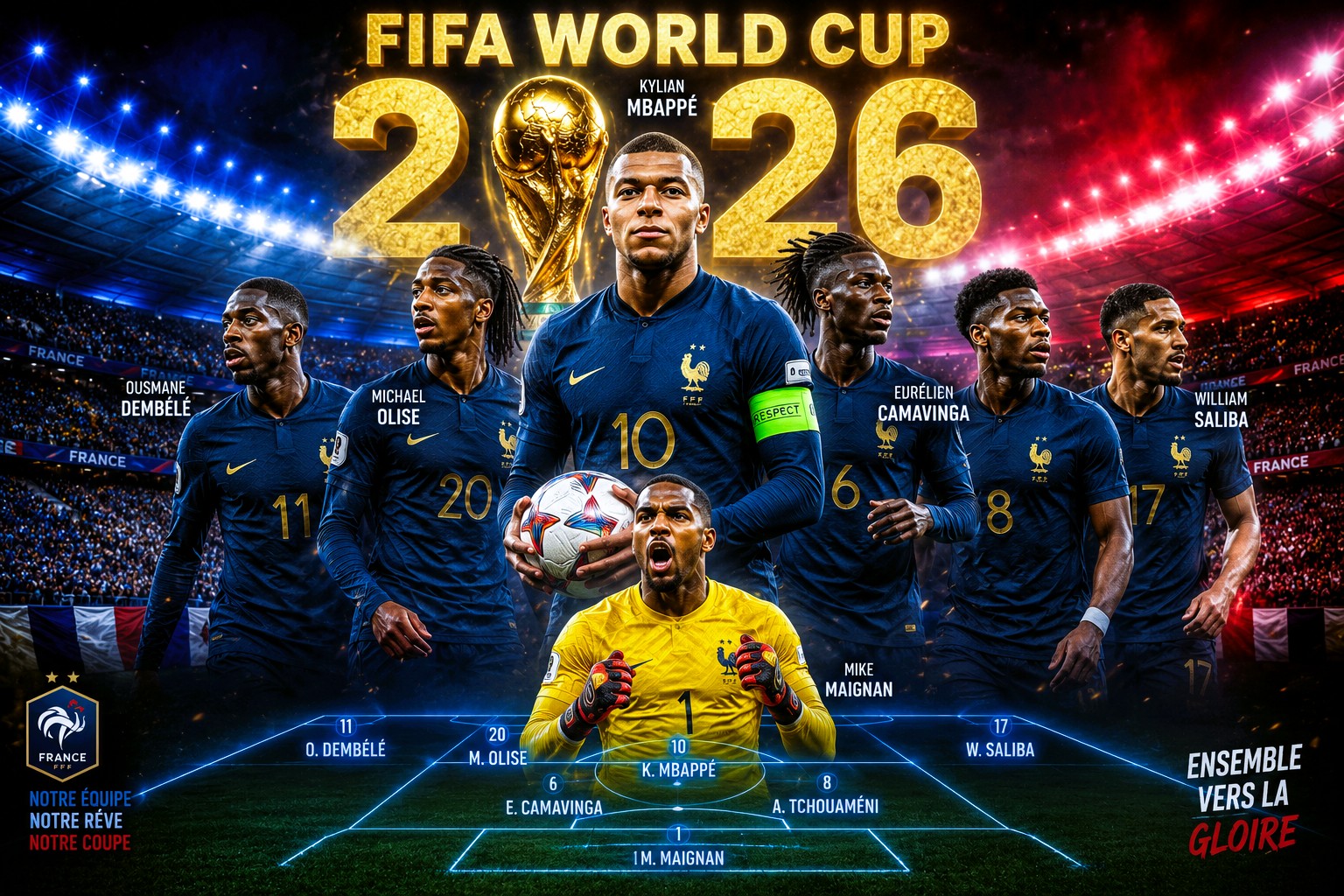

Few nations arrive at a World Cup radiating the kind of quiet, devastating confidence that Les Bleus carry into the summer of 2026.
Defending finalists, stacked with generational talent, and backed by one of the most experienced coaches in international football, France enter the tournament in the United States, Canada, and Mexico as one of the most complete footballing nations on the planet.
With Didier Deschamps having officially named his 26-man squad on May 14 — and confirmed this will be his final tournament as manager — the question isn’t whether France can go deep. The question is whether anyone can stop them.
This is a comprehensive breakdown of France’s best XI for the 2026 World Cup, their tactical setup, squad depth, young stars to watch, and a full analysis of whether this could finally be the year Les Bleus reclaim the trophy they last lifted in Russia eight years ago.
France’s Predicted Starting XI for World Cup 2026
Building France’s strongest lineup is both an enviable and genuinely difficult task.
Didier Deschamps has an embarrassment of riches across every department, and competition for places has never been more intense.
After poring over form, fitness, and tactical fit, here is the predicted starting XI that best represents France’s national team lineup heading into the tournament.
France Best XI – 2026 World Cup
(4-3-3 Formation)

| Position | Player | Club |
|---|---|---|
| GK | Mike Maignan | AC Milan |
| RB | Jules Koundé | Barcelona |
| CB | William Saliba | Arsenal |
| CB | Dayot Upamecano | Bayern Munich |
| LB | Theo Hernández | Al-Hilal |
| CM | Aurélien Tchouaméni | Real Madrid |
| CM | N’Golo Kanté | Fenerbahçe |
| CM | Warren Zaïre-Emery | PSG |
| RW | Ousmane Dembélé | PSG |
| ST | Kylian Mbappé (C) | Real Madrid |
| LW | Michael Olise | Bayern Munich |
Strong Bench Options (4-3-3):
- GK: Samba / Risser
- Def: Konaté, Lucas Hernández, Malo Gusto
- Mid: Rabiot, Koné (or Cherki pushed into midfield)
- Att: Cherki, Thuram, Barcola, Doué
This 4-3-3 offers more central midfield control and width in attack compared to the 4-2-3-1. It balances defensive solidity with fluid attacking transitions, suiting France’s pacey wingers and Mbappé’s movement. Deschamps has historically leaned toward 4-2-3-1, but 4-3-3 allows fitting more creative mids.
Goalkeeper
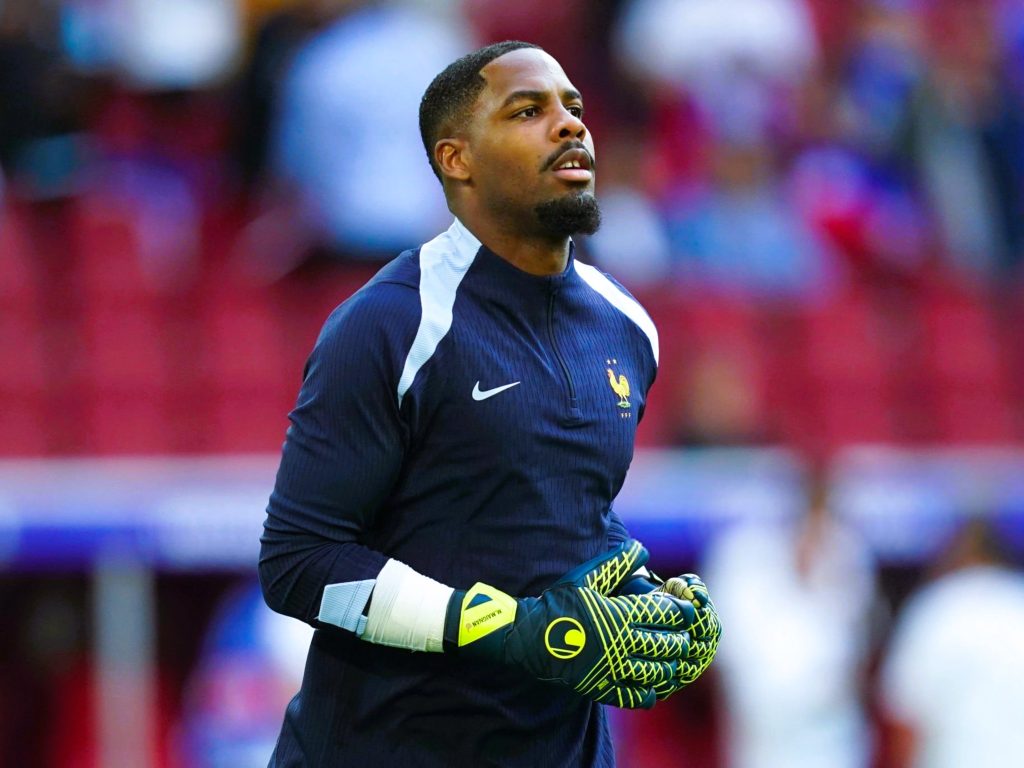
Since Hugo Lloris retired from international football, the gloves have passed to a goalkeeper who, many argue, is actually the superior option.
Mike Maignan of AC Milan is France’s undisputed number one, and his presence between the sticks gives Les Bleus a commanding, sweeping shot-stopper who is equally dominant in the air as he is with his feet.
Quick off his line, electric in one-on-one situations, and an authoritative organiser of the back four, Maignan brings everything a top international team needs from their France goalkeeper in 2026.
His deputy, Brice Samba of Lens, is a reliable and experienced backup, while uncapped youngster Robin Risser — one of the surprise inclusions in the squad — represents the future of the position.
Defense
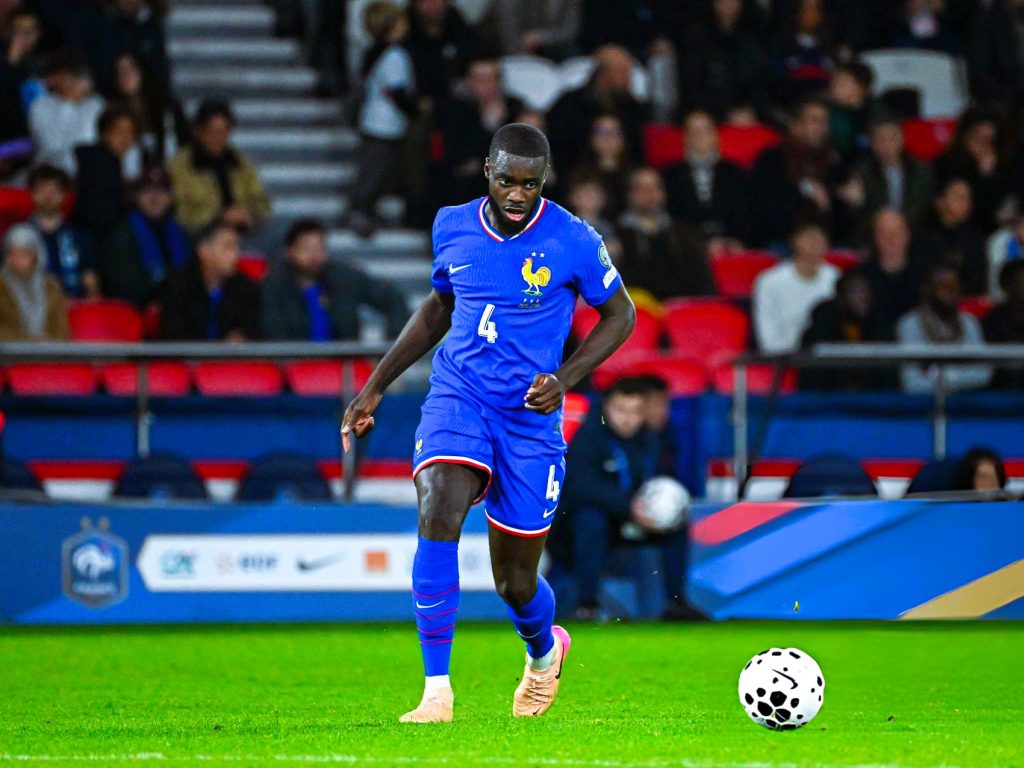
France’s defensive setup for 2026 is built around a back four that combines physicality, intelligence, and elite technical quality. It is one of the most formidable defensive units in world football.
Jules Koundé starts at right-back, bringing the composure and positional awareness he has displayed for both FC Barcelona and France over recent seasons. Alongside him, William Saliba is the defensive cornerstone.
The Arsenal centre-back has become one of the most consistent defenders in European football, and his partnership with Dayot Upamecano — who brings aggressive pressing and aerial dominance to the role — gives France a back two capable of handling the world’s finest strikers.
On the left, Théo Hernández remains arguably the most dangerous attacking full-back in the world.
His surging runs down the flank, combined with an underrated defensive discipline, make him an irreplaceable component of France’s strongest back four.
Lucas Hernández provides cover and experience from the bench, while the squad also includes Malo Gusto and Lucas Digne as capable alternatives.
France’s elite defense is a statement in itself: physical, technically polished, and capable of keeping clean sheets in the highest-pressure knockout football.
Midfield

This is where France’s France midfield analysis becomes particularly fascinating.
Deschamps has built a midfield triangle that balances defensive protection with creative dynamism and athletic energy — and it is arguably one of the best midfield units in the tournament.
Aurélien Tchouaméni anchors the base of the triangle.
The Real Madrid midfielder’s recovery pace, reading of the game, and ability to switch play with precise long passing make him the defensive heartbeat of this side.
His importance to France cannot be overstated; when Tchouaméni controls the tempo, France control the match.
Flanking him, Warren Zaïre-Emery has become one of the most exciting young midfielders in world football. Still just 20 years old, the PSG academy graduate carries an extraordinary maturity in possession, presses relentlessly, and provides the technical link between defence and attack that Deschamps demands.
The third midfield slot goes to Adrien Rabiot, whose physical power and ability to arrive late into goalscoring positions gives France an attacking dimension from deep.
N’Golo Kanté — one of only four survivors from the 2018 World Cup-winning squad — provides a legendary option from the bench, his experience and pressing intensity invaluable in knockout moments.
Attack

This is where France’s explosive front line separates itself from almost every other nation on earth.
The attacking lineup assembled for 2026 might be the most talented front three France have ever taken to a World Cup.
Kylian Mbappé needs no introduction. Captaining Les Bleus in his third World Cup, the Real Madrid superstar arrives having already scored 12 goals in just 14 World Cup matches — an astonishing rate that puts him among the elite goalscorers in tournament history.
Despite a hamstring injury in the final weeks of the club season, Mbappé has been declared fit and is the undisputed focal point of France’s attack.
He is simultaneously France’s best striker, most dangerous dribbler, and creative catalyst — a once-in-a-generation player at the peak of his powers.
On the right, Ousmane Dembélé arrives as the reigning Ballon d’Or winner. Since leaving Barcelona to join PSG, the winger has been transformed — consistent, electrifying, and ruthless in front of goal.
His pace, directness, and technical brilliance give France an attacking weapon that can destroy any defence in the world on his day.
Starting on the right side of the front three, Michael Olise has established himself as one of the most technically gifted wide attackers in European football.
His movement off the ball, his devastating delivery from set pieces, and his goal threat from distance give France’s attacking lineup another dimension entirely.
With Désiré Doué, Rayan Cherki, Bradley Barcola, and Marcus Thuram all waiting in the wings, the France strongest attack in 2026 has depth that no other nation can match.
France’s Best Formation and Tactical Setup
Why the 4-3-3 System Fits France
Didier Deschamps’ preferred France 4-3-3 formation remains the best tactical vehicle for this squad’s strengths.
The system allows Mbappé the freedom to roam centrally and wide, while Dembélé and Olise can stretch defences and create the kind of one-on-one situations that are virtually impossible to defend.
The three-man midfield provides the platform — Tchouaméni’s defensive solidity frees Zaïre-Emery and Rabiot to operate with attacking ambition — while the full-backs, especially Théo Hernández, provide crucial width and overlapping runs.
The 4-3-3 also suits France’s pressing triggers. Deschamps has developed a system where the front three initiate pressure high up the pitch, squeezing opponents into errors before the midfield arrives to capitalise.
Could France Switch to a 4-2-3-1?
Tactical flexibility is one of France’s great strengths, and Deschamps has shown the capacity to adapt mid-tournament.
A 4-2-3-1 configuration is the most likely alternative, with Tchouaméni and Kanté forming a double pivot and Zaïre-Emery pushing into an attacking midfield role behind Mbappé.
This shape would give France even greater defensive compactness in knockout matches against elite opponents, potentially sacrificing a fraction of attacking width for additional control.
France’s Tactical Strengths Ahead of 2026
France’s tactical strengths ahead of this tournament centre on their ability to win matches in multiple ways.
They can press and overwhelm, they can sit compact and absorb before hitting on the counter, and they have the set-piece menace — particularly through Olise’s delivery and Saliba’s aerial threat — to hurt teams from dead-ball situations.
In international football, that versatility is gold. Tournament favourites are rarely the most one-dimensional sides, and France are anything but.
France’s 26-man squad for the 2026 FIFA World Cup
This is the final 26-player squad (maximum allowed). France enters the tournament as one of the top favorites, with strong depth across all lines, particularly in attack and defense.
Goalkeepers (3)
- Mike Maignan (AC Milan)
- Brice Samba (Rennes)
- Robin Risser (Lens) — New call-up / breakthrough selection
Defenders (9)
- Lucas Digne (Aston Villa)
- Malo Gusto (Chelsea)
- Lucas Hernandez (PSG)
- Theo Hernandez (Al-Hilal)
- Ibrahima Konaté (Liverpool)
- Jules Koundé (Barcelona)
- Maxence Lacroix (Crystal Palace)
- William Saliba (Arsenal)
- Dayot Upamecano (Bayern Munich)
Midfielders (5)
- N’Golo Kanté (Fenerbahçe)
- Manu Koné (Roma / AS Roma)
- Adrien Rabiot (AC Milan)
- Aurélien Tchouaméni (Real Madrid)
- Warren Zaïre-Emery (PSG)
Forwards (9)
- Marcus Thuram (Inter Milan)
- Maghnes Akliouche (Monaco)
- Bradley Barcola (PSG)
- Rayan Cherki (Manchester City)
- Ousmane Dembélé (PSG)
- Désiré Doué (PSG)
- Jean-Philippe Mateta (Crystal Palace)
- Kylian Mbappé (Real Madrid, captain)
- Michael Olise (Bayern Munich)
Notable exclusions include Eduardo Camavinga, Randal Kolo Muani, and others like Lucas Chevalier.
Young French Stars to Watch at World Cup 2026
France’s football squad for 2026 is not merely a collection of established names. Beneath the headline acts, a remarkable generation of young players are ready to make the world sit up and take notice.
France’s next generation football stars may define the decade ahead — and several are already here.
Warren Zaïre-Emery
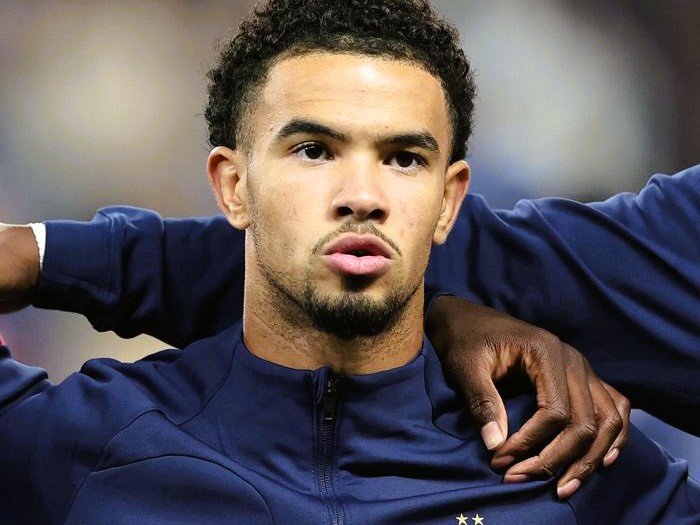
The youngest player in the squad and arguably the most naturally gifted midfielder France have produced since Zinedine Zidane.
At 20 years old, Zaïre-Emery has already become a cornerstone of the PSG midfield and is a regular starter for Les Bleus.
His composure under pressure, his technical precision, and his almost preternatural reading of the game make him one of the France young stars for the 2026 World Cup most likely to emerge as a global name by the tournament’s end.
The France golden generation 2026 has no more thrilling young heartbeat than this.
Désiré Doué
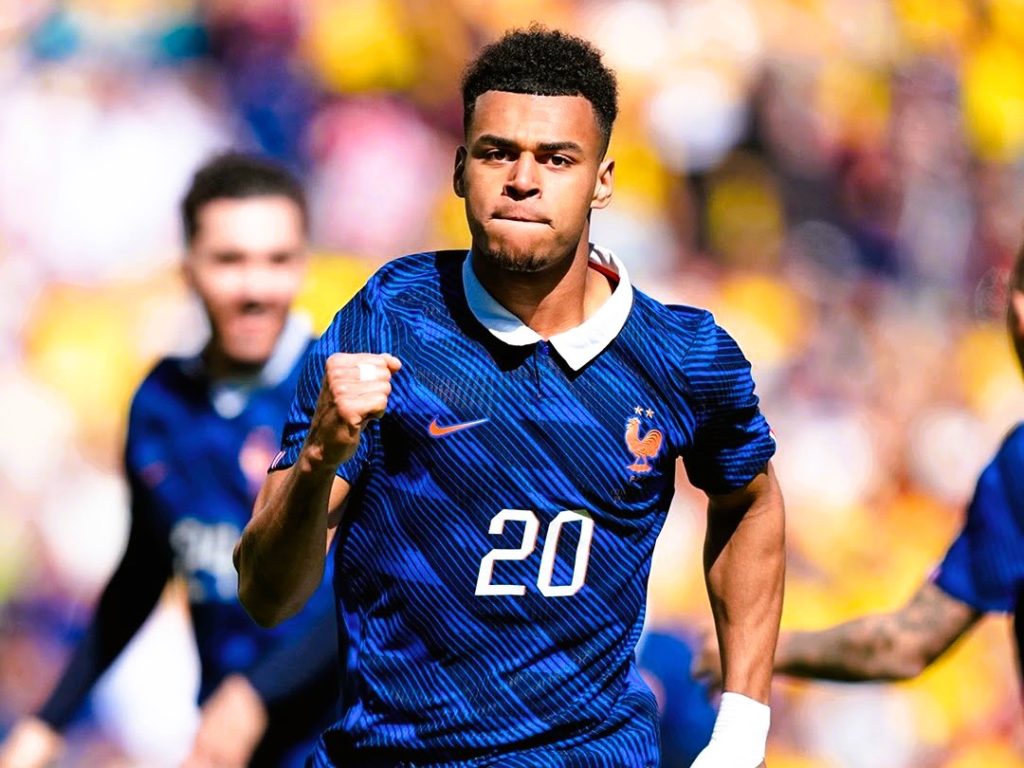
Doué won the Champions League Young Player of the Season award in PSG’s historic title-winning campaign, and his performances at club level have earned him a well-deserved place in Deschamps’ squad.
Quick, direct, and extraordinarily creative, the 19-year-old can play anywhere across the front three.
His ability to beat defenders with a change of pace and his composure in the final third suggest a player who will be a World Cup starter within the next cycle — and potentially a matchwinner at this one.
Can Kylian Mbappé Lead France to Another World Cup Title?
Mbappé’s Role in France’s Attack
The question of whether France can win the 2026 FIFA World Cup and the question of whether Mbappé performs to his potential are almost inseparable.
As captain, talisman, and primary goalscorer, Mbappé’s role in France’s attack is total.
He is the player opponents plan around, the player teammates play for, and the player the world watches above all others.
In a tournament played in North America — where massive crowds and a spectacle-hungry atmosphere could lift an already extraordinary player — Mbappé on the biggest stage is a phenomenon unlike anything else in the modern game.
Is This the Best Version of Mbappé?
There is a compelling argument that the answer is yes. Despite the hamstring concern that briefly threatened his participation, Mbappé has been in the form of his life at Real Madrid, where he has scored 41 goals in 41 games across all competitions in the 2025/26 season.
His movement has become more intelligent, his decision-making sharper, and his combination play more fluid than at any point in his career.
At 27, Mbappé enters this World Cup in the prime window between explosive youth and tactical maturity — a combination that is genuinely frightening for opposing defenders.
France’s Future Around Mbappé
The France World Cup team is not a one-man show, but Mbappé is the gravitational centre around which everything orbits.
With Dembélé in the form of his life, Olise developing into a world-class talent, and a midfield capable of winning possession and recycling the ball at speed, the players around Mbappé have never been better equipped to amplify his impact.
Whether Mbappé can lead France to another World Cup title may ultimately come down to whether the team can protect him, deploy him wisely, and give him the moments he needs to decide the big matches.
France’s Biggest Strengths and Weaknesses Before World Cup 2026
Biggest Strengths
France’s strengths going into the 2026 World Cup are almost embarrassingly numerous.
As a football powerhouse with tournament favourites status baked in, they possess elite midfield quality, one of the deepest attacking squads in the history of the competition, and a defensive unit built around two of the best centre-backs in European football.
The squad balance is exceptional. In every position, France have both a world-class starter and a quality backup capable of slotting in without a significant drop in level.
The goalkeeping department, the full-back positions, the midfield options — each area has been carefully constructed to withstand the pressure of a seven-game tournament without fading.
Beyond personnel, France possess something harder to quantify: tournament DNA.
They have been to three consecutive World Cup finals, winning in 2018 and agonisingly losing on penalties to Argentina in 2022.
That experience, that knowledge of what winning and losing on the biggest stage feels like, is an invaluable asset in knockout football.
Key Weaknesses
No squad is without vulnerabilities, and France’s key areas of concern are real. Mbappé’s fitness will be monitored closely throughout the tournament — a player of his importance operating below full capacity is a problem no tactical plan fully solves.
The team’s ability to grind out results against well-organised, lower-block defensive sides has historically been a challenge, and Les Bleus have occasionally looked vulnerable to well-executed pressing systems that disrupt their build-up play.
The full-back positions — particularly on the left without a natural backup of Théo Hernández’s quality — could become an issue if injury strikes.
And while the squad depth in attack is extraordinary, converting that talent into a coherent, automatic starting trio could take time to crystallise in a tournament environment.
Areas France Must Improve
Since the 2022 World Cup final, France have worked on improving their penalty-taking efficiency — a ghost that haunted their exit against Argentina.
Set-piece defending has occasionally been an Achilles heel, and in a tournament where corners and free kicks can decide tight matches, this is an area Deschamps will have spent hours drilling.
Converting the extraordinary attacking talent into consistent tactical cohesion — rather than relying on individual brilliance to unlock stubborn defences — is perhaps the greatest challenge Deschamps faces in his final tournament.
France’s 2026 Squad Compared to the 2022 World Cup Team
Key Differences From Qatar 2022
The France football evolution between Qatar 2022 and the 2026 edition is striking.
The squad that finished runners-up three and a half years ago was already exceptional, but the 2026 version feels sharper, deeper, and more ruthlessly talented in attack.
Gone is the over-reliance on a small core of experienced players carrying the whole show. In its place is a collective of elite performers across every line, many of whom have grown and improved significantly since their last World Cup appearance.
New Players in the Squad
Rayan Cherki’s inclusion is one of the most talked-about moments in the squad announcement.
The Manchester City creative midfielder earns his first World Cup call-up after an outstanding season under Pep Guardiola, bringing an inventive, unpredictable quality to France’s attacking options.
Jean-Philippe Mateta’s selection over Randal Kolo Muani also raised eyebrows — the Crystal Palace striker’s direct, powerful style offers France a different physical option in the final third.
Maghnes Akliouche of Monaco is another fresh face, a dribbler of pace and directness who has impressed in Ligue 1.
Crucially, Eduardo Camavinga — a key figure in Qatar — has been left out of the 2026 squad by Deschamps, who cited a difficult, injury-disrupted season at Real Madrid as the reason.
It is a significant omission, and one that underlines Deschamps’ willingness to make ruthless decisions even against players he has long trusted.
Tactical Changes Since 2022
France’s tactical setup has evolved considerably since the 4-3-3 they deployed in Qatar.
The midfield structure is now built around younger, more dynamic legs, with Zaïre-Emery replacing some of Camavinga’s energy and Tchouaméni taking on even greater defensive responsibility.
The attacking shape has shifted too, with the emergence of Olise and Doué giving Deschamps new wide options that blend creativity with directness — a slightly different flavour from the more pace-dependent wingers of 2022.
Can France Win the 2026 FIFA World Cup?
France’s Chances Against the World’s Best
France have been drawn into Group I alongside Senegal, Norway, and Iraq — a group that is manageable on paper, though Deschamps himself has cautioned against complacency.
Senegal, with their physical intensity and African Cup of Nations pedigree, represent a legitimate threat.
Norway, built around Erling Haaland, cannot be dismissed. And Iraq, though considered the weakest side in the group, will look to frustrate and absorb.
Once through to the knockout rounds, France’s path is likely to include battles against European giants and South American contenders.
Against Spain, England, Brazil, or Argentina — the nations most likely to emerge from the other side of the bracket — France’s France dream team for the 2026 World Cup is capable of prevailing.
Mbappé against Argentina 2026, a rematch of the 2022 final, is the storyline the football world hungers for most.
Why France Could Dominate the Tournament
The case for France dominating this tournament comes down to a simple truth: no other nation combines their attacking football brilliance with their defensive solidity.
The squad depth means Deschamps can rotate without weakening.
The tactical flexibility means he can adapt to any opponent. And in Mbappé, they have a player capable of producing the defining moment in any match, at any stage of the tournament.
Multiple sportsbooks have already priced France at or near the top of World Cup 2026 favorites lists, alongside Spain, and the wider prediction markets reflect a broad consensus that Deschamps’ side are one of the two or three teams most likely to lift the trophy in July.
What Could Stop France?
History teaches us that favourites fall. Injuries, fatigue, tactical rigidity in the face of an unexpected game plan, or simply the capricious nature of penalty shootouts could all intervene.
Argentina, the defending champions, carry championship DNA. Spain have a midfield system that can suffocate opponents. Brazil, under pressure to deliver after years of near-misses, could cause problems.
And the compressed schedule of a 48-team tournament, with more potential matches, increases the injury risk across a long campaign.
But if France stay healthy, if Mbappé fires, and if the extraordinary attacking depth clicks into rhythm, this is a France squad capable of doing what the 2018 version achieved — and what the heartbreaking 2022 side came one penalty away from repeating.
FAQ
What is France’s best lineup for the 2026 FIFA World Cup?
France’s strongest predicted starting XI is: Maignan; Koundé, Saliba, Upamecano, T. Hernández; Tchouaméni, Zaïre-Emery, Rabiot; Olise, Mbappé, Dembélé. This 4-3-3 formation makes the most of France’s extraordinary attacking talent and defensive solidity.
Who are France’s key players for World Cup 2026?
Kylian Mbappé is the undisputed captain and focal point of the squad, but Ousmane Dembélé (reigning Ballon d’Or winner), Michael Olise, William Saliba, Aurélien Tchouaméni, and Warren Zaïre-Emery are all critical to how France perform at this tournament.
What formation will France use in 2026?
Didier Deschamps’ preferred shape is the 4-3-3, which best utilises the squad’s attacking depth and the work rate of the midfield triangle. A 4-2-3-1 variant is also available and has been used by Deschamps in high-pressure knockout scenarios.
Can France win the 2026 FIFA World Cup?
Absolutely. France are widely regarded as one of the two or three strongest contenders for the tournament. They have the squad depth, tactical flexibility, and individual quality — led by Mbappé — to go all the way. Deschamps’ confirmation that this is his final tournament adds further emotional motivation.
Is Kylian Mbappé France’s most important player?
Yes, unquestionably. Mbappé’s combination of goalscoring record (12 goals in 14 World Cup matches), leadership as captain, and ability to create and finish makes him the most important player not just for France, but potentially in the entire 2026 World Cup.
Who are France’s young stars to watch in 2026?
Warren Zaïre-Emery, Désiré Doué, Michael Olise, Rayan Cherki, Bradley Barcola, and Maghnes Akliouche are the watch. Zaïre-Emery in particular, has the quality to emerge as one of the tournament’s defining players.
How strong is France’s squad depth for World Cup 2026?
Exceptional. France have world-class cover in every position. Their forward line alone includes nine players of the highest quality, meaning even significant injuries would not dramatically weaken the side. This squad depth is arguably France’s biggest structural advantage over their rivals.
Conclusion
France’s best XI for 2026 is a genuine contender for the greatest lineup in the tournament’s history.
From Maignan’s commanding presence in goal, through Saliba and Koundé’s elite defending and the electric engine of Tchouaméni and Zaïre-Emery in midfield, to the devastating trio of Mbappé, Dembélé, and Olise in attack — this France predicted lineup is capable of beating any opponent on any given night.
The France strongest squad has the depth, the tactical intelligence, and the generational talent to go all the way.
As Didier Deschamps prepares to bring down the curtain on one of the most decorated tenures in French football history, the stage is set for one final, defining chapter. Les Bleus have unfinished business. The world will be watching.