







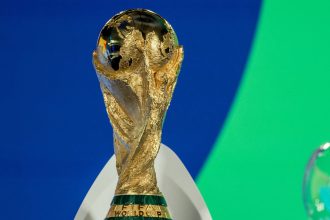
Some nations are defined by what they have won. The Netherlands are defined, in equal measure, by what they have not. Three World Cup finals. Three defeats.
1974, when Johan Cruyff’s Total Football revolution swept aside every team — except West Germany on their own soil.
1978, when a team without Cruyff still reached the final, only to fall to Argentina.
2010, when Robin van Persie, Wesley Sneijder, and Arjen Robben came agonisingly close, only for Andrés Iniesta’s extra-time winner to deny them.
In the decades since, the pattern has repeated. Not always in finals — but in the same suffocating way: talented squads, deep runs, and then the moment where it stops.
A penalty shootout in Qatar. A semi-final heartbreak in Brazil. An absence in Russia. Always competitive. Always there. Never quite over the line.
The curse — if you believe in such things — is 52 years old.
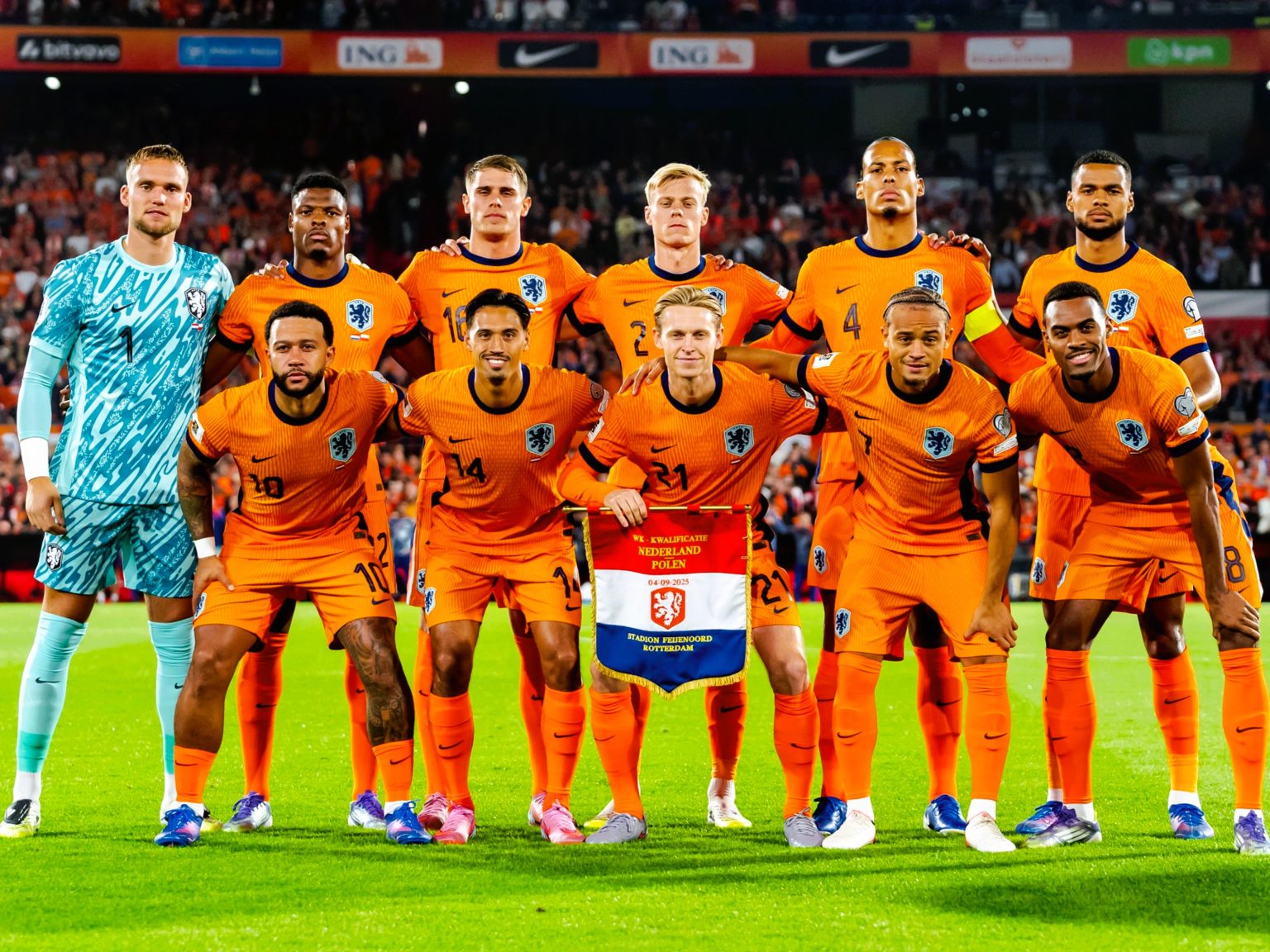
Heading into the summer of 2026, Ronald Koeman brings a Netherlands squad that is, in many ways, the most complete since 2010.
The defensive structure is elite. The midfield is balanced and modern. The attack, while not legendary, is varied and unpredictable.
The question is simple: could this finally be the tournament that changes everything?
The Netherlands enters the 2026 World Cup as a strong contender, though they are not the primary favorites. Currently ranked as approximately the seventh favorite by betting markets with odds around 20/1, they hold an implied probability of roughly 4.8% to lift their first trophy.
Netherlands 2026 Snapshot
| Metric | Value |
|---|---|
| FIFA Ranking | 7th (1,756.27 points) |
| World Cup Odds | ~+2000 (approx. 5% implied probability) |
| Best WC Finish | Runner-Up (1974, 1978, 2010) |
| Last 5 WC Results | QF (2022), DNS (2018), SF (2014), DNS* (2010), QF (2006) |
| Key Players | Virgil van Dijk / Frenkie de Jong / Cody Gakpo |
| Manager | Ronald Koeman |
| Group | Group F (Norway, Sweden, Tunisia) |
| Qualifying Record | Unbeaten in 8, topped Group G |
| Win Probability (AI) | ~5–7% |
| Finals Reached (WC History) | 3 (1974, 1978, 2010) — won none |
Recent World Cup Performance
2014 – The Last Great Run
Van Gaal’s 2014 campaign was a reminder of what Dutch football, at its ruthless best, can look like.
The opening match, a 5–1 destruction of Spain, the reigning world champions, remains one of the great World Cup statements of intent in the tournament’s modern era.
Robin van Persie’s diving header is still one of the iconic images of twenty-first century football.
They won their group, beat Mexico in an extraordinary Round of 16 comeback, and dispatched Costa Rica on penalties in the quarter-final.
In the semi-final, Argentina ended their run — 0–0 after 120 minutes, penalties decided it. They finished third. The tournament had promised more.
2018 – The Dark Years
The 2018 World Cup happened without the Netherlands. They failed to qualify for a humbling absence that triggered national soul-searching and, ultimately, Koeman’s first appointment to the national team role.
The failure was not a single event but a symptom: an aging squad, a generation gap, and the absence of system clarity.
A nation that knows what it is to be absent from the game’s biggest stage carries a different kind of motivation when it returns.
2022 – So Close Again
Qatar produced the most dramatic of the Netherlands’ recent exits. The quarter-final against Argentina, known as the Battle of Lusail, ended 2–2 after extra time following one of the most chaotic matches in World Cup history.
Wout Weghorst’s 83rd-minute header and his extraordinary 90+11 equaliser had forced extra time from 2–0 down.
Van Dijk missed the first penalty. The shootout unravelled. Argentina won 4–3. Another exit. More tears.
The core of this 2026 squad was present in Lusail that night. They remember every detail.
Key Pattern
The Netherlands are consistently competitive, rarely embarrassed, always dangerous, and they fall short in their biggest moments.
Since 1998, three of their four major tournament exits have been decided by penalty shootouts. Understanding that pattern is the starting point for understanding whether 2026 can be different.
Why Netherlands CAN Win the 2026 World Cup
Elite Defensive Core
The single most important reason to believe in the Netherlands in 2026 is the quality of their defensive structure, arguably the finest the Oranje have assembled in any era.
Virgil van Dijk
The centrepiece. The Liverpool captain, who broke the Dutch captaincy record during qualifying, is among the best centre-backs in the history of world football.
At 34, his reading of the game has deepened with age — he organises, he leads, and his presence raises the collective standard of every defender around him.
Micky van de Ven
van de Ven provides the pace element that changes how the back line can be structured.
His recovery speed means the Netherlands can play a higher defensive line than would otherwise be possible, which cascades through the entire attacking approach.
Jurrien Timber, Nathan Ake, Stefan de Vrij, and Jan Paul van Hecke give Koeman defensive depth that most international squads simply cannot match.
Midfield Control
Frenkie de Jong
The tempo controller, when healthy and at full rhythm, his ability to receive under pressure, play out from tight spaces, and shift the angle of attack gives the Netherlands a possession quality that few international teams can replicate.
Ryan Gravenberch
Developed into one of Europe’s most complete midfielders at Liverpool under Arne Slot, provides the physical protection and vertical speed that balances De Jong’s technical intelligence.
Tijjani Reijnders
Who moved to Manchester City last summer adds the goal threat from deep and the dynamic running that the Dutch midfield historically lacked.
When those three function as a genuine unit, the Netherlands controls matches rather than simply competing in them.
Tactical Identity
Koeman’s system is built on clarity — a high defensive line, aggressive pressing triggers in the middle third, and quick transitions from defensive stability to attacking speed.
He has operated comfortably in a 4-3-3, a 3-5-2, and a 4-2-3-1 depending on the opponent. The tactical identity is not as romantic as 1974, but it is considerably more reliable under tournament pressure.
Tournament Experience
Van Dijk has been to a World Cup semi-final and quarter-final. Frenkie de Jong has experienced the full emotional spectrum of knockout elimination. Gakpo scored in all three group matches in Qatar.
Multiple players in this squad have competed in high-stakes international matches and come out with both the scars and the understanding.
In a tournament where pressure builds across four weeks, experience in managing that escalation is a genuine competitive advantage.
Unpredictable Attack
Unlike previous Dutch squads that relied on one star, Van Persie in 2014, Robben in 2010, Koeman’s attacking system distributes the goal threat across multiple profiles.
Cody Gakpo is the primary force: powerful, composed, capable of playing wide or central.
Memphis Depay, the all-time Dutch top scorer, brings individual quality in decisive moments.
Xavi Simons provides the creative unpredictability that compact defences find hardest to plan for.
Opposition defences cannot isolate a single threat and solve the problem. That distribution is one of the most underappreciated aspects of what Koeman has built.
Will Netherlands Win the 2026 World Cup?
The Netherlands at +2000, with an implied probability of approximately 5%, is a fair market reflection of its position.
They are better than that price in some analytical models (AI simulators place them at 5–7%), but they are not among the two or three most likely winners.
The case against them being priced shorter is the attacking depth relative to the elite tier.
When a knockout match is tied at 0–0 with 20 minutes left and the opponent has defended everything thrown at them, the Netherlands’ creative resources do not yet match France, England, or Brazil.
The case for undervaluation is the defensive quality.
A team that is genuinely difficult to beat gives itself the chance to win every match it plays, and in an expanded 48-team tournament, that structural foundation is worth more than any single attacking star.
The realistic probability: 5–7%. A genuine dark horse with elite defensive foundations and enough individual quality to beat anyone on any given day.
Netherlands’ Chances of Winning the 2026 World Cup (Data Analysis)
FIFA Ranking & Global Standing
The Netherlands enter ranked 7th globally, directly behind Portugal (5th) and Brazil (6th), ahead of Morocco and Belgium.
This is not a peripheral team. They have been consistently ranked in the top ten for the better part of a decade under Koeman and are recognised globally as a genuine contender, even if the market does not fully reflect it.
Squad Market Value
The squad’s value is bolstered significantly by Premier League concentration: Van Dijk, Gravenberch, Timber, Van de Ven, and Gakpo are all competing in the world’s wealthiest league at the highest level.
Combined with De Jong at Barcelona and Dumfries at Inter, the squad’s collective market value sits in the €700–€900 million range, firmly within the top ten squads at the tournament.
Tournament Consistency
The Netherlands have qualified for 11 of the last 14 World Cups and reached the knockout stages in every tournament they have participated in since 1990.
That consistency reflects a footballing infrastructure that continues to produce elite talent regardless of the generation.
Comparison with Top Rivals
| Team | FIFA Rank | WC Odds | Recent WC Best | Key Strength |
|---|---|---|---|---|
| Spain | 1st | ~+600 | Winner (2022) | System & possession |
| Argentina | 2nd | ~+600 | Winner (2022) | Experience + depth |
| France | 3rd | ~+500 | Winner (2018) | Squad depth |
| England | 4th | ~+600 | Semi-Final (2018) | Individual talent |
| Brazil | 5th | ~+700 | QF (2022) | Attack + Ancelotti |
| Portugal | 6th | ~+1100 | QF (2022) | Creative midfield |
| Netherlands | 7th | ~+2000 | QF (2022) | Defensive structure |
Netherlands Manager & Tactical Approach
Current Manager Overview – Ronald Koeman
Koeman is in his second stint as Netherlands manager. His qualifying campaign was convincing, unbeaten in eight games, topping the group with only Poland able to take draws.
He has integrated young talent like Reijnders, Van de Ven, and Simons alongside the established core of Van Dijk and De Jong without disrupting the collective identity.
The Nations League double-header against Spain in 2024/25 — drawing twice with the world champions provided the most recent evidence that the system can compete at the highest level.
His philosophy is pragmatic rather than romantic: defensive solidity as the foundation, with creative freedom exercised within structural constraints.
Preferred Formation(s)
- 4-3-3 — the default shape; double pivot of De Jong and Gravenberch, Reijnders advancing, wide forwards providing width
- 3-5-2 — deployed against high-pressing teams; gives wing-backs licence to attack while the three-man defensive unit provides security
- 4-2-3-1 — used when Koeman wants to restrict midfield access; Simons or Koopmeiners as the playmaker behind one striker
Strengths of the System
The primary strength is the combination of defensive depth and attacking fluidity in transition.
The speed with which the Netherlands moves from defensive organisation to attacking threat is extremely difficult to contain over 90 minutes.
The second strength is positional clarity: every player knows exactly where they should be at every moment, reducing individual errors and wasted attacking moments.
Tactical Weaknesses
The striking department is the most frequently cited concern; neither Gakpo nor Memphis is the kind of dominant centre-forward who can carry a team through six knockout matches by pure physical superiority.
The second vulnerability is the system’s dependence on De Jong’s fitness. Without him, the Netherlands have energy and physicality in midfield but lose the tempo-controlling intelligence that defines Koeman’s approach.
How Netherlands Should Lineup to WIN the 2026 World Cup
Best Formation – 4-3-3
The 4-3-3 gives the Netherlands the best balance of defensive security and attacking variety.
It allows Van Dijk and Van de Ven to operate as the central defensive partnership, while Dumfries and Frimpong provide the attacking outlet from full-back.
Predicted Starting XI
GK: Bart Verbruggen — composed, excellent distribution, crucial to build-up from the back
RB: Denzel Dumfries (Inter Milan) — dynamic, physical, creates a dangerous right-side combination with Gakpo
CB: Virgil van Dijk (Liverpool) — captain, leader, the defensive intelligence around which the entire back line is organised
CB: Micky van de Ven (Tottenham) — the pace element; his recovery speed changes the structural calculation of the entire defensive line
LB: Nathan Ake (Manchester City) — composed, reliable, provides the defensive balance against the more attacking options elsewhere
CM: Frenkie de Jong (Barcelona) — the pivot; the player who determines whether the Netherlands impose their rhythm or react to the opposition’s
CM: Ryan Gravenberch (Liverpool) — the engine; wins the ball, distributes quickly, arrives late with purpose
CM: Tijjani Reijnders (Manchester City) — the goal threat from deep; the player who gives the midfield its forward unpredictability
RW: Jeremie Frimpong — directness, pace, a constant threat in behind
ST: Cody Gakpo (Liverpool) — the primary attacking reference point; powerful, clinical, capable both in behind and back-to-goal
LW: Memphis Depay — the experienced creative force; individual quality in decisive moments; the player who elevates for the biggest occasions
Key Tactical Roles
The De Jong–Gravenberch relationship is the structural heart of the system. De Jong receives and distributes; Gravenberch protects and presses.
Reijnders provides the late run that gives defences an additional problem they cannot solve purely by marking zonally.
On the right, Dumfries and Gakpo’s combination — inside run, overlapping run, creating the two-versus-one is the Dutch attack’s most reliable and dangerous mechanism.
Netherlands Squad Depth & Key Players
Goalkeepers & Defense
Bart Verbruggen has established himself as Koeman’s first choice through composure under pressure and the technical quality to play out from the back.
Virgil van Dijk, captaining the Netherlands for a record number of times, remains the best organiser of a defensive unit in world football. His presence makes every centre-back around him measurably better.
Micky van de Ven’s pace is a structural tactical weapon, not merely a physical attribute.
De Vrij, Van Hecke, Ake, and de Ligt (fitness permitting) give the back line a depth that few squads in the tournament can match.
Midfield Engine
The De Jong–Gravenberch–Reijnders triangle is the strongest Dutch midfield combination since the Sneijder generation.
Each covers what the others do not: creativity in possession, physical dominance in transition, goal threat from deep.
Teun Koopmeiners, Mats Wieffer, and Joey Veerman all represent legitimate depth options players who would start for most other European squads.
Koeman has structural redundancy in midfield that previous Dutch sides lacked entirely.
Attacking Firepower
Cody Gakpo is the pivot around whom the attacking system rotates.
His development from the 2022 World Cup, where he scored in all three group matches, through to his work at Liverpool has produced a player who is consistent, intelligent, and capable of the decisive moment.
Memphis Depay, the all-time Dutch top scorer at 47 goals, elevates for big occasions in a way that no system can manufacture.
Xavi Simons is the creative wildcard, still only 23, already capable of unlocking organised defences with a single moment that the opposition’s tactical plan did not account for.
Netherlands’ X-Factor for the 2026 World Cup
Virgil van Dijk’s Leadership
In a World Cup knockout match at 0–1 with 30 minutes left, the ability of a single player to reset the emotional temperature of a dressing room is worth more than any tactical innovation.
Van Dijk is that player. He has been that player for Liverpool across multiple Champions League campaigns.
The calm authority he projects — on and off the pitch — is the reason this Netherlands squad does not collapse under the weight of the history it carries.
Frenkie de Jong’s Tempo Control
The ability to slow a match when the Netherlands needs to recover and accelerate it when the opponent is tiring is a weapon most international teams do not possess.
De Jong gives the Netherlands that weapon. At his best, it is the single most important reason this team can compete for seven matches at the highest level without relying on individual moments of brilliance to compensate for structural deficiencies.
Collective Attacking Variety
Where previous Dutch squads had one great attacker around whom the entire system was organised, Van Persie in 2014, Robben in 2010.
This Netherlands side spreads the goal threat across five or six players. Less spectacular. More resilient. Over a four-week tournament in summer heat, resilience matters far more.
Will Netherlands Perform at Their ABSOLUTE BEST in 2026?
Mentality in Big Matches
The 2022 Qatar campaign showed that the current core does not fold quietly.
Coming back from 2–0 down against the eventual world champions, in the final minutes of a quarter-final, in one of the most hostile environments imaginable, that required a specific kind of belief that not every generation of Dutch footballer has demonstrated.
The penalty shootout went wrong. But the fight to get there was remarkable, and the players who produced it are still in this squad.
Knockout Stage Pressure
The market prices the quarter-final as the Netherlands’ most likely exit point: 3/1 for that outcome, and the historical record supports the assessment.
Three of the last four major tournament exits have been decided by penalty shootouts.
Breaking that pattern requires either a goalkeeper capable of winning a shootout (Verbruggen is, on his best days) or a draw that gives the Netherlands a semi-final opponent they are structurally better equipped to handle.
Tournament football is partly preparation and partly fortune.
Experience vs Fresh Generation
The balance between Van Dijk’s 34-year-old leadership and Reijnders’ 26-year-old energy represents the ideal tournament combination.
The kind of generational continuity that the very best international squads have when they win.
The previous Dutch World Cup generation that succeeded most of 2014 had Van Persie at 30, alongside Robben and a tactically clear system.
The structure was similar. Koeman will be hoping the 2026 version goes further.
Are Netherlands Right to Be Among 2026 Contenders?
Betting Odds Overview
At approximately +2000, the Netherlands are priced as third-tier contenders, behind the elite favourites and behind sides like Portugal and Germany in the market.
That pricing is shaped by the attacking ceiling relative to the top five and by the historical pattern of quarter-final exits.
It potentially undervalues the defensive quality of a team as difficult to beat as the Dutch, in an expanded 48-team format that rewards structural consistency, has more routes to the final than a standard draw would suggest.
Comparison with France, Brazil, England
France have greater depth across every attacking position. England are more explosively dangerous in the final third.
Brazil under Ancelotti have the most dangerous individual attacker in the tournament in Vinícius Júnior.
Against any of those three, the Netherlands enters as the slight underdog, but the Dutch defensive structure, in a single knockout match, gives them the foundation to contain, frustrate, and then execute.
Overhyped or Underrated?
Underrated, at +2000. The defensive quality is not fully captured by a price shaped primarily by the attacking ceiling.
In a knockout tournament, where the team that concedes fewest goals most often progresses, that quality is enormously meaningful.
The smart position is to back them reaching the semi-finals before extending to the outright.
What Are Netherlands’ Chances of Winning the 2026 World Cup?
Group Stage Probability
The Netherlands have been drawn into Group F alongside Japan, Tunisia, and Sweden. They are the heavy favorites to progress as group winners.
| Outcome | Implied Probability | Odds (Bet365) |
|---|---|---|
| Win Group F | ~53.5% – 58.3% | 8/11 |
| Qualify from Group | ~93.3% | -1400 |
Their opening game against Japan on June 14, 2026, in Monterrey is viewed as the decider for the top spot in the group.
While Japan is considered a “dark horse” with tactical discipline, the Dutch are expected to comfortably navigate this stage due to their superior squad quality and recent qualifying form, where they finished top of their UEFA group.
Knockout Stage Outlook
Analysts view a quarter-final exit as the most likely “baseline” outcome for Oranje, though their path could realistically lead to the semi-finals or beyond.
- Reach Quarter-finals: ~35.7% implied probability.
- Reach Semi-finals: ~18.2% implied probability.
- Reach Final: ~10% implied probability.
The squad’s strength lies in its defensive structure, featuring world-class players like Virgil van Dijk and Cody Gakpo, which historically makes them difficult to break down in knockout formats.
Overall Win Probability
The honest number: approximately 5–8%. Genuine contention better than the majority of the 48-team field, within shouting distance of the second tier of contenders.
| Model/Source | Probability | Status |
|---|---|---|
| Betting Markets | ~4.8% | 8th Favorite |
| Statistical Models | ~5% – 8.8% | Dark Horse / Contender |
| Prediction Markets (Polymarket) | ~3% | Top 10 Contender |
It means the Netherlands will be dangerous in every match they play, capable of winning any knockout tie, and a side whose exit in the final would not surprise anyone but would feel, as it always does, like another instalment of the longest-running story in international football.
Netherlands’ Possible Route to the 2026 Final
The expanded 48-team format means the Dutch must navigate five knockout rounds to reach the final.
A “tennis-style” seeding system implemented by FIFA protects the top four seeds—Spain, Argentina, France, and England—from meeting each other until the semi-finals, provided they win their groups.
For the Netherlands, this bracket structure suggests that if they maintain their form, they could potentially avoid these giants until a quarter-final or semi-final clash, with the ultimate goal being the final on July 19 at MetLife Stadium.
Potential Knockout Routes
For the expanded 2026 FIFA World Cup, a total of 32 teams will qualify for the knockout stage.
This marks a significant increase from the 16 teams that qualified in the previous 32-team tournaments.
The 32 advancing teams are determined as follow: Top 2 teams from each of the 12 groups (24 teams total). 8 best third-placed teams across all 12 groups.
If the Netherlands win Group F, their route to the final begins in the new Round of 32 against the runner-up of Group C—which features Brazil, Morocco, Scotland, and Haiti—on June 29 in Monterrey.
Advancing as group winners is strategically vital, as a second-place finish would likely force a much earlier showdown with Brazil (the Group C favorite) in the Round of 32.
| Round | Route 1: Group F Winner | Route 2: Group F Runner-up | Route 3: Best 3rd Place |
|---|---|---|---|
| Round of 32 | Runner-up Group C (e.g., Morocco, Scotland, Haiti) | Winner Group C (Likely Brazil) | Winner Group A, B, D, E, or I |
| Round of 16 | Winner Match 73 (Runner-up A vs. Runner-up B) | Winner Match 78 (Runner-up E vs. Runner-up I) | Depends on initial bracket placement |
| Quarter-finals | Likely Winner Group H (Spain) or J (Argentina) | Likely Winner Group A (Mexico) or L (England) | Varies by path |
| Semi-finals | Top-bracket favorites (e.g., Portugal) | Bottom-bracket favorites (e.g., France) | Varies by path |
| Final | July 19 at MetLife Stadium | July 19 at MetLife Stadium | July 19 at MetLife Stadium |
What is Stopping Netherlands from Winning the 2026 World Cup?
Defensive Fragility Under Pressure
When the full-backs push forward, the channels behind them are exposed to rapid transitions.
Against teams with elite counter-attacking pace, Vinícius Júnior for Brazil, the wide forwards of England, those channels can be lethal.
Van de Ven’s recovery speed compensates considerably, but it cannot do so indefinitely across 120 minutes of a knockout match.
Overdependence on Key Creators
Remove De Jong from the system and the midfield loses its defining quality.
Remove Gakpo from the attack, and the striking structure becomes reactive rather than threatening. The depth behind both is genuine but not equivalent.
Neither of those replacements replicates the specific function of the player they replace, and in the decisive moments of a World Cup knockout match, the difference between the first choice and the backup is exactly the margin that separates winning from losing.
Managerial Limitations
Koeman is excellent at building systems over extended periods.
The open question is his in-game management in crisis moments when the Netherlands are losing in the 70th minute of a quarter-final, and the tactical adjustment required is fundamental rather than marginal.
His record in those moments across both spells in charge is limited enough that it remains theoretical. That uncertainty is legitimate.
Netherlands vs Top Rivals – Who Has the Edge?
Netherlands vs France
France have more depth at every attacking position and a greater catalogue of knockout-stage success.
In a high-tempo match where both teams are pressing, France’s individual quality in transition is probably decisive.
But if the Netherlands set up to contain France and build through De Jong’s control, the defensive quality can keep it tight long enough for a set piece or counter-punch to matter. Edge: France, not comfortably.
Netherlands vs England
England’s tactical creativity against a compact, well-organised defensive block has been a persistent question mark across multiple tournaments.
The Euro 2024 semi-final, where the Netherlands led until the final minutes, is the most recent evidence that this matchup is more balanced than the market suggests.
Edge: Netherlands, slightly, based on defensive organisation and recent head-to-head history.
Netherlands vs Brazil
Vinícius Júnior versus Van de Ven is the match-up of the tournament.
Brazil under Ancelotti have solved a decade of tactical conservatism and carry the most dangerous attacking unit in the field.
Against a well-organised Dutch side, it would be extraordinary, but the attacking differential is real. Edge: Brazil, marginally.
Which Netherlands Player Will Shine Most in 2026?
Main Candidate
Tijjani Reijnders. At 26, in his first major World Cup, operating in a central midfield role with licence to arrive late, Reijnders has the profile of a player who can have a breakout tournament at the global level.
His goal threat from deep, technical quality on the ball, and Champions League experience at Manchester City make him the Dutch player most likely to produce a defining moment.
Supporting Stars
Cody Gakpo and Virgil van Dijk are the two non-negotiable elements of the Dutch system. Gakpo’s goals and Van Dijk’s defensive organisation, without either at their best, the structure is fundamentally compromised, and with both at their peak simultaneously, the Netherlands are capable of winning every match they play.
Dark Horse Pick
Xavi Simons. Still only 23, the Tottenham playmaker has the creative profile to produce one extraordinary moment, a no-look pass in the quarter-final, a solo run in the semi that defines a tournament for a nation.
His ceiling, on a specific day when everything is working, is as high as any player in the Dutch squad.
Final Prediction – How Far Will Netherlands Go?
Expected Finish
Quarter-Final or Semi-Final. The defensive quality gives them the structural foundation to reach the last four.
The attacking ceiling and the weight of historical penalty shootout vulnerability create meaningful risk beyond that point.
Best-Case Scenario
Champions. The squad has the defensive foundation to win every match 1–0 if necessary, the midfield intelligence to control every game they play, and enough individual attacking quality to find the decisive moment in tight situations.
Best-case is approximately 5–7% — a genuine, credible probability built on real competitive foundations. Not romanticism. Structure.
Worst-Case Scenario
Round of 16 exit — if De Jong’s injury situation deteriorates, the attacking line finds no rhythm against a compact opponent, and the expanded format introduces the variables that the expected path cannot survive. Unlikely but not implausible.
Conclusion – Can Netherlands Finally Do It?
The honest answer is: yes, they can. Not with overwhelming probability. Not as the most likely outcome.
But genuinely, structurally, with a squad that has the defensive architecture to win seven consecutive matches and enough creative quality to find the decisive moments when they are needed.
What makes 2026 feel different from 2010, or 2014, or 2022, is not any single player. It is the balance.
This is the most complete Dutch squad since the Cruyff era — not the most talented, but the most structurally sound. Every line is covered.
Every function has depth. The system does not collapse if one player has a bad game.
Whether that is enough to finally end the longest unfinished story in international football — whether this is the Dutch generation that gets to lift the trophy their predecessors three times deserved — will be one of the defining narratives of the summer.
The curse is 52 years old. Ronald Koeman’s squad might just be old enough to bury it.
(FAQs) Can Netherlands finally win the 2026 World Cup
Will the Netherlands win the 2026 World Cup?
While they are strong contenders, most bookmakers rank them behind favorites like Spain, France, and England. Statistical models currently give them an implied win probability of approximately 4.8%.
Who is the Netherlands’ best player in 2026?
Captain Virgil van Dijk remains the team’s highest-rated player and defensive anchor. Other key figures include midfielder Frenkie de Jong and top scorer Memphis Depay.
What are Netherlands’ odds for the 2026 World Cup?
As of April 2026, their odds to win the tournament outright are generally listed at 20/1. They are heavy favorites to win their group, with odds of 8/11.
Have the Netherlands ever won the World Cup?
No. The Netherlands have never won the FIFA World Cup, though they have finished as runners-up on three occasions: 1974, 1978, and 2010.
Who is the Netherlands’ manager at the 2026 World Cup?
Ronald Koeman is the manager. He returned for his second stint in 2023 and is under contract through the end of the 2026 tournament.
What group are Netherlands in at the 2026 World Cup?
The Netherlands is in Group F for the 2026 World Cup. They are joined in the group by Japan, Sweden, and Tunisia. As a top seed, the Dutch are favorites to advance, but they face a challenging mix of technical skill from Asia and physical presence from Europe and Africa.
Do you think the Netherlands can finally win the World Cup in 2026? Is this the generation that breaks the curse — or does the heartbreak continue? Share your thoughts in the comments below.