

Five stars. That is what sits on the chest of the Seleção‘s iconic yellow jersey, each one a World Cup triumph, each one a chapter in the most storied international football history the sport has ever produced.
Brazil are the only nation to have participated in every single World Cup, and they have lifted the trophy in 1958, 1962, 1970, 1994, and 2002 — a record that no other country comes close to matching.
They gave the world Pelé, Ronaldo, Ronaldinho, Rivaldo, Garrincha, Zico, and Romário.
They invented joga bonito — the beautiful game — and for decades, they were its finest practitioners.
The numbers are staggering. Brazil’s 2002 squad, the last to win it all, did so with a forward line so devastating it still lives in World Cup folklore.
Ronaldo, Rivaldo, and Ronaldinho dismantled opponents with a combination of technical brilliance and ruthless finishing that the tournament had never seen before.
That team in Yokohama, beating Germany 2-0 in the final, felt like a coronation as much as a victory.
But that was 24 years ago. And football, unlike nostalgia, does not stand still.
The 2026 FIFA World Cup arrives with a new format—48 teams, hosted across the United States, Canada, and Mexico—and Brazil arrives as one of the most talked-about sides in the tournament.
There is renewed optimism, and for once, it feels grounded in something concrete rather than just reputation.
Carlo Ancelotti, the most decorated club manager of the modern era, has taken charge of the national team.
A generation of European-trained Brazilian talent has emerged. Vinicius Junior, Raphinha, Rodrygo, and the prodigiously gifted Estevão Willian give Brazil an attacking depth that they have not had since the golden years.
Yet the cautious observer will note that Brazil have said something similar before. In 2014. In 2018. In 2022. And each time, the quarter-finals came and swallowed them whole.
Key Question: Can Brazil Finally Win Again? That is the central question this article attempts to answer — not with sentiment, but with evidence.
Can this Brazil squad, under Ancelotti, with its collection of elite talent, finally translate potential into a sixth World Cup?
Are the bookmakers right to have them in the conversation? Or is this another cycle of justified hype meeting tournament-stage reality? Let us work through it, section by section.
Brazil’s Recent World Cup & International Performance
2018 World Cup Performance
Brazil arrived in Russia with Tite at the helm and a squad built around the talismanic Neymar, who had returned from a long injury layoff. There was genuine expectation.
They cruised through the group stage, beating Switzerland narrowly, demolishing Costa Rica and Serbia with late drama, and looked tactically disciplined.
Neymar was not at his best physically but was clearly the focal point of everything Brazil did going forward.
In the Round of 16, they beat Mexico 2-0 in a controlled, professional display. And then came Belgium in Kazan.
Brazil dominated large stretches of the quarter-final, but were undone by two moments of clinical counter-attacking brilliance from the Red Devils.
Fernandinho’s own goal gifted Belgium the opener, Kevin De Bruyne’s strike doubled the lead, and despite a Renato Augusto goal pulling one back, Brazil could not complete the comeback.
A 2-1 defeat, and another early exit from the tournament they covet most.
The tactical verdict? Brazil were too conservative under Tite, too reliant on Neymar as a creator and too slow to break down organised defences.
Their midfield lacked creativity, and the absence of a genuine pressing structure left them vulnerable in transition.
2022 World Cup Performance
Qatar 2022 was supposed to be different. Brazil were arguably the most complete squad at that tournament.
Tite had developed a fluid 4-2-3-1 system with genuine squad depth across all positions.
Neymar, Vinicius Jr, Raphinha, Richarlison, Rodrygo, Gabriel Jesus, Antony — the attacking options alone made them the envy of every other nation.
They won Group G convincingly, Richarlison’s overhead bicycle kick against Serbia becoming one of the tournament’s defining moments.
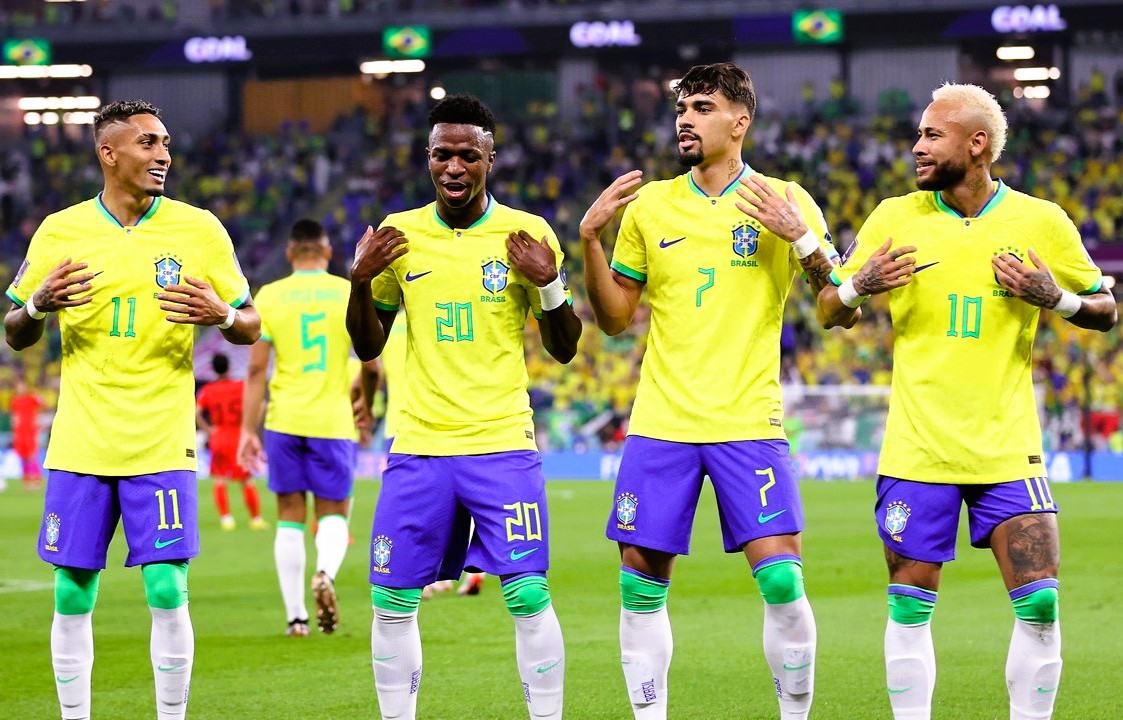
In the Round of 16 they demolished South Korea 4-1 in one of the most imperious Brazilian performances since 2002, the entire starting XI dancing on the pitch at one point with the score already settled.
Croatia awaited in the quarter-final, and what followed was one of the most agonising nights in Brazilian football.
Brazil dominated the 90 minutes, Neymar scoring a stunning extra-time goal that appeared to settle it.
But Brunó Petković equalised in the 117th minute, and in the shootout, goalkeeper Dominik Livaković became a national hero in Zagreb, saving two penalties as Croatia advanced 4-2 on spot-kicks.
Neymar, who did not even get to take a penalty, was inconsolable on the pitch.
Lessons from Recent Tournaments
Two consecutive quarter-final exits tell a story. Brazil are not underperforming the way a weak team does — they keep reaching the final eight with relative ease.
What they cannot do is win the big knockout match when it matters most.
There are consistent threads: a vulnerability under pressure in penalty shootouts; an over-reliance on individual brilliance rather than collective system; an inability to manage tight games when the opponent absorbs their attack and hits on the break.
The lesson is clear. To win in 2026, Brazil do not need to get better at reaching the quarter-finals. They need to be fundamentally different in them.
Brazil 2026 World Cup Snapshot
| Category | Details |
|---|---|
| FIFA Ranking | 6th As of April, 2026 |
| World Cup Odds | +800 (≈11% win probability) |
| Last 5 World Cups | 2022 – QF | 2018 – QF | 2014 – SF | 2010 – QF | 2006 – QF |
| Key Player | Vinicius Júnior (X-Factor & attacking leader) |
| Manager | Carlo Ancelotti |
| Biggest Strength | Elite attacking depth & individual brilliance |
| Biggest Weakness | Quarter-final exits & defensive vulnerabilities |
| Realistic Finish | Semi-finals |
You may also like:
Why Brazil will win the 2026 World Cup?
Elite Attacking Depth
The attacking burden no longer falls on a single player the way it did with Neymar for so long — and that is actually a significant strength.
Vinicius Junior is the headline name, but Raphinha, Rodrygo, Estevão Willian, and Matheus Cunha all offer dynamic, high-level alternatives.
This is not a squad that collapses if one player has a bad game.
It is a squad that rotates, surprises, and overwhelms, and in a 48-team tournament where depth is tested across seven games, that matters enormously.
Peak-Age Squad Profile
The timing is right. Vinicius Junior will be 25 at the tournament, still firmly in his peak years, while Marquinhos at 31 brings experience and the winning mentality gained from PSG’s Champions League-winning season.
Rodrygo at 25, Raphinha at 29, and the teenage Estevão all align to create a squad where the youngest are fearless and the veterans are hardened.
This is not a squad in transition — it is a squad at its moment.
Tactical Evolution
Under Carlo Ancelotti, Brazil represent something meaningfully different from recent cycles: more structured, more defensively organised, while still offering elite attacking quality on both wings.
Ancelotti’s genius has always been his ability to build a system that serves the players rather than constraining them.
At Real Madrid he won four Champions Leagues precisely because he knew how to get the best out of galácticos without strangling their instincts.
Brazil, with their natural attacking talent, could not have asked for a more suitable coach.
Winning Mentality Returning
The appointment of Ancelotti is not purely tactical; it is psychological.
His connection to Real Madrid means several players are deeply familiar with his methods, which removes the typical adaptation period that international coaches often face.
Casemiro, Vinicius, and Rodrygo have all won major trophies under him. They know what he demands and how he manages pressure situations.
That shared trust, rare in international football, could prove decisive in the moments that have broken Brazil before.
History in North America
Brazil have historically performed well in tournaments held in the Americas.
Their 1994 World Cup triumph came on American soil, at the Rose Bowl in Pasadena, in a penalty shootout win over Italy.
The time zones are accessible for South American fans and players.
The climate across the host cities from Los Angeles to Miami is more favourable to Brazilian players accustomed to warm conditions than a tournament in Russia or Qatar.
These are marginal gains, but tournament football is won on margins.
You may also like:
Will Brazil Win the 2026 World Cup?
Brazil are genuine 2026 World Cup contenders but not the outright favourites.
Under Carlo Ancelotti, with Vinicius Junior leading an elite attacking unit, they have the squad quality and tactical structure to win the tournament.
However, their recent pattern of quarter-final exits and inconsistency under knockout pressure means a deep run is more likely than ultimate glory.
Bookmakers currently place them as fourth favourites, with odds of around 8/1 implying roughly an 11% probability of winning the tournament.
Realistic Expectation vs Hype
The hype around Brazil at every World Cup typically outpaces the realistic probability.
They enter 2026 behind Spain, France, and England in the market for good reason. Spain are the world’s most coherent footballing system.
France have Mbappé at his peak. England have historically underdelivered but carry serious firepower.
Brazil’s realistic ceiling is a semi-final or final — achievable, but not guaranteed.
What makes this cycle different from 2018 or 2022 is the manager. Tite was a competent tactician limited by his conservatism.
Ancelotti is among the finest coaches in the history of the sport. That upgrade alone justifies cautious optimism.
Brazil’s Chances of Winning the 2026 FIFA World Cup Analyzed
FIFA Ranking & Global Standing
Brazil consistently sit inside the top five of the FIFA rankings, reflecting their sustained quality across qualifying and international competitions.
They finished CONMEBOL qualifying comfortably, confirming their presence among South America’s elite.
Their ranking marks them as a top-eight side at minimum in terms of global football standing.
Squad Market Value
Brazil’s squad market value ranks among the highest at the 2026 World Cup.
With the majority of their starting XI playing for elite European clubs — Real Madrid, PSG, Liverpool, Manchester United, Aston Villa, Barcelona- the combined value of their squad comfortably places them in the top three globally.
In attack alone, the Selecao boast numerous options, including some of Europe’s top stars.
Tournament Consistency
This is where Brazil’s record becomes more complicated. Since 2002, they have failed to win the tournament across six consecutive attempts.
They reached the semi-finals in 2014 as hosts, only to suffer the historic 7-1 demolition by Germany. They exited at the quarter-finals in 2006, 2010, 2018, and 2022.
No nation with Brazil’s squad quality has such a persistent gap between expectation and result at this stage of major tournaments.
Comparison with Top Rivals
When futures opened, France and Brazil were co-favourites, but Spain has since moved to the top of the market.
Spain possess the most cohesive system at the tournament. France have Mbappé and the reigning-final experience of 2022.
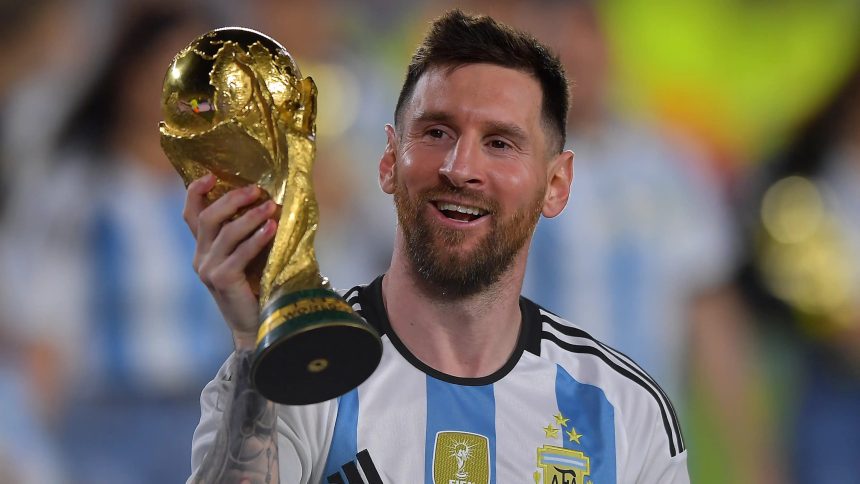
Argentina, the defending champions, arrive with a largely intact squad that knows how to win. Argentina (+850) still carries the core of the Qatar-winning group, giving them a tournament pedigree Brazil currently lacks.
Brazil Manager & Tactical Approach
Current Manager Overview
Carlo Ancelotti’s club CV includes successful stints at Real Madrid, AC Milan, PSG, Bayern Munich, and Chelsea — making him one of the rare managers to have won each of Europe’s top five leagues.
The Brazil role is his first in international management, which introduces an element of the unknown.
Managing a club, where you see your players daily and can implement patterns over months, is fundamentally different from the condensed environment of international football.
Ancelotti’s adaptation to that reality will be one of the key subplots of the tournament.
Preferred Formation(s)
Ancelotti has settled on a 4-2-3-1 formation as his likely structure for Brazil at the 2026 World Cup.
This shape offers defensive solidity through a double pivot in midfield while freeing the attacking three to express themselves.
A fluid transition to 4-3-3 when in possession is also likely, given the natural instincts of players like Vinicius and Raphinha to invert and create from wide positions.
Strengths of the System
The 4-2-3-1 suits this squad superbly. The double pivot provides the defensive cover that Brazil lacked in 2022, where a more attacking midfield left them exposed on transitions.
The attacking midfielder role — likely filled by Rodrygo — provides creativity between the lines.
And the two wide attackers in Vinicius and Raphinha give Brazil a level of pace and directness that will punish any defence that sits too deep.
Tactical Weaknesses
The right-back position remains Brazil’s most persistent vulnerability. Ancelotti has had to rotate frequently at right-back during his tenure, and that positional uncertainty has not yet been resolved.
Additionally, Ancelotti’s historical tendency to avoid aggressive pressing systems could become a liability against high-energy European sides who press intensely.
If Brazil allow opponents to play through their midfield, the double pivot can be bypassed, leaving the centre-backs exposed.
You may also like:
Can France Win the 2026 World Cup?
How Brazil Should Lineup to WIN the 2026 World Cup
Best Formation (4-3-3 / 4-2-3-1)
The optimal structure for this Brazil squad is a dynamic 4-2-3-1 that shifts into a 4-3-3 in possession. In this shape, Casemiro and one of Gerson or Douglas Luiz form the double pivot, providing the defensive backbone.
Behind the attack, Rodrygo operates as the number ten. Vinicius plays off the left, Raphinha off the right or centrally, with a physical centre-forward as the focal point.
Predicted Starting XI
- Alisson – GK
- Danilo / Vanderson – RB | Marquinhos – CB | Gabriel Magalhães – CB | Guilherme Arana – LB
- Casemiro – CDM | Gerson / Douglas Luiz – CM
- Raphinha – RAM | Rodrygo – CAM | Vinicius Júnior – LAM
- Matheus Cunha / Gabriel Martinelli – ST
Key Tactical Roles
Marquinhos is the spine of this team — his leadership, composure, and ability to read the game set the defensive tone.
Casemiro as the midfield anchor provides the defensive shield that was absent in 2022.
And Vinicius, operating from the left, is the primary chaos creator — the player opponents must double up on, which in turn creates space for Raphinha, Rodrygo, and the centre-forward to operate in.
Brazil Squad Depth & Key Players
Goalkeepers & Defense
Alisson remains Brazil’s first-choice goalkeeper despite some signs of decline at club level, with no obvious challenger capable of displacing him ahead of the tournament.
In front of him, Marquinhos is the undisputed captain and leader.
Gabriel Magalhães (Arsenal) has established himself as a strong partner, physical and progressive in possession.
The right-back spot remains unresolved, with Danilo, Vanderson, and others all competing.
Midfield Options
Casemiro brings Champions League-winning experience and a familiarity with Ancelotti’s methods from their time together at Real Madrid.
Douglas Luiz, Gerson, and Ederson are notable squad options, providing genuine depth in the middle third.
The midfield is not Brazil’s strongest department in terms of creative quality, but the Ancelotti system does not demand much from the pivot beyond discipline and positioning.
Attacking Firepower
This is where Brazil genuinely separate themselves from most competitors. Rodrygo has three goal involvements in his last four Brazil starts and retains the full trust of Ancelotti.
Raphinha brings goals and assists from his role at Barcelona. Estevão, still a teenager, is arguably the most naturally gifted player in the squad.
Matheus Cunha’s performances at Manchester United have elevated him rapidly up the selection charts. The variety and depth here is genuinely world-class.
Brazil’s X-Factor for the 2026 World Cup
Vinicius Júnior Impact
Vinicius Júnior is the 25-year-old who will be Brazil’s magic-maker at the 2026 tournament — not just for the Seleção but as one of the most exciting players at the entire competition.
His ability to beat defenders in one-on-one situations, his pace in behind, and his improved final ball make him the most dangerous wide player in world football on his best day.
Crucially, Ancelotti knows him inside out from their Real Madrid years, which means he will be used optimally rather than squeezed into a role that doesn’t suit him.
Individual Brilliance in Knockout Games
In knockout football, the difference is rarely systemic.
It is a moment of individual genius — a Zidane volley, a Mbappé burst, a Maradona dribble. Brazil in 2026 have multiple players capable of producing that moment.
Vinicius is carrying the ball through three defenders in a tight quarter-final.
Estevão is picking up the ball on the half-turn and threading an impossible pass. Raphinha is converting a free-kick in the dying minutes.
This squad, at its best, has the x-factors that win tournaments.
Creativity vs Structure Balance
The test for Ancelotti is managing this balance. Brazil’s most talented players are free-spirited, instinctive attackers who can stifle if over-coached.
The Italian has always understood this — he gives elite players the freedom to express themselves within a framework rather than constraining them with rigid systems.
If he manages to maintain that balance across seven games against progressively tougher opponents, Brazil become genuinely difficult to beat.
You may also like:
Will Brazil perform at their ABSOLUTE BEST in 2026 FIFA World Cup?
Mentality in Big Matches
This is the question mark that statistical analysis cannot fully resolve. Brazil have a squad capable of beating anyone on the planet on their best day.
But mentality at major tournaments is not just about talent — it is about the weight of expectation, the psychological burden of being a football nation of 215 million people, and the history of painful exits.
The 7-1 in 2014 left scars. The Croatia penalty defeat left more. Whether this generation has processed that collective trauma and emerged stronger is something only the tournament itself will reveal.
Knockout-Stage Pressure
Bookmakers currently identify the quarter-final as the most likely stage at which Brazil will be eliminated, which is a damning reflection of their recent record.
Two consecutive quarter-final exits have conditioned the market to view that stage as Brazil’s ceiling rather than their floor.
Breaking that psychological barrier — winning the big knockout game — is the defining challenge of the Ancelotti era.
Experience vs Expectation
The players who have been to a World Cup before — Alisson, Marquinhos, Casemiro, Raphinha — carry the experience of knowing what it takes.
The younger players — Vinicius, Estevão, Rodrygo — carry no baggage, only ambition. That combination can be powerful.
The risk is that the weight of 24 years without a title arrives at the worst possible moment.
Are Brazil right to be among the 2026 World Cup favorites?
Betting Odds Overview
Brazil sit at +800 with most major sportsbooks, representing an implied probability of around 11.1%.
Spain has moved to the top of the market at +450, with France at +550, England close behind, and Brazil as the fourth or fifth choice, depending on the platform.
This pricing feels broadly fair.
Brazil are not overpriced as a top-five contender, but anyone backing them at this stage should do so understanding the structural vulnerabilities their recent tournament record has exposed.
Comparison with France, Argentina
France possess the deepest squad at the tournament. Mbappé at his prime, a midfield of elite quality, and a manager in Deschamps who has won a World Cup.
They are arguably the single most complete side in the field.
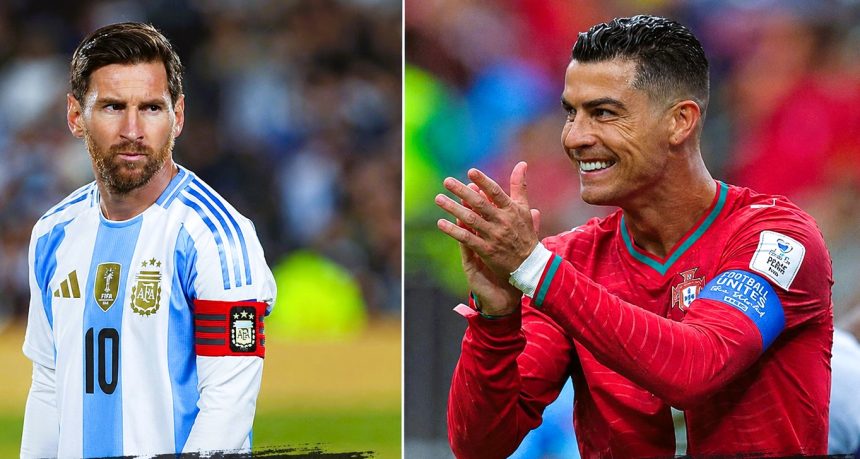
Argentina bring the defending champions’ mentality, a still-formidable squad around Messi, and the clutch DNA that delivered in Qatar.
Brazil match Argentina for attacking talent and likely exceed them for squad depth — but Argentina’s tournament record this decade is simply superior.
Are They Overhyped or Justified?
Justified as a top-five contender. Potentially overhyped as a favourite. Brazil’s attacking quality is genuine and world-class.
Their defensive organisation under Ancelotti has improved. But the mental block in knockout football is real, documented, and unresolved.
Back them to reach the semi-finals — that feels like a realistic outcome. Back them to win it, and you are betting on a psychological breakthrough as much as a footballing one.
What are Brazil’s chances of winning the 2026 FIFA World Cup?
Group Stage Probability
Brazil are a strong favourite to top Group C at -475, with Morocco as the clear second choice at +600, Scotland at +1200, and Haiti at +10000.
A group stage exit would be one of the most shocking results in World Cup history.
The realistic expectation is that Brazil win the group comfortably, possibly resting key players in their final group game once qualification is secured.
Knockout Stage Probabilities
The Round of 32 presents no serious challenge. A Round of 16 match could plausibly bring an African or Asian side, where Brazil would again be heavy favourites.
At 20/1, even the odds for a first-round exit reflect how unlikely that scenario is.
The quarter-final is where history weighs heaviest. Depending on the draw, they could meet France, England, or Spain at that stage — any of whom represent a serious threat.
Overall Win Probability
Most analytical models place Brazil’s overall World Cup win probability between 10-13%. That is accurate — they are the fourth or fifth most likely winner.
In a 48-team expanded tournament, even the heavy favourite (Spain) has only roughly an 18% chance of winning every game they need to.
In probabilistic terms, Brazil winning is plausible but far from likely.
Brazil’s possible routes to the 2026 World Cup final analysed
Group Stage Scenarios
Brazil face Morocco, Scotland, and Haiti in Group C. Morocco are a serious team — they reached the semi-finals in Qatar and will not be taken lightly.
But even a Morocco defeat would not necessarily derail Brazil, given the expanded format where third-placed teams can still advance.
The most likely scenario is Brazil winning the group with nine points, rotating the squad in the final fixture.
Knockout Bracket Difficulty
The potential bracket from Group C draws Brazil into a section of the draw that could eventually produce clashes with CONMEBOL or UEFA sides from the opposite half. A favourable draw in the Round of 32 and Round of 16 — possible given the number of weaker sides in the expanded field — would allow Ancelotti to build rhythm before the truly difficult matches begin.
Best vs Worst-Case Path
Best case: Brazil top Group C, beat a weaker Round of 32 opponent, edge past a mid-tier European side in the Round of 16, and avoid Spain and France until the semi-finals, where their fresh squad and peak Vinicius prove decisive. Final and sixth star.
Worst case: Morocco upset Brazil in the group stage, momentum is disrupted, they scrape through the Round of 32, face France or England in the quarter-final and exit on penalties for the third consecutive major tournament.
What is stopping Brazil From Winning The 2026 World Cup
Defensive Vulnerabilities
The right-back position has been Ancelotti’s most persistent headache. Brazil’s options at right-back have required constant rotation, and a settled solution has not yet emerged.
Against elite wide attackers — Mbappé, Saka, Olmo — that exposed flank could become a tournament-defining problem.
The centre-backs, while capable, are not immune to high-press systems that drag them out of position.
Tactical Inconsistency
International football in 2026 is more tactically sophisticated than at any previous World Cup.
European nations press at intensity levels that CONMEBOL qualifying simply does not replicate. Brazil’s preparation has been limited compared to club sides that train daily.
Whether Ancelotti can install a consistent press-resistance structure in the weeks before the tournament — and whether those patterns hold under the pressure of a knockout game — is genuinely uncertain.
Over-Reliance on Key Players
If Vinicius Junior is injured, suspended, or neutralised, what is Brazil’s plan B? The squad depth is excellent in theory, but the attacking pattern is heavily Vinicius-centric.
Beyond the main attacking unit, players like Estevão and Rodrygo are important but their effectiveness is partially dependent on Vinicius drawing defensive attention.
Removing that focal point changes the entire offensive dynamic.
Brazil vs Top Rivals – Who Has the Edge?
Brazil vs France
On paper, this is the tie of the tournament if they meet. France have Mbappé, Tchouaméni, Camavinga, and a manager who knows how to win World Cups.
Brazil have Vinicius, Raphinha, and Ancelotti’s structured chaos. In a neutral assessment, France hold a narrow edge — their system is more evolved, their experience of going deep in tournaments more recent.
But Brazil’s one-on-one quality in wide areas gives them genuine routes to victory. Call it 50-50 on the night.
Brazil vs Argentina
The eternal rivalry, and in 2026, a quarter-final or semi-final meeting is plausible. Argentina possess the defending champions’ mentality and Messi may still influence from deeper areas even at 38.
But Brazil’s overall squad quality in 2026 is arguably superior to Argentina’s.
Brazil’s attacking rotation means multiple players can contribute goals, whereas Argentina have historically depended more heavily on key individuals. Brazil would enter that game as slight favourites.
Brazil vs England
England, under Tuchel, present a physical, organised, high-pressing threat.
Harry Kane’s movement and the energy of Bellingham, Saka, and Palmer make them dangerous from multiple angles.
Brazil’s pace in transition would be their primary weapon — England historically struggle against teams that absorb pressure and punish on the counter.
This match-up slightly favours Brazil, but the margins are thin.
Which key player from Brazil will perform best in the 2026 World Cup?
Main Candidate
Vinicius Júnior. The answer is almost too obvious to state, but it is the correct one.
His impact goes beyond statistics alone — he creates a threat every single time he receives the ball, and under Ancelotti, who nearly managed him to a Ballon d’Or in 2024, he will be deployed in conditions ideally suited to his strengths.
If Brazil win the World Cup, Vinicius will be the Golden Ball winner.
Supporting Stars
Raphinha has the experience, the technical quality, and the big-game temperament to be Brazil’s most consistent contributor across all seven games.
His ability to play centrally or wide, his set-piece delivery, and his goals record at Barcelona make him a near-complete attacker.
Marquinhos, in defence, will be equally vital — his leadership and organisation are the invisible thread holding the team together.
Dark Horse Pick
Estevão Willian. Still a teenager, already generating comparisons to Pelé in Brazil (with all the weight that carries), Estevão possesses a natural footballing intelligence that most players take a decade to develop.
If Ancelotti gives him significant minutes, he has the potential to be the tournament’s breakout star — the player everyone is talking about by the quarter-finals.
Final Prediction – How deep will Brazil go in the 2026 World Cup?
Expected Finish
Semi-finalists. This feels like the most grounded, evidence-based prediction.
Brazil are good enough to beat anyone in the field and have the squad depth to sustain a long tournament run.
But their recent history, combined with the quality of France, Spain, and England, makes a final or a title less probable than reaching the last four.
Best-Case Scenario
World Cup Winners. The scenario is entirely plausible: Ancelotti’s structure holds, Vinicius produces a player-of-the-tournament performance, Brazil avoid France until the final, and 24 years of hurt end in a sun-soaked American stadium.
The sixth star. It is not the likeliest outcome, but it is absolutely within the range of realistic possibilities.
Worst-Case Scenario
Quarter-final exit, yet again. Possibly on penalties. The pattern is stubborn, the opponents at that stage will be elite European teams, and if Vinicius has a difficult game or the defensive structure is exposed, the same story could be told for a third consecutive time.
It would not be a shock — it would be a continuation of a narrative that has haunted this generation.
FAQs – Brazil’s chances as 2026 World Cup favorites
What are Brazil’s odds to win the 2026 World Cup?
Brazil are currently priced between 8/1 and 9/1 with major bookmakers, placing them fourth or fifth in the market. The implied probability is approximately 11%.
Who is managing Brazil at the 2026 World Cup?
Carlo Ancelotti is in charge of Brazil, bringing an extraordinary club record that includes winning each of Europe’s top five leagues.
Which group are Brazil in at the 2026 World Cup?
Brazil are in Group C, alongside Morocco, Haiti, and Scotland.
Who are Brazil’s key players for 2026?
Vinicius Júnior is the standout name, supported by Raphinha, Rodrygo, Marquinhos, Alisson, Casemiro, and the emerging Estevão Willian.
When did Brazil last win the World Cup?
Brazil last won the World Cup in 2002 in South Korea and Japan, beating Germany 2-0 in the final with Ronaldo scoring twice.
What is Brazil’s biggest weakness at the 2026 World Cup?
Their quarter-final record under pressure, the unsettled right-back position, and potential over-reliance on Vinicius Júnior are the three most credible vulnerabilities.
Are Brazil favourites to win the 2026 World Cup?
Spain (+450) lead the market, followed by France (+550), with Brazil (+800) placed as the fourth or fifth favourite depending on the bookmaker.
Who is your favorite to win the 2026 FIFA World Cup—Brazil, France, Spain, or Argentina? Drop your pick below.