







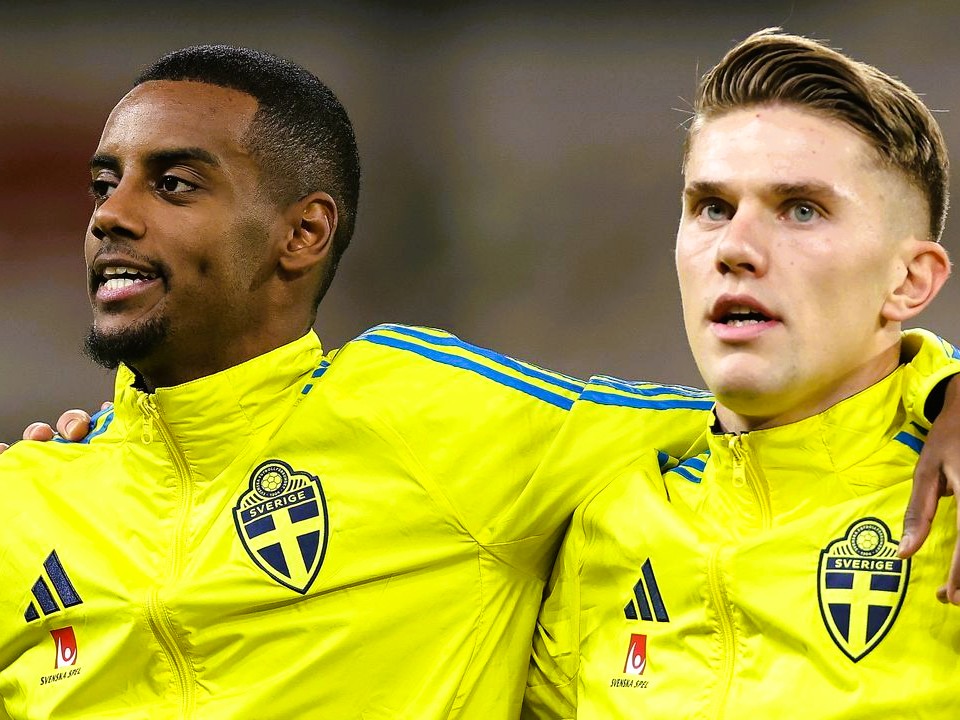

After eight years away from the world’s biggest football stage, Sweden’s return to the FIFA World Cup offers an opportunity to write a new chapter in the nation’s proud history.
The Blågult secured their place at the 2026 FIFA World Cup after becoming the first team to qualify through the UEFA Nations League pathway, recovering from a disappointing traditional qualifying campaign to book a place in Group F alongside the Netherlands, Japan and Tunisia.
Now, a far greater challenge awaits.
World Cups are rarely won on talent alone. They are won through resilience, adaptability, and the ability to survive football’s most unforgiving moments.
The 2026 FIFA World Cup will present an even greater test than any tournament before it.
For the first time, 48 nations will compete across three host countries and 16 stadiums spread throughout the United States, Canada and Mexico.
A newly introduced Round of 32 means the eventual champion must survive five knockout matches after the group stage — one more than any previous World Cup winner.
The expanded format creates opportunity and danger in equal measure. A favorable draw can open the door to a historic run, while a single difficult result can dramatically alter a team’s path through the tournament.

For Sweden, understanding that balance may prove just as important as any tactical preparation Graham Potter and his players undertake before arriving in North America.
So what does Sweden’s route to the 2026 FIFA World Cup final actually look like?
From Group F challenges and qualification scenarios to potential knockout opponents and bracket projections, here is a complete breakdown of Sweden’s possible path to MetLife Stadium and football’s greatest prize.
When Does Sweden’s 2026 FIFA World Cup Journey Begin?
Sunday, June 14. Estadio BBVA in Guadalupe, Monterrey, Mexico. 10:00 p.m. Eastern Time. That’s when Sweden’s 2026 FIFA World Cup journey officially begins.
Their first opponent will be Tunisia, which sounds like an opening gift. In World Cup soccer, though, the first game is rarely a gift.
Then their group stage unfolds in rapid succession. Five days later, on June 20, they’ll travel to Houston’s NRG Stadium — to face the Netherlands.
That will be the deciding match of Group F, the match that will likely determine the group’s pecking order.
Then, five days after that, they’ll play Japan in Dallas on June 25.
Sweden’s Group F Opponents at the 2026 FIFA World Cup
Group F looks competitive, with the Netherlands as the favourites to finish top, while Sweden are likely to compete with Japan and Tunisia for second place and a knockout progression.
The Netherlands
The Netherlands arrive with a squad packed with Premier League and European experience, including Cody Gakpo, Memphis Depay, Tijjani Reijnders and Frenkie de Jong.
Led by Ronald Koeman, they typically use a flexible 4-2-3-1 or 4-3-3, which emphasizes a strong defensive base, creative midfield control, and dynamic attacking transitions led by captain Virgil van Dijk.
In the history of the Men’s FIFA World Cup tournament, the Netherlands and Sweden have faced each other only once, resulting in a 0-0 draw in the group stage of the 1974 World Cup in West Germany.
The teams will meet the second time during the 2026 FIFA World Cup group stage.
Japan
Japan’s match against Sweden on June 25 could be the most difficult of the group stage. In the history of the men’s FIFA World Cup, Japan and Sweden have never met in a tournament match.
Japan is a well-organized, technically skilled team capable of upsetting any team, as shown in previous World Cups (such as victories over Germany and Spain in 2022).
The Samurai Blue, led by coach Hajime Moriyasu, have reached the round of 16 in four of their last five World Cups.
Moriyasu favors structured setups such as a 4-2-3-1 or variations with a back three, a mix of disciplined defense, high pressing, rapid transitions, and fluid attacking movement.
Key players include Wataru Endo, Takefusa Kubo, and Kaoru Mitoma, along with talents such as Ayase Ueda, Junya Ito, and Takehiro Tomiyasu and Ko Itakura.
Tunisia
Tunisia is a physically strong, defensively resilient African team that can be difficult to break down, although they have never advanced past the group stage in previous World Cups.
They prefer organization, compact formations (often 3-5-2 or 4-3-3/4-2-3-1 variations), physical midfield battles, and quick counters or set pieces.
In the history of the FIFA World Cup, Sweden and Tunisia have never faced each other in a tournament match.
Although they have never met in an official FIFA competition, they have played 4 friendly matches in their history, resulting in a perfectly balanced record: Sweden wins two, Tunisia one win, and a draw.
However, they are officially in the same group and will face each other on the grand stage a few weeks later (in the Group F opener).
Anything other than three points from this opener would represent a significant early blow to Swedish confidence and their group-stage arithmetic.
Sweden’s Group Stage Schedule
Sweden’s group stage takes them from Monterrey to Houston to Dallas — three cities, three states (two countries), over 11 days of tournament football.
| Date | Match | Venue | City | Kickoff (ET) |
| June 14, 2026 | Sweden vs Tunisia | Estadio BBVA | Guadalupe / Monterrey, Mexico | 10:00 PM |
| June 20, 2026 | Netherlands vs Sweden | NRG Stadium | Houston, Texas, USA | 1:00 PM |
| June 25, 2026 | Japan vs Sweden | AT&T Stadium | Arlington / Dallas, Texas, USA | 7:00 PM |
Sweden Group F Standings
No matches have been played yet. The group stage begins on June 14, 2026. All teams sit on 0 points, with identical records. Standings will update after the first matches.
| Pos | Team | GP | W | D | L | GF | GA | GD | Pts |
|---|---|---|---|---|---|---|---|---|---|
| 1 | Netherlands | 0 | 0 | 0 | 0 | 0 | 0 | 0 | 0 |
| 2 | Japan | 0 | 0 | 0 | 0 | 0 | 0 | 0 | 0 |
| 3 | Sweden | 0 | 0 | 0 | 0 | 0 | 0 | 0 | 0 |
| 4 | Tunisia | 0 | 0 | 0 | 0 | 0 | 0 | 0 | 0 |
How Sweden Can Reach the Knockout Stage
The 2026 FIFA World Cup’s expanded 48-team format means qualification from the group stage is more accessible than at any previous tournament — but that does not mean it should be taken for granted.
The top two teams from each of the twelve groups advance automatically to the Round of 32.
Beyond that, the eight best third-placed teams — out of twelve potential third-place finishers — also advance, ranked by points, then goal difference, then goals scored, then FIFA fair play record.
The strategic implication is clear: Sweden need at least four points from their three group matches to feel confident in their Round of 32 place. Six points — and a top-two finish — is the only way to control their own destiny.
Automatic Qualification (Top 2)
Beat Tunisia, draw or beat the Netherlands, manage Japan: Sweden finish first or second with comfortable certainty. Six points secures automatic advancement in virtually every scenario.
Third-Place Route (Best of Eight)
Four points may be enough. Three points could be enough — if Sweden’s goal difference compares favourably with the third-placed teams from other groups. But this is the uncertainty zone: you advance only if enough other third-placed teams perform worse. Not a position Sweden want to occupy.
Elimination Risk
Lose to Tunisia and the Netherlands without recovering against Japan, and Sweden go home.
Three points or fewer, particularly without a positive goal difference, could leave them among the four third-placed sides eliminated. In tournament football, your first game defines your psychological baseline for everything that follows.
Sweden as Group F Winners — The Optimal Path
Win Group F, and the bracket rewards Sweden with what this format can offer: a manageable Round of 32 opponent, a favourable geographic base for early knockout matches, and the possibility of avoiding the tournament’s biggest powers until the semifinals at the earliest.
According to the official bracket structure, the Group F winner faces the Group C runner-up in the Round of 32 — played back at Estadio BBVA in Monterrey on June 29.
Group C contains Brazil, Morocco, Haiti, and Scotland. The runner-up could realistically be Morocco or Scotland — either is a manageable, if not straightforward, opponent.
Brazil as runner-up would be a formidable draw, but their pedigree makes them almost certain group winners. The odds favour Sweden meeting a beatable side.
| Round | Date (2026) | Potential Opponent | Venue |
|---|---|---|---|
| Round of 32 | June 29 | Runner-up of Group C | Estadio Monterrey |
| Round of 16 | July 4 | Winner of Group A runners-up vs. Group B runners-up | NRG Stadium |
| Quarterfinals | July 9 | Winner Match 89 | Gillette Stadium |
| Semifinals | July 14 | Winner Match 98 | AT&T Stadium |
| Final | July 19 | TBD | MetLife Stadium |
Why winning Group F matters so much is not just about the Round of 32 opponent — it is about the entire bracket chain.
Topping the group places Sweden on a knockout pathway that keeps some of the tournament’s heaviest artillery — France, Argentina, Germany — on the opposite side of the bracket for longer.
In a 32-team knockout structure, every game you avoid the biggest names is a game you survive to fight again.
Additionally, Group F winners stay close to their geographic comfort zone in the early rounds. Monterrey for the Round of 32. A Houston-area Round of 16.
These are familiar venues — already visited during the group stage — which removes some logistical burden and provides a hint of home-ground familiarity, particularly in front of the Scandinavian diaspora population that will travel to North America in numbers.
Sweden as Group F Runners-Up — The Difficult Road
Finishing second in Group F does not close the door to the final. But it swings it considerably more shut.
The Group F runner-up faces the Group C winner in the Round of 32 — played at NRG Stadium in Houston on June 29.
Group C winner is expected to be Brazil. If that materialises, Sweden’s Round of 32 match would be, without exaggeration, a World Cup blockbuster — and the most difficult possible opening knockout test.
| Round | Date (2026) | Potential Opponent | Venue |
|---|---|---|---|
| Round of 32 | June 29 | Winner of Group C | NRG Stadium |
| Round of 16 | July 5 | Winner of Group E runners up vs Group I runners-up | MetLife Stadium |
| Quarterfinals | July 11 | Winner Match 92 | Hard Rock Stadium |
| Semifinals | July 15 | Winner Match 100 | Mercedes-Benz Stadium |
| Final | July 19 | TBD | MetLife Stadium |
The runner-up path also creates harder travel and shorter psychological preparation.
The sense of momentum — that sense a group winner carries of authority and confidence — is subtly absent.
You arrive at the Round of 32 knowing you did not quite control your group. Against a side like Brazil, the margins are already thin enough.
That said, Sweden as runners-up are not without hope. Tomasson’s side are a functional, resilient unit.
They defend with collective intelligence, press in orchestrated waves, and can absorb sustained pressure before striking.
Against Brazil — who sometimes labour against deep-seated, structured European defences — a disciplined Swedish performance could extend the match beyond 90 minutes.
At a World Cup, the shootout is always just 120 minutes away. But this would be surviving, not thriving.
Sweden as One of the Best Third-Placed Teams
This is the scenario Sweden must avoid. Not because advancement is impossible — it has happened, and the mathematics can work — but because the uncertainty is excruciating and the bracket placement entirely beyond your control.
Eight third-placed teams advance from twelve groups. Sweden finishing third in Group F — most likely with three or four points — would place them in a pool of up to twelve third-place sides, from which eight are selected.
They would need to outperform four other third-placed nations by points, then goal difference, then goals scored.
| Scenario | Date (2026) | Potential Opponent | Venue |
|---|---|---|---|
| Winner Group E | June 29 | Potential opponent such as Germany | Gillette Stadium |
| Winner Group A | June 30 | Potential opponent such as Mexico | Estadio Azteca |
| Winner Group I | June 30 | Potential opponent such as France | MetLife Stadium |
| Winner Group D | July 1 | Potential opponent such as USA | Levi’s Stadium |
| Winner Group B | July 2 | Potential opponent such as Canada | BC Place |
If Sweden do advance as a third-placed team, the bracket placement depends on which groups’ third-place finishers qualify — a complex, partially pre-determined structure that could place them anywhere from facing Group E winners (potentially Germany or Austria) to Group I winners (potentially France).
The unpredictability is not a feature of this scenario. It is its defining characteristic.
Sweden’s Best Route to the 2026 FIFA World Cup Final
Let us map it out — the ideal version. The path where the group-stage decisions align, where the bracket falls kindly, where Gyökeres is fit and clinical, and where Potter’s tactical framework holds its shape under the impossible weight of tournament pressure.
Step one: Beat Tunisia in Monterrey. Not comfortably, necessarily — though that would be welcome — but decisively enough to establish momentum and protect the goal difference that may matter later. Three points and a clean sheet would be the ideal opening statement.
Step two: Make the Netherlands work. A draw against the Dutch in Houston would be an enormous result.
Not a capitulation to a 4-0 defeat that fractures confidence and wrecks goal difference. A organised, disciplined, tactically coherent performance that frustrates one of Europe’s best sides and earns a point.
Step three: Win against Japan. With four points and the group title potentially within reach, a victory over Japan — even a nervy, late winner — would see Sweden top Group F. The mental transformation that comes with finishing first rather than second can be measured in clarity of purpose during knockout football.
From there, the ideal path runs through the bracket on the Group F winner’s side: a manageable Round of 32 against Scotland or Morocco, a Round of 16 with physical but beatable opponents, and a quarterfinal that is genuinely open rather than a pre-written giant-killer narrative.
Sweden’s tactical identity — Jon Dahl Tomasson has built a team that defends with genuine commitment and attacks with purpose rather than possession — suits tournament football. They do not need to dominate.
They need to be dangerous when it counts, organised when it matters, and precise in the moments that define the difference between glory and the early flight home.
Viktor Gyökeres is the difference-maker. His numbers at club level have been extraordinary.
At Sporting CP and in national team football, he has demonstrated the kind of finishing efficiency that wins knockout games where a single moment separates nations.
Sweden’s route to MetLife Stadium runs through him — his fitness, his form, his nerve when a crowd of 82,000 is pressing down on the shoulders of every man in Blågult.
Conclusion
Sixty-eight years ago, Sweden reached a World Cup final on home soil.
The country that walked off the pitch at Rasunda in 1958, runners-up to Pelé’s Brazil, has carried that moment across generations of football identity.
It remains their single greatest achievement — the summit of Nordic football.
North America, 2026. The format is bigger, the competition is wider, the noise will be louder.
But the logic of football remains unchanged: win the right games at the right moment, and history no longer has to be only about the past.
For Sweden’s Blågult, the road to MetLife Stadium begins under the Monterrey lights on June 14.
Whether that road ends in the Round of 32 or beneath the lights of MetLife Stadium, Sweden will arrive in North America carrying something they have lacked for years: genuine belief that another historic World Cup run is possible.