





Few nations have shaped the FIFA World Cup quite like Argentina. From the sun-scorched stadiums of Buenos Aires to the gleaming arenas of Qatar, the Albiceleste have written some of football’s most enduring chapters.
Three FIFA World Cup titles. Six final appearances. Legendary captains. Moments that transcended sport itself.
This is the definitive guide to Argentina’s FIFA World Cup winners — their squads, their records, and their irreplaceable place in football history.
How Many FIFA World Cups Has Argentina Won?
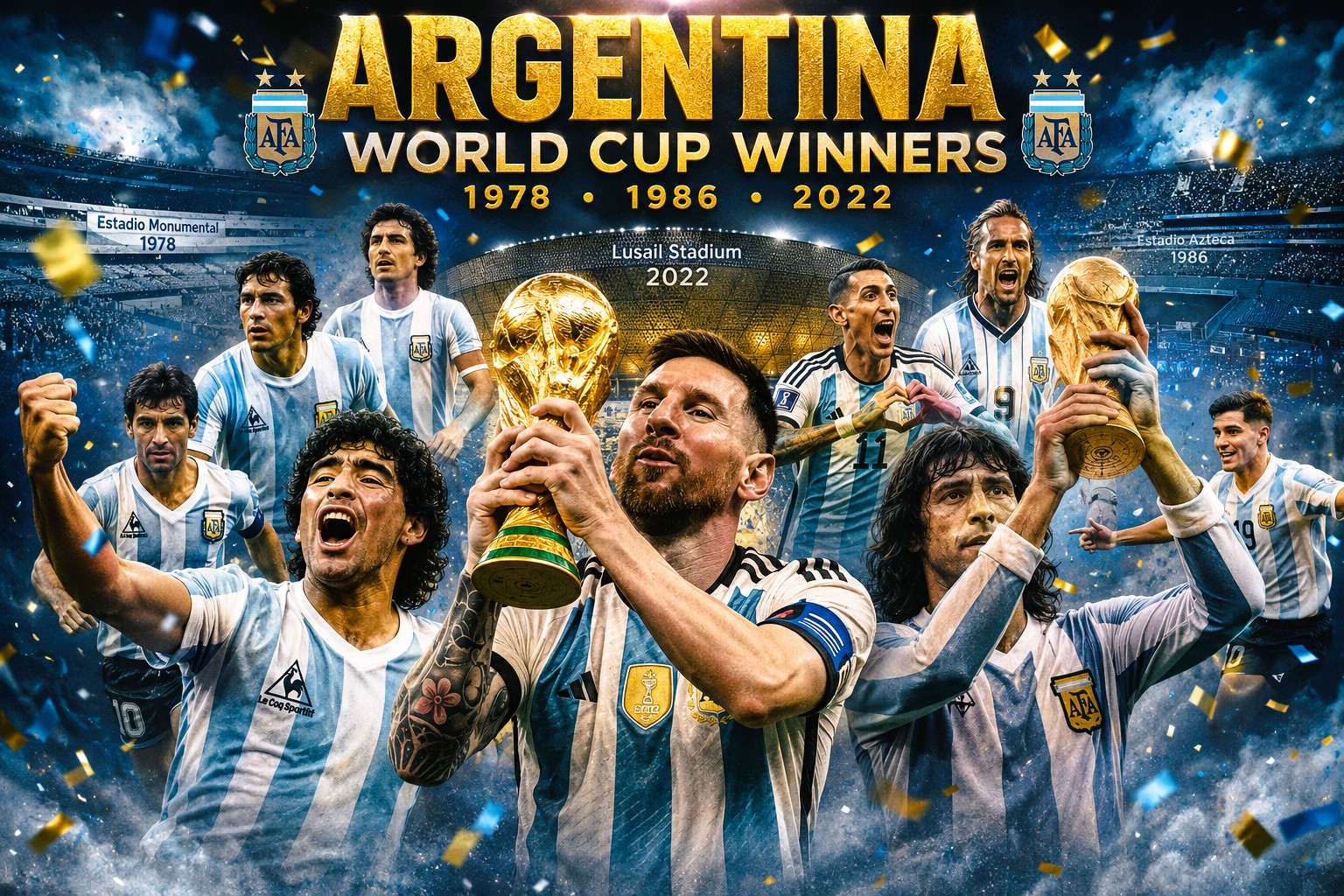
Argentina has won the FIFA World Cup three times — in 1978, 1986, and 2022. Only Brazil (5), Germany (4), and Italy (4) have lifted the trophy more often.
Each of Argentina’s three titles arrived in a different era, under a different captain, with a different footballing identity — yet all three share a common thread: individual brilliance matched by collective heart.
Argentina FIFA World Cup Winners by Year
| Year | Host Nation | Final Opponent | Score | Captain |
| 1978 | Argentina | Netherlands | 3–1 (AET) | Daniel Passarella |
| 1986 | Mexico | West Germany | 3–2 | Diego Maradona |
| 2022 | Qatar | France | 3–3 (AET), 4–2 pens | Lionel Messi |
Argentina’s first title came on home soil in 1978, the second through the genius of Diego Maradona in Mexico, and the third — the most emotionally charged — through Lionel Messi’s transcendent campaign in Qatar, completing one of football’s greatest individual journeys.
Argentina World Cup Trophies and Global Rankings
Argentina sits fourth in the all-time FIFA World Cup winners list with three championships.
Their record across all World Cup tournaments is remarkable: six final appearances, the most alongside Germany among nations not named Brazil.



They have also produced the World Cup’s most iconic individual moments, from Maradona’s “Hand of God” to Messi’s tearful final triumph.
Argentina’s Legacy in FIFA World Cup History
No other national team has so consistently produced transcendent individual talent across generations.
From Guillermo Stábile (the first-ever World Cup top scorer in 1930) to Mario Kempes, Diego Maradona, Gabriel Batistuta, and ultimately Lionel Messi, Argentina’s football legacy is inseparable from the World Cup itself.
The Albiceleste have played in 18 of 22 FIFA World Cup tournaments, maintaining one of the competition’s most sustained records of participation and achievement.
Complete Argentina World Cup History
Argentina’s First FIFA World Cup Appearance
Argentina were present at the very birth of the World Cup, competing in the inaugural tournament in Uruguay in 1930.
They reached the final — the first team ever to do so beyond the host nation — before losing 4–2 to Uruguay in Montevideo.
Guillermo Stábile, who had scored eight goals in the tournament, finished as the competition’s all-time first top scorer, a record that stood for two decades.
Argentina’s World Cup story began not with triumph but with promise.
Argentina’s Best FIFA World Cup Campaigns
Beyond their three victories, Argentina have consistently reached the latter stages of the World Cup. Their best performances include:
- 1930: Runners-up (Uruguay)
- 1978: Champions (Argentina)
- 1986: Champions (Mexico)
- 1990: Runners-up (Italy)
- 2014: Runners-up (Brazil)
- 2022: Champions (Qatar)
Their four runner-up finishes also underscore a hard truth — Argentina know how to reach finals. Converting those appearances into titles is where only the greatest squads have succeeded.
Argentina World Cup Finals History
Argentina have appeared in six World Cup finals, winning three and losing three.
Their final losses came in 1930 (to Uruguay), 1990 (to West Germany, via a controversial penalty), and 2014 (to Germany, with Mario Götze’s extra-time winner).
Their three victories came in distinctly different circumstances — a home triumph, a Maradona-inspired masterclass, and a breathless penalty shootout victory — each unique, each unforgettable.
Argentina’s Biggest Rivalries in the FIFA World Cup
Argentina’s World Cup history is punctuated by fierce rivalries. Their contests against England carry particular weight — most memorably in 1986, when Maradona’s “Hand of God” and his “Goal of the Century” occurred in the same quarter-final match.
Matches against Brazil in the World Cup have been rare but electric. And the repeated meetings with Germany and West Germany — across four World Cup finals and several knockout matches — constitute one of international football’s greatest recurring duels.
Argentina 1978 World Cup Winning Squad
Argentina’s Road to the 1978 FIFA World Cup Title
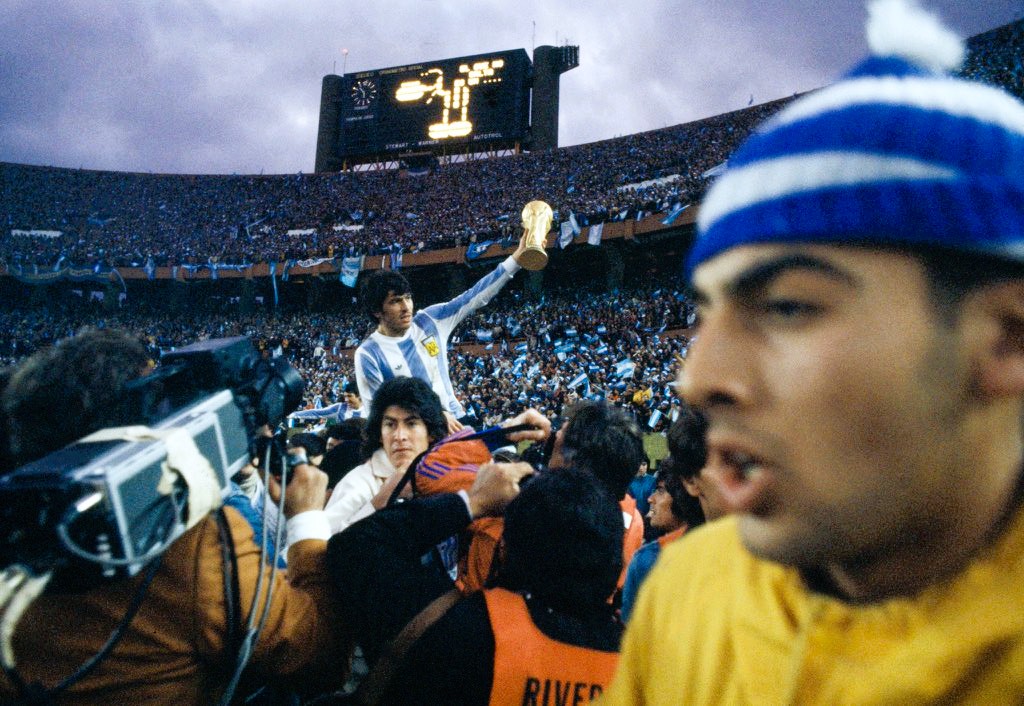
The 1978 World Cup in Argentina was played against a politically turbulent backdrop, with the country under military dictatorship.
On the pitch, manager César Luis Menotti built a team around fluid passing football and individual creativity.
Argentina navigated a competitive group stage and a second-round group before a dramatic final showdown with the Netherlands, the reigning runners-up and one of European football’s most celebrated sides of the era.
In the final at the Estadio Monumental in Buenos Aires, Argentina fell behind early before Mario Kempes equalised.
The match went to extra time, where Kempes struck again and Daniel Bertoni added a third to seal a 3–1 victory in front of 71,000 delirious home supporters.
Full Argentina 1978 World Cup Winning Squad
Manager: César Luis Menotti
| # | Player | Position | 1978 Club |
|---|---|---|---|
| 1 | Norberto Alonso | M | River Plate |
| 2 | Osvaldo Ardiles | M | Huracán |
| 3 | Héctor Baley | GK | Huracán |
| 4 | Daniel Bertoni | F | Independiente |
| 5 | Ubaldo Fillol | GK | River Plate |
| 6 | Américo Gallego | M | Newell’s Old Boys |
| 7 | Luis Galván | D | Talleres de Córdoba |
| 8 | Rubén Galván | M | Independiente |
| 9 | René Houseman | F | Huracán |
| 10 | Mario Kempes | F | Valencia |
| 11 | Daniel Killer | D | Racing Club |
| 12 | Omar Larrosa | M | Independiente |
| 13 | Ricardo Lavolpe | GK | San Lorenzo |
| 14 | Leopoldo Luque | F | River Plate |
| 15 | Jorge Olguín | D | San Lorenzo |
| 16 | Oscar Ortiz | F | River Plate |
| 17 | Miguel Oviedo | M | Talleres de Córdoba |
| 18 | Rubén Pagnanini | D | Independiente |
| 19 | Daniel Passarella | D | River Plate |
| 20 | Alberto Tarantini | D | Unattached |
| 21 | José Daniel Valencia | M | Talleres de Córdoba |
| 22 | Julio Ricardo Villa | M | Racing Club |
Mario Kempes and Argentina’s Historic Triumph
Mario Kempes was the heartbeat of Argentina’s 1978 campaign. The Valencia striker finished as the tournament’s top scorer with six goals — including two in the final — and was awarded the Golden Ball as the tournament’s best player.
Kempes combined raw power with technical elegance, and his performances in the knockout rounds transformed him from a talented club striker into a national hero.
His brace in the World Cup final against the Netherlands remains the defining moment of a tournament Argentina needed to win.
Argentina vs Netherlands – 1978 World Cup Final Recap
Date: 25 June 1978 | Venue: Estadio Monumental, Buenos Aires | Score: Argentina 3–1 Netherlands (AET)
The Netherlands, without the retired Johan Cruyff, still arrived as a formidable opponent, with talents like Johan Neeskens, Rob Rensenbrink, and Ruud Krol.
Rensenbrink nearly won the match in the closing seconds of normal time when his shot struck the post. In extra time, however, Argentina were relentless.
Kempes added his second goal with a powerful individual run and finish, and Bertoni sealed the win late on. Argentina were world champions for the first time.
Argentina 1986 World Cup Winning Squad
Diego Maradona’s Legendary 1986 World Cup Campaign
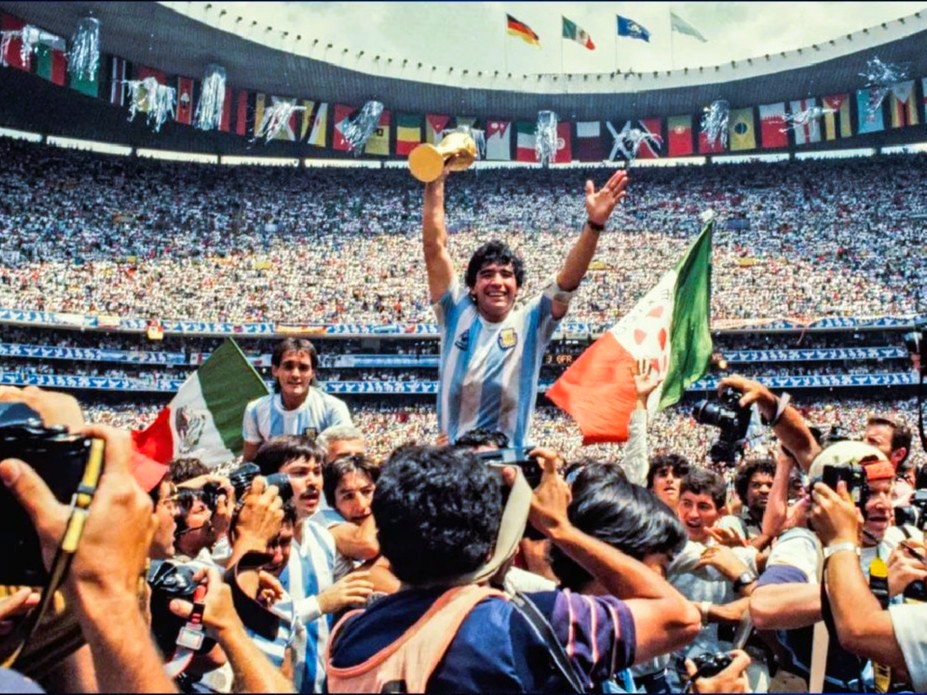
No FIFA World Cup performance in history compares to Diego Maradona’s display at Mexico 1986.
Maradona was the tournament from beginning to end — its most creative force, its most audacious character, and its most decisive player.
He scored five goals and provided five assists across seven matches, but statistics barely capture the magnitude of what he produced.
His two goals against England in the quarter-finals — one illicitly handled into the net, the other a solo masterpiece — remain the two most discussed goals in World Cup history.
In the final against West Germany, he delivered a perfect through-ball to Jorge Burruchaga with five minutes remaining to win the championship.
Full Argentina 1986 World Cup Winning Squad
Manager: Carlos Bilardo
| # | Player | Position | 1986 Club |
|---|---|---|---|
| 1 | S. Almirón | F | Newell’s |
| 2 | S. Batista | M | Argentinos |
| 3 | R. Bochini | M | Independiente |
| 4 | C. Borghi | F | Argentinos |
| 5 | J.L. Brown | D | Boca |
| 6 | D. Passarella | D | Fiorentina |
| 7 | J. Burruchaga | M | Nantes |
| 8 | N. Clausen | D | Independiente |
| 9 | J.L. Cuciuffo | D | Vélez |
| 10 | D. Maradona | M | Napoli |
| 11 | J. Valdano | F | Real Madrid |
| 12 | H. Enrique | M | River |
| 13 | O. Garré | D | Ferro |
| 14 | R. Giusti | M | Independiente |
| 15 | L. Islas | GK | Estudiantes |
| 16 | J. Olarticoechea | M | Boca |
| 17 | P. Pasculli | F | Lecce |
| 18 | N. Pumpido | GK | River |
| 19 | O. Ruggeri | D | River |
| 20 | C. Tapia | M | Boca |
| 21 | M. Trobbiani | M | Elche |
| 22 | H. Zelada | GK | América |
Argentina vs West Germany – 1986 World Cup Final Highlights
Date: 29 June 1986 | Venue: Estadio Azteca, Mexico City | Score: Argentina 3–2 West Germany
Argentina led 2–0 through José Luis Brown and Jorge Valdano, only for West Germany to produce a stunning comeback, levelling at 2–2 through Karl-Heinz Rummenigge and Rudi Völler.
With the final in the balance and the clock ticking past 80 minutes, Maradona threaded an inch-perfect pass through West Germany’s defence to find Burruchaga, who composed himself and fired past Harald Schumacher. Argentina were champions again.
The Hand of God and Goal of the Century
The quarter-final against England on 22 June 1986 produced the two most iconic goals in World Cup history — both scored by Maradona, both within minutes of each other.
The first, punched into the net with his left hand yet awarded by the referee, Maradona later described as scored “a little with the head of Maradona and a little with the hand of God.”
The second, which he scored after dribbling from inside his own half, past five England outfield players and goalkeeper Peter Shilton, was voted the Goal of the Century in a 2002 FIFA poll.
No single player has ever dominated a World Cup match — or a World Cup tournament — the way Maradona dominated Mexico 1986.
Argentina 2022 World Cup Winning Squad
Lionel Messi and Argentina’s FIFA World Cup 2022 Victory
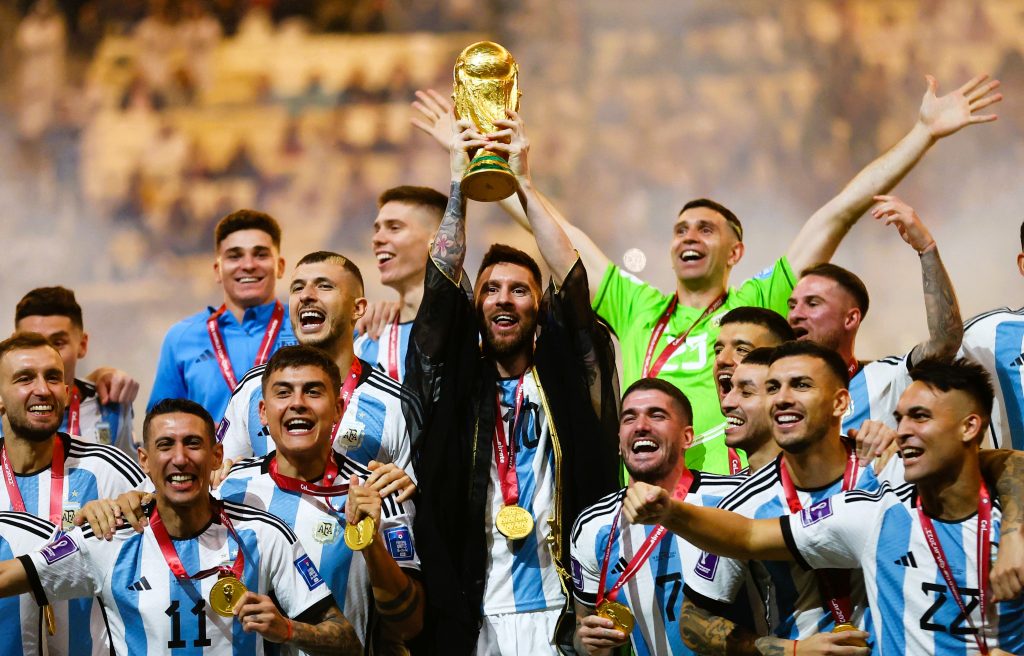
If Maradona’s 1986 campaign was football’s greatest individual performance, Lionel Messi’s 2022 World Cup was its greatest redemption story.
After coming closest in 2014 — when Argentina lost the final to Germany — Messi arrived in Qatar at 35 years old, in what was universally understood to be his last World Cup.
The weight of expectation was immense: could the greatest player of his generation finally claim the one trophy that had eluded him?
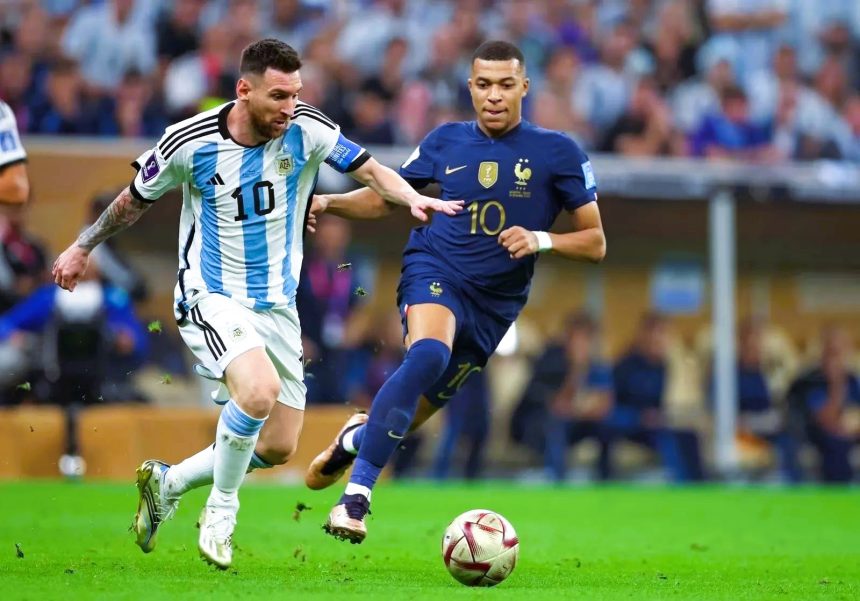
Messi answered with the tournament of his career. Seven goals. Three assists. A hat-trick scare in the final against France that pushed the match to extra time and then penalties.
When Gonzalo Montiel converted the decisive spot-kick on 18 December 2022, Messi fell to the turf in tears. Argentina were world champions for the third time, and Messi had completed his legacy.
He won the Golden Ball as the tournament’s best player — his second, having also won in 2014.
Messi scored seven goals and won the Golden Ball, while Kylian Mbappé finished as the tournament’s top scorer with eight.
Full Argentina 2022 World Cup Winning Squad
Manager: Lionel Scaloni
| # | Player | Position | 2022 Club |
|---|---|---|---|
| 1 | Franco Armani | GK | River Plate |
| 2 | Juan Foyth | D | Villarreal |
| 3 | Nicolás Tagliafico | D | Lyon |
| 4 | Gonzalo Montiel | D | Sevilla |
| 5 | Leandro Paredes | M | Juventus |
| 6 | Germán Pezzella | D | Real Betis |
| 7 | Rodrigo De Paul | M | Atlético Madrid |
| 8 | Marcos Acuña | D | Sevilla |
| 9 | Julián Álvarez | F | Manchester City |
| 10 | Lionel Messi | F | Paris Saint-Germain |
| 11 | Ángel Di María | M / F | Juventus |
| 12 | Gerónimo Rulli | GK | Villarreal |
| 13 | Cristian Romero | D | Tottenham Hotspur |
| 14 | Exequiel Palacios | M | Bayer Leverkusen |
| 15 | Ángel Correa | F | Atlético Madrid |
| 16 | Thiago Almada | M | Atlanta United |
| 17 | Alejandro Gómez | M | Sevilla |
| 18 | Guido Rodríguez | M | Real Betis |
| 19 | Nicolás Otamendi | D | Benfica |
| 20 | Alexis Mac Allister | M | Brighton & Hove Albion |
| 21 | Paulo Dybala | F | AS Roma |
| 22 | Lautaro Martínez | F | Inter Milan |
| 23 | Emiliano Martínez | GK | Aston Villa |
| 24 | Enzo Fernández | M | Benfica |
| 25 | Lisandro Martínez | D | Manchester United |
| 26 | Nahuel Molina | D | Atlético Madrid |
Argentina’s Road to the 2022 FIFA World Cup Title
Argentina’s path to glory in Qatar was anything but smooth. They opened the tournament with a stunning 2–1 defeat to Saudi Arabia, one of the biggest upsets in World Cup history.
Scaloni’s side regrouped with composure, winning their remaining group games against Mexico and Poland, then producing increasingly commanding performances in the knockout rounds.
They defeated Australia in the Round of 16, then eliminated the Netherlands in an extraordinary quarter-final that finished 2–2 after extra time before Argentina won 4–3 on penalties.
A semi-final against Croatia saw Messi and Julián Álvarez shine in a convincing 3–0 victory. Then came the final — and the most extraordinary match in World Cup history.
Argentina vs France – Greatest World Cup Final Ever?
Date: 18 December 2022 | Venue: Lusail Stadium, Qatar | Score: Argentina 3–3 France (AET), Argentina win 4–2 on penalties
Argentina seemed to be coasting to victory at 2–0, with goals from Di María and Messi, when France came alive in the final 10 minutes.
Kylian Mbappé scored twice in 97 seconds to level at 2–2. In extra time, Messi restored Argentina’s lead before Mbappé completed his hat-trick to make it 3–3 — the only player in history to score a hat-trick in a World Cup final.
The match was then settled by a penalty shootout, in which goalkeeper Emiliano Martínez, who had already been decisive against the Netherlands, made a crucial save. Montiel stepped up to convert the winning penalty, and Argentina celebrated their third world title.
Argentina World Cup Winning Captains and Managers
Daniel Passarella – Captain of the 1978 Champions
Daniel Passarella was Argentina’s imperious defensive leader in 1978. As the first Argentine to lift the World Cup, his name is etched permanently into the nation’s footballing consciousness.
Commanding in the air and fearless in the tackle, Passarella represented a steel that complemented the creativity of players like Ardiles and Kempes around him.
Diego Maradona – Captain of the 1986 Champions
Diego Maradona captained Argentina at the 1986 World Cup as player and spiritual leader — a role that required no badge or armband to be felt.
His direction of play, his willingness to carry pressure, and his capacity to produce the extraordinary under the most intense scrutiny made him not merely a great captain but the defining captain in World Cup history.
No player-captain has ever delivered what Maradona delivered in Mexico.
Lionel Messi – Captain of the 2022 Champions
Lionel Messi wore the armband in Qatar as the culmination of a 17-year international career.
He had endured Copa América near-misses, World Cup heartbreak in 2014, and years of comparisons with Maradona that seemed designed to diminish rather than celebrate.
In 2022, Messi silenced every critic, led by example in every match, and became the player who delivered Argentina their third world title. His legacy is now beyond debate.
Legendary Argentina World Cup Winning Coaches
César Luis Menotti (1978): A philosopher of attacking football, Menotti believed the game should be beautiful as well as effective.
His 1978 side was technically superior to most of its rivals and perfectly organised to perform on home soil under the most intense pressure imaginable.
Carlos Bilardo (1986): Where Menotti was romantic, Bilardo was pragmatic. His 1986 system was built around protecting Maradona and maximising his impact.
He was proved right when Maradona rewarded his tactical faith with the greatest individual World Cup performance ever witnessed.
Lionel Scaloni (2022): The youngest of Argentina’s three World Cup-winning coaches, Scaloni had never managed at senior level before taking charge of the national team in 2018.
His tactical flexibility, man-management skills, and ability to integrate generational talent like Messi, Álvarez, and Fernández into a cohesive unit earned him Argentina’s greatest triumph in 36 years.
Legendary Argentina Football Legends
Diego Maradona World Cup 1986 Legacy
Diego Armando Maradona (1960–2020) is, by any measure, one of the two greatest footballers in history.
His 1986 World Cup performance is the standard against which all individual tournament displays are judged.
Maradona won the Golden Ball at the 1986 World Cup and led Argentina to five victories and a final triumph entirely on the strength of his genius.
The city of Naples — where he also won two Serie A titles with SSC Napoli — declared a day of mourning upon his death in November 2020.
Lionel Messi World Cup 2022 Legacy
Lionel Messi’s career has redefined what is possible at the highest level of football. Eight Ballon d’Or awards. Champions League titles.
Copa América glory in 2021 — Argentina’s first major international honour in 28 years. And then, finally, the World Cup in 2022.
Messi’s legacy is no longer debated; it is celebrated. The 2022 World Cup was not merely the culmination of his career — it was arguably the greatest individual achievement in the sport’s history.
Greatest Argentina Football Legends in FIFA World Cup History
Beyond Maradona and Messi, Argentina have produced an extraordinary lineage of World Cup footballers.
Alfredo Di Stéfano, controversially absent from the 1958 squad, remains one of the game’s all-time greats.
Gabriel Batistuta — “Batigol” — scored 10 World Cup goals across three tournaments, including a hat-trick against Greece in 1994.
Osvaldo Ardiles was a creative force in 1978. Jorge Valdano combined intelligence with goals in 1986.
And Hernán Crespo, Sergio Agüero, and Carlos Tévez all left their mark across the 2000s and 2010s.
Argentina’s Top Goal Scorers in World Cup History
| Rank | Player | Goals | Matches | World Cups Played |
|---|---|---|---|---|
| 1 | Lionel Messi | 13 | 26 | 5 (2006, 2010, 2014, 2018, 2022) |
| 2 | Gabriel Batistuta | 10 | 12 | 3 (1994, 1998, 2002) |
| 3 | Guillermo Stábile | 8 | 4 | 1 (1930) |
| 4 | Diego Maradona | 8 | 21 | 4 (1982, 1986, 1990, 1994) |
| 5 | Mario Kempes | 6 | 18 | 3 (1974, 1978, 1982) |
Note: Messi’s career total across multiple tournaments makes him Argentina’s all-time top scorer in the FIFA World Cup.
Argentina World Cup Records and Statistics
Argentina World Cup Stats and Achievements
Argentina’s overall World Cup record through 2022 stands as one of the most impressive in the tournament’s history.
With 18 World Cup appearances, the Albiceleste have won 47 matches, drawn 16, and lost 17, scoring 146 goals. Their win percentage in World Cup knockout matches is among the highest of any nation.
Most Goals Scored by Argentina in FIFA World Cup History
Argentina’s most productive World Cup tournament in terms of goals was 1986, when they scored 14 times across seven matches.
Their 2022 campaign produced 15 goals — the most in any single World Cup by an Argentine side — though France pushed them hardest in the final.
Argentina’s Biggest FIFA World Cup Victories
- 6–0 vs Peru (1978 Second Round) — the match that sealed Argentina’s passage to the final, though it remains the most controversial result in their World Cup history
- 6–0 vs Serbia & Montenegro (2006 Group Stage) — a masterclass in attacking football
- 5–0 vs Jamaica (1998 Group Stage)
- 4–0 vs South Korea (2010 Group Stage) — Messi-inspired dominance
Argentina FIFA World Cup Records Compared to Brazil and Germany
| Nation | Titles | Finals | Semi-finals | Tournament Wins % |
| Brazil | 5 | 7 | 11 | Highest |
| Germany | 4 | 8 | 13 | Second |
| Italy | 4 | 6 | 8 | Third |
| Argentina | 3 | 6 | 7 | Fourth |
| France | 2 | 3 | 6 | Fifth |
Argentina’s ratio of final appearances to World Cup appearances remains one of the highest in the tournament’s history. No nation outside of Brazil reaches finals more consistently.
Argentina’s Greatest World Cup Moments
Best Goals in Argentina World Cup History
1. Diego Maradona vs England, 1986 (Goal of the Century) Still the greatest individual goal in football history. Maradona collected the ball inside his own half, beat five England players, and slotted past Peter Shilton in one breathtaking 10-second run.
2. Lionel Messi vs Mexico, 2022 (Group Stage) A long-range, dipping strike of controlled fury that lifted Argentina after their shock defeat to Saudi Arabia. The celebration — Messi pointing to the badge, screaming to the sky — became one of the iconic images of the tournament.
3. Julián Álvarez vs Croatia, 2022 (Semi-final) A goal that showcased Álvarez’s emergence as a world-class striker — pressing from deep, outrunning the Croatian defence, rounding the goalkeeper, and finishing with composed brilliance.
4. Mario Kempes vs Netherlands, 1978 (Final) Kempes’ second goal, scored after carrying the ball through multiple tackles in extra time, defined Argentina’s first World Cup triumph.
5. Ángel Di María vs France, 2022 (Final) A poised, precise finish that seemed to have won Argentina the World Cup — before Mbappé’s extraordinary intervention rewrote the script.
Argentina’s Most Memorable FIFA World Cup Matches
- Argentina 2–1 England (1986 QF): The most talked-about match in World Cup history.
- Argentina 3–2 West Germany (1986 Final): Maradona’s through-ball, Burruchaga’s finish, and Bilardo’s vindication.
- Argentina 3–3 France / 4–2 pens (2022 Final): Arguably the greatest match in World Cup history.
- Argentina 2–1 Netherlands (2014 SF): Mascherano’s legendary last-ditch tackle, and a Messi-led side reaching the final.
- Argentina 3–2 Germany (1986 Final): The same fixture as above, with history repeating.
From Maradona to Messi – Argentina’s Golden Eras
Argentina’s World Cup story has two golden eras. The first ran from 1978 to 1990 — three consecutive finals, two titles, Maradona’s genius at the heart of it all.
The second golden era began with Messi’s rise in 2006 and culminated in the Qatar triumph of 2022. Between those peaks — the lean years of 1994, 1998, 2002, and 2006 — Argentina remained competitive without reaching the summit.
The thread connecting both eras is not merely talent, but identity. Argentina play with passion, with skill, with a fierce competitive will that never relents. It is a footballing culture as distinctive as any in the world.
Argentina World Cup Finals Record
Every FIFA World Cup Final Played by Argentina
| Year | Opponent | Result | Venue |
| 1930 | Uruguay | L 2–4 | Montevideo, Uruguay |
| 1978 | Netherlands | W 3–1 (AET) | Buenos Aires, Argentina |
| 1986 | West Germany | W 3–2 | Mexico City, Mexico |
| 1990 | West Germany | L 0–1 | Rome, Italy |
| 2014 | Germany | L 0–1 (AET) | Rio de Janeiro, Brazil |
| 2022 | France | W 3–3 (AET), 4–2 pens | Lusail, Qatar |
Argentina World Cup Wins and Runner-Up Finishes
Argentina have won three World Cups and finished as runners-up three times. Their record of six final appearances is joint-second with Germany for non-Brazilian nations.
The consistency with which they reach the final — especially across the modern era — speaks to a programme that, even in transitional periods, maintains the tactical discipline and individual quality to challenge for world football’s highest honour.
Argentina’s Performance in Penalty Shootouts
Argentina’s World Cup penalty record has been mixed over the decades, but in 2022 they demonstrated exceptional composure under pressure.
Against the Netherlands in the quarter-finals — in one of the most heated matches of the modern era — they won 4–3 on penalties.
Against France in the final, the spot-kick triumph was more serene: 4–2, with Emiliano Martínez’s save from Kingsley Coman and Montiel’s decisive penalty writing the final line of a perfect chapter.
Argentina’s Best World Cup Final Performances
The 2022 final is widely regarded as the greatest World Cup final ever played — not because Argentina won, but because of the drama, the quality of football, and the narratives at stake.
Messi and Mbappé produced a showcase of individual brilliance that will be studied for generations.
The 1986 final, though less dramatic in scoreline, featured the decisive intervention of the greatest player of that era in Maradona.
Both finals captured what makes Argentina compelling: they do not merely participate in the World Cup’s greatest moments. They create them.
FAQs About Argentina World Cup Winners
How Many World Cups Has Argentina Won?
Argentina have won the FIFA World Cup three times: in 1978 (on home soil), 1986 (in Mexico), and 2022 (in Qatar). They are the fourth most successful nation in World Cup history, behind Brazil (5), Germany (4), and Italy (4).
Who Was Argentina’s Best World Cup Player?
Lionel Messi is Argentina’s best World Cup player by the metrics of goals scored and total contribution across tournaments, while Diego Maradona produced the single greatest individual World Cup performance in 1986. Both players won the Golden Ball (Maradona in 1986; Messi in 2014 and, informally recognised by many, in 2022). The debate between them is one of football’s great ongoing discussions — and the correct answer may simply be that football has been fortunate to produce two such players within a single national team’s history.
Who Scored the Most Goals for Argentina in the FIFA World Cup?
Lionel Messi is Argentina’s all-time top scorer in the FIFA World Cup, with 13 goals across five tournaments (2006, 2010, 2014, 2018, 2022). Gabriel Batistuta scored 10 World Cup goals across three tournaments (1994, 1998, 2002), making him Argentina’s second all-time scorer. Guillermo Stábile (8 goals) and Diego Maradona (8 goals) complete the top four.
Which Argentina World Cup Team Was the Strongest?
This is one of football’s most entertaining debates. The 1986 squad had the greatest individual player in tournament history. The 2022 squad possessed superior collective depth — with world-class performers at every position — and demonstrated tactical flexibility across more challenging opposition. Many football historians consider the 2022 squad the strongest Argentine side ever assembled, while acknowledging that in 1986, the presence of Maradona made the whole greater than the sum of its parts in a way that may never be replicated.
Who Were the Captains of Argentina’s World Cup Winning Teams?
1978: Daniel Passarella
1986: Diego Maradona
2022: Lionel Messi
Argentina World Cup Winners From 1978 to 2022
Argentina’s World Cup story spans nearly a century of competition, three trophies, six finals, and an unbroken line of footballing greatness.
From Daniel Passarella lifting the trophy on home soil in 1978, to Diego Maradona’s singular genius in Mexico in 1986, to Lionel Messi’s emotional crowning in Qatar in 2022, each championship has told a different story about the same enduring truth: Argentina is one of football’s truly special nations.
The Future of Argentina in Upcoming FIFA World Cups
The 2022 victory has not depleted Argentina’s footballing resources — it has, if anything, energised a new generation.
Julián Álvarez (Atlético de Madrid), Enzo Fernández (Chelsea), Alexis Mac Allister (Liverpool), and Giuliano Simeone (Atlético de Madrid) are players in their early-to-mid twenties who experienced a World Cup triumph while still developing their peak form.
The 2026 FIFA World Cup, to be co-hosted by the United States, Canada, and Mexico, will provide the next stage for Argentina to defend their title and write the next chapter in a story that shows no signs of ending.
As history has shown, writing off Argentina before a World Cup is a mistake. They have a habit of arriving at the biggest moment and producing their best.
From Kempes to Maradona to Messi, the Albiceleste have always had someone capable of carrying the weight of a nation’s dreams — and delivering.
Argentina: Three World Cups. Six finals. A century of football that the world will never forget.