







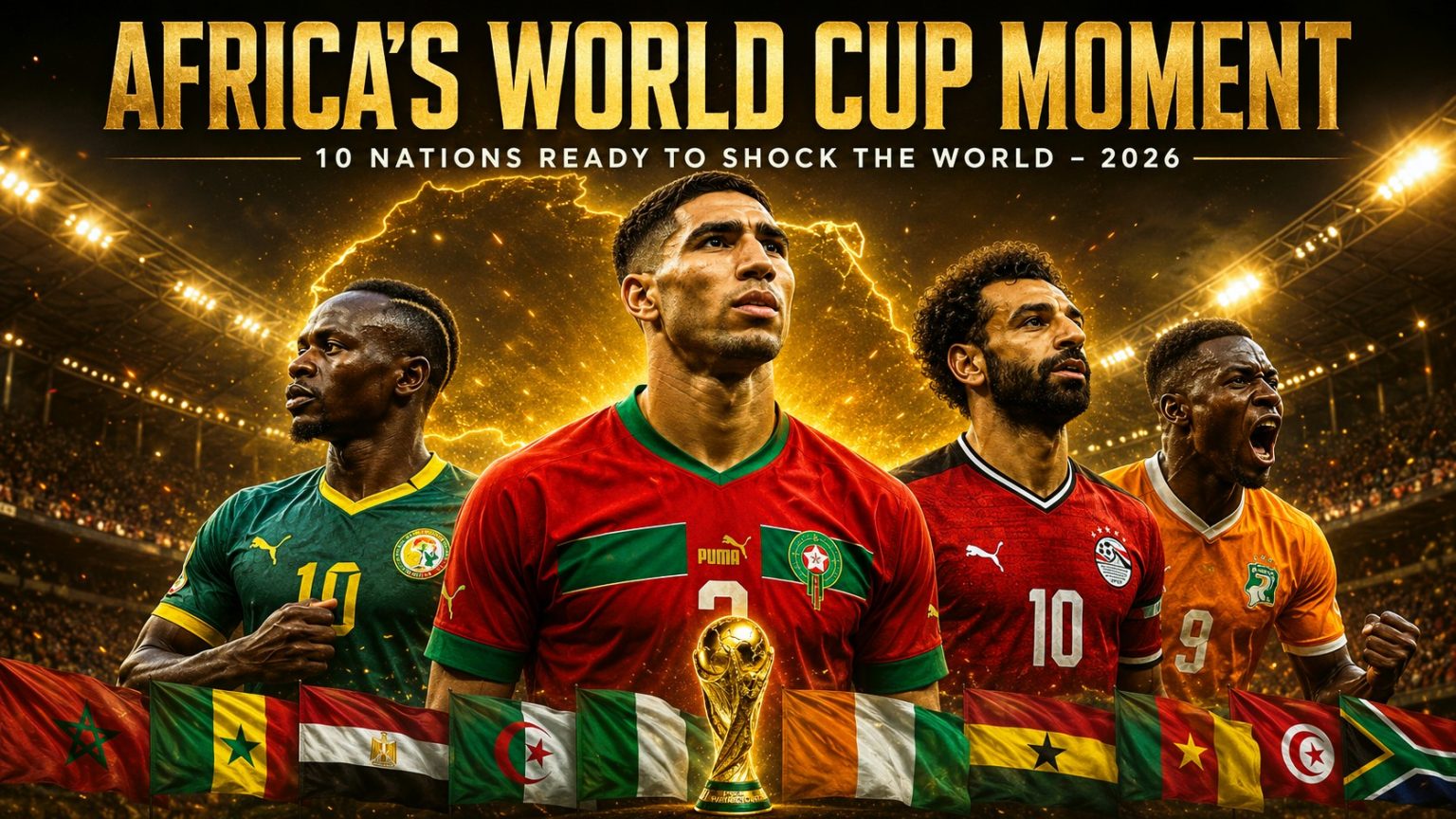

Ten nations. One continent. And at least one result in North America this summer that nobody will see coming.
Africa has never won a FIFA World Cup. That fact sits uncomfortably alongside the evidence of what the continent’s football has become: technically sophisticated, tactically organised, and producing players who compete at the highest levels of the game week in, week out for Europe’s biggest clubs.
The 2022 World Cup in Qatar gave the world a preview. Morocco became the first African nation to reach the semi-finals, dismantling Spain and Portugal along the way with a defensive structure and collective discipline that silenced every critic who had ever dismissed African football as a curiosity rather than a genuine force.
They lost to France in the last four. They finished fourth behind Croatia. The continent celebrated as if they had won it.
Four years on, the 2026 FIFA World Cup in the United States, Canada, and Mexico arrives with a record ten African nations in the field. Not nine. Ten.
The largest CAF representation in the history of the tournament, and a signal, whether FIFA intends it or not, that the world of football can no longer afford to look past the continent when serious conversations about who wins tournaments are being held.
Morocco, Senegal, Egypt, Ivory Coast, Algeria, Ghana, Tunisia, South Africa, DR Congo, and Cape Verde. Ten squads.
Ten stories. And a collective quality that makes this the most dangerous group of African nations ever to compete at a single World Cup.

The question is not whether they will make an impact. The question is which ones will go furthest, which ones will cause the upsets that reshape the tournament, and which single result will make the rest of the world sit up and finally, definitively, change how they think about African football.
This is the full analysis. Every nation examined. Every realistic path laid out. And an honest prediction about where the shocks are coming from.
Africa at the 2026 World Cup — Understanding the Scale
Ten nations from CAF competing at a single World Cup is not just a number. It is a statement about where African football stands in 2026.
DR Congo secured the tenth and final African spot through the intercontinental playoff — beating their opponent over two legs to claim a place that, in previous editions, would not have existed.
Their presence in North America is proof that the depth of African football now extends well beyond the traditional powerhouses.
The ten nations are spread across eight of the twelve groups, meaning African football will be present in almost every corner of the tournament from the opening match to the final day of the group stage.
The impact on the tournament — tactically, emotionally, and in terms of results — will be impossible to ignore.
What makes this collection of African nations different from any previous generation is the profile of the players.
These are not squads built around a handful of European-based stars surrounded by domestic league players.
Almost every starting eleven that an African manager will put out in North America will be composed almost entirely of players competing at the highest levels of club football in Europe and beyond.
The conversation about African football in 2026 starts with Morocco. But it does not end there.
1. Cape Verde — The Smallest Nation With the Biggest Opportunity
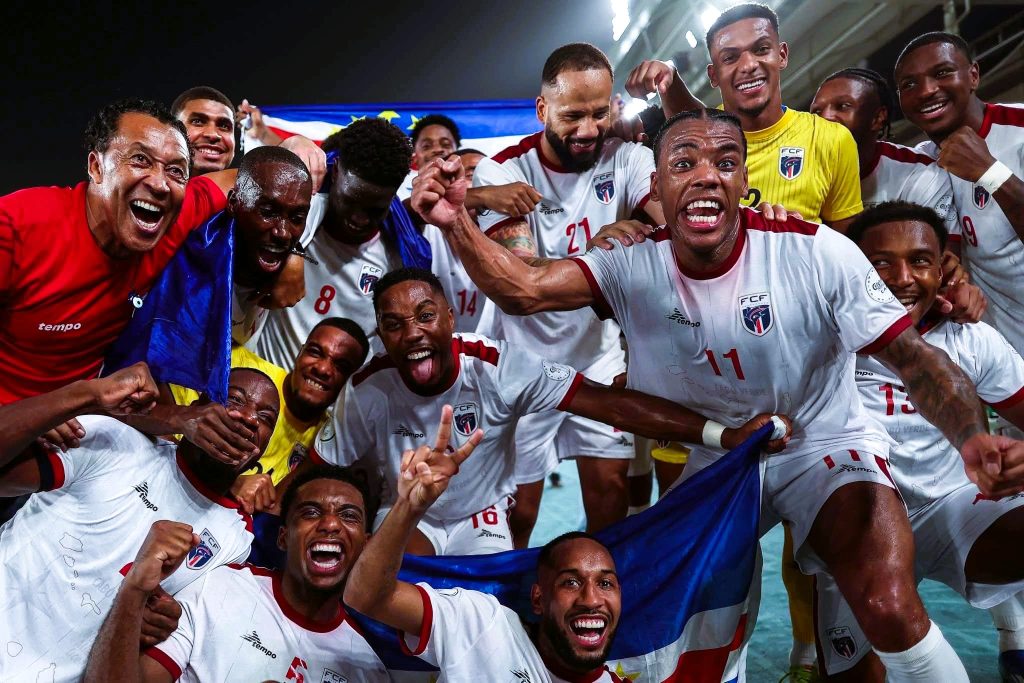
Group H: Spain, Uruguay, Saudi Arabia
Cape Verde are in a group with Spain — the defending European champions and one of the tournament favourites — Uruguay, one of South America’s most experienced and combative sides, and Saudi Arabia.
On paper, it is a group in which Cape Verde’s role is to participate rather than compete. That framing is worth challenging.
Cape Verde have quietly become one of the most organised and tactically coherent smaller nations in African football.
Their qualification for the 2026 World Cup — only their second appearance at a World Cup after Brazil 2014 — was not an accident.
It was the product of a squad with genuine quality, built around players competing in Portugal, Spain, and other European leagues.
Dylan Tavares and other Cape Verdean players with dual European heritage bring a technical level that belies the nation’s population of fewer than 600,000 people.
They will not win Group H. Spain will. But Cape Verde against Saudi Arabia is a match they can win.
And a team that finishes with three points from the group stage, having competed respectfully against Uruguay and pushed Spain harder than expected, will have done something that changes how the world sees their football.
The shock potential here is not about reaching the knockout stages. It is about proving that a nation of this size belongs at a World Cup — and doing it emphatically enough that nobody questions whether they deserve the invitation.
Realistic expectation: Group stage exit with at least one competitive result. Shock potential: Beating Saudi Arabia and making Spain work for their points would represent a genuine achievement.
2. South Africa — The Hosts of the Opening Night Surprise
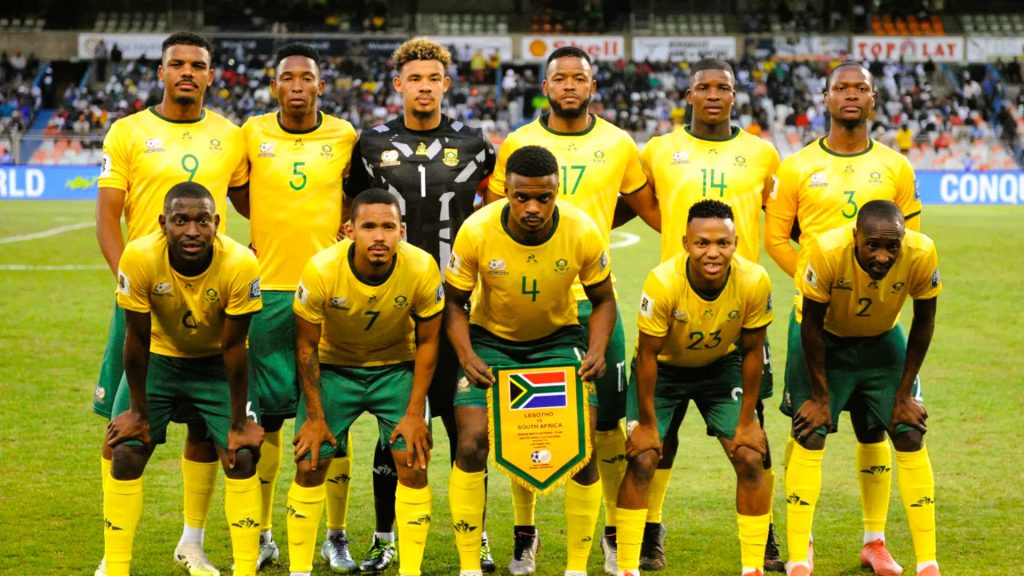
Group A: Mexico, South Korea, Czechia
South Africa open the entire 2026 World Cup against hosts Mexico at the Estadio Azteca in Mexico City on June 11.
There is no bigger stage in international football than that opening match, and Bafana Bafana will be walking into one of the most iconic venues the sport has ever produced, in front of a crowd that will be overwhelmingly hostile, against a Mexico side desperate to announce their home tournament with a victory.
Hugo Broos has spent years building a South Africa squad with more technical quality and tactical awareness than the nation has produced since their own World Cup hosting in 2010.
Percy Tau, at 30, brings the experience of competing at the highest levels of European football.
His technical quality, his ability to link play, and his leadership in the attacking third give South Africa an outlet that previous generations have not always had.
The group is genuinely competitive. South Korea bring the Asian football quality that has produced increasingly significant results at World Cups over the past two decades.
Czechia are a solid, organised European side. Neither is insurmountable. South Africa’s realistic path runs through their matches against South Korea and Czechia.
If they can take points from those two matches — and the opening draw or win against Mexico would be a bonus — they have a route to the knockout stages that is not entirely fanciful.
The emotional weight of the opening match matters too. A South Africa performance that shocks Mexico at the Azteca — even a draw — would be the moment that sets the tone for African football at this entire tournament.
Realistic expectation: Group stage exit. Shock potential: A draw or win against Mexico in the opening match of the entire World Cup would be the first headline result of the tournament.
3. Tunisia — The Quiet Disruptors
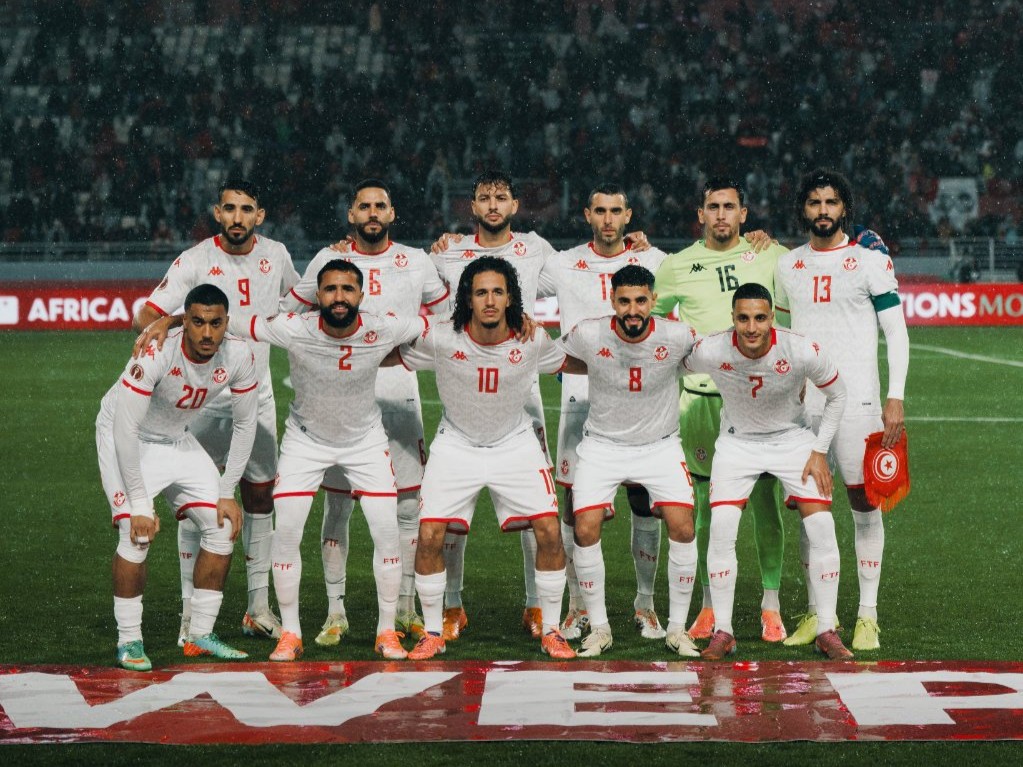
Group F: Netherlands, Japan, Sweden
Tunisia arrive at the 2026 World Cup without the profile of Morocco, the star power of Egypt, or the continental pedigree of Senegal.
What they have is something that has repeatedly made them difficult to beat at major tournaments — a collective defensive discipline and a tactical organisation that forces technically superior opponents into uncomfortable, attritional matches.
Their group contains Netherlands, Japan, and Sweden. Three technically capable sides. Three nations that prefer to play on the front foot and build through the lines.
Three nations that tend to struggle when an opponent takes away their rhythm.
Tunisia’s history at World Cups is defined by the famous 1978 win over Mexico — the first African team to win a World Cup match — and a series of appearances since in which they have consistently made life difficult for better-ranked opponents without ever progressing beyond the group stage.
That pattern could change in 2026 if the squad’s European-based players hit their peak form simultaneously.
Wahbi Khazri brings experience and technical quality. The younger generation of Tunisian players competing in French and Italian football adds an athleticism and directness that previous squads have lacked.
Japan are the most intriguing match in this group. Both sides defend with discipline, both sides are technically competent, and a match between them will likely be decided by the finest of margins.
That kind of tight, tactical contest tends to suit Tunisia. Realistic expectation: Group stage exit. Shock potential: Beating Japan or Netherlands would be the result that announces Tunisia as more than a group-stage participant.
4. Algeria — The Dark Horse Nobody Is Discussing
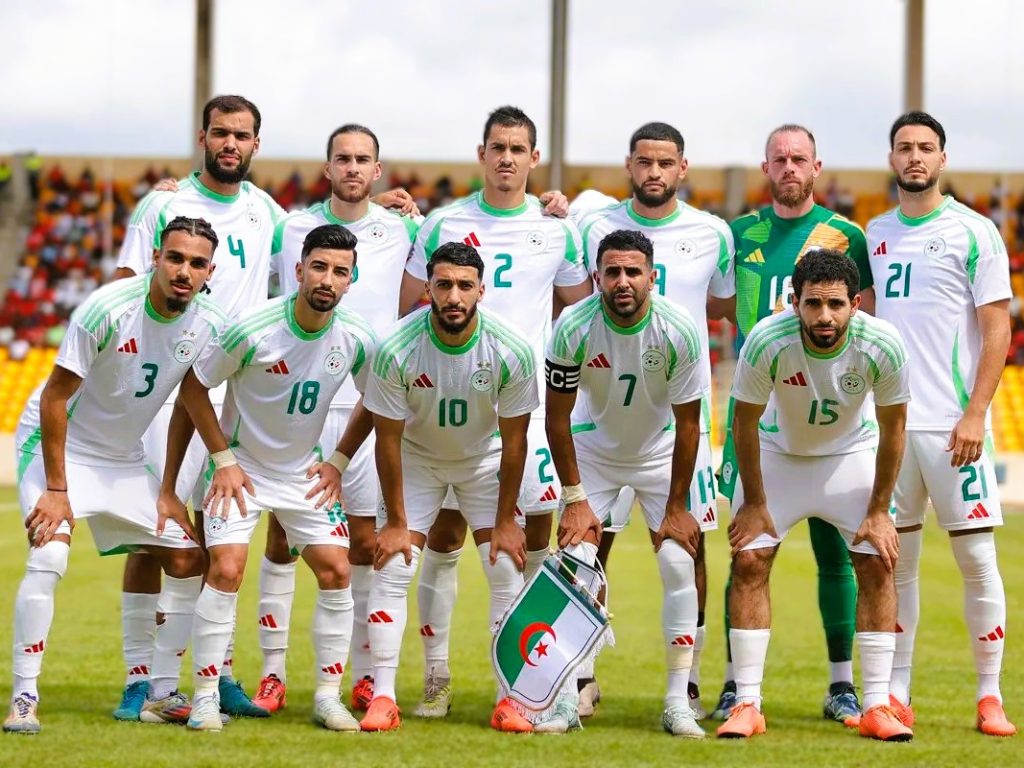
Group J: Argentina, Austria, Jordan
Algeria are in the same group as Argentina. The defending world champions. Lionel Scaloni’s side.
A squad with the mentality of winners and the tactical intelligence of a generation that knows exactly how to win tournaments. None of that should discourage Algeria, because second place in Group J — behind Argentina — is genuinely within reach.
Austria are a technically capable European side but not an elite one. Jordan, making their World Cup debut, will be focused on survival rather than advancement.
Algeria, with Riyad Mahrez leading a squad that has consistently been among Africa’s strongest over the past decade, are the most qualified team to finish second in this group.
Mahrez at 35 arrives at his final World Cup with something to prove. His club career — Premier League titles with Manchester City, Champions League glory — represents one of the finest individual journeys in African football history.
He has never produced those performances on a World Cup stage. This is his last chance.
Manager Vladimir Petković has built Algeria into a structured, tactically disciplined side that is difficult to break down and dangerous on the counter.
The 4-3-3 he has implemented gives Mahrez the freedom to operate in wide areas and come inside, creating space for the runners beyond him.
A second-place finish in Group J puts Algeria in the Round of 32. From there, a match against a third-placed qualifier is entirely winnable.
A quarter-final is not impossible. The reason nobody is discussing Algeria as a genuine shock candidate is exactly why they could be one. Expectations are low.
The pressure is manageable. And a squad with Mahrez’s quality, properly organised, freed from expectation, can be a dangerous thing.
Realistic expectation: Round of 32 if they finish second in Group J.
Shock potential: Eliminating Argentina would be one of the greatest upsets in World Cup history.
Even finishing second above Austria and reaching the knockout stages constitutes a significant achievement.
5. Ghana — The Return of the Black Stars
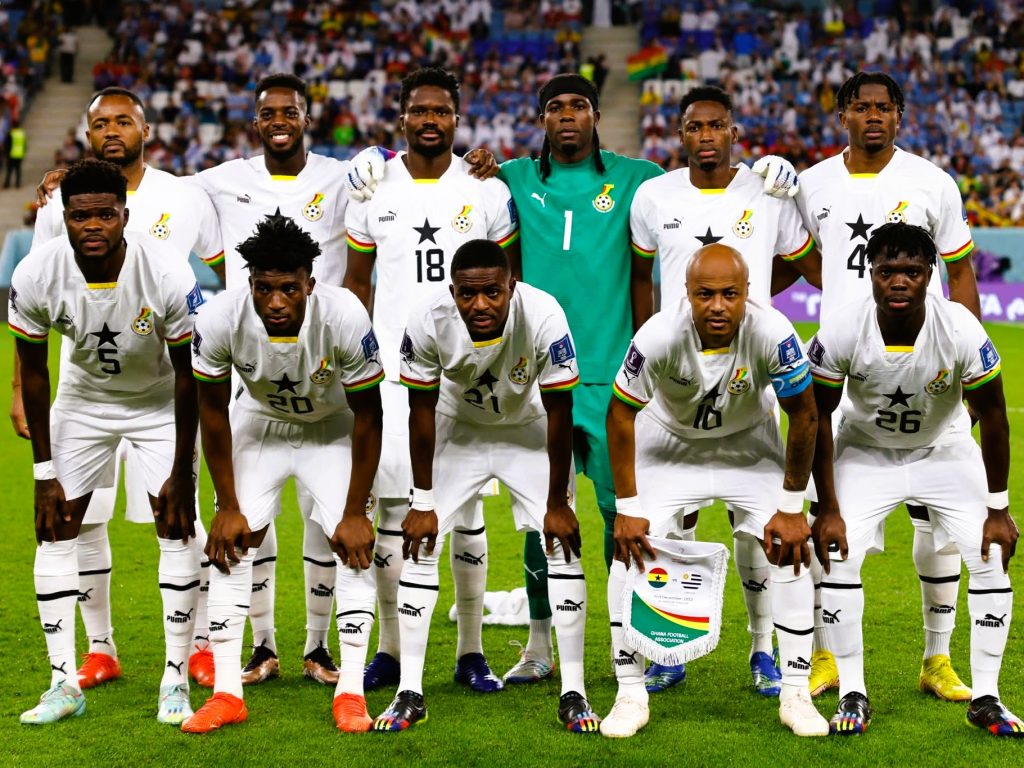
Group L: England, Croatia, Panama
Ghana returns to the World Cup for the first time since 2014, and they do so with a squad that carries both the weight of history and the excitement of a new generation.
The history is painful. The 2010 quarter-final in South Africa — when Asamoah Gyan missed a penalty in the final seconds of extra time against Uruguay, the ball hitting the crossbar, the shootout lost, the continent’s dream of a semi-final extinguished in the cruelest possible way — remains one of football’s most agonising near-misses.
Carlos Queiroz, appointed as manager in April 2026, brings a wealth of international management experience — Portugal, Iran, Colombia, Egypt, among his previous roles — and an immediate tactical credibility that gives Ghana a structure they have sometimes lacked.
Mohammed Kudus is the player who makes this Ghana side genuinely interesting. At 24, the Tottenham midfielder has developed into one of the most dynamic and unpredictable attackers in the Premier League — capable of playing centrally, from the right, or in the number ten role, and capable of producing moments of individual brilliance that change matches.
The group is difficult. England are one of the tournament favourites. Croatia, despite an aging squad, carry the tournament experience of a nation that reached the 2018 World Cup final. Panama will be organised and physical.
Ghana’s realistic target is to qualify from this group — and while England will be heavy favourites to win it, the second place is genuinely competitive.
A Croatia side that may be past their peak, a Panama side without the quality to trouble Ghana’s best players, and the possibility that England rotate against one of their easier opponents — these are the variables that could give Ghana a path.
Realistic expectation: Group stage exit, but competitive in every match. Shock potential: Beating Croatia and qualifying from Group L alongside England would be a statement of intent.
6. DR Congo — The Wildcard Nobody Can Fully Dismiss
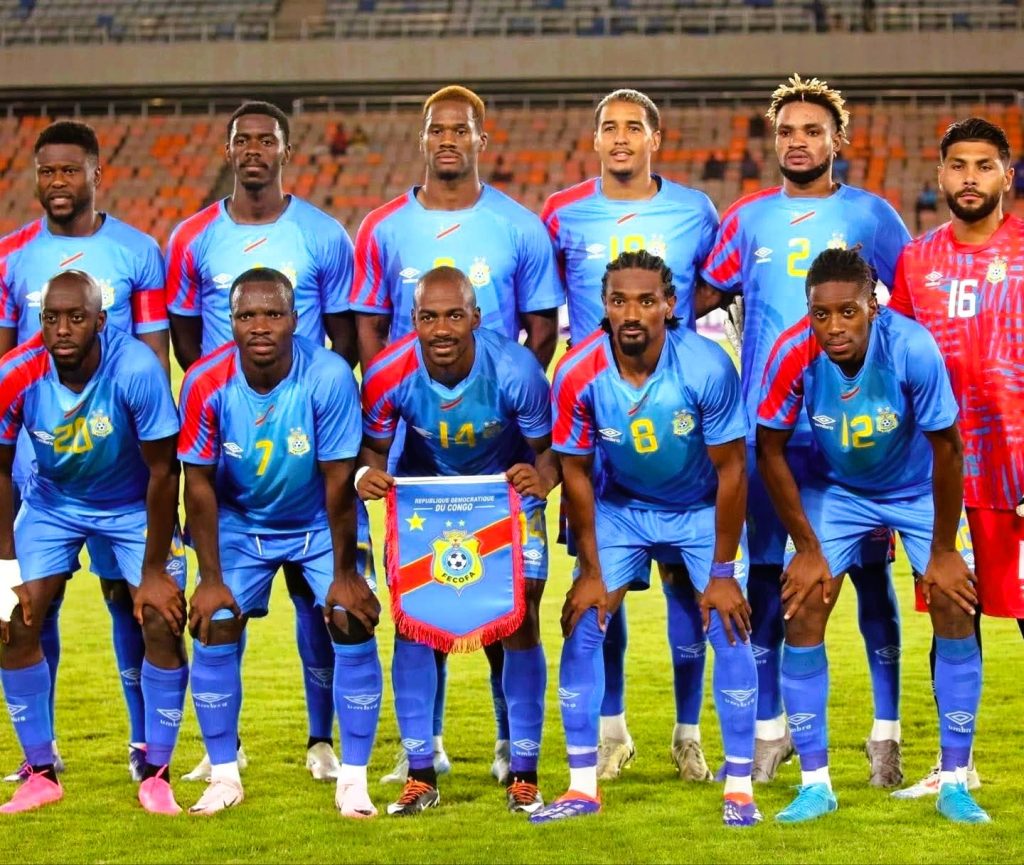
Group K: Portugal, Colombia, Uzbekistan
DR Congo are in this tournament because they fought their way through the intercontinental playoff, earning a place that felt, to many observers, like the appropriate reward for a footballing nation of enormous potential that had been waiting too long for a World Cup stage.
The group is challenging. Portugal — with Cristiano Ronaldo, Bruno Fernandes, and one of the deepest squads in world football — are the headline name.
Colombia, with their technically gifted European-based players and a pressing identity that makes them difficult to play against, are the real danger for DR Congo’s knockout aspirations.
Uzbekistan are the fourth team. And that is where DR Congo’s opportunity lies.
A win against Uzbekistan, combined with at least one competitive performance against either Portugal or Colombia, gives DR Congo a foothold in the group.
The squad has individual quality that the ranking does not fully reflect — particularly in attack, where the next generation of Congolese forwards competing in European leagues give manager Sébastien Desabre genuine options.
DR Congo will not reach the knockout stages from this group. But they will not be passive victims either.
A team representing a footballing nation of this size and passion — playing in their first World Cup since 1974 — will arrive in North America with something to prove.
Realistic expectation: Group stage exit. Shock potential: A competitive performance against Colombia, or an unexpected result against Portugal, would put DR Congo on the map in a way that matters for the future of their football.
7. Ivory Coast — The Most Underrated Squad in the Tournament
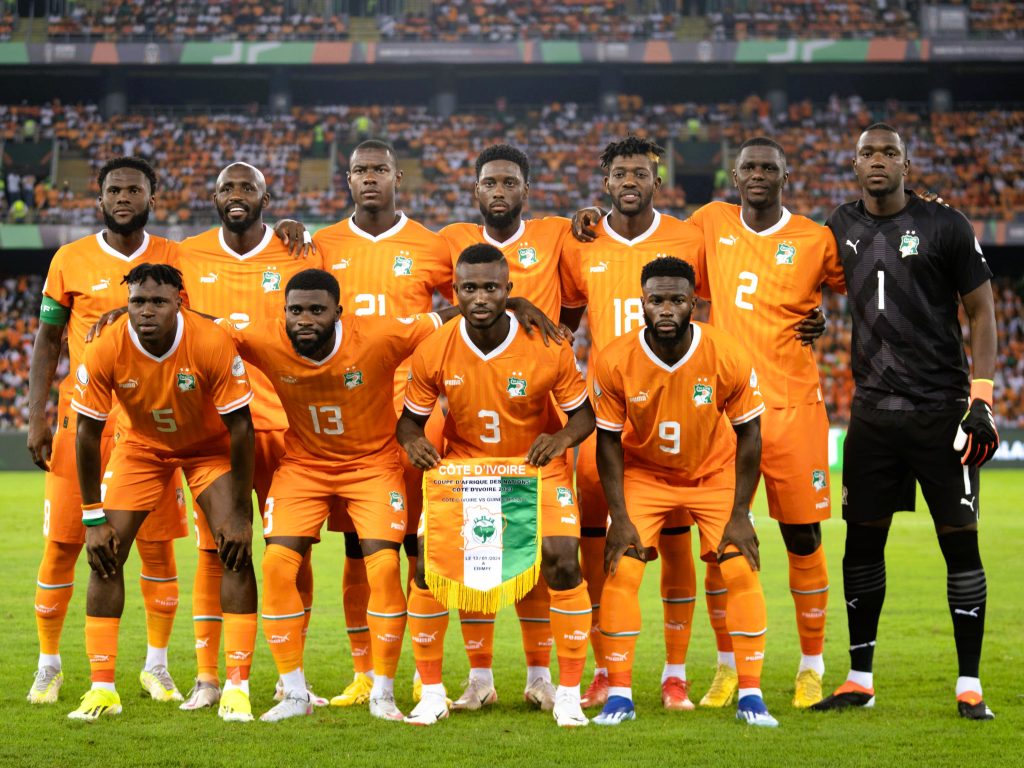
Group E: Germany, Ecuador, Curaçao
Ivory Coast arrive at the 2026 World Cup without the profile of Morocco or the headline star power of Salah’s Egypt — and that relative anonymity might be their greatest asset.
Manager Emerse Faé has quietly assembled one of the most technically accomplished African squads heading to North America.
The group draw — Germany, Ecuador, and Curaçao — is one that Ivory Coast can genuinely navigate.
Germany under Julian Nagelsmann are technically capable and well-organised, but they have shown defensive vulnerabilities throughout their qualifying campaign.
Ecuador are a disciplined, physical South American side who make life difficult for technically superior opponents but are limited in what they can produce against a well-organised defence.
Curaçao, making history as the smallest nation ever to compete at a World Cup, will be competitive but are not expected to trouble the group’s stronger sides.
Sébastien Haller leads the Ivory Coast attack. Having moved permanently to FC Utrecht in the Dutch Eredivisie in August 2025, he has found the kind of consistent game time and confidence that his stints at bigger clubs did not always provide.
Fully fit and firing, his combination of physical presence, aerial ability, and technical quality in the penalty area makes him a centre-forward capable of scoring the goals that win knockout matches.
Simon Adingra, 23, has established himself at Brighton as one of the most exciting young forwards in the Premier League — direct, technically sharp, and capable of the kind of individual moment that changes the direction of a match.
In midfield, Franck Kessié brings Champions League experience and a physical dominance that gives Ivory Coast a combative edge in the centre of the pitch.
The path is straightforward. Win against Ecuador and Curaçao, take something from Germany, and Ivory Coast reach the Round of 32. From there, the bracket could open up significantly.
A team with Haller’s quality in front of goal, Adingra’s unpredictability from wide, and Faé’s tactical organisation behind them is a genuine threat in the knockout stages — regardless of who they face.
Realistic expectation: Round of 16. Shock potential: Beating Germany in the group stage would be one of the results of the tournament from any African nation.
8. Egypt — The Pharaohs Have Mo Salah, and That Changes Everything
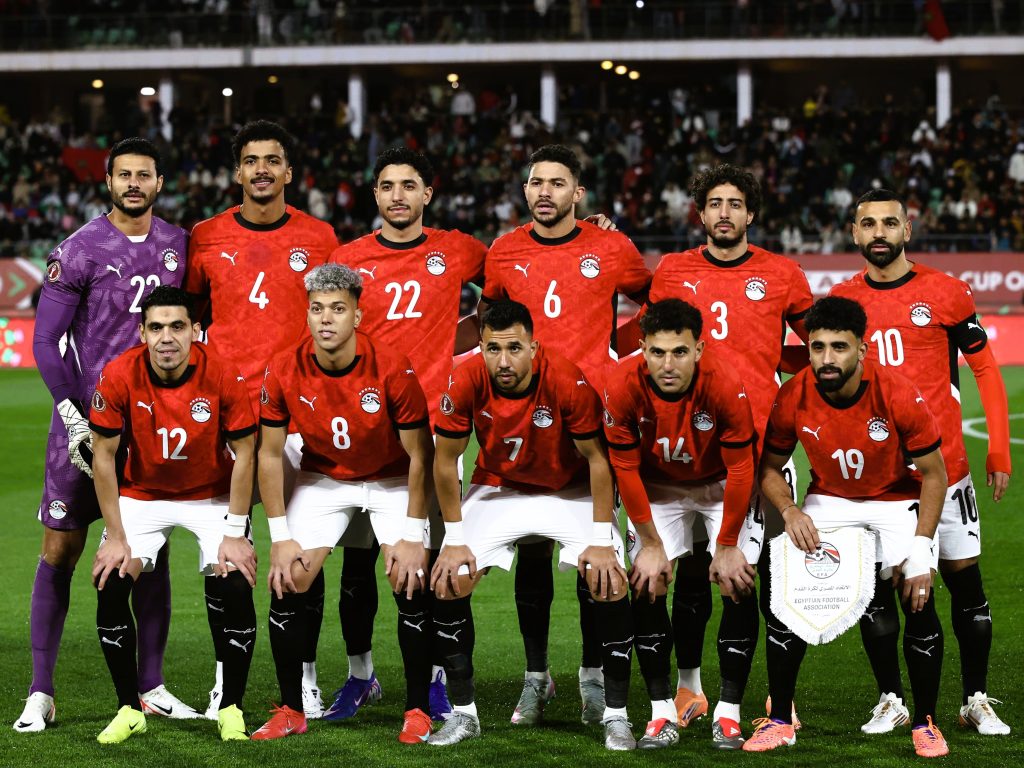
Group G: Belgium, Iran, New Zealand
Egypt are the most successful nation in Africa Cup of Nations history — seven titles, a record no other African nation comes close to matching. And yet their World Cup record tells a frustratingly different story.
Early exits, missed opportunities, and a persistent gap between continental dominance and global tournament impact. In 2026, they have Mohamed Salah at 34 years old.
And Mohamed Salah, coming off a season in which he led Liverpool to the Premier League title with a level of individual performance that has reignited debate about where he stands among the greatest players of his generation, is a different proposition to any Egyptian footballer who has gone before.
Manager Hossam Hassan — one of the greatest Egyptian players in the history of the game, now leading his nation into its most significant World Cup campaign in decades — has spent his tenure building a structure specifically designed to maximise Salah’s impact in the final third while ensuring the team does not collapse into a one-man dependency.
The draw is favourable. Belgium are past the peak of their golden generation — Hazard retired, Lukaku gone, De Bruyne in the final years of his career.
Iran are disciplined and difficult to break down but limited in attacking quality. New Zealand, making a rare World Cup appearance, will be focused on respectability rather than results. Egypt can win this group.
That is not an exaggeration. It is a realistic assessment of the gap between Egypt’s quality, with Salah at his best, and the other three sides in Group G.
The key match is Belgium. Win that, and the group opens up. Lose it, and Egypt face a difficult path through Iran and a nervous final match against New Zealand.
If Salah produces the kind of World Cup that Messi produced in Qatar — carrying a team on his back through individual brilliance, arriving in the biggest moments, delivering when the pressure is at its highest — Egypt become one of the great stories of the 2026 tournament.
At 34, this is his last World Cup. The motivation does not need to be manufactured. Realistic expectation: Round of 16.
Shock potential: A Salah-inspired run to the quarter-finals would be one of the great individual World Cup narratives of the modern era.
9. Senegal — The Lions Are Hungry and the Timing Is Right
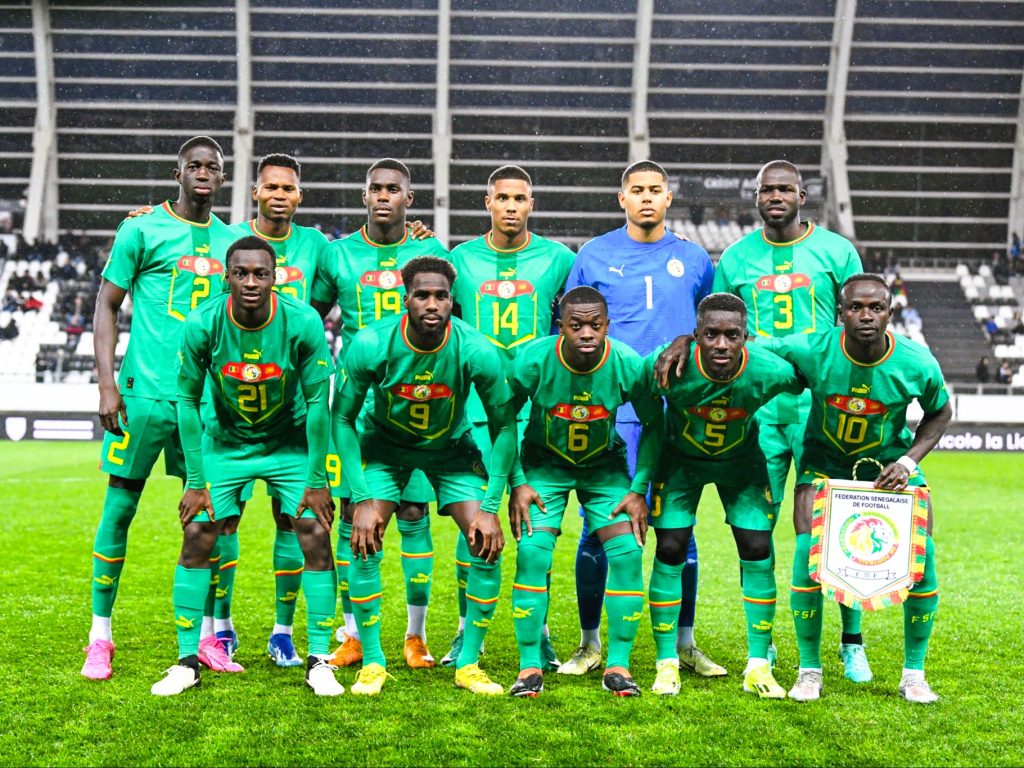
Senegal’s group is the most emotionally loaded draw any African nation received. France. The tournament favourites.
The world number one ranked side. A match that carries history, narrative, and the kind of weight that transcends football analysis.
Under manager Pape Thiaw, who succeeded the long-serving Aliou Cissé, Senegal arrive as one of the most consistently competitive African nations of the modern era.
They won the Africa Cup of Nations in 2021 — their first ever continental title.
They reached the AFCON final again in 2025, a campaign that ended in extraordinary controversy — Senegal won the match on the pitch against hosts Morocco before a disputed officiating decision led to a walk-off protest, and CAF subsequently awarded the title to Morocco by default with a 3-0 scoreline.
The title was stripped from Senegal in circumstances that remain deeply contentious across the continent. What that episode produced, regardless of how history records the result, was a Senegal squad with a burning sense of injustice and an unresolved hunger to win something on a stage where the result cannot be taken away from them.
Sadio Mané, now 34, is in the final chapter of a legendary career.
His influence at this tournament will be more about leadership and mentality than the electric pace that once made him one of the best forwards in the world.
But leadership and mentality at a World Cup — in a dressing room of players who look up to him as a generation-defining figure — are worth more than pace.
The real story of this Senegal squad is what exists around Mané. Ismaïla Sarr, at 26, is in the form of his career.
His directness, his pace, and his ability to operate in wide areas and cut inside give Senegal an attacking threat that France’s left-back will spend the entire group match worrying about.
Pape Matar Sarr has developed at Tottenham Hotspur into one of the most dynamic and complete box-to-box midfielders in the Premier League.
At 23, his energy, pressing intensity, and technical quality give Senegal a creative force in the middle of the pitch that the 2022 squad simply did not have.
Goalkeeper Édouard Mendy brings Champions League experience and the composed, commanding presence that defines Senegal’s defensive approach.
Norway, built around Erling Haaland, are a physical threat with limited tactical sophistication without the ball. Iraq are the group’s weakest side.
Senegal, if they organise properly and produce their best football, should qualify from Group I.
The question for Thiaw’s side is not about the Norway or Iraq matches. It is about France.
A result against the world number one that keeps Senegal in the group — a draw, or the most famous African result since Morocco beat Spain in 2022 — changes everything.
Realistic expectation: Round of 16, with a quarter-final possible if momentum builds. Shock potential: Beating France in the group stage would be the single biggest result involving an African nation at a World Cup since Morocco’s semi-final run in 2022.
10. Morocco — Africa’s Greatest Hope and the Weight of Expectation
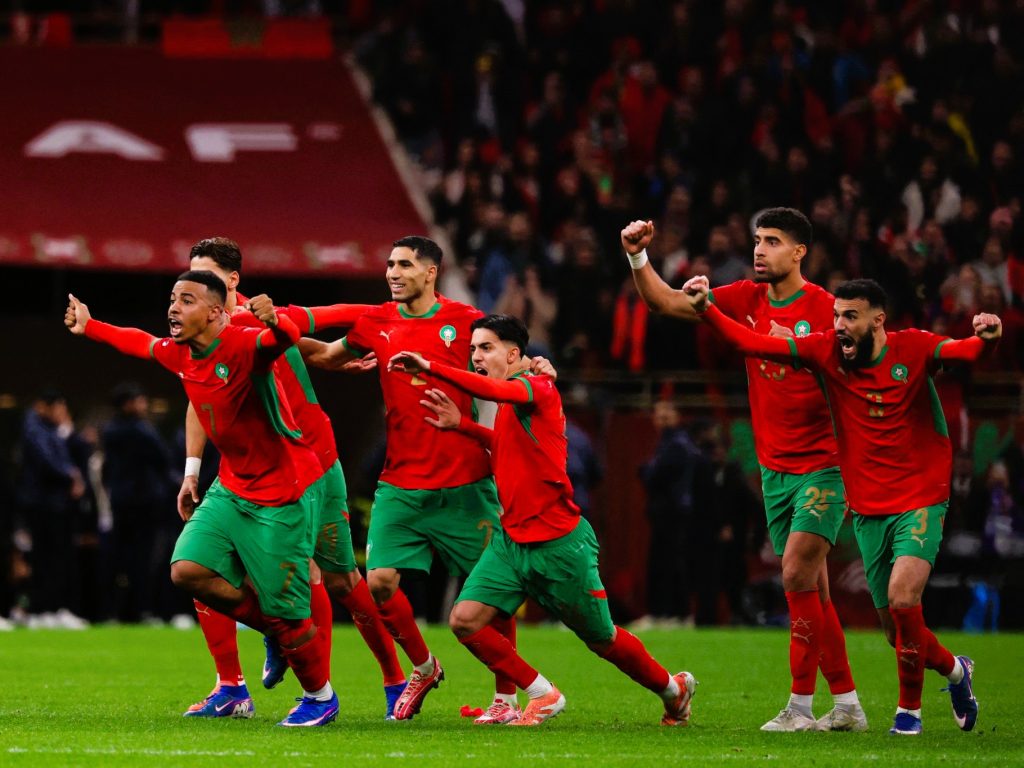
Group C: Brazil, Scotland, Haiti
Morocco are the African nation that arrives in 2026 carrying the heaviest expectations — and the most complicated transition. In 2022, Walid Regragui built something extraordinary.
A defensive system of collective discipline that had no obvious weakness, allied to a counter-attacking threat through Achraf Hakimi and Hakim Ziyech that punished every opponent who committed forward. They reached the semi-finals.
They changed African football forever. In March 2026, Regragui departed. Mohamed Ouahbi took over the national team with months remaining before the tournament begins.
That is the defining challenge of Morocco’s 2026 campaign — not the quality of the players, which remains elite, but the question of whether a new manager can maintain a tactical identity that was so deeply associated with his predecessor. Hakimi is the constant.
At 27, playing the best football of his career at Paris Saint-Germain, he remains the most complete full-back in world football — a player who can change a match on his own and who no defensive system has yet found a complete answer to.
Sofyan Amrabat provides the midfield anchor — relentless in his pressing, intelligent in his distribution, and one of the primary reasons Morocco’s defensive structure has been so difficult to dismantle.
In attack, Youssef En-Nesyri leads the line. Having joined Al-Ittihad in the Saudi Pro League in February 2026 from Fenerbahçe, his physicality and aerial dominance give Morocco a centre-forward who can operate as both a target man and a runner in behind.
Their draw is the most demanding of any African nation.
Brazil in the group stage — a direct rematch of the 2022 quarter-final that Morocco lost 1-0 — is the fixture that will define their tournament before it has really begun. That match in Qatar was one goal, one moment.
Morocco were not outplayed. They were not outclassed. They were eliminated by the narrowest of margins against a Brazil squad that has since changed managers and reset its tactical identity under Carlo Ancelotti.
The rematch in 2026 will be different. Both squads have evolved. Both managers — in different ways — are building something new.
And in a group that also contains Scotland and Haiti, Morocco can afford to approach the Brazil match with the knowledge that second place is entirely achievable even with a defeat.
But Morocco, with this squad, under any manager who understands what Regragui built, should not be thinking about second place.
They should be thinking about winning the group, entering the knockout stages as the most feared African side in the tournament, and going further than they did in Qatar.
Realistic expectation: Quarter-finals, with a semi-final within reach. Shock potential: Winning Group C above Brazil would announce the Ouahbi era and confirm that 2022 was not a one-off.
The African Nation Most Likely to Shock the World
Morocco are the strongest. Senegal have the most compelling storyline. Egypt have the individual genius.
But the honest answer about which African nation will produce the single most shocking result of the 2026 World Cup is this — it depends entirely on which player peaks at the right moment, which manager makes the right decision in the right match, and which side of the bracket opens up at the critical stage.
Morocco beating Brazil in the group stage. Senegal beating France. Egypt beating Belgium with a Salah hat-trick. Ivory Coast eliminating Germany.
Any of these results is possible. None of them is probable. And that combination — possible but not probable — is exactly what makes African football at the 2026 World Cup the most compelling storyline of the entire tournament.
A record ten nations. A continent with something to prove. And at least one result in North America this summer that will make the world stop, stare, and fundamentally reconsider everything they thought they knew about where football power now lives.