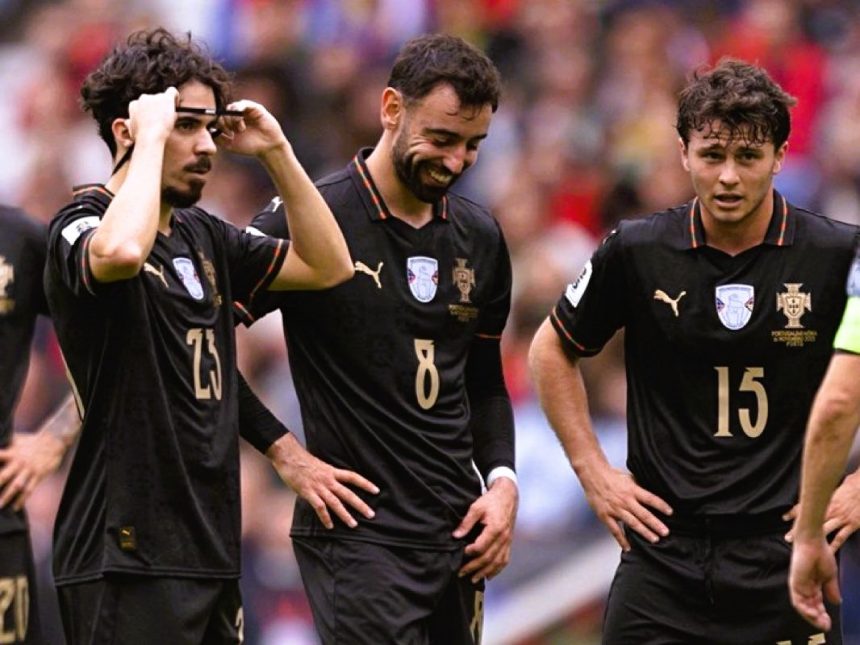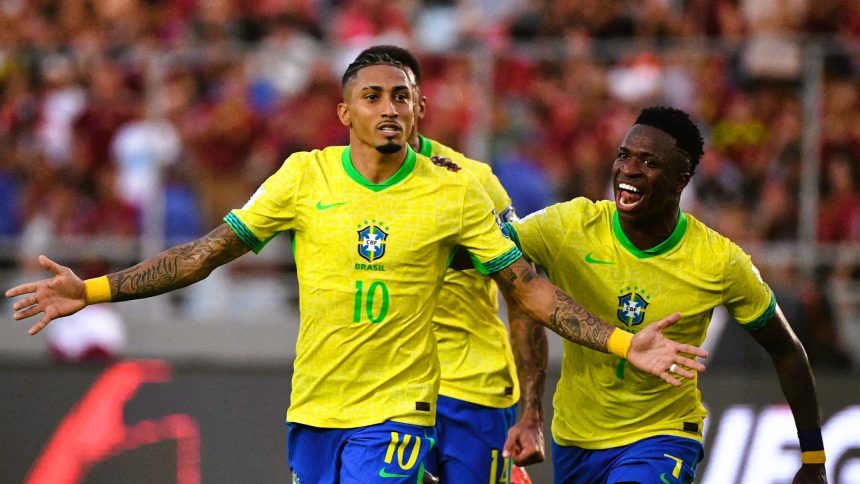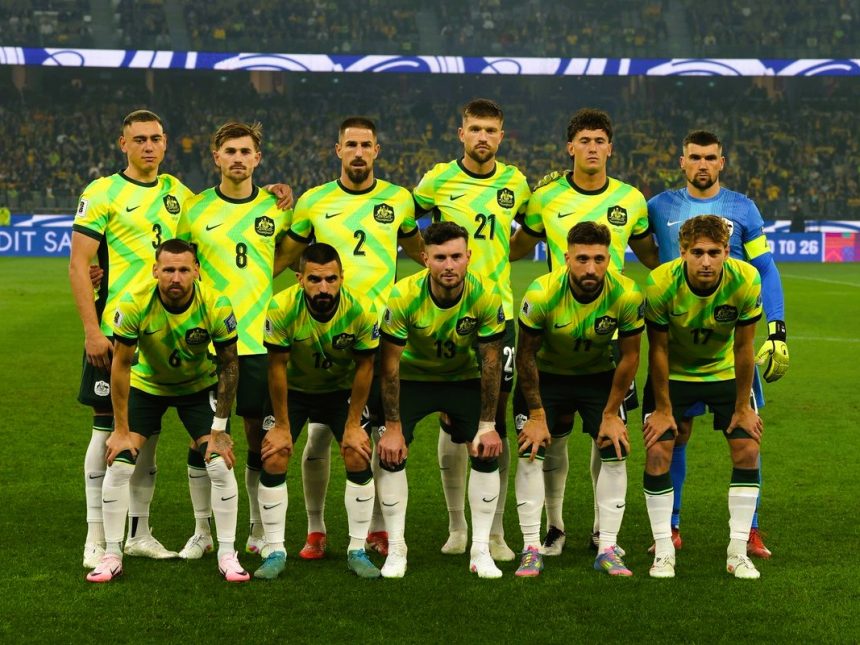










The 2026 FIFA World Cup Quarterfinals mark the moment when the competition truly turns brutal. With the group stage long behind and the knockout rounds in full force, the tournament reaches its most unforgiving phase—an “Elite Eight” showdown where the world’s best football nations battle under immense pressure for a place in the semifinals and a genuine shot at global glory.
By the time these four matches arrive, the field will have been whittled down from 48 teams to just eight. Close enough to touch the final, yet one mistake away from elimination, every moment carries enormous weight.
These four high-voltage clashes will be played from July 9 to July 11, 2026, across iconic American venues, including Gillette Stadium, SoFi Stadium, Hard Rock Stadium, and Arrowhead Stadium.
This complete guide breaks down the official quarterfinal schedule, confirmed venues and kickoff windows, fixed bracket routes, qualification rules, extra-time and penalty procedures, and the direct pathway to the semifinals. Everything you need to follow every decisive turn as the world’s elite nations chase a place in the 2026 final at MetLife Stadium.
What Are the Quarterfinals at the 2026 FIFA World Cup?
The quarterfinals represent the third knockout round of the 2026 FIFA World Cup, where the tournament’s remaining eight teams battle for just four coveted places in the semifinals.
After surviving the expanded group stage and navigating the first two knockout hurdles—the Round of 32 and the Round of 16—the quarterfinals act as the elite filter of the competition. At this stage, only nations capable of handling sustained pressure and knockout intensity remain, with every match directly deciding who stays in the race for a podium finish.
How the Quarterfinals Fit Into the Knockout Stage
This stage follows the newly introduced Round of 32 (June 28–July 3) and the traditional Round of 16 (July 4–7), with the eight winners of the Round of 16 advancing to the quarterfinals.
The quarterfinals represent the final barrier before the semifinals. The four teams that win at this stage are guaranteed at least two more matches—either the final or the third-place play-off—ensuring their place in the tournament until the final weekend of the competition.


- Progression: The winners of the eight Round of 16 matches (Matches 89–96) advance directly to this stage.
- Placement: The Quarterfinals serve as the final bridge before the Semifinals, narrowing the field from eight teams to four.
Single-Elimination Rules in the Quarterfinals
Like all knockout rounds at the 2026 World Cup, the quarterfinals operate under pure single-elimination rules. There are no second chances, no aggregate scores, and no points for draws—every match must produce a winner. For the eight remaining teams, the objective is absolute: win the match or be sent home.
If the score remains level after the initial 90 minutes of regulation, the contest moves into tie-breaking procedures. This includes extra time and, if required, a penalty shootout, ensuring that one nation advances to the semifinals while the other sees its journey in North America come to an abrupt end.
Related Guides
→ 2026 FIFA World Cup Knockout Stage Format & Bracket Explained
How Teams Qualify for the Quarterfinals
To qualify for the Quarterfinals of the 2026 FIFA World Cup, teams must successfully navigate a strict win-or-go-home pathway. Under the expanded 48-team format, reaching the “Elite Eight” requires consistency and resilience across multiple knockout rounds. A nation must first advance from the group stage and then secure consecutive victories in both the Round of 32 and the Round of 16.
Qualification at this stage is entirely merit-based. Only the eight winners of the Round of 16 matches advance to the quarterfinals. There are no secondary qualification routes, repechage opportunities, or “best loser” spots once the tournament reaches this phase.
Each team’s place in the Quarterfinal lineup is determined by a predefined bracket position, not a new draw. This fixed structure ensures that every advancing nation knows its exact path toward the semifinals, adding clarity, strategy, and long-term planning to the knockout journey.
Bracket Mapping & Fixed Pairings
The 2026 FIFA World Cup Quarterfinals operate on a fixed bracket mapping system, providing every team with a clear and transparent road to the final. Unlike some domestic cup competitions that rely on random draws in later rounds, the knockout bracket at the World Cup is pre-determined by FIFA before the tournament begins.
As a result, a team’s position in the Quarterfinals is dictated by its group-stage placement and its subsequent victories in the Round of 32 and Round of 16, rather than by chance or re-draws.
These fixed pairings are designed to preserve competitive balance by ensuring that teams advancing from the same side of the bracket do not meet until the later stages of the tournament. This structure distributes elite teams evenly across the four Quarterfinal slots and maintains clarity throughout the knockout phase.
For example, the winner of Match 89 is pre-assigned to face the winner of Match 90 in the first Quarterfinal (Match 97), illustrating how the bracket path is locked in well before kickoff.
When Are the Quarterfinal Matches Played?
As the competition reaches its peak in the summer of 2026, the quarterfinals will be played from Thursday, July 9 to Saturday, July 11, 2026, concluding with a high-profile doubleheader on the final day.
This three-day window follows immediately after the Round of 16, which ends on July 7, leaving teams with minimal recovery time before the most demanding matches of the tournament. With a place in the semifinals at stake, these fixtures mark a decisive turning point in the World Cup knockout phase.
Kickoff Times Across North America
Quarterfinal matches at the 2026 FIFA World Cup will be scheduled in afternoon and evening local time slots across the three host nations, balancing stadium attendance with global television audiences.
While FIFA will confirm exact kickoff times closer to the tournament, fans can expect scheduling patterns similar to earlier knockout rounds, with matches typically beginning in the mid-afternoon or early evening at each host venue.
Because quarterfinals will be played across multiple time zones—from Pacific (PT) through Central (CT) to Eastern (ET)—supporters are encouraged to check local listings as match days approach.
Expected Kickoff Windows (Illustrative)
Based on FIFA’s standard knockout scheduling, typical kickoff windows may include:
- July 9: Around 4:00 PM ET (local time)
- July 10: Around 12:00 PM PT / 3:00 PM ET
- July 11: Approximately 5:00 PM ET and a prime-time fixture around 8:00 PM CT / 9:00 PM ET
These windows are designed to maximize accessibility for fans across the United States, Canada, and Mexico, while also aligning with prime-time broadcast slots in major global markets.
Related Guides
2026 FIFA World Cup Quarterfinals Schedule
The following table outlines the venues and times for each quarterfinal fixture:
| Match | Date | Venue | Time (ET) | Matchup |
|---|---|---|---|---|
| 97 | Thursday, July 9 | Gillette Stadium, Foxborough, MA | 4:30 PM | Winner Match 89 vs. Winner Match 90 |
| 98 | Friday, July 10 | SoFi Stadium, Inglewood, CA | 3:00 PM | Winner Match 93 vs. Winner Match 94 |
| 99 | Saturday, July 11 | Hard Rock Stadium, Miami Gardens, FL | 5:00 PM | Winner Match 91 vs. Winner Match 92 |
| 100 | Saturday, July 11 | Arrowhead Stadium, Kansas City, MO | 9:00 PM | Winner Match 95 vs. Winner Match 96 |
Exact teams are determined by earlier results, so fixtures are shown as “Winner of [Round of 16 match] vs Winner of [Round of 16 match]”. All times are local.
Extra Time and Penalties in the Quarterfinals
Unlike the group stage, where teams can share points, a clear winner is required to advance in the knockout rounds of the Expanded World Cup. This stage often delivers the tournament’s most dramatic moments, as fatigue and mounting pressure collide in high-stakes, do-or-die scenarios.
If the game remains level at the end of 90 minutes plus stoppage time, the match enters extra time—a 30-minute period divided into two 15-minute halves. There is no golden goal or sudden death; both periods are played in full regardless of scoring.
Should the score still be tied after this grueling 120-minute battle, the winner is determined by a penalty shootout. The shootout begins with five rounds of spot-kicks, after which sudden death is used if necessary, ultimately deciding which nation continues its journey toward the final.
Substitution Rules in Knockout Matches
As the expanded 2026 FIFA World Cup moves into the knockout stages, managing player fatigue becomes a critical strategic factor for coaches. The substitution rules for the Quarterfinals are designed to balance high-intensity play with player safety, providing managers with flexibility to refresh their squads during regulation and beyond.
During the standard 90-minute regulation period, each team is allowed five substitutions. To minimize disruption to play, these must be made within a maximum of three substitution windows, although any changes made at halftime do not count toward this limit.
If the match remains level and enters extra time, teams are granted one additional substitution, bringing the total possible substitutions to six. This extra-time allowance also includes an additional substitution window, ensuring fresh legs can be introduced for the decisive final 30-minute period.
Additionally, special provisions for concussion substitutions may permit extra changes outside these limits, prioritising player health without compromising the flow of the game.
Related Guides
→ 2026 FIFA World Cup Knockout Stage Schedule – Dates & Times
How Winners Advance to the Semifinals
Advancing to the Semifinals represents the ultimate turning point of the 2026 FIFA World Cup, marking a team’s transition from the “Elite Eight” to the final four.
Once a victory is secured in the Quarterfinals, the surviving nations move into the most prestigious tier of the tournament. From this point forward, each team is guaranteed two additional high-stakes matches: either a place in the Championship Final in New Jersey or the Third-Place Play-off in Miami.
Path to the Semifinals
The winners of the Quarterfinals advance directly to the Semifinals, which consist of two matches—designated as Match 101 and Match 102. Progression follows the tournament’s fixed bracket, with Quarterfinal winners moving into pre-assigned Semifinal slots:
- Match 101: Winner Match 97 vs. Winner Match 98 (played in Dallas)
- Match 102: Winner Match 99 vs. Winner Match 100 (played in Atlanta)