







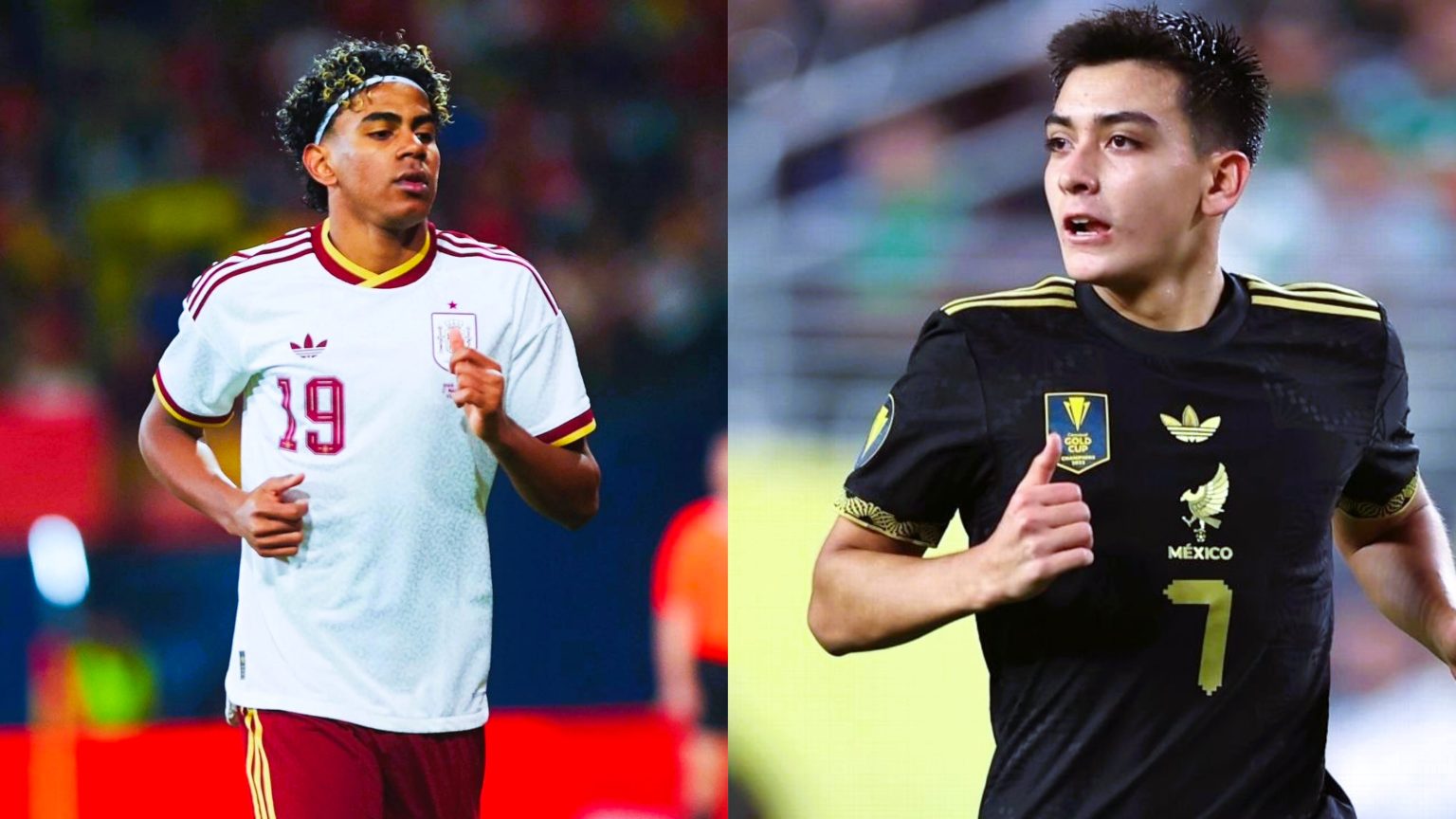

Of the 48 youngest players across all squads, just one — Mexico’s Gilberto Mora — is 17. Nine players are 18, making them teenagers heading into the tournament.
According to FIFA’s official squad analysis, 22 players under the age of 20 were selected among the tournament’s 1,248 players.
Every footballer’s dream is to represent their country on the biggest stage in the game. For young players, the FIFA World Cup offers a rare opportunity to introduce themselves to a global audience and take the first steps toward football stardom.
Few sporting events can transform a player’s career as quickly as the FIFA World Cup. It is the sport’s ultimate showcase, where careers can be transformed in a matter of weeks, and new stars can emerge overnight.
For the first time in history, the 2026 FIFA World Cup features 48 teams, creating more opportunities than ever for the next generation of players.
As a result, several teenagers and under-20 talents have earned places in their national squads, proving that age is no obstacle when ability, confidence, and hard work come together.
From highly rated European wonderkids to rising stars from Africa, Asia, and the Americas, these young players will bring energy, creativity, and fearlessness to the world’s biggest football tournament.
With millions of fans watching across Canada, Mexico, and the United States, the spotlight will shine brightly on football’s next generation. Some will gain valuable experience, while others may seize the moment and become household names.



Below is the complete list of the youngest players in every 2026 FIFA World Cup squad, highlighting the emerging talents who could shape the future of international football.
Youngest Player in Every 2026 FIFA World Cup Squad
Below is the definitive list of the youngest player representing each of the 48 nations at the 2026 FIFA World Cup. Ages are as of tournament commencement in June 2026.
Group A
| Nation | Youngest Player | Age |
| Czechia | Hugo Sochurek | 18 |
| Mexico | Gilberto Mora | 17 |
| South Africa | Mbekezeli Mbokazi | 20 |
| South Korea | Bae Jun-ho | 22 |
Group B
| Nation | Youngest Player | Age |
| Bosnia | Mladen Jurkas | 18 |
| Canada | Luc de Fougerolles | 20 |
| Qatar | Tahsin Jamshid | 19 |
| Switzerland | Johan Manzambi | 20 |
Group C
| Nation | Youngest Player | Age |
| Brazil | Rayan | 19 |
| Haiti | Keeto Thermoncy | 20 |
| Morocco | Ayyoub Bouaddi | 18 |
| Scotland | Tyler Fletcher | 19 |
Group D
| Nation | Youngest Player | Age |
| Australia | Lucas Herrington | 18 |
| Paraguay | Alexandro Maidana | 20 |
| Turkey | Can Uzun | 20 |
| USA | Alex Freeman | 21 |
Group E
| Nation | Youngest Player | Age |
| Curaçao | Livano Comenencia | 22 |
| Ecuador | Kendry Páez | 19 |
| Germany | Lennart Karl | 18 |
| Ivory Coast | Yan Diomandé | 19 |
Group F
| Nation | Youngest Player | Age |
| Japan | Keisuke Goto | 21 |
| Netherlands | Jorrel Hato | 20 |
| Sweden | Lucas Bergvall | 20 |
| Tunisia | Rayan Elloumi | 18 |
Group G
| Nation | Youngest Player | Age |
| Belgium | Mike Penders | 20 |
| Egypt | Hamza Abdelkarim | 18 |
| Iran | Amirmohammad Razzaghinia | 20 |
| New Zealand | Tyler Bindon | 21 |
Group H
| Nation | Youngest Player | Age |
| Cape Verde | Wagner Pina | 23 |
| Saudi Arabia | Musab Al-Juwayr | 22 |
| Spain | Lamine Yamal | 18 |
| Uruguay | Facundo Pellistri | 24 |
Group I
| Nation | Youngest Player | Age |
| France | Warren Zaïre-Emery | 20 |
| Iraq | Marko Farji | 22 |
| Norway | Antonio Nusa | 21 |
| Senegal | Ibrahim Mbaye | 18 |
Group J
| Nation | Youngest Player | Age |
| Algeria | Ibrahim Maza | 20 |
| Argentina | Nico Paz | 21 |
| Austria | Paul Wanner | 20 |
| Jordan | Ibrahim Sabra | 20 |
Group K
| Nation | Youngest Player | Age |
| Colombia | Gustavo Puerta | 22 |
| DR Congo | Matthieu Epolo | 21 |
| Portugal | João Neves | 21 |
| Uzbekistan | Bekhruz Karimov | 18 |
Group L
| Nation | Youngest Player | Age |
| Croatia | Luka Vušković | 19 |
| England | Kobbie Mainoo | 21 |
| Ghana | Caleb Yirenkyi | 20 |
| Panama | Edgardo Farina | 24 |
Youngest Players at the 2026 FIFA World Cup by Age
Sorting every nation’s youngest representative by age reveals just how compressed the talent is at the top — and how wide the gap is at the bottom.
The table below ranks all 48 youngest squad players from youngest to oldest, giving the clearest picture of where the next generation of football stars is being fielded.
| Age | Player | Nation | Group |
| 17 | Gilberto Mora | Mexico | A |
| 18 | Hugo Sochurek | Czechia | A |
| 18 | Mladen Jurkas | Bosnia | B |
| 18 | Ayyoub Bouaddi | Morocco | C |
| 18 | Lucas Herrington | Australia | D |
| 18 | Lennart Karl | Germany | E |
| 18 | Rayan Elloumi | Tunisia | F |
| 18 | Hamza Abdelkarim | Egypt | G |
| 18 | Lamine Yamal | Spain | H |
| 18 | Ibrahim Mbaye | Senegal | I |
| 18 | Bekhruz Karimov | Uzbekistan | K |
| 19 | Tahsin Jamshid | Qatar | B |
| 19 | Rayan | Brazil | C |
| 19 | Tyler Fletcher | Scotland | C |
| 19 | Kendry Páez | Ecuador | E |
| 19 | Yan Diomandé | Ivory Coast | E |
| 19 | Luka Vušković | Croatia | L |
| 20 | Mbekezeli Mbokazi | South Africa | A |
| 20 | Luc de Fougerolles | Canada | B |
| 20 | Johan Manzambi | Switzerland | B |
| 20 | Keeto Thermoncy | Haiti | C |
| 20 | Alexandro Maidana | Paraguay | D |
| 20 | Can Uzun | Turkey | D |
| 20 | Jorrel Hato | Netherlands | F |
| 20 | Lucas Bergvall | Sweden | F |
| 20 | Mike Penders | Belgium | G |
| 20 | Amirmohammad Razzaghinia | Iran | G |
| 20 | Warren Zaïre-Emery | France | I |
| 20 | Ibrahim Maza | Algeria | J |
| 20 | Paul Wanner | Austria | J |
| 20 | Ibrahim Sabra | Jordan | J |
| 20 | Caleb Yirenkyi | Ghana | L |
| 21 | Alex Freeman | USA | D |
| 21 | Keisuke Goto | Japan | F |
| 21 | Tyler Bindon | New Zealand | G |
| 21 | Antonio Nusa | Norway | I |
| 21 | Nico Paz | Argentina | J |
| 21 | Matthieu Epolo | DR Congo | K |
| 21 | João Neves | Portugal | K |
| 21 | Kobbie Mainoo | England | L |
| 22 | Bae Jun-ho | South Korea | A |
| 22 | Livano Comenencia | Curaçao | E |
| 22 | Marko Farji | Iraq | I |
| 22 | Musab Al-Juwayr | Saudi Arabia | H |
| 22 | Gustavo Puerta | Colombia | K |
| 23 | Wagner Pina | Cape Verde | H |
| 24 | Facundo Pellistri | Uruguay | H |
| 24 | Edgardo Farina | Panama | L |
The table makes one thing instantly clear: two-thirds of all 48 nations — exactly 32 of them — have a youngest representative aged 20 or under.
That is not a coincidence. It reflects a generation-wide shift in how international football managers are approaching squad construction, with youth no longer treated as a luxury but as a tactical asset.
The Youngest Player at the Entire Tournament
Gilberto Mora — Mexico — Age 17
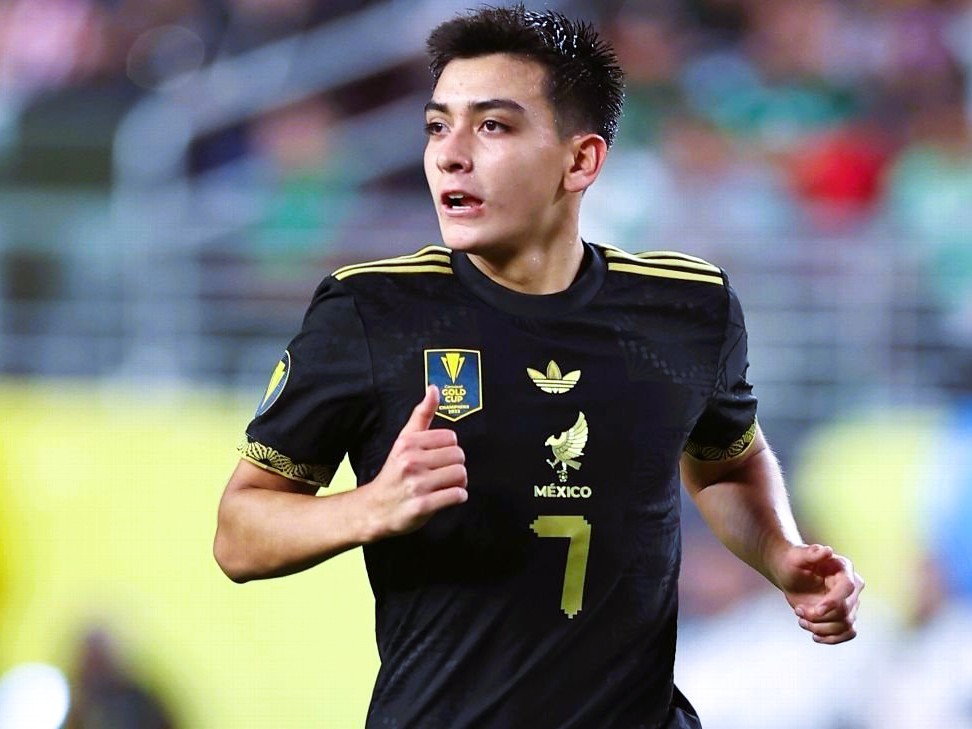
Gilberto Mora is the youngest player among all 48 teams at the 2026 FIFA World Cup. The Mexico midfielder is only 17 years old and already carries the reputation of one of the brightest young talents in world football.
Born on October 14, 2008, in Tuxtla Gutierrez, Mexico, Mora plays for Club Tijuana. Standing at 1.68 metres, he may not be the biggest player on the pitch, but he makes up for it with his speed, creativity, and technical quality.
Primarily an attacking midfielder, he can also operate on either wing.
FIFA has confirmed that the age gap between the oldest and youngest players at the tournament is more than 25 years.
Scotland goalkeeper Craig Gordon is the oldest participant, while Mora will be just 17 years and 240 days old when the World Cup begins.
Mora’s rise has been remarkable. He made his professional debut for Club Tijuana at the age of 15 and soon became the youngest goalscorer in Liga MX history.
His progress continued at international level, where he quickly earned opportunities with Mexico’s senior national team and contributed with both goals and assists.
What sets Mora apart is his confidence on the ball. He attacks defenders without fear, looks to create chances in tight spaces, and plays with a maturity that is rare for someone his age.
His direct style, quick decision-making, and unpredictability make him a valuable weapon for Mexico head coach Javier Aguirre.
The teenager has already made history by becoming the youngest player to win a senior international trophy after helping Mexico lift the Gold Cup. Now, an even bigger stage awaits.
If Mora features in Mexico’s opening match, he will become the youngest Mexican man ever to play at a FIFA World Cup, surpassing the record set by Manuel Rosas at the inaugural tournament in 1930.
Playing a World Cup on home soil is a rare opportunity. For Mora, it could be the moment that transforms him from one of football’s most exciting prospects into a global star.
Which Country Has the Youngest Representative at World Cup 2026?
The answer is straightforward — and historic. Mexico have the youngest representative of all 48 nations at the 2026 FIFA World Cup, with midfielder Gilberto Mora aged just 17 years and 240 days at the tournament’s start.
But behind that headline number lies a richer story about which countries are fielding the youngest talent — and what that reveals about each nation’s football development pipeline.
Among all 48 nations, ten countries have a youngest representative aged 18 or under. Mexico leads at 17. Nine nations — Czechia, Bosnia, Morocco, Australia, Germany, Tunisia, Egypt, Spain, Senegal, and Uzbekistan — all have 18-year-olds as their youngest squad player.
At the other end, Panama (Edgardo Farina, 24) and Cape Verde (Wagner Pina, 23) have the oldest “youngest representatives” at the tournament.
Both are nations making relatively rare World Cup appearances, with smaller professional leagues and fewer players established in Europe’s top competitions.
Their presence in the expanded 48-team format is welcome — and the expectation is that future editions will see those youngest ages drop as investment in youth development grows.
Uruguay also stands out, with Facundo Pellistri at 24 as their youngest player.
For a country with Uruguay’s football tradition, that figure reflects the depth of experience Marcelo Bielsa has demanded across the squad.
Uruguay are not building for the future at this tournament — they are trying to win it now.
The contrast between Mexico (17) and Panama (24) captures the whole story of the 2026 World Cup in miniature: a tournament where different nations are at completely different stages of their football journey, and where youth means very different things depending on the infrastructure behind it.
The Biggest Wonderkids to Watch at World Cup 2026
Lamine Yamal: Spain · Age 18
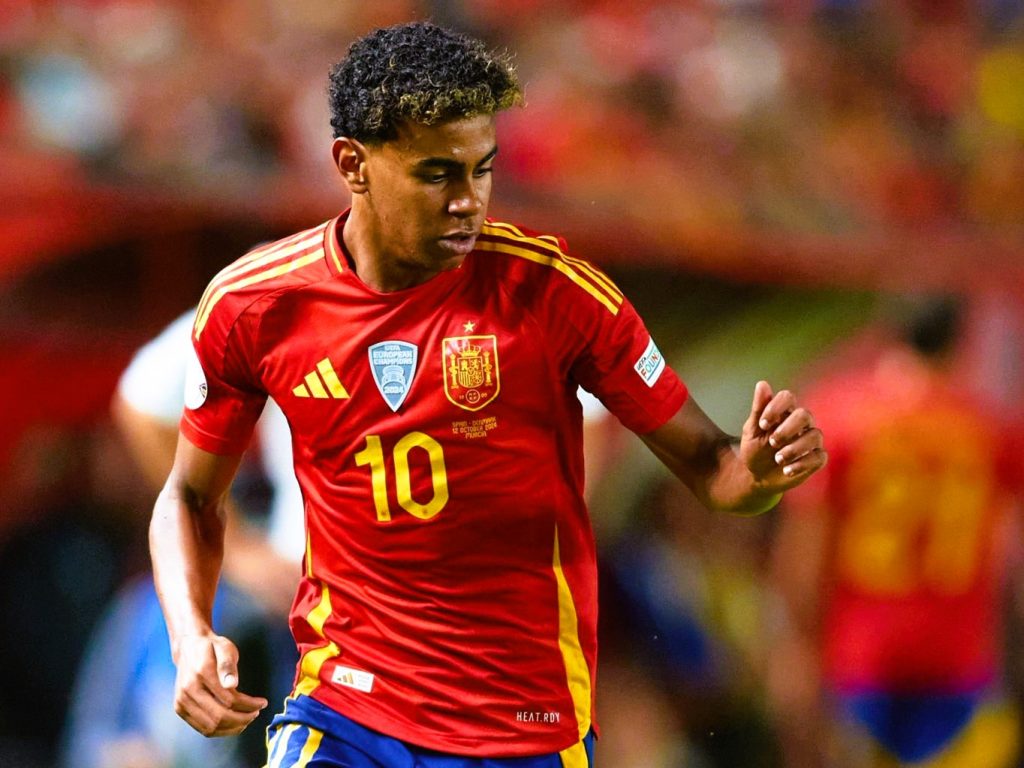
Lamine Yamal will turn 19 just one week before the 2026 World Cup final. Barcelona’s right winger is one of the biggest wonderkids to watch in North America.
In the 2025/26 season, he has scored 24 goals and provided 17 assists in all competitions for Barcelona, while he has contributed 16 goals and 11 assists in La Liga.
He became the most recognisable face in football in a single evening in Munich, and that curling strike against France at Euro 2024 is still remembered.
The La Masia graduate’s dribbling, pace and vision create magic on the right wing. Yamal is not a player who hides in big games. He runs at defenders, absorbs contact and creates.
Spain’s World Cup campaign will be driven by him and Pedri, and there is every reason to believe that he will arrive at this tournament as a rising star and leave as a global superstar.
Warren Zaïre-Emery: France · Age 20
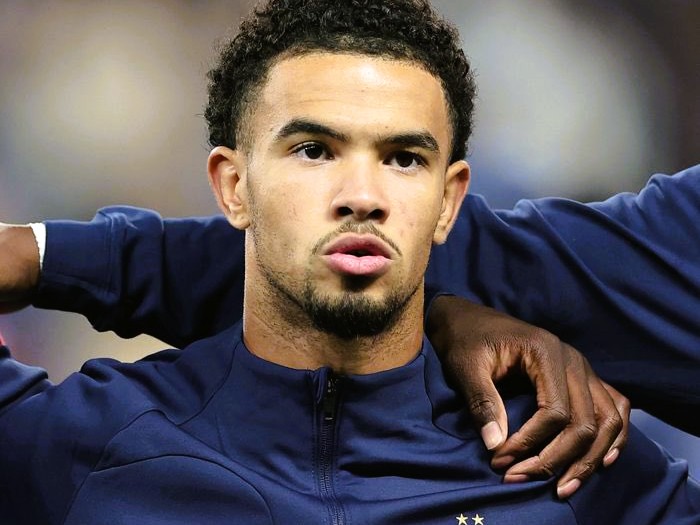
Another wonderkid to watch at the 2026 FIFA World Cup is Warren Zaire-Emery, the dynamic midfielder who has already established himself as one of the brightest talents in world football.
Born on March 8, 2006, Zaire-Emery is just 20 years old and is the youngest player in France’s World Cup squad. Despite his age, he already possesses the experience and composure of a seasoned international.
The Paris Saint-Germain star recently made history by becoming the youngest player ever to win two UEFA Champions League titles, further underlining his rapid rise to the top of the game.
What makes Zaire-Emery so special is his complete skill set. He combines technical quality with physical strength, tactical intelligence, and relentless energy.
Comfortable both in possession and out of it, he can dictate the tempo of a match, break up opposition attacks, and drive his team forward from midfield.
France arrive at the tournament as one of the leading contenders for the trophy, and Zaire-Emery is expected to play a key role in their ambitions.
If Les Bleus make a deep run toward the final, the young midfielder could emerge as one of the defining players of the entire World Cup.
Nico Paz: Argentina · Age 21
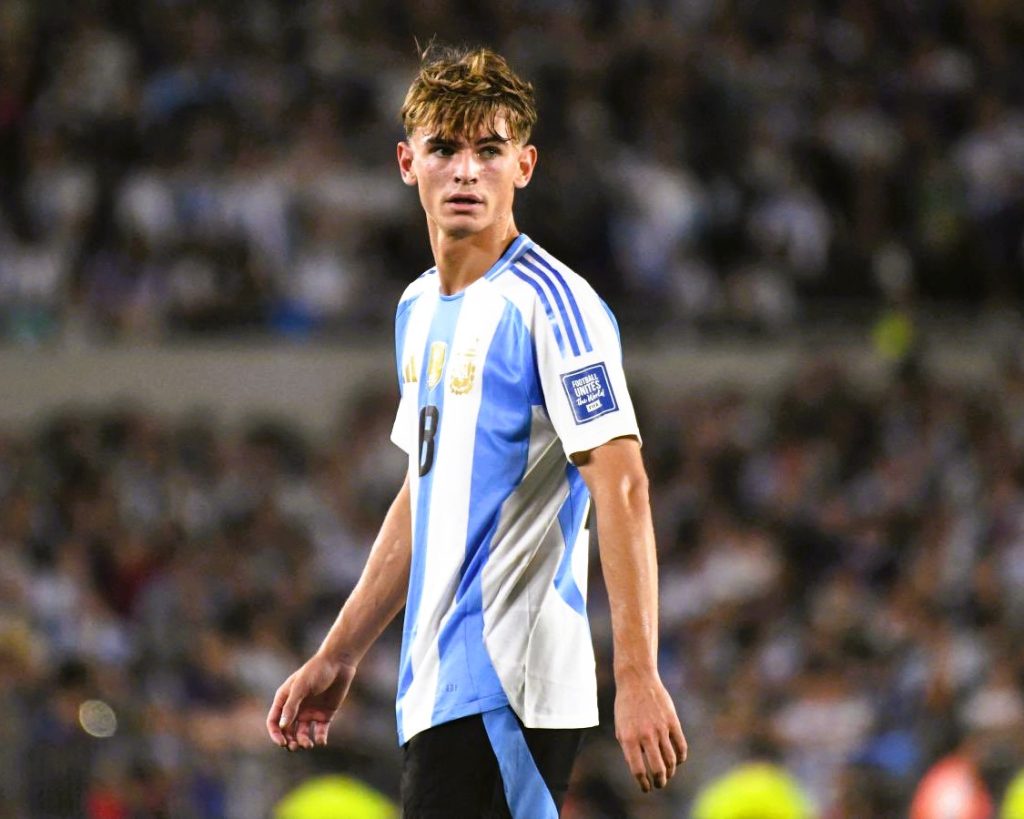
A young talent who could make Argentina’s starting eleven at the 2026 FIFA World Cup is Nico Paz, one of the brightest prospects in Argentina’s next generation.
Rather than staying at a European giant and waiting for opportunities, Paz chose regular playing time and a move to Serie A.
It has proven to be a smart decision. The young midfielder enjoyed a breakthrough season in Italy under the guidance of Cesc Fabregas, developing into one of the league’s most promising creative players.
Many observers see Paz as a potential long-term successor to Lionel Messi in the Argentine national team.
While comparisons with a player of Messi’s stature are never easy, Paz possesses the vision, technical ability, and confidence that have made him one of the country’s most highly rated young stars.
Elegant in possession, he thrives in tight spaces and has the ability to unlock defenses with a single pass.
He is also a threat from distance, capable of producing spectacular goals when given room outside the penalty area.
His creativity and attacking intelligence allow him to create chances consistently and influence games in the final third.
As Argentina look to defend their World Cup crown, Paz could have an important role to play.
Whether he earns a place in the starting lineup or makes an impact from the bench, his first World Cup appearance is likely to attract significant attention.
Many believe that Argentina’s 2026 World Cup journey could be the platform for him to announce himself to a global audience.
Désiré Doué: France · Age 21
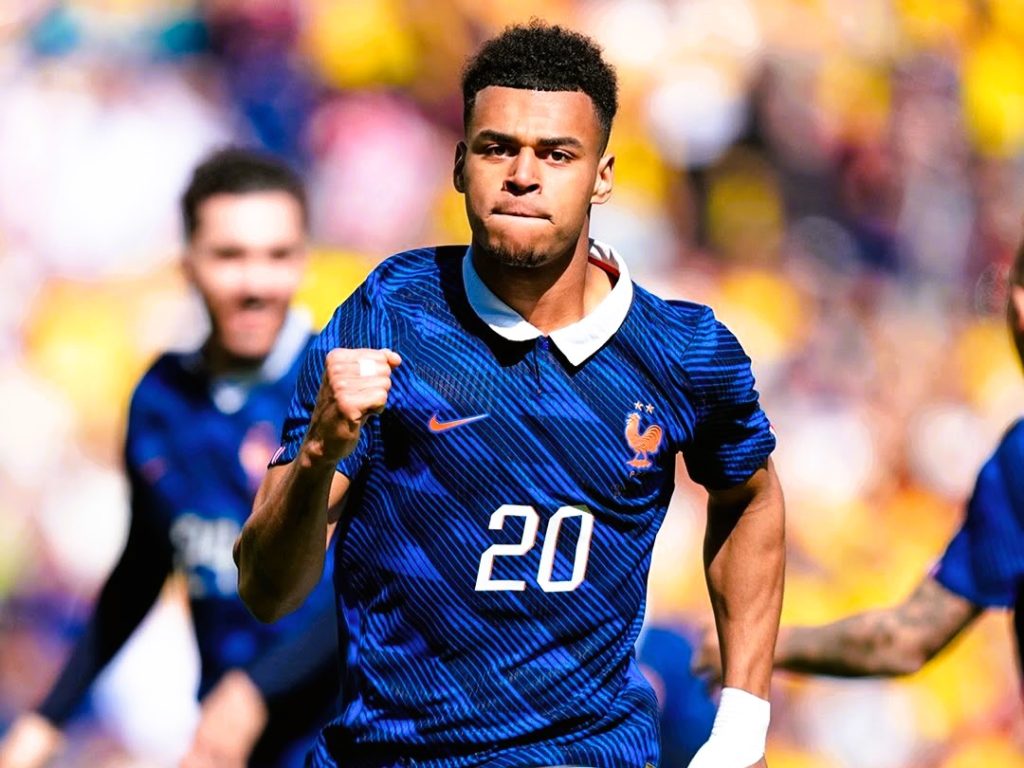
Désiré Doué is another exceptional young talent who could light up the 2026 FIFA World Cup for France.
The dynamic 21-year-old adds pace, creativity, and unpredictability to an already star-studded French attack.
Doué recently announced himself on the biggest club stage by scoring twice in Paris Saint-Germain’s UEFA Champions League final victory, underlining his ability to deliver in high-pressure moments.
Blessed with explosive pace, powerful dribbling, and remarkable stamina, he is a constant threat whenever he receives the ball.
Equally comfortable playing as an attacking midfielder, winger, or second striker, Doué can operate across the front line and adapt to different tactical roles.
What makes him especially dangerous is his unpredictability. Defenders often struggle to anticipate his next move, whether it is a sudden burst of acceleration, a clever change of direction, or a defence-splitting pass.
His willingness to take risks and attack opponents one-on-one gives France another weapon in an already star-studded squad.
If France make a deep run at the tournament, Doué has all the qualities needed to emerge as one of the breakout stars of the 2026 World Cup.
His combination of talent, confidence, and fearlessness could make him a nightmare for defenders throughout the competition.
Countries Betting on Youth
The 2026 World Cup is not just a competition of nations. It is also a competition of visions, and one of the most compelling is the commitment of a growing number of countries to trust young players with the sport’s biggest stage.
Mexico has embraced this change in perhaps the most dramatic way. Javier Aguirre overhauled a squad that failed to advance beyond the group stage of Qatar 2022 for the first time since 1978, naming 13 players who were not part of that campaign.
The most emblematic of these, Gilberto Mora, is a player who represents not just a selection decision but a generational statement.
Playing on home soil for the first time since 1986, Mexico are betting that youth and local energy can meet the demands of the country’s football.
Spain has always produced talented teenagers, but the decision to centre its attack around 18-year-old Lamine Yamal is even more remarkable.
The Spaniards won Euro 2024 with Yamal at the heart of their system, and they have come into this World Cup confident that continuity and Yamal’s development can take them all the way.
Germany have 18-year-old Lennart Karl as their youngest representative, part of a rapid rebuilding process following the humiliations of 2018 and 2022.
Karl is part of a wave of emerging German talent that suggests a post-Müller generation is finally taking shape.
Morocco represent one of the most compelling young stories in African football.
18-year-old Ayyoub Bouaddi is the youngest Moroccan in the tournament. He plays in a team that combines experience and youthful energy better than almost any other African nation has managed.
After their historic run to the semi-finals in Qatar, Morocco are no longer underdogs.
Senegal’s inclusion of 18-year-old Ibrahim Mbaye reflects a broader truth about West African football.
A generation of Senegalese players are playing at the highest level in Europe’s top leagues.
Senegal arrive as one of Africa’s real tournament contenders, and their youth is a feature, not a bug.
The Czech Republic has named 18-year-old Hugo Sochurek as its youngest representative.
Czech football has historically thrived on blending disciplined tactical structure with individual creativity, and the presence of a teenager in the team suggests that the next generation of that model is being shaped for the international stage.
For a country defined by players like Pavel Nedved and Petr Cech, Socurek carries a meaningful weight of expectation.
Tunisia and Uzbekistan complete the picture. Both nations have 18-year-olds like Ryan Eloumi and Bekhruz Karimov.
Uzbekistan, making their first World Cup appearance, are coached by Fabio Cannavaro, and Karimov represents a rising star in Central Asia.
Egypt has 18-year-old Hamza Abdelkarim, and Australia has Lucas Herrington – two more teenagers entering a phase that will test everything they have built up in their young careers.
The pattern is consistent across all of these nations: youngsters are no longer being held back. The expanded competition has created more minutes, more group-stage games, and more opportunities for coaches to give young players time on the big stage.
Top 10 Youngest Players at World Cup 2026
While every nation’s youngest representative is worth knowing, some players stand above the rest — either because of their age, their profile, or the genuine expectation that they could define this tournament. Here are the ten youngest players at the 2026 FIFA World Cup, ranked by age.
| Rank | Player | Nation | Date of Birth | Exact Age (11 June 2026) |
| 1 | Gilberto Mora | Mexico | 14 Oct 2008 | 17 years, 7 months, 28 days |
| 2 | Hugo Sochurek | Czechia | 7 Jun 2008 | 18 years, 4 days |
| 3 | Hamza Abdelkarim | Egypt | 1 Jan 2008 | 18 years, 5 months, 10 days |
| 4 | Ibrahim Mbaye | Senegal | 24 Jan 2008 | 18 years, 4 months, 18 days |
| 5 | Lennart Karl | Germany | 22 Feb 2008 | 18 years, 3 months, 20 days |
| 6 | Lamine Yamal | Spain | 13 Jul 2007 | 18 years, 10 months, 29 days |
| 7 | Lucas Herrington | Australia | 5 Sep 2007 | 18 years, 9 months, 6 days |
| 8 | Rayan Elloumi | Tunisia | 17 Sep 2007 | 18 years, 8 months, 25 days |
| 9 | Ayyoub Bouaddi | Morocco | 2 Oct 2007 | 18 years, 8 months, 9 days |
| 10 | Mladen Jurkas | Bosnia | 7 Oct 2007 | 18 years, 8 months, 4 days |
Gilberto Mora sits in a category of his own at the top. As the only 17-year-old across all 1,248 players, he is guaranteed a place in the tournament’s history books before he has even kicked a ball.
The nine 18-year-olds behind him represent a remarkable concentration of young talent from across four continents — Europe, Africa, the Americas, and Oceania all feature.
Of this top ten, two names carry the heaviest commercial and sporting weight heading into the tournament: Mora and Yamal.
Both have been linked with transfers to Europe’s biggest clubs. Both have already demonstrated at senior international level that they are not merely promising — they are ready.
The rest of the top ten are largely unknown quantities outside their own nations, which means the World Cup stage is exactly the platform they need.
What ties all ten together is a shared characteristic that coaches at elite clubs spend millions trying to find: the ability to perform in pressure environments without appearing to feel the pressure.
You cannot teach that at 17 or 18. You either have it or you do not. This list suggests that all ten of these players do.
Could These Players Become the Next World Cup Superstars?
The question is not whether the 2026 FIFA World Cup will produce a young breakout star. History suggests it almost certainly will. The real question is: who will be the player that captures the world’s imagination?
Several names on this list have already shown they can thrive under the brightest lights.
They arrive at the tournament not simply as promising youngsters, but as players capable of influencing matches at the highest level.
Lamine Yamal enters the World Cup as perhaps the most accomplished young player in the competition.
A European champion before his 18th birthday, he has already proven himself on some of football’s biggest stages.
The challenge for Yamal is not whether he can impress, but whether he can reach the extraordinary standards he set during UEFA Euro 2024.
For France, Warren Zaire-Emery could be one of the tournament’s defining midfielders.
Surrounded by world-class talent, France possess a squad capable of challenging for the trophy once again.
If Les Bleus make a deep run, Zaire-Emery’s influence in midfield could be one of the key factors behind their success.
Whether it is Gilberto Mora carrying the hopes of a host nation, Lamine Yamal attempting to become football’s next global icon, or a lesser-known teenager waiting for a breakthrough moment, the 2026 FIFA World Cup will provide the perfect stage for a new generation to emerge.
History tells us that every World Cup creates new heroes. By the final whistle in New York, one of these young talents may have become the face of world football.