







The UEFA European Championship, commonly known as the Euros or Euro Cup, stands as one of international football’s most prestigious tournaments.
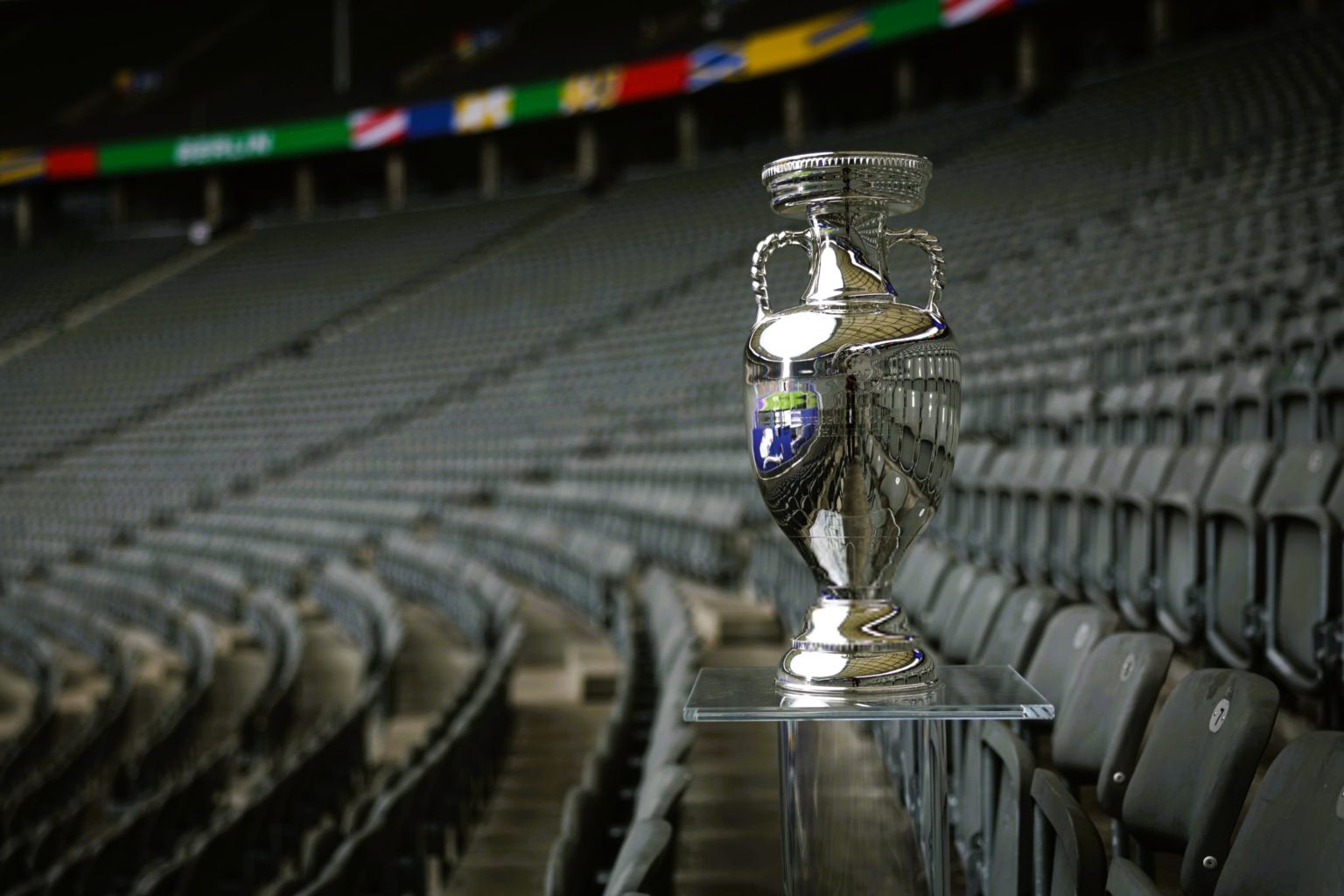
Every four years, the continent’s finest national teams battle for the right to be crowned European champions and lift the iconic Henri Delaunay Trophy.
From the inaugural edition in France in 1960 to Spain’s record-breaking triumph in Germany in 2024, the tournament has produced unforgettable moments, legendary players, and defining chapters in football history.
In this complete UEFA Euro winners list, you will find every champion from 1960 to 2024, along with final scores, host nations, venues, country title tallies, records, and much more.
Whether you are looking for a quick fact or a deep dive into European Championship history, this is your definitive reference.
History of the UEFA European Championship
The UEFA European Championship has its roots in the vision of one man: Henri Delaunay, the Secretary General of UEFA and a pioneering figure in European football administration.
Delaunay first proposed a pan-European national team competition in the 1920s, but his idea would not come to fruition until after he died in 1955.
In his honour, the trophy awarded to the tournament’s winner carries his name.

The first edition, then called the European Nations’ Cup, was held in France in 1960. Only four teams participated in that inaugural final tournament, a far cry from the 24-nation spectacle the competition has become today.
The Soviet Union defeated Yugoslavia 2–1 in extra time in Paris to etch their names into the history books as European football’s first continental champions.
The early tournaments were compact affairs. The 1964 edition in Spain featured just four teams again. By 1968, Italy hosted and eight teams reached the final stages.
The 1980 tournament in Italy expanded to eight teams competing in a group-based final tournament.
A major step came in 1996, when England hosted a 16-team edition, the format most fans associate with the modern era.
The most significant expansion came in 2016, when UEFA increased the tournament to 24 teams, allowing more than half of UEFA’s member associations to qualify.
France hosted that first 24-team edition, which Belgium nearly won before losing to the host nation in the final. Euro 2024 in Germany maintained that 24-team format, delivering one of the most widely watched editions in history.
Over six decades, the UEFA European Championship has evolved from a niche four-nation tournament into one of the three most prestigious football competitions in the world, alongside the FIFA World Cup and the Copa América.
Complete UEFA Euro Winners List (1960–2024)
The table below provides every UEFA Euro champion, runner-up, final score, host nation, and final venue from 1960 to 2024.
| Year | Host Nation(s) | Champion | Runner-Up | Final Score | Final Venue |
| 1960 | France | Soviet Union | Yugoslavia | 2–1 (AET) | Parc des Princes, Paris |
| 1964 | Spain | Spain | Soviet Union | 2–1 | Estadio Bernabéu, Madrid |
| 1968 | Italy | Italy | Yugoslavia | 2–0 (replay) | Stadio Olimpico, Rome |
| 1972 | Belgium | West Germany | Soviet Union | 3–0 | Heysel Stadium, Brussels |
| 1976 | Yugoslavia | Czechoslovakia | West Germany | 2–2 (AET); 5–3 pens | Crvena zvezda Stadium, Belgrade |
| 1980 | Italy | West Germany | Belgium | 2–1 | Stadio Olimpico, Rome |
| 1984 | France | France | Spain | 2–0 | Parc des Princes, Paris |
| 1988 | West Germany | Netherlands | Soviet Union | 2–0 | Olympiastadion, Munich |
| 1992 | Sweden | Denmark | Germany | 2–0 | Ullevi, Gothenburg |
| 1996 | England | Germany | Czech Republic | 2–1 (golden goal, AET) | Wembley Stadium, London |
| 2000 | Belgium / Netherlands | France | Italy | 2–1 (golden goal, AET) | Feijenoord Stadium, Rotterdam |
| 2004 | Portugal | Greece | Portugal | 1–0 | Estádio da Luz, Lisbon |
| 2008 | Austria / Switzerland | Spain | Germany | 1–0 | Ernst-Happel-Stadion, Vienna |
| 2012 | Poland / Ukraine | Spain | Italy | 4–0 | Olympic Stadium, Kyiv |
| 2016 | France | Portugal | France | 1–0 (AET) | Stade de France, Paris |
| 2020* | Pan-European (11 countries) | Italy | England | 1–1 (AET); 3–2 pens | Wembley Stadium, London |
| 2024 | Germany | Spain | England | 2–1 | Olympiastadion, Berlin |
*UEFA Euro 2020 was postponed to 2021 due to the COVID-19 pandemic but retained the “Euro 2020” branding.
UEFA Euro Titles by Country
| Country | Titles | Runner-Up Finishes | Finals Played | Years Won |
| Spain | 4 | 2 | 6 | 1964, 2008, 2012, 2024 |
| Germany / West Germany | 3 | 3 | 6 | 1972, 1980, 1996 |
| France | 2 | 2 | 4 | 1984, 2000 |
| Italy | 2 | 2 | 4 | 1968, 2020 |
| Soviet Union | 1 | 3 | 4 | 1960 |
| Czechoslovakia | 1 | 0 | 1 | 1976 |
| Netherlands | 1 | 0 | 1 | 1988 |
| Denmark | 1 | 0 | 1 | 1992 |
| Portugal | 1 | 1 | 2 | 2016 |
| Greece | 1 | 0 | 1 | 2004 |
| Yugoslavia | 0 | 2 | 2 | — |
| England | 0 | 2 | 2 | — |
| Belgium | 0 | 1 | 1 | — |
| Czech Republic | 0 | 1 | 1 | — |
Most Successful UEFA Euro Nations
Spain (4 Titles)
Spain is the most successful nation in UEFA European Championship history. Their journey began with a home triumph in 1964 and reached its zenith between 2008 and 2012, when they became the only side ever to win consecutive European titles.
The 2012 final, a 4–0 rout of Italy, remains the most one-sided final in tournament history.
Their 2024 triumph in Germany, built around a generational talent in Lamine Yamal and the clinical finishing of Álvaro Morata, confirmed Spain as European football’s greatest dynasty.
Germany / West Germany (3 Titles)
Germany’s three European Championship victories span three different eras of German football: the Netzer-Beckenbauer-Müller era of 1972, the Rummenigge-era team of 1980, and the reunified Germany of Bierhoff and Klinsmann in 1996.
They have also finished runners-up three times, making them the joint-most frequent finalists alongside Spain. No other nation has been as consistently present at the business end of major tournaments.
France (2 Titles)
France’s two European Championship titles bookend the Michel Platini and Zidane eras perfectly. The 1984 tournament on home soil featured arguably the greatest individual performance in tournament history from Platini.
The 2000 victory — won through a Trezeguet golden goal against Italy — came in the middle of France’s golden generation that also lifted the 1998 World Cup.
France have reached two finals they did not win (2016 on home soil and losses across those eras), making them a perennial contender.
Italy (2 Titles)
Italy’s 1968 home triumph required a replay against Yugoslavia after the first final ended 1–1 — the only final in the competition’s history to require a second match.
Their return to glory at Euro 2020, won on penalties against England at Wembley under Roberto Mancini, was one of the sport’s great redemption stories, coming just three years after Italy had failed to qualify for the 2018 World Cup.
Soviet Union (1 Title, 3 Runner-Up Finishes)
The Soviet Union holds a unique place in European Championship history.
They won the inaugural title in 1960 and reached three further finals in 1964, 1972, and 1988 — losing all three.
Their status as an underappreciated force in the early decades of the competition is clear from their record.
Portugal (1 Title)
Portugal’s 2016 triumph in France was emotional and unexpected. After drawing all three of their group matches, they somehow navigated the knockout rounds and won the title without Ronaldo for most of the final.
It validated a golden generation that had reached multiple major finals without lifting the trophy.
Netherlands (1 Title)
The Netherlands’ only European Championship title came in 1988 in West Germany, but what a title it was.
Marco van Basten’s volleyed goal in the final against the Soviet Union is ranked among the greatest goals in football history.
That Dutch generation, featuring Gullit, Rijkaard, and van Basten, produced some of the most aesthetically pleasing football the competition has ever seen.
Denmark (1 Title)
Denmark’s 1992 title is the most improbable in the competition’s history. C
alled up as a late replacement for disqualified Yugoslavia, the Danes had barely prepared but beat France and the Netherlands before defeating Germany in the final.
Peter Schmeichel was inspirational throughout. It remains the greatest underdog story in European football history.
Greece (1 Title)
Greece in 2004 was the Denmark of their era — an outsider that shocked the world.
Otto Rehhagel built a disciplined, defensive unit that conceded few goals and found a way to win every knockout match, including beating the host nation, Portugal, twice (in the opening game and the final).
Their 1–0 final win over Portugal in Lisbon stands as one of the great upsets in sporting history.
Czechoslovakia (1 Title)
Czechoslovakia’s 1976 title will forever be defined by Antonín Panenka’s audacious chipped penalty in the shootout against West Germany.
The “Panenka penalty” has since been replicated by Zidane, Messi, Ronaldo, and many others. That single moment of genius cemented Czechoslovakia’s place in UEFA Euro folklore.
UEFA Euro Host Nations
| Year | Host Nation(s) | Winner |
| 1960 | France | Soviet Union |
| 1964 | Spain | Spain |
| 1968 | Italy | Italy |
| 1972 | Belgium | West Germany |
| 1976 | Yugoslavia | Czechoslovakia |
| 1980 | Italy | West Germany |
| 1984 | France | France |
| 1988 | West Germany | Netherlands |
| 1992 | Sweden | Denmark |
| 1996 | England | Germany |
| 2000 | Belgium / Netherlands | France |
| 2004 | Portugal | Greece |
| 2008 | Austria / Switzerland | Spain |
| 2012 | Poland / Ukraine | Spain |
| 2016 | France | Portugal |
| 2020* | Pan-European (11 nations) | Italy |
| 2024 | Germany | Spain |
France has hosted the tournament three times (1960, 1984, 2016), more than any other nation.
Italy hosted twice (1968, 1980), as did Belgium (1972 as sole host, 2000 as co-host). The 2020 edition was uniquely staged across 11 countries simultaneously, a first in tournament history, prompted by the pandemic postponement’s logistical constraints.
Germany hosted in 2024, having previously hosted as West Germany in 1988.
Home advantage has proven valuable: Spain (1964), Italy (1968), and France (1984) all won on home soil. Portugal (2004) and France (2016) lost their respective home finals.
25 Interesting Facts About the UEFA European Championship
- The competition was known as the “European Nations’ Cup” until 1968, when it was renamed the UEFA European Championship.
- The Soviet Union appeared in four finals — 1960 (win), 1964, 1972, and 1988 — without winning again after 1960.
- Only four teams participated in the final stage of the first three editions (1960, 1964, 1968).
- Spain are the only team to win three consecutive major international tournaments: Euro 2008, World Cup 2010, and Euro 2012.
- Denmark’s 1992 triumph remains unique — they were a replacement team who became champions without winning their qualifying group.
- The 1968 final between Italy and Yugoslavia required a replay after the first match ended 1–1 — the only final in history to do so.
- Antonín Panenka’s 1976 penalty technique is so famous it is now officially called a “Panenka” across the football world.
- Greece’s 2004 victory is the only time the host nation lost the final to the eventual winner (Portugal lost at home to Greece).
- Michel Platini’s nine goals in Euro 1984 has never been matched or broken, despite the tournament now having far more matches.
- England have never won the UEFA European Championship in their history.
- The 2020 edition was postponed by one year due to COVID-19 but kept its “Euro 2020” name for branding purposes.
- Euro 2020 was played across 11 countries — a pan-continental experiment driven by necessity.
- Germany’s Oliver Bierhoff scored the first golden goal in a major tournament final (Euro 1996).
- Spain’s 4–0 win over Italy in the 2012 final is the largest margin of victory in a UEFA Euro final.
- Marco van Basten’s volleyed goal in the 1988 final is consistently voted one of the greatest goals in football history.
- Portugal’s Cristiano Ronaldo suffered a knee injury just 25 minutes into the 2016 final, yet Portugal went on to win.
- France hosted the tournament three times — more than any other nation (1960, 1984, 2016).
- Lamine Yamal of Spain became one of the youngest players to feature in a UEFA Euro final during Euro 2024 at just 17 years old.
- Spain’s Mikel Oyarzabal scored the winning goal in the Euro 2024 final against England in the 86th minute.
- The Henri Delaunay Trophy was redesigned for the 2008 tournament, becoming taller and heavier than the original.
- West Germany is counted separately from reunified Germany in the record books — meaning Germany’s total across both entities is three titles.
- Yugoslavia reached two finals (1960 and 1968) but never won the tournament.
- The Soviet Union’s 1988 final appearance came under Viktor Lobanovskyi — 28 years after their first title.
- Euro 1996 in England introduced the golden goal and silver goal rules to the competition.
- Rodri of Spain was named the best player (Player of the Tournament) at Euro 2024, while Lamine Yamal won the best young player award.
Conclusion
The UEFA European Championship has come a long way from a four-team knockout competition in France in 1960.
Over 17 editions, it has grown into one of football’s most-watched and most-celebrated tournaments, producing legends, shocks, tactical masterclasses, and moments of individual brilliance that live permanently in the sport’s memory.
Spain’s four titles make it the greatest nation in the competition’s history. Germany’s consistency across eras is unmatched.
Denmark’s 1992 miracle, Greece’s 2004 triumph, and Panenka’s penalty in 1976 remind us that football’s beauty lies in its capacity for surprise.
And with Euro 2028 on the horizon to be hosted in the United Kingdom and Ireland, the next chapter of European football history is already being written.
Whether you are a researcher, a football fan settling a pub debate, or an editor building a knowledge base around European football, this UEFA Euro winners list covers everything you need to know about the world’s premier continental national team tournament.