






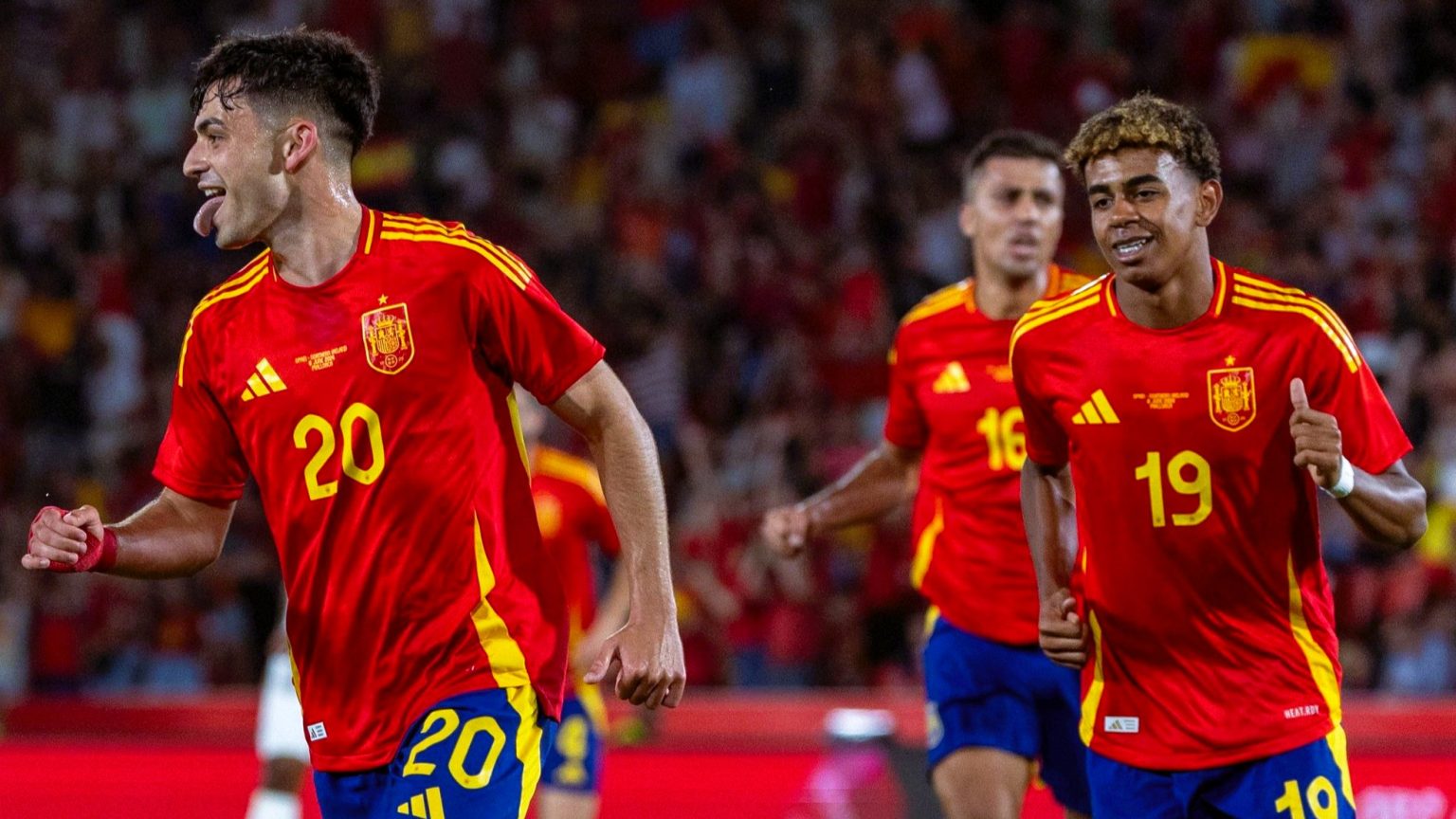

Two years ago, Spain lifted the European Championship trophy in Berlin, reminding Europe of exactly what they are capable of.
Now, as the 2026 FIFA World Cup arrives across the United States, Mexico, and Canada, Luis de la Fuente’s side head to North America not as outsiders, but as one of the few nations that genuinely look ready to win the whole thing.
De la Fuente travels with a 26-man squad carrying real title ambitions, several controversial selection calls, and lingering fitness doubts surrounding some of his most important players.
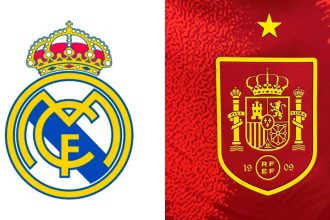
The squad is young, unified, heavily influenced by FC Barcelona — and, remarkably, contains no Real Madrid CF player for the first time since 1950. Not a single one.
For the first time in the modern era of Spanish football, Los Blancos have contributed zero names to Spain’s World Cup roster.
Much of that stems from a difficult club season in which several Spanish internationals struggled for form, rhythm, and fitness.
There are fitness doubts. Genuine selection debates. And one huge question hanging over the entire campaign: How much can Spain rely on Lamine Yamal?
Because if he is fit and decisive in North America, Spain suddenly becomes one of the most dangerous teams in the tournament. And if he is not, the balance of this side changes dramatically.
As La Roja chases its first world title since 2010, let’s take a closer look at the key players who could contribute to reaching the 2026 FIFA World Cup final.
Spain’s Official 2026 World Cup Squad
| Position | Player | Club | Age |
| GK | Unai Simón | Athletic Bilbao | 27 |
| GK | David Raya | Arsenal | 29 |
| GK | Joan García | Barcelona | 23 |
| DEF | Pau Cubarsí | Barcelona | 18 |
| DEF | Aymeric Laporte | Athletic Bilbao | 31 |
| DEF | Marc Cucurella | Chelsea | 26 |
| DEF | Eric García | Barcelona | 23 |
| DEF | Marc Pubill | Atlético Madrid | 22 |
| DEF | Alejandro Grimaldo | Bayer Leverkusen | 29 |
| DEF | Marcos Llorente | Atlético Madrid | 30 |
| DEF | Pedro Porro | Tottenham Hotspur | 25 |
| MID | Rodri | Manchester City | 29 |
| MID | Pedri | Barcelona | 22 |
| MID | Gavi | Barcelona | 22 |
| MID | Martín Zubimendi | Arsenal | 26 |
| MID | Fabián Ruiz | PSG | 28 |
| MID | Mikel Merino | Arsenal | 28 |
| MID | Álex Baena | Atlético Madrid | 24 |
| FWD | Lamine Yamal | Barcelona | 18 |
| FWD | Nico Williams | Athletic Bilbao | 22 |
| FWD | Mikel Oyarzabal | Real Sociedad | 27 |
| FWD | Dani Olmo | Barcelona | 26 |
| FWD | Ferran Torres | Barcelona | 25 |
| FWD | Yéremy Pino | Crystal Palace | 22 |
| FWD | Borja Iglesias | Celta de Vigo | 31 |
| FWD | Víctor Muñoz | Osasuna | 21 |
Spain’s Predicted Starting XI (4-3-3)
               Unai Simón

Marc Cucurella – Pau Cubarsí – Aymeric Laporte – Marcos Llorente

          Pedri     Rodri     Fabián Ruiz

     Lamine Yamal – Mikel Oyarzabal – Nico Williams
The shape hasn’t changed much under De la Fuente — possession-based, high defensive line, wingers who can cut in or run channels depending on the moment.
Yamal’s fitness will dictate whether he’s there from minute one against Cape Verde or whether Spain begin the tournament with Dani Olmo or Ferran Torres deputising on the right.
Impact from the bench: Gavi, Zubimendi, Merino, Baena, Olmo. This isn’t a squad that drops off after the starting XI.
The Key Players
The Goalkeeper Debate
Unai Simón is De la Fuente’s first choice after Euro 2024, and nothing has changed ahead of the tournament.
He is commanding, aggressive from his line, and crucially his distribution fits perfectly into Spain’s formation.
He may not be the flashiest goalkeeper in the squad, but he is arguably the most complete for the system.
However, the inclusion of David Raya keeps the debate alive. The Arsenal goalkeeper has had a great season in the Premier League and could make a legitimate case for the jersey if Simeone can overcome a shaky start.
Meanwhile, the emergence of Joan Garcia has been remarkable. The 23-year-old has quietly become one of the best young goalkeepers in La Liga and will be a regular starter for years to come.
The Defence: Young, Experienced, Imperfect
Despite his age, 19-year-old Pau Cubarsí looks like he’s been playing international football for a decade.
There’s a reason why Real Madrid’s Dean Huijsen, a player many expected to make the team, was not included. Cubarsí edged him out on merit.
With a build beyond his years, ease on the ball, and the ability to sense danger quickly, he’s the centre-back that a possession-based system needs.
He partners with Laporte, who brings experience and an aerial presence that Cubarci still lacks.
While Aymeric Laporte will provide Spain with experience and leadership at the back, at 31, this is likely his last World Cup.
He knows it. He will be expected to be one of the senior voices in the dressing room when the going gets tough in the knockout rounds.
Question marks sit at full-back. Cucurella on the left and Porro or Llorente on the right offer ability without obvious world-class quality.
Meanwhile, Cucurella is a different player than he was when he arrived at Chelsea. His confidence has grown, his attacking output has improved, and his partnership with Pedri on Spain’s left flank at Euro 2024 was one of the most effective combinations of the tournament.
Pedro Porro, meanwhile, will provide similar energy down the right, spreading the pitch and giving Spain’s 4-3-3 a wide, unpredictable feel.
The inclusion of Alejandro Grimaldo gives Spain a different dimension. He is more attack-minded than a traditional left-back, able to deliver from distance and overlap with wingers at speed.
De la Fuente’s defensive unit conceded just twice on the way to Euro 2024 glory. This was almost certainly their weakest area at the time, and little has changed now.
Midfield: The Best in the World, Probably
This is where Spain emerge as the tournament’s main contenders. Three of the best central midfielders at the 2026 World Cup play for the same country.
Rodri
If there’s one player who defines this Spain team, it’s him. The 2024 Ballon d’Or winner has become the heartbeat of everything that De la Fuente, the man who built the team, has built.
Rodri controls the tempo, directs the press, covers the ground in ways that aren’t reflected in the statistics, and perhaps most importantly, makes it easy for the players around him to play.
He missed a large part of the club season through injury but has returned to full fitness ahead of the tournament. Spain don’t look the same without him, and everyone knows it.
Pedri
Still 23, Pedri is arguably the most complete midfielder of his generation.
He’s back to his best, and his 2025/26 season with Barcelona has been truly outstanding. Two-footed, positionally intelligent, willing to press, an ability to create space in tight areas, he does it all.
The kind of form that reminds you why people were comparing him to Iniesta when he was 18.
In Spain’s midfield, he’s the connector. He links the defensive block to the attacking line and he does it with a fluidity that’s hard to replicate.
Fit, available Pedri gives Spain a player who can truly win the World Cup in the knockout stages.
Gavi
It feels personal. Gavi’s inclusion in the squad comes after a long, arduous journey back from a serious knee injury that threatened to derail everything.
For months there was real uncertainty about whether he would make it. He did.
This is a player who was repeatedly written off and refused to accept it.
Whether he starts or whether De la Fuente uses him as the most dangerous option in the tournament is a tactical question worth watching. His presence in this team will be crucial.
The Depth Behind Them
The midfield depth behind them is ridiculous, with Martín Zubimendi, Mikel Merino (returning from an injury), Fabian Ruiz, and Alex Baena all giving De la Fuente real options.
Fabian in particular is an underrated figure in this team. He has the ability to carry the ball and create from deep. He doesn’t always catch the eye but keeps Spain going when they need him.
Merino’s return from injury adds a physical, dynamic option off the bench.
The Attack — Young, Electric, and Built Around One Name
The Lamine Yamal Situation
The winger has not played since scoring a penalty for Barcelona against Celta Vigo on April 22 due to a hamstring injury.
Initial estimates suggested he could miss between six and eight weeks. The good news is that his recovery has pushed back those initial timelines.
The recovery timeline remains uncertain. He will either be in the starting eleven or on the bench when Spain play their opener against Cape Verde in Atlanta on June 15.
The current thinking is that he will miss the Cape Verde and Saudi Arabia group games, with his return likely in time for the Uruguay game on June 27.
Whether that cautious approach will hold up under the pressure of the tournament is another question entirely. But Spain’s staff won’t rush it. He is very important.
What makes Yamal so dangerous goes beyond goals and assists. Beyond the goals and assists and dribbles, it’s what he does on the pitch and in opposition defensive lines that matters.
Teams will have to change tactics to stop him before the game even starts. Yamal’s presence on the right draws two or three markers, which opens up corridors for Pedri and the forwards in central roles.
Nico Williams
Athletic Bilbao’s Nico Williams is another winger who can open up games. He’s one of the most exciting attackers in world football when fit.
He had a tough 2025/26 season due to injury, but he’s recovered and is expected to be available from the start.
His tournament in Germany last summer was a revelation. The Yamal-Williams partnership on the opposite flank was central to Spain winning Euro 2024, and De la Fuente will be hoping they can repeat that.
Mikel Oyarzabal
Central striker Mikel Oyarzabal is an often underrated player in this attacking line-up. Intelligent, technically refined, a superb finisher, he is no penalty-box poacher.
He drops, links, creates, and still appears at crucial moments. The winner of the Euro 2024 final, he is poised to quietly and effectively shoulder the burden of being Spain’s No. 9.
Dani Olmo
He is a trusted figure for De la Fuente and knows his role in this setup. Dani Olmo gives De la Fuente flexibility. He can play centrally, on the right, or deep in midfield.
His versatility gives Spain their best solution if Yamal cannot start.
Rising Stars and the No Real Madrid Angle
The absence of Real Madrid players was particularly noticeable. Neither Dean Huijsen nor Dani Carvajal made the cut.
The reasons are clear: Real Madrid have had a difficult season, and that has affected several Spanish internationals. Dean Huijsen’s injury has ruled him out. Dani Carvajal’s form has not been there. That’s about it, really.
What this means in practice is that Spain will travel to North America with a squad that leans heavily towards Barcelona and Athletic Bilbao.
Two clubs that have played possession-based football under intense pressure all season. The tactical unity that this creates is real.
It still feels important. Spain are truly new territory at the World Cup without Madridistas. Take a look at the squad list above again and your worries will soon disappear.
Similarly, De la Fuente has named 22-year-old Marc Pubil as a real wildcard. Only as a regular until the end of the season, his inclusion among more experienced options says something about how De La Fuente sees the direction of this team.
Spain’s Tactics Under De la Fuente
Luis de la Fuente has reshaped the Spanish national team by blending Spain’s traditional (tiki-taka) possession-based style with verticality, width, mobility and directness.
Since taking charge after the 2022 World Cup, he has led Spain to victory at Euro 2024 and has maintained a high level of performance in 2026.
De la Fuente mainly uses a 4-3-3 in possession formation, which can be transformed into a 4-2-3-1 depending on how the advanced midfielders position themselves.
The team builds play with a single pivot, supported by two energetic number 8s, while the full-backs push high and the wingers provide width or drift inside.
This creates fluid rotation between the wingers, full-backs and midfielders, allowing the team to exploit spaces through quick combinations and progressive passing.
Compared to the previous tiki-taka era, Spain under De la Fuente seem more inclined to play forward, break lines and find depth rather than pass the ball around.
Of course, a notable feature of his approach to this tournament will be a strong emphasis on wide play and crossing.
Group H and the Path Through the Tournament
La Roja, in Group H, are the clear favourites to top the group. Their group stage games are Cape Verde (June 15), Saudi Arabia (June 21), Uruguay (June 26).
Cape Verde are no pushovers – they qualified ahead of the real competition – but Spain should handle them, especially once the attack starts.
Uruguay remains dangerous, tactically astute, and capable of grinding out results. Marcelo Bielsa’s pressing system has always made life uncomfortable for possession-heavy sides. That game could be a highlight.
Out of the group, securing top spot for Spain would be a fairly easy path to avoid the favourites until the later stages.
Anything short of the semi-finals would feel disappointing given the talent in this squad.
Depending on the results, the bracket could pit France or Germany against each other in the later stages. Those are the games that define tournaments.
Spain is one of the top-three favorites to win the World Cup, along with France and Argentina.
Historical Context
The 2010 World Cup in South Africa still stands as a record high. That was the only World Cup Spain won, achieved with a brand of football that was methodical yet completely suffocating for opponents.
With the end of the tiki-taka era, what De la Fuente has built is more adaptable, more direct when necessary, built around individuals who can do things that pure possession merchants cannot.
He has a talented squad, which adds a layer of expectation, perhaps even a little pressure.
How Far Can Spain Go?
The 2024 European champions will be a real contender at the 2026 World Cup. Not merely a dark horse — a genuine contender.
The depth of the squad is extraordinary. The strategies are tested. The psychological profile is strong, given what many of these players have already achieved together.
Yamal’s injury is a cloud, and how De la Fuente manages that situation in the first two group games will significantly shape Spain’s tournament.
Spain arrive in North America carrying something they have not truly carried into a World Cup for years: expectation.
Real expectation.
Not nostalgia. Not reputation. Genuine belief that this generation can lift the trophy again.
And with Rodri controlling midfield, Pedri dictating rhythm, and Lamine Yamal capable of changing games in seconds, it is easy to understand why.
Spain 2026 World Cup FAQs
Who are Spain’s key players for 2026?
Lamine Yamal, Pedri, Rodri, Nico Williams, Mikel Oyarzabal, Dani Olmo, Pau Cubarsí, and Gavi are central to Spain’s plans.
What is Spain’s predicted starting lineup?
Unai Simón; Cucurella, Cubarsí, Laporte, Porro; Pedri, Rodri, Fabián Ruiz; Nico Williams, Oyarzabal, Yamal — subject to fitness.
Will Lamine Yamal start against Cape Verde?
He suffered a hamstring injury on April 22 and is expected to be available around the opening match, though De la Fuente may manage his minutes carefully in the early stages.
Why are there no Real Madrid players in Spain’s squad?
A difficult domestic season at the Bernabéu left several Spanish internationals short on form and fitness, leading De la Fuente to omit them entirely.
What group are Spain in at the 2026 World Cup?
Group H: Spain vs Cape Verde (June 15), Spain vs Saudi Arabia (June 21), Uruguay vs Spain (June 26).
Who is your favourite Spain player to watch at the 2026 World Cup? Let us know in the comments.