







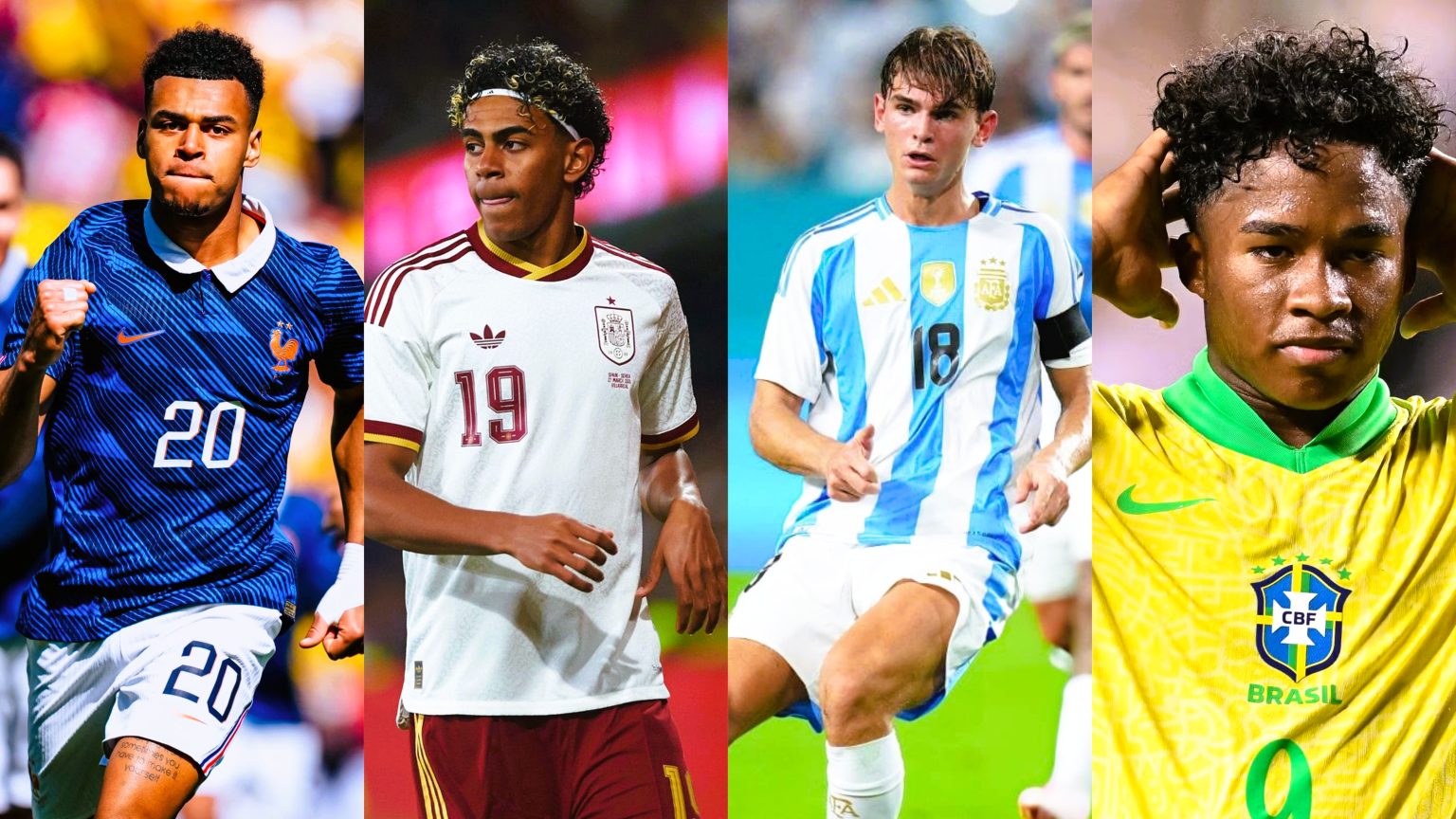

Every four years, a World Cup writes someone’s name into football folklore. Kylian Mbappé in 2018. James Rodríguez in 2014. Thomas Müller in 2010.
As the 2026 FIFA World Cup arrives across the United States, Canada, and Mexico, the search begins for the tournament’s next breakout star.
History suggests that no competition accelerates a footballer’s rise quite like the World Cup.
A handful of unforgettable performances on the sport’s biggest stage can transform a promising youngster into a global superstar almost overnight.
What begins as a tournament appearance can end as a career-defining moment.
The 2026 edition is uniquely positioned to create those moments.
With 48 teams, a record 104 matches, and an expanded format that offers more opportunities than ever before, the tournament is designed to showcase football’s next generation.
More games mean more minutes, more pressure-filled situations, and more chances for young talents to announce themselves to a worldwide audience.



For the players on the verge of international stardom, this is more than another major tournament. It is the largest platform football has ever provided.
A strong World Cup campaign could elevate them from exciting prospects to household names, while a single magical moment could secure a place in football history.
This year’s crop of young talent is particularly compelling. From explosive wingers and creative playmakers to dynamic forwards capable of deciding matches on their own, several emerging stars appear ready to make the leap from potential to prominence.
Here are five young players who could become the breakout stars of the 2026 FIFA World Cup.
They possess the talent, confidence, and opportunity to thrive under the brightest spotlight in sport.
Some will arrive in North America as rising stars. One may leave as football’s newest global icon.
What Makes a World Cup Breakout Star?
The path from “highly rated prospect” to “global household name” is rarely straightforward. Talent is the entry requirement, not the determinant.
What separates the James Rodríguezs from the countless gifted youngsters who passed through World Cups unnoticed is a convergence of factors: the right role on a team with momentum, a national setup that liberates rather than constrains, media markets that amplify a narrative, and the psychological constitution to rise as stakes intensify.
A player with a ceiling role on a dominant team — always the third-choice creator, perpetually managed — rarely breaks through regardless of ability.
Contrast that with Müller in 2010, a 20-year-old handed a starting role by Joachim Löw and unleashed without overthinking.
He scored five goals, added three assists, and walked away with the Golden Boot and best young player honours. The tournament didn’t make Müller great — it gave him room to be great.
With that framework in mind, here are the five players most likely to own 2026.
Lamine Yamal: Spain · Right Wing · Age 18
Why he already looks like a superstar
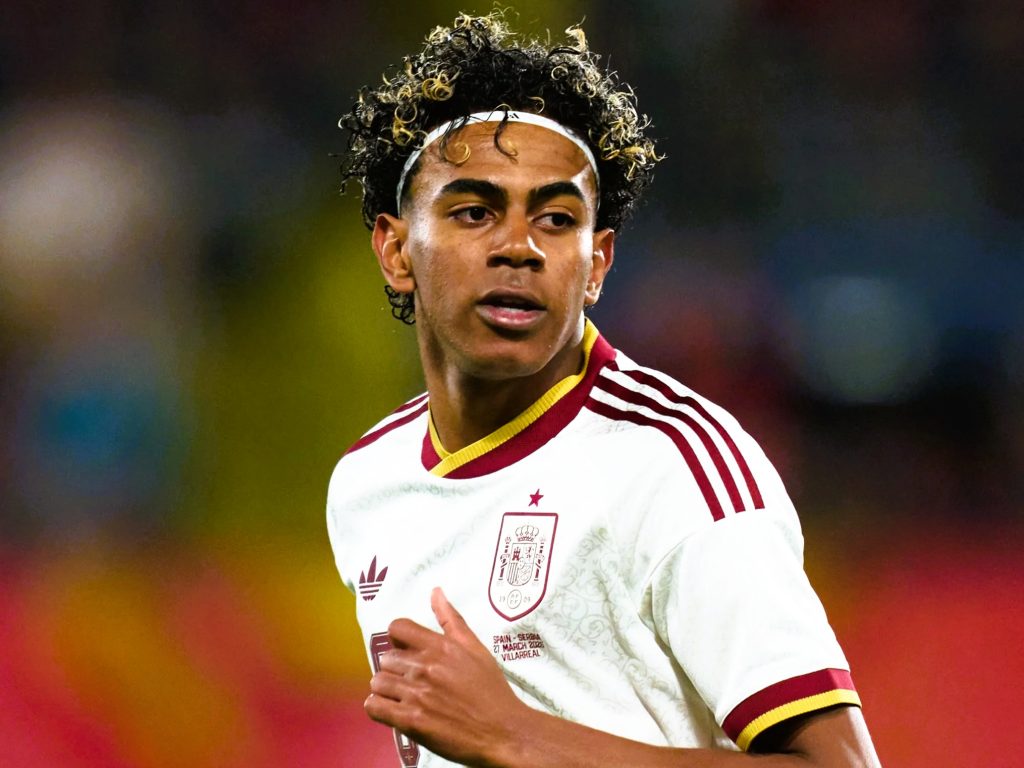
There is a version of this article where Lamine Yamal doesn’t need an introduction. We may already be living in it.
At Euro 2024, at just 16 years old, the Barcelona winger shattered the concept of a gradual international education.
He was not at ease with things. He was the most decisive attacker in the tournament that Spain won.
He is not emerging at this World Cup. He arrives as a known quantity who is, paradoxically, still underrated.
His contribution to Spain’s journey to the 2026 World Cup finals is likely to be very important.
The gap between his current reputation and his actual ceiling remains enormous, and 2026 is the tournament where that gap closes in front of a billion viewers.
Why 2026 could be his tournament
Spain enter the tournament as title favourites, and Yamal is at the heart of everything they do in attack.
As the most complete of the 2026 World Cup breakout star candidates, his case is both structural and personal.
Luis de la Fuente’s system is essentially built around his right-flank presence.
The overlapping runs of the full-backs, the diagonal carries of Pedri, are all engineered to feed Yamal into one-v-one situations or half-spaces.
Where he is essentially irreplaceable. Against the quality of opposition at the World Cup, that calculated deployment becomes even more lethal.
One real concern is fitness. A hamstring problem raised alarm briefly at the end of April, although recent reports suggest a full recovery.
Hamstrings can be temperamental. But if Yamal enters the tournament at full capacity.
His explosiveness at its peak, his agility limitless – it’s really hard to see how opponents will take responsibility for him in seven games.
Endrick: Brazil · Centre-Forward · Age 18
Living with the weight of Brazilian expectations
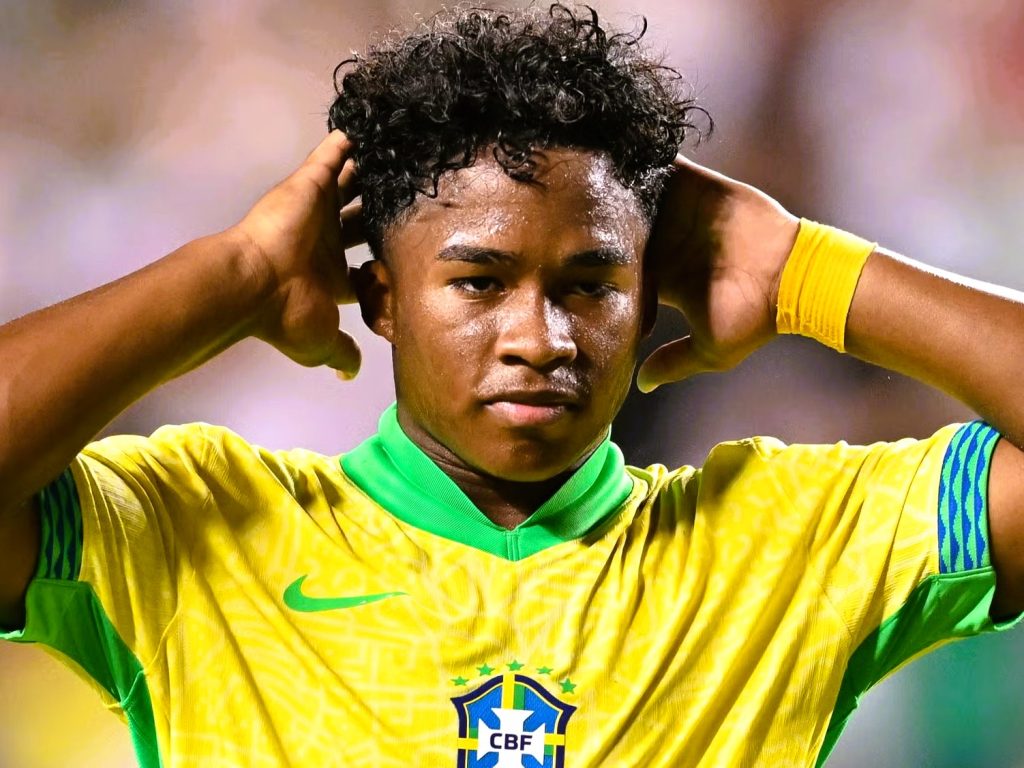
Few burdens in football are heavier than being a Brazilian striker at a World Cup.
The golden thread runs from Pelé to Ronaldo to Ronaldo (the second one) — and then, for a painfully long time, it frays.
Brazil have not won a World Cup since 2002. Endrick, now plying his trade at Real Madrid after an eye-catching early career, understands what he represents and seems entirely unbothered by it.
The remarkable thing about Endrick is the type of footballer he is: not primarily a dribbler or a creator, but a pure goalscorer with a finisher’s instinct that coaches cannot manufacture.
He moves in the penalty area with a spontaneity that makes him genuinely difficult to track.
His technique chest control, acrobatic finishes, explosive runs behind a defensive line belongs to a different era in the most refreshing sense.
In an age of the pressing, high-energy No.9, Endrick is simply in the box, waiting for the moment.
Why the World Cup could change everything
Brazil’s attacking depth — Vinícius Júnior, Raphinha, Martinelli — means Endrick may not be a guaranteed starter. But that unpredictability cuts both ways.
Coming off the bench at a World Cup, with the game already in motion and defensive shapes disrupted, is arguably where Endrick’s game is most lethal.
One run, one finish, and the narrative shifts entirely.
Brazil’s journey to the 2026 World Cup finals provides him with precisely the high-stakes context where sudden, singular moments define careers.
Arda Güler: Turkey · Attacking Midfielder · Age 20
Why Europe already knows his name
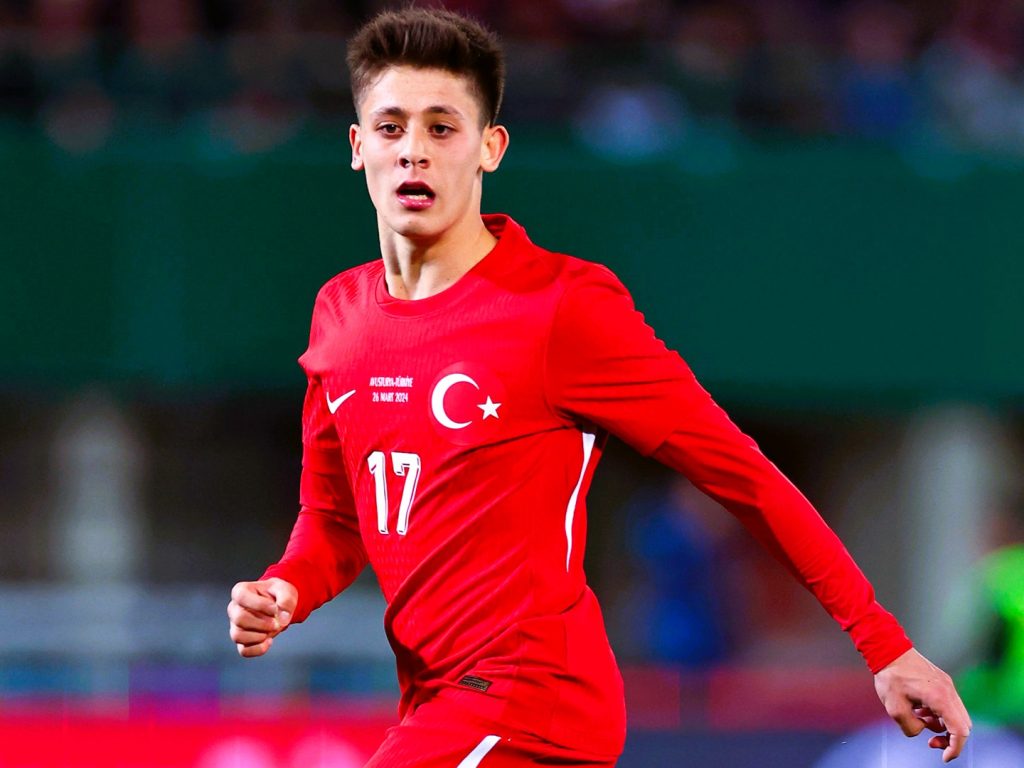
At Euro 2024, Arda Güler announced himself with a goal against Georgia that was, by objective standards, one of the most technically extraordinary strikes of the entire tournament.
He was just 19 years old. He was playing for Real Madrid. This made him the youngest player to score on his Euro debut, breaking the record held by Cristiano Ronaldo since 2004.
Güler has a defining quality that makes him exceptional and difficult for opponents to plan for. His first touch is not control, it is already the beginning of another move.
Can Turkey surprise again?
Turkey’s draw — Group D alongside the United States, Paraguay, and Australia — is not a group of destiny, but it is genuinely winnable.
More importantly, the USA opener is a fixture tailored for Güler: a defensively disorganised side, against a player whose greatest skill is breaking compact lines through creativity rather than power.
If Güler dominates that match, Turkey’s tournament opens up — and so does his.
Nico Paz: Argentina · Attacking Midfielder · Age 21
Learning inside a winning environment
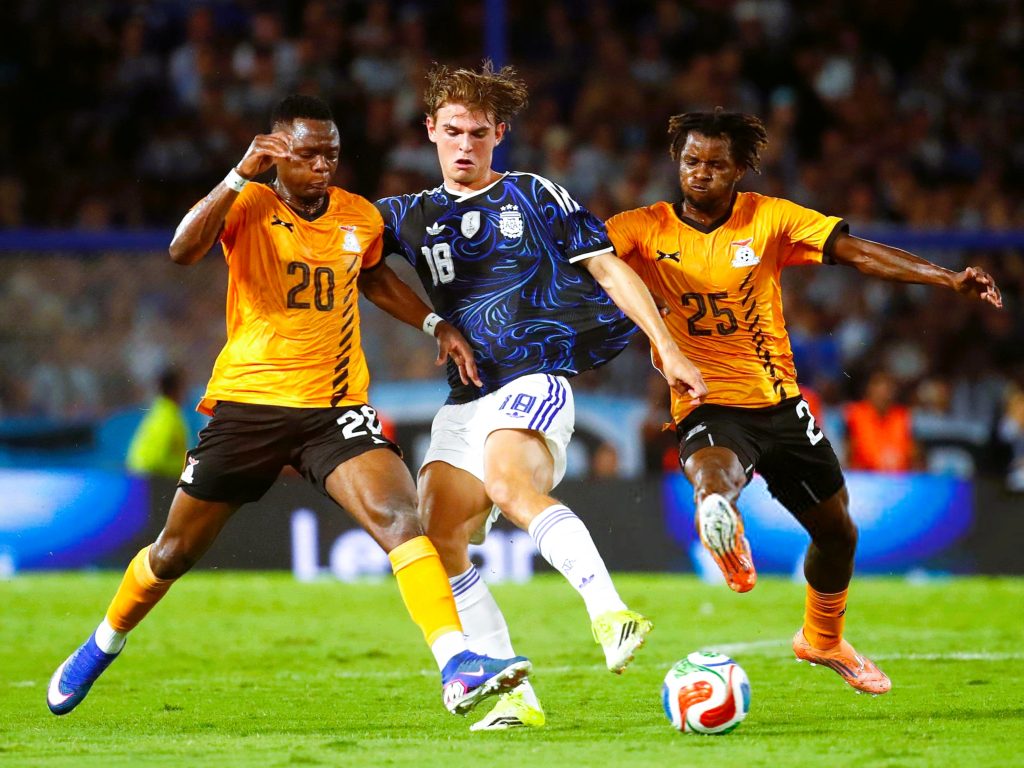
There is an argument that the best education in world football right now is not any single club academy, but the Argentine national team’s collective understanding of how to navigate major tournaments.
Nico Paz, 21, who has had a great season at Como in Serie A, is the latest beneficiary of that environment.
His skill set — a playmaking No.10 with directness, a nose for goal, and the ability to combine fluidly in tight spaces — fits Argentina’s winning culture naturally.
Messi’s presence in this likely final World Cup appearance draws attention, creates space, and demands doubled defensive resources.
Paz, operating in the pockets those double-teams vacate, could be the most consequentially positioned young player at the entire tournament.
Why he benefits most from Argentina’s system
The 2022 World Cup champions know how to win games when the going is uncomfortable.
Paz doesn’t need to be the engine of Argentina’s tournament — Messi, Álvarez, De Paul provide the foundation.
He just needs to be decisive in the moments to come. Before earning his freedom in Como, he became a player who spent his formative years absorbing the winning mentality of Real Madrid.
Arriving at the World Cup as a reliable complement rather than a main actor may be exactly the right level of pressure.
Désiré Doué: France · Wide Attacker · Age 20
The most unpredictable talent on this list
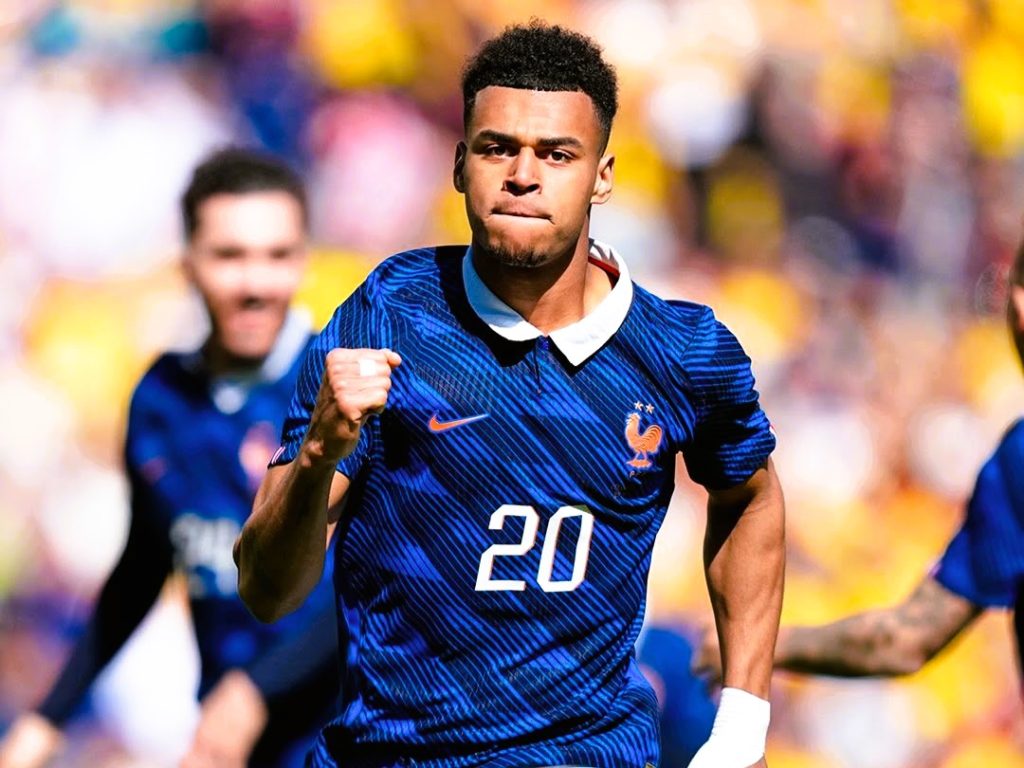
Désiré Doué is, quite deliberately, the wildcard entry here. PSG’s wide forward finished the 2025-26 season with 13 goals across all competitions.
He was instrumental in a Ligue 1 title and a Champions League final run, and carried the kind of form that would ordinarily guarantee a central role at a major tournament.
The complication is that Didier Deschamps’ preferred shapes already accommodate Michael Olise and Ousmane Dembélé in wide attacking positions, and both sit ahead of Doué in the France hierarchy.
But this is precisely why Doué is interesting rather than irrelevant.
He is France’s most unpredictable attacking talent. He is capable of doing something truly incredible at any moment.
His dribbling sequence, an improved finish, a run that the entire defensive structure does not expect.
If France need a goal in the 65th minute of a quarterfinal and Deschamps turns to Doué, the conditions are perfect for a moment that defines a career.
Why France’s system could still suit him
Les Bleus routinely carry tournament depth that rivals other nations’ starting XIs. Deschamps has historically been willing to shake his shapes in knockout situations.
The player who makes the semi-final or final from the bench — arriving fresh, with the game cracked open — is frequently the one the world remembers.
Doué, fluid on either flank and capable of playing centrally, is built for exactly that role.
Honorable Mentions
Five Who Narrowly Missed the Cut
- Warren Zaïre-Emery, France · Midfielder: PSG’s tenacious engine whose deep-lying role limits individual visibility, but whose importance to France’s structure is absolute. The quietly essential player.
- Yan Diomande, Ivory Coast · Midfielder: A physically imposing box-to-box presence who could become the standout African player of the tournament if Les Éléphants find their groove.
- Lennart Karl, Germany · Attacking MF: The 18-year-old German entering with long-odds billing but real potential in a rejuvenated German side that could surprise the tournament’s favourites.
- Geovany Quenda, Portugal · Winger: Sporting CP’s teenage sensation — potentially one of the tournament’s most exciting names if Portugal’s aging core gives more room to its emerging generation.
- Kendry Páez, Ecuador · Midfielder: The 17-year-old prodigy who could turn Ecuador’s tournament into a platform — if his minutes and his team’s results align in the group stage.
The Breakout Star Power Rankings
| # | Player | Country | Position | Rating | Impact Prediction |
| 1 | Lamine Yamal | Spain | RW | 9.5 / 10 | Young Player Award winner |
| 2 | Arda Güler | Turkey | AM | 8.5 / 10 | Knockout stage revelation |
| 3 | Endrick | Brazil | ST | 8.0 / 10 | Match-winning impact substitute |
| 4 | Désiré Doué | France | LW / RW | 7.8 / 10 | Semi-final super-sub moment |
| 5 | Nico Paz | Argentina | AM | 7.5 / 10 | Quiet consistency and key assists |
What Separates These Five from Everyone Else?
Dozens of young players to watch at the 2026 FIFA World Cup will arrive in North America with genuine talent.
What distinguishes this particular group is how completely the surrounding conditions align with their individual strengths.
Tournament role matters enormously: Yamal and Güler are guaranteed starters in systems built around them, while Endrick and Doué are primed for the specific pressure of decisive late interventions — a role that, historically, produces some of the most remembered moments in World Cup history.
National team strength is the second separator. Yamal benefits from playing in arguably the strongest tactical structure at the tournament.
Güler benefits from being the irreplaceable axis of a side hungry to prove themselves. Nico Paz benefits from the gravitational pull of Messi drawing every defensive resource away from him.
These are not incidental advantages — they are structural amplifiers that transform good performances into unforgettable ones.
A rising star on a struggling team disappears into the noise; a rising star inside a well-organised, winning team gets broadcast to 500 million viewers in the moments that count.
Playing style completes the picture. All five are attacking players capable of the kind of spontaneous, unrepeatable action that defines how the world remembers a tournament.
None of them are grinders; none of them are pure system players. Each has a moment of individual magic in them that no tactical preparation fully accounts for — which is precisely the quality that turns a promising young footballer into football’s next superstar.
That unpredictability, within the structure of a functioning team, is the most dangerous combination in the game.
These five young players to watch at the 2026 World Cup represent the clearest version of that combination currently available in world football.
Who Will Become the Tournament’s Breakout Star?
Lamine Yamal
The structural alignment is essentially perfect: a dominant team, a central role, a system engineered around his strengths, and a player whose ceiling has not yet been reached.
Barring injury, 2026 is Yamal’s tournament to define. He was unlucky not to win Player of the Tournament at Euro 2024 as a 16-year-old.
At 18, with two more years of elite development and the biggest tournament ever assembled as his stage, the result is unlikely to be the same.
Arda Güler
If Turkey navigate their group and reach the knockout stages, Güler will have carried them there — and the narrative will be irresistible.
A technically extraordinary player carrying a mid-tier nation deep into a World Cup on the back of performances of the highest quality; that is precisely the kind of story a billion-viewer tournament turns into a global phenomenon.
Désiré Doué
Doué has the widest range of outcomes on this list. He might appear in 40 minutes across the group stage if Deschamps stays rigid — or he might score the goal that sends France to a final.
The upside of a young Frenchman producing a decisive moment on the sport’s biggest stage is as high as any player in the tournament.
The floor is a quiet, unmemorable exit. That volatility is exactly what makes him worth watching.
The 2026 World Cup Is Built to Create New Icons
Breakout stars don’t merely illustrate tournament football — they define it. We remember Mbappé’s explosion in 2018 before we recall the full sweep of France’s march to the title.
We remember James Rodríguez’s left-footed volley against Uruguay before we remember the particulars of Colombia’s group stage results.
The singular talent, arriving without full warning, is the instrument through which a World Cup enters memory.
The 2026 tournament, with its expanded structure and unprecedented global reach across three countries, is perhaps the most favourable ecosystem ever created for exactly this kind of emergence.
There are more games, more audiences, more moments for something unrepeatable.
The five players on this list — Yamal, Güler, Endrick, Doué, and Paz — are the strongest candidates to own those moments.
At least one of them will, almost certainly, walk out of this summer’s tournament as one of the most recognizable footballers on earth.
The only question is which one. Which young player do you think will become the breakout star of the 2026 FIFA World Cup?