








There is no league on Earth that has redefined football economics quite like La Liga.
From Zinedine Zidane’s jaw-dropping arrival at Real Madrid in 2001 to the era of triple-digit transfer fees that followed, Spanish football has consistently pushed the boundaries of what clubs are willing and able to pay for the world’s elite talent.
The most expensive La Liga transfers of all time tell a story not just about individual players, but about the ambitions of its clubs, the commercial power of the sport, and the relentless inflation of the transfer market over the past two decades.
Real Madrid invented the modern concept of the Galáctico, the idea that a football club could sign the world’s biggest name every summer and sell shirts, sponsorships, and stadium tours on the back of it.
Barcelona countered with their own philosophy: acquiring not just stars but systems, building the platform on which Messi, Neymar, and Suárez could rewrite the history books together.
Atlético Madrid, under Diego Simeone, eventually joined the conversation, proving that a club outside La Liga’s traditional duopoly could compete financially when the right player became available.
The numbers have grown staggering. When Real Madrid signed Ronaldo from Manchester United in 2009 for €94 million, it was a world record that seemed almost impossible to surpass.
Eight years later, Barcelona and Atlético Madrid each shattered €120 million in a single summer.


The arrival of release-clause culture, a quirk of Spanish employment law that requires every professional contract to include a buyout figure, has turned La Liga into the league where headline fees are set by the players themselves, not the selling clubs.
This article is the definitive, fully updated guide to the biggest La Liga signings of all time.
We have ranked every major transfer by confirmed fee, profiled the players behind the deals, examined which investments delivered and which became expensive cautionary tales, and charted how the market has evolved from 2001 through the 2026 window.
Whether you want the headline numbers or the full context, you will find it here.
Top 20 Most Expensive La Liga Transfers of All Time
All fees listed are the reported base transfer fees or confirmed initial payments where officially disclosed. Add-ons and performance bonuses are noted separately where significant. Fees are in euros; exchange rates at time of transfer apply.
| Rank | Player | Buying Club | Selling Club | Season | Transfer Fee |
| 1 | Philippe Coutinho | Barcelona | Liverpool | 2017/18 | €135m (incl. add-ons) |
| 2 | Ousmane Dembélé | Barcelona | Borussia Dortmund | 2017/18 | €135m (incl. add-ons) |
| 3 | João Félix | Atlético Madrid | Benfica | 2019/20 | €127.2m |
| 4 | Eden Hazard | Real Madrid | Chelsea | 2019/20 | €120.8m (incl. add-ons) |
| 5 | Antoine Griezmann | Barcelona | Atlético Madrid | 2019/20 | €120m (release clause) |
| 6 | Jude Bellingham | Real Madrid | Borussia Dortmund | 2023/24 | €103m (+ up to €30m add-ons) |
| 7 | Gareth Bale | Real Madrid | Tottenham Hotspur | 2013/14 | €101m |
| 8 | Julián Álvarez | Atlético Madrid | Manchester City | 2024/25 | €95m (€75m + €20m add-ons) |
| 9 | Cristiano Ronaldo | Real Madrid | Manchester United | 2009/10 | €94m |
| 10 | Neymar | Barcelona | Santos | 2013/14 | €88m (total incl. fees) |
| 11 | Frenkie de Jong | Barcelona | Ajax | 2019/20 | €86m |
| 12 | Luis Suárez | Barcelona | Liverpool | 2014/15 | €82m |
| 13 | Zinedine Zidane | Real Madrid | Juventus | 2001/02 | €73.5m |
| 14 | James Rodríguez | Real Madrid | Monaco | 2014/15 | €75m |
| 15 | Kaká | Real Madrid | AC Milan | 2009/10 | €67m |
| 16 | Raphinha | Barcelona | Leeds United | 2022/23 | €58m |
| 17 | Rodri | Manchester City* | Atlético Madrid | 2019/20 | €63m |
| 18 | Thomas Lemar | Atlético Madrid | Monaco | 2018/19 | €63m |
| 19 | Gareth Bale (2nd deal) | Real Madrid | — | — | — |
| 19 | Luís Figo | Real Madrid | Barcelona | 2000/01 | €60m |
| 20 | Dean Huijsen | Real Madrid | AFC Bournemouth | 2025/26 | €62.5m |
*Rodri transferred out of La Liga; included for completeness as a major La Liga-related deal. Note: transfer fee figures sourced from Transfermarkt, UEFA financial reports, and verified media reporting. Add-ons are noted where base fees differ from headline totals.
Related: Explore our complete guides to the UEFA Champions League Winners List, the UEFA Conference League Winners List, the Ballon d’Or Winners List, and the La Liga Winners List, and league champions from England, Spain, Italy, Germany, and beyond.
Who Is the Most Expensive Signing in La Liga History?
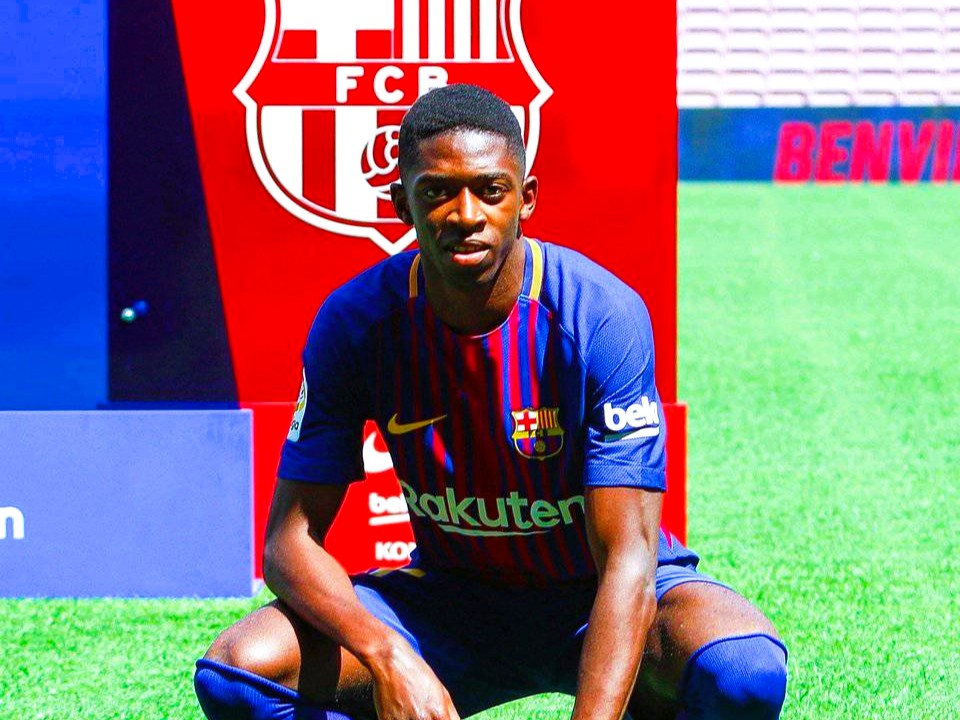
Depending on how you count it, two players share the record as La Liga’s most expensive signing: Philippe Coutinho and Ousmane Dembélé, both signed by Barcelona with headline packages that reached €135 million including add-ons.
Dembélé arrived first, from Borussia Dortmund in the summer of 2017 for a base fee of €105 million with €42 million in potential add-ons.
Coutinho followed in the January window of 2018 from Liverpool at a €120 million base with €15 million in variables, narrowly matching the Dembélé headline figure.
That both records belong to Barcelona and that neither player ultimately justified the extraordinary outlay tells its own story about the Catalan club’s transfer policy during the post-Neymar panic years.
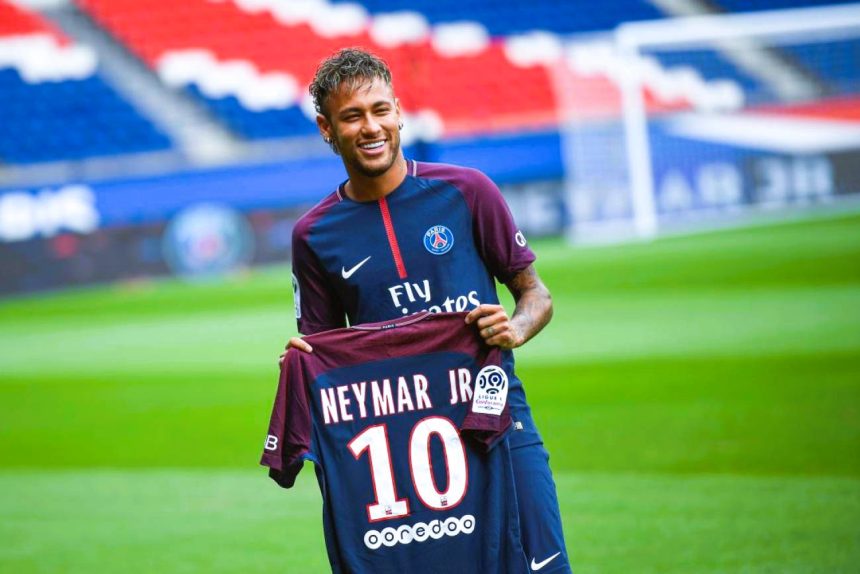
Neymar’s €222 million departure to PSG in August 2017 left Barcelona scrambling for replacements, and the club spent lavishly in the months that followed.
The two players who received those record fees could not, in the end, fill the void left by the Brazilian.
In terms of a single, undisputed world record set upon arrival in La Liga, Cristiano Ronaldo’s €94 million move from Manchester United to Real Madrid in 2009 remains the most iconic.
At the time, it was the most expensive transfer in football history, and for four years, until Gareth Bale arrived, Ronaldo was La Liga’s costliest import.
Unlike the expensive disappointments that followed, Ronaldo’s fee looks, in retrospect, like an absolute bargain: 450 goals, four Champions League titles, and a transformation of Real Madrid’s global brand that generated revenues far exceeding the outlay.
Detailed Player Profiles
1. Philippe Coutinho — €135 million — Barcelona (January 2018)
Few transfers in La Liga history have generated as much hype or ended in such comprehensive disappointment as Philippe Coutinho’s move from Liverpool to Barcelona.
The Brazilian had been Liverpool’s most creative force for several seasons, a player of genuine world-class quality whose dribbling, long-range shooting, and delivery from deep made him the heartbeat of Jürgen Klopp’s pressing machine.
Barcelona had been chasing him since the summer of 2017; when they finally landed him in January 2018 for a package that could reach €135 million, it felt like a statement of intent from a club determined to replace Neymar with multiple high-quality alternatives.
Reality proved harsher. Coutinho arrived to find Camp Nou a difficult environment for a player who needed freedom and space to express himself.
He scored in his debut against Valencia and showed flashes of his best form, but consistency eluded him throughout his two full seasons in Spain.
A loan to Bayern Munich in 2019/20, during which he won a Champions League medal and scored twice in a famous 8–2 demolition of his parent club, only underlined the mismatch between his abilities and Barcelona’s tactical demands.
He was sold to Aston Villa in January 2022 for around €20 million, a staggering depreciation. In terms of return on investment, Coutinho at Barcelona stands as the most expensive mistake in the club’s history.
2. Ousmane Dembélé — €135 million — Barcelona (2017)
Ousmane Dembélé’s arrival at Barcelona in the summer of 2017 came directly in the slipstream of Neymar’s departure.
Barcelona needed a wide forward fast, and the 20-year-old Frenchman was identified as the ideal profile: explosive pace, exceptional dribbling, and youth on his side.
Borussia Dortmund, where he had spent just one season, demanded €105 million upfront with a further €42 million in add-ons, setting a new La Liga record at the time.
On pure potential, the fee was defensible. In practice, it was a masterclass in football’s capacity for disappointment.
Dembélé’s Barcelona career was defined almost entirely by injury. Hamstring, thigh, and knee problems repeatedly kept him sidelined, limiting his ability to build any real rhythm or consistency.
When fit, he showed precisely why Barcelona paid so much for his directness, creativity, and ability to beat defenders made him genuinely dangerous, but fit, he was not nearly often enough.
He made 185 appearances for the club across six seasons, contributing 51 goals and 58 assists, but the €135 million investment demanded far more.
He departed on a free transfer to PSG in 2022, once his contract expired, which itself became a lengthy and acrimonious saga.
Eventually settled at PSG and found new consistency. At Barcelona, he remains a €135 million cautionary tale about the risks of buying 20-year-olds for world-record fees.
3. João Félix — €127.2 million — Atlético Madrid (2019)
When Atlético Madrid paid €127.2 million for 19-year-old João Félix from Benfica in the summer of 2019, it was the single most expensive transfer in the club’s history and, at the time, the fourth-largest fee in football.
The Portuguese forward had lit up the Portuguese Liga with a stunning 20-goal, 11-assist campaign for Benfica at an age when most teenagers are still trying to break into first-team football. Every elite club in Europe wanted him; Atlético moved quickest and paid most.
What followed was perhaps the most structurally complex transfer story of the modern era. Félix and Diego Simeone were simply not compatible.
Simeone’s system demands defensive discipline, pressing intensity, and tactical selflessness qualities Félix, a naturally creative and somewhat balletic forward, never quite embedded.
He averaged just over 10 goals per La Liga season in his three full years at the club, productive but not €127 million-level productive.
Loan spells at Chelsea and Barcelona followed, both of which showed an entirely different player when given freedom and trust.
He eventually returned to Atlético on Barcelona’s terms before Atlético sold him permanently to Barcelona in 2024 for around €50 million, less than half what they paid.
The gap between Félix’s obvious talent and his Atlético output remains one of Spanish football’s most intriguing mismatches.
4. Eden Hazard — €120.8 million — Real Madrid (2019)
Few players have arrived at Real Madrid with as much goodwill, expectation, and genuine world-class pedigree as Eden Hazard.
The Belgian had spent seven years at Chelsea, winning two Premier League titles, the FA Cup, and two Europa Leagues, and was widely regarded as the best player in England during his peak years.
His 2018/19 farewell season was exceptional, 21 goals, 17 assists in all competitions, culminating in a man-of-the-match performance in the Europa League final. Real Madrid paid €120.8 million to end his Stamford Bridge story.
What came next in Madrid was not a story at all — it was a series of injury bulletins.
Hazard suffered ankle fractures, muscular injuries, and COVID complications that reduced what should have been his prime years to an extended spell in the treatment room.
He scored just seven goals in 76 appearances across four seasons at the Santiago Bernabéu, never once recapturing the electric, unstoppable form that had justified his fee.
He retired from football in October 2023 at the age of 32, a player whose legacy belongs almost entirely to his Chelsea years. Madrid’s €120 million investment returned next to nothing.
5. Antoine Griezmann — €120 million — Barcelona (2019)
Griezmann’s transfer to Barcelona was as much a soap opera as a sporting transaction.
In 2018, the Frenchman had publicly chosen to stay at Atlético Madrid via a choreographed mini-documentary that parodied LeBron James’s famous decision only for him to trigger his own €120 million release clause twelve months later.
Barcelona activated it before the clause expired, Atlético disputed the timing in court, and the legal dispute dragged on for years.
On the pitch, the partnership never clicked. Griezmann was a natural false-nine who had thrived in Simeone’s defensive-counter system; at Barcelona, he was asked to play second fiddle in a possession-based structure already designed around Messi.
He contributed 35 goals in over 100 appearances but rarely looked like the player who had scored 133 goals in 257 La Liga games for Atlético.
His 2021 loan back to the Rojiblancos felt like an admission. Barcelona eventually sold him permanently to Atlético for €22 million, less than a fifth of what they had paid.
One of the most dramatic transfer sagas of the modern era ended with Barcelona losing approximately €98 million.
6. Jude Bellingham — €103 million — Real Madrid (2023)
In a market full of cautionary tales, Jude Bellingham has been a refreshing reminder that occasionally a big-money signing actually delivers.
Real Madrid paid Borussia Dortmund €103 million with a further €30 million in potential add-ons, confirmed in writing by the German club to sign the 19-year-old Englishman in the summer of 2023.
The fee was a statement of intent, but Bellingham’s debut season made every euro look justified.
He scored 23 goals across all competitions in his first La Liga season, including decisive Champions League moments and a habit of scoring late winners that earned him cult status at the Bernabéu almost immediately.
His combination of box-to-box dynamism, composure under pressure, and genuine goal-scoring threat from midfield set him apart from any player in his position in world football.
Real Madrid won La Liga and the Champions League in 2023/24, and Bellingham’s influence was central to both.
He entered 2025/26 as one of the most valuable players on the planet, with his Transfermarkt valuation approaching €200 million.
A future Ballon d’Or contender who has already paid back his transfer fee in trophies.
7. Gareth Bale — €101 million — Real Madrid (2013)
Gareth Bale arrived at Real Madrid in the summer of 2013 as the world’s most expensive player, breaking Cristiano Ronaldo’s record of four years with a reported fee of €101 million from Tottenham Hotspur.
The Welshman had just completed a remarkable Premier League season as Player of the Year, 26 goals, and a performance against Inter Milan in the Champions League that established him as a global star.
Madrid’s president Florentino Pérez saw him as the next Galáctico.
Bale’s time at Madrid delivered more than many remember. He won four Champions League titles, scored an extraordinary overhead kick in the 2018 final, and his goals in two Champions League finals, including the bicycle kick against Liverpool, guaranteed him a place in the competition’s folklore.
Yet his nine years at the club were also defined by inconsistency, a famously distant relationship with manager Zinedine Zidane, persistent fitness issues, and an impression of detachment that frustrated supporters. He was brilliant in flashes, anonymous for stretches.
At €101 million, the investment generated trophies but also friction.
8. Julián Álvarez — €95 million — Atlético Madrid (2024)
Argentina’s 2022 World Cup hero arrived in La Liga in the summer of 2024 when Atlético Madrid paid Manchester City €75 million with €20 million in add-ons, a deal that represented a record sale for City.
At 24, Álvarez was a proven World Cup winner, Champions League champion, and one of the most reliable forwards in elite football.
Atlético needed a focal point after years of goals being distributed across their squad, and Álvarez was a player who scored them reliably at every level.
His debut La Liga season exceeded expectations. He hit double figures in the league within his first campaign, brought the kind of relentless pressing and positional intelligence that suited Simeone’s system perfectly, and immediately became one of the most important players at the Wanda Metropolitano.
At €95 million, Atlético bought a player in his prime, at the right age, for a system designed precisely around his strengths. It is the kind of logic that has been absent from several previous La Liga megadeals.
9. Cristiano Ronaldo — €94 million — Real Madrid (2009)
There is an argument — a very strong one — that Cristiano Ronaldo’s €94 million move from Manchester United to Real Madrid in 2009 is the best-value transfer in football history.
At the time, it was a world record that seemed almost grotesque in its scale. In retrospect, it looks like a bargain.
The Portuguese forward went on to score 450 goals in 438 appearances for Real Madrid across nine seasons, winning four Champions Leagues, two La Liga titles, and three Club World Cups.
He was the top scorer in the Champions League for seven consecutive seasons and won four Ballon d’Or awards during his time in Spain.
Beyond the statistics, Ronaldo transformed Real Madrid’s commercial identity.
Shirt sales, shirt sponsorship revenues, and global brand metrics all rose dramatically after his arrival, meaning the club almost certainly recouped the €94 million transfer fee through commercial activity alone before he kicked a ball in a competitive fixture.
When he departed for Juventus in 2018 for €117 million more than he cost to bring in, Real Madrid made a net profit on one of football’s greatest ever players.
It remains the gold standard against which all expensive La Liga transfers are measured.
10. Neymar — €88 million — Barcelona (2013)
Neymar’s 2013 move from Santos to Barcelona was officially reported as €57.1 million, but the full picture, including agent fees, intermediary payments, and hidden side arrangements, ultimately totalled approximately €88 million, as established by Spanish court proceedings that ultimately found all parties not guilty of fraud.
The complexity of the deal, and the legal fallout, symbolised the opacity that has long surrounded football’s biggest transfers.
Whatever the fee, Barcelona got extraordinary value. Neymar formed the legendary MSN attack alongside Messi and Luis Suárez, arguably the greatest attacking trio in club football history.
He won nine major trophies, including the 2015 Champions League, scored 105 goals in 186 appearances, and was arguably the second-best player on earth during his time in Barcelona.
His 2017 departure to PSG for €222 million was not just a world record; it was the event that triggered the transfer inflation now defining the upper end of La Liga’s market.
Most Expensive Barcelona Transfers
Barcelona’s transfer philosophy has oscillated dramatically over the past two decades.
Under Johan Cruyff’s conceptual descendants, Frank Rijkaard, Pep Guardiola, the club prided itself on developing talent from La Masia rather than buying it. Then the Neymar era began, and the caution dissolved.
The years between 2017 and 2020 represent the most reckless spending period in Barcelona’s history.
Desperate to replace Neymar after his €222 million departure, the club spent approximately €460 million on Dembélé, Coutinho, Griezmann, and Frenkie de Jong in the space of three years.
Of those signings, only De Jong could be considered even a moderate success, and Barcelona’s financial crisis of 2021, when the club was unable to renew Messi’s contract due to salary cap constraints, was in no small part a consequence of those years of overindulgence.
More recently, Barcelona have attempted to recalibrate. Raphinha arrived from Leeds for €58 million in 2022 and went on to be one of the best players in Europe a genuine bargain at that fee.
The club’s financial recovery, driven by the “economic levers” policy under Joan Laporta, has gradually restored some structural sanity.
Their 2025/26 La Liga title, their first without Messi in years, was built substantially on players developed at the club rather than bought at record prices.
Barcelona’s biggest transfer successes have typically been the deals that flew under the radar: Luis Suárez at €82 million was a steal; Neymar at €88 million delivered nine trophies.
Their most expensive deals, Dembélé and Coutinho at €135 million each, are case studies in transfer market overreach.
Most Expensive Real Madrid Transfers
Real Madrid did not invent football’s transfer arms race, but they perfected it.
The Galácticos era of the early 2000s, Zidane, Ronaldo, Beckham, Figo, Owen, was the first time a football club openly treated the transfer market as a global entertainment strategy rather than a sporting necessity.
Every summer, Los Blancos would sign the single most famous player available, regardless of whether the squad needed him, and reap the commercial rewards in jersey sales and sponsorship revenue.
Florentino Pérez’s second Galáctico era, beginning around 2009, was even more extravagant.
Ronaldo at €94 million and Kaká at €67 million arrived in the same summer window, making Real Madrid’s squad the most expensive ever assembled at that point. Gareth Bale broke the world record again in 2013.
The commercial logic was impeccable. Ronaldo alone reportedly generated over €1 billion in commercial revenues during his nine years, but the sporting returns were not always commensurate with the spending.
Eden Hazard’s failure represents the most significant deviation from the Galáctico model working as intended.
Hazard was 28 and injury-prone when he arrived; the two risks that any sensible football director would have stress-tested were both realised.
The Bellingham signing, by contrast, suggests a shift toward younger, long-term investments, a model that Real Madrid’s recent recruitment of Vinicius Júnior, Tchouaméni, and Camavinga has reinforced.
Real Madrid’s record signing history illustrates one consistent truth: when they get it right, no club on earth extracts more value from a transfer.
When they get it wrong, Hazard being the obvious example, the losses are enormous.
Most Expensive Atlético Madrid Transfers
Atlético Madrid’s identity under Diego Simeone has been built on defensive organisation, collective sacrifice, and the kind of hard-nosed pragmatism that makes their transfer policy inherently different from Real Madrid and Barcelona.
Simeone does not want the most technically gifted player available; he wants the player who will run the most, press the hardest, and track back when the team doesn’t have the ball. Finding that profile at the €120 million price point is nearly impossible.
Which explains why João Félix at €127.2 million was such a structural mismatch. Félix is a creative, intrinsically motivated player who needs positive reinforcement and tactical freedom — precisely the opposite of what Simeone’s system provides.
Griezmann, who had thrived in that system before joining Barcelona, returned and was transformed again. The lesson Atlético drew: buy for the system, not for the market.
Julián Álvarez represents that lesson applied correctly. The Argentine is a relentless worker, technically excellent but fundamentally a team player, willing to press and carry defensive responsibility.
His €95 million fee was high, but the fit was right from day one. Thomas Lemar at €63 million was another expensive misfit, a technically gifted French midfielder who never adapted to the intensity Simeone demands.
Atlético’s greatest transfer-market achievement, in truth, has been on the selling side: buying players cheaply, Diego Costa, Agüero, Griezmann a second time — and selling them or their replacements for multiples.
The €127 million Félix purchase was an outlier in their otherwise shrewd approach.
Transfer Spending by Club
| Club | Record Signing | Transfer Fee | Season | Current Status |
| Barcelona | Philippe Coutinho / Ousmane Dembélé | €135m each (incl. add-ons) | 2017/18 | Coutinho sold (2022); Dembélé sold (2022) |
| Real Madrid | Jude Bellingham | €103m + add-ons | 2023/24 | At club (2025/26) |
| Atlético Madrid | João Félix | €127.2m | 2019/20 | Sold to Barcelona (2024) |
| Valencia | Gaizka Mendieta | €48m | 2001/02 | Sold (2002) |
| Sevilla | Fernando Torres (loan/various) | ~€15m | — | — |
Most Successful Expensive Transfers
Not every big-money La Liga signing became a cautionary tale. Here are ten that delivered.
- Cristiano Ronaldo — €94m (2009): 450 goals, four Champions Leagues, a net profit on the eventual sale. The definitive successful transfer in football history.
- Jude Bellingham — €103m (2023): Immediate impact, Champions League winner, La Liga winner in debut season, Ballon d’Or contender. One of the best La Liga signings of the decade.
- Neymar — €88m (2013): Nine trophies including the Champions League, 105 goals, and the foundation of the greatest attacking trio in football history.
- Luis Suárez — €82m (2014): Over 198 goals in 283 appearances. The MSN trio’s lethal third component. Value is almost absurd for the fee paid.
- Zinedine Zidane — €73.5m (2001): Became one of Real Madrid’s all-time legends. His chip against Leverkusen in the 2002 Champions League final is the greatest goal ever scored in European club football’s biggest game.
- Gareth Bale — €101m (2013): Flawed in many respects, but four Champions League medals and two decisive final goals make the investment defensible in silverware terms.
- Julián Álvarez — €95m (2024): Too early to judge fully, but the early evidence strongly suggests a well-targeted signing.
- Raphinha — €58m (2022): Evolved into one of the best players in European football. One of Barcelona’s most astute recent purchases.
- James Rodríguez — €75m (2014): His first season — 13 goals, 13 assists — was spectacular. The subsequent decline and loan outs diminish the overall verdict, but the initial impact was elite.
- Luís Figo — €60m (2000): A controversial transfer (the Barcelona pig’s head incident still echoes), but Figo delivered three La Liga titles and a Champions League semi-final at Madrid.
Biggest Transfer Flops
La Liga’s most expensive failures deserve honest analysis. In each case, the underperformance stemmed from a combination of factors — tactical misfit, injury, unrealistic expectations, or simply a player who was past his best by the time he arrived.
Eden Hazard — €120.8m: The clearest and most complete failure. Injury ended his career as an elite performer before it properly began at Real Madrid. Seven goals in four seasons. No argument available in mitigation.
Philippe Coutinho — €135m: Not a poor player, but never the right player for Barcelona’s system post-Messi. A product of panic-buying after Neymar’s departure, sold for a tiny fraction of the purchase price.
Ousmane Dembélé — €135m: The fee is indefensible in retrospect. Dembélé had real quality — his assist numbers when fit were elite — but a player at €135 million cannot miss the majority of matches through injury across six seasons. Left on a free.
Antoine Griezmann — €120m (at Barcelona): Great player; wrong environment. His Atlético career bookends make the Barcelona chapter look like a costly detour. Sold for €22 million.
João Félix — €127.2m: The mismatch between his qualities and Simeone’s system was identifiable in advance and proved unavoidable in practice. Atlético recouped approximately €50 million of a €127 million investment.
Thomas Lemar — €63m: Talented but never fully functional in Simeone’s high-intensity system. A recurring theme at the Metropolitano.
Interesting Facts and Records
- Highest fee ever paid by a La Liga club: €135 million — shared by Barcelona for Philippe Coutinho (January 2018) and Ousmane Dembélé (2017).
- Most expensive teenager: João Félix at €127.2 million, signed at age 19. Jude Bellingham (19) is close behind at €103 million.
- Most expensive defender in La Liga history: Dean Huijsen, signed by Real Madrid for €62.5 million in 2025 at the age of 20.
- Most expensive goalkeeper signed by a La Liga club: Jan Oblak is widely considered the most valuable, though signed for a relatively modest fee; Kepa Arrizabalaga was sold by Athletic to Chelsea for €80 million — the highest fee received by a La Liga club for a goalkeeper.
- Biggest release clause ever set in La Liga: Lionel Messi’s buyout clause was famously set at €700 million — the highest in football history.
- Highest-spending decade in La Liga history: 2010–2020, when total inbound transfer spending by the top three clubs exceeded €2 billion.
- Largest transfer involving Barcelona: Coutinho / Dembélé at €135 million incoming; Neymar to PSG at €222 million outgoing.
- Largest transfer involving Real Madrid: Jude Bellingham at €103 million incoming; Ronaldo to Juventus at €117 million outgoing.
- Largest transfer involving Atlético Madrid: João Félix at €127.2 million incoming; Rodri to Manchester City at €63 million outgoing.
- First La Liga club to spend €100 million on a single player: Barcelona, for Neymar (whose total cost reached €88m in the original deal and who was replaced partly by the €105m Dembélé).
- The summer of 2019 was the most expensive single window in La Liga history: Joao Felix, Hazard, Griezmann, and De Jong all signed that summer for a combined outlay of approximately €460 million.
Conclusion
The history of La Liga’s most expensive transfers is not simply a list of fees — it is a mirror held up to the ambitions, anxieties, and occasionally the hubris of European football’s most powerful clubs.
Real Madrid invented the Galáctico model and, at its best, made it work spectacularly: Ronaldo at €94 million remains the most successful expensive transfer in football history.
Barcelona embraced the same logic with rather more catastrophic results in the post-Neymar era, spending €260 million on two players in four months and ultimately recouping a fraction of either fee.
Atlético Madrid, operating on a different financial tier, paid their record fee for a player constitutionally unsuited to their system and have spent years managing the consequences.
What the data consistently shows is that the size of the fee is a poor predictor of success.
Ronaldo and Bellingham — both bought at market-record levels — vindicated their price tags almost immediately.
Hazard, Coutinho, Dembélé, and Griezmann all signed at comparable or higher fees, but did not.
The difference lies in fit: tactical compatibility, age, injury record, and cultural alignment with the buying club’s demands.
The most successful La Liga transfers, almost without exception, were the ones where those variables aligned.
The biggest flops were the ones where clubs let the pressure of a rival’s transfer or the departure of an irreplaceable player override sporting logic.
Looking forward to the 2026/27 window and beyond, the next generation of La Liga record-breakers is already taking shape.
Real Madrid’s investment in young talent Bellingham, Vinicius, Huijsen, and Mastantuono suggests a club finally comfortable building for the long term rather than chasing ageing superstars.
Barcelona’s financial recovery, while fragile, has produced a team capable of winning La Liga without requiring another Dembélé-level gamble. Atlético, with Álvarez as their centrepiece, look better positioned than at any point since Griezmann left.
Which club do you think has made the best and worst use of its transfer budget over the past decade — and who should La Liga’s big three be targeting in the 2026/27 window? Let us know in the comments below.