







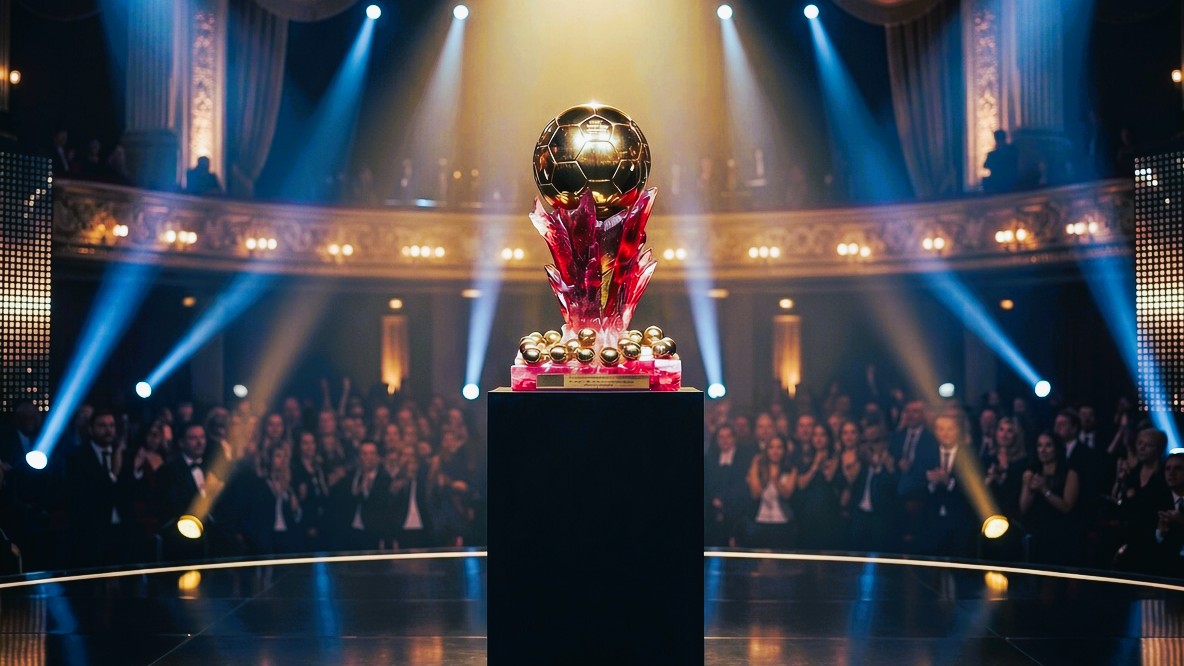

The Super Ballon d’Or has been awarded only once in football history.
In 1989, France Football gave the special honour to Alfredo Di Stéfano, the Real Madrid legend who had already won the regular Ballon d’Or twice.
Unlike the annual Ballon d’Or, the Super Ballon d’Or was a one-off recognition of Di Stéfano’s extraordinary career. He prevailed in the final vote ahead of Johan Cruyff and Michel Platini.
More than three decades later, Di Stéfano remains the only player to have received the award.
So who won the Super Ballon d’Or, why was Di Stéfano chosen, and how is the award different from the regular Ballon d’Or? Here’s the complete history.
Alfredo Di Stéfano won the Super Ballon d’Or in 1989.
Alfredo Di Stéfano is the only player to have won the Super Ballon d’Or. France Football awarded him the trophy on 24 December 1989 after he prevailed in the final vote ahead of Johan Cruyff and Michel Platini.
| Player | Year | Award | Organization | Status |
| Alfredo Di Stéfano | 1989 | Super Ballon d’Or | France Football | Only Recipient |
This is not a list of multiple recipients. The Super Ballon d’Or has been awarded exactly once in football history.
On 24 December 1989. France Football presented the award to Di Stéfano. recognizing his extraordinary career and historical influence on the sport.


In the final vote. Di Stéfano prevailed over Johan Cruyff and Michel Platini. two of football’s greatest players in their own right.
Yet Di Stéfano’s unique historical stature as a bridge between eras. a player who had already won the regular Ballon d’Or twice and revolutionized European football. made him the sole recipient of this singular honour.
What Is the Super Ballon d’Or?
The Super Ballon d’Or was a special one-off honour awarded by France Football in 1989 to recognise Alfredo Di Stéfano’s remarkable career. Unlike the regular Ballon d’Or, it was not part of an annual awards cycle.
Unlike the regular Ballon d’Or. which is presented yearly to the best player of that calendar year. the Super Ballon d’Or transcends any single season or decade. It exists outside the annual calendar.
France Football established the Super Ballon d’Or in 1989 as a commemorative honour. The magazine recognized that certain players transcend normal statistical measures and annual comparisons.
Di Stéfano’s career spanned multiple decades across different continents. His influence on Real Madrid during their five consecutive European Cup triumphs.
His achievements across three major football leagues. and his lasting impact on how the game was played made him a logical candidate for such recognition.
The award acknowledged a player whose overall body of work. longevity. and historical influence could not be properly measured against annual recipients.
France Football has never established a second recipient or a regular schedule for awarding this honour.
It remains a unique award. presented once. given to one player. and unlikely to be repeated unless football’s governing bodies decide to explicitly revive it.
This singular status makes the Super Ballon d’Or fundamentally different from every other individual football award. It is a historical certificate rather than an ongoing competition.
Who Did Di Stéfano Beat in the 1989 Vote?
The 1989 Super Ballon d’Or vote involved three finalists. Di Stéfano prevailed in the final vote, becoming the only recipient of the Super Ballon d’Or.
| Player | 1989 Super Ballon d’Or vote |
| Alfredo Di Stéfano | Winner |
| Johan Cruyff | Final vote |
| Michel Platini | Final vote |
Johan Cruyff
Johan Cruyff was one of the defining players of the 1970s, winning three Ballon d’Or awards and becoming closely associated with Ajax and Barcelona.
He won three Ballon d’Or awards. more than any player at that time. His career at Ajax and Barcelona reshaped those clubs’ identities and tactical approaches. He was a legitimate candidate for any lifetime achievement award.
Yet the voting panel distinguished between Cruyff’s exceptional excellence and Di Stéfano’s historical transformation.
Cruyff pioneered 1970s football. Di Stéfano had pioneered a decade earlier and influenced the game’s foundational development across different continents.
Michel Platini
Michel Platini was one of the leading midfielders of the 1980s. He won three consecutive Ballon d’Or awards from 1983 to 1985 and led France to the 1984 European Championship.
He led France to the 1984 European Championship. His creativity and goal-scoring prowess from midfield redefined that position.
His career represented football’s immediate past relative to 1989. Yet Platini. like Cruyff. represented excellence within an established modern era.
Di Stéfano represented something different. a pioneering career that had helped establish the modern European football structure itself.
The distinction was historical rather than qualitative. Cruyff and Platini were perhaps equal or superior to Di Stéfano in pure talent.
The Super Ballon d’Or recognized something beyond talent. It recognized historical significance and transformational influence.
Super Ballon d’Or vs Ballon d’Or
| Feature | Super Ballon d’Or | Ballon d’Or |
| Frequency | One-time award in 1989 | Annual award since 1956 |
| Purpose | Career lifetime achievement | Performance over the relevant football season |
| Awarding Organization | France Football | Ballon d’Or — France Football |
| Known Recipients | Alfredo Di Stéfano (1) | Dozens across decades |
| Historical Period | Special one-off honour | Ongoing annual competition |
| Selection Concept | Overall career impact and historical significance | Current year performance |
| Number of Awards | 1 (never repeated) | Multiple per year (modern era) |
| Current Status | Inactive. no scheduled future editions | Active. awarded annually |
The Ballon d’Or is modern football’s most recognizable annual award. It identifies the year’s best player through voting by journalists. coaches. and occasionally fans.
The award has been presented every year since 1956. With rare exceptions. Winning the Ballon d’Or represents excellence within a single calendar year.
The Super Ballon d’Or is fundamentally different. It is not annual. It is not competitive in the traditional sense.
There is no voting between multiple contemporaneous candidates. Instead. it is a historical recognition award designed to honour players whose entire career merits singular acknowledgment.
Only one footballer has ever received the Super Ballon d’Or. The award exists outside the normal competitive structure.
It answers a different question than the annual Ballon d’Or. The annual award asks who was best that year.
The Super Ballon d’Or asks who deserves recognition as a transformational figure in football history. The two awards measure different qualities.
Has Lionel Messi Won the Super Ballon d’Or?
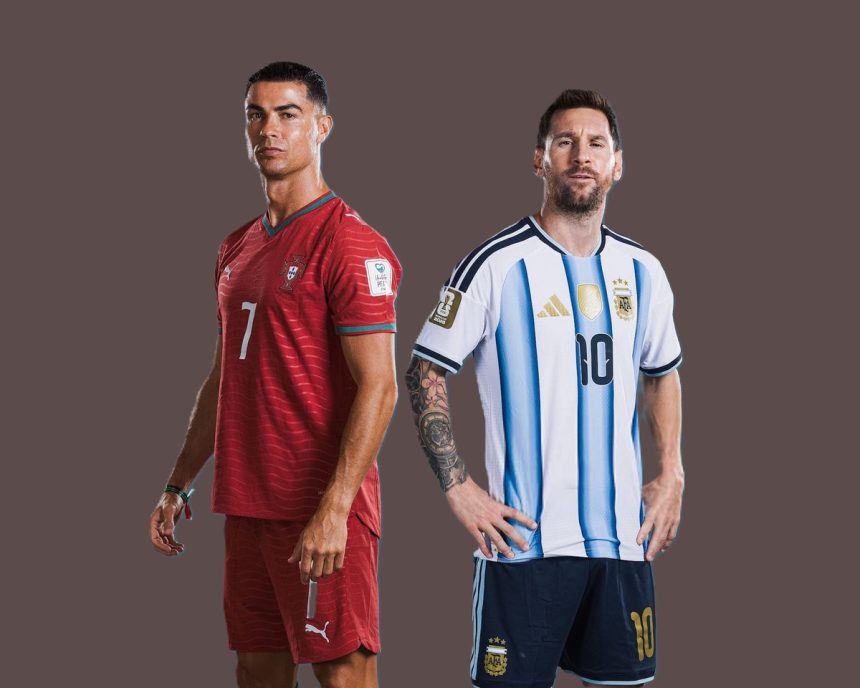
No, Lionel Messi has not won the Super Ballon d’Or. Messi holds the record with eight regular Ballon d’Or awards (2009, 2010, 2011, 2012, 2015, 2019, 2021, and 2023), along with numerous other individual and team honors, but the Super Ballon d’Or is not among them, as it predates his career and was never repeated.
His achievements across multiple decades have established him as one of football’s greatest players. Yet he has never been awarded the Super Ballon d’Or.
Messi’s eight Ballon d’Or awards represent an extraordinary achievement within the annual award framework.
Yet that distinction does not extend to the Super Ballon d’Or. The two awards measure different things.
Has Cristiano Ronaldo Won the Super Ballon d’Or?
No. Cristiano Ronaldo has never won the Super Ballon d’Or.
France Football awarded the Super Ballon d’Or only once, on 24 December 1989, to Alfredo Di Stéfano. Di Stéfano remains the only player to have received the honour.
Ronaldo has won the regular Ballon d’Or five times, in 2008, 2013, 2014, 2016 and 2017, but those awards are separate from the Super Ballon d’Or.
Why Is the Super Ballon d’Or So Rare?
The Super Ballon d’Or is unusual because France Football has awarded it only once.
On 24 December 1989, Alfredo Di Stéfano received the honour after prevailing in the final vote ahead of Johan Cruyff and Michel Platini.
Unlike the regular Ballon d’Or, there is no recurring Super Ballon d’Or edition or established annual schedule.
As a result, Di Stéfano remains the award’s only recipient.
Could the Super Ballon d’Or Be Awarded Again?
France Football has not announced another edition of the Super Ballon d’Or.
The award has been presented only once, in 1989, so there is currently no established schedule for another presentation.
Any future edition would require an official announcement from France Football.
CONCLUSION
The Super Ballon d’Or remains one of the most unusual honours in football history because it has been awarded only once.
Alfredo Di Stéfano received the trophy from France Football on 24 December 1989 after prevailing in the final vote ahead of Johan Cruyff and Michel Platini.
Di Stéfano’s two regular Ballon d’Or victories, five consecutive European Cups with Real Madrid and extraordinary influence on European football help explain the historical importance of his career.
More than three decades later, the central fact remains unchanged: Alfredo Di Stéfano is the only Super Ballon d’Or winner.