

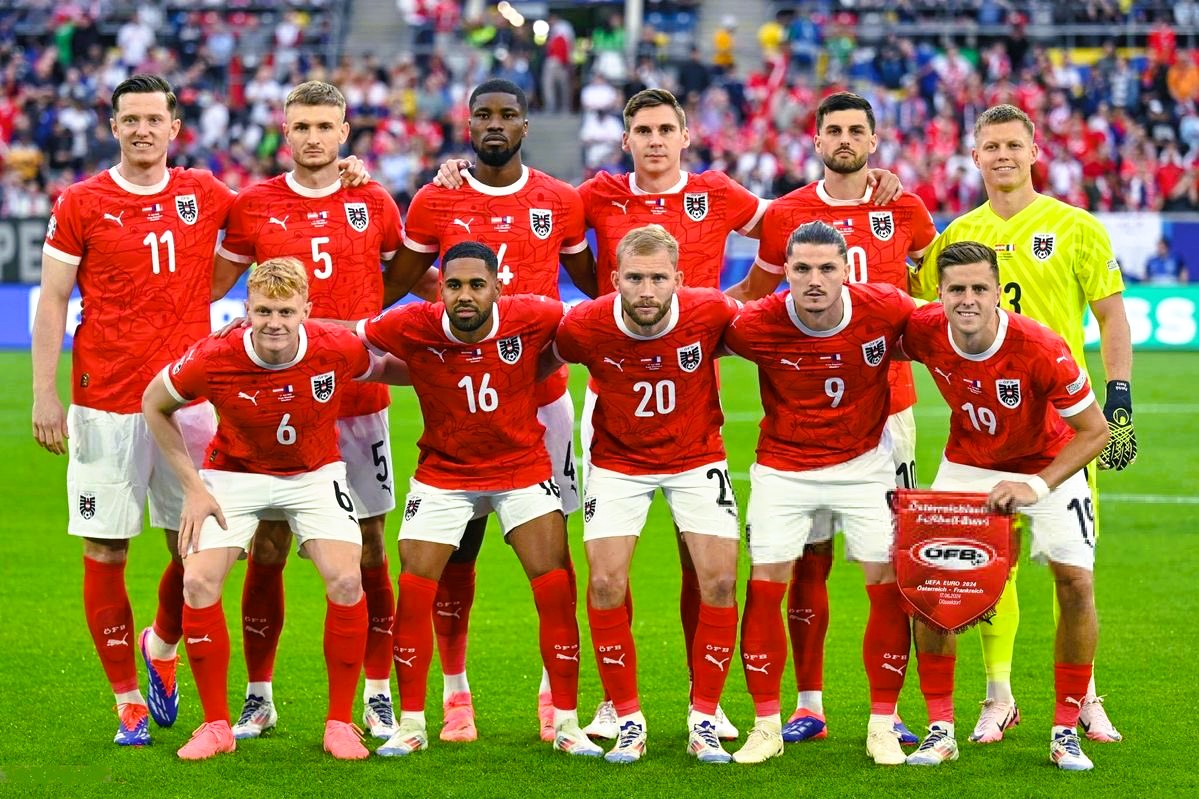
After a 28-year exile from the world’s biggest stage, Austria makes its highly anticipated return to the 2026 FIFA World Cup as a potential “bracket-buster” from Europe.
Having been drawn into a diverse Group J alongside defending champions Argentina, Algeria, and Jordan, Austria is viewed as a formidable threat capable of upsetting the world’s elite through their signature “heavy metal” pressing style.
Co-hosted by Canada, Mexico, and the United States, the expanded 48-team tournament will run from June 11 to July 19, 2026, with the final staged at MetLife Stadium. Austria will open their campaign against Jordan on June 16, 2026, at Levi’s Stadium.
Below, we take a closer look at Austria at the 2026 FIFA World Cup, including the squad, key players, head coach, tournament history, and a complete preview of their ambitions and expectations
Qualification for 2026
Austria qualified directly for the 2026 FIFA World Cup by topping UEFA Group H with a record of 6 wins, 1 draw, and 1 loss in 8 matches, scoring 22 goals and conceding 4 for 19 points.
They clinched qualification with a 1-1 draw against Bosnia and Herzegovina on November 18, 2025.
Under coach Ralf Rangnick, this marks their first World Cup since 1998, following impressive Euro 2020 and 2024 campaigns where they reached the Round of 16 both times.
History
The Austrian national football team has a rich but sporadic World Cup history, with notable successes in the mid-20th century.
They qualified for eight tournaments but only participated in seven, withdrawing from the 1938 edition after the occupation by Nazi Germany.
They made their debut in 1934, finishing in fourth place after a semi-final defeat to Italy.
The “Wunderteam” era peaked with a third-place finish in 1954, their best result, defeating Uruguay 3–1 in the bronze medal match.
Recent appearances have been limited, with group stage exits in 1990 and 1998, their last participation before 2026.
Overall, Austria’s World Cup record includes 10 wins, 4 draws and 15 losses in 29 matches, with 43 goals scored and 47 conceded.
Here’s a summary of their past performances:
| Year | Stage Reached | Key Result |
|---|---|---|
| 1934 | Fourth place | Lost semi-final 1-0 to Italy; lost third-place match 3-2 to Germany |
| 1954 | Third place | Lost semi-final 6-1 to West Germany; won third-place match 3-1 vs Uruguay |
| 1958 | Group stage | Eliminated with 0 wins, 1 draw, 2 losses |
| 1978 | Second group stage | Eliminated after 1 win, 2 losses in second group |
| 1982 | Second group stage | Eliminated after 0 wins, 1 draw, 2 losses in second group |
| 1990 | Group stage | Eliminated with 2 losses, 1 win |
| 1998 | Group stage | Eliminated with 2 draws, 1 loss |
| 2026 | TBD | TBD |
Austria Group Stage Schedule
June 16, 2026: Austria vs. Jordan
June 22, 2026: Argentina vs. Austria
June 27, 2026: Algeria vs. Austria
Austria Coach and Key Players
Head Coach
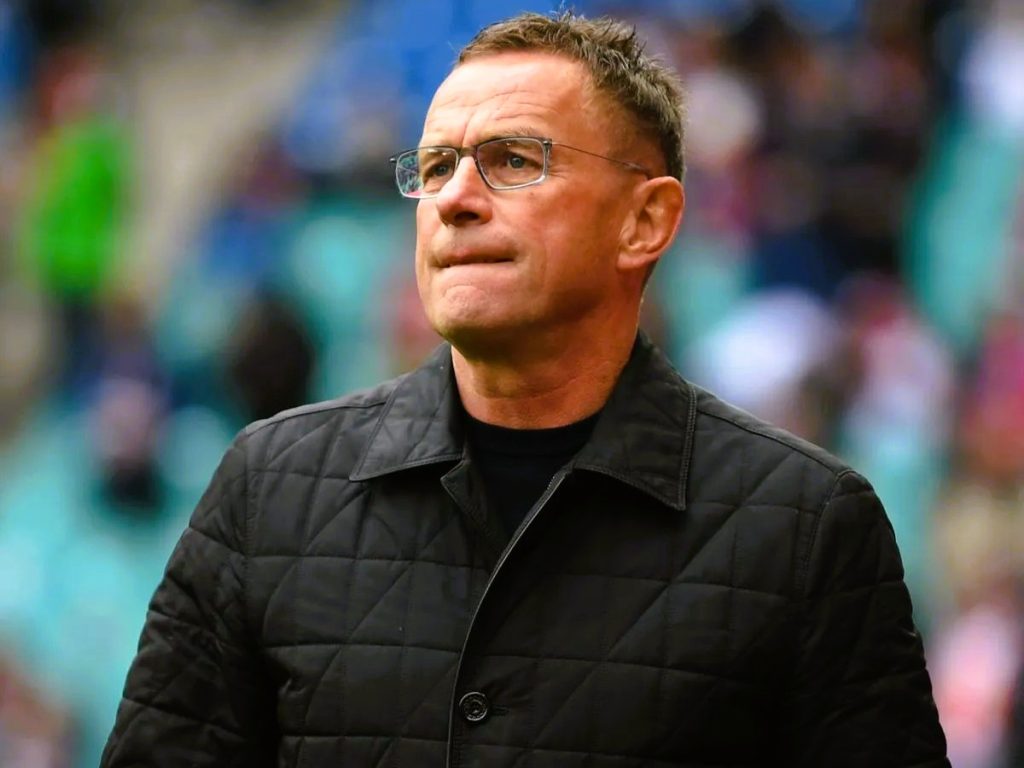
The Austria national football team is led by Ralf Rangnick, a visionary German tactician widely regarded as the “godfather” of modern Gegenpressing.
Since his appointment in April 2022, Rangnick has transformed Austria into a high-intensity, vertical-attacking force, ending a 28-year wait for major tournament consistency and securing qualification for the 2026 FIFA World Cup.
His aggressive counter-pressing philosophy and rapid transitional play propelled Austria to the top of their Euro 2024 group, finishing ahead of established powerhouses France and Netherlands.
Under Rangnick’s guidance, Das Team has enjoyed record-breaking success, highlighted by a historic 10–0 victory over San Marino in October 2025 — the largest win in Austrian football history.
Tactically, Rangnick favours a fluid 4-2-3-1 or 4-2-2-2 system designed to create “controlled chaos.” His teams prioritise winning the ball high up the pitch and generating shots within seconds of regaining possession, overwhelming opponents through relentless pressure and pace.
Key Players
David Alaba (Defender, Real Madrid)
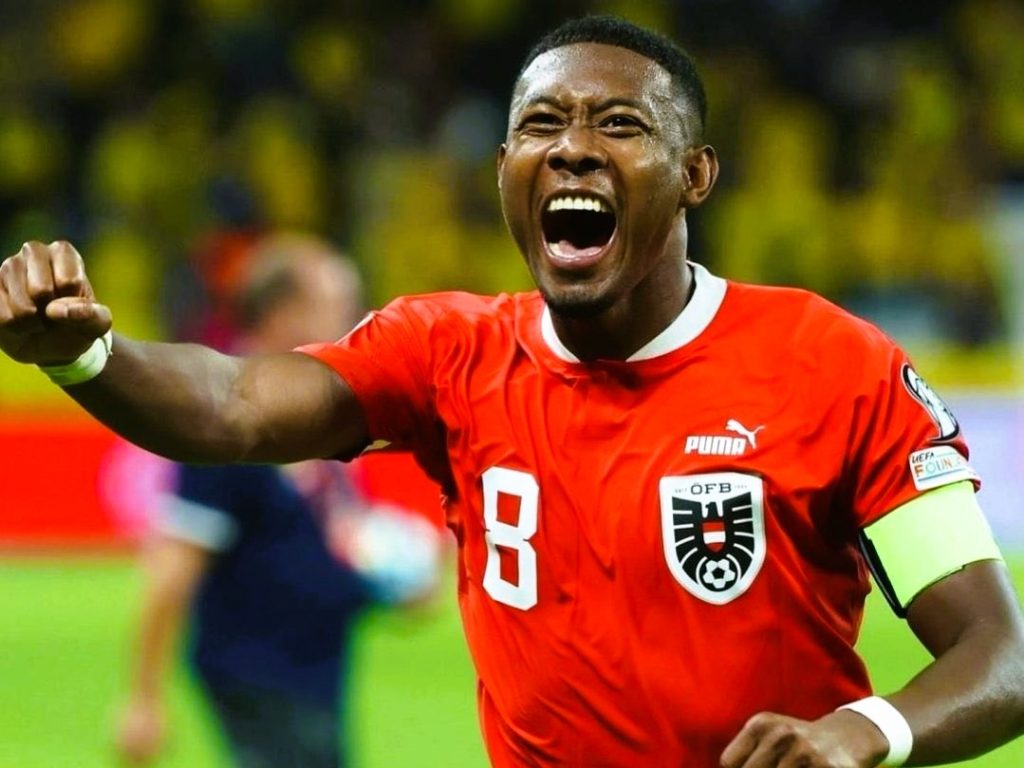
David Alaba is the undisputed leader and most highly regarded player in Austria’s history. Captaining the team at the 2026 World Cup, the veteran Real Madrid player could provide invaluable experience.
His world-class versatility allows him to operate as a “quarterback” from the centre-back position, dictate the tempo of Rangnick’s high-pressing system and provide the necessary leadership for Austria’s first World Cup appearance since 1998.
Marcel Sabitzer (Midfielder, Borussia Dortmund)
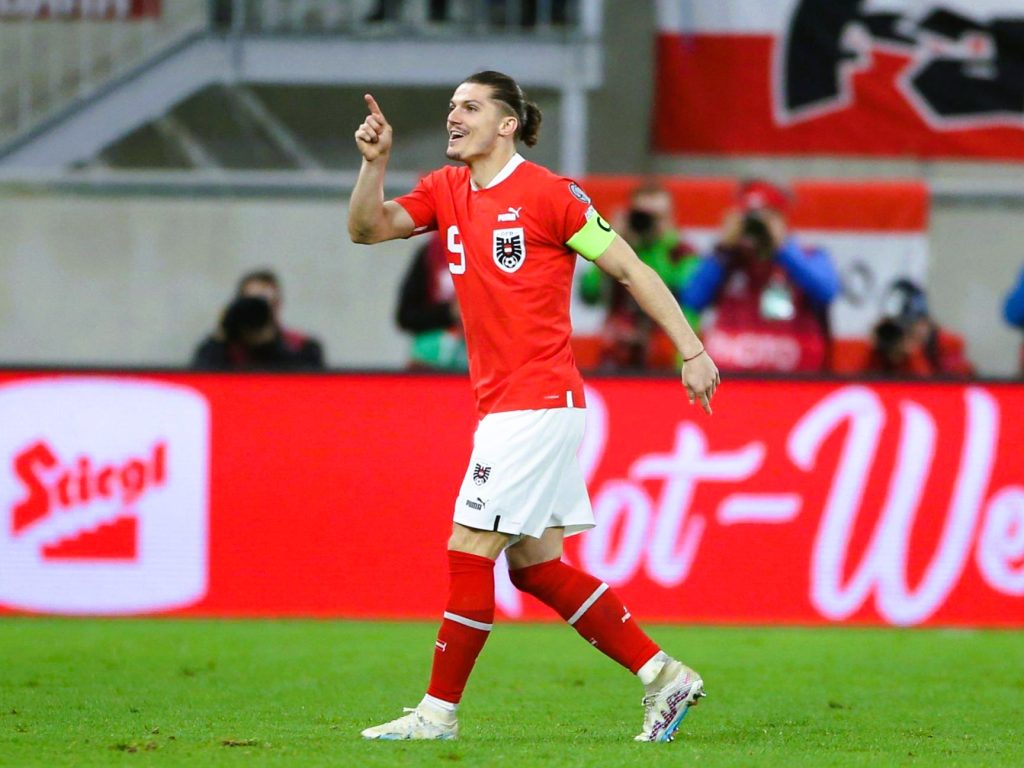
The Borussia Dortmund captain is the creative architect of the Austrian midfield. Known for his relentless work rate and “clutch” goal-scoring ability, Sabitzer served as the team’s primary playmaker throughout their journey to 2026.
His tactical intelligence to trigger counter-pressing and his deadly long-range shots make him one of the most feared midfielders, where he will be tasked with disrupting the opposition’s rhythm.
Konrad Laimer (Midfielder, Bayern Munich)
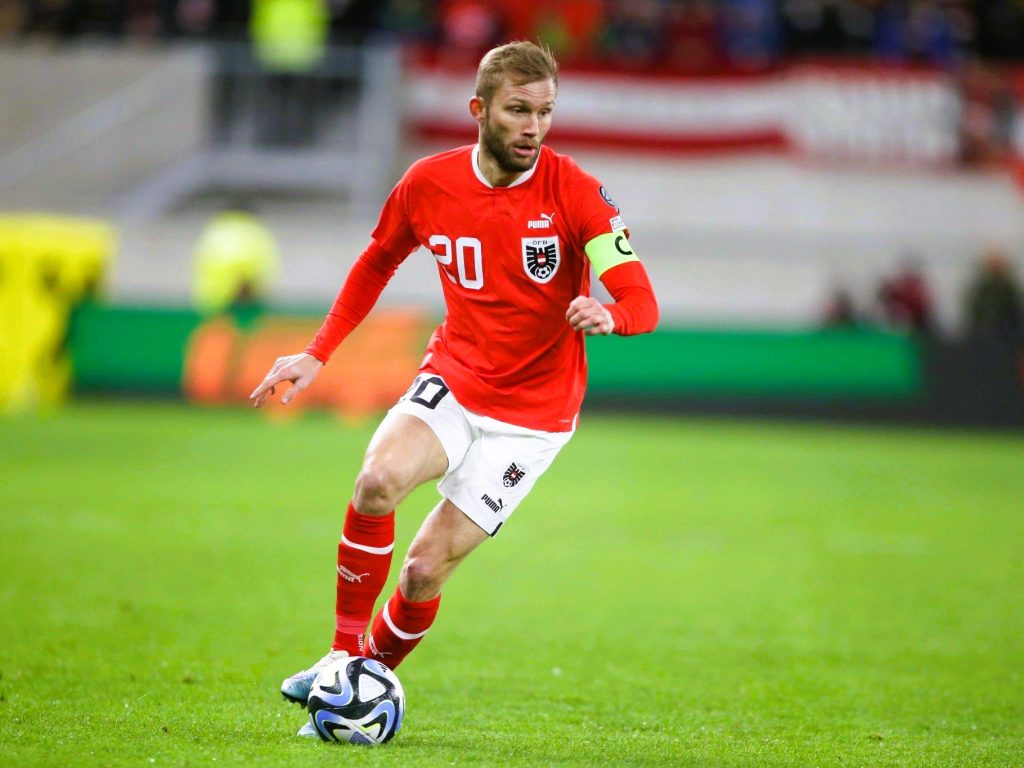
Bayern Munich is the embodiment of Ralf Rangnick’s “pressing machine” philosophy. Laimer’s relentless energy and ability to win the ball up the pitch will be crucial to the Austrian’s transitional game.
He leads the team in successful tackles and interceptions, acting as a defensive shield that gives Sabitzer and Baumgartner freedom to roam.
Provisional Squad
The final 26-man squad has not been announced, with the tournament starting in June. Based on recent call-ups, club form, and expert projections, here’s a predicted squad.
Predicted Squad
Goalkeepers
- Alexander Schlager (RB Salzburg)
- Nikolas Polster (Wolfsberger AC)
- Patrick Pentz (Brøndby)
- Nicolas Kristof (Elversberg)
Defenders
- Kevin Danso (Lens)
- Marco Friedl (Werder Bremen)
- Philipp Lienhart (SC Freiburg)
- Leopold Querfeld (Union Berlin)
- Philipp Mwene (Mainz 05)
- Stefan Posch (Bologna)
- Gernot Trauner (Feyenoord)
- David Schnegg (Sturm Graz)
Midfielders
- Konrad Laimer (Bayern Munich)
- Nicolas Seiwald (RB Leipzig)
- Marcel Sabitzer (Borussia Dortmund)
- Romano Schmid (Werder Bremen)
- Matthias Seidl (Rapid Vienna)
- Christoph Baumgartner (RB Leipzig)
- Florian Grillitsch (Hoffenheim)
- Dejan Ljubičić (Köln)
Forwards
- Marko Arnautović (Inter Milan)
- Michael Gregoritsch (SC Freiburg)
- Junior Adamu (SC Freiburg)
- Guido Burgstaller (Rapid Vienna)
- Sasa Kalajdzic (Eintracht Frankfurt)
- Andreas Weimann (West Bromwich Albion)
Preview
Team Strengths and Weaknesses
After a 28-year wait, Austria will be one of Europe’s most tactically distinctive “dark horses” at the 2026 FIFA World Cup.
Austria arrives in North America with a clear identity: “heavy metal” football that is designed to disrupt even the most technically gifted opponents.
Ralf Rangnick’s signature counter-pressing system is ingrained in the team, allowing them to outplay opponents by winning the ball up the pitch. This style saw them top their group at Euro 2024 ahead of France and the Netherlands.
David Alaba’s return from a long-term knee injury provides the team with world-class composure and a “quarterback” from the centre-back position.
The partnership of Marcel Sabitzer and Konrad Leimer provides a rare blend of creative playmaking and relentless defensive work rate that can dominate the pace of the game.
With Michael Gregoric’s height and Alaba’s delivery, Austria has become one of Europe’s most dangerous teams from dead-ball situations.
Austria’s attacking high line has made them vulnerable against teams with excellent, fast pace that can exploit space behind defenders on the counterattack.
Key talismans Marko Arnautovic (36) and David Alaba (33) are in the twilight of their careers, raising concerns about their physical durability in the month-long tournament in the North American summer.
The 2026 World Cup is the first for each member of this squad. Managing the unique psychological pressure of the global stage after a 28-year absence is an untested variable.
Expectations and Tournament Outlook
Austria’s primary objective at the 2026 FIFA World Cup will be to secure a top-two finish in their group, or at minimum advance as one of the best-performing third-placed teams under the expanded tournament format.
Beyond qualification, the broader ambition is clear. Austria enter the competition driven by a historic pursuit to reach the knockout stages for the first time in the 21st century, a milestone that would signal a genuine return to the elite level of international football.
Under Ralf Rangnick’s high-intensity system, Austria are expected to approach the tournament with fearless intent rather than cautious conservatism. Their aggressive pressing, vertical transitions, and collective discipline make them a difficult opponent for even the most established nations.
While a deep tournament run would require favourable matchups and physical consistency, Austria possesses the tactical structure and momentum to challenge for a Round of 16 berth. Progressing beyond the group stage would already represent a major success, but with confidence growing inside the squad, Austria will believe they are capable of going further if early results fall into place.