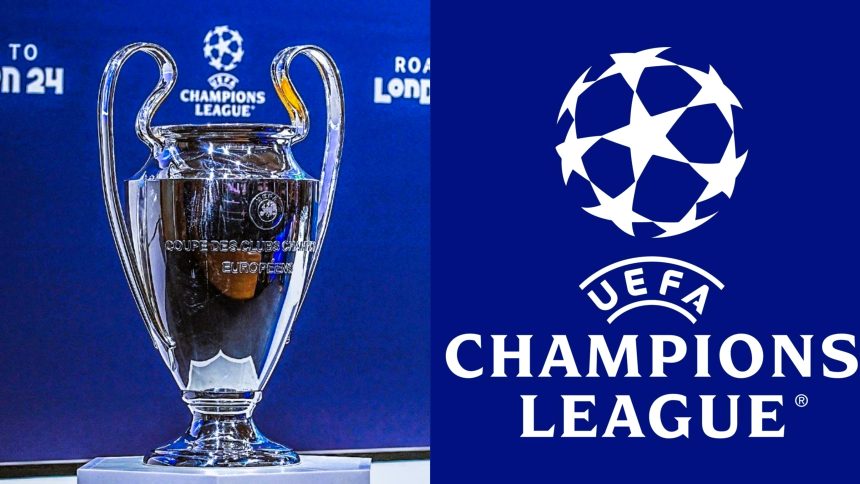

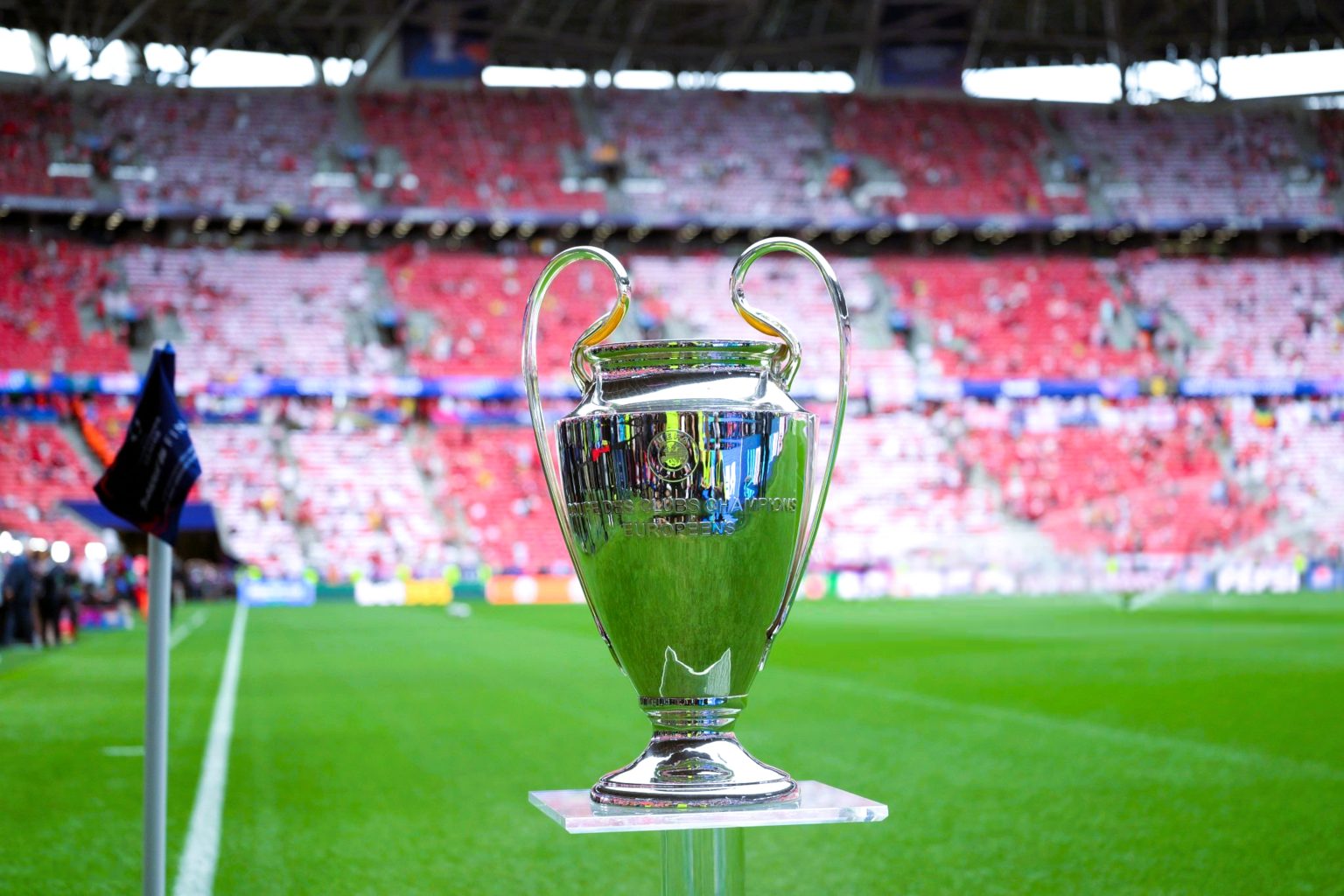

The UEFA Champions League stands as club football’s ultimate prize. The pinnacle of European competition that captivates millions worldwide.
Founded as the European Champion Clubs’ Cup in 1955 and rebranded as the UEFA Champions League in 1992, the competition has been contested across seven decades by the very finest teams the continent has produced.
The trophy has been lifted in 26 different cities, in front of crowds from 45,000 to over 100,000, in monsoons and blazing sunshine, in cathedrals of football and converted athletics stadiums.
Real Madrid stands alone at the summit. Fifteen European Cups. Six different decades. Five consecutive titles that no club has matched before or since.
But the Champions League winners list is far richer than one club’s story. AC Milan’s back-to-back triumphs in 1989 and 1990.
Ajax’s three-peat in the early 1970s. Liverpool’s five titles across four decades. Bayern Munich’s Bundesliga-to-Europe dominance.
And, most recently, Paris Saint-Germain’s arrival as back-to-back champions after their 2026 triumph in Budapest.
This is the complete guide: every champion from 1956 to 2026, every record broken, every unforgettable final, decade by decade.

Whether you’re researching Champions League history, settling a pub argument, or hunting the rarest statistical corners of European football, you’ve found the right page.
UEFA Champions League Winners List by Year (1956–2026)
European Cup Era (1956–1992)
The UEFA Champions League, originally known as the European Champions’ Cup or simply the European Cup, began in the 1955–56 season.
French sports journalist Gabriel Hanot proposed the competition after observing inconsistencies in comparing top European clubs.
UEFA created the tournament for domestic league champions, starting with 16 teams.
Real Madrid set an unmatched record by winning the first five editions consecutively from 1956 to 1960.
Eligibility was mainly limited to one club per country — the domestic league champion — with the defending champion usually granted automatic entry and some early exceptions allowed.
The competition followed a pure knockout format with home-and-away ties in all rounds except the single-match final at a neutral venue.
Ties were decided on aggregate score, with the away goals rule introduced in 1965, alongside extra time or replays when needed.
There were no group stages until a limited experiment in the 1991–92 season.
Real Madrid dominated the early years, while Dutch (Ajax), German (Bayern Munich), and English clubs (Liverpool, Nottingham Forest) shone in later decades.
Around 22–24 different clubs have won the trophy across its full history. The format changed significantly with the rebranding to the UEFA Champions League in 1992–93.
| Year | Winner | Runner-Up | Score | Venue |
| 1956 | Real Madrid | Stade de Reims | 4–3 | Paris, France |
| 1957 | Real Madrid | Fiorentina | 2–0 | Madrid, Spain |
| 1958 | Real Madrid | AC Milan | 3–2 (AET) | Brussels, Belgium |
| 1959 | Real Madrid | Stade de Reims | 2–0 | Stuttgart, Germany |
| 1960 | Real Madrid | Eintracht Frankfurt | 7–3 | Glasgow, Scotland |
| 1961 | Benfica | Barcelona | 3–2 | Bern, Switzerland |
| 1962 | Benfica | Real Madrid | 5–3 | Amsterdam, Netherlands |
| 1963 | AC Milan | Benfica | 2–1 | Wembley, England |
| 1964 | Internazionale | Real Madrid | 3–1 | Vienna, Austria |
| 1965 | Internazionale | Benfica | 1–0 | Milan, Italy |
| 1966 | Real Madrid | Partizan | 2–1 | Brussels, Belgium |
| 1967 | Celtic | Internazionale | 2–1 | Lisbon, Portugal |
| 1968 | Manchester United | Benfica | 4–1 (AET) | Wembley, England |
| 1969 | AC Milan | Ajax | 4–1 | Madrid, Spain |
| 1970 | Feyenoord | Celtic | 2–1 (AET) | Milan, Italy |
| 1971 | Ajax | Panathinaikos | 2–0 | Wembley, England |
| 1972 | Ajax | Internazionale | 2–0 | Rotterdam, Netherlands |
| 1973 | Ajax | Juventus | 1–0 | Belgrade, Yugoslavia |
| 1974 | Bayern Munich | Atlético Madrid | 4–0 (replay) | Brussels, Belgium |
| 1975 | Bayern Munich | Leeds United | 2–0 | Paris, France |
| 1976 | Bayern Munich | Saint-Étienne | 1–0 | Glasgow, Scotland |
| 1977 | Liverpool | Borussia Mönchengladbach | 3–1 | Rome, Italy |
| 1978 | Liverpool | Club Brugge | 1–0 | Wembley, England |
| 1979 | Nottingham Forest | Malmö FF | 1–0 | Munich, Germany |
| 1980 | Nottingham Forest | SV Hamburg | 1–0 | Madrid, Spain |
| 1981 | Liverpool | Real Madrid | 1–0 | Paris, France |
| 1982 | Aston Villa | Bayern Munich | 1–0 | Rotterdam, Netherlands |
| 1983 | Hamburg | Juventus | 1–0 | Athens, Greece |
| 1984 | Liverpool | AS Roma | 1–1 (4–2 pens) | Rome, Italy |
| 1985 | Juventus | Liverpool | 1–0 | Brussels, Belgium |
| 1986 | Steaua București | Barcelona | 0–0 (2–0 pens) | Seville, Spain |
| 1987 | Porto | Bayern Munich | 2–1 | Vienna, Austria |
| 1988 | PSV Eindhoven | Benfica | 0–0 (6–5 pens) | Stuttgart, Germany |
| 1989 | AC Milan | Steaua București | 4–0 | Barcelona, Spain |
| 1990 | AC Milan | Benfica | 1–0 | Vienna, Austria |
| 1991 | Red Star Belgrade | Marseille | 0–0 (5–3 pens) | Bari, Italy |
| 1992 | Barcelona | Sampdoria | 1–0 (AET) | Wembley, England |
UEFA Champions League Era (1993–2026)
The rebranded UEFA Champions League began in the 1992–93 season, representing a major evolution from the European Cup.
The key change was the introduction of a group stage, which allowed more teams and matches while permitting multiple clubs from stronger leagues to participate, starting with the top two and later expanding to four or more.
This transformation increased financial rewards, global popularity, and tactical variety.
The competition steadily grew from eight groups to the modern 36-team single-league phase launched in 2024/25.
Spanish clubs, led by Real Madrid, dominated much of the era, though English, Italian, and German teams also achieved significant success.
Real Madrid extended their record to 15 titles. (124 words)Key features of this era include automatic qualification for defending champions and multiple entries per country.
The format evolved from a traditional group stage and knockouts, with a brief second group phase (1999–2003), before moving to a round of 16 and the new league phase.
Real Madrid remains the most successful club with 15 titles overall. Paris Saint-Germain became the latest back-to-back winners in 2025 and 2026.
The era has produced many unforgettable moments, including dramatic comebacks such as Liverpool’s 2005 Istanbul miracle, several penalty shootouts, and massive commercial expansion. (126 words)
| Year | Champion | Runner-Up | Final Score | Host Stadium |
| 1993 | Marseille | AC Milan | 1–0 | Munich, Germany |
| 1994 | AC Milan | Barcelona | 4–0 | Athens, Greece |
| 1995 | Ajax | AC Milan | 1–0 | Vienna, Austria |
| 1996 | Juventus | Ajax | 1–1 (4–2 pens) | Rome, Italy |
| 1997 | Borussia Dortmund | Juventus | 3–1 | Munich, Germany |
| 1998 | Real Madrid | Juventus | 1–0 | Amsterdam, Netherlands |
| 1999 | Manchester United | Bayern Munich | 2–1 | Barcelona, Spain |
| 2000 | Real Madrid | Valencia | 3–0 | Paris, France |
| 2001 | Bayern Munich | Valencia | 1–1 (5–4 pens) | Milan, Italy |
| 2002 | Real Madrid | Bayer Leverkusen | 2–1 | Glasgow, Scotland |
| 2003 | AC Milan | Juventus | 0–0 (3–2 pens) | Manchester, England |
| 2004 | Porto | Monaco | 3–0 | Gelsenkirchen, Germany |
| 2005 | Liverpool | AC Milan | 3–3 (3–2 pens) | Istanbul, Turkey |
| 2006 | Barcelona | Arsenal | 2–1 | Paris, France |
| 2007 | AC Milan | Liverpool | 2–1 | Athens, Greece |
| 2008 | Manchester United | Chelsea | 1–1 (6–5 pens) | Moscow, Russia |
| 2009 | Barcelona | Manchester United | 2–0 | Rome, Italy |
| 2010 | Internazionale | Bayern Munich | 2–0 | Madrid, Spain |
| 2011 | Barcelona | Manchester United | 3–1 | Wembley, England |
| 2012 | Chelsea | Bayern Munich | 1–1 (4–3 pens) | Munich, Germany |
| 2013 | Bayern Munich | Borussia Dortmund | 2–1 | Wembley, England |
| 2014 | Real Madrid | Atlético Madrid | 4–1 (AET) | Lisbon, Portugal |
| 2015 | Barcelona | Juventus | 3–1 | Berlin, Germany |
| 2016 | Real Madrid | Atlético Madrid | 1–1 (5–3 pens) | Milan, Italy |
| 2017 | Real Madrid | Juventus | 4–1 | Cardiff, Wales |
| 2018 | Real Madrid | Liverpool | 3–1 | Kyiv, Ukraine |
| 2019 | Liverpool | Tottenham Hotspur | 2–0 | Madrid, Spain |
| 2020 | Bayern Munich | PSG | 1–0 | Lisbon, Portugal |
| 2021 | Chelsea | Manchester City | 1–0 | Porto, Portugal |
| 2022 | Real Madrid | Liverpool | 1–0 | Paris, France |
| 2023 | Manchester City | Internazionale | 1–0 | Istanbul, Turkey |
| 2024 | Real Madrid | Borussia Dortmund | 2–0 | Wembley, England |
| 2025 | Paris Saint-Germain | Internazionale | 1–0 | Munich, Germany |
| 2026 | Paris Saint-Germain | Arsenal | 1–1 (4–3 pens) | Budapest, Hungary |
Clubs With the Most UEFA Champions League Titles
Here are the top clubs in the competition’s history: (European Cup + UEFA Champions League, 1956–2026)
| Rank | Club | Titles | Runners-up | Last Title |
|---|---|---|---|---|
| 1 | Real Madrid | 15 | 3 | 2023–24 |
| 2 | AC Milan | 7 | 4 | 2006–07 |
| 3= | Bayern Munich | 6 | 5 | 2019–20 |
| 3= | Liverpool | 6 | 4 | 2018–19 |
| 5 | Barcelona | 5 | 3 | 2014–15 |
| 6 | Ajax | 4 | 2 | 1994–95 |
| 7= | Inter Milan | 3 | 3 | 2009–10 |
| 7= | Manchester United | 3 | 2 | 2007–08 |
| 9= | Chelsea | 2 | 1 | 2020–21 |
| 9= | Juventus | 2 | 7 | 1995–96 |
| 9= | Benfica | 2 | 5 | 1961–62 |
| 9= | Nottingham Forest | 2 | 0 | 1979–80 |
| 9= | Porto | 2 | 0 | 2003–04 |
| 9= | Paris Saint-Germain | 2 | 0 | 2025–26 |
Key Highlights
- Real Madrid are the undisputed kings of Europe with a record 15 titles, including the first five consecutive wins (1956–1960) and multiple three-peats.
- AC Milan sit comfortably in second with 7 titles.
- Bayern Munich and Liverpool are tied on 6.
- Paris Saint-Germain joined the multi-title clubs with back-to-back victories in 2024–25 and 2025–26, becoming only the second club to achieve consecutive wins in the Champions League era.
A total of 23 clubs have won the competition at least once in its 71-year history.
Real Madrid’s Dominance in Champions League History
Real Madrid’s European Legacy
Real Madrid are the undisputed kings of European football, with a record 15 UEFA Champions League/European Cup titles.
They set the standard by winning the first five editions in a row (1956–1960), a feat no club has been able to match.
In the Champions League era, they have added nine more titles, including three consecutive victories (2016–2018) and six trophies between 2014 and 2024.
Los Blancos have reached more finals and won more matches than any other club.
The Champions League winners list is also a geopolitical map of football power — one that has shifted considerably across seven decades.
Spain and England dominate the modern era; in the 1970s, it was German, Dutch, and English clubs who ruled. In the early years, it was Spanish and Portuguese dominance.
| Country | Titles | Winning Clubs |
| Spain | 20 | Real Madrid (15), Barcelona (5) |
| England | 15 | Liverpool (6), Manchester United (3), Nottingham Forest (2), Chelsea (2), Manchester City (1), Aston Villa (1) |
| Italy | 12 | AC Milan (7), Internazionale (3), Juventus (2) |
| Germany | 8 | Bayern Munich (6), Borussia Dortmund (1), Hamburg (1) |
| Netherlands | 6 | Ajax (4), Feyenoord (1), PSV Eindhoven (1) |
| France | 3 | Paris Saint-Germain (2), Marseille (1) |
| Portugal | 4 | Benfica (2), Porto (2) |
| Scotland | 1 | Celtic (1) |
| Romania | 1 | Steaua București (1) |
| Yugoslavia/Serbia | 1 | Red Star Belgrade (1) |
Spain’s 20 titles — all shared between Real Madrid and Barcelona — reflect a domestic league structure that has produced the two most successful clubs in Champions League history.
England’s 15, spread across six different clubs, speak to the breadth and depth of English football’s European tradition.
Italy’s 12 came in more concentrated bursts: the Grande Milan of the early 1990s, and Internazionale’s two-title haul in the 1960s.
The Netherlands’ six titles are all the more remarkable for coming from just three clubs. Ajax’s four titles include their three-peat in the early 1970s.
Champions League Winners by Country
Here are the top countries in the competition’s history: (European Cup + UEFA Champions League, 1956–2026)
| Rank | Country | Titles | Clubs with Titles |
|---|---|---|---|
| 1 | Spain | 20 | Real Madrid (15), Barcelona (5) |
| 2 | England | 15 | Liverpool (6), Manchester United (3), Chelsea (2), Nottingham Forest (2), Manchester City (1), Aston Villa (1) |
| 3 | Italy | 12 | AC Milan (7), Inter Milan (3), Juventus (2) |
| 4 | Germany | 8 | Bayern Munich (6), Hamburg (1), Borussia Dortmund (1) |
| 5 | Netherlands | 6 | Ajax (4), PSV Eindhoven (1), Feyenoord (1) |
| 6 | Portugal | 4 | Porto (2), Benfica (2) |
| 7 | France | 3 | Paris Saint-Germain (2), Marseille (1) |
| 8= | Romania | 1 | Steaua București |
| 8= | Scotland | 1 | Celtic |
| 8= | Serbia | 1 | Red Star Belgrade (as Yugoslavia) |
Key Highlights:
- Spain leads comfortably, thanks mainly to Real Madrid’s dominance.
- England has the most different winning clubs (6).
- France reached 3 titles after Paris Saint-Germain’s back-to-back wins in 2024–25 and 2025–26.
A total of 23 different clubs from 10 countries have won the competition in its 71-year history.
European Cup vs UEFA Champions League
The European Cup (1955–1992) and the UEFA Champions League (1992–present) represent two distinct eras of Europe’s premier club competition.
While the core prize remains the same, the tournament underwent a dramatic transformation in 1992, shifting from an elite knockout competition to a large-scale, commercially driven event.
Key Differences
| Aspect | European Cup (1955–1992) | UEFA Champions League (1992–present) |
|---|---|---|
| Format | Pure knockout (home & away ties) | Group stage + knockout (later league phase) |
| Eligibility | 1 club per country (mostly league champions) | Multiple clubs per country (up to 4+ from top leagues) |
| Number of Teams | 16–30+ teams | 32 (1999–2024) → 36 (2024/25 onwards) |
| Group Stage | None (except limited trial in 1991/92) | Introduced in 1992/93, expanded significantly |
| Financial Impact | Modest | Massive revenue, huge prize money |
| Defending Champion | Automatic entry | Automatic entry |
UEFA Champions League Records and Statistics
Key Records
| Record | Detail | Year(s) |
| Most titles | Real Madrid | 15 |
| Most consecutive titles | Real Madrid | 5 (1956–1960) |
| Most final appearances | Real Madrid | 18 |
| Top scorer in competition history | Cristiano Ronaldo | 140 goals |
| Most appearances in competition | Cristiano Ronaldo / Iker Casillas | 183 |
| Biggest final margin | Real Madrid 7–3 Eintracht Frankfurt | 1960 |
| Most goals in one final | 10 goals — Real Madrid 7–3 Eintracht Frankfurt | 1960 |
| Managers with most titles | Zinedine Zidane (3), Bob Paisley (3) | — |
| Longest wait between titles | Internazionale — 45 years | 1965 to 2010 |
| First UCL-era back-to-back winner | Real Madrid (2016–17) | Then PSG (2025–26) |
Most Successful Managers
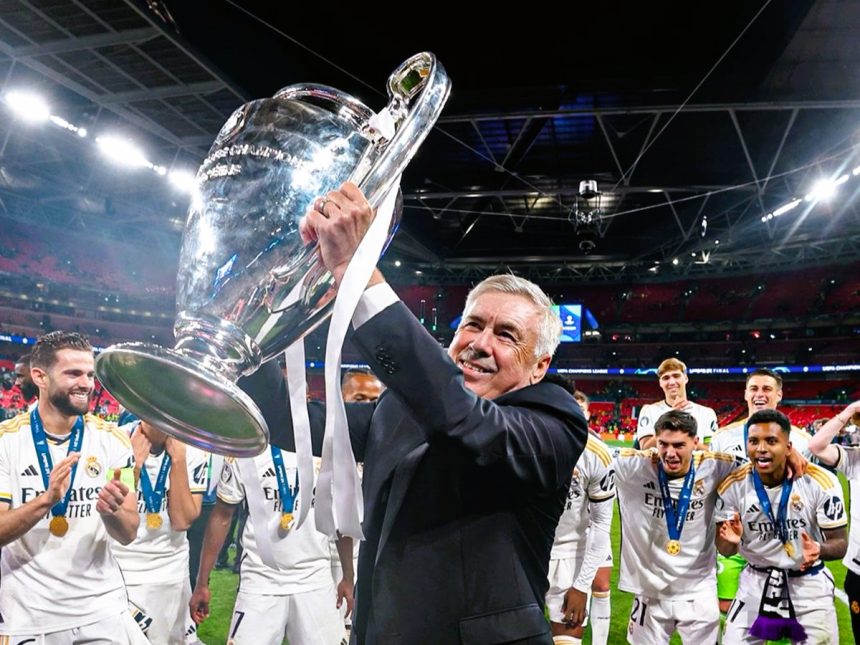
Carlo Ancelotti (Real Madrid, AC Milan) is the only manager to have won the Champions League four times in 2003, 2007, 2014, and 2022.
Bob Paisley won three consecutive European Cups with Liverpool between 1977 and 1981, and Zinedine Zidane won three in a row at Real Madrid between 2016 and 2018.
Luis Enrique joined that elite group of three-time winners when PSG retained the trophy in 2026.
Most Final Appearances Without Winning
Juventus have appeared in seven finals and won just two in 1985 and 1996.
Their five final defeats, including losses to Real Madrid in 1998 and 2017, make them the competition’s most decorated runners-up.
Atlético Madrid have appeared in three finals and won none, losing twice to city rivals Real Madrid.
Frequently Asked Questions
Who has won the most UEFA Champions League titles?
Real Madrid have won the UEFA Champions League (and its predecessor, the European Cup) 15 times more than any other club in the competition’s history.
Which club won the first European Cup?
Real Madrid won the first European Cup in 1956, defeating Stade de Reims 4–3 in the final held in Paris. They went on to win the next four consecutive editions as well.
How many clubs have won the Champions League?
As of 2026, 24 different clubs have won the European Cup or UEFA Champions League.
Which country has won the most Champions League titles?
Spain leads all nations with 20 titles, 15 for Real Madrid and 5 for Barcelona. England is second with 15 titles across six different clubs: Liverpool (6), Manchester United (3), Nottingham Forest (2), Chelsea (2), Aston Villa (1), and Manchester City (1).
When did the European Cup become the Champions League?
The European Champions’ Cup was renamed the UEFA Champions League ahead of the 1992–93 season.
Which clubs have won consecutive Champions League titles?
Only Real Madrid and Paris Saint-Germain have won back-to-back UEFA Champions League titles in the modern era. Real Madrid won three in a row from 2016 to 2018 under Zinedine Zidane.
Which player has won the most Champions League trophies?
Francisco “Paco” Gento, Dani Carvajal, Luka Modrić, Toni Kroos, and Nacho (all with 6 titles) jointly hold the record for the most UEFA Champions League/European Cup trophies won by a player.
Which manager has won the most Champions League titles?
Carlo Ancelotti holds the record with 5 UEFA Champions League / European Cup titles as a manager — the most in the competition’s history.
Conclusion
The UEFA Champions League winners list from 1956 to 2026 chronicles football’s greatest stories of dominance, redemption, and glory under the lights.
Real Madrid’s unparalleled record, the European Cup’s historic roots, and modern records continue to inspire.
Lifting the trophy remains the ultimate achievement in club football: a symbol of excellence that unites history, passion, and the beautiful game.
This article is the ultimate resource—regularly updated for accuracy and depth.