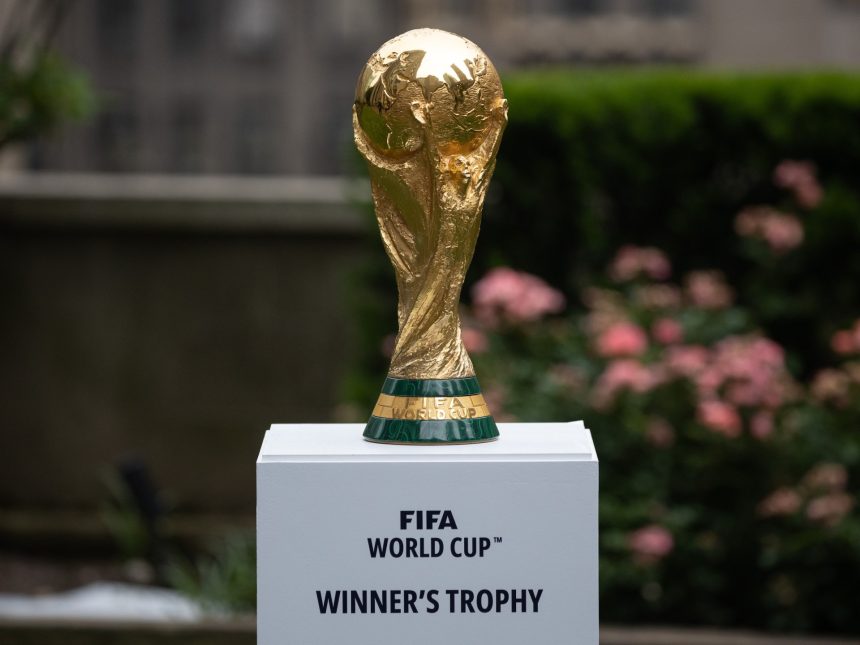







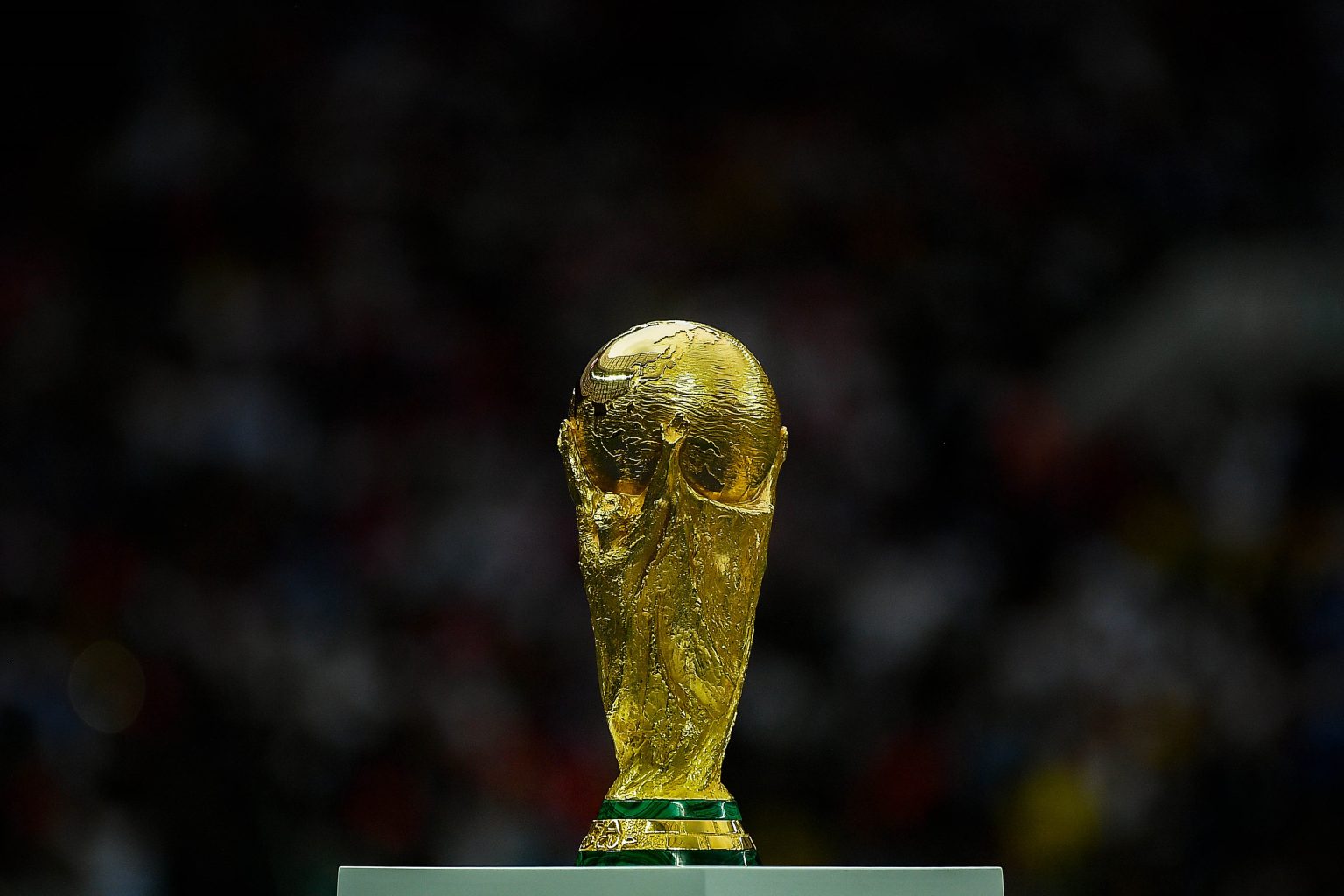

For over nine decades, the FIFA World Cup has stood as the pinnacle of global sport — a once-every-four-years spectacle that unites billions.
From Uruguay’s pioneering triumph in 1930 to Argentina’s breathtaking penalty shootout victory in Qatar, the tournament has crowned champions who transcend the sport itself. Twenty-two editions. Eight nations. One trophy.
The FIFA World Cup has been held 22 times since 1930, with 8 different nations lifting the trophy. Brazil leads all countries with 5 titles (1958, 1962, 1970, 1994, 2002).
Argentina won the most recent edition in 2022, defeating France on penalties in Qatar. In total, South American nations have won 10 World Cups and European nations 12.
Complete List of FIFA World Cup Winners (1930–2022)
Every FIFA World Cup final result in history — winner, runner-up, score, and host nation — in a single reference table.
FIFA World Cup Winners by Year
| Year | Host Nation | Winner | Runner-Up | Score / Result |
| 1930 | Uruguay | Uruguay | Argentina | 4–2 |
| 1934 | Italy | Italy | Czechoslovakia | 2–1 (AET) |
| 1938 | France | Italy | Hungary | 4–2 |
| 1950 | Brazil | Uruguay | Brazil | 2–1 (Final RR) |
| 1954 | Switzerland | West Germany | Hungary | 3–2 |
| 1958 | Sweden | Brazil | Sweden | 5–2 |
| 1962 | Chile | Brazil | Czechoslovakia | 3–1 |
| 1966 | England | England | West Germany | 4–2 (AET) |
| 1970 | Mexico | Brazil | Italy | 4–1 |
| 1974 | West Germany | West Germany | Netherlands | 2–1 |
| 1978 | Argentina | Argentina | Netherlands | 3–1 (AET) |
| 1982 | Spain | Italy | West Germany | 3–1 |
| 1986 | Mexico | Argentina | West Germany | 3–2 |
| 1990 | Italy | West Germany | Argentina | 1–0 |
| 1994 | USA | Brazil | Italy | 0–0 (3–2 pens) |
| 1998 | France | France | Brazil | 3–0 |
| 2002 | South Korea / Japan | Brazil | Germany | 2–0 |
| 2006 | Germany | Italy | France | 1–1 (5–3 pens) |
| 2010 | South Africa | Spain | Netherlands | 1–0 (AET) |
| 2014 | Brazil | Germany | Argentina | 1–0 (AET) |
| 2018 | Russia | France | Croatia | 4–2 |
| 2022 | Qatar | Argentina | France | 3–3 (4–2 pens) |
| 2026 | Canada, Mexico, USA | TBD | TBD | TBD |
Most Successful FIFA World Cup Teams
Only eight nations in history have won the FIFA World Cup. Here is every World Cup champion ranked by total titles.
Countries With the Most World Cup Titles
- Brazil – 5 titles (1958, 1962, 1970, 1994, 2002)
- Germany – 4 titles (1954, 1974, 1990, 2014)
- Italy – 4 titles (1934, 1938, 1982, 2006)
- Argentina – 3 titles (1978, 1986, 2022)
- France – 2 titles (1998, 2018)
- Uruguay – 2 titles (1930, 1950)
- England – 1 title (1966)
- Spain – 1 title (2010)
Brazil’s dominance is unmatched — their five World Cup titles span six decades, demonstrating extraordinary consistency across multiple generations of talent.
Germany and Italy share second place with four titles each, while Argentina’s 2022 triumph cemented their status as the sport’s most decorated active dynasty alongside Brazil.



Notably, Germany have appeared in 8 finals — more than any other nation — winning 4 and losing 4.
FIFA World Cup Winners by Continent
Europe vs. South America Dominance
The World Cup has always been a two-continent affair at its summit. No nation from Africa, Asia, North America, or Oceania has ever reached a World Cup final — though that could change at the expanded 2026 tournament.
- Europe: 12 titles — Germany (4), Italy (4), France (2), England (1), Spain (1)
- South America: 10 titles — Brazil (5), Argentina (3), Uruguay (2)
Europe’s edge of 12–10 is deceptively narrow given the sheer number of European nations competing.
South America — with just three winning countries — produces more champions per competing confederation than any other.
The most striking geographical pattern in World Cup history: no tournament held in Europe has ever been won by a South American nation, and a European team has not won the World Cup in the Americas until Spain’s 2010 triumph in South Africa.
The first time a European side won on non-European soil.
FIFA World Cup Winners Timeline (Key Eras)
The history of World Cup champions falls into three defining periods, each shaped by tactical evolution, geopolitical context, and emerging football powers.
Early Dominance (1930–1950)
The World Cup was born in South America. Uruguay hosted and won the inaugural 1930 tournament, establishing football’s first dynasty.
Italy, under the authoritarian shadow of Mussolini, claimed back-to-back titles in 1934 and 1938 — the only team to ever defend the World Cup title.
After a 12-year hiatus caused by World War II, the tournament resumed in Brazil in 1950, where Uruguay produced the famous “Maracanazo” — shocking the host nation 2–1 in front of an estimated 200,000 devastated Brazilians at the Maracanã.
European Rise (1954–1990)
West Germany’s shock 3–2 defeat of the “Magical Magyars” in 1954 signalled a shift in power.
Brazil then defined the era — their 1958 squad introduced the world to a teenage Pelé, and their 1970 side in Mexico is still widely regarded as the greatest football team ever assembled.
The 1970s and 80s brought the total football of the Netherlands (runners-up twice, never winners), Argentina’s Maradona-inspired 1986 masterpiece in Mexico, and West Germany’s remarkable consistency — appearing in six finals between 1966 and 1990 and winning three of them.
Modern Era (1994–2022)
The modern era has delivered genuine surprises alongside expected giants. Brazil ended a 24-year drought in 1994 via penalty shootout.
France’s multicultural 1998 squad won emphatically on home soil. Spain’s 2010 triumph in South Africa shattered the European continent barrier for the first time.
Germany’s 7–1 semi-final dismantling of host Brazil in 2014 remains the most shocking result in World Cup history.
Qatar 2022, Argentina and France produced arguably the greatest final ever played — ending 3–3 after extra time before Argentina won on penalties to claim a third world title.
Countries That Won the World Cup on Home Soil
Home advantage has proven decisive six times in World Cup history — though it has become increasingly rare in the modern era, with no host nation winning since France in 1998.
- Uruguay (1930) — Won the inaugural tournament in Montevideo
- Italy (1934) — Defeated Czechoslovakia 2–1 after extra time in Rome
- England (1966) — Beat West Germany 4–2 (AET) at Wembley
- West Germany (1974) — Defeated the Netherlands 2–1 in Munich
- Argentina (1978) — Won their first title, beating the Netherlands 3–1 (AET) in Buenos Aires
- France (1998) — Zinedine Zidane’s brace ended Brazil’s hopes 3–0 in Paris
South Africa (2010), Brazil (2014), and Russia (2018) all failed to advance past the knockout stages as hosts, suggesting the weight of national expectation may now work against home nations rather than for them.
Interesting Facts About FIFA World Cup Winners
Most Titles Won by a Nation
Brazil’s five World Cup victories are unmatched in football history. The Seleção have also appeared in the most finals (seven) and are the only team to have competed in every single World Cup since the tournament began.
Their 1970 squad — featuring Pelé, Jairzinho, Tostão, and Rivelino — is regularly voted the greatest football team ever assembled and became the first nation to permanently claim the Jules Rimet Trophy by winning it three times.
Biggest Final Victory
The most emphatic World Cup final in history was Brazil’s 4–1 victory over Italy at the 1970 Azteca Stadium in Mexico City.
Brazil won every single match of that tournament, outscoring opponents 19–7 across six games.
By stark contrast, the 2022 final in Qatar — ending 3–3 after extra time before Argentina won on penalties — is widely considered the most dramatic final ever played.
First-Time Winners
The most recent first-time champion was Spain in 2010. Before them, France won their maiden title in 1998.
England and Argentina became first-time winners in 1966 and 1978 respectively.
No new nation has broken into the winner’s circle since Spain’s triumph in Johannesburg, leaving the list of champions unchanged for 15 years heading into the 2026 tournament.
Back-to-Back Champions
Only one nation has ever successfully defended a World Cup title: Italy, champions in both 1934 and 1938.
No team in the post-war era has come close to repeating. In fact, of the last 10 World Cup champions, not one has advanced past the round of 16 in their immediate title defense — a statistical pattern that has become one of football’s most reliable truisms.
Latest FIFA World Cup Winner (2022) — Argentina
Argentina claimed their third World Cup title at the Lusail Stadium in Qatar on 18 December 2022, defeating France in a final widely regarded as the greatest ever played.
The match ended 3–3 after extra time — Argentina led 2–0 through goals from Lionel Messi and Ángel Di María, before Kylian Mbappé produced a stunning hat-trick to level the scores.
Argentina won the subsequent penalty shootout 4–2, with goalkeeper Emiliano Martínez the decisive hero.
For Lionel Messi, the victory completed the only meaningful gap in an extraordinary career.
Already a record eight-time Ballon d’Or winner and widely regarded as the greatest footballer of all time, Messi scored twice in the final, converted his penalty in the shootout, and was awarded the Golden Ball as the tournament’s best player — joining Pelé and Diego Maradona as a World Cup champion.
Argentina’s third title, won 36 years after Maradona’s iconic 1986 victory, belongs to an era defined by Messi.
Who Could Win the Next FIFA World Cup? (2026)
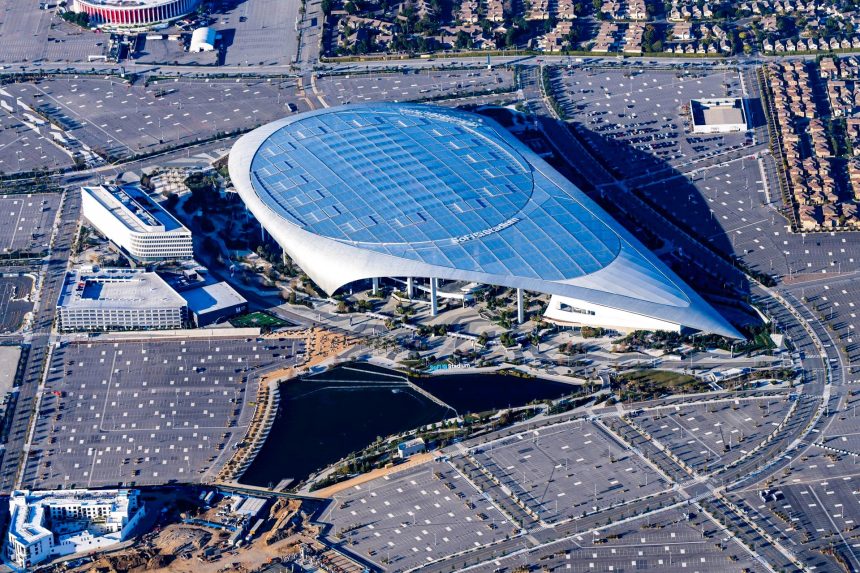
The 2026 FIFA World Cup will be co-hosted by the United States, Canada, and Mexico — the first edition to feature 48 teams, expanded from 32.
The larger field increases the path to the latter stages and creates genuine opportunities for nations outside the traditional powers.
Argentina begin as reigning champions and one of the favourites. France retain arguably the most talented squad in world football with Kylian Mbappé in his prime.
England, consistently developing under a settled structure, are considered serious contenders.
Brazil — desperate to end a 24-year title drought — and Germany, rebuilt under a new generation, complete the top tier. Spain, Portugal, and the Netherlands are dark horses in a wide-open field.
One thing history all but guarantees: the winner will come from Europe or South America.
Twenty-two tournaments. The same two confederations. That pattern may be football’s most unbreakable law — though 48 teams and three North American hosts offer the best chance yet to rewrite it.
FAQ About FIFA World Cup Winners
Who has won the most FIFA World Cups?
Brazil has won the most FIFA World Cups with 5 titles, claimed in 1958, 1962, 1970, 1994, and 2002. Germany and Italy are joint second with 4 titles each.
Which country won the first World Cup?
Uruguay won the inaugural FIFA World Cup in 1930, defeating Argentina 4–2 in the final in Montevideo. Uruguay hosted the tournament and remain the only nation to win the World Cup on their first attempt as a host.
Who won the latest World Cup?
Argentina won the most recent FIFA World Cup in 2022, held in Qatar. They defeated France 4–2 on penalties after a 3–3 draw in extra time — widely regarded as the greatest World Cup final in history.
How many countries have won the World Cup?
Only 8 countries have ever won the FIFA World Cup: Brazil (5), Germany (4), Italy (4), Argentina (3), France (2), Uruguay (2), England (1), and Spain (1). Five are European nations; three are South American. No nation from Africa, Asia, North America, or Oceania has ever won the tournament.
Conclusion
From Uruguay’s pioneering triumph in 1930 to Argentina’s breathtaking victory in Qatar 92 years later, the FIFA World Cup winners list tells the story of football itself — its power, its drama, and its unique ability to unite and devastate in equal measure.
Only 8 nations have conquered the world’s greatest stage across 22 editions, yet every tournament rewrites history.
The complete list of FIFA World Cup champions is defined not just by the trophies they lift, but by the matches, the moments, and the memories that endure forever.
With the 2026 World Cup bringing 48 nations to North America, the next chapter is ready to be written.
Will a familiar giant reclaim the throne — or will a new nation finally join football’s most exclusive list of World Cup champions?