






There is no individual honour in club football that cuts as cleanly as the European Golden Boot.
In the glittering pantheon of individual football honours, few carry the weight and romance of the European Golden Boot.
Also known as the European Golden Boot, the award has crowned Europe’s deadliest marksmen for nearly six decades.
From Eusebio’s thunderous strikes in the late 1960s to Harry Kane’s clinical masterclass in 2025-26, the Golden Boot tells the story of the evolution of footballing eras, the shifting power of leagues and generations of goal-scoring talent.
Whether you’re here for the full list of winners, Messi’s dominance, or the intricacies of the points system, this definitive guide covers every winner and the stories behind them.
What Is the European Golden Boot?
The European Golden Boot, formally known as the European Golden Shoe, or Soulier d’Or in its original French.
The European Golden Boot recognises the leading goalscorer across Europe’s top-division leagues each season.
It was created by the French sports newspaper L’Équipe in 1968 as the Soulier d’Or; it has been managed by European Sports Media (ESM) since the mid-1990s.


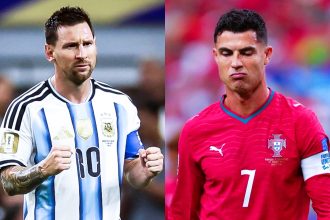
The award ran continuously from 1968 through to 1991, when a dispute with the Cyprus Football Association over eligibility caused it to be suspended.
Between 1991-92 and 1995-96, no official award was presented, though the top scorers for those seasons have since been informally recognised.
Notably, Rangers striker Ally McCoist finished as Europe’s highest scorer in both 1991-92 and 1992-93, but neither season carries official status.
The prize was revived in 1996-97 by European Sports Media (ESM), a consortium of European sports journalists, who introduced the weighted points system still in use today. ESM has administered the award ever since.
It is important not to confuse the European Golden Boot with the FIFA World Cup Golden Boot, which is an entirely separate award presented to the top scorer at each World Cup tournament.
The European version is a season-long club award; the World Cup version is a tournament prize.
How Is the European Golden Boot Calculated?
Until 1991, a goal was simply a goal. The player who scored the most across any European league won the award.
This produced some eyebrow-raising results, as players from tiny leagues in Cyprus, Romania, and Georgia racking up 40-plus goals against minimal opposition.
Since 1996-97, European Sports Media has used a weighted coefficient system that accounts for league strength:
| League Tier | UEFA Ranking | Points Per Goal |
| Top Five Leagues | 1–5 | ×2 |
| Mid-Tier Leagues | 6–22 | ×1.5 |
| Lower Leagues | 23+ | ×1 |
The top five leagues are determined annually by UEFA coefficient rankings based on each league’s European performance over the previous five seasons.
In 2025, those five leagues are Germany, Spain, England, Italy, and France.
So a player scoring 30 goals in La Liga accumulates 60 points. A player in the Dutch Eredivisie scoring 40 goals accumulates only 60 points — the same total.
And a player in, say, the Latvian Virsliga scoring 50 goals would accumulate just 50 points and finish behind both.
In practice, this means that since 2002, no player from outside the top five leagues has won the European Golden Shoe. The award, in its modern form, effectively belongs to the elite leagues.
Tiebreaking rules: If two players finish level on points, the player with the lower number of minutes played is ranked higher.
If still tied, assists and then penalty kicks come into consideration. In rare cases, the award can be shared.
Complete List of European Golden Boot Winners (1968–2026)
Early Era: 1968–1991 (L’Équipe Award)
| Season | Winner | Club | Country | Goals |
| 1967–68 | Eusébio | Benfica | Portugal | 43 |
| 1968–69 | Petar Zhekov | CSKA Sofia | Bulgaria | 36 |
| 1969–70 | Gerd Müller | Bayern Munich | West Germany | 38 |
| 1970–71 | Josip Skoblar | Marseille | France | 44 |
| 1971–72 | Gerd Müller | Bayern Munich | West Germany | 40 |
| 1972–73 | Eusébio | Benfica | Portugal | 40 |
| 1973–74 | Héctor Yazalde | Sporting CP | Portugal | 46 |
| 1974–75 | Dudu Georgescu | Dinamo Bucharest | Romania | 33 |
| 1975–76 | Sotiris Kaiafas | Omonia Nicosia | Cyprus | 39 |
| 1976–77 | Dudu Georgescu | Dinamo Bucharest | Romania | 47 |
| 1977–78 | Hans Krankl | Rapid Vienna | Austria | 41 |
| 1978–79 | Kees Kist | AZ Alkmaar | Netherlands | 34 |
| 1979–80 | Erwin Vandenbergh | Lierse SK | Belgium | 39 |
| 1980–81 | Georgi Slavkov | Trakia Plovdiv | Bulgaria | 31 |
| 1981–82 | Wim Kieft | Ajax | Netherlands | 32 |
| 1982–83 | Fernando Gomes | Porto | Portugal | 36 |
| 1983–84 | Ian Rush | Liverpool | England | 32 |
| 1984–85 | Fernando Gomes | Porto | Portugal | 39 |
| 1985–86 | Marco van Basten | Ajax | Netherlands | 37 |
| 1986–87 | Anton Polster | Austria Wien | Austria | 39 |
| 1987–88 | Tanju Çolak | Galatasaray | Turkey | 39 |
| 1988–89 | Dorin Mateuț | Dinamo Bucharest | Romania | 43 |
| 1989–90 | Hristo Stoichkov / Hugo Sánchez | CSKA Sofia / Real Madrid | Bulgaria / Mexico | 38 |
| 1990–91 | Darko Pančev | Red Star Belgrade | Yugoslavia | 34 |
Note: The award was suspended from 1991–92 to 1995–96. Darko Pančev was not officially presented with his award until 2006.
Modern Era: 1996–97 to 2025–26 (ESM Award, Weighted System)
| Season | Winner | Club | Country | Goals | Points |
| 1996–97 | Ronaldo | Barcelona | Spain | 34 | 68 |
| 1997–98 | Nikos Machlas | Vitesse | Netherlands | 34 | 51 |
| 1998–99 | Mário Jardel | Porto | Portugal | 36 | 54 |
| 1999–00 | Kevin Phillips | Sunderland | England | 30 | 60 |
| 2000–01 | Henrik Larsson | Celtic | Scotland | 35 | 52.5 |
| 2001–02 | Mário Jardel | Sporting CP | Portugal | 42 | 63 |
| 2002–03 | Roy Makaay | Deportivo | Spain | 29 | 58 |
| 2003–04 | Thierry Henry | Arsenal | England | 30 | 60 |
| 2004–05 | Thierry Henry | Arsenal | England | 25 | 50 |
| 2004–05 | Diego Forlán | Villarreal | Spain | 25 | 50 |
| 2005–06 | Luca Toni | Fiorentina | Italy | 31 | 62 |
| 2006–07 | Francesco Totti | Roma | Italy | 26 | 52 |
| 2007–08 | Cristiano Ronaldo | Manchester United | England | 31 | 62 |
| 2008–09 | Diego Forlán | Atlético Madrid | Spain | 32 | 64 |
| 2009–10 | Lionel Messi | Barcelona | Spain | 34 | 68 |
| 2010–11 | Cristiano Ronaldo | Real Madrid | Spain | 40 | 80 |
| 2011–12 | Lionel Messi | Barcelona | Spain | 50 | 100 |
| 2012–13 | Lionel Messi | Barcelona | Spain | 46 | 92 |
| 2013–14 | Cristiano Ronaldo | Real Madrid | Spain | 31 | 62 |
| 2013–14 | Cristiano Ronaldo | Liverpool | England | 31 | 62 |
| 2014–15 | Cristiano Ronaldo | Real Madrid | Spain | 48 | 96 |
| 2015–16 | Luis Suárez | Barcelona | Spain | 40 | 80 |
| 2016–17 | Lionel Messi | Barcelona | Spain | 37 | 74 |
| 2017–18 | Lionel Messi | Barcelona | Spain | 34 | 68 |
| 2018–19 | Lionel Messi | Barcelona | Spain | 36 | 72 |
| 2019–20 | Ciro Immobile | Lazio | Italy | 36 | 72 |
| 2020–21 | Robert Lewandowski | Bayern Munich | Germany | 41 | 82 |
| 2021–22 | Robert Lewandowski | Bayern Munich | Germany | 35 | 70 |
| 2022–23 | Erling Haaland | Manchester City | England | 36 | 72 |
| 2023–24 | Harry Kane | Bayern Munich | Germany | 36 | 72 |
| 2024–25 | Kylian Mbappé | Real Madrid | Spain | 31 | 62 |
| 2025–26 | Harry Kane | Bayern Munich | Germany | 36 | 72 |
The award has been shared on a few occasions, notably in 2004–05 between Thierry Henry and Diego Forlán, and in 2013–14 between Cristiano Ronaldo and Luis Suárez.
Players With the Most European Golden Boots
All-Time Rankings
| Player | Nationality | Golden Shoes Won | Years |
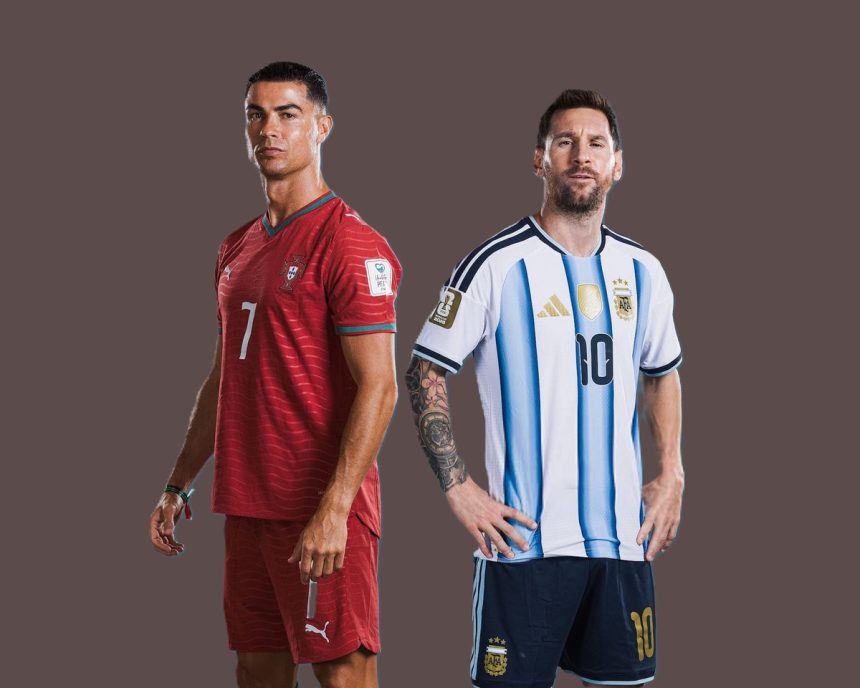
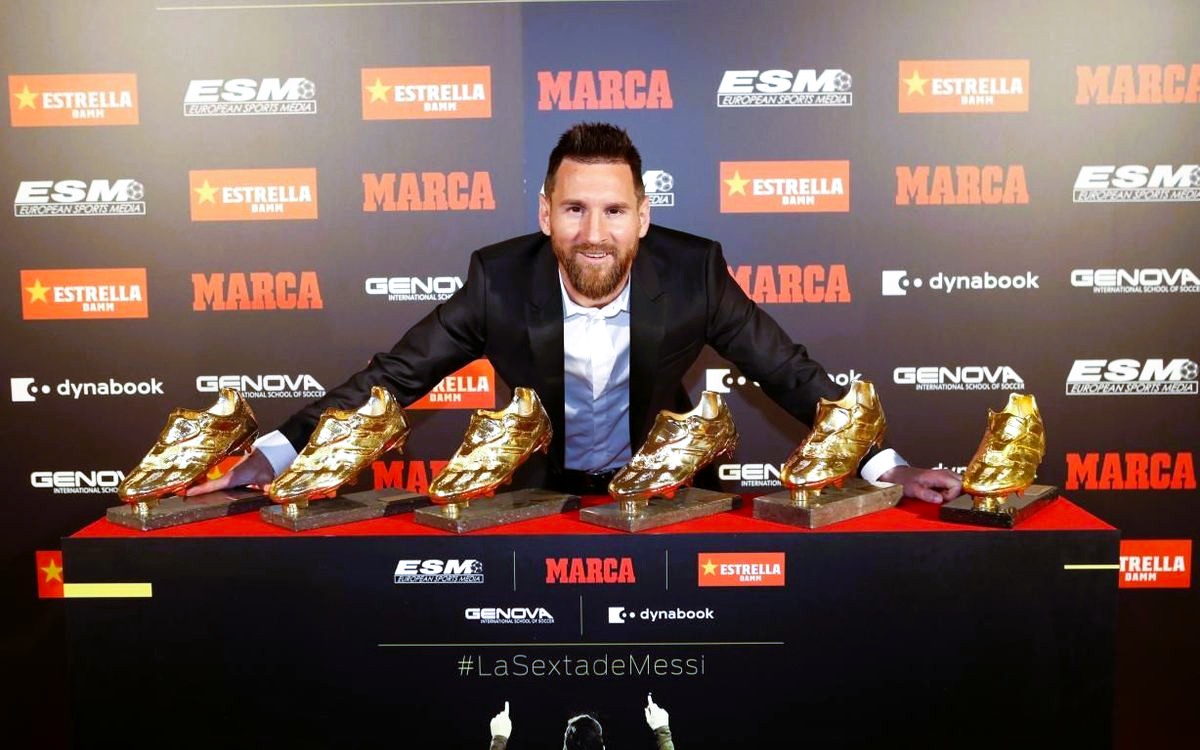
| Lionel Messi | Argentina | 6 | 2010, 2012, 2013, 2017, 2018, 2019 |
| Cristiano Ronaldo | Portugal | 4 | 2008, 2011, 2014, 2015 |
| Eusébio | Portugal | 2 | 1968, 1973 |
| Gerd Müller | West Germany | 2 | 1970, 1972 |
| Dudu Georgescu | Romania | 2 | 1975, 1977 |
| Fernando Gomes | Portugal | 2 | 1983, 1985 |
| Mário Jardel | Brazil | 2 | 1999, 2002 |
| Diego Forlán | Uruguay | 2 | 2009 |
| Thierry Henry | France | 2 | 2004, 2005 |
| Robert Lewandowski | Poland | 2 | 2021, 2022 |
| Luis Suárez | Uruguay | 2 | 2014, 2016 |
| Harry Kane | England | 2 | 2024, 2026 |
Forlán won the award once in Europe but also claimed a World Cup Golden Boot in 2010. His single European Golden Shoe came in 2008-09.
The gap between Messi’s six and Ronaldo’s four is only two awards, but in footballing terms it represents an almost unbridgeable chasm.
No other player in the modern weighted era has won the award more than twice. Thierry Henry’s back-to-back triumphs in 2003-04 and 2004-05 at Arsenal remain one of the most dominant short spells the award has seen from a non-Iberian player.
Lionel Messi’s Golden Shoe Dominance
Six. The number tells you everything, and nothing.
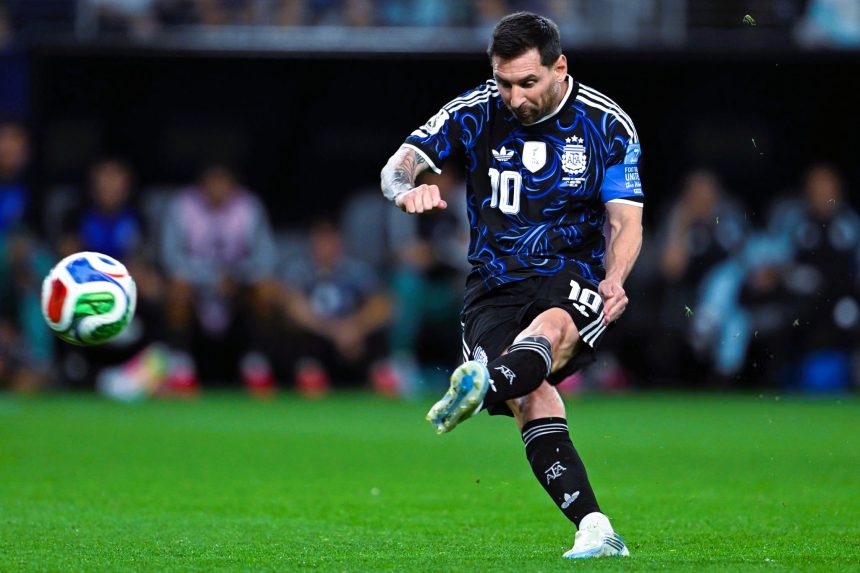
Lionel Messi won his first European Golden Boot in 2009–10, scoring 34 goals for Barcelona.
His 2011–12 campaign stands alone in the award’s history. Fifty league goals in a single La Liga season, producing 100 points under the weighted system.
Both figures are all-time records that no player has come close to threatening.
That he followed that up with 46 goals and a third consecutive Golden Boot the following season speaks to a consistency that borders on the supernatural.
After a three-season hiatus, Messi returned to claim three consecutive Golden Boots.
2016–17, 2017–18, and 2018–19 – becoming the only player to win the award in three consecutive seasons.
His sixth and final Golden Boot came at the age of 31, a season in which he scored 36 La Liga goals.
All six awards were won while playing for the same club: FC Barcelona.
All awards were won in La Liga. The consistency of those facts, in their own way, is as impressive as the table itself.
Messi’s career goal total over his six winning seasons has surpassed anything produced by any rival. He holds the records for:
- Most Golden Shoes won — 6
- Most goals in a single winning season — 50 (2011-12)
- Most points in a single season — 100 (2011-12)
- Only player to win three consecutive Golden Shoes (2016-17, 2017-18, 2018-19)
The benchmark has been set. Whether it will ever be beaten is one of football’s most genuinely interesting open questions.
Cristiano Ronaldo’s European Golden Shoe Success
While Messi collected his award with one club, Cristiano Ronaldo’s four Golden Boots have spanned two clubs, two leagues and two very different phases of his career.
His first Golden Boot came in 2007-08 at Manchester United, where he scored 31 Premier League goals under Sir Alex Ferguson.
That season also saw him win the UEFA Champions League and his first Ballon d’Or.
The other three came during his Real Madrid years. The 2010-11 season brought him 40 La Liga goals and his first Golden Boot in Spain.
He repeated the feat in 2013-14 and 2014-15, the latter of which saw him score a remarkable 48 league goals.
The second-highest tally in the history of the modern awards, behind Messi’s record 50.
What makes Ronaldo’s four Golden Boots particularly impressive is the range.
Manchester United in the Premier League. Real Madrid in La Liga. Three different seasons, two different countries, the same relentless efficiency in front of goal.
| Season | Club | League Goals | Points |
| 2007–08 | Manchester United | 31 | 62 |
| 2010–11 | Real Madrid | 40 | 80 |
| 2013–14 | Real Madrid | 31 | 62 |
| 2014–15 | Real Madrid | 48 | 96 |
Messi leads the head-to-head in this category by six to four. But four European Golden Boots are no consolation prize for two decades of top-flight goalscoring. It’s a historic feat that only one man has ever surpassed.
European Golden Boot Winners by Country
Which nations have produced the most European Golden Shoe winners?
| Country | Total Wins | Top Scorers |
|---|---|---|
| Portugal | 8 | C. Ronaldo (4), Eusébio (2), Gomes (2) |
| Argentina | 7 | L. Messi (6), H. Yazalde (1) |
| Netherlands | 4 | Van Basten, Makaay, Kieft, Kist |
| Uruguay | 4 | L. Suárez (2), D. Forlán (2) |
| Brazil | 3 | M. Jardel (2), Ronaldo (1) |
| Bulgaria | 3 | H. Stoichkov, P. Zhekov, G. Slavkov |
| France | 3 | T. Henry (2), K. Mbappé (1) |
| Italy | 3 | C. Immobile, F. Totti, L. Toni |
| Romania | 3 | D. Georgescu (2), D. Mateuț (1) |
| Austria | 2 | H. Krankl, T. Polster |
| England | 2 | H. Kane, K. Phillips |
| Germany | 2 | G. Müller (2) |
| Poland | 2 | R. Lewandowski (2) |
| Yugoslavia | 2 | J. Skoblar, D. Pančev |
Note: Winners are counted by player nationality. Portugal as a nation has been the most decorated, with Eusébio, Fernando Gomes, Mário Jardel, and Cristiano Ronaldo all claiming the prize.
Argentina has effectively been a one-man production: Messi’s six awards account for every Argentine claim on the trophy.
Portugal, by contrast, has produced multiple different winners across decades, making it arguably the most consistently Golden Shoe-producing nation in European football history.
European Golden Boot Winners by Club
Tracking which clubs have had their players win the award reveals some fascinating patterns.
| Club | Winning Seasons | Players |
| FC Barcelona | 8 | Ronaldo R9 (1997), Messi ×6, Luis Suárez (2016) |
| Real Madrid | 5 | Hugo Sánchez (1990), Cristiano Ronaldo ×3, Kylian Mbappé (2025) |
| Bayern Munich | 5 | Gerd Müller ×2, Robert Lewandowski ×2, Harry Kane (2024) |
| Benfica | 2 | Eusébio ×2 |
| Dinamo Bucharest | 2 | Dudu Georgescu ×2 |
| Porto | 2 | Fernando Gomes ×2 |
| Arsenal | 2 | Thierry Henry ×2 |
| Manchester United | 1 | Cristiano Ronaldo (2008) |
| Manchester City | 1 | Erling Haaland (2023) |
| Lazio | 1 | Ciro Immobile (2020) |
| Liverpool | 1 | Ian Rush (1984) |
| Atlético Madrid | 1 | Diego Forlán (2009) |
Barcelona’s dominance in the modern era is staggering — eight winning seasons from a single club, anchored by Messi’s six, with Ronaldo R9 and Suárez adding one apiece.
Real Madrid and Bayern Munich have each accumulated five, but across more varied rosters.
What Barcelona’s record reflects, more than anything, is Messi’s near-decade of supremacy coinciding with one of the greatest attacking teams in club football history.
Highest Goal Totals in European Golden Boot History
Not all Golden Shoes are created equal. Some arrived with a modest 25-goal tally in a competitive year; others were built on goal hauls that rewrote record books.
| Player | Season | Club | League Goals | Points |
| Lionel Messi | 2011–12 | Barcelona | 50 | 100 |
| Cristiano Ronaldo | 2014–15 | Real Madrid | 48 | 96 |
| Lionel Messi | 2012–13 | Barcelona | 46 | 92 |
| Héctor Yazalde | 1973–74 | Sporting CP | 46 | 46 |
| Robert Lewandowski | 2020–21 | Bayern Munich | 41 | 82 |
| Cristiano Ronaldo | 2010–11 | Real Madrid | 40 | 80 |
| Luis Suárez | 2015–16 | Barcelona | 40 | 80 |
| Erling Haaland | 2022–23 | Manchester City | 36 | 72 |
| Harry Kane | 2023–24 | Bayern Munich | 36 | 72 |
| Ciro Immobile | 2019–20 | Lazio | 36 | 72 |
Messi’s 50-goal campaign in 2011-12 sits in a category of its own. The 100-point total under the weighted system has never been replicated.
For context: Cristiano Ronaldo’s 48-goal season in 2014-15, which at the time felt almost untouchable, still fell two goals and four points short of Messi’s benchmark.
The gap between the old L’Équipe era and the modern weighted system is also worth noting.
Héctor Yazalde’s 46 goals in 1973-74, scored in the Portuguese league against far weaker opposition, earned him the award at one point per goal.
In the modern system, those 46 goals would be worth only 46 points — fewer than a top-five league player scoring 23.
Biggest Records in European Golden Shoe History
| Record | Player | Detail |
| Most Golden Shoes | Lionel Messi | 6 awards |
| Highest single-season goals | Lionel Messi | 50 goals (2011-12) |
| Highest single-season points | Lionel Messi | 100 points (2011-12) |
| Most consecutive Golden Shoes | Lionel Messi | 3 (2016-17, 2017-18, 2018-19) |
| First winner | Eusébio | 1967-68 season |
| First player to win it twice | Gerd Müller | 1969-70 and 1971-72 |
| Youngest modern era winner | Erling Haaland | 22 years old (2022-23) |
| First non-European winner | Héctor Yazalde | 1973-74 (Argentinian) |
| Only Scotsman to top Europe | Ally McCoist | 1991-92, 1992-93 (unofficial) |
| Last non-top-five league winner | Mário Jardel | 2001-02 (Sporting CP, Portugal) |
Erling Haaland’s 2022-23 triumph is worth flagging for a different reason. His 36 Premier League goals broke the single-season record for English top-flight goals in the process, demonstrating that the European Golden Shoe and domestic record-breaking can occasionally arrive in the same package.
Which League Produces the Most Golden Boot Winners?
The dominance of La Liga in the Golden Shoe record books is not a coincidence. It reflects two decades during which the Spanish top flight housed either Messi or Ronaldo, and frequently both.
| League | Wins (Modern Era, 1997–2025) | Notable Winners |
| La Liga | 14 | Messi ×6, Ronaldo ×3, Mbappé, Suárez, Forlán, Totti equivalent, Makaay |
| Premier League | 5 | Phillips, Ronaldo (Man Utd), Henry ×2, Haaland |
| Bundesliga | 4 | Lewandowski ×2, Toni*, Kane |
| Serie A | 4 | Totti, Toni, Immobile, (Henry at Arsenal = PL) |
| Ligue 1 | 0 | — |
| Other leagues | 3 | Machlas (Netherlands), Larsson (Scotland), Jardel (Portugal) |
La Liga’s 14 modern-era wins are more than double the Premier League’s five.
Take out Messi and Ronaldo, and the gap narrows considerably, but even so, La Liga is still ahead.
The Premier League has shown increasing strength in recent seasons.
Haaland’s record-breaking 2022-23 campaign, followed by Kane’s 2023-24 triumph and Mbappe’s La Liga triumph in 2024-25, suggest that the Premier League and its rivals are moving closer to Spanish dominance.
Much, however, depends on whether another all-time great emerges to concentrate his winnings at a single club, like Messi.
Conclusion
The European Golden Boot is one of football’s oldest and most respected individual honours.
It doesn’t require a transfer saga, a geopolitical alliance of voters, or a particularly good run of Champions League nights.
You outscore every striker in Europe in a full domestic season. You take home the boot.
From Eusebio’s 43 goals in 1968 to Mbappe’s 31 goals in La Liga in 2025, the award has almost perfectly tracked the evolution of European football.
Messi’s record may stand for generations, but names like Mbappe, Erling Haaland and Harry Kane continue to add new chapters.
Who will claim the next Golden Boot? Football’s beautiful unpredictability ensures that the debate will continue.
Related: Ballon d’Or Winners List | UEFA Champions League Winners