








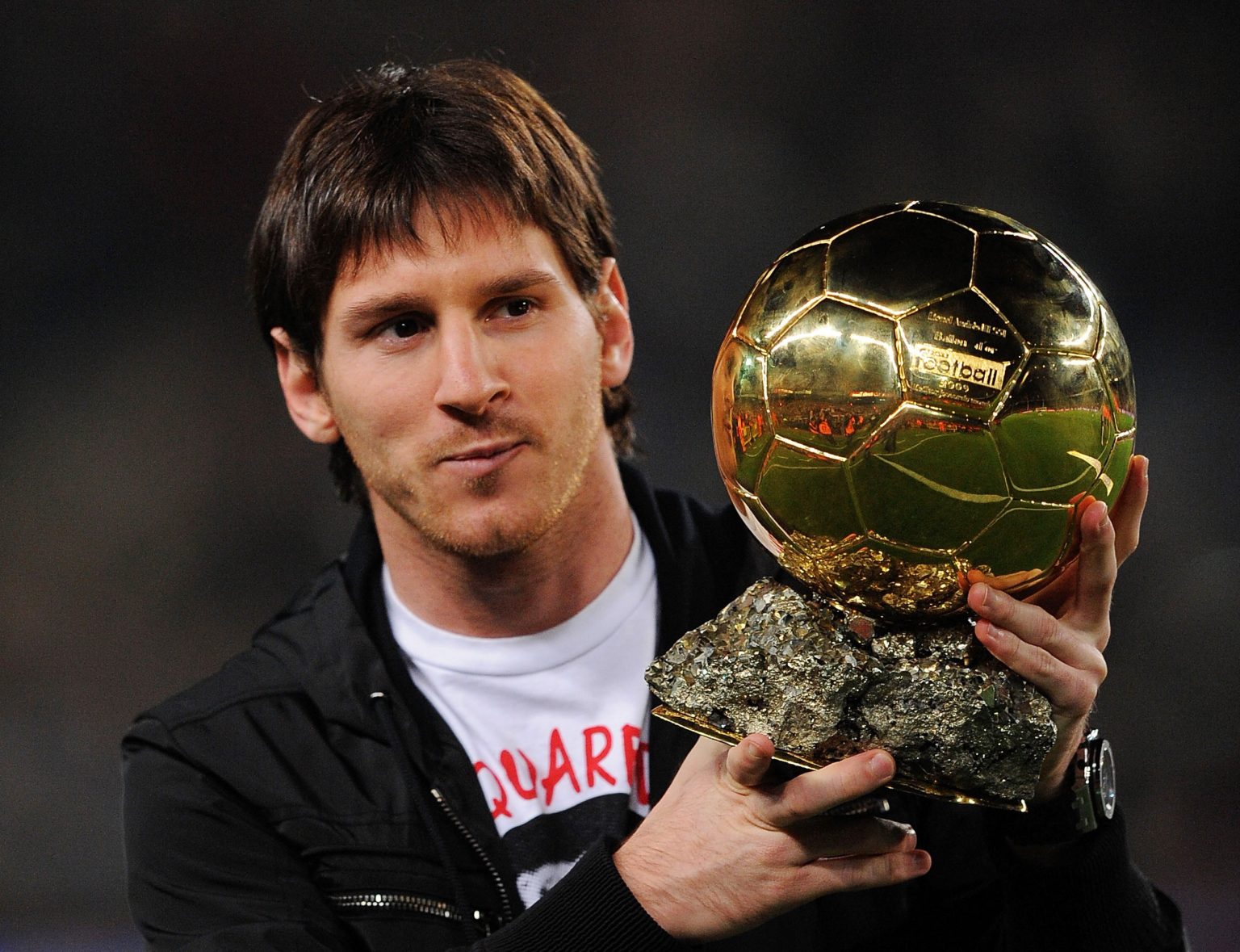

What is the Ballon d’Or? The Ballon d’Or is an annual individual football award presented by France Football to recognise the outstanding men’s and women’s players over a defined assessment period.
The award is organized by the French magazine France Football, which created the original Ballon d’Or in 1956. Winners are chosen by a jury of journalists.
What Is the Ballon d’Or?
The Ballon d’Or is a personal honour. It goes to one player, not to a team.
A winner is named in the men’s game and another in the women’s game. Each award has its own nominees, its own jury and its own record of past winners.
The award is based on a defined assessment period. Since 2022, that period has followed the European football season rather than the calendar year, with players judged on their performances for club and country.
Winning major trophies is an important part of the assessment, but it does not determine the result on its own. Voters also consider individual performances and sporting conduct.
The award draws attention because of the way the result is built. The shortlist comes out weeks before the ceremony, journalists from around the world vote, and the final ranking becomes part of football’s historical record.
What Does “Ballon d’Or” Mean?
“Ballon d’Or” is French for “Golden Ball.” Ballon means ball, and d’Or means “of gold.”

The name comes from the trophy itself, a golden football. France Football is a French publication, so the French name stuck as the award spread internationally.
Who Gives the Ballon d’Or?
France Football created the Ballon d’Or and remains responsible for the award’s voting system. Since 2024, France Football’s owner, Groupe Amaury, has co-organised the Ballon d’Or with UEFA. UEFA organises the annual awards gala and handles the global commercial rights.
The winners are chosen by specialised football journalists. Under the current format, one journalist from each of the top 100 nations in the FIFA men’s world rankings votes for the men’s award.
One journalist from each of the top 50 nations in the FIFA women’s rankings votes for the women’s award. The rankings used are those in force when the nominee lists are published.
How Does Ballon d’Or Voting Work?
France Football publishes a list of 30 nominees for the men’s award and 30 for the women’s award. The nominees are selected based on their performances during the assessment period.
These shortlists are based on performances during the assessment period, which since 2022 has followed the European football season rather than the calendar year.
Each voting journalist then ranks ten players from the shortlist in order of preference. Points are awarded as follows: 15 for first place, 12 for second, 10 for third, 8 for fourth, 7 for fifth, 5 for sixth, 4 for seventh, 3 for eighth, 2 for ninth and 1 for tenth.
The player with the highest total points wins. In the event of a tie, the number of first-place votes is used as the first tie-breaker, followed by second-place votes and so on if needed.
The voting process turns each journalist’s ranking into points. The player with the highest total wins, with first-place votes used as the first tie-breaker if necessary.
The system is designed to reward consistent excellence rather than any single statistic.
Who Can Win the Ballon d’Or?
Players must first be included on the official list of nominees to be considered for the award.
Nationality is not a barrier, and players based at clubs outside Europe can be considered. Both club form and international performances during the assessment period count.
Being a well-known player does not guarantee a place on the shortlist. The editorial process that produces the 30-player lists is selective. The women’s Ballon d’Or operates with its own independent nominee list and jury.
Each year’s shortlist is published ahead of the ceremony. Our 2026 Ballon d’Or nominees article covers the current cycle.
What Does the Ballon d’Or Reward?
Jurors are asked to consider three broad areas:
- Individual performances
- Team achievements and trophies
- Sporting conduct and fair play
Individual performance covers the quality of a player’s season, not only raw numbers. Goals and assists matter, but they are one input among several.
Team achievements give context. Trophies and deep runs in major competitions can strengthen a case.
Sporting conduct completes the picture. Fair play is part of the criteria rather than an afterthought.
The result is not decided by a formula. No single statistic, whether goals scored or trophies won, determines the winner.
When Was the Ballon d’Or Created?
France Football introduced the Ballon d’Or in 1956. The magazine wanted to name the best footballer in Europe.
Stanley Matthews won the first award while playing for Blackpool. He was 41 at the time, which makes him the oldest winner in the award’s history.
You can read more about that inaugural season in our piece on the first Ballon d’Or winner.
In its earliest years the award was limited to European players. Eligibility rules later widened, and the assessment period and voting format have also evolved.
How Has the Ballon d’Or Changed Over Time?
The original 1956 award was restricted to European footballers. In 1995, eligibility expanded to include players of any nationality based at a European club. From 2007, players based anywhere in the world could be considered.
Between 2010 and 2015, France Football and FIFA jointly organised the FIFA Ballon d’Or. After that partnership ended, France Football resumed sole control of the Ballon d’Or, while FIFA continued with its own award, The Best FIFA Men’s Player.
The women’s Ballon d’Or was introduced in 2018. Further adjustments followed in 2022: the assessment window shifted from the calendar year to the European season, roughly August to July, and the voting jury was reduced to representatives of the top 100 FIFA-ranked nations for the men’s award and top 50 for the women’s award.
Is There a Women’s Ballon d’Or?
Yes. The women’s Ballon d’Or was first presented in 2018. Ada Hegerberg of Norway and Lyon became the inaugural winner.
The award is given separately from the men’s prize, with its own shortlist of nominees and a dedicated jury of 50 journalists drawn from the top 50 nations in the FIFA women’s rankings.
The two awards share the same ceremony but maintain distinct historical records.
What Is the Difference Between the Ballon d’Or and FIFA The Best?
The Ballon d’Or is organised by France Football. FIFA The Best is organised by FIFA. They are independent awards with different voting systems and different structures.
A player can win one, both, or neither in the same period. The two awards have separate voting systems and historical records.
What Categories Are Included at the Ballon d’Or Ceremony?
The modern ceremony presents a range of awards beyond the two main Ballon d’Or trophies. These include:
- Men’s Ballon d’Or
- Women’s Ballon d’Or
- Men’s Young Talent of the Year
- Women’s Young Talent of the Year
- Men’s Goalkeeper of the Year
- Women’s Goalkeeper of the Year
- Men’s Coach of the Year
- Women’s Coach of the Year
- Men’s Club of the Year
- Women’s Club of the Year
- Men’s Striker of the Year
- Women’s Striker of the Year
- Sócrates Award
These are separate awards from the main men’s and women’s Ballon d’Or. The Young Talent of the Year awards recognise emerging players, while the Goalkeeper, Striker, Coach and Club of the Year awards cover their respective categories.
The Sócrates Award recognises solidarity initiatives and societal causes supported by a committed champion.
Winning one of these awards is not the same as winning the main Ballon d’Or.
Who Has Won the Most Ballon d’Or Awards?
Lionel Messi holds the men’s record with eight. In the women’s award, Alexia Putellas has the most wins, with three as of the 2025 ceremony.
For the current record holders, see our article on who has won the most Ballon d’Or awards.
If you want a year-by-year list, the Ballon d’Or winners list has it. Other milestones are collected in our piece on Ballon d’Or records.
Why Is the Ballon d’Or Important?
The Ballon d’Or provides a yearly record of how football journalists judged individual performances during a defined assessment period.
Its history stretches back to 1956, giving the award a record that covers several generations of players. The list of winners includes many of the game’s most recognised names.
Because the result comes from journalists representing different countries, the voting also provides a broad international view of individual performances.
Frequently Asked Questions About the Ballon d’Or
What is the Ballon d’Or?
The Ballon d’Or is an annual individual award organised by France Football that recognises the outstanding men’s and women’s footballers of the season through a vote by specialised journalists.
Who gives the Ballon d’Or?
France Football organises the award. The winners are chosen by a jury of football journalists—one from each of the top 100 FIFA-ranked nations for the men’s prize and the top 50 for the women’s prize.
What does Ballon d’Or mean?
It is French for “Golden Ball,” a reference to the golden football trophy presented to the winner.
When was the Ballon d’Or created?
France Football introduced the award in 1956. Stanley Matthews of Blackpool was the first recipient.
Who won the first Ballon d’Or?
Stanley Matthews, then of Blackpool, won the inaugural award in 1956 at the age of 41.
Is there a women’s Ballon d’Or?
Yes. It was introduced in 2018. Ada Hegerberg was the first winner. The women’s award has its own nominees and voting jury.
How is the Ballon d’Or winner decided?
Journalists rank ten players from a shortlist of 30. Points are awarded according to ranking position, and the player with the highest total wins. Individual performance, team success and fair play are the key criteria.
What is the difference between the Ballon d’Or and FIFA The Best?
They are separate awards. France Football organises the Ballon d’Or; FIFA organises The Best. Their voting systems and structures differ.
Conclusion
The Ballon d’Or is an annual individual football award organised by France Football. It recognises outstanding performances over a defined assessment period through a vote by specialist football journalists.
The award began in 1956 and has changed significantly since then, including the expansion of eligibility and the introduction of the women’s Ballon d’Or in 2018. The men’s and women’s awards now have separate nominees, juries and records.
For a year-by-year breakdown, see our Ballon d’Or winners list.