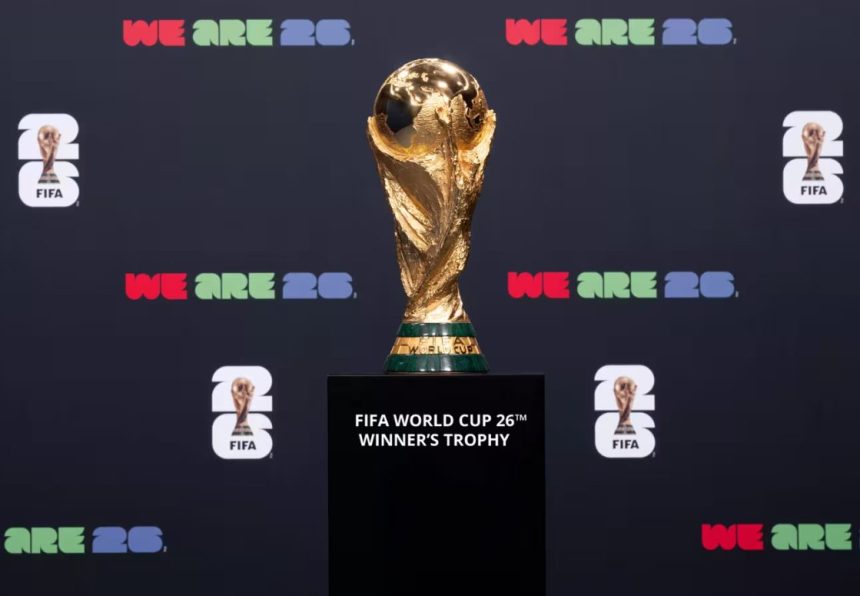



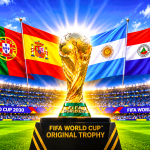

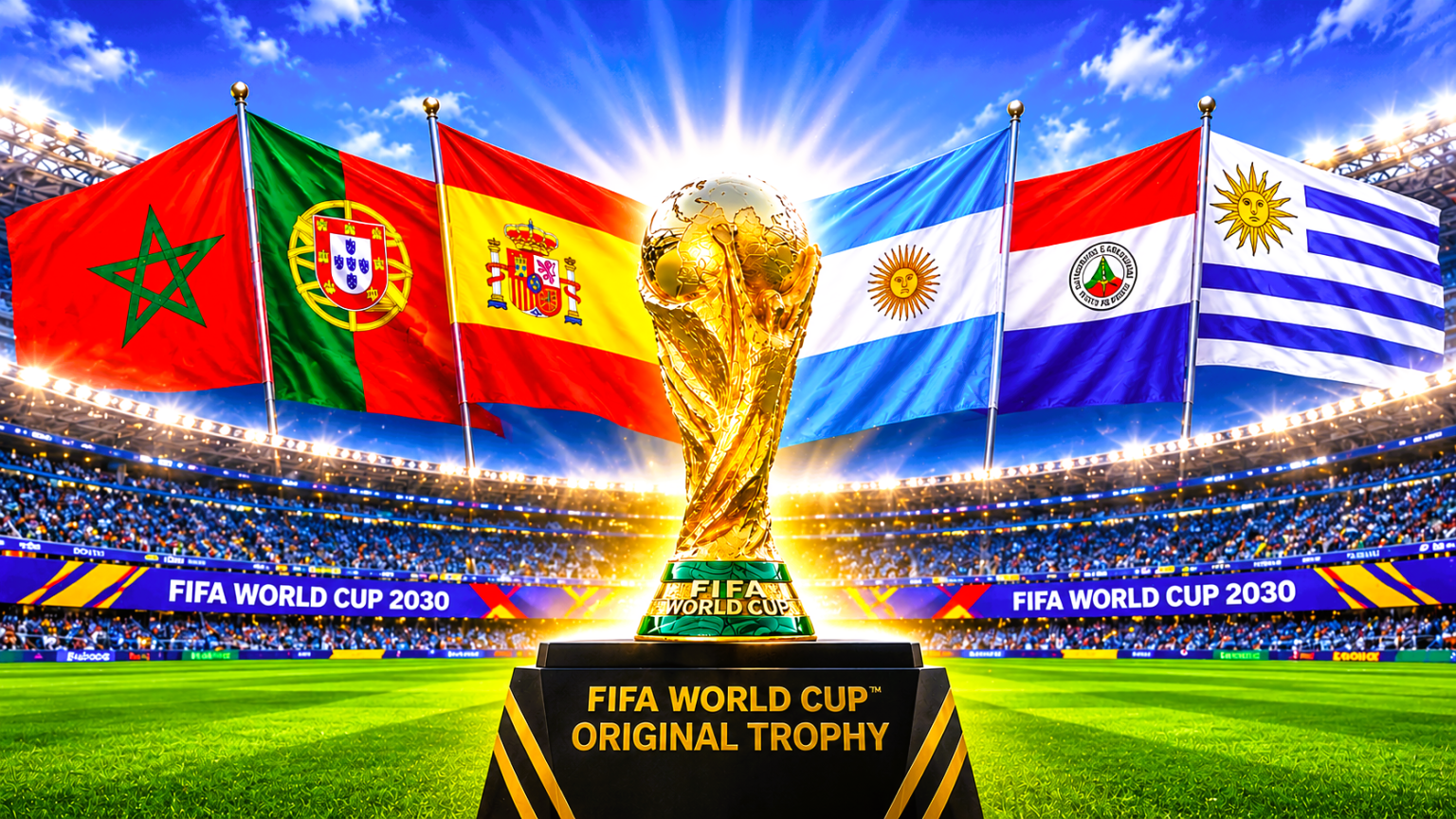

The 2030 FIFA World Cup is set to become one of the most historic editions of international football.
Celebrating 100 years since the first World Cup was held in Uruguay in 1930, the tournament will bring together six host nations across three continents: Africa, Europe and South America.
Morocco, Portugal and Spain will jointly host the main part of the competition, while Argentina, Paraguay and Uruguay will stage three special centenary matches.
The arrangement will make the 2030 FIFA World Cup the first edition to feature matches across three continents and six countries.
Beyond its historic significance, the tournament will continue the expanded 48-team format introduced in 2026.
It is expected to feature 104 matches, giving national teams from around the world another opportunity to compete for football’s most prestigious international trophy.
From the host countries and stadium plans to qualification, tournament dates, the competition format and its historical significance, here is everything you need to know about the 2030 FIFA World Cup.
2030 FIFA World Cup: Key Information
| Tournament detail | Information |
|---|---|
| Competition | FIFA World Cup 2030 |
| Edition | 24th edition |
| Main host countries | Morocco, Portugal, Spain |
| Centenary match hosts | Argentina, Paraguay, Uruguay |
| Total host nations | Six |
| Continents involved | Africa, Europe, South America |
| Expected participating teams | 48 |
| Expected total matches | 104 |
| Main-host-country matches | 101 |
| Centenary matches | Three |
| Expected tournament period | June–July 2030 |
| Planned opening centenary matches | 8–9 June 2030 |
| Planned main tournament opening | 13–14 June 2030 |
| Planned final | 21 July 2030 |
| Previous champions | Spain |
Note: The dates and format above reflect FIFA’s published planning information. Final operational details and any subsequent changes should be checked against official FIFA announcements.



Which Countries Will Host the 2030 FIFA World Cup?
Six countries have been selected to host matches at the 2030 FIFA World Cup: Morocco, Portugal, Spain, Argentina, Paraguay and Uruguay.
However, the hosting arrangement is divided into two parts. Morocco, Portugal and Spain will host the main tournament, while Argentina, Paraguay and Uruguay will stage one centenary celebration match each.
The decision was officially confirmed by FIFA at an Extraordinary FIFA Congress on 11 December 2024.
1. Morocco
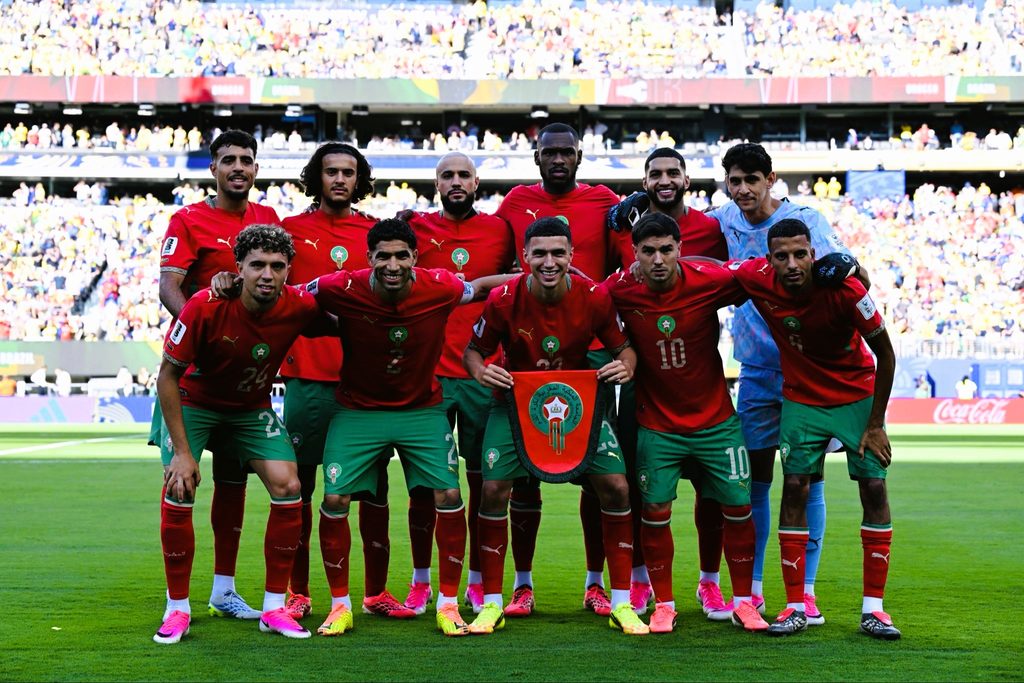
Morocco will become the first North African country to host FIFA World Cup matches.
The country has developed its football infrastructure significantly, investing in stadium renovations, transportation, training facilities and other sporting projects.
Morocco’s selection is also an important milestone for African football. South Africa previously became the first African nation to host the tournament in 2010. Morocco will now help bring the competition back to the African continent.
Several Moroccan cities have been included in the country’s proposed hosting plans, including Casablanca, Rabat, Tangier, Marrakech, Agadir and Fez.
One of the most ambitious projects is the proposed Grand Stade Hassan II in Casablanca, which has been planned as a major international football venue.
The final selection of stadiums and the allocation of matches remain subject to FIFA’s venue assessment and approval process.
2. Portugal
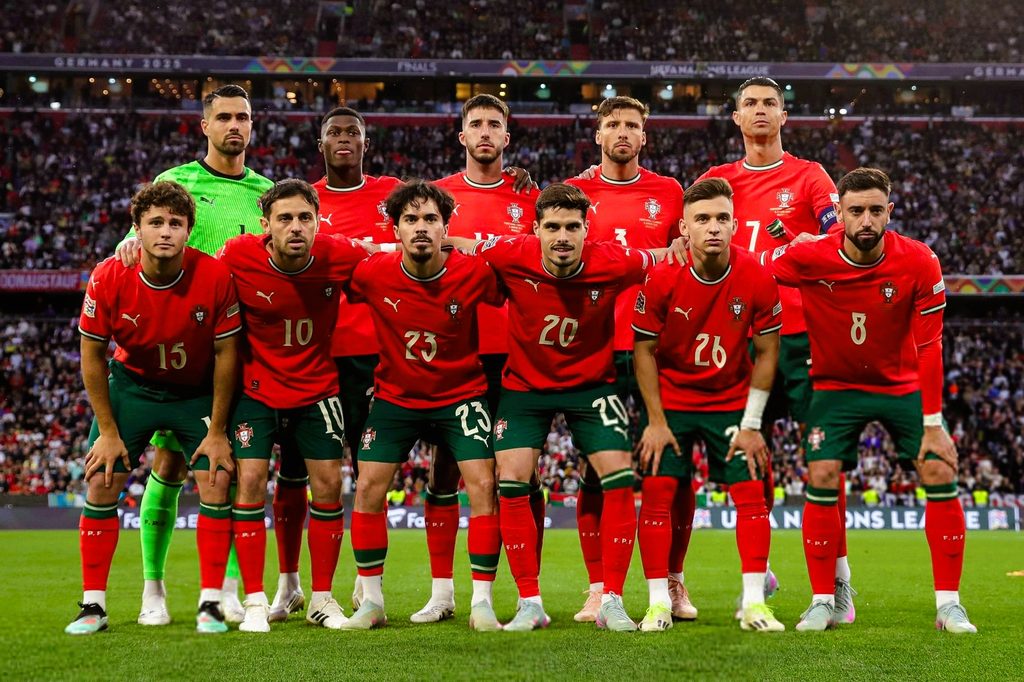
Portugal will co-host the FIFA World Cup for the first time in its history.
The country has a strong football tradition, passionate supporters and modern stadium infrastructure. Lisbon and Porto are among the main cities expected to play important roles in the tournament.
Portugal’s proposed stadiums include Estádio da Luz, Estádio José Alvalade and Estádio do Dragão.
The country is also home to a successful national team that has won major international honours, including the UEFA European Championship in 2016.
Hosting World Cup matches will give Portugal another opportunity to showcase its football culture to a worldwide audience.
3. Spain
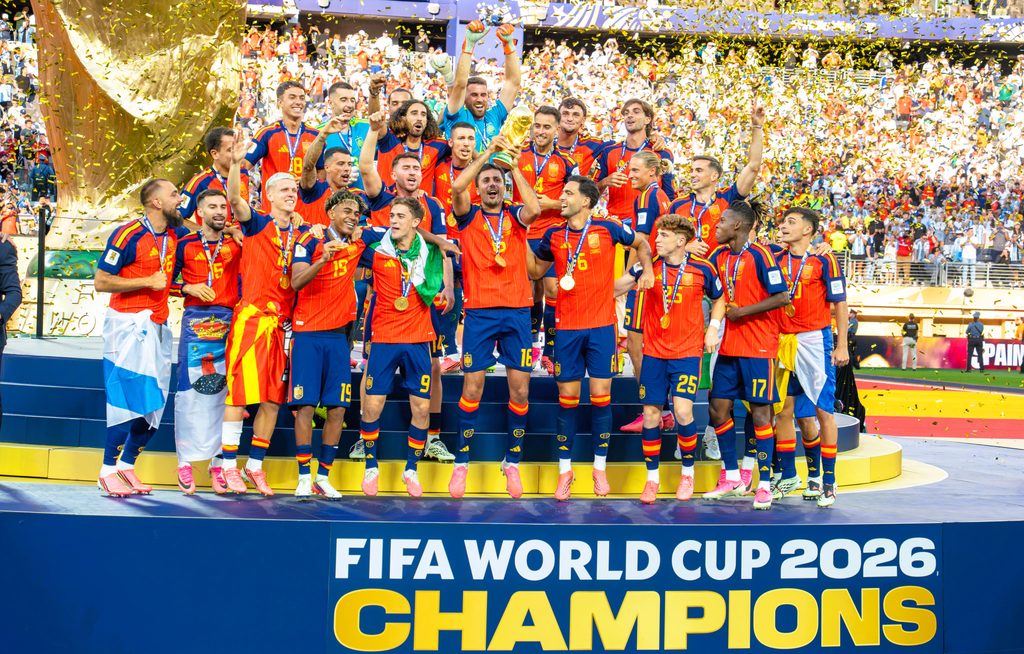
Spain will be one of the central hosts of the 2030 FIFA World Cup.
The country has extensive experience organising major international football competitions. Spain previously hosted the 1982 FIFA World Cup and has some of Europe’s most recognisable football stadiums.
Barcelona, Madrid, Bilbao, Seville, Valencia and other cities have been included in the proposed venue plans.
Potential stadiums include the Santiago Bernabéu, Spotify Camp Nou, Metropolitano Stadium and San Mamés.
Spain’s role could be particularly significant because of its football history, stadium infrastructure and established international reputation.
The final venue allocation, including the stadium for the World Cup final, has not been officially settled.
4. Uruguay
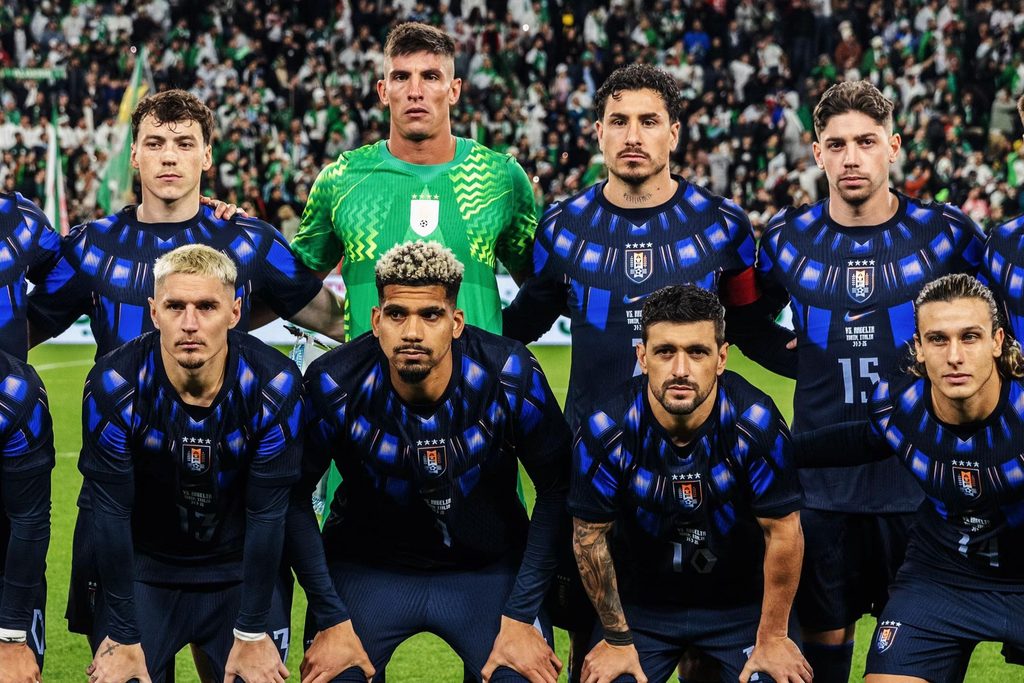
Uruguay has a special place in World Cup history.
The country hosted the inaugural FIFA World Cup in 1930 and became the first nation to win the competition.
For the 2030 centenary edition, Uruguay will stage one of the three special South American matches.
Montevideo, the capital, is expected to be at the centre of the celebrations. The historic Estadio Centenario is particularly significant because it hosted the 1930 World Cup final.
The match in Uruguay will recognise the country’s role in creating the history of the FIFA World Cup.
5. Argentina
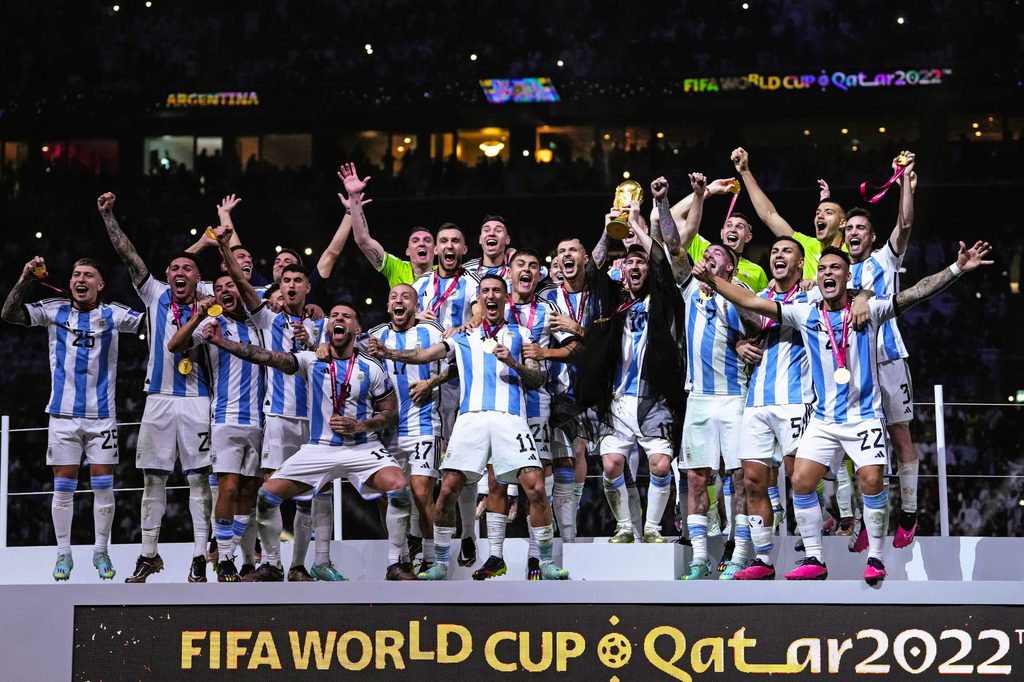
Argentina will also stage one centenary celebration match.
The national team has one of the richest histories in international football, having won the World Cup in 1978, 1986 and 2022.
Argentina was also the runner-up in the inaugural 1930 tournament, losing the final to Uruguay.
Its inclusion in the 2030 celebrations recognises that historical connection.
The match will give Argentine supporters an opportunity to celebrate the competition’s centenary on home soil.
6. Paraguay
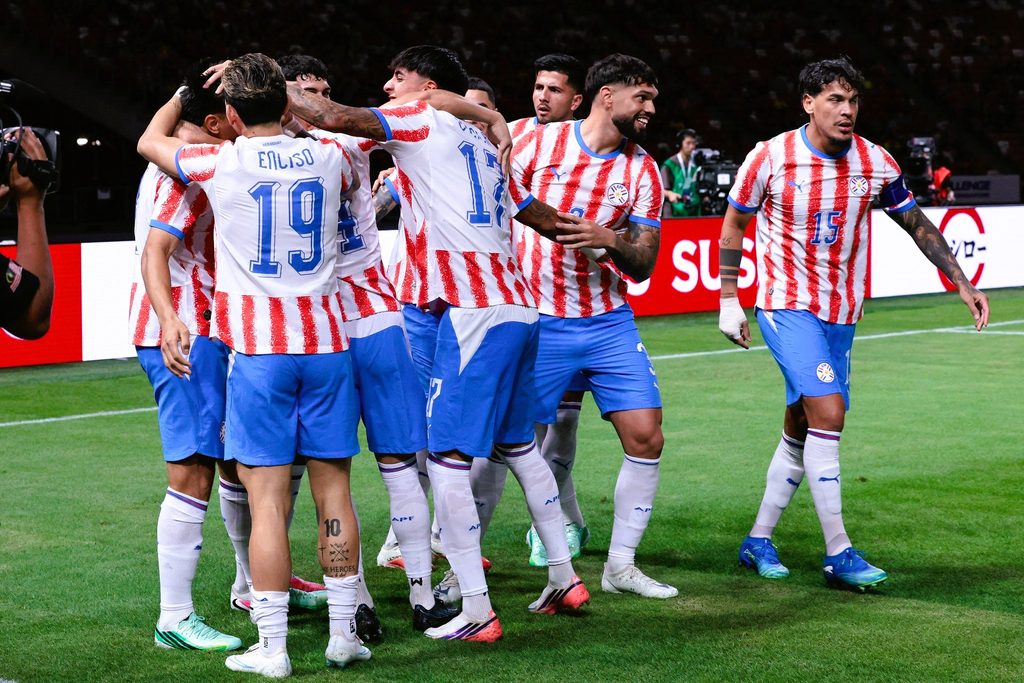
Paraguay completes the group of six host countries.
The country will stage one centenary match as part of FIFA’s plan to recognise the origins of the competition and South American football.
Paraguay is also home to CONMEBOL, the governing body of South American football, which is based in Luque.
The country has a long international football tradition and has qualified for several FIFA World Cup tournaments.
Its involvement makes the 2030 competition a significant occasion for Paraguayan football and the wider South American region.
Why Are Six Countries Hosting the 2030 World Cup?
The 2030 FIFA World Cup will celebrate the centenary of the competition, which began in Uruguay in 1930.
FIFA’s decision connects the tournament’s historical origins with its modern international reach.
Morocco, Portugal and Spain were selected as the main hosts through their joint candidacy. Uruguay, Argentina and Paraguay were included to commemorate the first World Cup and the early history of South American football.
Each South American country has a specific historical connection.
- Uruguay hosted and won the first FIFA World Cup in 1930.
- Argentina reached the first World Cup final and finished as runners-up.
- Paraguay is home to CONMEBOL, the South American football confederation.
The arrangement will create a tournament spread across three continents.
It also introduces logistical challenges involving international travel, different time zones, transportation and recovery periods for participating teams.
FIFA has indicated that the match schedule will be adapted to provide additional travel and recovery time for teams involved in the South American centenary matches.
When Will the 2030 FIFA World Cup Start?
The 2030 FIFA World Cup is planned for June and July 2030.
FIFA’s published planning outline identifies 8–9 June 2030 for the centenary celebration ceremony and the first matches involving Uruguay, Argentina and Paraguay.
The main tournament opening matches in Morocco, Portugal and Spain are planned for 13–14 June 2030.
The remaining opening matches involving the other teams in the groups of the three South American nations are planned for 15–16 June.
The final is planned for 21 July 2030.
Important planned dates
| Event | Planned date |
|---|---|
| Event | Planned date |
| Centenary ceremony and matches | 8–9 June 2030 |
| Main tournament opening matches | 13–14 June 2030 |
| Other opening group matches in the centenary groups | 15–16 June 2030 |
| Second group matches in those groups | 21–22 June 2030 |
| World Cup final | 21 July 2030 |
These dates are based on FIFA’s planning outline and should be updated if the official match calendar changes.
How Many Teams Will Play in the 2030 FIFA World Cup?
The 2030 FIFA World Cup is expected to feature 48 national teams.
This will continue the expanded format introduced at the 2026 FIFA World Cup, which increased participation from 32 to 48 teams.
The expansion gives more national teams an opportunity to reach the biggest international football competition.
It also increases the number of matches and creates more opportunities for supporters to watch teams from different football regions.
Under the expected format, the 48 participating nations will be divided into 12 groups of four teams.
The top two teams from each group and the eight best third-placed teams will progress to the knockout stage.
A total of 32 teams will qualify for the round of 32.
The competition is expected to feature 104 matches, including the group stage and knockout rounds.
Any proposal to expand the tournament beyond 48 teams would require official confirmation. A 64-team tournament should not be presented as an approved format.
How Will Qualification for the 2030 FIFA World Cup Work?
Qualification will determine most of the teams competing in the 2030 FIFA World Cup.
The six host countries have been granted automatic qualification.
These nations are:
- Morocco
- Portugal
- Spain
- Uruguay
- Argentina
- Paraguay
Their automatic places will come from the existing allocation of their respective confederations.
Other national teams will need to qualify through their continental competitions.
FIFA’s qualification system is organised through six confederations:
- AFC – Asian Football Confederation
- CAF – Confederation of African Football
- CONCACAF – Confederation of North, Central America and Caribbean Association Football
- CONMEBOL – South American Football Confederation
- OFC – Oceania Football Confederation
- UEFA – Union of European Football Associations
Each confederation organises its own qualifying competition under FIFA’s overall framework.
The remaining qualification places, the precise allocation of slots and the detailed qualification calendar should be checked against FIFA’s official announcements as they are confirmed.
Which countries are already qualified for the 2030 World Cup?
The six host nations are guaranteed places:
| Country | Confederation | Qualification status |
|---|---|---|
| Morocco | CAF | Automatically qualified |
| Portugal | UEFA | Automatically qualified |
| Spain | UEFA | Automatically qualified |
| Uruguay | CONMEBOL | Automatically qualified |
| Argentina | CONMEBOL | Automatically qualified |
| Paraguay | CONMEBOL | Automatically qualified |
The other participating countries will be determined through the qualification process. This section should be updated as national teams secure their places.
What Is the Format of the 2030 FIFA World Cup?
The expected 2030 FIFA World Cup format will follow the 48-team structure introduced in 2026.
The 48 teams will be divided into 12 groups, with four nations in each group. Each team will play three group-stage matches.
The top two teams from each group will advance, alongside the eight best third-placed teams. This will create a 32-team knockout stage.
Expected tournament structure
| Stage | Number of teams |
|---|---|
| Group stage | 48 |
| Round of 32 | 32 |
| Round of 16 | 16 |
| Quarter-finals | 8 |
| Semi-finals | 4 |
| Third-place match | 2 |
| Final | 2 |
The expanded structure is expected to produce 104 matches.
The knockout stage will provide a direct route to the final, with teams needing to win their matches to continue in the competition.
This format offers more opportunities for emerging football nations while retaining the traditional knockout drama associated with the FIFA World Cup.
Which Stadiums Will Host the 2030 FIFA World Cup?
Stadiums will be one of the biggest attractions of the 2030 FIFA World Cup.
The three main host countries have proposed a range of established football venues and major infrastructure projects.
Spain, Portugal and Morocco have all included stadiums in their hosting plans.
Some of the venues associated with the proposals include:
Proposed stadiums in Spain
- Santiago Bernabéu – Madrid
- Spotify Camp Nou – Barcelona
- Metropolitano Stadium – Madrid
- San Mamés – Bilbao
- Estadio de La Cartuja – Seville
Proposed stadiums in Portugal
- Estádio da Luz – Lisbon
- Estádio José Alvalade – Lisbon
- Estádio do Dragão – Porto
Proposed stadiums in Morocco
- Grand Stade Hassan II – Casablanca
- Prince Moulay Abdellah Stadium – Rabat
- Ibn Batouta Stadium – Tangier
- Marrakesh Stadium – Marrakech
- Adrar Stadium – Agadir
- Fez Stadium – Fez
These are proposed venues rather than a final approved match list.
FIFA’s venue assessment process is important because stadiums must meet the required infrastructure, safety, accessibility, technical and operational standards.
The final allocation of stadiums and matches will be confirmed through FIFA’s official process.
Where will the 2030 FIFA World Cup final be played?
The stadium for the 2030 FIFA World Cup final has not been officially confirmed.
Potential candidates have included major venues in Spain and Morocco.
The Santiago Bernabéu in Madrid, Spotify Camp Nou in Barcelona and the proposed Grand Stade Hassan II in Casablanca have attracted attention in discussions about the final.
However, none should be described as the confirmed final venue until FIFA makes an official announcement.
The final stadium decision will be one of the most closely followed developments ahead of the tournament.
Which Countries Have Won the FIFA World Cup?
The following table shows the historical list of men’s FIFA World Cup champions through the 2026 edition.
| Country | Titles | Winning years |
|---|---|---|
| Country | Titles | Winning years |
| Brazil | 5 | 1958, 1962, 1970, 1994, 2002 |
| Germany | 4 | 1954, 1974, 1990, 2014 |
| Italy | 4 | 1934, 1938, 1982, 2006 |
| Argentina | 3 | 1978, 1986, 2022 |
| France | 2 | 1998, 2018 |
| Uruguay | 2 | 1930, 1950 |
| Spain | 2 | 2010, 2026 |
| England | 1 | 1966 |
How to Buy Tickets for the 2030 FIFA World Cup
Official ticket information for the 2030 FIFA World Cup should be followed through FIFA’s official channels.
Ticket sales dates, prices, categories and purchasing procedures should not be assumed before FIFA publishes them.
Supporters should be cautious of unofficial websites, misleading offers and sellers claiming to have guaranteed tickets before an official sales process is announced.
The safest approach is to monitor FIFA’s official website for ticket announcements and tournament updates.
Frequently Asked Questions About the 2030 FIFA World Cup
Where will the 2030 FIFA World Cup be held?
The main tournament will be hosted by Morocco, Portugal and Spain. Three centenary celebration matches will also take place in Argentina, Paraguay and Uruguay.
How many countries will host the 2030 World Cup?
Six countries will host matches: Morocco, Portugal, Spain, Argentina, Paraguay and Uruguay.
Why are Argentina, Paraguay and Uruguay hosting World Cup matches?
The three South American nations are included to celebrate 100 years since the inaugural FIFA World Cup in 1930. Uruguay hosted the first tournament, Argentina was the runner-up, and Paraguay is home to CONMEBOL.
When will the 2030 FIFA World Cup take place?
FIFA’s planning outline identifies 8–9 June 2030 for the centenary matches, 13–14 June for the main tournament opening matches and 21 July for the final. These dates should be checked for any subsequent official changes.
How many teams will compete in the 2030 World Cup?
The expected format includes 48 national teams, continuing the expanded structure introduced in 2026.
How many matches will be played at the 2030 FIFA World Cup?
The expected total is 104 matches, including 101 in Morocco, Portugal and Spain and three centenary matches in South America.
Which countries have automatically qualified for the 2030 World Cup?
Morocco, Portugal, Spain, Argentina, Paraguay and Uruguay have automatic qualification as the six host nations.
Where will the 2030 World Cup final be played?
FIFA has not officially confirmed the final venue. Potential candidates have included major stadiums in Spain and Morocco.
Will the 2030 World Cup have 48 or 64 teams?
The expected format is 48 teams. A 64-team tournament has not been officially approved.
Will the 2030 World Cup be the first tournament hosted across three continents?
Yes. The 2030 edition is set to feature matches in Africa, Europe and South America.
Where was the first FIFA World Cup held?
The first FIFA World Cup took place in Uruguay in 1930. The host nation won the inaugural tournament by defeating Argentina in the final.
Final Thoughts
The 2030 FIFA World Cup will be more than another international football competition. It will celebrate a century of World Cup history while bringing together six host nations across three continents.
Morocco, Portugal and Spain will stage the main tournament, while Argentina, Paraguay and Uruguay will play an important role in the centenary celebrations.
With 48 teams expected to compete and 104 matches planned, the tournament promises another major chapter in international football.
As preparations continue, attention will increasingly turn towards the stadiums, host cities, qualification campaigns, national teams and final match schedule.
For football supporters around the world, the countdown to the 2030 FIFA World Cup has already begun.
FutbolUpdate will continue updating this guide as FIFA confirms new information about the tournament.