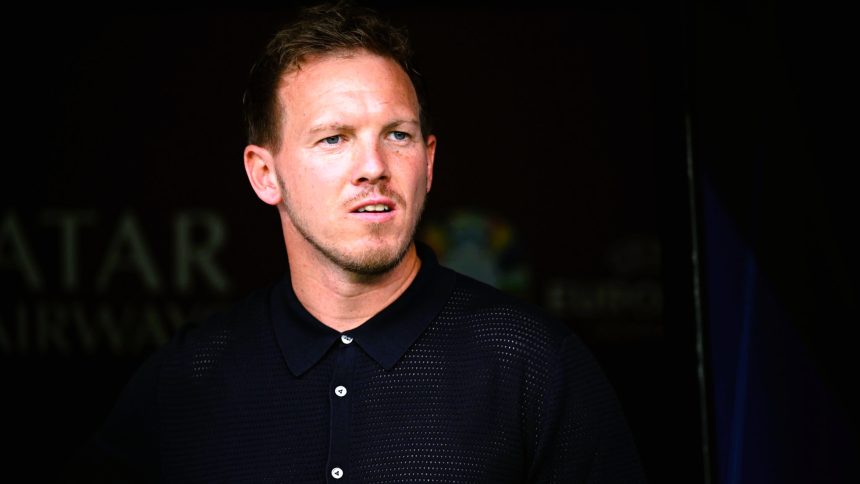









Roberto Martinez has spent three years quietly moulding a team that no longer depends on any single star.
Yes, Cristiano Ronaldo remains the emotional heartbeat — heading into his sixth and almost certainly final World Cup at 41 years of age, a record that may never be equalled — but the Selecao of 2026 is something more complete than any Portuguese generation before it.
In midfield, Vitinha, João Neves, and Bruno Fernandes form a trio of rare intelligence and energy. Out wide, Rafael Leão and Pedro Neto can unmask any defence on the planet.
At the back, Rúben Dias captains a settled, experienced unit, with Nuno Mendes — arguably the finest left-back in world football — bombing forward from PSG form that has been nothing short of sensational.
This is Portugal’s best-ever World Cup squad on paper. The question is whether Martinez can unlock it all when the pressure reaches its peak.
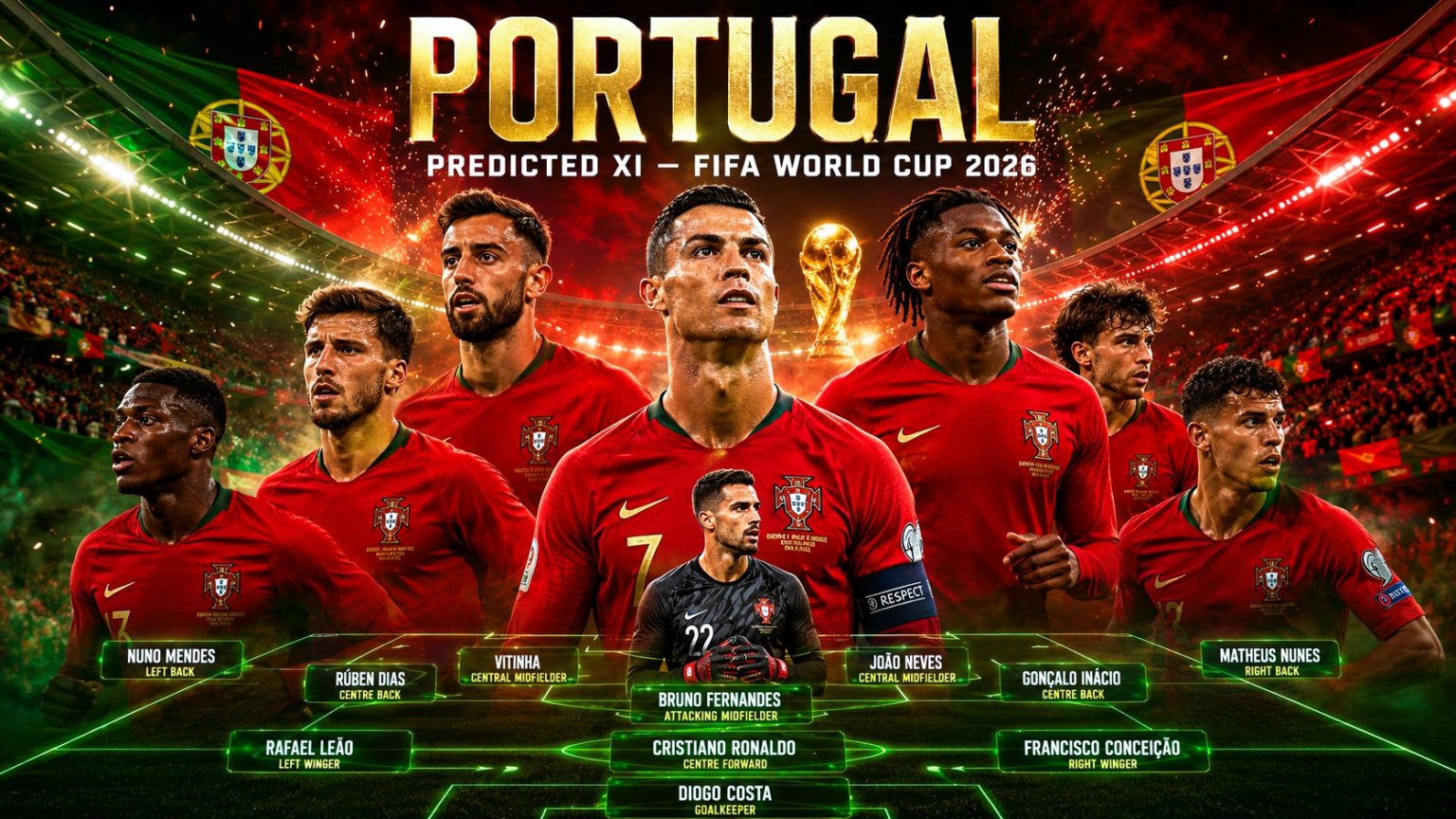
Here is a complete breakdown of the predicted starting XI, formation, tactics, and squad depth heading into Group K.
Portugal Predicted Starting XI for 2026 World Cup (4-3-3)
Martinez has settled overwhelmingly on a 4-3-3 as his base formation through qualifying and the Nations League — a system that provides defensive solidity, midfield control, and enough width for Portugal’s elite attackers to operate.
Here is the predicted best starting lineup:


| Position | Player | Club (2025–26) |
| GK | Diogo Costa | FC Porto |
| RB | Matheus Nunes | Manchester City |
| CB | Gonçalo Inácio | Sporting CP |
| CB | Rúben Dias | Manchester City |
| LB | Nuno Mendes | PSG |
| CM | Vitinha | PSG |
| CM | João Neves | PSG |
| CAM | Bruno Fernandes | Manchester United |
| RW | Francisco Conceição | Juventus |
| ST | Cristiano Ronaldo | Al-Nassr |
| LW | Rafael Leão | AC Milan |
The shape above reflects Martinez’s preference for a high defensive line, an energetic central midfield trio, and direct, wide attackers operating beyond the last line.
Ronaldo leads the line as a central striker — a role he has grown into brilliantly at Al-Nassr in 2025–26, where he has contributed 28 goals — with Leão and Francisco Conceição providing pace and unpredictability out wide.
Portugal Formation and Tactics Under Roberto Martinez
When Martinez took over in 2023, one of his first decisions was to move away from an over-reliance on Ronaldo as the pivot around which everything else operated.
The Spaniard recognised — just as he had with Belgium’s golden generation — that great individual talent needs a structured system to reach its collective ceiling.
His preferred 4-3-3 (which occasionally morphs into a 4-2-3-1 when protecting a lead) is built on three pillars: defensive solidity, midfield domination, and attacking width.
Portugal press high in the opponent’s half, utilising Vitinha and João Neves as mobile, ball-winning shuttlers, while Bruno Fernandes operates as the creative number eight with licence to arrive late into dangerous positions.
Defensively, the full-backs are instructed to stay disciplined — particularly on the right, where Martinez has favoured reliability over adventurousness.
On the left, however, Nuno Mendes is given specific freedom to overlap and combine with Leão, creating a two-vs-one overload that has punished even the best right-sided defences in Europe.
In terms of pressing triggers, Portugal force the ball wide and look to win it back in transition — a system that particularly benefits Leão, who is devastatingly effective in counter-attacking scenarios with space in behind.
Goalkeeper and Defensive Breakdown
Goalkeeper – Diogo Costa
The undisputed number one. Costa has amassed over 40 caps at just 26 and his distribution, commanding presence, and shot-stopping reliability make him one of Europe’s finest young goalkeepers. José Sá and Rui Silva provide experienced backup.
CB – Rúben Dias
The captain and defensive cornerstone. Dias reads the game at an elite level, organises the line with authority, and has been outstanding for City in 2025–26. His leadership is arguably as important as his defensive quality.
CB – Gonçalo Inácio
A ball-playing centre-back of exceptional composure for his age. Inácio’s ability to carry the ball out of defence and switch play is a key feature of Martinez’s build-up game. A first-choice partner for Dias in the current system.
LB – Nuno Mendes
Named in the 2025 FIFPRO World XI, Mendes is the attacking threat from the left that teams simply cannot ignore. His combination play with Leão along the left flank creates one of the most dangerous corridors in world football.
RB – Matheus Nunes
Pep Guardiola’s decision to move Nunes to right-back has paid dividends, and Martinez has adopted the same approach. Athletic, disciplined, and technically confident, Nunes edges Cancelo and Dalot for the starting position in this predicted XI.
Midfield Engine: The Heart of Portugal’s 2026 Team
This is where Portugal’s 2026 squad may be at its most formidable. The midfield trio of Vitinha, João Neves, and Bruno Fernandes combines world-class defensive screening, visionary passing, and relentless energy in a way that very few nations can match.
CM – Vitinha
The first name on Martinez’s teamsheet. Third in the 2025 Ballon d’Or voting and named in the FIFPRO World XI, Vitinha is the tactical brain of this team — a relentless presser with the technical purity to control games in tight spaces. He will be essential to Portugal’s ambitions.
CM – João Neves
One of the most exciting young midfielders in world football. Neves brings outstanding defensive intelligence beyond his years, winning the ball back tirelessly and using it simply. His partnership with Vitinha at PSG means they have elite-level understanding heading into this tournament.
CM – Bruno Fernandes
The FWA Footballer of the Year in 2025–26 after steering Manchester United back into the Champions League. Fernandes is Portugal’s creative fulcrum — his pressing, passing range, and ability to arrive late into the box make him a game-changer at both ends of the pitch.
Bernardo Silva, who has had another exceptional season at Manchester City, offers Martinez elite rotational depth — a luxury most nations would love as a starting option. The Portugal midfield is arguably the most complete in the entire tournament.
Attack: Ronaldo Leads the Line in His Final World Cup
The spotlight, as always, returns to Cristiano Ronaldo. At 41 years old, the most decorated individual player in football history steps onto the World Cup stage for a sixth time — an unparalleled achievement that may define how the tournament is remembered.
Heading into the competition with 143 international goals and 28 club strikes for Al-Nassr this season, Ronaldo remains a genuine goalscoring threat.
What has changed is how Portugal use him. Martinez does not ask Ronaldo to press relentlessly or win the ball back in the way he once might have.
Instead, he is positioned as a classic central striker — occupying centre-backs, making intelligent runs in behind, and arriving in the penalty area to apply the finishing quality that remains, despite all his years, genuinely elite.
The Wide Men
LW – Rafael Leão
Explosive pace, direct running, and an improving end product. Despite a mixed domestic season at Milan, Leão’s ceiling in international football — when given space — is extraordinary. He and Nuno Mendes form a left-side combination that is almost impossible to contain one-on-one.
RW – Francisco Conceição
Son of Sérgio Conceição, Francisco has enjoyed a breakthrough season in Turin. Elusive, technically sharp, and capable of the unexpected, he provides directness and creativity from the right flank that makes him a compelling starting option over Pedro Neto.
Beyond the starters, Portugal’s forward depth is formidable. Pedro Neto and Gonçalo Ramos can each change a game from the bench, while João Félix — mercurial and technically brilliant — remains a wild card capable of producing something spectacular in the knockout rounds. Gonçalo Guedes and Ricardo Horta offer further flexibility in wider areas.
Full Portugal World Cup 2026 Squad
| Position | Player | Club |
| GK | Diogo Costa | FC Porto |
| GK | José Sá | Wolverhampton |
| GK | Rui Silva | Real Betis |
| GK | Ricardo Velho | Almería |
| DEF | Rúben Dias (C) | Manchester City |
| DEF | Gonçalo Inácio | Sporting CP |
| DEF | Nuno Mendes | PSG |
| DEF | Matheus Nunes | Manchester City |
| DEF | Diogo Dalot | Manchester United |
| DEF | João Cancelo | Barcelona |
| DEF | Nélson Semedo | Wolverhampton |
| DEF | Renato Veiga | Chelsea |
| DEF | Tomás Araújo | Benfica |
| MID | Vitinha | PSG |
| MID | João Neves | PSG |
| MID | Bruno Fernandes | Manchester United |
| MID | Bernardo Silva | Manchester City |
| MID | Rúben Neves | Al-Hilal |
| MID | Samuel Costa | Gil Vicente |
| FWD | Cristiano Ronaldo | Al-Nassr |
| FWD | Rafael Leão | AC Milan |
| FWD | Francisco Conceição | Juventus |
| FWD | Pedro Neto | Chelsea |
| FWD | Gonçalo Ramos | PSG |
| FWD | João Félix | Chelsea |
| FWD | Gonçalo Guedes | Benfica |
| FWD | Francisco Trincão | Sporting CP |
Martinez has finalised a squad of 27+1 players, a unique roster confirmed on May 19, 2026. The depth across all lines — particularly in midfield and attack — means Portugal can adapt tactically and cope with injuries without a significant drop in quality.
Portugal World Cup 2026 Group Stage & Schedule
Portugal have been drawn in Group K alongside DR Congo, Uzbekistan, and Colombia.
On paper, this represents one of the more favourable groups for a nation of Portugal’s calibre — but Martinez will be wary of complacency, particularly against Colombia, who will fancy their chances in the final group fixture.
- June 17, 2026: Portugal vs DR Congo, NRG Stadium, Houston, 1:00 p.m. ET
- June 23, 2026: Portugal vs Uzbekistan, NRG Stadium, Houston, 1:00 p.m. ET
- June 27, 2026: Colombia vs Portugal, Hard Rock Stadium, Miami, 9:00 p.m. ET
The opener against DR Congo on June 17 is the game where Martinez will want a statement performance — a convincing victory sets the tone, puts the squad in rhythm, and, crucially, gives Ronaldo a World Cup goal to settle into the tournament.
Uzbekistan in Game 2 should be manageable, and the third match against Colombia — who will also fancy their chances — will likely determine the group’s final standings.
Portugal’s predicted lineup for the DR Congo game mirrors the XI shown above, with the 4-3-3 providing compact defensive shape and the freedom for Leão and Conceição to exploit space against the DR Congo wide defenders.
Key Questions and Rotation Alternatives
Who competes with Conceição for the right wing?
Pedro Neto is the most natural challenger, offering different qualities — less directness, more dribbling craft and intelligent movement — and is likely to start against Colombia if Portugal have already secured qualification.
Bernardo Silva could also feature from the right in a more possession-focused game plan.
What about the right back?
This is arguably Martinez’s most contested position. Diogo Dalot and João Cancelo both have strong claims, but Matheus Nunes’ success in the role at Manchester City under Guardiola gives him the edge in the predicted XI. Cancelo’s experience provides an important fallback option.
Will Ronaldo play all three group games?
Almost certainly yes. Martinez has been clear that Ronaldo remains an active, vital part of the squad, not a ceremonial presence.
Given his Al-Nassr form, there is no footballing reason to rest him in the group stage. Gonçalo Ramos is the impact substitute option when legs tire in the knockout rounds.
Injury concerns
Portugal’s squad depth is sufficient to absorb one or two significant absences, particularly in attack.
The one position where an injury could hurt is the left-back slot — Nuno Mendes is irreplaceable as a starter, and while cover exists, Martinez will be hoping to keep him fit throughout the tournament.
The squad also carries a deeply emotional context: this will be the first major tournament without Diogo Jota, who died in a car crash with his brother André Silva in July 2025.
The shadow of that tragedy — and the motivation it provides — cannot be understated. Portugal will carry Jota’s memory into every game this summer.
Can This Be Portugal’s Best Chance to Win the World Cup?
The case for Portugal as World Cup winners in 2026 is stronger than at any previous point in their history. Their squad has world-class players at almost every position. Their manager has won the Nations League with them.
Their group is navigable. And the emotional weight of Ronaldo’s farewell provides a motivational engine that cannot be manufactured.
But Martinez also arrives in North America carrying the burden of his Belgium tenure — an era in which that nation’s finest-ever generation of players never won the tournament they deserved to.
Portugal know the feeling of wasted potential too: their quarter-final exit to Morocco in Qatar 2022 still stings. This, everyone connected to the Seleção agrees, cannot happen again.
Likely routes through the bracket put Portugal on a potential collision course with Argentina — and Messi — in the quarter-finals. A Ronaldo vs Messi World Cup quarter-final would be one of the most extraordinary sporting events of the modern era. Whether it materialises or not, Portugal’s 2026 story is already compelling beyond measure.
Conclusion
Portugal’s predicted XI for the 2026 World Cup is a lineup that can genuinely challenge the world’s best. Diogo Costa behind a back four led by Rúben Dias; Vitinha and João Neves controlling the midfield engine room with Bruno Fernandes adding creative spark; and up front, Ronaldo flanked by the pace of Leão and Conceição.
Martinez has built something cohesive and well-organised around Portugal’s generational talent. For Ronaldo, this is the last dance — the final chance to hold aloft the one trophy that has always eluded him. For the golden generation around him, it is the moment they must step fully into the light.
Portugal have never won the World Cup. In 2026, they have the squad — and perhaps the destiny — to change that. Vai, Portugal.