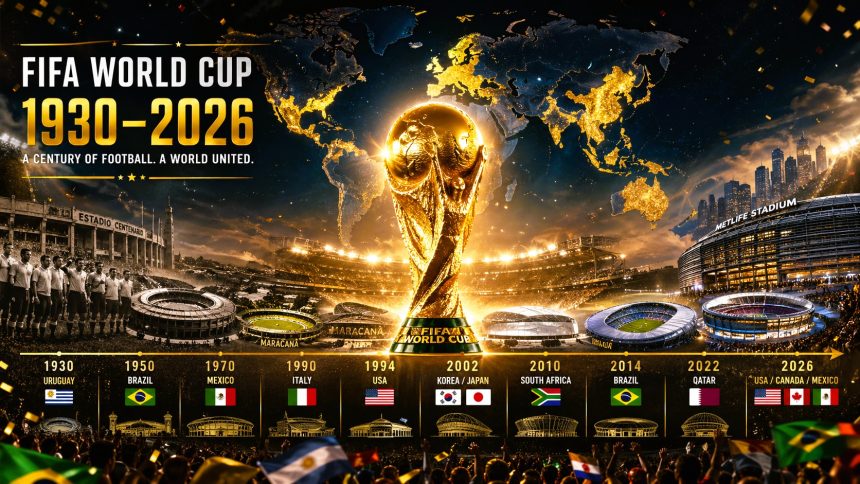








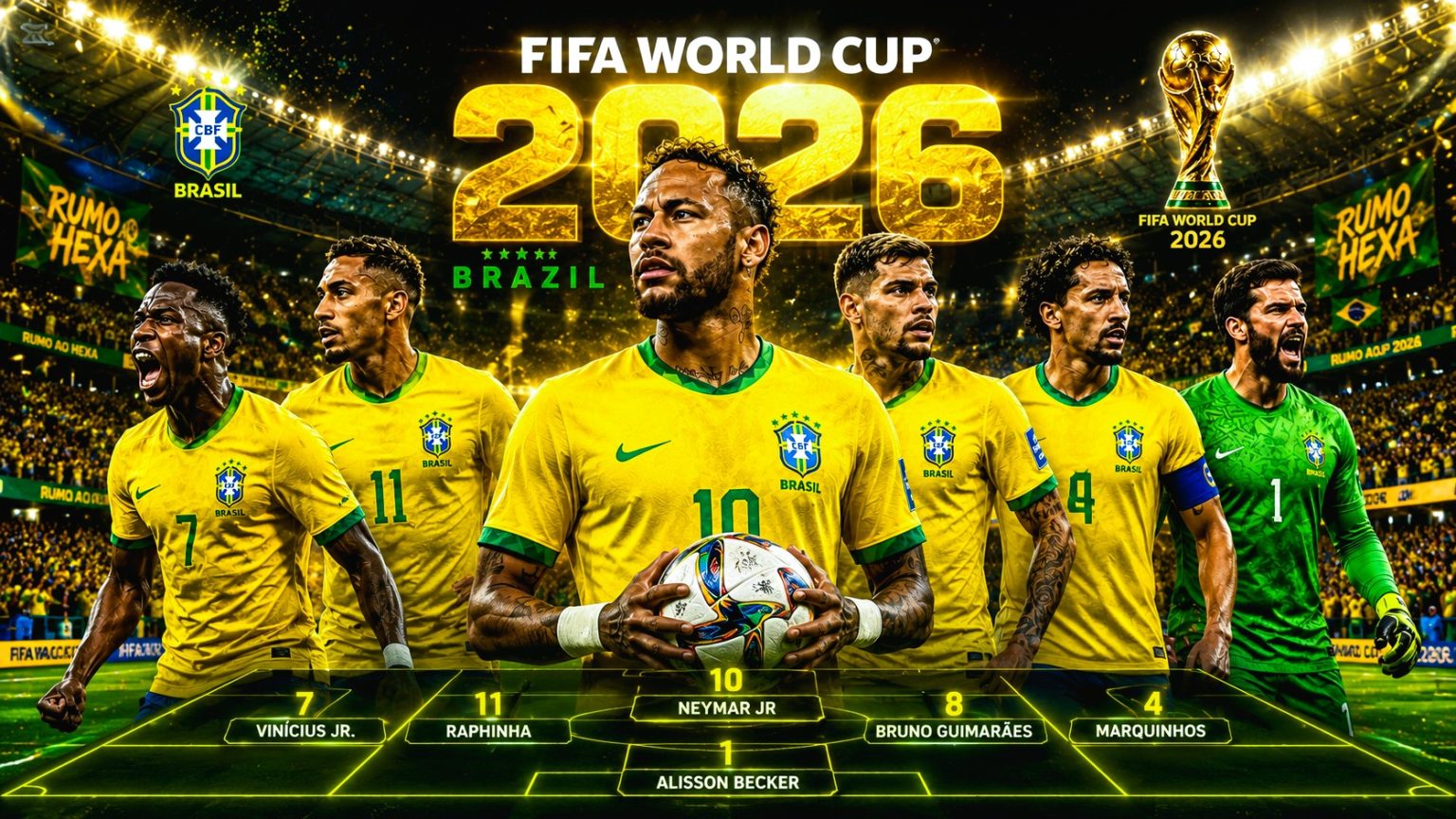

By the time the 2026 FIFA World Cup kicks off across the United States, Canada, and Mexico, all eyes will be on the Seleção. Five-time world champions. The original entertainers. The architects of Samba football.
Brazil arrive at this tournament carrying the weight of a fanbase that has waited 24 long years since their last triumph in 2002 — and the belief that this golden generation might finally end that drought.
Under the steady, experienced hand of Carlo Ancelotti — the first foreign coach to manage the Seleção in their history — Brazil have rebuilt their identity around speed, technique, and attacking brilliance.
But between a chaotic qualification campaign that burned through two coaches, a clutch of devastating injuries to key players, and lingering questions about Neymar’s fitness, the road to glory is anything but smooth.
This is a complete breakdown of Brazil’s best XI for the 2026 World Cup — covering their predicted lineup, tactical setup, full squad, young stars to watch, and the big question: can Brazil win their sixth?
Brazil’s Predicted Starting XI for World Cup 2026
Before we break it down position by position, here is our predicted Brazil starting XI heading into the tournament:
Formation: 4-2-3-1
| POS | PLAYER | CLUB |
| GK | Alisson | Liverpool |
| CB | Marquinhos | PSG |
| Gabriel Magalhães | Arsenal | |
| RB | Wesley | Roma |
| LB | Alex Sandro | Flamengo |
| MF | Casemiro | Manchester United |
| Bruno Guimarães | Newcastle | |
| AM | Vini Jr. | Real Madrid |
| Raphinha | Barcelona | |
| Matheus Cunha | Manchester United | |
| ST | João Pedro | Chelsea |
Note: Rodrygo (ACL), Estêvão (thigh), and Eder Militãohave all been ruled out of the tournament through injury. Their absence significantly reshapes Ancelotti’s options, particularly across the wings and central defence.


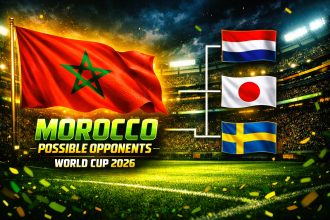
Goalkeeper – Can Alisson Still Lead Brazil’s Defence?
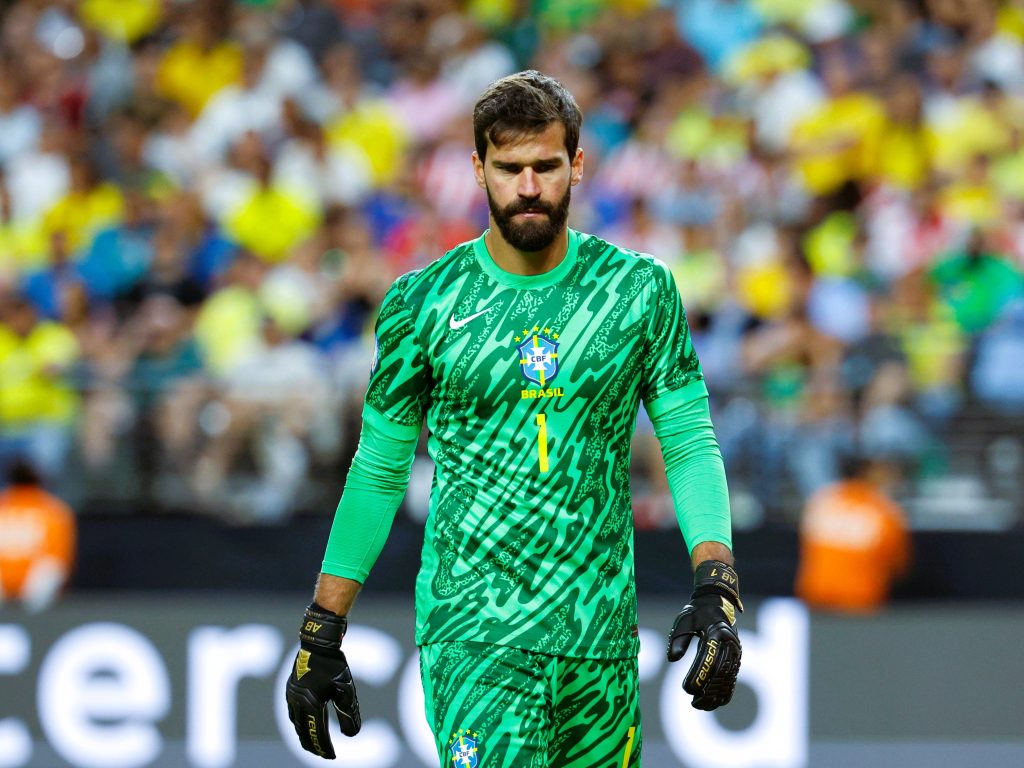
There is no debate about who stands between the sticks for Brazil.
Alisson Becker remains one of the finest goalkeepers on the planet, a near-flawless technician whose reading of the game, distribution, and shot-stopping ability set him apart from almost every rival at this tournament.
The Liverpool number one has been Brazil’s undisputed first choice since the 2018 World Cup cycle.
His communication with the backline, his calmness under pressure, and his ability to act as a sweeper-keeper — vitally important for a team that defends with a high line — make him irreplaceable.
The one concern heading into the summer is fitness. Alisson has dealt with injury issues at club level, and nobody is certain exactly how sharp he will be by the time Brazil open their campaign against Morocco on June 13.
But when he is fit, he is comfortably among the top two or three goalkeepers in world football. Ederson and Hugo Souza provide capable back-up, though the gap between the Liverpool man and his understudies is significant.
Defence – Brazil’s Strongest Back Four
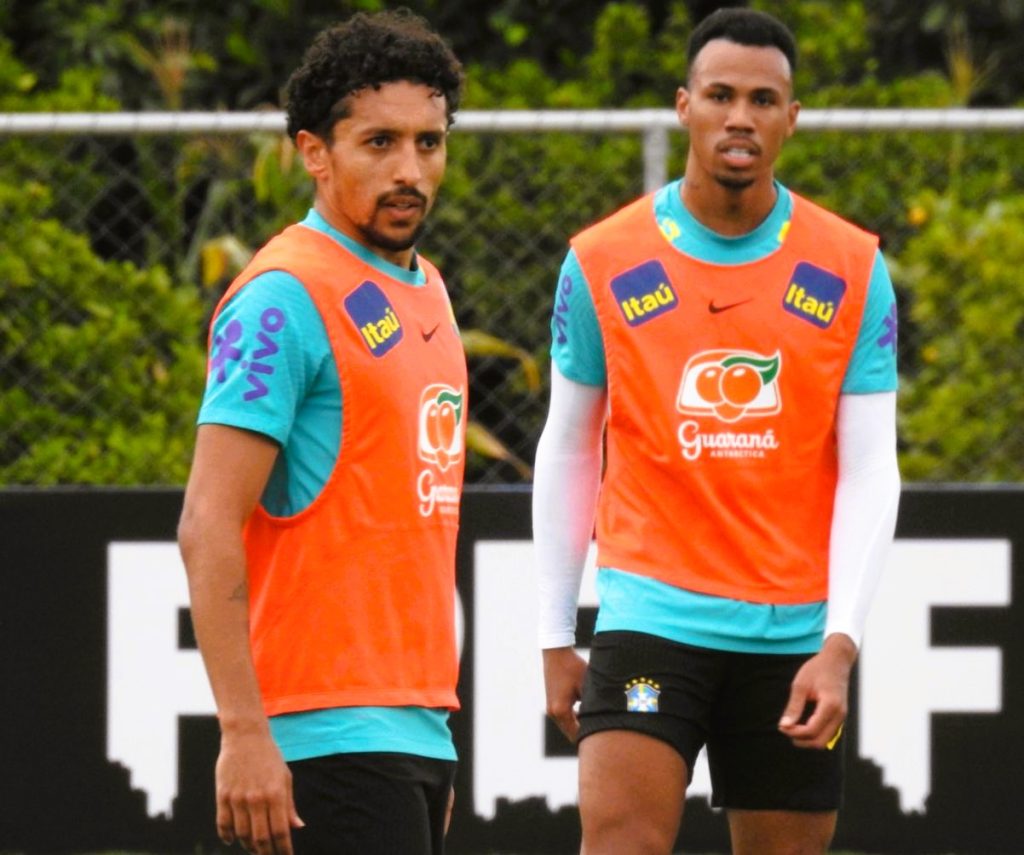
Brazil’s defensive setup heading into 2026 has been considerably disrupted by injury.
The loss of Éder Militão — one of the finest central defenders in world football — is a major blow. Militão’s pace, aerial dominance, and experience at Real Madrid under the highest pressure environments will be sorely missed.
In his absence, the central defensive partnership falls to Marquinhos and Gabriel Magalhães.
Marquinhos, the Paris Saint-Germain captain who has been a Seleção pillar for over a decade, brings experience, leadership, and composure in abundance.
He is the heartbeat of Brazil’s defensive organisation and arguably the most important player in their back line.
Gabriel Magalhães, meanwhile, has developed into one of Arsenal’s most commanding presences — aggressive in the air, confident in possession, and increasingly influential at the highest level of the Champions League.
At right back, Wesley França has established himself as a dynamic, attack-minded option whose ability to overlap and combine with Raphinha on the right flank suits Ancelotti’s system well.
On the left, Alex Sandro provides experience and reliability, though his inclusion remains somewhat debated given his age and the competition around him.
Brazil’s defensive setup may not be their greatest strength in 2026, but Marquinhos as captain and leader anchors a unit that has the quality to withstand the best attacks in the world — provided they remain compact and disciplined.
Midfield – Bruno Guimarães and the Engine Room
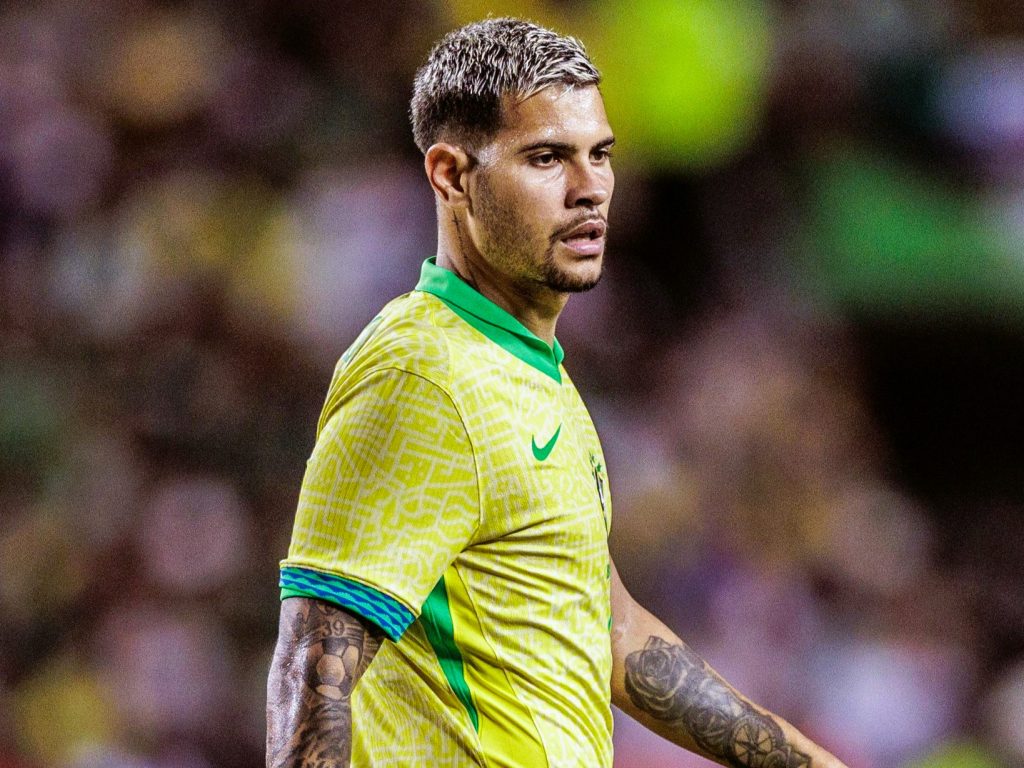
If there is one department where Brazil should feel genuinely confident, it is midfield.
The partnership of Bruno Guimarães and Casemiro at the base of their 4-2-3-1 system provides both the defensive discipline and the creative drive to control matches.
Bruno Guimarães has become one of the most complete midfielders in the Premier League.
The Newcastle United man — who guided the Magpies to their first major trophy in 70 years — brings an extraordinary engine, intelligent pressing, and the technical ability to progress the ball quickly into attacking areas.
He has been a regular starter under Ancelotti’s entire reign and, barring injury, will be the heartbeat of Brazil’s midfield at this tournament.
Casemiro’s role is the more pragmatic one. The Manchester United veteran provides the defensive shield that frees Guimarães and the attacking three to operate with creative licence.
He is the type of player whose impact only becomes visible when he is absent — the midfield anchor who breaks up play, imposes physicality, and transitions the ball with minimum fuss.
Behind them in the number ten role, Brazil’s midfield analysis becomes more complicated.
The injury losses of Rodrygo and Estêvão mean the burden on Raphinha and Vinícius Júnior in the three-behind-the-striker is even greater.
Lucas Paquetá and Andrey Santos provide depth, though Paquetá’s own fitness and form at West Ham makes his role uncertain.
Attack – Vinícius Júnior, Raphinha, and the Star-Studded Front Line
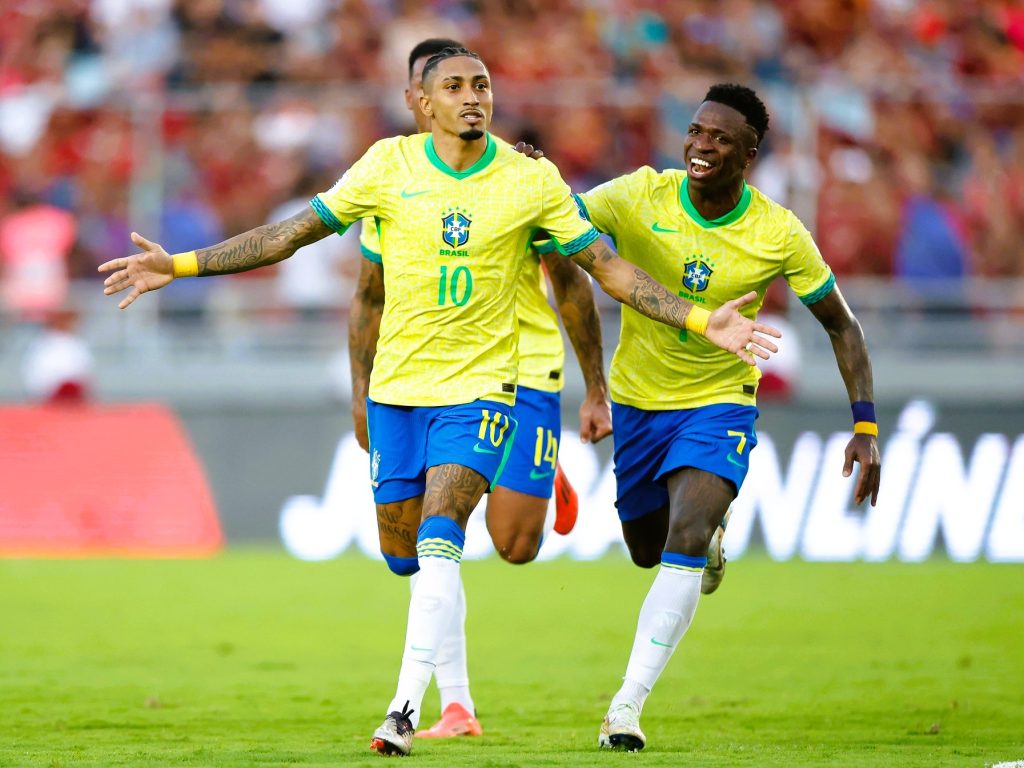
This is where Brazil’s Brazil’s best XI 2026 becomes genuinely mouth-watering, even after the injury setbacks.
Vinícius Júnior is the undisputed talisman. Now 25, the Real Madrid forward has grown from an electrifying but inconsistent winger into one of the deadliest attacking players in world football.
His pace, dribbling, and ability to finish in both wide and central positions make him arguably the most dangerous attacker at this entire tournament.
With 45 caps for Brazil and a growing international goal record, he will be the player opposing coaches spend their pre-match press conferences nervously trying not to talk about.
Raphinha has been in the form of his life at Barcelona under Hansi Flick.
The winger’s link-up play, his aerial threat from wide areas, and his ability to shift centrally and be genuinely decisive in front of goal have elevated him from reliable squad option to genuine match-winner at international level.
If he replicates his club form for the Seleção, he could be one of the players of the tournament.
Up front, in the absence of Rodrygo and Estêvão, the striker role becomes one of Ancelotti’s most intriguing selection puzzles.
Matheus Cunha — whose explosive, unpredictable style and eye for goal at Wolverhampton Wanderers have drawn admiring glances from Europe’s elite — is in contention, as is João Pedro, whose physical presence and goal threat give Ancelotti a different dimension.
Endrick, still only a teenager on loan in France after a January move from Real Madrid, remains one of the most exciting young strikers in world football and cannot be discounted for starting opportunities.
Brazil’s Full Predicted Squad for the 2026 FIFA World Cup
The final 26-man squad is expected to be confirmed around May 18, with the following players forming the core of Ancelotti’s group.
Note that Éder Militão, and Rodrygo have all been confirmed as absent through serious injury.
This squad mixes world-class talent (Vini, Marquinhos, etc.), Premier League-proven players, and youth.
Predictions can shift with last-minute fitness/news—Ancelotti’s experience should help finalize a competitive group for Group C (Morocco, Haiti, Scotland).
Brazil are among the favorites for a deep run or title challenge. What are your thoughts on key debates like Neymar?
Goalkeepers (3)
- Alisson (Liverpool) — Clear No. 1.
- Ederson (Fenerbahçe) — Reliable backup with distribution.
- Bento (Al-Nassr) or Hugo Souza (Corinthians) — Third choice; Bento edges it in most projections for experience.
Defenders (8)
- Centre-backs: Marquinhos (PSG), Gabriel Magalhães (Arsenal), Bremer (Juventus), Léo Pereira or Thiago Silva (veteran experience/leadership).
- Full-backs: Wesley (Roma, right), Danilo (Flamengo), Alex Sandro (Flamengo, left), Douglas Santos or Carlos Augusto (depth).
Rationale: Strong core with European-proven CBs. Marquinhos + Gabriel as the likely starting pair. Veterans provide leadership; injuries (e.g., Militão) open spots.
Midfielders (6–7)
- Bruno Guimarães (Newcastle) — Box-to-box engine.
- Casemiro (Manchester United) — Leadership and defensive steel.
- Lucas Paquetá (likely West Ham or similar) — Creativity.
- Andrey Santos (Chelsea) or João Gomes (Wolves) — Youth/energy.
- Andreas Pereira or Fabinho/Gerson — Utility/depth.
Rationale: Balance of control, experience, and dynamism. Ancelotti favors a solid double pivot (e.g., Guimarães + Casemiro).
Forwards/Attackers (8–9)
- Vinícius Júnior (Real Madrid) — Star attacker.
- Raphinha (Barcelona) — In-form winger.
- Endrick (Real Madrid) — High-upside youngster.
- Matheus Cunha (Manchester United) — Versatile forward.
- João Pedro (Chelsea) or Richarlison (Tottenham) — Striker options.
- Gabriel Martinelli (Arsenal) or Antony — Depth/wing cover.
- Neymar (Santos) — Biggest question mark; included in prelims but fitness is the decider. Many projections lean toward including him for experience/influence (even limited minutes), though some exclude him.
Rationale: Brazil’s attack is stacked. Vini + Raphinha provide width/flair; Cunha/Endrick add goals. Neymar’s inclusion is debated heavily—talent and squad harmony favor a spot if fit enough, but form/injury history could see him cut.
Brazil’s Best Formation and Tactical Setup
Why the 4-2-3-1 System Fits Brazil
Ancelotti’s Brazil have shown tactical flexibility, but the system that best suits this squad in 2026 is a 4-2-3-1. Here’s why.
The double pivot of Casemiro and Bruno Guimarães allows Ancelotti to set his attacking players free with minimal defensive responsibility.
Vinícius Júnior, Raphinha, and a creative number ten can all operate higher up the pitch, pressing aggressively and combining in tight spaces, without exposing the backline.
It also gives Ancelotti the ability to shift to a 4-4-2 shape out of possession — compact, hard to break down, and effective against teams that like to build through midfield.
The pressing system under Ancelotti is built on the speed and intensity of his forwards.
Brazil have been constructed around the ability of Vinícius, Raphinha, and their attacking colleagues to press high, recover the ball quickly, and transition at pace.
Against lower-block defences, the width of the full backs — particularly Wesley’s overlapping runs — creates space for the attacking three to exploit.
Could Brazil Use a 4-2-3-1 or 4-2-4 in 2026?
Early in Ancelotti’s tenure, some formations drifted toward a more adventurous 4-2-4, effectively playing with two strikers and two wide forwards.
That system depends entirely on the full backs providing defensive balance, and it requires full backs who are both technically assured and physically relentless.
With Militão and Rodrygo both absent, the 4-2-3-1 offers greater structural safety.
The Brazil formation 2026 will almost certainly start in this shape, with the option to push into a more attack-minded setup when the game state demands it — particularly in knockout football when a goal is needed.
Brazil’s Tactical Strengths Ahead of the World Cup
Brazil’s attacking football in 2026 is built on several clear principles:
- Transition speed: Brazil are at their most devastating in the first three to five seconds after winning possession. The combination of Vinícius’s raw pace, Raphinha’s directness, and Cunha’s movement creates havoc in counter-attacking moments.
- Pressing intensity: Without the ball, Ancelotti’s side press with structure and purpose. The front four press in coordinated waves, with the double pivot rotating to cover central spaces.
- Individual quality: In any given duel — one vs. one on either wing, or in the final third — Brazil have players capable of winning from nothing. This is not a system-dependent team. It is a team with enough individual quality to solve problems by itself.
Young Brazilian Stars to Watch at World Cup 2026
Brazil’s golden generation is, in many ways, split between experienced stars and a wave of teenagers and early-twenty-somethings who could define the next decade of Seleção football.
Despite several of that young guard being ruled out through injury, there are still thrilling prospects to track this summer.
Endrick
The teenager announced himself to the world with a Champions League goal for Real Madrid against Manchester City at the age of 17.
Now 18 and developing on loan in France, Endrick is the prototype Brazilian wonderkid — physically powerful for his age, technically gifted, and possessing a composure in front of goal that defies his years.
His movement pairs naturally with Vinícius’s drifting runs from the left, creating natural attacking partnerships that Ancelotti has been keen to develop.
If Brazil reach the knockout rounds and need a fresh goal threat from the bench, Endrick will be Ancelotti’s first call.
Estêvão Willian — The One Who Will Miss Out
It would be wrong not to mention Estêvão, even though his 2026 World Cup dream is over.
The Chelsea winger suffered a muscle injury to his right thigh during his club’s defeat to Manchester United in April, and medical staff from both Brazil and Chelsea could not guarantee a full recovery in time.
The 19-year-old was reportedly in tears in the dressing room after the incident — a heartbreaking moment for one of the most gifted teenagers in world football.
He had scored eight goals in 36 appearances for Chelsea since joining from Palmeiras, and had netted five times in 11 Brazil caps. His absence is a significant loss for Ancelotti’s attacking plans.
Andrey Santos
The Chelsea midfielder has had a challenging season in west London, but his technical quality and engine as a box-to-box presence still make him a fascinating prospect at international level.
His inclusion in the squad — should it be confirmed in the final 26 — would give Brazil a dynamic, youthful option in the middle of the park capable of supporting both defence and attack.
Igor Thiago
The Brentford striker has staked a genuine claim for World Cup involvement after an eye-catching Premier League season.
A powerful, mobile centre-forward who combines hold-up play with a sharp goal instinct, Thiago has given Ancelotti a template different from anything else in his attacking options.
If Brazil need physicality and directness through the middle, he could be the answer.
Will Neymar Play at the 2026 FIFA World Cup?
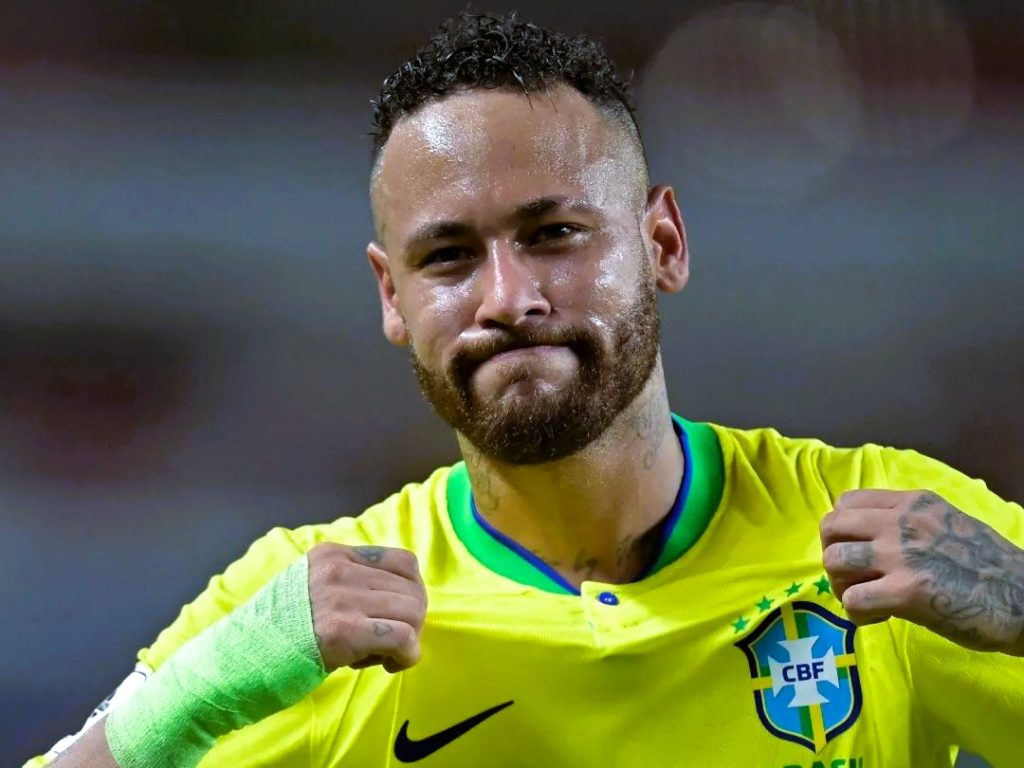
The question that has dominated Brazilian football debate for two years now finally has a partial answer — and it is more optimistic than most expected even a month ago.
Neymar’s Possible Role in the Squad
Brazil’s all-time record scorer with 79 international goals has been included in Ancelotti’s 55-man preliminary list submitted to FIFA — a significant step toward a fourth World Cup appearance.
It came as a genuine surprise given that Ancelotti had left the 34-year-old out of every squad since taking charge, previously stating he would “only call up players who are physically ready.”
Neymar’s return to form at Santos — including goals in successive appearances — appears to have shifted the calculus.
Yet the path to the final 26-man roster, expected to be announced around May 18, remains narrow.
Up to 29 players from the preliminary list will miss out. Neymar still has high-stakes fixtures against Coritiba to use as auditions, and his track record of injury in 2026 alone — including a spell sidelined from January through mid-February with knee soreness — remains the overriding concern.
Can Neymar Start Every Match?
Realistically, no. Even if Neymar makes the final squad and travels to the United States, the idea of him starting three group-stage matches and then powering through the knockout rounds is a stretch that very few analysts will commit to.
He has not played for the national team since rupturing his ACL against Uruguay in October 2023 — nearly three years of intermittent rehabilitation, injury recurrence, and patchy club form. His career has never fully recovered from that night in Montevideo.
The more realistic scenario, if he makes the squad at all, is a supersub role — someone Ancelotti can bring on when a game needs unlocking, when Brazil trail in a knockout match and need individual brilliance to change the dynamic.
In that role, the threat Neymar still carries is real. He remains one of the most technically gifted players ever to represent the Seleção.
Brazil’s Future Beyond Neymar
Regardless of what happens in 2026, the Neymar era is drawing to a close. The generation that will carry Brazil through the 2030 cycle already contains the likes of Endrick, Gabriel Martinelli, and the injured but supremely talented Estêvão.
The Seleção’s next generation squad is built around pace, directness, and versatility — a very different kind of Brazilian football than the Neymar-centred approach of the 2014 and 2018 tournaments.
This summer, whether Neymar features or not, will be the bridge between those two eras.
Brazil’s Biggest Strengths and Weaknesses Before World Cup 2026
Biggest Strengths
Attacking quality. Even after injuries to Rodrygo, Militão, and Estêvão, Brazil’s strongest attack remains one of the most feared in the world.
Vinícius Júnior and Raphinha on either side of a creative number ten, with the pace and power of Cunha, Endrick, or João Pedro through the middle, gives Ancelotti an attacking lineup capable of dismantling any defence on the planet on their day.
Midfield balance. The Casemiro-Guimarães partnership is one of the best double pivots Brazil have had in years.
The combination of defensive solidity and dynamic ball progression makes Brazil difficult to press and difficult to pin back.
Experience and leadership. Marquinhos and Alisson provide the kind of leadership that cannot be coached.
They have been through elite knockout football at the very highest level. In the pressure-cooker environment of a World Cup knockout stage, that experience is invaluable.
Key Weaknesses
Injury disruption. Losing Rodrygo, Militão, and Estêvão in the build-up to a World Cup would hurt any side.
Brazil are deeper than most, but the cumulative effect of those absences — particularly in wide and central defensive areas — does leave Ancelotti’s squad thinner than it should be.
Inconsistency under pressure. For all their attacking fluency, Brazil have shown a vulnerability in matches where they fall behind.
Their CONMEBOL qualifier campaign saw flat performances against sides they should have dominated.
Ancelotti must address that mental fragility before the tournament begins.
Defensive cohesion. Without Militão alongside Marquinhos, the central defensive pairing lacks the elite pedigree of Brazil’s best years.
Gabriel Magalhães is a fine player, but the Marquinhos-Militão axis that functioned at Qatar 2022 was a different level entirely.
Areas Brazil Must Improve
Brazil’s pressing system needs to be sharper and more consistent than it has been during qualifying.
There have been matches in the CONMEBOL qualifiers where the high press broke down too easily, exposing the backline to direct balls in behind.
Against the speed of European forwards in the knockout stages, that vulnerability must be corrected.
Set piece defending has also been an area of concern. Brazil have conceded from dead-ball situations in recent fixtures — a problem that Ancelotti, a manager famous for his club-level preparation and attention to detail, will want to eliminate before June 13.
Brazil’s 2026 Squad Compared to the Qatar 2022 Team
Key Differences From Qatar 2022
The Brazil that arrives in North America in 2026 is markedly different from the side that fell so heartbreakingly to Croatia on penalties in Qatar.
That team was built around a 4-2-3-1 framework with Neymar as the central creative force — the conductor around whom everything else was orchestrated.
This team is more collectively driven, with the attacking threat distributed across multiple players rather than concentrated in a single genius.
The coaching change is also transformative. Where Tite’s Brazil were meticulous but occasionally rigid, Ancelotti’s approach is built on winning the confidence of his best players and giving them the freedom to express themselves.
His man-management — honed through decades working with galactics at Real Madrid, Bayern Munich, and Chelsea — is arguably his greatest asset.
New Players in the Squad
The most significant new faces are generational. Endrick was barely a teenager at Qatar 2022; now he is a Real Madrid player with Champions League experience.
Estêvão Willian, cruelly absent through injury, represents a talent that Qatar 2022 could not even have imagined.
Matheus Cunha, Igor Thiago, and Andrey Santos are all players whose international opportunities have multiplied under Ancelotti.
Tactical Changes Since 2022
The shift away from Neymar as the absolute centre of Brazil’s offensive identity is the clearest tactical evolution.
Ancelotti’s Brazil want width, pace, and interchangeability in the attacking line — a pressing system that works in coordinated waves rather than relying on individual improvisation.
The full backs play a far more significant role in the 2026 model than they did in 2022, with their overlapping runs creating overloads that the front three can exploit.
Can Brazil Win Their Sixth FIFA World Cup in 2026?
Brazil’s Chances Against Europe’s Elite
The 2026 World Cup field is impossibly strong. England, France, Spain, Germany, and Portugal all arrive with squads capable of winning the tournament.
Brazil are not the overwhelming favourite they might have appeared four years ago.
And yet. The tournament takes place on home soil for the Americas — a factor that should not be underestimated, with 80 of the 104 matches played in the United States, and the atmosphere in cities from Los Angeles to New York carrying the warmth of a continent that embraces Brazilian football with genuine passion.
Why Brazil Could Dominate the Tournament
The attacking fluency that Ancelotti has developed — Vinícius at his electric best, Raphinha in the form of his club career, and a striker who can hold the line and link play — gives Brazil a template for dismantling any defensive structure.
In knockout football, when matches tighten and individual moments decide everything, Brazil have the players to manufacture genius from nothing.
Their Brazil squad depth, even after the injuries, is extraordinary.
The ability to bring on Endrick, change the shape, or switch from a possession-based approach to a counter-attacking game gives Ancelotti flexibility that few other managers at this tournament will enjoy.
What Could Stop Brazil?
History, principally. Brazil have not won a World Cup since 2002 — a sequence now stretching across six tournaments and including the trauma of the 7-1 against Germany on home soil in 2014.
The psychological weight of that record is real, and it will not disappear simply because Ancelotti is in charge.
The injury list is another concern. Brazil need their best players fit and available from the group stage through to the final.
Any further setbacks — and Alisson’s return from injury remains a watch point — and the squad begins to look stretched.
Finally, there is the question of consistency. The best World Cup winners — France in 2018, Germany in 2014 — found ways to win when they were not at their best.
Brazil, for all their individual quality, have not always demonstrated that capacity in recent tournaments.
It is the one thing Ancelotti must manufacture: the ability to grind out results when the Samba football refuses to come.
Frequently Asked Questions
What is Brazil’s best lineup for the 2026 FIFA World Cup?
Brazil’s strongest lineup in 2026 is expected to feature Alisson in goal; Wesley, Marquinhos, Gabriel Magalhães, and Alex Sandro in defence; Bruno Guimarães and Casemiro as the double pivot; with Vinícius Júnior, Raphinha, and Matheus Cunha operating behind João Pedro or Endrick as the striker. The preferred formation is a 4-2-3-1, with Ancelotti having the flexibility to shift shape based on the opponent and the match situation.
Will Neymar play in the 2026 FIFA World Cup?
Neymar has been included in Brazil’s 55-man preliminary squad submitted to FIFA, which is a significant step toward tournament involvement. However, his place in the final 26-man roster — expected to be confirmed around May 18 — is not guaranteed. He has not played for the national team since October 2023 and has battled persistent fitness issues throughout 2025 and 2026. Even if selected, a starting role in every match seems unlikely given the gaps in his match sharpness.
Who are Brazil’s key players for World Cup 2026?
Brazil’s key players for the 2026 FIFA World Cup include Vinícius Júnior, Raphinha, Bruno Guimarães, Marquinhos, and Alisson. Vinícius is expected to be the team’s attacking talisman, while Bruno Guimarães and Casemiro provide midfield balance. Raphinha’s creativity and Marquinhos’ leadership will also be crucial to Brazil’s title hopes.
What formation will Brazil use in 2026?
Carlo Ancelotti’s preferred formation is a 4-2-3-1, with a double pivot of Casemiro and Bruno Guimarães protecting a backline of four, and three attacking midfielders operating behind a centre-forward. The system is designed to give Vinícius Júnior and Raphinha maximum freedom on either flank while maintaining defensive structure. A 4-2-4 variant remains possible when Brazil are chasing a result in the late stages of a knockout match.
Can Brazil win the 2026 FIFA World Cup?
Yes — Brazil are genuine contenders. Despite the injury setbacks and the questions around Neymar, the Seleção’s attacking quality, midfield balance, and squad depth make them one of the favourites to lift the trophy in the final on July 19 in New York. The five-time world champions have the individual quality to beat any team on the planet on any given night. Whether Ancelotti can build the collective resilience to sustain that across seven matches is the central question of their tournament.
Conclusion
Brazil’s best XI for the 2026 FIFA World Cup is built around two of the most exciting attacking players in world football, a midfield partnership that provides both muscle and creativity, and a defensive core anchored by one of the great leaders of his generation.
The injuries to Rodrygo, Militão, and Estêvão hurt. The Neymar question remains open. The CONMEBOL qualifying campaign was not always convincing.
But none of that changes the fundamental reality: Brazil, under Carlo Ancelotti, are a team built to win football’s greatest prize.
Their Brazil strongest lineup on paper is as fearsome as any in the world. Their Brazil predicted lineup is young enough to grow within the tournament and experienced enough not to be broken by it.
The Seleção have waited 24 years. A nation of 220 million is ready.
The only question is whether this Brazil World Cup team can find the consistency, the resilience, and the moments of individual brilliance to go all the way.
If Vinícius Júnior stays fit, if Raphinha translates his Barcelona form to the international stage, and if Ancelotti finds the right balance between attacking expression and defensive solidity — do not bet against them.