







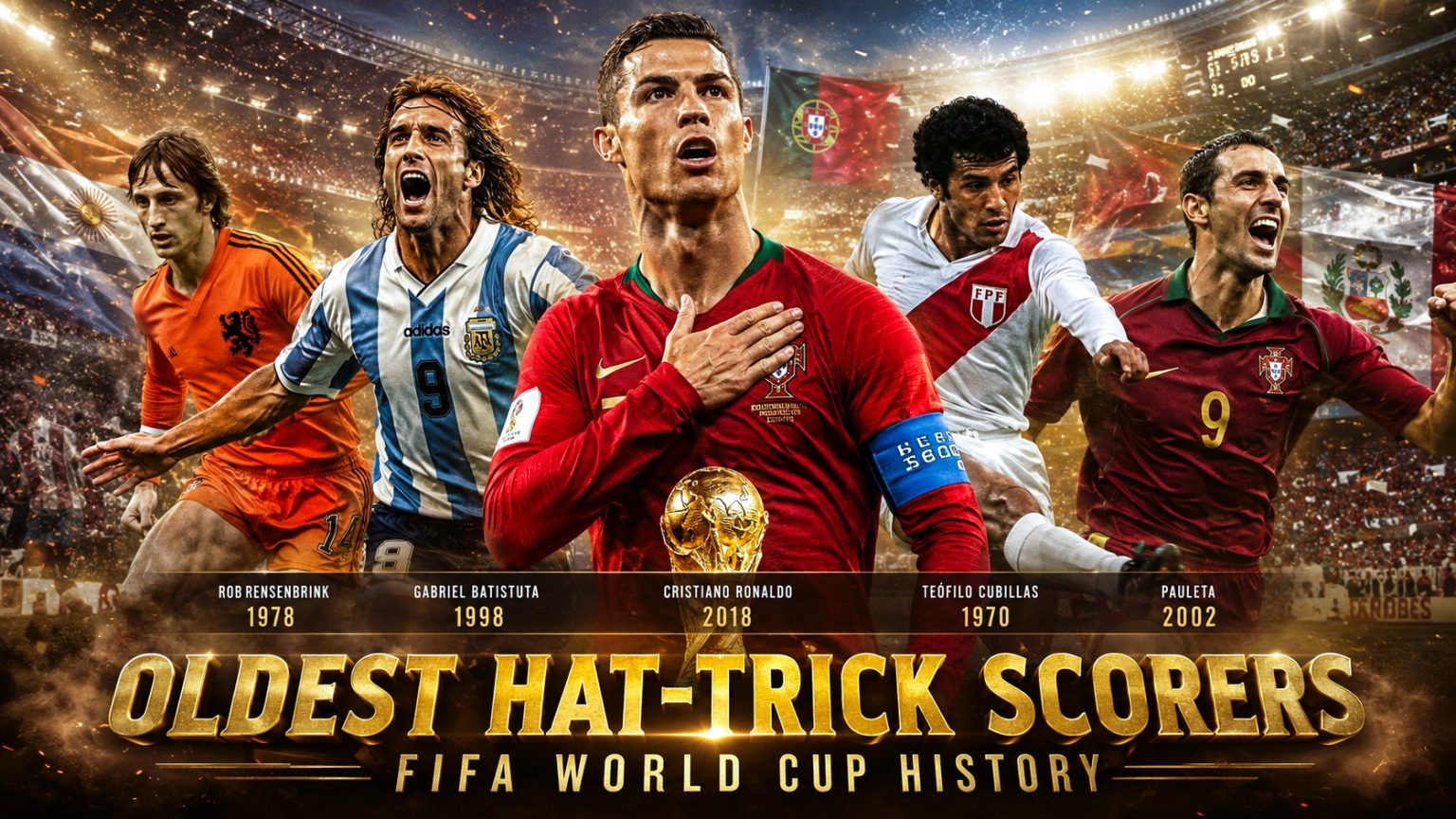

Scoring a single goal at a FIFA World Cup requires a rare blend of technical excellence, mental composure, and fortunate circumstance. Scoring three in a single match — a hat-trick — demands all of that, amplified, sustained across ninety minutes of the highest-stakes football on the planet.
In the entire history of the tournament, stretching back to Uruguay in 1930, hat-tricks have remained astonishingly scarce: barely more than 50 have been recorded across nearly a century of competition.
But within that already exclusive club, an even more rarefied category exists — those players who delivered their treble not in the hungry flush of youth, but as seasoned, experienced footballers who had learned, across thousands of matches, exactly how to impose themselves on the world’s greatest defenders.
This is the complete story of the oldest hat-trick scorers in FIFA World Cup history: who they were, what they did, and why those performances continue to define the record books decades later.
Complete Ranking: Oldest Hat-Trick Scorers in World Cup History
The table below ranks the ten oldest hat-trick marksmen in FIFA World Cup history, verified against official FIFA records. Each entry represents a landmark individual performance and a defining moment in their nation’s World Cup history.
| Rank | Player | Country | Age | Tournament | Opponent | Score |
| 1 | Messi | Argentina | 38 years and 358 days old | 2026 | Algeris | 3-0 |
| 2 | Cristiano Ronaldo | Portugal | 33y, 130d | 2018 | Spain | 3–3 |
| 3 | Rob Rensenbrink | Netherlands | 30y, 335d | 1978 | IR Iran | 3–0 |
| 4 | Pedro Cea | Uruguay | 29y, 329d | 1930 | Yugoslavia | 6–1 |
| 5 | Gabriel Batistuta | Argentina | 29y, 140d | 1998 | Jamaica | 5–0 |
| 6 | Teofilo Cubillas | Peru | 29y, 95d | 1978 | IR Iran | 4–1 |
| 7 | Max Morlock | West Germany | 29y, 43d | 1954 | Turkey | 7–2 |
| 8 | Pauleta | Portugal | 29y, 43d | 2002 | Poland | 4–0 |
| 9 | Preben Elkjaer | Denmark | 28y, 270d | 1986 | Uruguay | 6–1 |
| 10 | Angelo Schiavio | Italy | 28y, 224d | 1934 | USA | 7–1 |
Related Articles You May Enjoy:
- FIFA World Cup Winners List — All Champions (1930–2022)
- All-Time Golden Boot Winners — World Cup Top Scorers
- FIFA World Cup Golden Glove Winners
- FIFA World Cup Golden Ball Winners
- FIFA World Cup Best Young Player
- Oldest Goal Scorer in World Cup History
Oldest World Cup Hat-Trick Scorers Ranked
1. Cristiano Ronaldo (Portugal) — 33 years, 130 days
2018 FIFA World Cup vs Spain
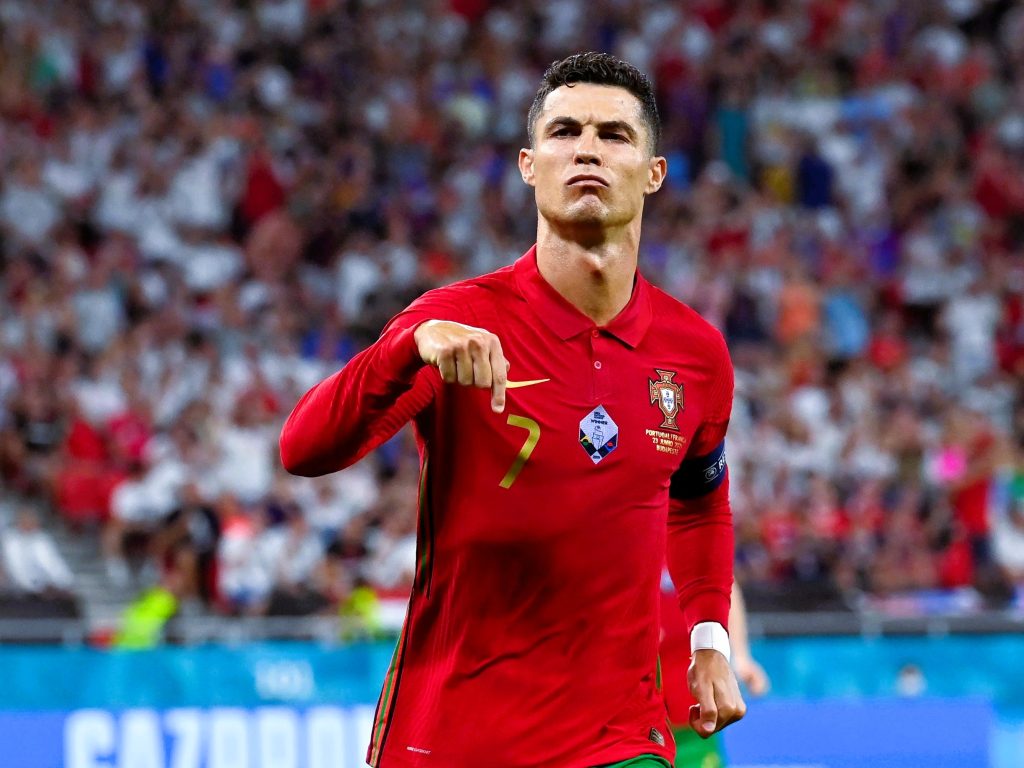
Portugal’s opening Group B fixture at Russia 2018 was billed as a competitive clash between Iberian neighbours.


What unfolded in Sochi was something altogether more extraordinary — one of the most dramatic matches in modern World Cup history, built almost entirely around one man.
Cristiano Ronaldo, then 33 years old and in what many expected to be his final World Cup, delivered a performance for the ages.
Spain arrived in Russia in turmoil. Manager Julen Lopetegui had been sacked just 48 hours before the tournament began, following the announcement of his future move to Real Madrid.
Yet on the pitch, La Roja were organised, dangerous, and tactically sharp. This was not a weakened opponent — it was a team among the tournament favourites, featuring Diego Costa, David Silva, Isco, and one of the world’s finest goalkeepers in David de Gea.
Ronaldo opened the scoring from the penalty spot in the fourth minute after a foul by Diego Costa on Nacho.
Spain equalised through Costa himself, then went ahead via a spectacular volley from Nacho — credited as an own goal in some records but a genuine strike in others.
Trailing in a World Cup group-stage match, Ronaldo levelled once more from the spot. With Portugal apparently settling for a draw, Spain pushed forward and scored a third through Iago Aspas.
Then, in the 88th minute, with Portugal staring at a 3-2 defeat against one of the world’s best sides, Ronaldo stepped over a free-kick from roughly 25 yards.
What followed has become one of the most replayed moments in recent World Cup history: a perfectly struck, swerving delivery that caught David de Gea at his near post and curled into the net.
The stadium erupted. The hat-trick was complete. The draw was secured. And a record had been set.
At 33 years and 130 days old, Ronaldo became the oldest player in FIFA World Cup history to score a hat-trick — a record that remains unbroken.
What elevated the performance beyond the merely statistical was its context: three goals against Spain, under maximum pressure, with the match slipping away, delivered with composure that no amount of youth can manufacture.
It was experience and genius operating in concert, and it produced one of the great individual performances in World Cup history.
2. Rob Rensenbrink (Netherlands) — 30 Years, 335 Days
1978 FIFA World Cup vs Iran
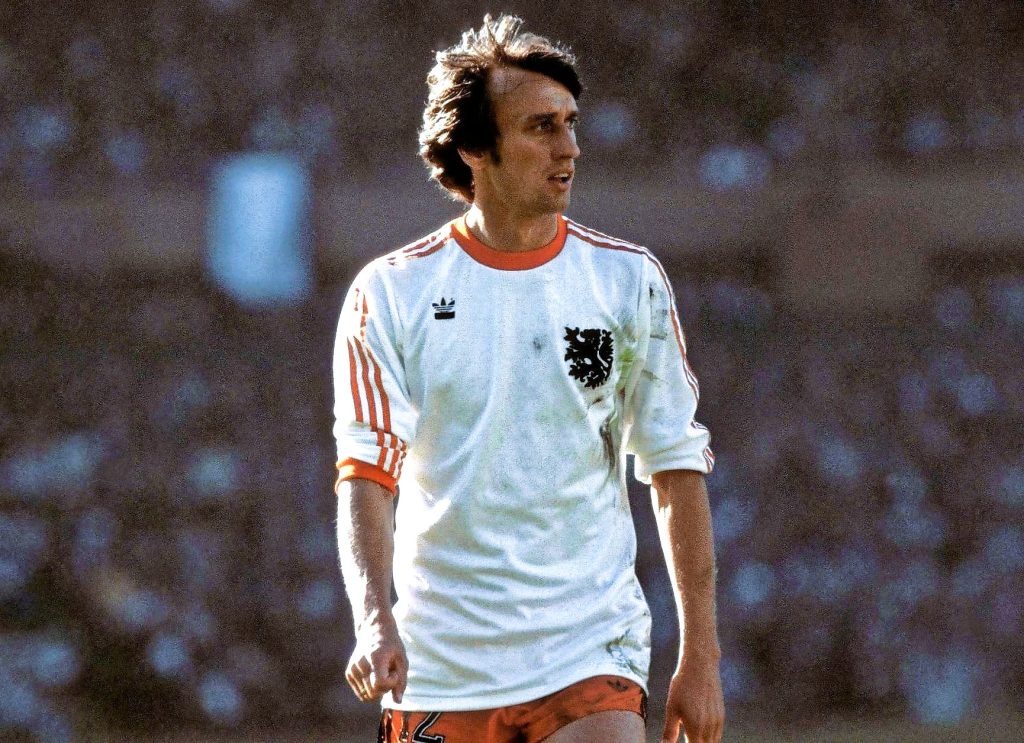
Rob Rensenbrink is perhaps the most underappreciated hat-trick scorer in World Cup history — a supremely gifted attacking winger who reached the peak of his international powers at the 1978 World Cup in Argentina.
Technically exceptional, intelligent in movement, and lethal with both feet and from dead-ball situations, Rensenbrink was one of the finest attacking players in Europe throughout the 1970s, spending the bulk of his career at Anderlecht where he became a legend.
His hat-trick against IR Iran in the group stage of Argentina 1978 was a display of fluid, instinctive attacking football at its finest.
The Netherlands, even in the absence of Johan Cruyff — who had withdrawn from the tournament under circumstances that remain debated to this day — remained one of the world’s strongest sides, built on the framework of Total Football that had dazzled at the previous World Cup.
Against Iran, making only their second World Cup appearance, Rensenbrink was irresistible.
His three goals in a convincing 3-0 win demonstrated the breadth of his technical repertoire: intelligent runs in behind the defensive line, precision finishing from close range, and the composed execution that defined his best performances.
He finished the tournament as one of its leading scorers with five goals.
The Netherlands reached the 1978 World Cup Final, where they faced hosts Argentina in a tensely charged game in Buenos Aires.
They lost 3-1 after extra time in deeply controversial circumstances, amid widespread criticism of the refereeing and the Argentinian crowd’s behaviour.
Rensenbrink’s contribution throughout the campaign was fundamental — and he is forever associated with one of the most agonising near-misses in World Cup Final history: a late shot that struck the post with the score at 1-1, which had it gone in would have delivered the World Cup to the Netherlands in regular time.
3. Pedro Cea (Uruguay) — 29 Years, 329 Days
1930 FIFA World Cup vs Yugoslavia
No player on this list occupies a more historically significant position than Pedro Cea of Uruguay.
His hat-trick against Yugoslavia was scored at the 1930 FIFA World Cup — the very first edition of the tournament, held in Montevideo — making Cea one of the foundational figures in the entire history of World Cup football.
To score a hat-trick at the inaugural tournament is to have one’s name inscribed permanently at the origins of the sport’s grandest competition.
The 1930 World Cup was structured differently to the modern tournament.
There were no group stages in the format we recognise today, and the pathway to the final ran through a semi-final.
Uruguay faced Yugoslavia, one of Europe’s more formidable sides in that era, in what proved to be a comprehensive demolition: a 6-1 victory in which Cea’s hat-trick formed the backbone of the performance.
Uruguay were the overwhelming favourites as host nation and reigning Olympic champions, having won gold at both the 1924 and 1928 Olympics.
Their squad was stacked with exceptional talent — Héctor Scarone, José Nasazzi, José Leandro Andrade — and Cea was among its most important attacking contributors.
A centre-forward of intelligence and composure, he combined well with the creative players around him and was a consistent scorer throughout the tournament.
Uruguay went on to defeat Argentina 4-2 in the inaugural World Cup Final, becoming the first-ever world champions.
Pedro Cea scored in that final as well — his contribution to Uruguay’s triumph thus stretched across both the semi-final and the decisive match.
His hat-trick against Yugoslavia was not only the third-oldest in World Cup history by player age, but one of the oldest performances in World Cup history, full stop — a reminder that the age records on this list connect the present back to the very founding of the competition.
Pedro Cea’s inclusion on this list is a corrective to the tendency in modern football analysis to neglect the pre-war and early-post-war eras.
The 1930 World Cup was played in a different football world — no television coverage, minimal international football infrastructure, and players who were in many cases amateurs or semi-professionals.
That Cea’s performance at 29 years and 329 days stands third on this all-time list nearly a century later speaks to both the historical depth of this record and the enduring quality of what he produced in Montevideo.
4. Gabriel Batistuta (Argentina) — 30 Years, 199 Days
1998 FIFA World Cup vs Jamaica
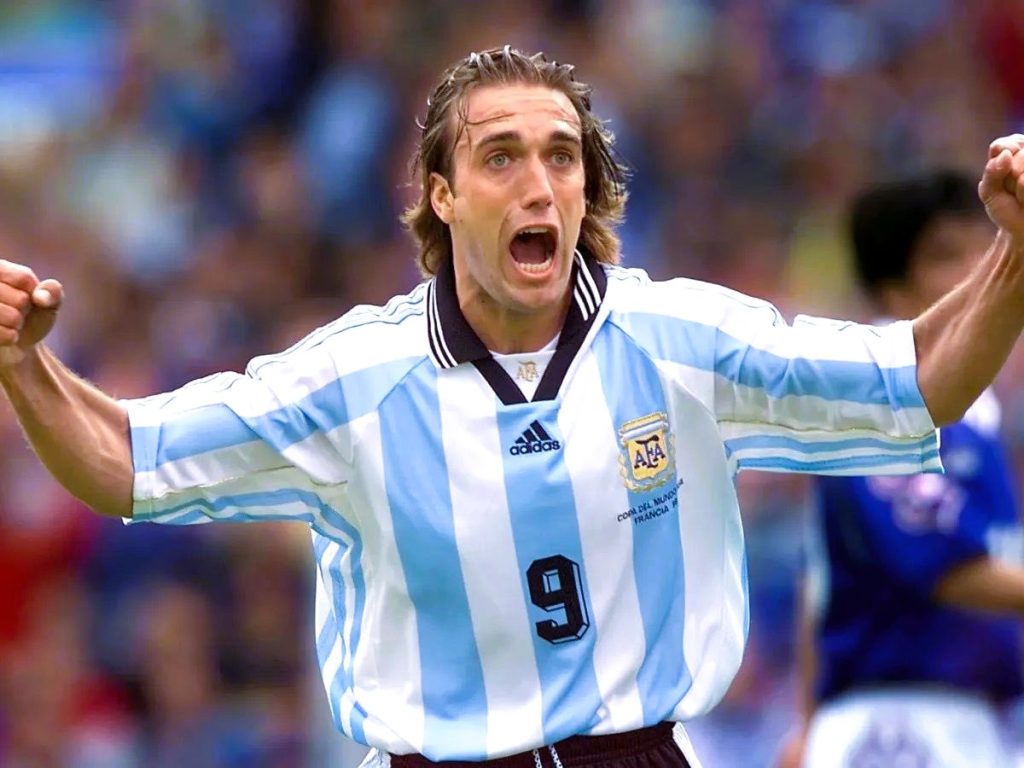
Gabriel Batistuta — universally known as “Batigol” — is one of the most feared strikers in World Cup history and Argentina’s all-time leading scorer at the tournament.
His hat-trick against Jamaica in France 1998 was a masterclass in the art of penalty-box finishing from a player at the absolute peak of his powers.
Explosive over short distances, ferociously powerful with both feet, and possessed of an almost supernatural instinct for where the goal was, Batistuta at his best was simply unstoppable.
In Daniel Passarella’s Argentina, Batistuta was the team’s reference point — the striker around whom creative players orbited and whose movement created the spaces that midfielders exploited.
Against Jamaica, making their first and to date only World Cup appearance, Argentina’s quality was overwhelming, and the 5-0 scoreline reflected the difference in class between the two sides.
Batistuta’s three goals were not merely the product of an easy fixture; they were the work of a complete centre-forward operating with surgical precision against an opponent who could not contain him.
What elevates Batistuta into a category entirely his own among this list’s five players is the extraordinary fact that France 1998 was his second World Cup hat-trick.
He had already scored a treble against Greece at USA 1994, four years earlier, making him at the time the only player in history to score hat-tricks at two different World Cup tournaments.
That distinction has since been equalled — but it remains one of the most remarkable individual achievements in the competition’s history.
Batistuta’s career total of ten World Cup goals across three tournaments places him among the elite group of South American scorers at the competition.
His hat-trick against Jamaica was not the flashiest performance in the 1998 tournament — that distinction belongs perhaps to Ronaldo’s displays for Brazil — but it was among the most clinically efficient.
Batigol, as always, did not need spectacular circumstances to produce spectacular results.
5. Teófilo Cubillas (Peru) — 29 Years, 95 Days
1978 FIFA World Cup vs IR Iran
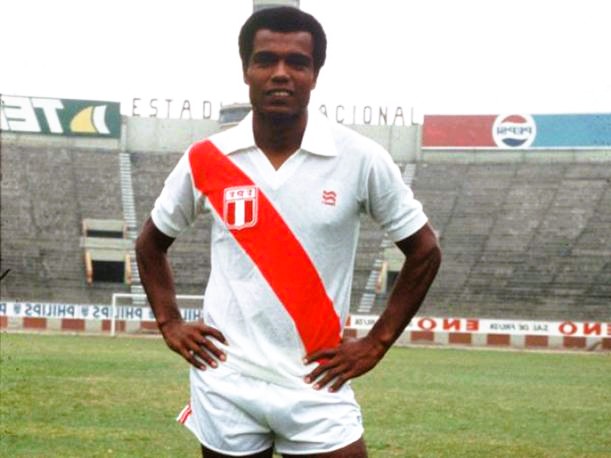
Teófilo Cubillas at the 1978 World Cup in Argentina was one of the competition’s great individual stories.
Widely known for his brilliance at Mexico 1970 — where he had announced himself to the world as a teenager of exceptional talent — Cubillas returned eight years later to produce a second landmark tournament.
His hat-trick against IR Iran in a commanding 4-1 victory in Group D was a display of mature, intelligent attacking football from a player who had added tactical depth and physical experience to the natural gifts that had made him famous as a young man.
Cubillas was not a traditional centre-forward. He operated as a roaming attacking midfielder with licence to penetrate, to shoot from distance, and to link play with a sophistication more associated with a creative playmaker.
His long-range shooting in particular was a weapon of consistent threat — strikes delivered with power and accuracy that goalkeepers of the era found extremely difficult to deal with.
Against Iran, he was given the freedom to express his full range of qualities, and he produced a performance that showcased every dimension of his attacking intelligence.
Peru’s 1978 World Cup campaign carried the weight of expectation generated by their quarter-final appearance in 1970.
They arrived in Argentina with a competent squad and Cubillas as their undisputed talisman.
The group stage produced genuine quality, and Cubillas’s hat-trick against Iran — helping Peru to a convincing victory — was the tournament highlight that confirmed his status as one of South America’s finest players of his generation.
The deeper significance of Cubillas in World Cup history is his status as one of very few players to score prolifically at two separate tournaments.
His five goals at Mexico 1970 and five more in Argentina 1978 give him a career total of ten World Cup goals — equalling Batistuta’s tally and placing him among an elite group of South American marksmen.
His hat-trick against IR Iran in 1978 was the centrepiece of that second tournament campaign, and it secured his place on this all-time list of oldest World Cup hat-trick scorers.
Will This Record Ever Be Broken?
The question of whether Ronaldo’s record as the oldest World Cup hat-trick scorer will ever be surpassed is genuinely fascinating.
Modern squad management practices, with their emphasis on physical monitoring and load management, may give elite forwards more productive years in international football than previous generations were able to access.
The tournament expansion to 48 teams from 2026 onwards will also increase the likelihood of significant mismatches in group stages — the conditions in which older, experienced forwards most reliably produce their best performances.
But against a Spain side, in a 3–3 draw, with a free-kick in the 88th minute to seal it? That specific constellation of conditions is unlikely to be replicated.
The record stands — and the performances behind it deserve the kind of enduring attention that only the best football history commands.
FAQ
Who is the oldest player to score a World Cup hat-trick?
Cristiano Ronaldo of Portugal is the oldest player ever to score a hat-trick at the FIFA World Cup. He achieved the feat on 15 June 2018, at 33 years and 130 days of age, scoring all three of Portugal’s goals in a 3–3 draw against Spain in Sochi during the 2018 FIFA World Cup group stage. His record-breaking third goal — a curling free-kick in the 88th minute — secured the draw and completed the most significant hat-trick of his international career.
Has Cristiano Ronaldo scored a World Cup hat-trick?
Yes. Cristiano Ronaldo scored a World Cup hat-trick against Spain at the 2018 FIFA World Cup in Russia. The match, played in Sochi on 15 June 2018, ended 3–3 with Ronaldo scoring in the 4th minute (penalty), 44th minute, and 88th minute (free-kick). It remains his only World Cup hat-trick, and it placed him at the top of the all-time ranking of oldest hat-trick scorers in FIFA World Cup history.
How many hat-tricks have been scored in World Cup history?
A total of 54 hat-tricks have been scored across 22 FIFA World Cup tournaments from 1930 to 2022. The first was scored by Bert Patenaude of the United States against Paraguay on 17 July 1930. The most recent was Kylian Mbappé’s in the 2022 final against Argentina. The 1958 tournament in Sweden produced the most hat-tricks of any single edition — eight in total — while the 2006 tournament in Germany is the only World Cup in history without a single hat-trick. Only four players have scored more than one World Cup hat-trick: Sándor Kocsis, Just Fontaine, Gerd Müller, and Gabriel Batistuta.
Who scored the fastest World Cup hat-trick?
The fastest hat-trick in FIFA World Cup history belongs to László Kiss of Hungary, who scored three goals in approximately eight minutes against El Salvador during the 1982 FIFA World Cup in Spain. His treble came in a match that Hungary won 10–1 — still the largest margin of victory in World Cup history. Kiss’s feat is notable not only for its speed but for the fact that he achieved it as a substitute, entering the match in the second half. None of the oldest World Cup hat-trick scorers hold speed records — their performances were typically distributed across the full 90 minutes.
Which player has scored the most World Cup hat-tricks?
Gabriel Batistuta of Argentina is the only confirmed player in World Cup history to score hat-tricks in two separate tournaments. He scored his first at USA 1994 against Greece and his second at France 1998 against Jamaica — making him statistically unique in the tournament’s records. His 1998 treble, at 30 years and 199 days, places him on the list of oldest World Cup hat-trick scorers, but the totality of his two-tournament achievement makes him arguably the greatest World Cup hat-trick scorer in history.
Final Thoughts on Oldest World Cup Hat-Trick Scorers
The five players who occupy the top positions in the ranking of oldest World Cup hat-trick scorers represent something both statistically precise and philosophically resonant about the nature of football excellence.
Each man arrived at his tournament moment with years of professional experience distilled into a single afternoon — and each used that experience to deliver performances that the record books will carry indefinitely.
Cristiano Ronaldo’s hat-trick against Spain at 33 years and 130 days is likely to stand as one of the great individual achievements in World Cup history for decades to come.
Not because it was the product of exceptional physical gifts — though those were present — but because it was the product of everything that great players accumulate across a career: the technique, the decision-making, the competitive intelligence, and above all, the absolute refusal to be reduced by the weight of the occasion.
Rob Rensenbrink, Gabriel Batistuta, Teófilo Cubillas, and Hakan Şükür each offered their own version of that same lesson — that in football’s greatest competition, age can be something other than a limitation. In the right hands, it can be a weapon.