







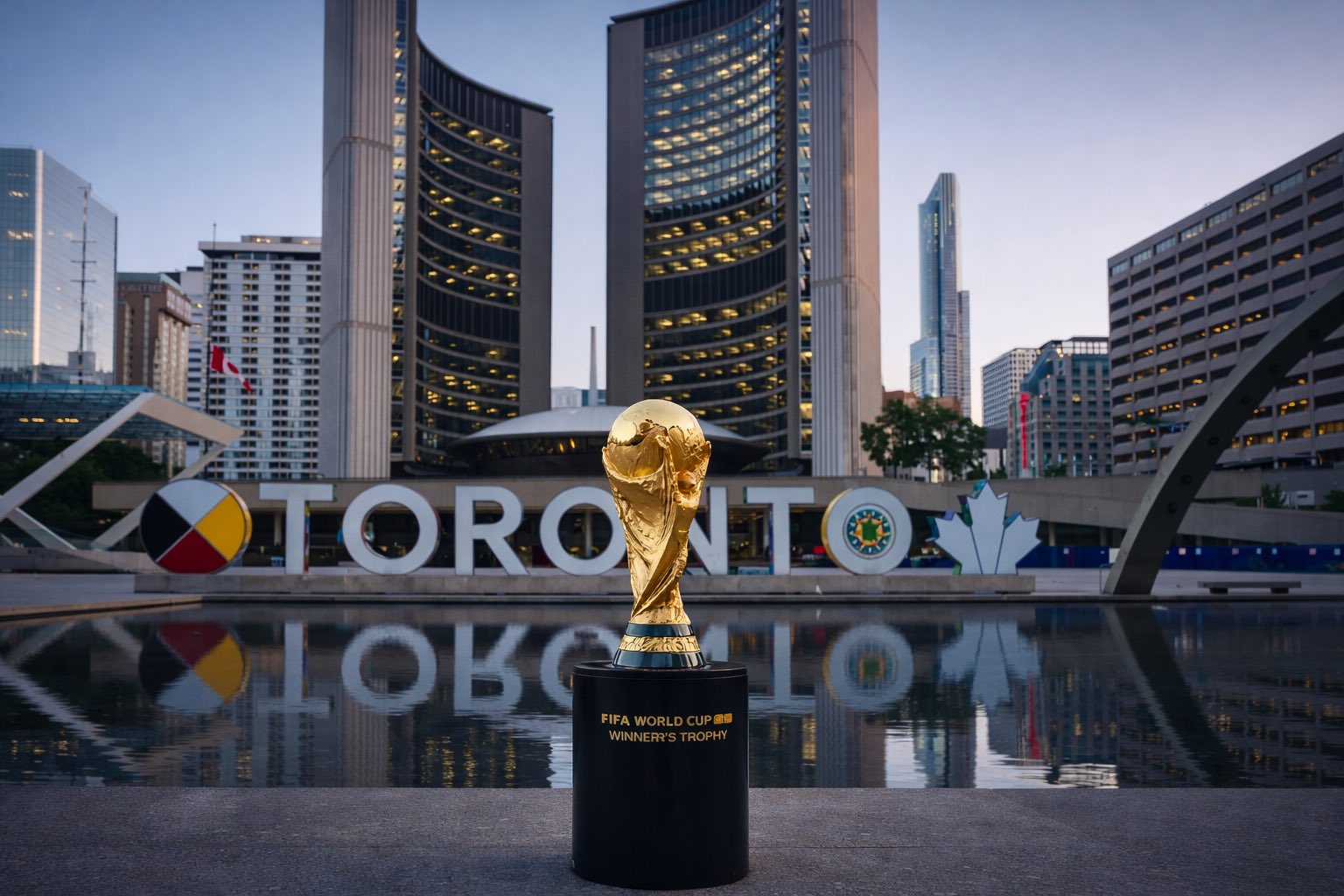

Every edition of the 2026 FIFA World Cup brings surprises—but this one could rewrite the script entirely.
With an expanded 48-team format, more nations than ever have a realistic shot at making history, turning the tournament into a perfect stage for underdogs to rise and giants to fall.
In World Cup history, “dark horse” teams are the ones no one expects—until it’s too late.
From shock group-stage victories to unforgettable knockout runs, these teams thrive on momentum, belief, and tactical discipline.
And in a competition where a single moment can change everything, even the smallest footballing nations can dream big.
The 2026 tournament, hosted across North America, is set to deliver exactly that kind of drama.
With new teams, unpredictable groups, and a longer knockout path, the chances of a surprise contender reaching the latter stages are higher than ever.
So, which teams could defy expectations this time? Here are the top dark horse teams who have the potential to shock the world and become the breakout stories of World Cup 2026.
Every World Cup creates heroes nobody saw coming — and 2026 could produce the biggest shock champions ever.
What Makes a Dark Horse Team in World Cup 2026?
Underrated Squad Quality
These sides possess depth and individual brilliance that FIFA rankings often undervalue.
Whether it’s a cluster of Premier League or La Liga stars or a core of battle-hardened domestic talents, the quality is there—if the team can harness it on the biggest stage.
Tactical Discipline & Coaching
Modern dark horses are rarely chaotic; they are surgically organized. Smart coaches who drill high-pressing systems, compact defending, and lethal transitions give their teams the edge against technically superior opponents.
Favorable Group Draw
In a 48-team format, avoiding a “group of death” can be the difference between an early exit and a Cinderella run.
A manageable set of fixtures allows these teams to build momentum and conserve energy for the knockouts.
Momentum from Recent Tournaments
Form is temporary, but recent success breeds belief. Whether it’s a strong Copa América, AFCON showing, or Nations League campaign, these squads enter 2026 riding a wave of confidence that can carry them through tense moments.
Top Dark Horse Teams in FIFA World Cup 2026
Morocco
Why They Can Shock the World
The Atlas Lions stunned the world in 2022 by becoming the first African team to reach a World Cup semi-final.
Under new coach Mohamed Ouahbi (who replaced Walid Regragui in March 2026), they retain their trademark defensive steel and rapid counter-attacks.
With a record 18-match winning streak earlier in the cycle and a squad blending European experience with domestic hunger, Morocco enters as Africa’s most dangerous side.
Key Players to Watch
Achraf Hakimi’s overlapping runs and blistering pace remain a constant threat. Captain Yassine Bounou anchors a stingy backline, while midfield creators Bilal El Khannouss and Sofyan Amrabat dictate tempo.
Up front, Youssef En-Nesyri and Ayoub El Kaabi offer aerial dominance and clinical finishing. Brahim Díaz’s creativity adds another dimension.
Best Possible Path to Knockouts
Drawn in Group C alongside Brazil, Scotland, and Haiti, Morocco can realistically finish second or even top the group with a win or draw against Brazil and victories over the others.
A favorable Round of 32 matchup could see them advance deep into the knockouts—potentially echoing 2022.
Japan
Tactical Strength & Pressing Style
Japan’s high-intensity, organized pressing under long-serving coach Hajime Moriyasu is their signature. They suffocate opponents in midfield and transition at lightning speed, a formula that produced famous upsets in Qatar.
Lessons from 2022 Upsets
Victories over Germany and Spain proved Japan can compete with anyone when their system clicks. That tactical maturity, combined with a deep pool of Europe-based talent, makes them perennial threats.
Group Stage Opportunities
Placed in Group F with the Netherlands, Tunisia, and a playoff side, Japan has the tools to advance. Expect them to press relentlessly and punish any complacency from bigger names.
Senegal
Physical Strength & Experience
Senegal’s athleticism and defensive organization make them a nightmare to break down. Coach Pape Thiaw’s side blends raw power with technical poise, and their experience in major tournaments is unmatched in Africa.
African Champions Pedigree
Even after recent controversies around their title status, Senegal’s core remains battle-tested. They know how to grind out results when it matters most.
Chances Against Top Teams
Drawn in a tough Group I with France, Norway, and a playoff qualifier, Senegal can still punch through. Their physical edge could neutralize star-studded attacks and set up a dangerous knockout run.
USA
Home Advantage Factor
Playing on home soil across multiple venues gives the USMNT an intangible boost. The crowd will be loud, the travel minimal, and the pressure—while real—can be channeled into motivation.
Young Talented Squad
Under Mauricio Pochettino, a youthful core featuring Christian Pulisic, Weston McKennie, Gio Reyna, and rising stars like Folarin Balogun and Ricardo Pepi is hitting its stride. The average age hovers around 26, blending experience with fearless energy.
Pressure vs Opportunity
In Group D with Paraguay, Australia, and a playoff side, the USA is expected to advance. The real test is whether home support can propel them beyond the Round of 16 for the first time since 2002.
Mexico
Crowd Power & Historic Advantage
As co-hosts, Mexico benefits from passionate support in familiar stadiums. The “Tri” has historically performed well on home continent soil.
Tactical Setup
Coach Javier Aguirre’s pragmatic approach emphasizes defensive solidity and quick transitions. Edson Álvarez anchors the midfield, while Hirving Lozano and fellow attackers provide cutting edge.
Can They Go Beyond Round of 16?
In Group A with South Africa, Korea Republic, and others, Mexico should top the group. The question is whether they can finally break their Round of 16 ceiling in 2026.
Switzerland
Defensive Organization
The Swiss are the definition of consistency: compact, disciplined, and difficult to beat. Coach Murat Yakin’s side rarely concedes chances.
Consistency in Major Tournaments
Regular quarter-finalists or round-of-16 contenders at recent Euros and World Cups, Switzerland knows how to peak at the right time.
Upset Potential
Drawn in Group B with Canada, Qatar, and a playoff side, Switzerland is well-placed to advance and cause problems for anyone in the knockouts.
Colombia
Attacking Firepower
Colombia’s front line, led by Luis Díaz’s dribbling wizardry and Jhon Durán’s physical presence, is explosive. James Rodríguez, even at 34, can still unlock defenses with a single pass.
South American Resilience
Under Néstor Lorenzo, Colombia plays with intensity and belief. Their Copa América pedigree adds steel.
Key Matches That Will Decide Their Fate
In Group K with Portugal, Uzbekistan, and a playoff side, Colombia must navigate tough fixtures. A strong showing could carry them deep.
Norway
Star Power Influence
Erling Haaland and Martin Ødegaard form one of the most potent attacking duos in world football. Haaland’s clinical finishing and Ødegaard’s vision create constant danger.
Balance Between Attack & Defense
Norway isn’t just about goals; they defend with structure and counter at speed. Their emphatic qualifying campaign (including a record goal tally) showed maturity.
Can They Go Deep?
In Group I alongside France and Senegal, Norway faces early tests. Survive the group and their star power could propel them into the quarter-finals or further.
Dark Horse Teams That Could Surprise Everyone
Beyond the established mid-tier powers, the 2026 expansion opens the door for high-upside debutants and re-emerging regional giants to disrupt the status quo.
Norway, led by the generational scoring of Erling Haaland and creative engine Martin Ødegaard, is frequently cited as the premier dark horse with the offensive firepower to punish any elite defence.
Ecuador enters the tournament as a defensive juggernaut, having conceded only five goals across 18 South American qualifying matches.
Meanwhile, Uzbekistan and Jordan are among the first-time qualifiers poised to bring fresh tactical energy from the AFC, while Egypt finally boasts a dual-threat attack with Mohamed Salah joined by the rising Omar Marmoush.
Upsets in the Group Stage
The 2026 draw has already flagged several “David vs. Goliath” matchups in which favourites are on high alert.
Hosts, Canada will look to capitalise on home-field advantage in Toronto to topple an inconsistent Switzerland, while Japan—fresh from 2022 wins over Germany and Spain—is tipped to challenge the Netherlands in Dallas.
Other high-probability upsets include Morocco facing a struggling Brazil and Algeria potentially repeating Saudi Arabia’s 2022 feat against world champions Argentina.
With the eight best third-place teams now advancing, smaller nations like Curaçao or South Africa only need one signature performance to keep their tournament dreams alive.
Knockout Stage Chaos
The introduction of the Round of 32 significantly increases the tournament’s volatility. Unlike the traditional 32-team format, the path to the final now requires an additional win, testing squad depth and endurance like never before.
This extra knockout round creates a “variance trap” for top-seeded nations; a single bad day against a disciplined, low-block opponent can end a title run prematurely.
Because the bracket is structured to keep heavyweights like Spain and Argentina on opposite sides, the early knockout rounds may see a “thinning of the herd” where several favourites fall to tactically rigid underdogs before the quarterfinals.
Potential Cinderella Runs
The expanded field and the “best third-place” rule provide a safety net that could facilitate a deep, unexpected run similar to Iceland or Wales in the expanded Euros.
Ecuador is a strong candidate for a quarterfinal surge due to their physical resilience and elite defensive pairing of Willian Pacho and Piero Hincapié.
Ireland has also been highlighted as a potential “bracket-buster” following a resilient playoff campaign.
However, the most compelling Cinderella story may belong to Curaçao; as the smallest nation ever to qualify, their presence alone is historic, but their disciplined structure could see them mirror Costa Rica’s 2014 heroics if they navigate the group stage chaos.
Prediction: Which Dark Horse Can Go the Furthest?
As the tournament shifts to a 48-team marathon, the definition of “going deep” moves from the quarterfinals to the final four.
While many underdogs will falter under the physical strain of the extra knockout round, one team possesses the unique combination of tactical maturity, elite individual star power, and “big game” experience to outlast the traditional giants.
Top Contender Among Underdogs
Colombia enters 2026 as the most dangerous “sub-elite” threat on the planet.
After the heartbreak of missing Qatar 2022, Los Cafeteros have reinvented themselves into a high-octane attacking force that combines South American grit with modern European tactical speed.
Led by the electrifying Luis Díaz, whose ability to isolate and beat defenders is among the world’s best, and supported by a midfield that has recently outplayed the likes of Brazil and Spain in friendlies, Colombia has the “puncher’s chance” required to dismantle a heavyweight.
Their familiarity with the North American climate and the massive expatriate support they will receive in U.S. stadiums effectively gives them a “soft” home-field advantage.
Bold Prediction
The boldest forecast for 2026 is that two non-European/non-South American teams will reach the semi-finals for the first time in history.
The sheer volatility of the new 48-team bracket—specifically the high-stakes Round of 32—will act as a “meat grinder” for traditional powers like Italy or Germany, who have historically struggled with consistency in the early knockout stages.
Between the United States riding a wave of unprecedented home support and Japan’s terrifyingly efficient high-press system, the traditional hierarchy is set to crumble.
We aren’t just looking at one “Cinderella” story this time; the 2026 World Cup will be remembered as the moment the global gap officially closed, as a dark horse from the AFC or CONCACAF finally secures a spot in the World Cup Final.
FAQ 2026 FIFA World Cup Dark Horse Teams
Which teams are the top dark horse contenders for 2026?
Norway, Japan and Colombia are the most mentioned “dark horse” contenders. Experts point to their outstanding individual talent and strong qualifying form as key reasons for their potential to disrupt the traditional powerhouses.
How does the new 48-team format help dark horse teams?
The expansion to 12 groups of four means the eight best third-place teams will now advance to a new Round of 32. This “safety net” allows teams that might have been eliminated in a 32-team format to reach the knockouts, where a single disciplined performance can lead to a massive upset.
Will the host nations (USA, Mexico, Canada) have an advantage?
Yes. Host nations historically reach the knockout stages 87% of the time. The USA is noted for its most talented generation yet, while Mexico and Canada will rely on massive home crowds and climate familiarity (such as Mexico’s altitude) to push beyond their traditional ceilings.
Can a dark horse team win the World Cup 2026?
Yes, a dark horse team can absolutely win the 2026 FIFA World Cup™. While traditional powerhouses like Argentina, France, and Brazil remain favorites, the new tournament structure and a history of underdog deep runs suggest a “giant-killing” champion is possible.
The 2026 World Cup dark horses—Morocco, Japan, Senegal, USA, Mexico, Switzerland, Colombia, and Norway—represent the best of what the beautiful game offers: surprise, resilience, and joy in the underdog story. Add in emerging and debut nations, and the tournament promises more chaos than ever.
Why 2026 could see major surprises? The 48-team format, home-continent advantage for several sides, and a generation of tactically sophisticated mid-tier teams have aligned perfectly.