





The 2026 FIFA World Cup is many things. It is set to kick off across the United States, Canada and Mexico, and a new generation of coaches is storming the barricades.
It is potentially Lionel Messi’s last dance, the stage on which Kylian Mbappé might cement his era, and the proving ground for a generation of players who grew up watching the 2006 and 2010 editions on small screens.
But there is another story unfolding in North America, one that gets less attention than it deserves: the generational shift happening in the dugouts.
The managerial field in 2026 is noticeably younger than those seen at many recent World Cups.
These men did not inherit the job of national team manager after decades of distinguished playing careers and long club apprenticeships.
Many came through a different route entirely: through tactical obsession, coaching academies, and a willingness to rethink the craft from the ground up.
This is the story of the five youngest managers at the 2026 FIFA World Cup, and what their presence says about where football management is heading.
Their stories are different. Their footballing philosophies are different. But together they represent a broader shift in the game — one where tactical innovation, data-driven preparation, and coaching expertise matter more than age or reputation.

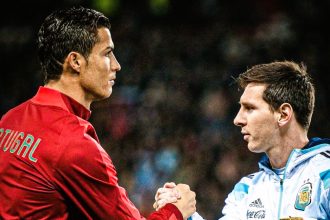

Here’s a closer look at the five youngest managers at the 2026 FIFA World Cup and how they reached football’s biggest stage.
Top 5 Youngest Managers at the 2026 FIFA World Cup
| # | Manager | Nation | Age | Tournament |
| 1 | Julian Nagelsmann | Germany | 38 | 1st World Cup |
| 2 | Emerse Faé | Ivory Coast | 42 | 1st World Cup |
| 3 | Pape Thiaw | Senegal | 45 | 1st World Cup |
| 3 | Sebastián Beccacece | Ecuador | 45 | 1st World Cup |
| 5 | Lionel Scaloni | Argentina | 48 | 2nd World Cup |
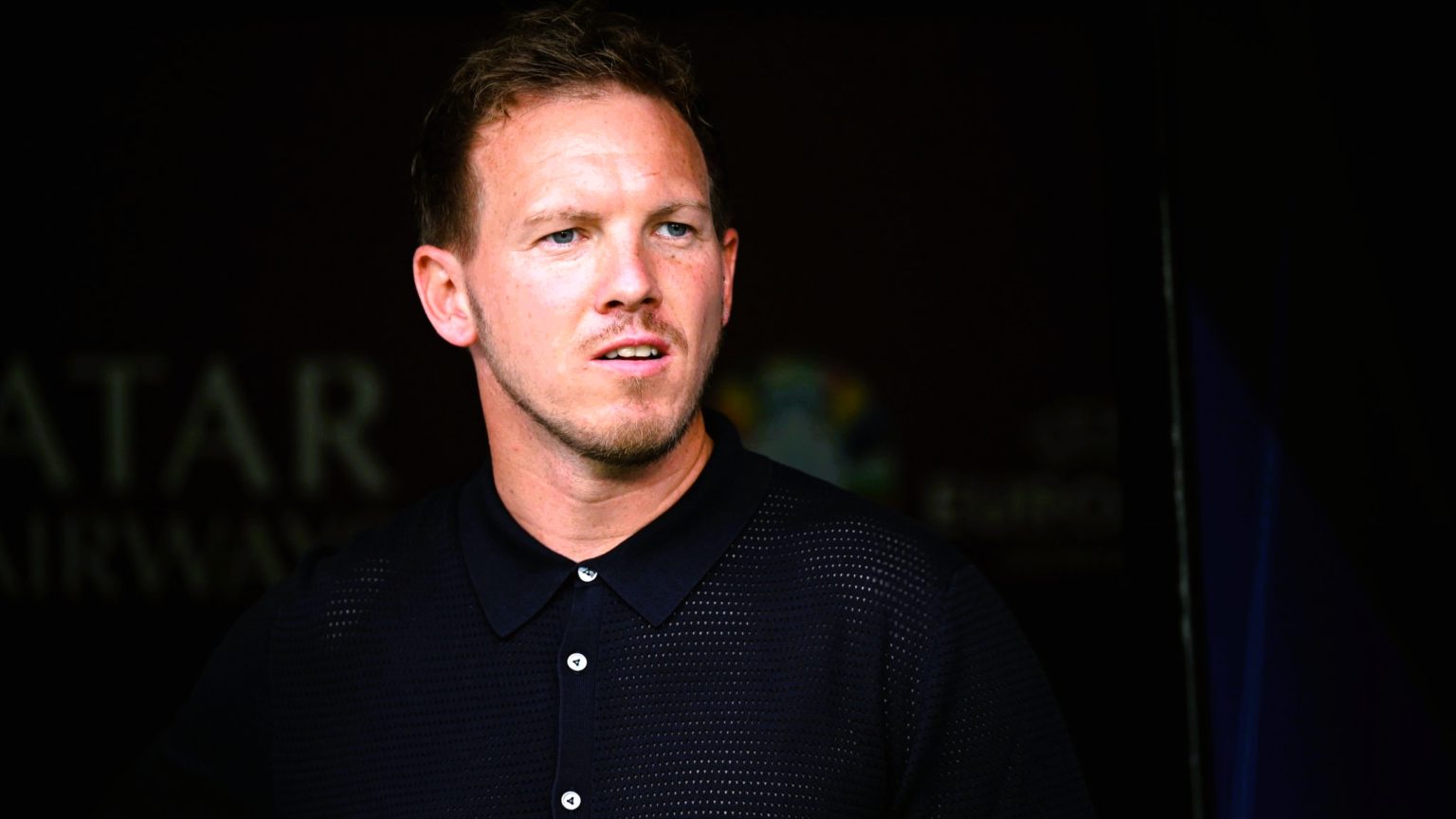
Julian Nagelsmann — Germany (Age 38)
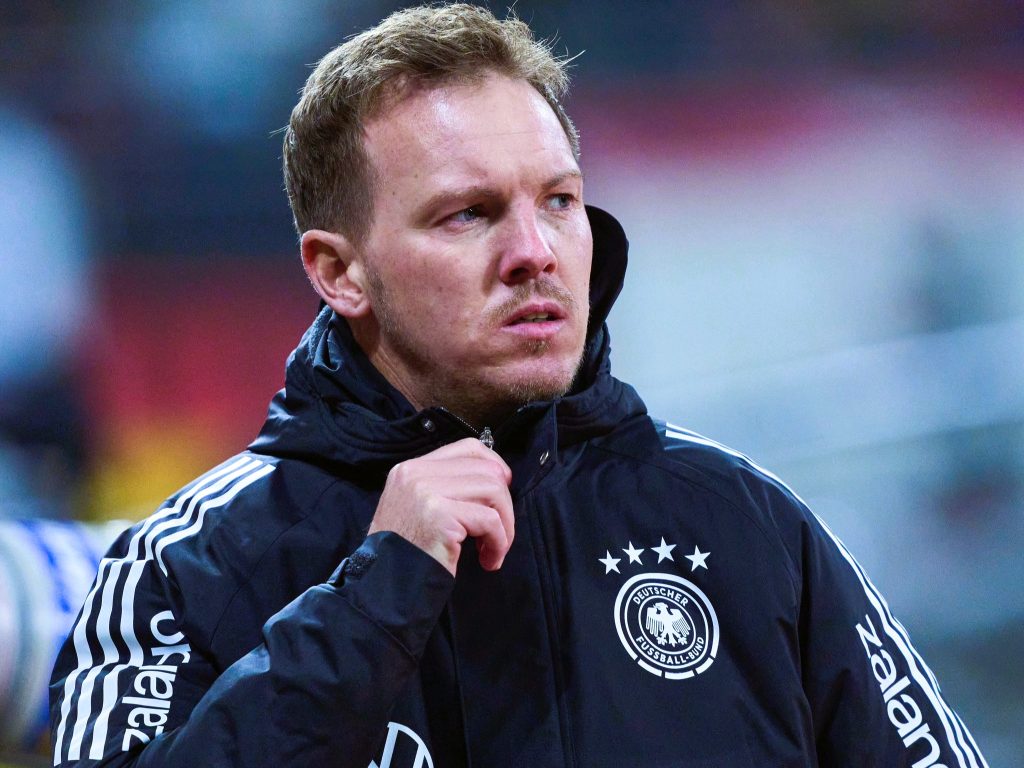
Born in July 1987, Julian Nagelsmann was just 28 when he took charge of Hoffenheim’s first team, making him one of the youngest Bundesliga coaches ever.
A former youth player whose career was cut short by injury, he immersed himself in coaching, rising through Hoffenheim’s academy before earning his big break.
His journey took him to RB Leipzig, where he reached the Champions League semi-finals in 2020, and then to Bayern Munich, where he delivered the Bundesliga title in 2022.
Appointed Germany manager in September 2023 at age 36, he became the nation’s second-youngest ever after Otto Nerz. He has since extended his deal through Euro 2028.
Nagelsmann does not believe in formations as fixed structures. He believes in “principles.” On any given possession, Germany might shape as a 3-2-5, a 4-2-3-1, or a diamond midfield – sometimes within the same attack.
His hallmark is Vertikalität (verticality): rapid transitions that bypass the opposition’s first press and exploit space behind full-backs.
Defensively, he employs a high line with aggressive counter-pressing. It’s a risky system that requires elite athleticism from centre-backs – which Germany’s new generation (led by Antonio Rüdiger and a reimagined Jonathan Tah) provides.
Major achievements include the 2022 Bundesliga title and strong performances with Germany, including a solid run to the Euro 2024 quarter-finals on home soil and topping their World Cup qualifying group unbeaten.
Germany are drawn in Group E alongside Ivory Coast, Ecuador, and Curaçao — a group that looks manageable but contains a real threat in Beccacece’s Ecuador.
The real test will come in the knockout rounds. With a squad built around Florian Wirtz, Jamal Musiala, and Kai Havertz, the potential is enormous.
Germany last won the World Cup in 2014. A nation of that size, with that history, does not accept consolation prizes. Nagelsmann knows it.
At 38, this tournament represents both the next step in his coaching evolution and the moment by which a generation of German fans will judge him.
Emerse Faé — Ivory Coast (Age 42)
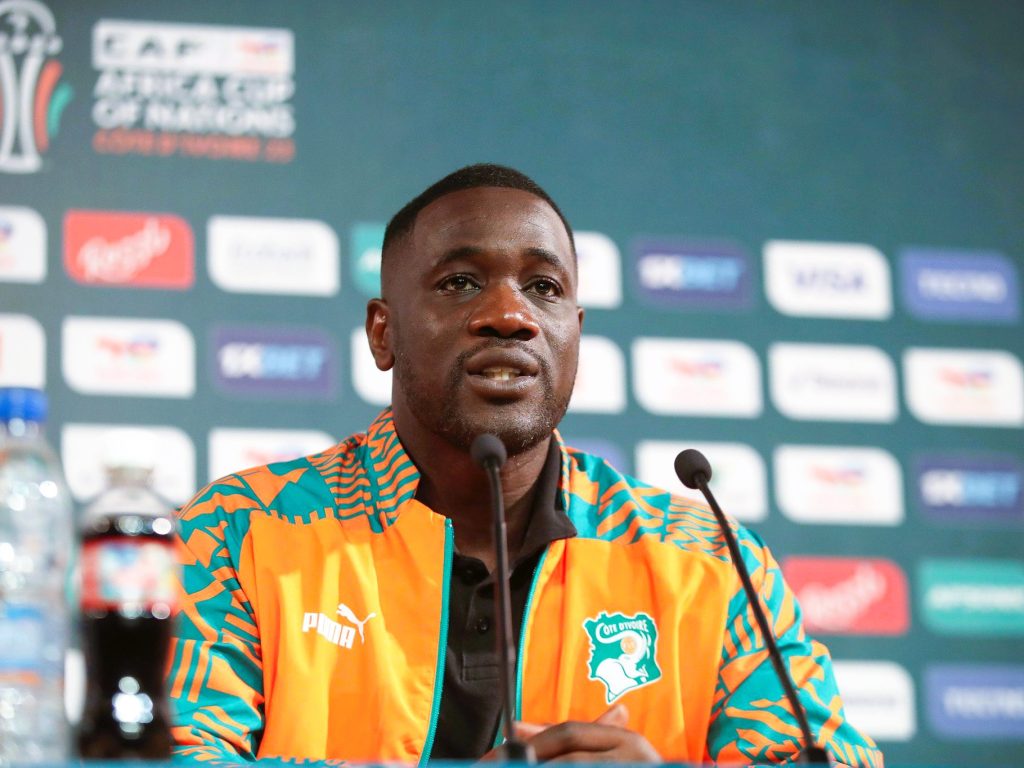
Emerse Faé was born in Nantes and came through the club’s celebrated academy system before carving out a professional career that included spells at Reading and Nice. He represented Ivory Coast at the 2006 World Cup and multiple AFCONs.
His coaching path began in Nice’s academy and Clermont Foot’s reserves. The pivotal moment came in early 2024 when, as assistant, he stepped up as interim coach mid-AFCON after Jean-Louis Gasset’s departure.
He led Ivory Coast to the title on home soil in dramatic fashion, winning the tournament and securing the permanent job.
Faé organises Ivory Coast in a structured 4-3-3 that prioritises width and directness in the final third. With players like Sébastien Haller and a generation of technically gifted attackers at his disposal, the Elephants can hurt any defence at this level.
His challenge is replicating the cohesion of club football at international level, where preparation time is limited and squad harmony is everything.
The draw was both an opportunity and a statement. Ivory Coast face Germany, Ecuador, and Curaçao in Group E — a group where second place is not only possible but realistic.
Reaching the round of sixteen from a Nagelsmann group would be a significant statement of intent. Reaching the quarter-finals would be historic.
Pape Thiaw — Senegal (Age 45)
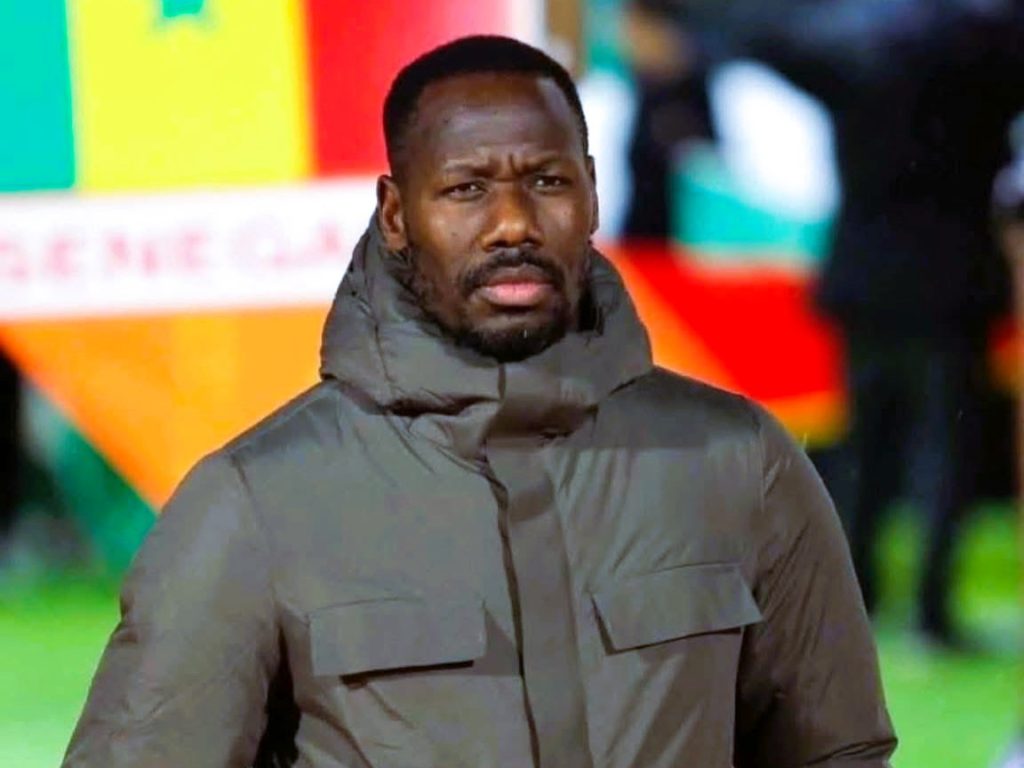
Pape Bouna Thiaw, born in Dakar in February 1981, was a forward who represented Senegal, including at the 2002 World Cup.
His coaching career developed domestically with clubs like Niarry Tally before success with Senegal’s A’ (local-based) team and CHAN triumphs.
Appointed senior coach in December 2024, Thiaw quickly made an impact, reaching the 2025 AFCON final.
His coaching philosophy is emphatically offensive. Thiaw demands that his teams press immediately after losing possession, recover the ball high, and transition quickly into attack through wide channels.
The 4-3-3 and 4-2-3-1 are his preferred frameworks, both of which allow maximum width and support runners in behind.
He is also a member of FIFA’s Technical Study Group, which reflects an intellectual engagement with the modern game that extends well beyond his own national team context.
Success at CHAN level and a strong start with the senior side, including a runner-up finish at the 2025 AFCON.
Senegal carry genuine pedigree into this tournament. With Sadio Mané now in the twilight of his career, the question is whether Thiaw can transition the team’s identity away from one great player and toward a more collective model of excellence.
The Lions of Teranga’s qualifying campaign was rock-solid, and a squad containing depth across every position gives Thiaw options that many younger coaches on this list can only envy.
A quarter-final would represent a minimum ambition. A semi-final would make history.
Sebastián Beccacece — Ecuador (Age 45)
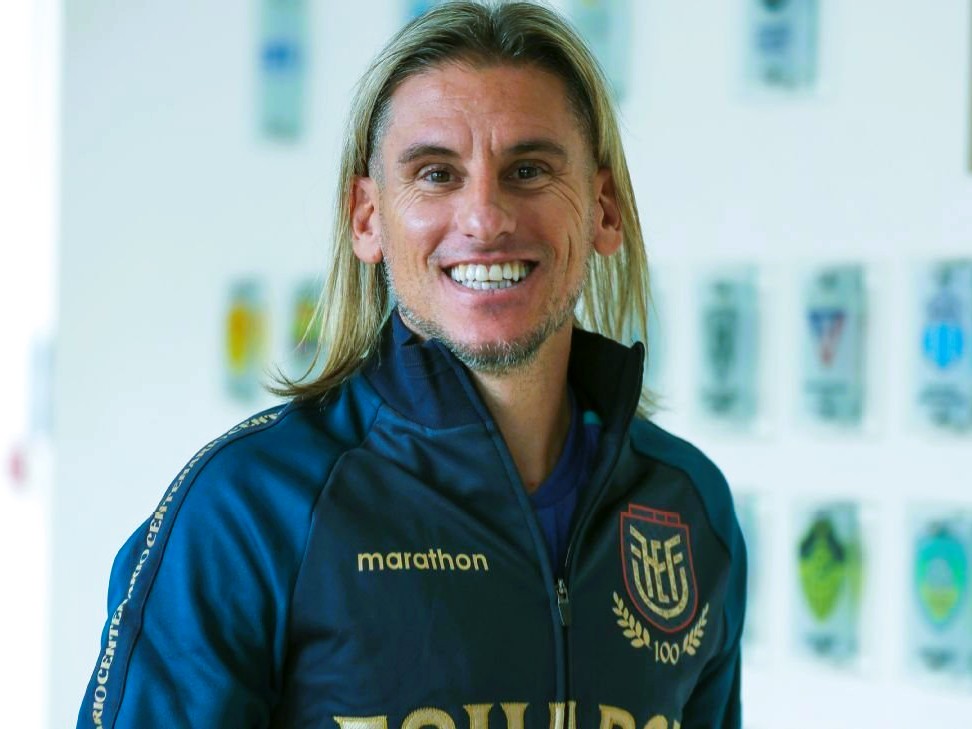
Born in Rosario, Argentina, in December 1980, Beccacece had a modest playing career as a right-back before transitioning early to coaching.
He spent over a decade as Jorge Sampaoli’s assistant, contributing to Chile’s 2015 Copa América win and work with Argentina.
As head coach, he has led clubs including Defensa y Justicia, Independiente, Racing, and Spain’s Elche. He took over Ecuador in August 2024.
He organises his side in a compact 4-4-2 that becomes a dynamic 4-2-3-1 in possession. Moisés Caicedo — among the most complete central midfielders in world football — is the engine.
Enner Valencia, now 36, provides the experienced attacking reference point.
The blend of youthful European-based talent and hard-won experience gives Beccacece’s Ecuador a versatility that defies their underdog tag.
Guiding Ecuador to 2026 World Cup qualification with strong performances after taking over mid-campaign.
Ecuador will face Germany, Ivory Coast, and Curaçao in Group E — a draw that, on paper, places two other sides from this very ranking against La Tri.
The defensive metrics from qualifying make them genuine threats to anyone.
If Beccacece can organise Ecuador to advance from a group containing Nagelsmann’s Germany, it would be confirmation that South American football’s newest emerging power has genuinely arrived on the global stage.
Lionel Scaloni — Argentina (Age 48)
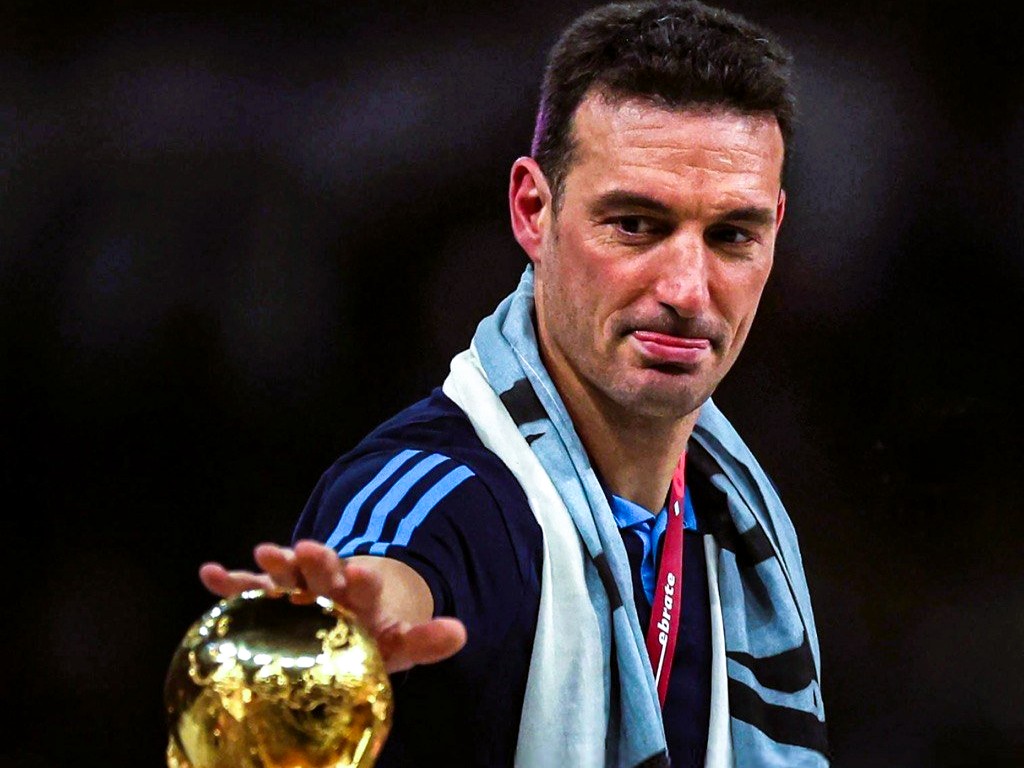
Lionel Scaloni, born in May 1978 in Pujato, Argentina, had a long playing career across Europe before entering coaching.
In 2018, when the Argentine Football Association handed Lionel Scaloni the national team job on what felt like a caretaker basis, most observers assumed it was a placeholder — a quiet bridge until a more decorated name could be found.
Scaloni had never managed at senior club level. He was, in the football world’s sometimes uncharitable shorthand, simply the assistant who happened to be standing there.
Six years later, he is the World Cup-winning manager of the greatest footballing nation on earth, about to lead the reigning champions in defence of their title.
Football occasionally produces these recalibrations of expectation. Scaloni is the ultimate example of this generation.
What Scaloni demonstrated between 2018 and Qatar 2022 was an underrated quality in elite management: the capacity to listen.
He rebuilt Argentina’s squad with patience rather than panic, created a team environment that freed Messi to perform at his absolute peak in international football for the first time, and devised a tactical setup — flexible between a 4-3-3 and 4-4-2 diamond — that combined defensive resilience with the space for attacking genius to express itself.
The Copa América title in 2021, the Finalissima against Italy in 2022, and then the World Cup in Qatar — a trophy lifted in a final against France that many consider the greatest single match in the history of the competition.
Scaloni’s achievements are already beyond any reasonable expectation placed on him at the outset.
Argentina arrive in North America as both champions and question marks. Messi will be 38 by the time of the final.
The squad has depth and hunger, and the culture built under Scaloni remains one of international football’s most cohesive environments.
The question is whether the tactical structures can function at the same level without the absolute peak of Messi’s powers to compensate when plans go awry.
If they can, another final is not a stretch. If they cannot, the ruthlessness of a 48-team knockout format may expose them.
Historical Comparison with Previous World Cups
The youngest manager ever to lead a nation at a FIFA World Cup remains Juan José Tramutola, who co-managed Argentina at the inaugural 1930 FIFA World Cup at just 27 years old.
It is a record born from a vastly different era of football and one that appears increasingly unlikely to be challenged in the modern game.
Historically, World Cup-winning managers have tended to be older, benefiting from decades of coaching experience before reaching the sport’s biggest stage.
Yet there have been notable exceptions. Alberto Suppici guided Uruguay to the first World Cup title at the age of 31 in 1930, while Mário Zagallo lifted the trophy with Brazil at 38 in 1970.
Eight years later, César Luis Menotti led Argentina to glory at 39. More recently, Lionel Scaloni joined that exclusive company by winning the 2022 World Cup at just 44 years old.
Against that historical backdrop, Julian Nagelsmann arriving at the 2026 World Cup at 38 is remarkable.
While he is not close to Tramutola’s all-time record, he stands out as one of the youngest managers ever to lead a major footballing nation at the tournament in the modern era.
In a profession traditionally dominated by veteran coaches, Nagelsmann’s presence reflects the growing trust placed in a new generation of tactically innovative managers.
Which of These Young Coaches Has the Best Chance of Winning the 2026 World Cup?
This is ultimately the question that matters. Tactical philosophy and biographical narrative are interesting; trophies are what endure.
Nagelsmann and Scaloni stand out. Germany’s depth, home federations’ expectations, and Nagelsmann’s proven elite-level success make them prime contenders.
Scaloni’s Argentina benefit from proven winning mentality and superstar quality.
Beccacece and Faé could deliver surprises, while Thiaw’s Senegal offer African hope. Ultimately, Scaloni’s experience at the very top edges it, but Nagelsmann’s trajectory suggests he could soon join that elite tier.
A Changing of the Guard
The 2026 FIFA World Cup marks more than another edition of football’s greatest show. It signals a generational handover in management.
These young coaches—armed with tactical fluency, emotional intelligence, and fearlessness—prove that success at the highest level no longer requires a lifetime of scars.
Whether one lifts the trophy in July or not, their presence ensures the tournament will be dynamic, tactically rich, and full of stories.
The touchlines are younger, the ideas fresher, and international football is all the better for it. The guard is changing—and it looks ready to lead.