








The FIFA World Cup 2026 is shaping up to be the most spectacular football tournament in history.
For the first time ever, three nations — the United States, Canada, and Mexico — will co-host the world’s biggest sporting event, spanning 16 host cities and 11 world-class stadiums across the continent.
But beyond the matches themselves, the stadiums are a story of their own. From the iconic concrete cathedral of Estadio Azteca in Mexico City — a venue steeped in World Cup mythology — to the gleaming modern marvel of SoFi Stadium in Los Angeles, the biggest stadiums in FIFA World Cup 2026 represent the full spectrum of football culture in North America.
Capacity matters. A packed 80,000-seat stadium roaring for a semi-final creates an atmosphere that cannot be manufactured.
It rattles goalkeepers, lifts underdogs, and writes football legends. In this guide, we break down the top 5 biggest stadiums at FIFA World Cup 2026 — their capacities, locations, key matches, and what makes each venue unforgettable.
Top 5 Biggest Stadiums at FIFA World Cup 2026
Estadio Azteca
- Location: Mexico City, Mexico
- Capacity:~87,000
- Key Matches: Opening Matches / Group Stage
- Opened: 1966
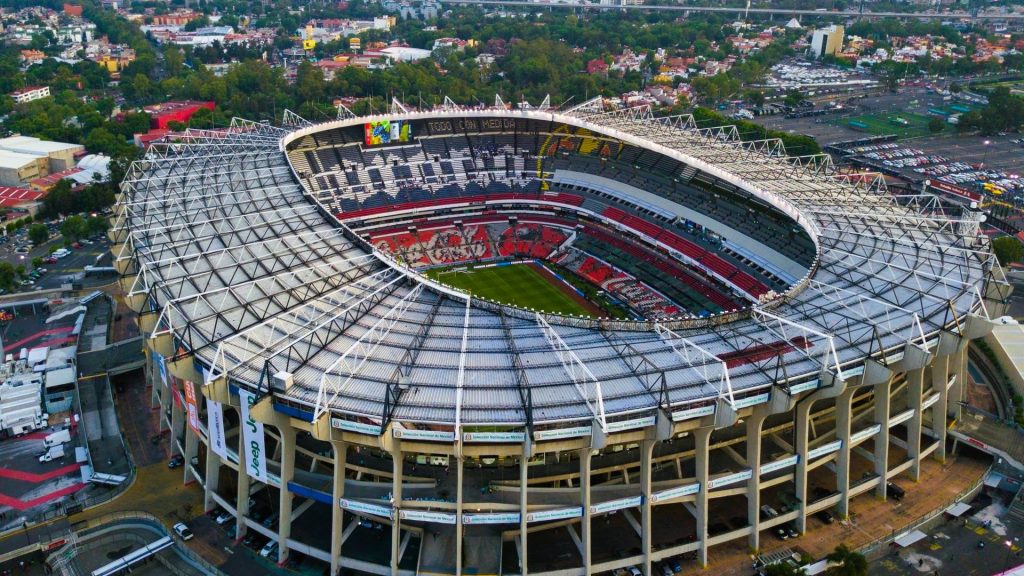
There is no stadium on Earth with a World Cup résumé quite like Estadio Azteca.
Towering over southern Mexico City at an altitude of 2,240 metres above sea level, it is the largest stadium in the 2026 World Cup and a monument to football history.
The Azteca has previously hosted the World Cup final in 1970 (Brazil vs. Italy) and 1986 (Argentina vs. West Germany), and in 2026 it becomes the first stadium ever to host matches at three separate FIFA World Cups — an achievement no other venue comes close to matching.



Built in 1966 and renovated across the decades, the Azteca’s colossal bowl-shaped architecture creates an extraordinary noise level that visiting teams have historically found overwhelming.
It was here that Diego Maradona scored both the infamous “Hand of God” and the breathtaking solo “Goal of the Century” against England in 1986.
In 2026, the Azteca will host the tournament’s opening matches, making it the ground zero for the most-watched sporting event on the planet.
MetLife Stadium
- Location: New Jersey / New York
- Capacity: ~82,500
- Key Matches: Semi-Final / Major Knockouts
- Opened: 2010
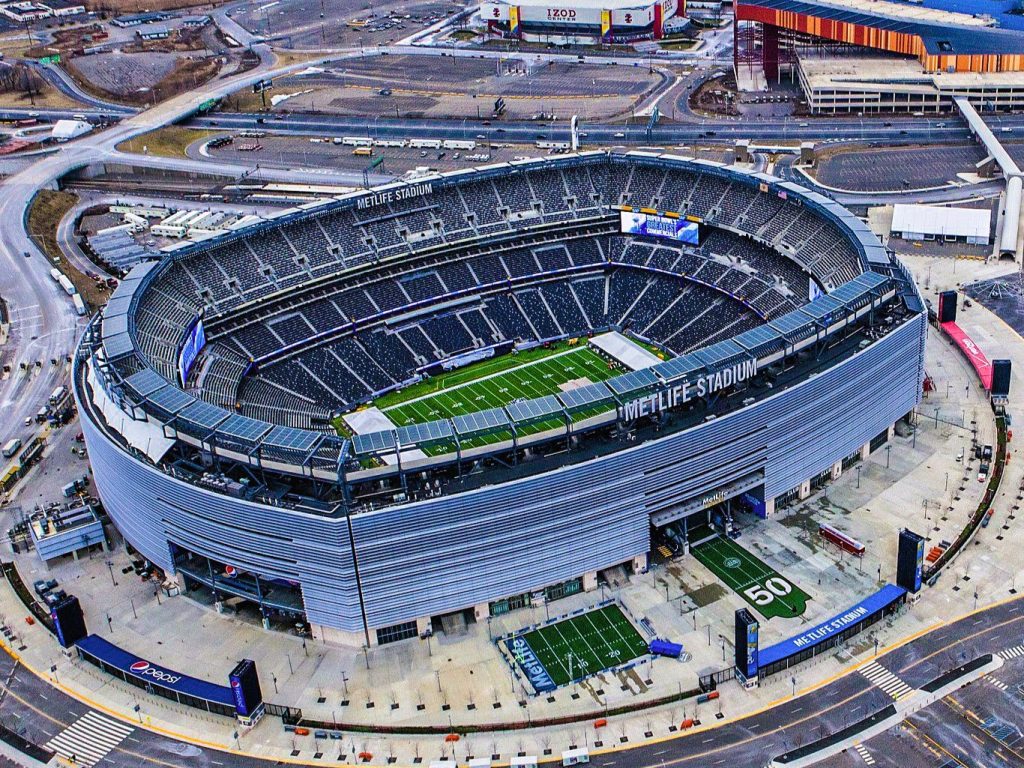
Home to both the New York Giants and New York Jets, MetLife Stadium in East Rutherford, New Jersey, sits just across the Hudson River from New York City — the most famous skyline in the world.
With a capacity of approximately 82,500, it is the second-largest venue at the 2026 World Cup and arguably the most prestigious, given its proximity to one of the most internationally visible cities on the planet.
FIFA has assigned MetLife Stadium to host the 2026 World Cup Final, cementing its place in football history.
The stadium’s scale, state-of-the-art infrastructure, and media connectivity make it the logical choice for the showpiece event of a 48-team tournament.
On Final day, with the world watching, MetLife Stadium will become the beating heart of global football. It was also the venue for the 2014 Super Bowl, proving its ability to handle events of the highest magnitude.
AT&T Stadium
- Location: Arlington, Texas
- Capacity: ~80,000+
- Key Matches: Group Stage + Knockouts
- Opened: 2009
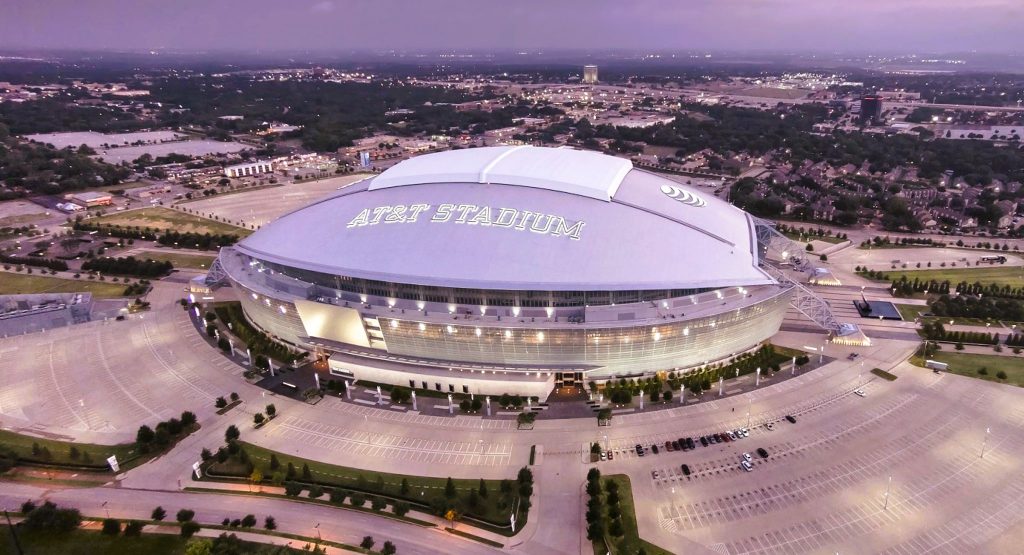
Nicknamed “Jerry World” after Dallas Cowboys owner Jerry Jones, AT&T Stadium in Arlington, Texas is one of the most iconic sports arenas in the United States.
With a standard capacity exceeding 80,000 that can expand beyond 100,000 for special events, it is an absolute colossus of modern sports architecture.
The retractable roof, the massive video board — the largest in the world at time of construction — and the vast glass-walled facades make it feel less like a stadium and more like a city within a city.
For the 2026 World Cup, AT&T Stadium will host group stage matches as well as knockout round games, giving fans from across the world a chance to experience the full-throated roar of Texas football culture.
The venue’s experience hosting Super Bowls, NBA All-Star Games, and international boxing bouts demonstrates its ability to rise to any occasion.
Expect packed stands, a supercharged atmosphere, and temperatures that will test every squad physically.
SoFi Stadium
- Location: Inglewood, California
- Capacity: ~70,000+
- Key Matches: Group Stage + Knockout Rounds
- Opened: 2020
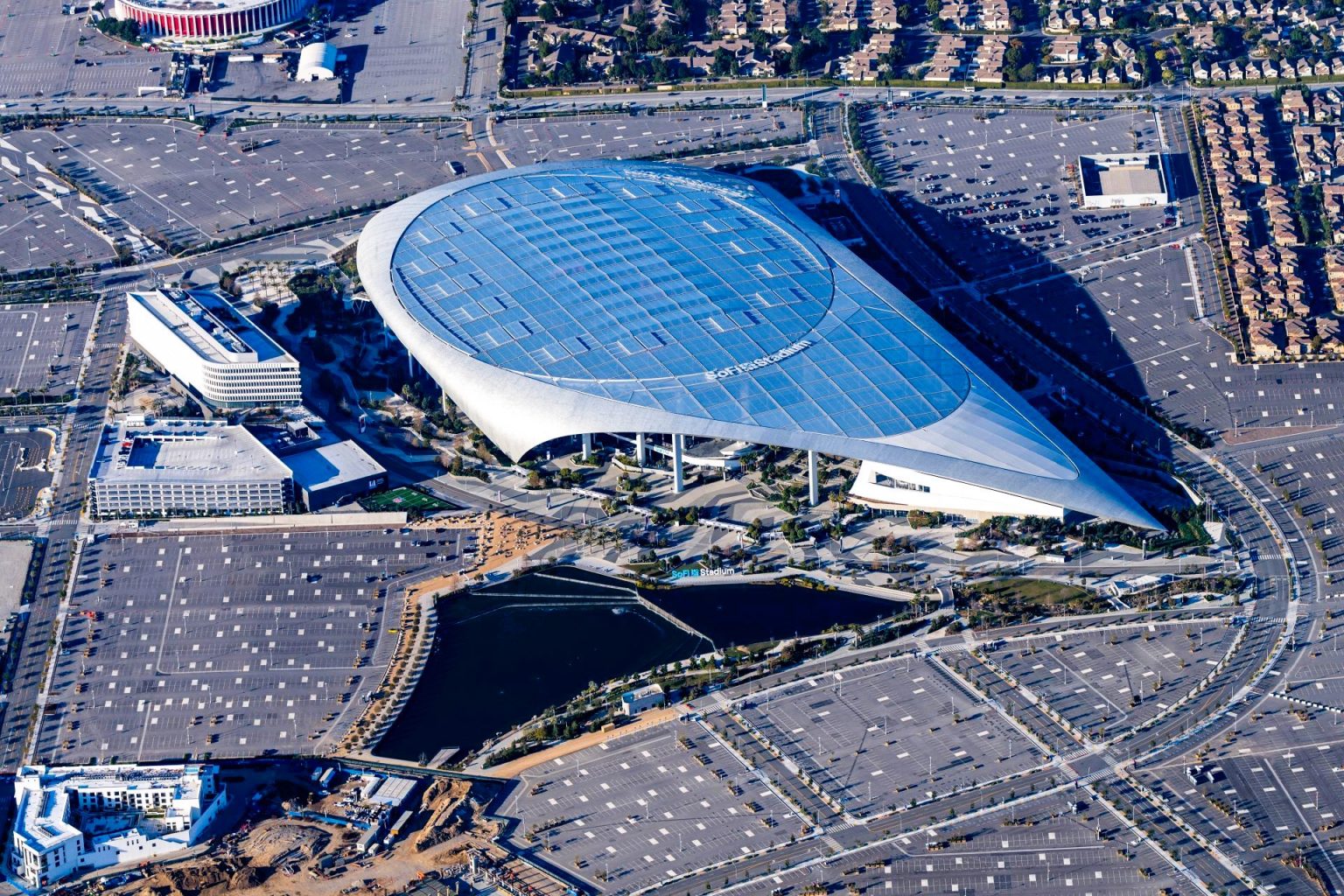
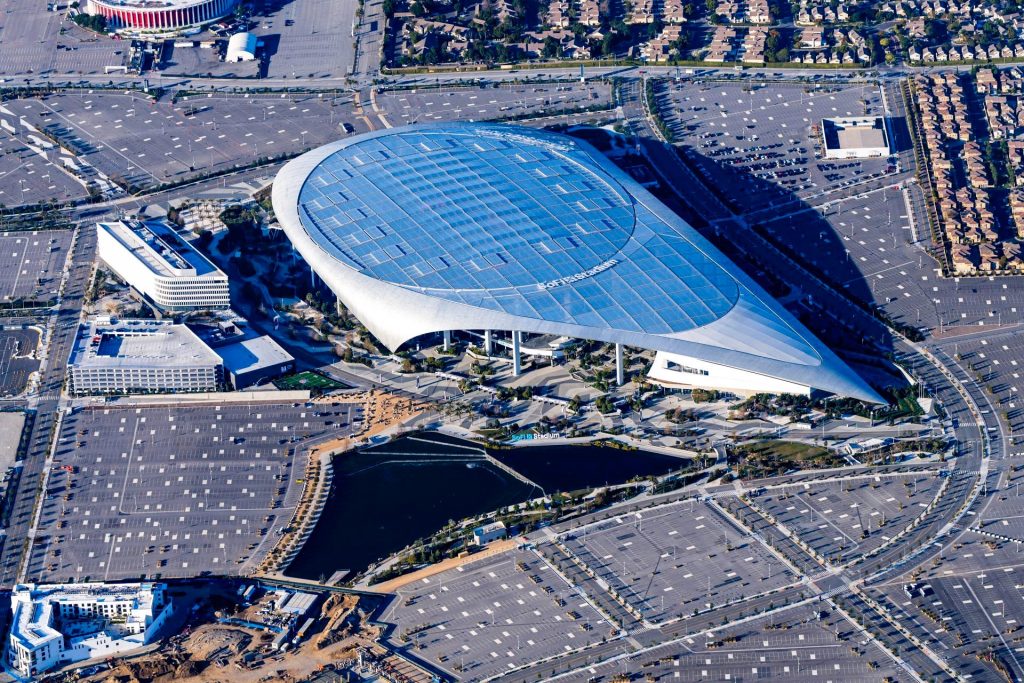
SoFi Stadium in Inglewood, just minutes from Los Angeles International Airport, is the newest and most technologically advanced venue on this list.
Opened in 2020 at a cost of approximately $5.5 billion — the most expensive stadium ever built — it is a stunning architectural feat: a translucent, wave-shaped roof shelters an open-air seating bowl, allowing natural light and breeze while protecting fans from rain.
The surrounding Hollywood Park campus adds retail, dining, and entertainment to create a full-day destination.
With a capacity of over 70,000, SoFi represents the new era of NFL stadiums — smart, connected, and media-ready.
The Los Angeles market, with its massive Latino football fanbase and global celebrity culture, will make matches here uniquely electric.
For the 2026 World Cup, SoFi Stadium is scheduled to host both group stage encounters and knockout games.
Los Angeles, a city already confirmed as the host of the 2028 Summer Olympics, is on the cusp of a golden decade of global sport.
BC Place
- Location: Vancouver, Canada
- Capacity: ~54,000
- Key Matches: Group Stage Matches
- Opened: 1983 (Renovated 2011)
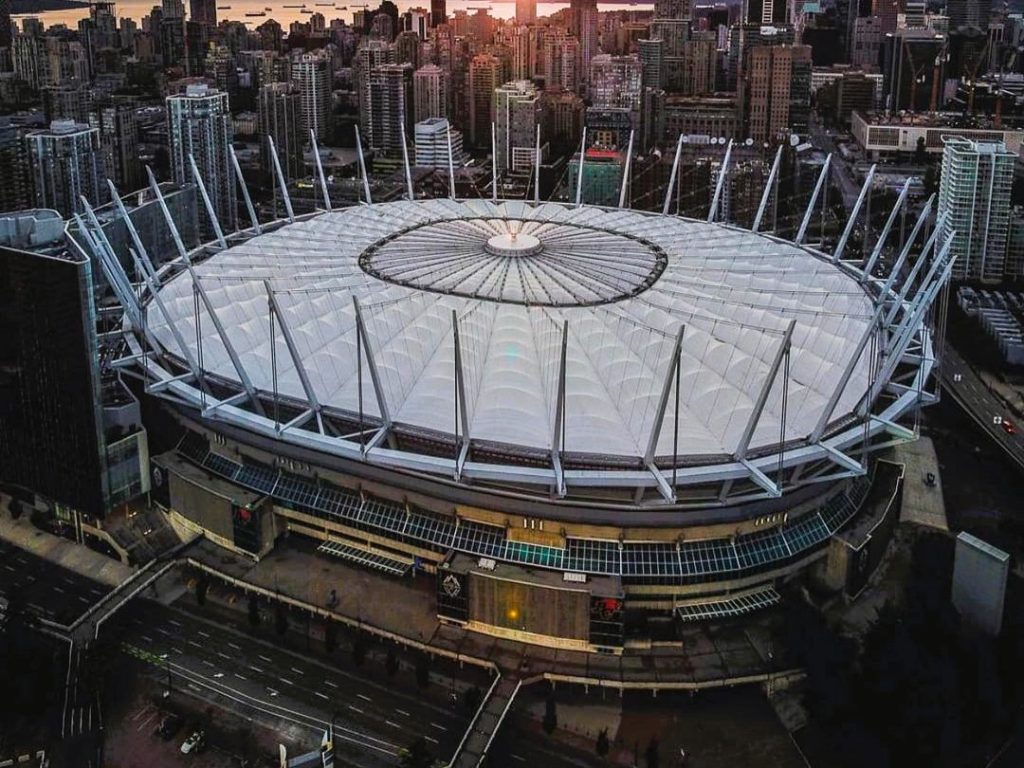
BC Place in downtown Vancouver holds a special significance in the 2026 World Cup story: it is the largest Canadian stadium included in the tournament, and it carries with it the pride of a nation that has arrived on the world’s football stage.
Canada, a co-host nation, qualified for the 2022 World Cup in Qatar for the first time in 36 years and now brings that growing football culture to its home soil.
The stadium, which sits beside the waters of False Creek in one of North America’s most beautiful cities, features a retractable roof — essential for Vancouver’s notoriously unpredictable weather.
With a capacity of approximately 54,000 for football configuration, it hosted the 2015 FIFA Women’s World Cup Final, where Japan faced the United States in front of a sell-out crowd.
That experience gave the venue and its organizers invaluable know-how. In 2026, BC Place will host group stage games and is expected to see passionate support from Canada’s diverse, multicultural fanbase.
Stadium Comparison Table
Here is a side-by-side breakdown of the top 5 biggest stadiums in FIFA World Cup 2026, ranked by capacity:
| Rank | Stadium | Country | City | Capacity | Key Matches |
|---|---|---|---|---|---|
| 1 | Estadio Azteca | 🇲🇽 Mexico | Mexico City | ~87,000 | Opening Matches / Group Stage |
| 2 | MetLife Stadium | 🇺🇸 USA | New Jersey / New York | ~82,500 | Final / Semi-finals |
| 3 | AT&T Stadium | 🇺🇸 USA | Arlington, Texas | ~80,000+ | Group Stage + Knockouts |
| 4 | SoFi Stadium | 🇺🇸 USA | Los Angeles, CA | ~70,000+ | Group Stage + Knockouts |
| 5 | BC Place | 🇨🇦 Canada | Vancouver | ~54,000 | Group Stage Matches |
Why These Stadiums Were Selected
FIFA’s selection of venues for the 2026 World Cup was not made purely on stadium size. Several key criteria shaped the final decision — and all five stadiums on this list excel across the board.
- Capacity: Only venues meeting FIFA’s minimum threshold of 40,000 seats were considered for major matches.
- Infrastructure: World-class locker rooms, media centers, pitch quality, and fan facilities were all evaluated.
- Global Reach: Venues in major media markets maximize broadcast viewership and global commercial exposure.
- Hosting Experience: Each selected stadium has a proven track record with large-scale international events.
Beyond these metrics, geographic spread across the three host nations was also a key factor.
FIFA sought to ensure fans across the USA, Canada, and Mexico all had access to World Cup football without prohibitive travel. The result is an 11-venue footprint that stretches from Vancouver in the north to Mexico City in the south.
Impact on World Cup 2026
The 2026 FIFA World Cup will be the largest in the tournament’s history, with an expanded field of 48 teams competing across 104 matches — up from 64 in previous editions.
That expansion fundamentally changes the scale of infrastructure required, and North America’s stadiums are rising to meet the challenge.
Analysts project the 2026 World Cup could generate over $5 billion in economic activity across North America, with record-breaking ticket demand, television rights fees, and sponsorship revenue.
The five biggest stadiums — capable of packing in over 370,000 combined fans for a single matchday — will be central to delivering that scale.
Perhaps more importantly, the 2026 World Cup is a watershed moment for football’s growth in North America.
MLS has expanded rapidly over the past decade, Canada’s men’s national team has become a genuine World Cup contender, and the US soccer ecosystem is maturing at every level.
Hosting the World Cup in front of massive home crowds — in the biggest stadiums on the continent — could ignite a generation of new fans in markets that were once seen as football’s frontier.
FAQs: Biggest Stadiums at FIFA World Cup 2026
Which is the biggest stadium in World Cup 2026?
The biggest stadium in the FIFA World Cup 2026 is Estadio Azteca in Mexico City, Mexico, with a capacity of approximately 87,000 seats. It is also the most historically significant World Cup venue ever, having hosted matches at the 1970, 1986, and now 2026 tournaments.
How many stadiums are used in the FIFA World Cup 2026?
A total of 16 venues across 16 host cities in the United States, Canada, and Mexico will be used for the 2026 FIFA World Cup. The USA will host the majority of games with 11 stadiums, while Canada and Mexico will each contribute additional venues.
Which country hosts the most matches in World Cup 2026?
The United States will host the most matches in the 2026 World Cup, given that it has the most allocated venues among the three co-host nations. The US will also host the Final at MetLife Stadium in New Jersey.
Which stadium will host the 2026 World Cup Final?
The 2026 FIFA World Cup Final is scheduled to be held at MetLife Stadium in East Rutherford, New Jersey — just outside New York City — on July 19, 2026. With a capacity of approximately 82,500, it will be one of the most-watched sporting events in history.
How many teams are competing in the FIFA World Cup 2026?
The 2026 FIFA World Cup will feature an expanded field of 48 national teams, up from the 32-team format used in previous tournaments. This means more group stage matches, more nations represented, and more football for fans across the globe.
Is Estadio Azteca the first stadium to host three World Cups?
Yes. Estadio Azteca in Mexico City is the first — and only — stadium in the world to have hosted matches at three separate FIFA World Cups: 1970, 1986, and 2026. This makes it the most storied World Cup venue in history.
Which Stadium Are You Most Excited For?
Is it the historic Azteca, the glittering MetLife, or one of the American super-stadiums? Share your pick with fellow football fans and join the World Cup 2026 conversation. Drop Your Pick in the Comments Below.
Conclusion
The biggest stadiums at FIFA World Cup 2026 are not simply venues — they are stages for history.
From the legendary Azteca, steeped in 60 years of World Cup mythology, to the gleaming modernity of SoFi Stadium and the coastal charm of BC Place in Vancouver, each venue brings its own identity, its own atmosphere, and its own story to the tournament.
With 48 nations, 104 matches, and a record attendance expected to surpass any previous World Cup, the 2026 tournament promises to be unforgettable. And at the heart of it all will be these five extraordinary stadiums, packed to the rafters, roaring for glory.
The countdown is on. The greatest show on Earth is coming to North America — and these stadiums are ready.